#1 Returns Management Software
Stop losing 30% of your revenue to terrible returns experiences
Apply personalized policies for every customer segment, tailored by AI. Automate your returns, slash processing time, and promote exchanges over refunds.
Returns Killing Your Business?
Let ClickPost help you to breakout from the endless loop of messy returns
With ClickPost’s real time tracking, customers receive timely updates, significantly reducing WISMO Queries and helping us improve our post purchase experience.
ClickPost’s team were experts in their systems and integrated seamlessly with ours. They proactively resolved every issue, ensuring a smooth experience.
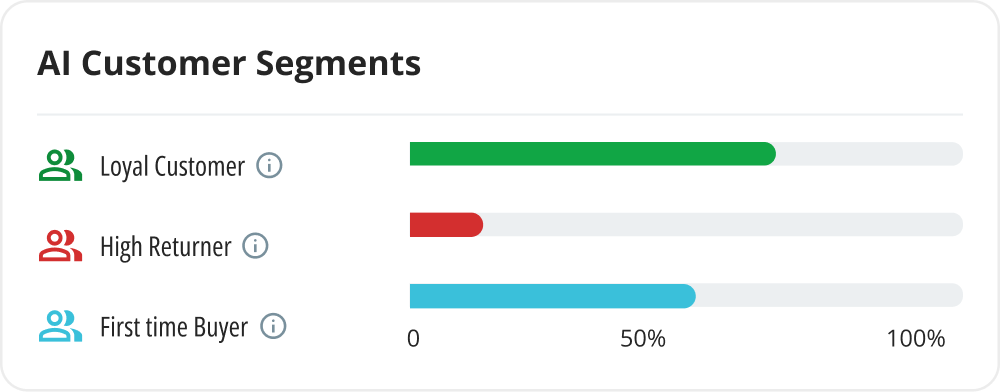
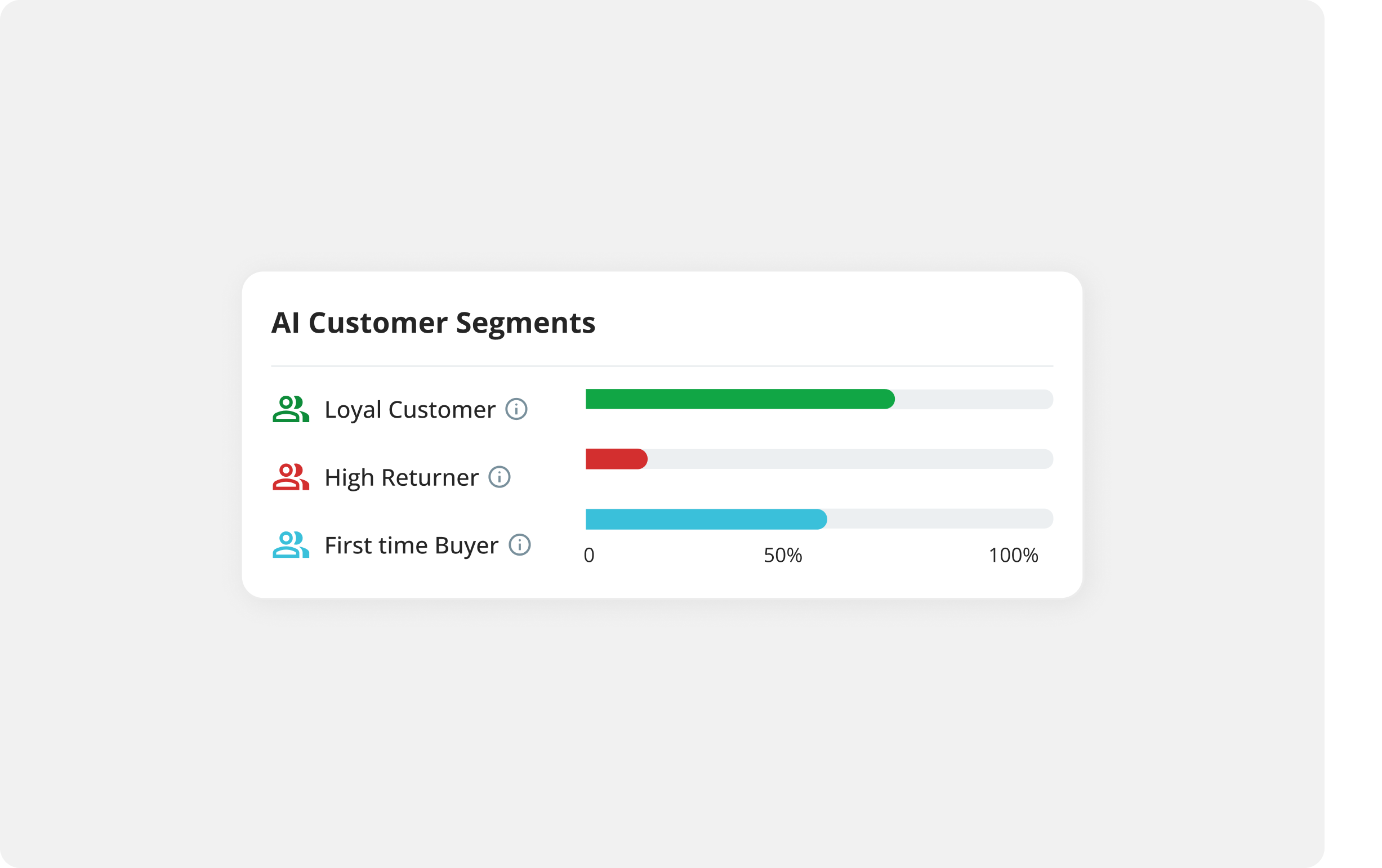
AI Personalizes Returns for Every Customer
AI Identifies your loyalists
Personalize returns experiences
With ClickPost, Win With Exchanges
- Retain customers with hyper-personalized exchange nudges
- Boost Revenue with exchanges for size, colour, or style, right on your Shopify site
- Simplify reconciliation by automating exchange price variance adjustments
- Automate refunds, offer gift cards or discounts as alternates
- Gain flexibility, trigger refunds at your preferred RTO milestone
- Reduce queries by 60% with Real-time tracking for you and your customers
Leading Carriers, Shopfronts, WMS, ERP, OMS
Frequently asked questions
What features does ClickPost’s Returns & Exchanges Management Solution offer?
ClickPost simplifies returns and exchanges with a fully customizable self-serve portal, real-time tracking, and multi-channel notifications. It enables automated refunds, 360-degree exchange solutions (including managing exchange price variance), and personalized exchange nudges to drive conversions. Brands can set custom return policies or create new ones using ClickPost’s advanced configurations. Shopify stores can also seamlessly enable catalog-wide exchanges with ClickPost.
How does ClickPost improve customer experience during returns?
ClickPost makes returns simple and fast with a self-serve portal, real-time tracking, automated notifications on multiple channels, and admin support for quick resolutions - turning returns into a retention opportunity.
How does ClickPost reduce revenue loss from returns?
By promoting exchanges over refunds with hyper personalized nudges, offering catalog wide exchanges, customising return windows and optimizing policies backed by data, ClickPost helps brands retain revenue while reducing operational strains. Furthermore, Brands can offer in-store credits as an option to process refunds.
Can the returns portal be customized to match our brand?
Yes! ClickPost’s white-labeled returns and exchanges portal allows brands to customize the UI, offer return and exchange options in a single view, and enables policy personalization, ensuring a hassle free and branded customer experience.
Questions to Ask Before Choosing Your Returns Management Software
1. How Easily Can the Software Integrate with Our Existing Systems?
Your tech stack is the backbone of your operations. A returns management software that doesn’t easily plug into your existing systems causes a domino effect: inventory blind spots, stuck parcels, and delays in refunds.
Therefore, before selecting the right platform, consider if it natively integrates with your storefronts, WMS, OMS, ERPs, payment gateways, CRM tool, and your carrier partners. This saves you from reworking your order, shipment, and inventory flows — and helps avoid silos and visibility gaps.
For example, when your customers initiate a return, the software instantly generates a pickup request or a return label. This streamlines the process for better customer experience and reduces the possibility of errors from manual oversight.
Action tips:
- Check the integrations page to see which platforms and tools are supported.
- Ask about the set-up process, latency, downtime record, API/webhook offerings.
- Avoid platforms without robust and fast custom integration support.
2. Does It Support a Wide Range of Return Methods (In-store, Pickup, Mail-in)?
Cross-brand partnerships, no-box/no-label returns, in-store drop-offs, and mail-ins are blending into a delicious cocktail—one that many retailers serve to win customer loyalty and make returns effortless.
Since 67% of customers consider one negative return experience reason enough to abandon a brand, return flexibility becomes key to retaining them. Different returns management software handle return methods differently. Some focus on concierge style returns. Some nail in-store returns and instant refunds. Some are pro at scheduling pickups with carriers and consolidating returns.
Action tips: No matter which return methods you offer, look out for the following non-negotiables-
- A self-serve portal where customers can easily choose their preferred return method.
- Display the nearest drop-off point or parcel locker, complete with geo-coordinates, to make returns more convenient.
- Automatic generation of shipping labels or QR codes for hassle-free mail-ins.
- Pre-built connections with multiple logistics partners and in-store systems like your POS software.
- Smart order routing to your warehouse or fulfillment center with intelligent carrier allocation.
3. Does the Software Handle Flexible and Customizable Return Policies?
Your return policy is often your brand’s true first impression as 80% of shoppers check it before deciding to buy. A friendly return policy encourages customers to make a confident purchase.
Whether you choose to offer free returns, issue refunds instantly, provide a flexible return window or charge a restocking fee, return management software can automatically enforce these policies. They cut out manual approvals and the need for emails and support calls.
Though most solutions let you automate your return policy through basic configurations, what retailers really need is true customization.
Action Tips: Evaluate if your preferred solution can-
- Personalize your policy such as setting up return restrictions, promoting gift-cards for refunds.
- Enable SKU exceptions with auto-approval/rejection.
- Adjust return duration (accommodating big sales/promotions) and prioritize rules.
- Offer nested return reasons, image validation, and customer’s note.
4. Can It Provide Real-Time Tracking and Notifications for Returns?
Customers crave real-time tracking and notifications, not just for the orders placed, but for returns too. With 84% of shoppers expecting faster refunds, many feel uneasy until they can see where their parcel is and when their refund will arrive. Therefore, the best returns management solution always proactively notify customers.
Like your customers, you’d also want to know where the return shipment is and make strategic calls like when to trigger refunds. For example, issue a refund at the time of the first scan or when the package reaches your warehouse.
Action Tips: A checklist for have a solid notification and tracking system:
- Both tracking API and webhook to enable live tracking updates with timestamps.
- Multichannel notifications with pre-built templates for easy set-up.
- Automated messages triggered at key milestones.
- Proactive exception alerts with standardized statuses and a central dashboard.
- Pre-built integrations with communication gateways and CRMs.
- Whitelabeled and branded tracking portal.
5. How Does the Software Improve Customer Experience Post-Purchase?
The post-purchase experience isn’t over once customers hit “Buy.” It’s just as critical when they hit “Return Your Order”. Many brand owners underestimate how far they fall short of customer expectations—even in critical areas like returns and delivery updates. According to a Deloitte study, 78% of retailers believe they offer proactive delivery communication, yet only 59% of customers feel the same.
Personalization forms the core of any post-purchase strategy built to improve customer experience. Building return policies specific to customer segmentation plays a big role in rewarding your loyal customers or bringing more into the fold, and deter unwanted behaviour like bracketing and other frauds. Astonishingly, 87% of customers over-order apparels and return those they don’t want, a nightmare for apparel brands.
The spread of LLM based models and GenAI has made AI-enabled personalization accessible and easy to implement.
Action Tips: Find out if the returns management platform offers-
- AI-enabled customer segmentation to tailor return policies.
- LLM-generated hyper-personalized and contextualized emails at scale.
- AI detector for preventing frauds or safeguards for return policy misuse.
- Proactive ETAs, language localization, and a branded return experience.
6. Can it Encourage Exchanges Over Refunds?
Exchanges aren’t just customer-friendly—they’re revenue-friendly. 60% of online customers prefer an exchange or store credit over a direct refund. This opens up the opportunity to nudge them toward alternatives that keep revenue in-house.
Your returns software should allow customers to browse an open catalog or a custom one for exchanges beyond simple size or color swaps. But here's the catch: not all platforms sync accurately with your live inventory or SKU logic, leading to mismatch issues and stockouts.
Exchanges can be bundled with upsells. A smart RMA flow can turn a return into an upgrade, not a loss. Likewise, while automating refunds sounds appealing, high-value items often require manual checks to prevent errors and fraud.
Action Tips: Look for the feasibility to-
- Set up multiple refund formats including store-credit, gift cards, discount codes.
- Trigger refunds at your preferred milestone.
- Enable site-wide exchanges along with automated price variance reconciliation.
- Combine manual refund checks with smart retries on transaction failure.
7. How Scalable Is the Returns Management System?
A returns management software is only as powerful as its ability to scale. While automation gets you started, it’s scalability that supports your growth. It should be able to keep up with your rising volume and operational complexity even 5 or 10 years down the line.
Action Tips: There are four main components to scalability and your returns management software should have them all to future proof your expansion-
- Handle surges like peak season sales or promotions without performance slowdown or outages.
- Fulfill customization needs, expand features quarterly, have faster product deployment.
- Support expansion to newer geographies and set up new currencies, payments, carriers with ease.
- Enable multiple users, secure log-ins; have robust data security measures, decentralized team access, and custom setups.
8. Does It Offer Advanced Reporting and Analytics?
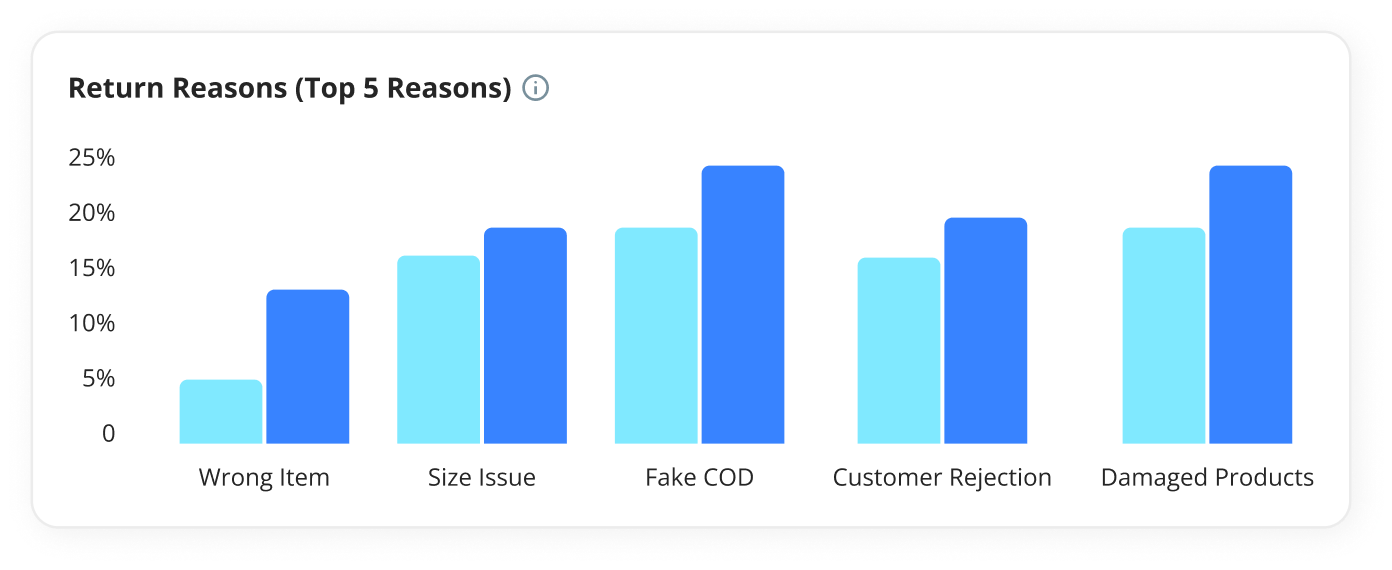
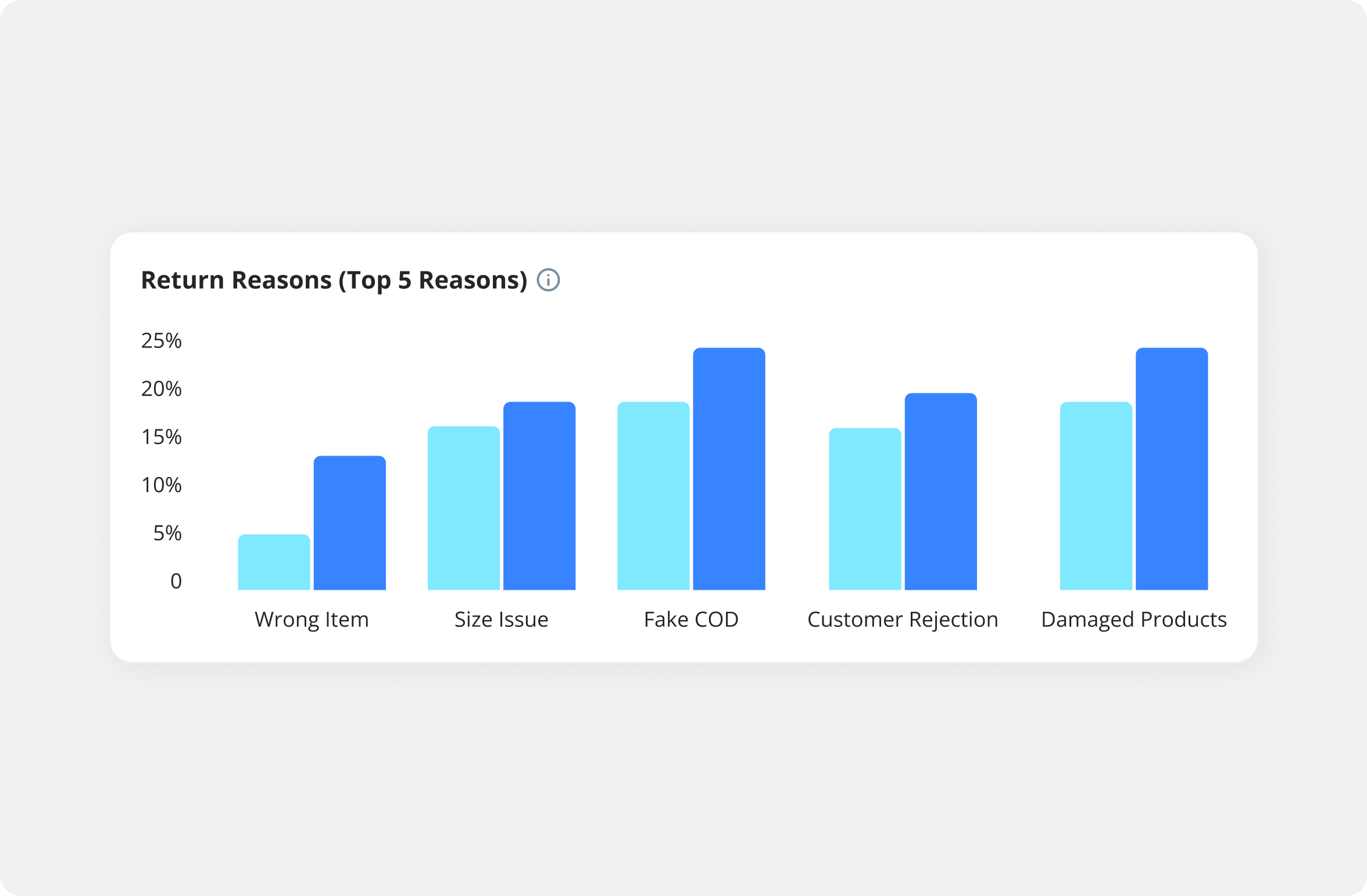
As 68% of retailers plan to upgrade their return capabilities, most seek ways to lower their return rate. Imagine having access to customers’ return patterns, return reasons, total returns and exchange volume, returns-to-exchange ratios. Better yet, having unprecedented visibility, automated reports, customizable dashboards, and notifications for important metrics.
You can mine the data to easily identify bottlenecks and revenue leaks, plan for seasonal demands, detect recurring customer behaviors, create safeguards, check for inventory issues, redesign your exchange campaigns, and upgrade customer experience.
Action Tips:
- Look for platforms that give you a comprehensive breakdown of the causes and trends observed in your return data.
- Analyze based on SKU, customer segments, category, or tags on an interactive dashboard.
- Check the availability of predictive models that forecast return volumes or detect fraud patterns.
9. What Kind of Customer Support Does the Software Provider Offer?
If you are worried about not having active and timely customer support, you’re right to do so. Support right from the moment you plan to onboard with a platform pays well, especially in your product adoption, usage knowledge, and training. Aligning with your business objectives and building a successful plan requires successful cooperation for customer support teams.
A recent Bain survey found that only 65% of customers felt their post-sales needs were moderately or adequately addressed. You wouldn’t want to be in that position. Therefore, choose a returns management software that offers support across key areas: product deployment, technical implementation, integration needs, support ticket resolution, and product onboarding.
Action Tips:
- Look for live support via emails, calls, or chat.
- Ensure you get help articles and self-learning materials.
- Confirm that responsive support isn’t paywalled behind advanced subscriptions.
10. What Are the Costs and Pricing Models?
Most return management solutions offer pricing models in two ways: tiered systems or custom pricing. The one you choose would depend on your return volume and the features you opt for.
For example, if you are a Shopify start-up with 100 return orders, choosing a basic subscription plan or free plan like ClickPost’s Shopify Returns App would mostly suffice. But, if you are a fast-scaling business with a steady increase in returns, you may want to consider a fully automated system to derive ROI.
The tiered model allows you to browse different subscription bundles to choose the right one. But, with custom or granular pricing you can opt for features and pay as you use them.
Action Tips:
- Enquire about any charges if returns exceed your plan limit.
- Browse customer reviews to find if there are any hidden fees.
- Clarify if any features are add-ons, as this might incur more charges.
Common Returns Management Challenges and How Software Can Help?
Processing an ecommerce exchange or refund is much different than in store returns. From keeping tabs on the entire process, curating eligible returns, to ensuring the returns journey is convenient for customers, your team has a lot on their plate. By learning the significant challenges, you can implement smart solutions and offer better returns than competitors.
Top Key Returns Management Challenges
- Challenge No. 1: High Return Rates and Revenue Loss
- Challenge No. 2: Complex and Manual Returns Process
- Challenge No. 3: Lack of Real-Time Visibility in Returns
- Challenge No. 4: Return Fraud and Policy Abuse
- Challenge No. 5: Managing Cross-Border Returns
- Challenge No. 6: High Costs of Return Shipping
- Challenge No. 7: Complicated or Slow Return Process
- Challenge No. 8: Inefficient Restocking and Inventory Management
- Challenge No. 9: Lack of Integration with Other Business Systems
- Challenge No. 10: Difficulty in Analyzing Return Data for Insights
Key Feature to Look For in Returns Management Software
The features of return management software are the core ingredients that define its capabilities. Each feature is vital in streamlining the returns process and increasing business efficiency. They stand out for their specialty in helping businesses achieve business excellence. Here are the key features of returns management software.
1. Self service Returns Portal
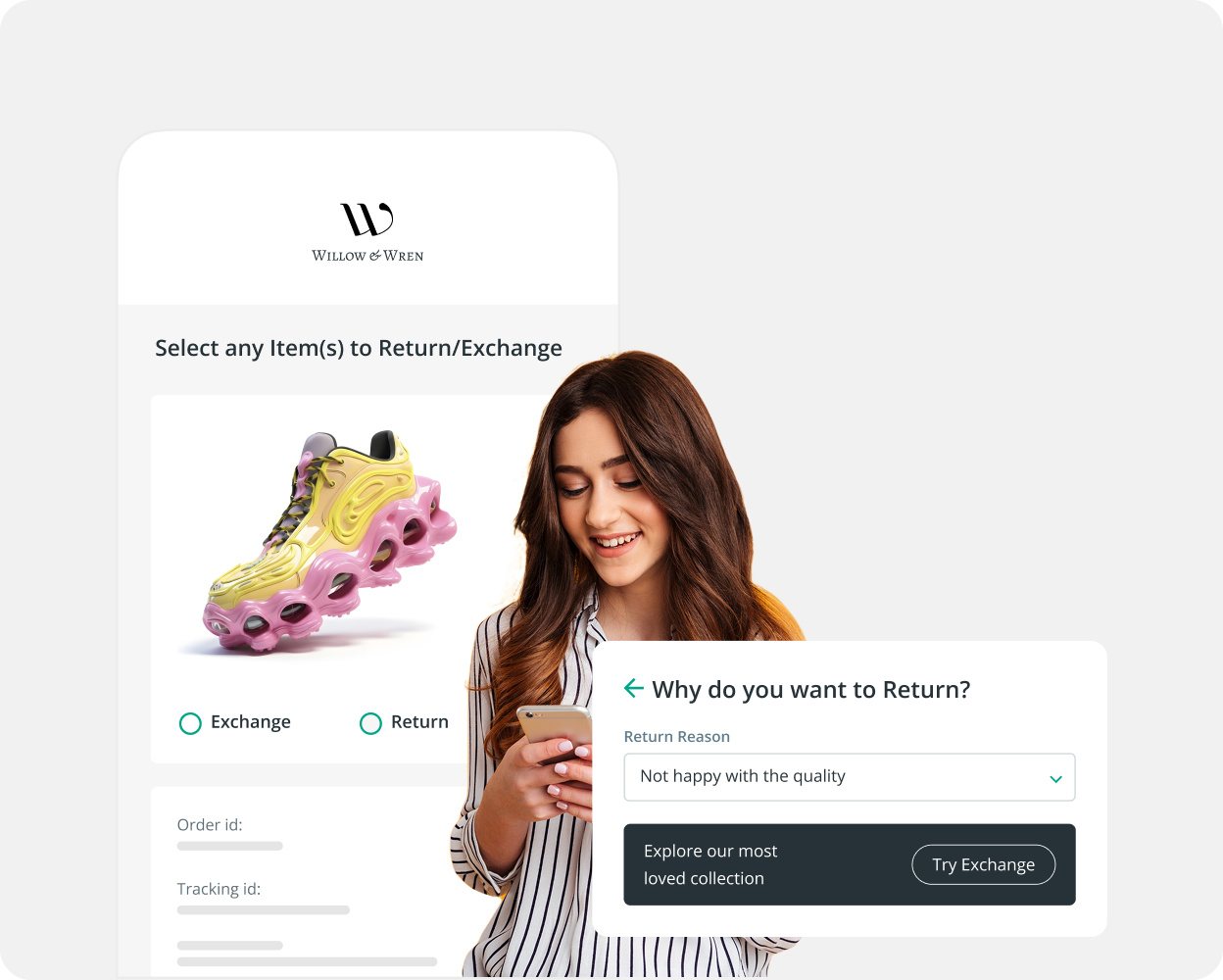
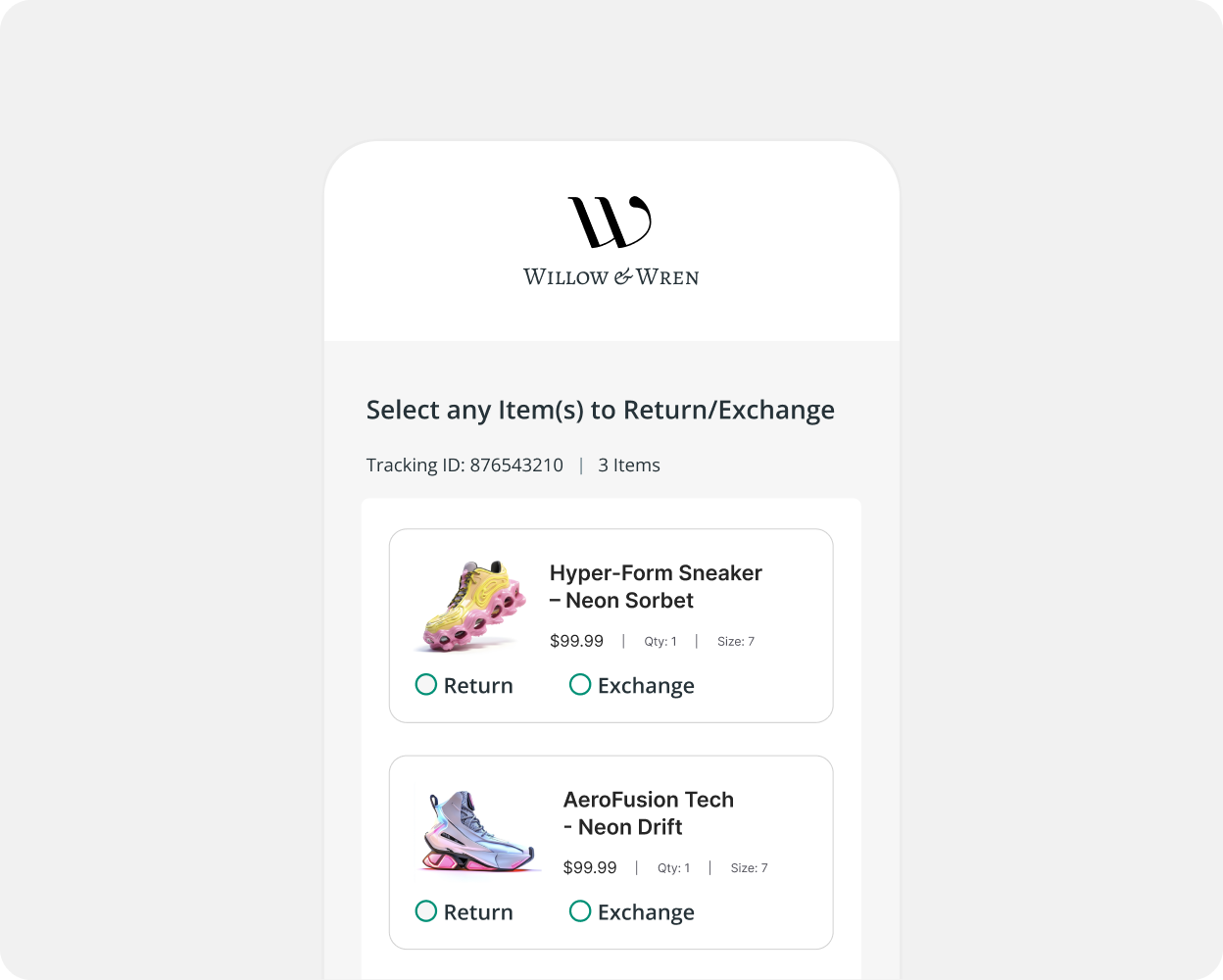
A self-serve returns portal is a platform that allows customers to manage their returns without any involvement from the company. They can enter their email address or order number, choose the items to return, create a shipping label, and print it out at home.
The portal allows users to select the reason for returns and offer their feedback and concerns. It is also super easy to use, which goes a long way in maintaining positive customer relationships.
2. Returns Tracking
The returns management software allows brands to track their returns and offers complete visibility to answer WISMR (Where is my Return?) customer concerns and questions. It helps your customer support agents guide shoppers with each stage of the return process.
A returns management systems also enables them to collect data analytics on customer returns. Customer return data is regularly collected by return management solutions. It keeps records of items in the inventory to ensure stocks are ready to be shipped or received.
3. Integration Capabilities
Merchants look into the integration capability of returns management software to ensure its maximum capabilities. This means whether or not it seamlessly connects with other integral systems like CRM (Customer Relationship Management) or ERP (Enterprise Resource Planning). This can also mean it offers analytics and reporting capabilities.
This flexibility allows the smooth flow of information and data required for shipping ops. This makes it easier to process returns, initiate returns, and offer customers quick refunds or store credit. You can manage the entire returns process for you online store via a single dashboard, including analytics and reporting.
4. Quality Checks
Quality checks (QC) are essential components in the returns management process. Brands perform QC checks to ensure the product is in good condition when returned. Upon receiving the product, they determine its quality by examining it.
Quality checks are a corrective measure to give the product a pass if it meets the quality standards or to ensure it requires replacement or repair. This ensures a hassle free returns process for both businesses and the customer's experience.
5. Multi-currency Support
A returns management software has multi-currency support to facilitate payments in multiple currencies and allow users to process transactions from anywhere in the world. It can specifically help a customer planning to initiate an international return request.
Upon successful returns initiation, customers can receive payments in their preferred currency. The multi-currency advantage is a feature to watch out for while looking for returns software. This is a great feature to offer to ensure repeat purchases and increases the likelihood of returning customers opting for instant store credit.
6. User-friendly Interface
A user-friendly interface in reverse logistics software is a common criterion. Businesses want no customer to wait and get frustrated while navigating the self-serve portal. It creates a positive user experience if it is visually appealing and easy to use.
Returns management software that is straightforward and intuitive design attracts more customers, increases their use of the software, and brings them back. It not only makes for an efficient returns management process (which, again, is key to encouraging repeat purchases), it also actively enhances customer satisfaction.
7. Disposition Management
A vital factor that aligns with the capability of ecommerce returns management software is its disposition management functionality. It means how accurately it can get the returned items to its designated warehouse.
Businesses consider it because of its importance in saving them time and money, while also improvement inventory management. It helps them mark items for clearances and identify Return to Vendor (RTV) products for credit or refunds. With Disposition Management, brands take a call to send items for recycling or for direct disposal.
8. Multi-channel Support
With multi-channel support, business owners offer flexible return options to customers planning to return the products. It allows individuals to explore different convenient options according to their availability and time.
This can make a more efficient returns process and allow companies to invest in reverse logistics software. Also, having a multi-channel system can cut costs and increase customer loyalty to your brand.
9. Automated Communications
The two kinds of communication in the returns process involve interactions with internal teams and customer communications. Manually practicing both can be strenuous and time-consuming.
To run things faster, brands use ecommerce returns management software that automatically sends order-related information to customers and teams, keeping them in the loop. The tool sends notifications, emails, and updates to reduce customer queries and keep them informed throughout the order journey.
10. Barcode Scanning
Barcode scanning is a highly reliable feature that allows you to manage returned items and track inventory. Internal teams use it to fetch product details such as serial numbers, update the status, and retrieve stock data in real time.
One easy scan can reduce the time-consuming tasks of going back and forth with information. A good returns management software solution lets you track customer returns as effectively as you can track outgoing orders.
Which is the best Returns Management Software?
Choosing the right returns software in 2025 can redefine how retailers handle reverse logistics, protect revenue, and deliver a smoother customer experience. The growing demand for efficient returns processes and the rising costs associated with returned items have made investing in specialized technology a necessity. Below is a curated list of the ten most powerful and reliable returns management systems available this year, helping brands of all sizes reduce costs, retain revenue, and elevate operational efficiency.
| Name | Nature | Pricing Info |
Key Features (in one line)
|
| ClickPost | Enterprise RMS | Custom | AI-powered automation, reverse logistics, and fraud detection |
| AfterShip Returns | eCommerce SaaS | Tiered (Free to Enterprise) | Custom returns portal, automated labels, analytics |
| ReturnGO | Mid-market SaaS | $121 to Custom | Store credit, branded portal, deep analytics |
| parcelLab | Post-purchase Platform | Custom | AI insights, WMS integration, personalization |
| Narvar | Premium Post-purchase | $65,000+/year | AI fraud prevention, branded UX, return policies |
| Loop Returns | Shopify-Focused SaaS | Flat-fee or Usage-based | Dynamic routing, refund incentives, and Return Bar integration |
| Happy Returns | Hybrid/Omnichannel | Volume-based | Box-free drop-off, Return Bars, exchange workflows |
| ReverseLogix | Enterprise Platform | Custom | WMS, OMS integration, fraud analytics, asset tracking |
| ReturnLogic | Small to Mid eCommerce | $300+/month | Auto RMAs, store credit, data dashboards |
| Return Rabbit | Shopify RMS | Free to $650/month | Visual dashboards, AI alerts, and return incentives |