









ALTERNATIVES GUIDE
8 ShipStation Alternatives in 2026 for Shipping Software
Compare 8 ShipStation alternatives in 2026. Explore shipping software features, pricing, carrier integrations, automation, and fulfillment tools to find the best fit for your business.
 Written by
 Reviewed by
-
ClickPost: Best for growing brands managing delivery visibility, exceptions, customer notifications, and returns across their existing carrier relationships.
-
Shippo: Best for sellers seeking multi-carrier shipping software with lower entry costs.
-
Veeqo: Best for multichannel sellers seeking free shipping software with unlimited users and shipments.
-
Pirate Ship: Best for sellers primarily using USPS and UPS without needing extensive fulfillment automation.
-
Ordoro: Best for businesses combining shipping with inventory, kitting, and dropshipping workflows.
-
Easyship: Best for international sellers needing import-duty calculations and checkout options.
-
EasyPost: Best for engineering teams building shipping workflows through APIs.
ShipStation helps ecommerce businesses import orders, compare carrier rates, print shipping labels, and automate fulfillment. Its subscription plans cover different shipment volumes, with additional capabilities available on higher tiers.
However, the right shipping platform depends on how a business operates.
A small seller may prioritize free shipping labels. A multichannel retailer may need inventory synchronization, while a growing brand may require more control over delivery visibility and customer communication.
ShipStation alternatives address these requirements in different ways.
This guide compares ShipStation's pricing and capabilities with six alternatives, alongside ClickPost, the platform we build.
Why Sellers Look for ShipStation Alternatives in 2026?
ShipStation offers shipping automation, carrier integrations, and fulfillment tools. However, its pricing structure and restrictions on certain plans can create challenges for businesses with growing shipping requirements.
-
Limited API access and carrier flexibility on lower plans: Businesses using ShipStation's Free or Starter plans cannot access its Shipping API. Connecting existing parcel carrier accounts also requires Standard or higher. This can push merchants toward a paid upgrade when they need custom integrations or want to use their negotiated carrier rates.
-
Rising subscription costs as shipping volumes grow: ShipStation's volume-based pricing can become a concern for businesses with growing or fluctuating shipment volumes. Sellers may need to move to a more expensive subscription tier as their order count increases, even if they don't require additional features. This can make software expenses harder to manage during seasonal peaks or periods of rapid growth.
-
Additional expenses when fulfillment teams expand: Starter includes three users, Standard allows ten, and Premium supports fifteen. Businesses adding warehouse staff or fulfillment teams may need additional paid seats or a higher subscription tier, increasing costs beyond their shipment-based plan fees.
-
Extra carrier connection charges on legacy plans: Businesses on eligible legacy ShipStation plans may face additional costs when connecting their own carrier accounts. This can be a concern for sellers who have already negotiated shipping rates directly with carriers but must pay extra to use those relationships within the platform. These charges can increase overall software expenses and make existing subscriptions less cost-effective.
What ShipStation does well, and When to Stay?
ShipStation remains a practical choice for businesses that rely on its shipping and fulfillment workflows.
-
Multichannel order management: ShipStation imports orders from connected storefronts and marketplaces, allowing teams to process shipments from one workspace.
-
Shipping automation: Standard supports unlimited automation rules, order combining, automatic order splitting, and customized rate shopping.
-
Carrier-rate comparison: Merchants can compare available carrier services and use discounted shipping rates without negotiating individual carrier contracts.
-
Returns and exchanges: Standard includes branded returns and exchanges, RMA workflows, and returns reporting.
-
Inventory and warehouse operations: Standard includes inventory synchronization and basic warehouse capabilities. Premium adds purchasing, forecasting, advanced warehouse tools, and custom analytics.
Businesses already using ShipStation's order-management rules, carrier connections, and fulfillment workflows may have little reason to switch if the subscription remains cost-effective.
ShipStation pricing explained: plan fee plus postage
A monthly fee by shipment volume, plus postage at ShipStation's rates or your own. Annual billing takes about 20% off.
ShipStation's pricing depends on the subscription tier and monthly shipment volume. For brands considering ShipStation alternatives, understanding how subscription fees, shipment limits, and postage costs add up is essential to comparing the total cost of shipping across platforms.
| Plan | Starting Monthly Price | Price at 500 Shipments | Key Capabilities |
| Starter | $14.99 | $39.99 | Rate shopping, return labels, basic automation, three users |
| Standard | $29.99 | $89.99 | Shipping API, existing carrier accounts, unlimited automation, ten users |
| Premium | $349.99 | $449.99 | Advanced inventory, forecasting, warehouse management, fifteen users |
These are monthly-billing prices. ShipStation advertises a 20% discount for annual billing.
Postage, insurance, additional users, and applicable add-ons are charged separately.
For businesses using their own UPS or FedEx parcel accounts, Standard is generally the practical starting point.
At 500 shipments per month, its $89.99 subscription works out to approximately $0.18 per shipment before postage.
Why Do Brands Move from ShipStation to ClickPost?
ShipStation handles order management, carrier rates, label generation, and fulfillment automation. ClickPost focuses on coordinating carrier operations and managing the customer experience after checkout.
The platforms overlap in tracking and returns, but their operational emphasis differs.
-
Delivery visibility across carriers: ShipStation provides shipment tracking and branded pages. Brands needing centralized visibility across existing carrier relationships can use ClickPost to standardize tracking events and monitor delivery progress from one dashboard.
-
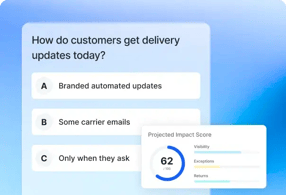
Proactive communication: ShipStation supports customer notification emails. ClickPost adds milestone-based notifications and proactive delay alerts, helping operations and support teams identify delivery problems before customers contact them.
-
Exchange-focused return workflows: ShipStation Standard includes branded returns and exchanges. ClickPost adds configurable return policies, exchange incentives, store credit, and customer segmentation for brands prioritizing revenue retention.
-
Delivery-date management: ShipStation provides delivery estimates during shipping. ClickPost supports estimated delivery dates across shopping and post-purchase touchpoints, helping brands communicate expected arrival dates and potential delays.
-
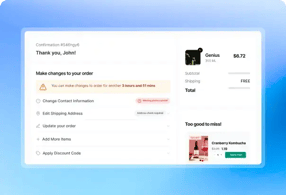
Post-purchase revenue opportunities: ShipStation primarily connects shipping, fulfillment, and related operations. ClickPost supports order editing and tracking-page upsells, allowing brands to manage additional customer interactions after checkout.
ShipStation vs. ClickPost: Which platform fits your shipping needs?
Businesses needing multichannel order imports, rate shopping, label printing, and warehouse automation may be better served by ShipStation. ClickPost becomes relevant when post-purchase coordination requires additional capabilities.
| What you are deciding | ShipStation | ClickPost |
| Main job | Labels, rate shopping, order rules | Tracking, delivery dates, returns, exchanges |
| Pricing | $14.99 to $349.99+ a month by volume | Custom quote |
| Tracking experience | Branded tracking on Standard | Branded page on your domain with SMS and email alerts |
| Returns | Returns and exchanges on Standard | Exchange-first portal and Returns Protection |
| After-checkout revenue | Not a focus | Order editing and post-purchase upsell |
| Reviews | Shopify 3.9 (602) | G2 4.8 (135) |
ShipStation Alternatives Compared
Prices are published plan fees in USD as of September 2026. Postage is billed separately on every platform, and several tiers scale with monthly volume.
| Platform | Best for | Starting price | Own carrier accounts | Rating |
| ShipStation | Shipping and fulfillment automation | $14.99/mo (50 shipments) | Standard and above | Shopify 4.2/5 (710 reviews)) |
| ClickPost | Scaling brands, post-purchase | Custom quote | Core model | G2 4.8/5 (148 reviews) |
| Shippo | Multi-carrier shipping | Free (30 labels); Pro from $19/mo | $0.05/label on Starter; included on Pro | Shopify 4.2/5 (317 reviews) |
| Veeqo | Free multichannel shipping | Free | Yes | Shopify 4.0/5 (128 reviews) |
| Pirate Ship | Low-volume USPS/UPS | Free | No | Shopify 4.9/5 (187 reviews) |
| Ordoro | Shipping plus inventory | Free (100 labels); paid plans from $59/mo | Shipping Premium ($149) | Capterra 4.7/5 (79 reviews) |
| Easyship | International shipping | Free (50 shipments); paid plans | Plus and above | Shopify 4.2/5 (414 reviews) |
| EasyPost | Developer-focused shipping API | 3,000 free Wallet Carrier labels | Separate BYOCA pricing | G2 4.2/ 5 (122 reviews) |
The 6 ShipStation Alternatives Worth a Look
Each one solves a specific reason sellers leave ShipStation.
1. Shippo: Best lower-cost multi-carrier shipping
Shippo helps merchants compare carrier rates, generate shipping labels, and manage shipments from one platform. It also supports existing carrier accounts and API integrations for businesses that need to connect shipping with their own systems.
Pricing: Starter is free for up to 30 labels per month. Pro starts at $19/month, with annual billing available at a discount.AI: Confirm any named AI capabilities against current product documentation.
Ratings: 4.2/5 from 318 reviews on the Shopify App Store.
Pros:
-
Supports rate comparison across multiple carriers in one workflow.
-
Provides APIs for integrating shipping with existing business systems.
-
Starter charges per label when merchants use their own carrier accounts.
-
Plan limits may require merchants to change tiers as shipping volume grows.
2. Veeqo: Best free option for multichannel sellers
Veeqo brings orders from multiple sales channels into one centralized shipping workflow. It is particularly useful for merchants selling across marketplaces and ecommerce stores who want to manage order fulfillment from a single platform. Its inventory management and warehouse features should be assessed separately to ensure they meet your operational requirements.
Pricing: Veeqo offers a free Shipping plan with unlimited orders and users. Paid Inventory and High Volume plans are also available.AI: Seller Assistant is Veeqo’s AI agent for warehouse and fulfillment tasks. It can help manage orders, resolve exceptions, analyze inventory, and support purchasing workflows.
Availability may be limited as access is currently being rolled out.
G2 rating: Shopify App Store: 2.8 out of 5 from 101 reviews, 20% one-star.
Pros:
-
No subscription or seat limits.
-
Cash back on eligible labels.
-
Limited carrier flexibility outside supported services.
-
Advanced warehouse workflows may require additional tools.
Verdict: Hard to beat on cost for Amazon-heavy sellers; test inventory sync before moving everything.
3. Pirate Ship: Best for low-volume USPS and UPS shipping
Pirate Ship focuses on discounted USPS and UPS shipping labels. It suits sellers who need a straightforward way to import orders, compare available rates, and process shipments without a complex fulfillment setup.
Its narrower carrier coverage may be a limitation for businesses that use several shipping providers or need advanced warehouse workflows.
Pricing: The software is free; postage is charged separately.AI: No named AI feature confirmed.
Ratings: 4.8/5 from 184 Shopify App Store reviews.
Pros:
-
Supports discounted USPS and UPS labels within one shipping workflow.
-
Allows sellers to import shipment details and process labels in batches.
-
Label purchasing is limited to USPS and UPS.
-
Does not provide the broader inventory and warehouse workflows available in fulfillment platforms.
Verdict: Pirate Ship is best suited to sellers whose shipping needs are covered by USPS and UPS.
4. Ordoro: Best for shipping plus inventory control
Ordoro combines shipping with inventory management, kitting, bundles, purchase orders, and dropshipping tools. It is relevant to merchants who need to coordinate stock, suppliers, and fulfillment rather than manage shipping labels alone.
Businesses should compare its shipping, inventory, and dropshipping modules separately to understand which capabilities are included in their chosen plan.
Pricing: Shipping Essential is free for up to 100 labels per month. Paid shipping, inventory, and dropshipping plans have separate fees.AI: No named AI feature publicly documented
Ratings: 4.7/5 from 79 reviews on Capterra.
Pros:
-
Combines shipping with inventory tracking, kitting, and bundle management.
-
Supports purchase orders and dropshipping workflows.
- Connecting existing carrier accounts requires Shipping Premium.
- Inventory and dropshipping capabilities may involve separate subscription costs.
Verdict: Ordoro is worth considering if inventory and supplier coordination are central to your fulfillment operations.
5. Easyship: Best for International Shipping
Easyship helps merchants compare international shipping services, manage cross-border shipments, and calculate import duties and taxes. Merchants can show customers estimated import charges at checkout on eligible plans.
Before switching, confirm that the selected plan supports your required checkout, shipping, and integration workflows.
Pricing: Free plan available. Paid plans start at $29/month for 500 shipments, $69 for 2,500, $99 for 5,000, and up to $199/month for higher volumes.
AI: AI insights and smart box selection
Ratings: 4.2/5 from 407 reviews on the Shopify App Store.
Pros:-
Supports international shipping and import-duty calculations.
-
Can display duties and taxes at checkout on eligible plans.
-
Displaying duties and taxes at checkout requires a qualifying plan.
-
Plan-specific shipment allowances and API limits may affect integration and fulfillment workflows.
6. EasyPost: Best for Custom Shipping Integrations
EasyPost provides APIs for shipping rates, label generation, tracking, and carrier connections. It is designed for businesses that want to integrate shipping capabilities directly into their own applications, rather than rely solely on a prebuilt shipping interface.
This approach gives engineering teams control over their shipping workflows, but they need the resources to build and maintain the required integrations.
Pricing: EasyPost offers 3,000 free labels per month through its Wallet Carrier plan, then charges $0.08 per additional label. Its BYOCA plan costs $20/month plus $0.08 per label. Postage is billed separately, and enterprise pricing is custom.
AI: Luma Insights, Advisor and Select; free under 500 packages a month
Ratings: 4.2/5 from 122 reviews on G2.
Pros:-
Provides APIs for rates, labels, tracking, and carrier integrations.
-
Supports custom shipping workflows within existing business systems.
-
Requires engineering resources to build and maintain integrations.
-
Bring Your Own Carrier accounts follow a different billing structure from Wallet Carriers.
Verdict: EasyPost is best suited to businesses with engineering resources that want to build shipping into their own systems.
How ClickPost Supports Growing Ecommerce Businesses
While platforms like Shippo, Veeqo, and ShipStation focus on shipping labels, order fulfillment, and multichannel workflows, ClickPost helps ecommerce businesses manage carrier operations and the post-purchase experience. It brings shipment tracking, carrier performance insights, estimated delivery dates, delivery notifications, and returns management into one platform. This makes it relevant for growing brands that need better visibility and control across their existing carrier relationships as shipping volumes increase.
Which ShipStation Alternative Fits your Business?
| Monthly shipments | Shortlist | Why |
| Under 100 | Pirate Ship, Shippo Starter | No plan fee |
| 100 to 1,000 | Shippo Pro, Veeqo | Low or zero software cost with automation |
| 1,000 to 5,000, multichannel | Ordoro, Veeqo | Inventory sync across channels |
| Growing international share | Easyship | Duties and taxes at checkout |
| In-house engineering team | EasyPost | Usage-based API |
| Thousands a month, own contracts | ClickPost | EDD, exceptions, tracking and returns across carriers |
Total Cost of Ownership at 500 Shipments a Month
Software fees are only part of the bill. In April 2026 data, the ShipScience Parcel Refund Index found dim-weight upcharges on about 32% of UPS and 28% of FedEx shipments.
Prices are published plan fees in USD as of September 2026. Postage is billed separately on every platform, and several tiers scale with monthly volume.
| Platform at 500 labels a month | Software cost |
| ShipStation Standard (needed for own accounts and API) | $89.99 |
| Shippo Pro (201 to 500 tier) | About $29 (third-party listings) |
| Easyship Plus | $29 |
| EasyPost with own carrier accounts ($20 + 500 × 8 cents) | $60 |
| Ordoro Shipping Premium (own accounts) | $149.00 |
| Veeqo or Pirate Ship | $0.00 |
Bigger savings often sit on the carrier side:
-
Negotiated UPS or FedEx rates
-
Right-sized boxes to avoid dim-weight charges
-
Late-delivery refunds where your service level allows
How to Migrate from ShipStation: 8-step checklist
Most of the work is rebuilding rules and reconnecting stores. Plan a two-week overlap.
-
Export order history, shipment records and your automation rules from ShipStation.
-
Check your billing date and cancel or downgrade before the next renewal.
-
Reconnect stores and carrier accounts on the new platform and test rate quotes.
-
Rebuild automation rules, package presets and service mappings.
-
Run both systems in parallel for one to two weeks on a share of orders.
-
Move remaining volume, then archive ShipStation data for audits and returns.
Frequently asked questions
What is the best alternative to ShipStation?
It depends on what you need. Shippo is the closest like-for-like swap, Veeqo and Pirate Ship are free, Ordoro adds inventory control, Easyship suits international sellers, and EasyPost suits developers. Brands shipping thousands of orders on their own carrier contracts usually graduate to ClickPost for tracking, delivery dates and returns.
How much does ShipStation cost in 2026?
Since July 2025, ShipStation has three plans priced by monthly shipment volume: Starter from $14.99 (50 shipments), Standard from $29.99, and Premium from $349.99. Standard costs roughly $89.99 at 500 shipments and $149.99 at 1,000. Postage is billed separately, and annual billing saves about 20%.
Is there a free alternative to ShipStation?
Yes. Veeqo is free with unlimited users and orders, and Pirate Ship is free for USPS and UPS labels. Shippo's Starter plan is free for up to 30 labels a month, and EasyPost's API is free for the first 3,000 labels a month on its own carrier rates.
ShipStation vs Shippo: which is better?
Shippo is cheaper to start and lets you connect your own carrier accounts on any plan, while ShipStation needs Standard ($29.99+) for that. ShipStation offers more users and deeper automation on higher tiers, plus Premium inventory tools. Small and mid-size sellers often find Shippo Pro the better value.
Does ShipStation charge per label?
Current plans charge a monthly fee by shipment volume, and postage is billed separately. Some accounts opened before July 2025 still pay a legacy "Your Carriers" add-on of $5 to $95 a month for connecting their own carrier accounts.
Who owns ShipStation?
ShipStation is part of Auctane, which also owns Stamps.com, ShippingEasy, ShipEngine, ShipWorks, Metapack and Endicia. Private equity firm Thoma Bravo invested in Auctane in 2021. Switching between these brands keeps you within the same company.
The bottom line
The right ShipStation alternative depends on what's holding your shipping operations back. If subscription costs are the concern, Veeqo and Pirate Ship offer free shipping software, while Shippo provides multi-carrier shipping with a lower entry cost. Ordoro is worth considering for inventory-heavy operations, Easyship for international shipping, and EasyPost for businesses building custom shipping workflows.
But as order volumes grow, shipping labels may become only one part of the challenge. Delayed deliveries, inconsistent tracking updates, and complicated returns can create additional work for operations and support teams.
If these are your priorities, ClickPost helps you manage delivery visibility, exceptions, customer notifications, and returns across your existing carrier relationships
 4.8

 4.4

Looking for a Better
Alternative to Outvio?
We use cookies to keep the site working, understand usage, and improve your experience. Learn more
Always active for essential site performance and security.
Enables anonymous usage analysis to refine our services.
Used to present relevant promotions and advertising.