







TL;DR: Customer Service Expectations Statistics
Customers want faster, smarter and more connected service than ever: 88% expect quicker responses than a year ago, and 95% expect their information to follow them across channels. Yet 48% of companies still don't pass that context from a bot to a human agent.
-
88% of customers expect faster customer service responses than a year ago.
-
95% of customers expect support context to carry over between interactions, but only 48% of companies deliver it.
-
61% of service teams believe they offer proactive support, compared with just 33% of customers who agree.
-
35% of Americans prefer phone support, while only 1% prefer chatbots.
-
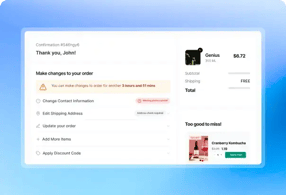
80% of US online shoppers want a specific delivery date in their order confirmation.
Introduction
Customer service expectations statistics for 2026 point in one direction: shoppers want answers faster and want to explain themselves only once. 88% of customers expect quicker responses than a year ago, and 92% of consumers expect every company to match the best experience they have ever had.
That bar is set by the best brand a shopper uses, not by your category. This guide covers what customers expect on speed, channels, memory, self-service and AI, plus what online shoppers expect after they click "buy."
What do customers expect from customer service in 2026?
Customers expect speed, availability and accurate answers together. 74% of consumers now expect 24/7 service because of AI, and 86% say responsiveness and accurate resolution strongly influence what they buy, Zendesk's CX Trends 2026 found. 83% still believe experiences should be better than they are today.
-
94% of consumers value efficient service as much as empathy.
-
Not being able to reach a human agent remains consumers' top service frustration.
-
More than half of consumers would rather do anything else than contact customer service.
-
88% of customers say good service makes them more likely to buy from the same company again.
Put together, the message is simple. Customers do not want to contact you at all, and when they must, they want it over fast and done right.
Is the gap between customer expectations and delivery growing?
Yes, and companies tend to underestimate it. 61% of service teams believe they handle issues proactively, but only 33% of customers agree that companies anticipate their needs, Salesforce found. More than half of customers (53%) want companies to predict their needs before problems arise.
-
86% of service agents say customer expectations are getting higher.
-
81% of agents say customers expect more of a personal touch than before.
-
85% of consumers have spent less or stopped buying from a brand after poor service.
-
Fewer than 1 in 3 consumers now give companies feedback, an all-time low.
That last figure explains why the gap stays hidden. Customers who feel let down rarely complain; they simply buy less, so your survey scores can look fine while revenue leaks.
How fast do customers expect a response from customer service?
Faster every year. 88% of customers expect quicker responses than a year ago, and 32% of consumers expect a reply to a direct message within one hour. Ecommerce brands at $10 million in sales take a median 6.3 hours to reply across all channels.
| Expectation | What customers say | What ecommerce teams deliver |
| Overall speed | 88% expect faster replies than last year | 6.3-hour median first response |
| Social DMs | 32% expect a reply within one hour | Most brands do not publish DM benchmarks |
| Live chat | N/A | 38x faster first response than email |
| After hours | 74% expect 24/7 service | Varies by staffing and automation |
Which customer service channels do customers prefer?
Phone is still the most preferred channel in the US. 35% of Americans pick it first, ahead of email at 23% and live chat at 10%, YouGov data shows. Only 1% prefer chatbots, even though 18% end up using them.
| Generation | Prefer phone for customer service |
| Baby Boomers | 52% |
| Gen X | 39% |
| Millennials | 30% |
| Gen Z | 25% |
-
Email is more popular with younger buyers: 28% of Gen Z and 24% of Millennials prefer it, against 23% overall.
-
About 70% of Americans use phone support, but only half of them prefer it.
-
Gen Z (8%) and Millennials (6%) are more likely than average (4%) to choose social media for service.
-
61% of US Boomers prefer voice calls, while Gen Z splits evenly across email, text, chat and voice, Forrester found.
Customers use the channels you offer, not the ones they want. Keeping a phone or callback option for complex orders protects older, higher-value buyers.
Do customers expect brands to remember them across channels?
Almost all of them do. 95% of consumers expect their information to be remembered across channels, yet 48% of organizations do not automatically pass information from virtual agents to human agents, Genesys found in its 2026 survey of 5,811 consumers.
-
81% of consumers want agents to continue the conversation without backtracking.
-
74% of consumers are frustrated when they have to repeat information.
-
76% would choose a company that lets them add text, images and video to one thread without restarting.
For ecommerce, this means a shopper who asked the bot about a late parcel should not have to repeat the order number to an agent. That handoff is where trust is won or lost.
Do customers prefer self-service over human support?
For simple questions, most do. 61% of customers prefer self-service for simple issues, Salesforce reports. But only 14% of service issues are fully resolved in self-service, Gartner found, so the preference often ends in a call or ticket anyway.
-
73% of customers use self-service at some point in their service journey.
-
43% of self-service failures happen because customers can't find content relevant to their issue.
-
78% of consumers say companies are getting better at self-service, and 65% say virtual agents made issues easier to solve.
Customers have not given up on self-service; they are tired of dead ends. Answer the top ten questions completely, and offer a clear route to a person when that fails.
How do customers feel about AI in customer service?
Wary, but warming up. 64% of customers would prefer companies didn't use AI for customer service, and 53% would consider switching to a competitor over it, Gartner found. Their top concern is that AI will make it harder to reach a person.
-
Gartner's Keith McIntosh warns that customers fear AI will become "another obstacle between them and an agent."
-
94% of consumers say they have a right to know when they are dealing with AI.
-
Nearly 1 in 5 consumers who used AI for customer support saw no benefit at all.
-
74% of consumers say AI has raised their expectation of 24/7 service.
AI raises expectations while lowering trust when it blocks access to people. Tell customers when they are talking to AI, and make the handoff to a human obvious.
What do online shoppers expect after they place an order?
Precise delivery information. 80% of US online adults say it's important to get an order confirmation with a specific delivery or pickup date, and three-quarters value status update notifications, Forrester's March 2025 survey found. 72% want specific dates on the product page itself.
-
61% of shoppers would pay a premium for more detailed order tracking, in a 2025 survey of 5,000 consumers in the US and Europe.
-
Parcel tracking is "very important" to 60% of shoppers buying electronics, 43% buying fashion, and 38% buying health and beauty.
-
Inaccurate notifications and premature "delivered" updates are among shoppers' top tracking frustrations.
-
Satisfaction with US consumer shipping rose 1% to an ACSI score of 78 in 2026.
No primary study publishes a reliable share of support tickets that are "Where is my order?" questions. The expectation data still makes the case: clear dates and timely updates answer the question before a shopper asks it.
Customer service expectations checklist for ecommerce teams
Use these six checks to see where you fall short of what customers now expect.
1. Speed: Compare your first response time with your vertical, not the 6.3-hour all-industry median.
2. Context: Make sure bot conversations and order details pass to agents automatically.
3. Human access: Show a clear route to a person in every automated flow.
4. AI disclosure: Tell customers when they are talking to AI.
5. Self-service: Answer your top order, return and delivery questions fully, and track resolution, not views.
6. Delivery dates: Show specific dates on product pages and order confirmations, and send status updates.
Verdict
Fix context before speed. A customer who repeats an order number to a second agent feels slower service than one who waits an extra hour for a reply that already knows the story. Proactive delivery updates come next, because they remove questions instead of answering them.
How will customer service expectations change through 2029?
Gartner predicts that agentic AI will autonomously resolve 80% of common customer service issues by 2029. As that happens, customers will expect instant answers for simple questions and faster access to people for complex ones.
-
Projection: 86% of CX leaders expect AI to be part of every customer interaction by 2029.
-
Projection: 82% of CX leaders expect autonomous AI agents to orchestrate customer experiences within three years.
-
Today, 40% of CX organizations already use agentic AI.
Customer service expectations trends to watch in 2026
Memory is the new speed
95% of consumers expect context to follow them across channels. Brands that remember the order and the last conversation will feel faster even when they are not.
AI must be disclosed
94% of consumers say they have a right to know when they are dealing with AI. Hidden bots risk the trust they were meant to protect.
Proactive beats reactive
53% of customers want companies to predict their needs. In ecommerce, a delay alert sent before the customer asks is the clearest example.
Phone is not going away
35% of Americans still prefer the phone. A callback option for complex issues keeps older, higher-value buyers on side.
Customer service expectations statistics at a glance
| Statistic | Figure |
| Customers expecting faster responses than last year | 88% |
| Consumers expecting 24/7 service due to AI | 74% |
| Consumers expecting to match their best experience | 92% |
| Consumers expecting context across channels | 95% |
| Companies not passing bot context to agents | 48% |
| Service teams vs customers who see brands as proactive | 61% vs 33% |
| Americans who prefer phone support | 35% |
| Americans who prefer chatbots | 1% |
| Customers preferring self-service for simple issues | 61% |
| Issues fully resolved in self-service | 14% |
| Customers who prefer companies not use AI for service | 64% |
| Consumers who expect a DM reply within one hour | 32% |
| US shoppers wanting a specific delivery date at confirmation | 80% |
| Shoppers willing to pay more for detailed tracking | 61% |
Conclusion: expectations are rising faster than service
Customers now expect fast answers, 24/7 help, memory across channels and honest AI, and most will not tell you when you fall short. For ecommerce teams, the strongest moves are also the simplest: pass context to agents, keep a clear path to a person, and give shoppers precise delivery dates and updates before they need to ask. As AI handles more simple questions through 2029, the bar for everything else will only rise.
FAQs: customer service expectations statistics
What percentage of customers expect a response within an hour?
32% of consumers expect a reply to a direct message within one hour, according to Emplifi's 2025 research. No current primary study sets a one-hour standard for every channel. The broader trend is clear: 88% of customers expect faster responses than they did a year ago.
What do ecommerce customers expect from customer service in 2026?
88% expect faster responses than a year ago, 74% expect 24/7 service and 95% expect their information to carry across channels. Online shoppers also want precise delivery details: 80% of US online adults want a specific delivery date with their order confirmation.
How fast do customers expect live chat responses?
38 times faster than email is how quickly live chat answers on ecommerce brands, Gorgias platform data shows. No current primary survey publishes a minute-level chat expectation; the often-quoted 60-second figure comes from older studies. Customers simply expect each reply to be faster than last year.
What is the average first response time for ecommerce customer service?
6.3 hours is the median first response time for ecommerce brands at $10 million in annual sales across all channels, according to Gorgias data from March 2026. It ranges from 1.6 hours in the fastest vertical to 9.1 hours in the slowest.
What percentage of customers prefer self-service over human support?
61% of customers prefer self-service for simple issues, Salesforce reports. But only 14% of issues are fully resolved in self-service, according to Gartner, so complex problems still end up with people. Phone remains the top preferred channel for 35% of Americans.
How much does poor customer service cost businesses?
$973 billion in US sales is at risk from poor customer experiences, Qualtrics estimates. 85% of consumers have spent less or stopped buying from a brand after poor service, and fewer than 1 in 3 tell the company first, so most of the loss is silent.
What response time do customers expect on social media?
32% of consumers expect a brand to reply to a social media direct message within one hour. Social is still a niche service channel: 4% of Americans prefer it overall, rising to 8% among Gen Z, according to YouGov.
How is AI changing customer service expectations?
74% of consumers say AI has raised their expectation of 24/7 service. Trust lags behind: 64% would prefer companies didn't use AI for service, and 94% say they have a right to know when they are dealing with AI. Clear disclosure and easy human handoff close that gap.
What is a good ticket deflection rate for ecommerce?
14% is Gartner's cross-industry rate for issues fully resolved in self-service, the most reliable baseline available. No primary source publishes ecommerce deflection quartiles; widely shared figures like 41% come from vendors. Track your own resolution rate by question type instead.