.png?width=193&height=27&name=ClickPost%20Logo%20(Blue).png)
.svg)
.svg)
.svg)
.svg)
.webp?width=286&height=206&name=ROI%20Calculator%20(2).webp)
.svg)
.svg)
.svg)
.svg)
.svg)
.svg)
.svg)
.svg)
.svg)
.webp?width=286&height=206&name=Frame%201171276203%20(11).webp)
.svg)
.svg)
.svg)
.svg)
.webp?width=286&height=206&name=ROI%20Calculator%20(3).webp)
.svg)

.svg)
.svg)
.svg)
.webp?width=286&height=206&name=ROI%20Calculator%20(4).webp)
FedEx One Rate Explained: 2026 Box Sizes and Pricing


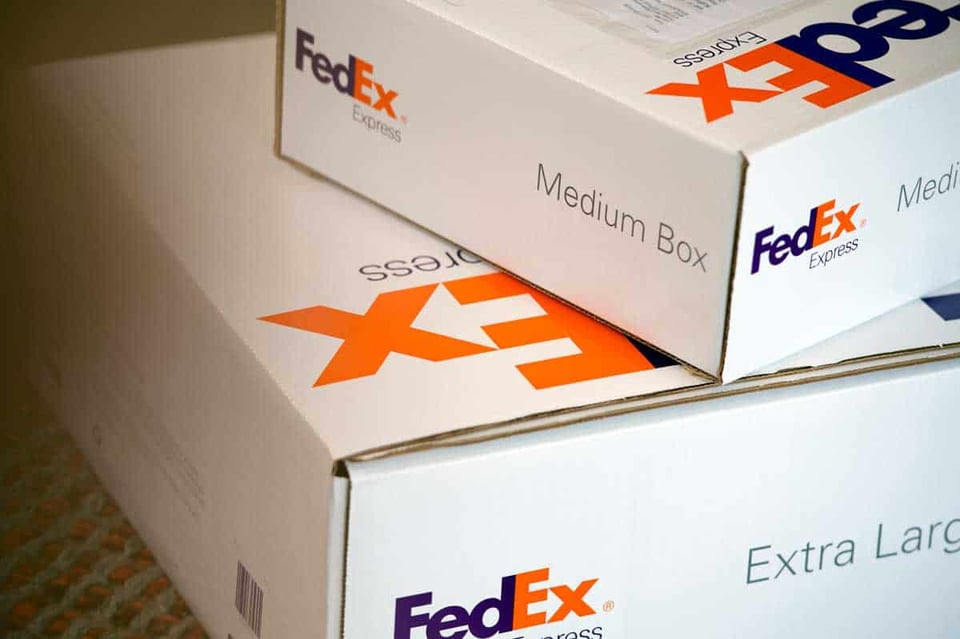
Ready to delight customers after checkout?
Trusted by 600+ brands
In this blog
TL;DR Summary
FedEx One Rate is flat-rate domestic shipping where price is set by packaging type and service level rather than weight, up to 50 lbs. On the schedule effective 20 April 2026, rates run from $12.75 for an Envelope on Express Saver or 2Day to $322.05 for an Extra Large Box on First Overnight in the National band. Express Saver and 2Day are priced identically and do not change with distance. The four faster services are banded Local, Regional, and National. Fuel, residential delivery, and Delivery Area Surcharges are all included, which is worth more than most guides suggest: at the current 28.50% express fuel surcharge, those charges add over 45% to a standard residential Express rate. One Rate is Express only, so FedEx Ground does not qualify, and no account discounts apply.
Introduction
You quote a customer $32 for two-day shipping. The invoice arrives at $47. That gap is not a mistake: it is a residential delivery charge, a Delivery Area Surcharge, and a fuel surcharge currently running at 28.50% of everything beneath it. None of the three appeared in the rate lookup.
FedEx One Rate exists to close that gap. You pick a box, you pick a speed, and the posted price is what you pay, with those charges already inside it. Weight stops mattering up to 50 lbs. That predictability matters more each year: FedEx has lifted published rates by an average of about 5.9% every January since 2023, and the surcharges layered on top have risen faster still.
This guide gives you the complete 2026 rate matrix from FedEx's own One Rate pricing schedule effective 20 April 2026, every packaging dimension in one table, a break-even analysis computed against FedEx Standard List Rates rather than estimated, and a decision framework you can run against your own order data. Most published guides still quote the February 2026 schedule, which is now superseded.
What Is FedEx One Rate?
FedEx One Rate is a flat-rate domestic shipping program available only on FedEx Express services. Your cost is set by the FedEx packaging you choose and the delivery speed you buy, not by package weight, which caps at 10 lbs for envelopes and 50 lbs for paks, boxes, and tubes. Fuel, residential delivery, and Delivery Area Surcharges are included in the posted price.
You select the One Rate packaging type when you create the label. FedEx groups destinations into three bands: Local covers zone 2, Regional covers zones 3 and 4, and National covers zones 5 through 8 plus Alaska and Hawaii. Express Saver and 2Day carry the same price in all three bands, so distance is irrelevant on those two services. The four faster options price by band.
Scope is domestic. Intra-Alaska shipments qualify, intra-Hawaii shipments do not, Express Saver is unavailable to Alaska and Hawaii, and dry ice is prohibited on every One Rate shipment. One detail catches merchants out: no account-specific discounts apply to One Rate. Whatever you negotiated on Express does not carry over.
Does FedEx One Rate Work with FedEx Ground?
No. One Rate covers six Express services only: Express Saver, 2Day, 2Day A.M., Standard Overnight, Priority Overnight, and First Overnight. FedEx Ground and FedEx Home Delivery are excluded. This is the most common misconception among new ecommerce shippers, and it matters because Ground is where most sub-5-pound direct-to-consumer volume belongs on price.
FedEx One Rate Box Sizes: All 8 Packaging Types with Dimensions
FedEx One Rate packaging, dimensions and weight limits
| Packaging type | Exterior dimensions (inches) | Max weight | Best for |
| Envelope | 9.5 x 12.5 (reusable 9.5 x 15.5; padded 9.75 x 11.5) | 10 lbs | Contracts, documents, flat media |
| Extra Small Box | 7.25 x 2.5 x 4.69 | 50 lbs | Jewellery, a single supplement bottle, small electronics |
| Pak | 10.25 x 12.75 or 12 x 15.5 (padded 11.75 x 14.75) | 50 lbs | Soft goods, apparel, fabric samples |
| Small Box | 10.875 x 1.5 x 12.375 or 8.75 x 2.625 x 11.25 | 50 lbs | Phone cases, accessories, small parts |
| Medium Box | 11.5 x 2.375 x 13.25 or 8.75 x 4.375 x 11.25 | 50 lbs | Multiple apparel items, 3 to 6 supplement bottles |
| Large Box | 12.375 x 3 x 17.5 or 8.75 x 7.75 x 11.25 | 50 lbs | Shoes, stacked books, small kitchen items |
| Extra Large Box | 11.875 x 10.75 x 11 or 15.75 x 14.125 x 6 | 50 lbs | Subscription kits, bulkier goods, trade show material |
| Tube | 6 x 6 x 38 | 50 lbs | Posters, blueprints, banners, rolled documents |
Weight limits per the FedEx One Rate schedule effective 20 April 2026: envelopes 10 lbs or less, paks, boxes and tubes 50 lbs or less. Verified 5 August 2026.
The Small, Medium, Large, and Extra Large boxes each ship in two orientations. One is flat and wide, the other deeper and squarer, and they cost the same. Shape matters for fit rather than price, so pick whichever wastes less void fill.
The Extra Small Box is the newcomer, available since 2 February 2026. At $13.40 on 2Day it sits 65 cents above the Envelope and well below the Pak, making it the cheapest rigid option in the programme. Most competing guides have not added it, and several still publish a 10 lb or 20 lb cap on packaging that FedEx rates to 50 lbs.
FedEx One Rate Pricing in 2026: Full Rate Matrix by Service and Zone Band
Express Saver and 2Day are identical in price and flat across every band, so those two columns repeat in all three tables below. That is not an error, it is how FedEx prices them.
Local band (zone 2)
| Packaging | Express Saver | 2Day | 2Day A.M. | Standard Overnight | Priority Overnight | First Overnight |
| Envelope | $12.75 | $12.75 | $36.15 | $39.90 | $49.50 | $103.50 |
| Extra Small Box | $13.40 | $13.40 | $37.95 | $43.25 | $52.75 | $106.75 |
| Pak | $16.30 | $16.30 | $42.00 | $50.95 | $60.35 | $114.35 |
| Small Box | $19.55 | $19.55 | $43.80 | $54.75 | $61.45 | $115.45 |
| Medium Box | $24.35 | $24.35 | $44.75 | $59.40 | $70.95 | $124.95 |
| Large Box | $32.05 | $32.05 | $46.55 | $71.65 | $79.00 | $133.00 |
| Extra Large Box | $42.75 | $42.75 | $58.30 | $81.30 | $93.95 | $147.95 |
| Tube | $42.75 | $42.75 | $58.30 | $81.30 | $93.95 | $147.95 |
Regional band (zones 3 to 4)
| Packaging | Express Saver | 2Day | 2Day A.M. | Standard Overnight | Priority Overnight | First Overnight |
| Envelope | $12.75 | $12.75 | $39.50 | $41.55 | $66.05 | $120.05 |
| Extra Small Box | $13.40 | $13.40 | $40.75 | $50.30 | $75.95 | $129.95 |
| Pak | $16.30 | $16.30 | $43.80 | $70.60 | $99.05 | $153.05 |
| Small Box | $19.55 | $19.55 | $44.75 | $77.05 | $107.85 | $161.85 |
| Medium Box | $24.35 | $24.35 | $48.90 | $81.30 | $122.90 | $176.90 |
| Large Box | $32.05 | $32.05 | $58.30 | $97.90 | $139.55 | $193.55 |
| Extra Large Box | $42.75 | $42.75 | $74.60 | $132.65 | $182.60 | $236.60 |
| Tube | $42.75 | $42.75 | $74.60 | $132.65 | $182.60 | $236.60 |
National band (zones 5 to 8, plus Alaska and Hawaii)
| Packaging | Express Saver | 2Day | 2Day A.M. | Standard Overnight | Priority Overnight | First Overnight |
| Envelope | $12.75 | $12.75 | $53.95 | $55.60 | $81.95 | $135.95 |
| Extra Small Box | $13.40 | $13.40 | $56.85 | $66.30 | $97.10 | $151.10 |
| Pak | $16.30 | $16.30 | $63.70 | $91.30 | $132.40 | $186.40 |
| Small Box | $19.55 | $19.55 | $73.60 | $101.75 | $148.20 | $202.20 |
| Medium Box | $24.35 | $24.35 | $93.00 | $105.80 | $167.65 | $221.65 |
| Large Box | $32.05 | $32.05 | $116.50 | $146.70 | $193.05 | $247.05 |
| Extra Large Box | $42.75 | $42.75 | $168.60 | $203.85 | $268.05 | $322.05 |
| Tube | $42.75 | $42.75 | $168.60 | $203.85 | $268.05 | $322.05 |
Source: FedEx One Rate pricing, effective 20 April 2026. Published rates with no account-specific discounts applied. Express Saver is unavailable to Alaska and Hawaii; 2Day A.M. and Standard Overnight are Hawaii outbound only. Verified 5 August 2026.
Two patterns deserve attention. Express Saver and 2Day never change with distance, so a Medium Box costs $24.35 whether it travels 40 miles or 2,800. And the spread between cheapest and dearest cell is wide: $12.75 to $322.05, a factor of 25. Guides quoting a ceiling near $110 are using an old Priority Overnight figure and missing First Overnight altogether.
FedEx has raised published rates about 5.9% each January for several years, with mid-year adjustments layered on top, and the One Rate schedule itself moved in April. Check FedEx's rate changes page before you build these numbers into a checkout.
What Surcharges Are Included in FedEx One Rate, and What Is Not
Yes, FedEx One Rate includes fuel surcharges, residential delivery surcharges, and Delivery Area Surcharges in the flat rate. Those charges will not appear separately on your invoice for a One Rate shipment. Other accessorials still bill on top.
Included in the posted price:
-
Fuel surcharge, currently 28.50% on domestic express for the week of 3 August 2026
-
Residential delivery surcharge, $6.95 per package in 2026
-
Delivery Area Surcharge, including the extended rural tiers
Billed separately:
-
On-call pickup
-
Saturday delivery
-
FedEx Delivery Signature Options, including adult signature
-
Additional declared value above the $100 included liability
-
Address and account corrections
Now quantify it, because the usual estimate of $8 to $12 per package is badly out of date. Take a residential Express shipment with a $30 base rate. Residential adds $6.95. Fuel is assessed on the transportation charge plus applicable accessorials, so 28.50% applies to $36.95 and adds $10.53. The bundle is worth $17.48 against a $30 base, or 58%. Ship into a Delivery Area Surcharge zip code and it climbs further. On a One Rate label, none of it appears.
Worth knowing: one currently ranking guide states that fuel surcharges still apply on top of One Rate pricing. That contradicts the FedEx schedule, which lists fuel among the included charges. If your invoice shows a separate fuel line on a One Rate shipment, that is a billing error worth disputing.
When Does FedEx One Rate Save You Money? A Real Break-Even Analysis
Published answers to this question disagree wildly, from 4 to 7 lbs at one competitor to 10 to 15 lbs at another. Both are wrong, and for the same reason: they compare the One Rate price against a bare standard base rate without adding the residential fee and fuel that One Rate already includes. Gross up the standard side properly and One Rate wins far earlier than anyone is publishing.
The table below compares the One Rate Medium Box against FedEx Standard List Rates for the same service, grossed up with the $6.95 residential charge and 28.50% fuel.
Break-even weight, One Rate Medium Box vs standard rates, residential delivery
| Service | Local (zone 2) | Regional (zones 3 to 4) | National (zones 5 to 8) |
| Express Saver | Wins at 1 lb | Wins at 1 lb | Wins at 1 lb |
| 2Day | Wins at 1 lb | Wins at 1 lb | Wins at 1 lb |
| Standard Overnight | Wins at 1 lb | Wins at 1 lb | Wins at 1 lb |
| Priority Overnight | From 3 lbs | From 2 to 7 lbs by zone | From 2 to 4 lbs by zone |
| First Overnight | From 6 lbs | From 3 to 11 lbs by zone | From 3 to 6 lbs by zone |
Method: One Rate Medium Box price against FedEx Standard List Rates effective 5 January 2026, updated 1 June 2026, plus $6.95 residential and 28.50% fuel applied to the combined standard figure. Ranges reflect the spread within each band, the earlier figure applying to the more distant zone. Computed 5 August 2026.
The 2Day result surprises people, so here is the arithmetic. A 1 lb parcel on standard 2Day to zone 2 lists at $26.46. Add residential and fuel and it invoices at $42.93. The One Rate Medium Box on 2Day is $24.35 in every band. One Rate wins by $18.58 on the lightest, shortest shipment in the table, and the gap widens with distance because One Rate does not move. At zone 8 that same standard parcel reaches $69.29 against the unchanged $24.35.
Overnight is where standard rates can still win, and only at low weights. Watch the Priority Overnight crossover in zone 2. At 2 lbs the standard route lists at $45.82 and invoices at $67.81 once residential and fuel are added, beating the $70.95 One Rate Medium Box by $3.14. At 3 lbs the same calculation reaches $73.17 and the flat rate takes over. The window where standard wins is two pounds wide.
My read: if you ship 2Day or Express Saver to residential addresses in FedEx packaging, One Rate is close to a default and the break-even question barely arises. If you ship First Overnight to nearby business addresses, price it per shipment. One caveat carries real weight, though. These comparisons use published list rates, and if you hold an Express contract discounting 25% or more, your negotiated rate applies to standard shipments and never to One Rate, which can flip every row above.
The Overstuffing Warning: How FedEx Re-Rates a One Rate Package
Overstuff a One Rate package and FedEx does not throw you out of the programme. It re-rates the shipment as a One Rate box priced on the package's overall cubic volume. The documented triggers are specific: an Envelope measuring more than 3 inches along its shortest side, or a Pak measuring more than 5 inches. Stuff an Envelope past 3 inches and a $12.75 label reprices to a box rate, which on National First Overnight means $135.95 or more.
A second trigger gets missed: exceed 50 lbs and the shipment leaves One Rate entirely, billing at standard Express rates on dimensional weight and zone. FedEx also warns that if shape or dimensions change in transit it may adjust the packaging type and the charge after the fact.
One widely repeated warning does not apply here. FedEx introduced cubic volume triggers on 12 January 2026, with Additional Handling above 10,368 cubic inches and Oversize above 17,280. The largest One Rate package, the Extra Large Box, is roughly 1,404 cubic inches. You cannot reach those thresholds inside One Rate packaging, so the cubic volume rules are a standard-rate concern rather than a One Rate one.
Prevention: close the flap without pressure before taping, keep a 3 inch gauge at the packing bench for envelopes and a 5 inch gauge for paks, and never reinforce the outside of the packaging to make contents fit.
FedEx One Rate vs USPS Priority Mail Flat Rate vs UPS Simple Rate
The three domestic flat-rate programmes compared
| Feature | FedEx One Rate | USPS Priority Mail Flat Rate | UPS Simple Rate |
| Max weight | 10 lbs envelope, 50 lbs otherwise | 70 lbs | 50 lbs |
| 2026 price range | $12.75 to $322.05 | About $12.91 to $34.00 retail | Ground from about $10.45 |
| Delivery speed | 1 to 3 business days | 1 to 3 business days | 1 to 5 business days |
| Own box allowed | No, FedEx packaging only | No, USPS flat rate packaging only | Yes, any box to 1,728 cubic inches |
| Surcharges included | Fuel, residential, DAS | No fuel or residential charged at all | Fuel, residential, DAS |
| Ground option | No, Express only | Not applicable | Yes |
| APO, FPO and military | No | Yes, at a lower rate | No |
| Account discounts apply | No | Commercial pricing available | Varies by account |
| Best for | Dense parcels, cross-country speed, rural residential | Light parcels, military addresses, price sensitivity | Branded packaging, ground economics |
USPS retail rates effective 12 July 2026. UPS Simple Rate prices across five cubic-volume tiers and figures are approximate. Verified 5 August 2026.
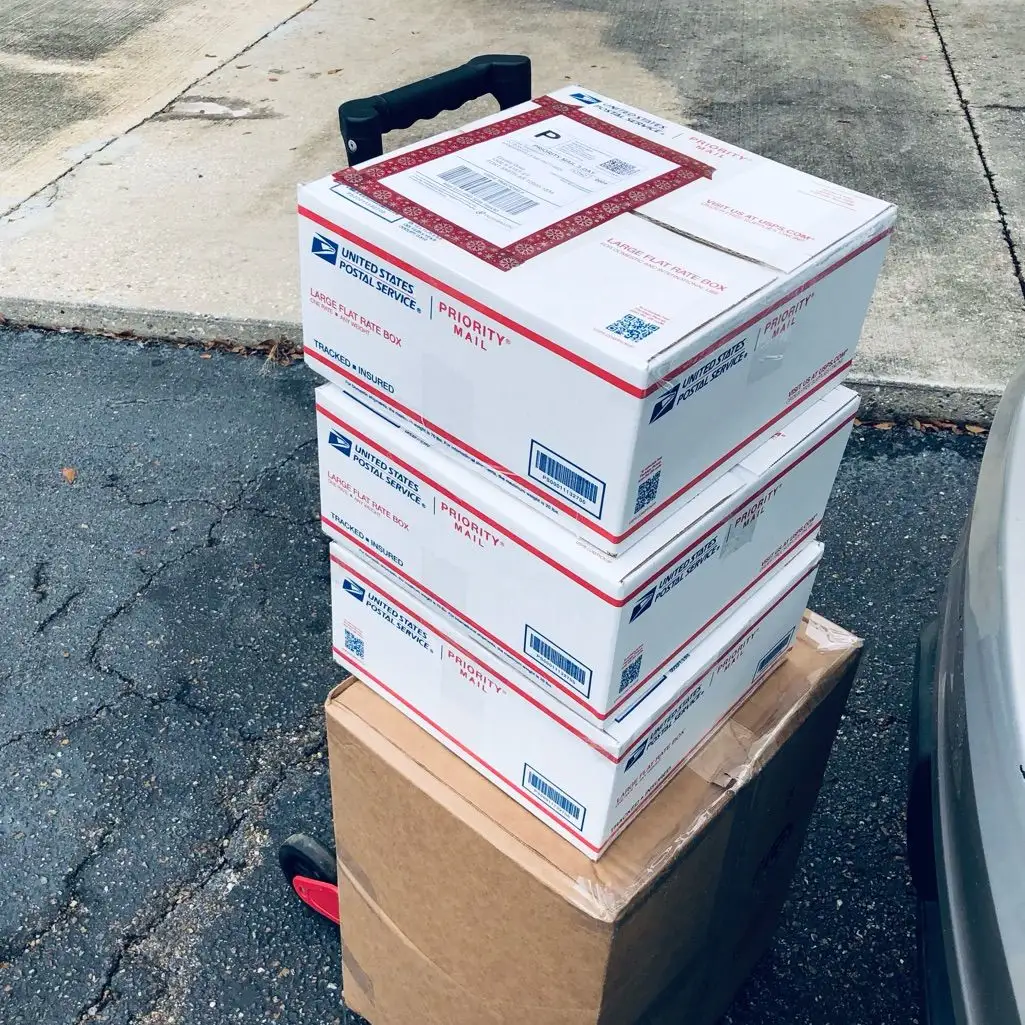
Read it this way. USPS Flat Rate owns the low end: a Medium box at $24.80 retail, roughly $21.17 commercial, with no fuel or residential charge and 70 lbs of headroom. It is also the only one of the three serving APO and FPO addresses. UPS Simple Rate is the only programme that lets you ship in your own branded box, which decides it for subscription brands, and the only one with a ground option. FedEx One Rate buys speed: guaranteed Express transit with the surcharge stack already inside the price.
Is FedEx One Rate Worth It for Your Business?
Score yourself against the six statements below. Each yes is a point.
-
Your typical parcel fits a One Rate box without forcing the flap
-
You ship 2Day or Express Saver rather than Ground for a meaningful share of orders
-
Most deliveries go to residential addresses
-
You ship into rural zip codes where Delivery Area Surcharges apply
-
One to three day delivery is an expectation you are already meeting
-
You have no FedEx Express contract, or your discount sits under about 20%
Scoring: four to six points and One Rate should be your default for Express volume. Two to three and it is worth rate-shopping per order. Zero to one and the programme is not built for your profile.
Skip One Rate entirely if any of these is true:
-
Your parcels weigh under 3 lbs and are not urgent, where Ground or USPS wins on price
-
You hold an Express discount above roughly 25%, since no account discount applies to One Rate
-
You ship to APO, FPO, or international addresses
-
Your product needs custom packaging, which disqualifies it outright
How to Get Free FedEx One Rate Boxes
-
Sign in to your FedEx account, or open a free business account first.
-
Open the FedEx supplies catalogue and filter for One Rate packaging.
-
Add the sizes you need. All One Rate packaging is supplied at no cost.
-
Place the order and expect delivery in roughly five to seven business days.
-
Alternatively collect from a FedEx Office location, subject to local stock.
You cannot substitute your own box, and you cannot print a One Rate label onto standard FedEx packaging. The packaging type is chosen at label creation and has to match what leaves your bench. Order quantities are capped per order rather than per account, so a growing operation should reorder on a schedule rather than waiting for the shelf to empty. Stock the two orientations of your most-used box, since the price is identical and the fit decides which one saves you void fill.
How ClickPost Helps You Manage FedEx One Rate Across Every Shipment
One Rate is one lane in a mixed carrier mix. The same catalogue that ships a 12 lb Medium Box cross-country on 2Day also ships a 9 oz item belonging on Ground and a bulky item belonging in your own box on UPS Simple Rate. Deciding that order by order, by hand, is where the savings quietly disappear.
ClickPost sits between the store and the carriers and turns that decision into a rule. Carrier selection logic can be written directly, routing anything that fits a Medium Box to One Rate on 2Day while sending sub-3-pound orders to a cheaper ground service, evaluated at label creation rather than by a packer guessing. Because One Rate eligibility depends on packaging type rather than weight, the rule engine checks the dimensions your warehouse actually recorded.
After dispatch, branded tracking, proactive delay alerts, and delivery milestone messaging run through one layer regardless of which carrier moved the parcel, which matters when a single order profile spans three flat-rate programmes. Invoice reconciliation then closes the loop, flagging re-rated One Rate shipments in the month they occur. That is the only reliable way to catch a packing bench that has started overstuffing envelopes.
Disclosure: ClickPost publishes this blog. Every rate, dimension, and effective date above comes from FedEx published sources, cited so you can verify each independently.
FedEx One Rate Quick-Reference Checklist
-
Package weighs 50 lbs or less, or 10 lbs or less for an Envelope
-
Destination is a US domestic address, not APO, FPO, or international
-
Shipment uses FedEx One Rate packaging, not a custom box
-
Contents fit without forcing the closure, and an Envelope stays under 3 inches thick
-
Service selected is one of the six Express levels, never Ground
-
No dry ice, and no special services that bill separately
-
The One Rate price beats your grossed-up standard rate for that weight and band
Why FedEx Built One Rate, and Why It Still Fits
When FedEx launched the programme in 2013, the executive who introduced it summed up the pitch in a line that still describes it: customers "can add to the box without adding to the cost". That was Raj Subramaniam, then head of marketing at FedEx Services and now the company's president and chief executive.
The backdrop has shifted since. Subramaniam told analysts in June 2026 that FedEx is "gaining profitable market share in the most premium verticals" of the economy. For a small shipper without negotiating power, a published flat rate that already absorbs the surcharge stack is one of the few pricing structures that does not move against you while the carrier is pushing yield.
Frequently Asked Questions About FedEx One Rate
What are the sizes of FedEx One Rate boxes?
There are eight packaging types: Envelope, Extra Small Box, Pak, Small Box, Medium Box, Large Box, Extra Large Box, and Tube. The Extra Small Box measures 7.25 by 2.5 by 4.69 inches and the Extra Large 11.875 by 10.75 by 11 inches. Envelopes cap at 10 lbs, everything else at 50 lbs.
Is FedEx One Rate cheaper than regular FedEx shipping?
For residential shipments on 2Day and Express Saver, almost always, because One Rate includes fuel and residential charges that add over 45% to a standard rate. On Priority Overnight it wins from roughly 2 to 7 lbs depending on zone. If you hold an Express discount above 25%, your contract rate may win instead.
Does FedEx One Rate include fuel surcharges?
Yes. Fuel, residential delivery, and Delivery Area Surcharges all sit inside the posted One Rate price and will not bill separately. Signature options, Saturday delivery, on-call pickup, declared value above $100, and address corrections are charged on top. A separate fuel line on a One Rate invoice is an error.
Can I use my own box for FedEx One Rate?
No. One Rate requires FedEx One Rate packaging, selected at label creation, and you cannot print a One Rate label onto a standard FedEx box. If custom or branded packaging matters, UPS Simple Rate is the only major flat-rate programme permitting your own box, up to 1,728 cubic inches.
How much does FedEx One Rate cost per box size?
On Express Saver and 2Day, prices are flat nationwide: $12.75 Envelope, $13.40 Extra Small Box, $16.30 Pak, $19.55 Small Box, $24.35 Medium Box, $32.05 Large Box, and $42.75 for Extra Large Box or Tube. Faster services price by Local, Regional, or National band and run considerably higher.
What is the FedEx One Rate break-even weight by zone?
On Express Saver, 2Day, and Standard Overnight, One Rate beats grossed-up standard rates from 1 lb in every band. On Priority Overnight the crossover falls between 2 and 7 lbs depending on zone, and on First Overnight between 3 and 11 lbs. Distance moves the crossover earlier, not later.
Is FedEx One Rate cheaper than UPS Simple Rate?
They solve different problems. UPS Simple Rate starts lower, around $10.45 on Ground, and allows your own packaging up to 1,728 cubic inches. FedEx One Rate has no ground option but covers six Express service levels with guaranteed transit. For branded boxes or ground economics choose UPS, for speed choose FedEx.
How do I set up FedEx One Rate in Shopify?
Shopify does not expose One Rate natively. Connect FedEx through a shipping platform or multi-carrier layer supporting One Rate packaging types, map each product to an eligible box in your catalogue, then create a rate rule selecting One Rate when the parcel fits. Test with a live label before publishing rates at checkout.
FedEx One Rate in 2026: The Bottom Line
One Rate earns its place for a narrower reason than most guides give. Weight ceasing to count helps on dense parcels, but the real value is that the posted price already contains the three charges that turn a tidy quote into an untidy invoice, and at a 28.50% fuel surcharge those charges have grown faster than base rates for three years running. Pick your box, check it against the grossed-up standard rate for your band, and watch the envelope thickness. If you carry a deep Express contract, run the comparison anyway, because that is the one profile where One Rate reliably loses.




We use cookies to keep the site working, understand usage, and improve your experience. Learn more
Always active for essential site performance and security.
Enables anonymous usage analysis to refine our services.
Used to present relevant promotions and advertising.