.png?width=193&height=27&name=ClickPost%20Logo%20(Blue).png)
.svg)
.svg)
.svg)
.svg)
.webp?width=286&height=206&name=ROI%20Calculator%20(2).webp)
.svg)
.svg)
.svg)
.svg)
.svg)
.svg)
.svg)
.svg)
.svg)
.webp?width=286&height=206&name=Frame%201171276203%20(11).webp)
.svg)
.svg)
.svg)
.svg)
.webp?width=286&height=206&name=ROI%20Calculator%20(3).webp)
.svg)

.svg)
.svg)
.svg)
.webp?width=286&height=206&name=ROI%20Calculator%20(4).webp)
Branded Tracking Page WISMO: Can It Reduce Support Calls?


Ready to delight customers after checkout?
Trusted by 600+ brands
In this blog
TL;DR Summary
WISMO inquiries consume 30–60% of e-commerce support queues and cost brands thousands monthly in agent time, burnout, and lost retention. Proactive post-purchase infrastructure can deflect the vast majority of these tickets without adding headcount.
-
WISMO Cost Reality – 400 calls monthly costs $2,864 before hidden costs
-
Deflection Benchmarks – branded pages cut WISMO 40–75% when done right
-
Proactive Notifications – pairing alerts pushes deflection toward 90 percent
-
Agent Burnout Link – repetitive WISMO work drives costly frontline turnover
-
ROI Formula – plug orders times rate times cost to find savings
-
Logo-Only Pages Fail – raw carrier events barely outperform carrier portals
Introdcution
If 30 to 60 percent of your support tickets are customers asking, “Where is my order?”, you already know how quickly WISMO can take over the queue. Now, the usual solution is a branded tracking page. But whether it actually reduces those calls depends on what the page shows customers and how well it handles changes in the delivery journey.
Consider a mid-sized brand shipping 10,000 orders a month with a 4 percent WISMO rate. That translates to 400 incoming calls, emails, chats, or WhatsApp messages about order status alone. Based on ContactBabel’s 2025 benchmark of $7.16 per inbound call, those 400 WISMO calls could cost around $2,864 a month before you account for agent time, team morale, or the CSAT impact of a queue filled with the same question.
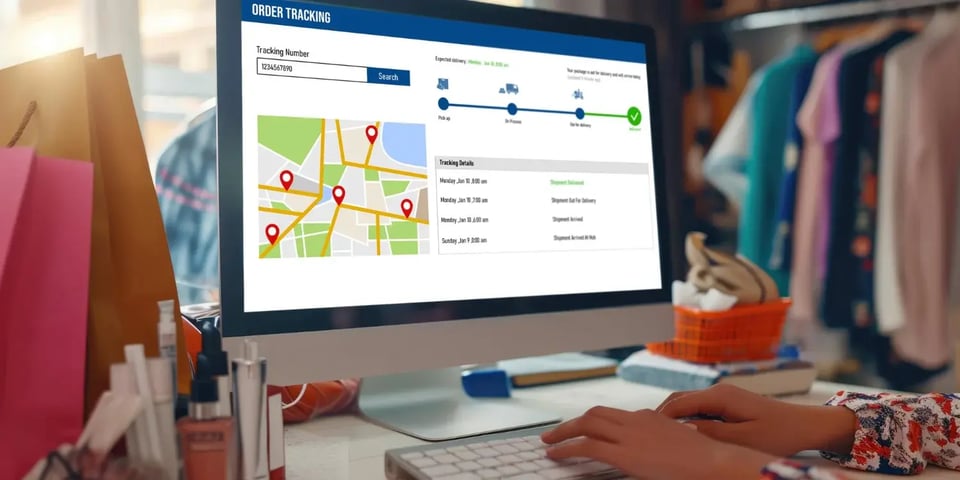
Here is the direct answer to the title question. A branded tracking page is an order-status experience hosted on your own domain that shows customers real-time shipment events, a dynamic estimated delivery date, and proactive delay alerts, so they can answer "Where is my order?" without contacting support. Well-implemented, a branded tracking page reduces WISMO calls by 40 to 75 percent. Poorly implemented, it does not, and this article covers the difference in specific terms.
This piece delivers two things that competing guides tend to skip. First, the ROI math you can bring to your CFO in one page. Second, an honest breakdown of the exception scenarios where a branded tracking page alone still won't stop the phone from ringing.
The Real Cost of WISMO: What the Ticket Count Doesn't Show
Every WISMO ticket comes with two costs. The obvious one shows up in your support budget. The other is felt by your CX team every day but rarely makes it onto the CFO’s spreadsheet.
The ticket math
The WISMO rate formula is:
WISMO Rate = (Total WISMO Tickets ÷ Total Orders Shipped) × 100
A healthy WISMO rate is under 2 to 3 percent. Industry average runs 4 to 8 percent, and high-volume DTC brands with no post-purchase infrastructure often sit above 10 percent. For example: 8,000 orders shipped multiplied by a 5 percent WISMO rate is 400 tickets.
Multiply by an $8 average cost per contact and you land at $3,200 a month, or roughly $38,400 a year, from a single support category that is almost entirely preventable.
The hidden cost your ticket count doesn't show
Answering the same "where is my order?" question 40 to 60 times a day is a leading driver of support-agent burnout, and burnout drives turnover. Gartner's customer service research has consistently flagged repetitive low-complexity work as the top predictor of frontline attrition, and SHRM's benchmarks on employee turnover cost place total replacement cost at roughly 50 to 200 percent of annual salary once recruitment, training, and productivity ramp are included. WISMO deflection is a support cost play and a team-retention play, and the retention math often dwarfs the ticket-cost math for teams already running hot.
The Numbers Your CFO Needs: WISMO Reduction Benchmarks and ROI
Deflection ranges depend on what the page actually does. A branded tracking page alone deflects 40 to 75 percent of standard WISMO inquiries. Paired with proactive shipment notifications, the range extends toward 60 to 90 percent.
Salesforce's State of Service research and Forrester's customer experience research both place self-service resolution among the highest-ROI moves a support organization can make, and WISMO is the single most deflectable ticket type on that list.
Here is the comparison that puts the real trade-off into perspective:
| Feature | Carrier Page | Native Platform Order Status | Branded Tracking Page | Full Post-Purchase Platform |
| Brand-domain hosting | No | Partial | Yes | Yes |
| Plain-English status language | No | Partial | Yes | Yes |
| Real-time EDD | No | No | Yes | Yes |
| Proactive delay alerts | No | No | Depends | Yes |
| Exception-specific messaging | No | No | Depends | Yes |
| WISMO deflection rate | ~0% | 10 to 20% | 40 to 75% | 60 to 90% |
| Revenue upsell capability | No | No | Depends | Yes |
| Analytics dashboard | No | No | Depends | Yes |
Fill-in-the-blanks ROI in two lines:
Monthly WISMO Cost = Monthly Orders × WISMO Rate × Cost Per Ticket Monthly Savings = Monthly WISMO Cost × Deflection Rate
Here’s how the numbers play out for a mid-sized brand: 15,000 orders × 5 percent WISMO rate × $8 per ticket × 60 percent deflection = $3,600 a month saved, or roughly $43,200 a year. Plug your own numbers in.
If your ticket cost is closer to $12 (phone-heavy support) or your WISMO rate is above 5 percent, the annual savings scale into the $80,000 to $150,000-plus range without changing anything else in your operation.
What Your Branded Tracking Page Must Actually Do to Deflect Calls
A branded page that just applies your logo to raw carrier scan events is barely better than sending customers to the carrier portal. Six things separate a page that deflects calls from a page that only looks like it should.
1. Translate carrier events into plain English
"IN_TRANSIT" and "DEPARTED SORT FACILITY MEMPHIS TN" are carrier system events, not customer communications. Every tracking status must answer the implicit customer question: is this normal, and is it on time? "Your order is moving through our distribution network and is on track for delivery by Thursday" deflects calls. Carrier jargon generates them.
2. Show a live, accurate estimated delivery date
Static delivery estimates from the order confirmation email become liabilities the moment a package runs a day late. A tracking page with a dynamic EDD that recalculates against actual carrier scans eliminates the single most common WISMO trigger, which is a customer refreshing the page after the promised date has passed with no update in sight.
3. Send proactive alerts before customers check
Customers return to a tracking page multiple times per order across the delivery window. It's one of the highest-attention moments in the whole customer journey, and every visit is a potential support ticket if the page can't answer the question. Proactive SMS or email alerts on status changes, especially delays, turn a reactive check into a resolved concern before the customer reaches for the phone.
4. Handle exceptions with action-oriented messaging
A generic "there may be a delay" message will not prevent a call about a failed delivery attempt or a customs hold. Exception-specific messaging that names the event and gives the customer the next action, for example "We attempted delivery Friday at 2:14 PM. No one was home. Here is how to reschedule:", deflects the ticket that vague language would have generated.
5. Embed a contextual FAQ for common follow-ups
Common questions vary by shipment stage. "Is it normal for tracking not to update for 24 hours?" is an in-transit question. "What do I do if the carrier says delivered but I don't have my package?" is a post-delivery question. Both should appear inline on the tracking page at the relevant stage, not buried in a help center article a customer has to hunt for.
6. Provide a clear escalation path
When self-service fails, the page should offer a frictionless "contact support" option. This reduces WISMO frustration while routing the calls that do come through to agents who are already loaded with order context, which cuts average handle time on the tickets that remain.
When a Branded Tracking Page Won't Be Enough
Even a well-built branded tracking page still generates calls in three specific scenarios. Naming them honestly is what separates a real ROI case from a vendor pitch.
Delivery exceptions: Roughly one in ten packages encounters some form of exception across the delivery lifecycle: failed attempts, address issues, customs holds, weather delays. These require customer action, not just status information.
A tracking page cannot reschedule a redelivery or correct an address on the customer's behalf, so exception-handling capabilities layered on top of the page (automated action options embedded in the page, or triggered via notification) are required.
The processing gap: When a shipping label is created but the package has not yet been physically scanned by the carrier, tracking shows no movement for 12 to 36 hours. That produces a wave of "my tracking number isn't working" contacts that a standard branded page won't prevent unless it explicitly names the pre-scan window, for example "Your order is being packed. Carrier tracking will activate once we hand it off, usually within 24 hours."
"Delivered but not received": A customer whose tracking shows "Delivered" but who has no package needs resolution, not information. This category requires human or AI-assisted intervention, an investigation, and often carrier claim work. A self-service page can only capture the report; it cannot close the loop.
The lesson is not to skip the branded page. It is to plan the escalation layer that catches what the page can't.
Branded Tracking Page Implementation Checklist
Use this seven-item checklist before signing off on any branded tracking page launch.
-
Confirm brand-domain hosting. The page must live on your own domain, not the carrier's or a third-party subdomain a customer wouldn't recognize as yours.
-
Translate all carrier status events into plain-English customer language before publishing. Any status a customer wouldn't understand at a glance is a WISMO trigger.
-
Implement a dynamic EDD. Static dates from the order confirmation are a liability; the EDD on the tracking page must recalculate in real time against carrier scans.
-
Configure proactive notifications for at minimum: "order shipped," "out for delivery," and "delay detected." Email plus SMS or WhatsApp is the standard modern stack.
-
Build exception-specific messaging for the five most common exception types: failed delivery, address issue, customs hold, weather delay, and lost package.
-
Embed a contextual FAQ by shipment status stage, so common questions get answered inline instead of driving a customer into search or into your queue.
-
Add a visible support escalation path. Do not hide the "contact us" option. A customer who can escalate easily is measurably less frustrated than one who feels trapped.
How ClickPost Turns a Branded Tracking Page Into a Full WISMO Solution
Sections 4 and 5 lay out the complete WISMO stack: a page that does the six deflection jobs, plus a layer that handles the three exception categories. ClickPost is built to cover both.
1. Branded Tracking Page with intelligent status translation.
ClickPost normalizes shipment events across over 600 carriers into consistent, plain-English customer-facing language. The customer sees "Your order is in transit and on track for delivery by [date]" regardless of which carrier is handling the shipment or what language that carrier's API returns. This closes the "logo on top of raw carrier data" trap identified in Section 4.
2. Post-Purchase Upsell on the Tracking Page.
Because customers return to a tracking page several times across the delivery window, the page is among the highest-engagement surfaces in the entire customer journey. ClickPost lets brands use that attention for personalized product recommendations, referral incentives, and loyalty prompts, converting a support cost center into a net-positive revenue asset without any incremental ad spend.
3. Tracking API for operations and support teams.
For teams building custom experiences or integrating tracking data into existing CRM and support platforms, ClickPost's Tracking API surfaces normalized, real-time shipment data. Support agents see the same information the customer sees, and average handle time on the tickets that do escalate drops accordingly.
The result reframes the tracking page from a support-cost line item into a dual-outcome investment: fewer WISMO tickets and higher post-purchase revenue per order, measured against the same platform fee.
See how ClickPost's branded tracking page works on your own carrier mix. Our team can walk you through a live setup measured against your current WISMO rate.
The Bottom Line
A branded tracking page reduces WISMO calls, but only when it does the actual work of replacing the information vacuum, not when it just applies brand aesthetics to a carrier data feed. The ROI case for a Head of Support running 400 to 1,000 WISMO contacts a month is straightforward: 40 to 75 percent deflection on tickets that cost $5 to $12 each adds up fast, and the retention effect on your support team compounds it further.
The tighter question is what version to build. A page that only solves the aesthetic problem generates the same calls in a nicer wrapper. Talk to us about ClickPost's branded tracking page if you want to see what a full-stack build looks like against your current WISMO rate.
Frequently Asked Questions
What is a branded tracking page?
A branded tracking page is an order-tracking experience hosted on the retailer's own domain that shows customers real-time shipment status, an estimated delivery date, and proactive delay alerts, without redirecting them to a carrier portal. Unlike generic carrier pages, it uses the retailer's visual identity and translates carrier scan events into customer-friendly language.
What percentage of ecommerce support tickets are WISMO?
WISMO inquiries represent 30 to 60 percent of total ecommerce support volume, making them the single largest ticket category for most online retailers and the highest-return target for self-service investment.
How much does a WISMO call cost per ticket?
WISMO contacts cost roughly $5 to $12 per interaction depending on channel. Phone is the most expensive, live chat sits mid-range, and email or self-service is the lowest. Multiply your monthly WISMO volume by the applicable channel cost to size your annual WISMO spend.
How do I calculate my WISMO rate?
WISMO Rate = (Total WISMO Tickets ÷ Total Orders Shipped) × 100. A healthy benchmark is under 2 to 3 percent. Most mid-size ecommerce brands without post-purchase infrastructure run between 4 and 8 percent, and the number spikes further during peak-season windows.
What is the difference between a branded tracking page and a carrier tracking page?
A carrier tracking page lives on the carrier's domain, displays raw scan events in technical language, and carries the carrier's branding. A branded tracking page lives on the retailer's domain, translates events into plain English, shows a live EDD, and keeps the customer inside the brand experience end to end.
Can a tracking page replace a customer support agent for order inquiries?
For standard "where is it?" inquiries, yes: a well-implemented branded tracking page with proactive notifications deflects 40 to 75 percent of WISMO contacts without any agent involvement. Delivery exceptions, "delivered but not received" cases, and lost-package claims still require human or AI-assisted resolution.
What should a branded tracking page include?
At minimum: plain-English carrier status translation, a dynamic EDD, proactive delay notifications, exception-specific messaging, a contextual FAQ by shipment stage, and a visible escalation path to support. The 7-item checklist above spells out the full list.
Does a branded tracking page work for multi-carrier shipping?
Yes, but only if the platform normalizes carrier data across every carrier you use. Brands running 3 to 10 or more carriers need a solution that maps each carrier's event taxonomy to consistent customer-facing language; otherwise the translation quality is only as strong as your worst carrier's data feed.





We use cookies to keep the site working, understand usage, and improve your experience. Learn more
Always active for essential site performance and security.
Enables anonymous usage analysis to refine our services.
Used to present relevant promotions and advertising.