.png?width=193&height=27&name=ClickPost%20Logo%20(Blue).png)
.svg)
.svg)
.svg)
.svg)
.webp?width=286&height=206&name=ROI%20Calculator%20(2).webp)
.svg)
.svg)
.svg)
.svg)
.svg)
.svg)
.svg)
.svg)
.svg)
.webp?width=286&height=206&name=Frame%201171276203%20(11).webp)
.svg)
.svg)
.svg)
.svg)
.webp?width=286&height=206&name=ROI%20Calculator%20(3).webp)
.svg)

.svg)
.svg)
.svg)
.webp?width=286&height=206&name=ROI%20Calculator%20(4).webp)
How DTC Brands Can Build Customer Loyalty During the Holidays


Ready to delight customers after checkout?
Trusted by 600+ brands
In this blog
TL;DR Summary
Holiday shoppers are the most expensive customers you will ever acquire, and up to 60% never buy again without deliberate follow-up. The fix is to treat holiday loyalty as a four-phase calendar, not a one-time campaign. In October, segment your list and build your post-purchase flow.
During BFCM, reward existing members and enroll new buyers within two hours. In December, cut WISMO tickets with proactive tracking. In January, reactivate the holiday cohort between day 20 and day 35, before re-acquisition cost climbs back toward your original CAC.
The move most brands miss is returns. A return routed to an exchange keeps the revenue on your books, while a poor returns experience sends 71% of consumers elsewhere. The brands that win on holiday loyalty build the post-purchase infrastructure that turns acquisition cost into repeat revenue.
Introduction
November makes your revenue chart look incredible. February tells the truth. That holiday spike is mostly strangers who bought once and never came back, and the churn is brutal. Optimove Insights found that one-time buyers can make up as much as 60 percent of a brand's monthly customers in fashion and beauty, depending on category. Holiday shoppers sit at the sharp end of it. They come in through your priciest channels, buy once, and vanish before spring.
Here is the part you need to focus on. You have a narrow window to turn that stranger into a regular. Optimove found that 39 percent of first-time customers return within a month and 62.5 percent within three.
Move fast and you keep them. Repeat buyers spend 23 percent more per order than one-timers, so the payoff compounds. Move slow and you paid peak prices to rent a customer for a single checkout.
And peak prices are real. Contentsquare's 2025 benchmark found that the cost of an online visit climbed 9 percent year over year while conversion rates dropped 6.1 percent. The holidays are now the most expensive acquisition window on the calendar. When every new buyer costs more than ever, loyalty is not a nice-to-have. It is the only math that makes Q4 pay off.
So this guide treats holiday loyalty as a calendar, not a checklist. Build in October. Activate before Black Friday. Protect in December. Reactivate in January.
Build Customer Loyalty This Holiday Season in 6 Steps: A Quick Glance
1. Segment your customer list before BFCM (VIPs, lapsed, new).
2. Launch VIP early access at least 7 days before Black Friday.
3. Trigger a post-purchase email and SMS sequence within 24 hours of delivery.
4. Optimize your returns flow as a loyalty touchpoint, not a cost center.
5. Run double-points or exclusive-access events during peak windows.
6. Execute a January reactivation campaign before the 30-day window closes.
Why is the Holiday Season a Loyalty Crisis in Disguise?
Brands pour budget into Q4 acquisition, then watch most of those customers disappear before spring. This is not a marketing failure. It points to something structural. Teams think about acquisition one way and retention another, and the gap between the two is real. The holidays only widen it. They pull in the most price-sensitive cohort of the year.
Three numbers frame the problem. According to the Emarsys Customer Loyalty Index 2024, overall brand loyalty fell from 77% in 2022 to 69% in 2024. Price sensitivity and low switching costs pulled shoppers apart from their favorite brands. The same index shows emotional loyalty built on connection rather than discounts rose 26% since 2021.
That shift tells you the opportunity is moving from points toward experience. And per Optimove's proprietary analysis, one-time buyers carry an average order value about 23% lower than repeat buyers. Every buyer you fail to convert costs you twice, once in margin and once in future value.
A D2C brand meets three types of holiday shopper. Net-new acquires carry the highest risk and lowest loyalty. Lapsed reactivations sit in the middle, with real upside if you catch them. Existing VIPs are the most loyal and, paradoxically, the easiest to take for granted during the noise of peak season.
The Real Cost of Ignoring Holiday Loyalty
Run the P&L. If your CAC is $45 and a one-time holiday buyer spends $60, the margin after fulfillment and returns is often negative. The second purchase is where the unit economics turn profitable. That is why Shopify's acquisition-cost benchmarks matter more than any single campaign metric. Treat Q4 as an acquisition sprint and you pay CAC twice. You pay once to win the customer this year, and again to re-win them next year.
The Numbers Every D2C Retention Manager Should Know Before Q4
This benchmark table gives you a scannable reference for where your holiday loyalty metrics should land against the industry.
| Metric | Industry Average |
Top Quartile D2C
|
| Average D2C retention rate | 28.20% | 40 to 45% |
| Holiday new-buyer 30-day repeat rate | ~18% |
30 to 35% (with post-purchase flow)
|
| One-time vs. repeat buyer AOV gap | 23% lower (one-time) | — |
| Loyalty program redemption (holiday) | 15 to 22% | 30%+ |
| One-time buyers who never return | Up to 60% | — |
Optimove's retention research documents the AOV gap and one-timer figures above. The 28.2% average retention rate is a widely cited cross-industry benchmark. Treat the top-quartile column as a target a disciplined post-purchase program can reach, not a guarantee.
How to Turn One-Time Holiday Shoppers into Repeat Customers?
The single most effective lever for converting a first-time holiday buyer into a repeat customer is a structured post-purchase email and SMS sequence launched within 24 hours of delivery. Brands that deploy a three-touch post-purchase flow in the 30 days after a holiday purchase report repeat purchase rates roughly double those of brands with no follow-up cadence. Without deliberate re-engagement, up to 60% of holiday acquirers make only one purchase and churn.
The 4-Phase Holiday Loyalty Playbook (October Through January)
Read enough competing articles and you notice the same thing. They hand you a list of tips. What they skip is when to use them. Holiday loyalty does not work as a menu you pick from. The moves only pay off if you make them in the right order, and the order is the whole point. So here is the timeline.
Phase 1: Pre-Season Setup (Early to Mid October)
This phase is about segmenting before BFCM, not during it. Pull your customer list into four segments: VIPs, active non-VIPs, lapsed 90 to 180 days, and holiday-only buyers from last year. Build your post-purchase flow in Klaviyo or your ESP of choice before November 1, and confirm your returns policy is visible and generous on the product page and at checkout.
The signature discount-free move is a VIP early-access preview in mid-October. A simple "You will get first access before we open to the public" costs nothing. It creates exclusivity without training anyone to wait for a sale. AI-powered customer segmentation removes the manual lift here. It sorts customers into loyalty tiers automatically, based on purchase history, recency, and engagement.
Phase 2: BFCM Window (Late November)
Three tactics own the 72-hour window. First, run double-points or bonus-credit events for existing loyalty members only, not new visitors, so your VIPs feel the difference. Second, open a post-purchase order-editing window so buyers can add items before shipment. This lifts AOV and cuts post-delivery regret. Third, fire a loyalty enrollment trigger to every new BFCM buyer within two hours of purchase, when intent and sentiment peak.
Swipe-file subject lines: "You're in: here's $10 for your next order" for points programs, or "Your order is confirmed. Here's what VIPs get next" for non-points brands.
Best Holiday Loyalty Program Strategies for BFCM
-
Double-points or bonus-credit events for existing members only.
-
Two-hour loyalty enrollment trigger for every new buyer.
-
Early-access windows for VIPs before the public promotion.
-
Post-purchase order editing to lift AOV before shipment.
-
Tiered rewards that visibly separate VIPs from first-time buyers.
Phase 3: Peak Holiday (December)
December is where customer experience makes or breaks loyalty. The WISMO (Where Is My Order) surge is the biggest CX threat of the season. Holiday WISMO queries typically spike 200 to 300% above baseline. Brands that send proactive shipment updates before customers even ask reduce inbound support volume meaningfully while lifting satisfaction.
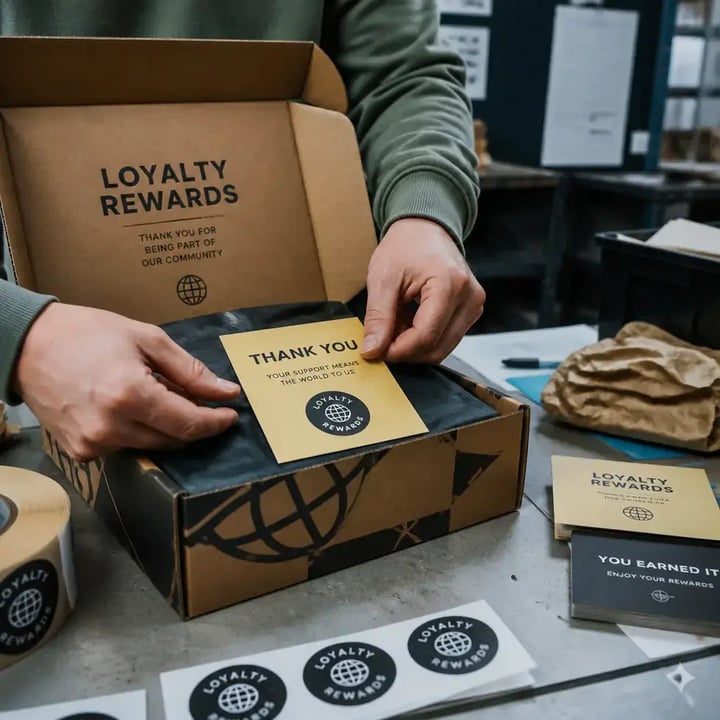
Layer in personalized packaging inserts or handwritten notes for top-LTV customers, a near zero-cost emotional loyalty signal. Then trigger a post-purchase upsell email at the "delivered" milestone with a curated "what pairs with your purchase" recommendation.
Real-time branded tracking pages address the WISMO problem and the upsell opportunity inside the same touchpoint, which is where the December revenue-protection and revenue-recovery goals converge for CX teams managing peak volume.
Phase 4: January Reactivation (The 30-Day Window)
This is the most neglected phase in the category, and the most valuable. The optimal reactivation moment for a holiday buyer lands between day 20 and day 35 post-purchase. That window opens after the initial excitement fades but before new shopping habits harden. Past day 45, win-back probability drops sharply and re-acquisition cost creeps back toward your original CAC.
Where to spend your January effort:
1. A "Thank you for being part of our year" email in week one, with a soft loyalty-points nudge.
2. A value-based SMS in week three: not a discount, but "here's what other customers who bought X love next."
3. A returns-as-opportunity sequence: if a customer initiated a December return, follow up within 5 days of processing with an exchange recommendation or store credit.
Intelligent returns routing that offers exchanges to high-LTV returners instead of refunds protects revenue and reinforces loyalty at the exact moment the customer is deciding whether to stay.
How a Good Returns Experience Drives Repeat Purchases
Here is the counterintuitive truth. A return is an act of continued engagement, not abandonment. The returns experience has become a measurable retention lever. According to the NRF and Happy Returns 2025 Retail Returns Landscape report, 71% of consumers are less likely to shop with a retailer again after a poor returns experience, up from 67% a year earlier, and 82% cite free returns as a major consideration when they buy. Get the return right and you have delivered a service experience. That is among the highest-leverage loyalty touchpoints a D2C brand has.
Three operational moves turn returns into retention:
-
Offer instant store credit at the return initiation stage, before processing, not after.
-
Segment your returns policy by persona: VIPs get free returns and extended windows automatically; new buyers get a standard policy with a loyalty enrollment offer embedded.
-
Use the returns confirmation email as an exchange opportunity: "While we process your return, here are three products customers with similar taste love."
A return that ends in an exchange or store credit keeps the revenue on your books. A return that ends in a cash refund is the only version that is a true loss. The same NRF research shows consumers increasingly value instant refunds and exchanges, which is exactly what an exchange-first flow delivers. Persona-based returns logic makes that distinction executable without manual intervention.
Holiday Loyalty Readiness Checklist for D2C Brands
Build and QA this before October 15 to avoid execution gaps during peak volume.
Pre-Season (October)
1. Segment your list into four tiers: VIP, active, lapsed, holiday-only.
2. Build or audit your post-purchase email and SMS flow.
3. Set your returns policy and confirm it is visible on the product page and checkout.
4. Schedule your VIP early-access email for mid-October.
BFCM Window
1. Activate a double-points or exclusive-access event for existing members.
2. Queue the loyalty enrollment trigger for new buyers (fire within 2 hours).
3. Enable the order-editing window for post-purchase add-ons.
December
1. Activate proactive shipping notifications to cut WISMO tickets.
2. Schedule the post-delivery upsell email for all holiday buyers.
January
1. Send the reactivation email by day 20 to 25 post-purchase.
2. Pull the holiday cohort into a 90-day LTV tracking segment.
3. Review returns data and trigger exchange recommendations to high-LTV returners.
How Clickpost Helps D2C Brands Execute Holiday Loyalty at Scale
Holiday loyalty starts in the moments after checkout, and ClickPost owns those moments. Order Editing lets customers add items before shipment, which lifts AOV.
Branded Order Tracking turns the tracking page into an owned touchpoint which cuts WISMO and opens room for post-purchase upsells. Returns and Exchanges guides returning customers toward an exchange instead of a refund.
Returns Policy Segmentation by Persona applies different returns rules to VIPs and new holiday buyers without manual work. Returns Protection flags the accounts most likely to erode profit, so brands guard margin on high-risk holiday return cohorts.
Each capability covers one phase of the post-purchase journey, so a segmented holiday loyalty strategy runs on real infrastructure. VIPs, lapsed customers, and new buyers each need experiences that fit where they are, and these touchpoints decide whether one holiday order becomes a habit. Plan your Q4 loyalty strategy now, and book a ClickPost demo to build the post-purchase infrastructure underneath it.
Conclusion
The holiday season is the highest-CAC, highest-stakes loyalty window of the year. Brands that treat it as an acquisition sprint pay CAC twice: once to acquire the customer in Q4, again to re-acquire them next year. The four-phase framework is the way out.
Build the infrastructure in October, activate for VIPs before BFCM, protect the December experience, and close the loop in January. The brands that win on holiday loyalty are not the ones who spend the most on Q4 acquisition. They are the ones who build the post-purchase infrastructure that turns that acquisition cost into compounding lifetime value.
Frequently Asked Questions
How do you build customer loyalty during the holidays?
Segment your customer list before BFCM, deliver a post-purchase experience that exceeds expectations with proactive tracking and fast resolution, and re-engage new holiday buyers within 30 days using value-based communication rather than discounts.
How do you turn one-time holiday shoppers into repeat customers?
Trigger a three-touch post-purchase sequence within 24 hours of delivery: a thank-you with tracking, a product-education email around day 7, and a soft loyalty or reorder nudge on day 20 to 25. Brands with this sequence report repeat rates roughly double the average.
What makes customers loyal to a brand during the holidays?
Frictionless experience, personalized communication, and fast issue resolution create emotional loyalty, which outperforms transactional loyalty in long-term retention. Emotional loyalty has risen 26% since 2021 even as overall brand loyalty declined.
How do you retain holiday shoppers after the season ends?
Run a January reactivation campaign between days 20 and 35 post-purchase. Lead with value-based messaging before any discount. If the customer initiated a return, prioritize an exchange recommendation within 5 days of processing.
What is the best loyalty program strategy for the holiday season?
Run double-points or exclusive-access events for existing members during the BFCM window. Enroll new holiday buyers within two hours of purchase, and use persona-based returns policies to give VIPs a materially better post-purchase experience.
How do you use email marketing to build customer loyalty during the holidays?
Build a three-touch post-purchase flow: delivery confirmation with tracking at shipment, product value content around day 7, and a loyalty or reorder prompt on day 20 to 25. Segment by tier so VIPs receive a different sequence from new buyers.
What are discount-free ways to build holiday loyalty?
Early access before public promotions, personalized packaging inserts, proactive shipping updates, handwritten notes for top-LTV customers, and community content all build emotional loyalty without training customers to wait for a sale.
How should D2C brands handle holiday returns to protect loyalty?
Offer instant store credit at return initiation, route VIPs to a premium returns policy automatically, and use the returns confirmation email to recommend exchanges. A frictionless returns experience is a documented retention lever.



We use cookies to keep the site working, understand usage, and improve your experience. Learn more
Always active for essential site performance and security.
Enables anonymous usage analysis to refine our services.
Used to present relevant promotions and advertising.