.png?width=193&height=27&name=ClickPost%20Logo%20(Blue).png)
.svg)
.svg)
.svg)
.svg)
.webp?width=286&height=206&name=ROI%20Calculator%20(2).webp)
.svg)
.svg)
.svg)
.svg)
.svg)
.svg)
.svg)
.svg)
.svg)
.webp?width=286&height=206&name=Frame%201171276203%20(11).webp)
.svg)
.svg)
.svg)
.svg)
.webp?width=286&height=206&name=ROI%20Calculator%20(3).webp)
.svg)

.svg)
.svg)
.svg)
.webp?width=286&height=206&name=ROI%20Calculator%20(4).webp)
The Ultimate Guide to USPS Priority Mail: Speed, Pricing, and More


Ready to delight customers after checkout?
Trusted by 600+ brands
In this blog
TL;DR Summary
Priority Mail is USPS’s fastest domestic shipping service for packages and envelopes, with delivery usually in 2 to 3 business days. It sits between slower, cheaper mail options and more expensive express shipping. This guide explains what Priority Mail is, how it works, what it costs, the different pricing options, and how it compares with other USPS services.
Key points:
- USPS Priority Mail typically delivers in 2 to 3 business days and includes tracking.
- It supports packages up to 70 pounds and includes up to $100 of insurance on most shipments.
- Shippers can use Flat Rate, weight-and-zone pricing, or Cubic pricing, depending on package type and shipping setup.
- USPS provides free Priority Mail packaging and free Package Pickup for eligible shipments.
- Priority Mail does not include a money-back delivery guarantee. Priority Mail Express does.
How USPS Priority Mail solves the speed vs. cost problem for ecommerce shipping
USPS Priority Mail remains one of the most practical shipping products because it solves a familiar problem. The problem is that standard shipping is often too slow for packages, while expedited shipping can be too expensive for everyday orders. USPS Priority Mail is a faster domestic option with tracking, included insurance, free packaging, and a delivery window that usually lands in the 2-to-3-day range.
That combination is exactly why it stays popular with small businesses, ecommerce sellers, and individual shippers who need speed without paying express prices.
What is USPS Priority Mail and when should you use it?
Priority Mail is USPS's domestic package service for shipments that need to move faster than regular mail without stepping up to Priority Mail Express. The service includes tracking and delivery in 2 to 3 days, and it is available for packages up to 70 pounds. That makes it a middle-ground product. That means it is quicker and more feature-rich than basic mail, but less expensive than overnight shipping.
What features and benefits does Priority Mail include?
Priority Mail includes several features that explain its staying power. USPS includes tracking, up to $100 of shipping insurance on most shipments, and free Package Pickup for eligible parcels. USPS also offers free branded packaging for Flat Rate shipments. Moreover, the service can reach PO Boxes, military addresses, and U.S. territories through the postal network.
How many days does USPS Priority Mail take to deliver?
Priority Mail generally arrives in 2 to 3 business days, though that timing is not guaranteed. It is fast enough for many business shipments and personal packages, but it remains a standard-priority service rather than a refund-backed, guaranteed product. If the shipment requires a guaranteed arrival commitment, shippers should use Priority Mail Express instead.
Source: USPS Priority Mail, USPS FAQs, USPS Insurance Extra Service
Why ecommerce brands and small businesses choose USPS Priority Mail
Priority Mail is popular because it balances convenience, price control, and delivery speed. USPS lets shippers send Priority Mail to every U.S. address, including PO Boxes, military destinations, and many remote addresses that are less straightforward for private carriers. It also avoids the residential and fuel surcharge structure that often complicates private-carrier pricing.
Some of the biggest benefits are straightforward:
- Fast domestic delivery in about 2 to 3 business days for most shipments.
- Tracking and insurance are included with most shipments, adding visibility and basic protection at no extra cost.
- Free USPS packaging for Flat Rate products, which helps reduce material costs.
- Free Package Pickup for for eligible shipments, saving time for home-based and small-business shippers
- Nationwide reach, including PO Boxes and military addresses.
For many shippers, that mix matters more than any single feature. Priority Mail is not the cheapest USPS product or the fastest, but it is often the most practical.
USPS Priority Mail vs. First-Class Mail vs. Priority Mail Express: Which should you choose?
Priority Mail makes the most sense when you need a service that is faster than standard mail and less expensive than express shipping. The easiest way to understand it is to compare it with the two USPS services people most often confuse it with: First-Class Mail and Priority Mail Express.
USPS Priority Mail vs. First-Class Mail shipping: What's the difference?
First-Class Mail is designed for postcards, letters, and large envelopes, not regular package shipping in the way Priority Mail is. First-Class Mail letters max out at 3.5 ounces, and large envelopes max out at 13 ounces. Priority Mail, by contrast, handles packages up to 70 pounds and includes tracking and insurance on most shipments.
- First-Class Mail is best for postcards, letters, and flats.
- Priority Mail is better for packages, merchandise, and higher-value shipments.
- First-Class Mail is cheaper, but it is not built around the same package-service features.
Priority Mail vs. Priority Mail Express: When is the upgrade worth it?
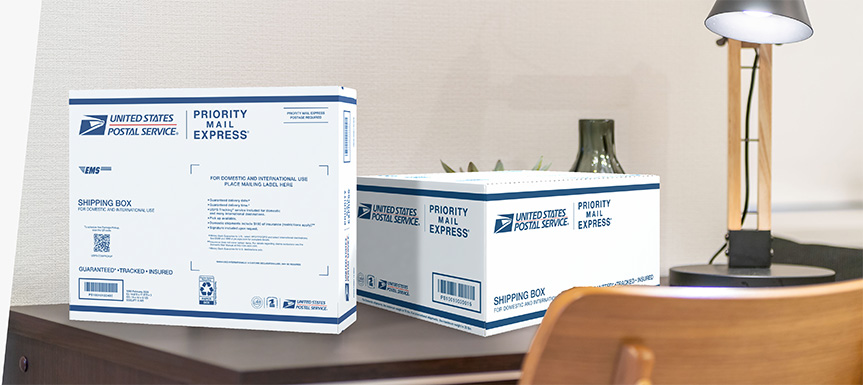
Priority Mail Express is USPS’s faster premium option. It offers 1 to 3-day delivery by 6 PM with a money-back guarantee, while Priority Mail offers 2 to 3-day delivery without that guarantee. Both include tracking and up to $100 of insurance on most shipments, but Express costs significantly more.
- Priority Mail is the better value for regular non-urgent shipments.
- Priority Mail Express is the better choice when the guaranteed delivery commitment matters.
| Feature | Priority Mail | First-Class Mail | Priority Mail Express |
| Typical delivery window | 2–3 business days | 1–5 days for letters/flats | 1–3 days by 6 PM |
| Best for | Packages and merchandise | Letters, postcards, flats | Urgent shipments |
| Max weight | 70 lbs | 3.5 oz letters / 13 oz flats | 70 lbs |
| Tracking | Included | Not the same package-tracking product | Included |
| Insurance | Up to $100 included on most shipments | Not included this way | Up to $100 included on most shipments |
| Money-back guarantee | No | No | Yes |
Priority Mail sits squarely in the middle for a reason. It is the service you use when you want speed and usefulness without paying for urgency you do not actually need.
Source: USPS Priority Mail, USPS Priority Mail Express, USPS First Class, USPS Mail Shipping Services, USPS Refunds
What are the three types of USPS Priority Mail pricing models?
Priority Mail is not one fixed pricing model. USPS effectively gives shippers three ways to use it: Flat Rate, weight-and-zone pricing, and Cubic pricing for commercial users. The right choice depends on how heavy the item is, how much space it takes up, and whether the shipper is using USPS packaging or their own box.
What is Priority Mail Flat Rate and when does it save you money?
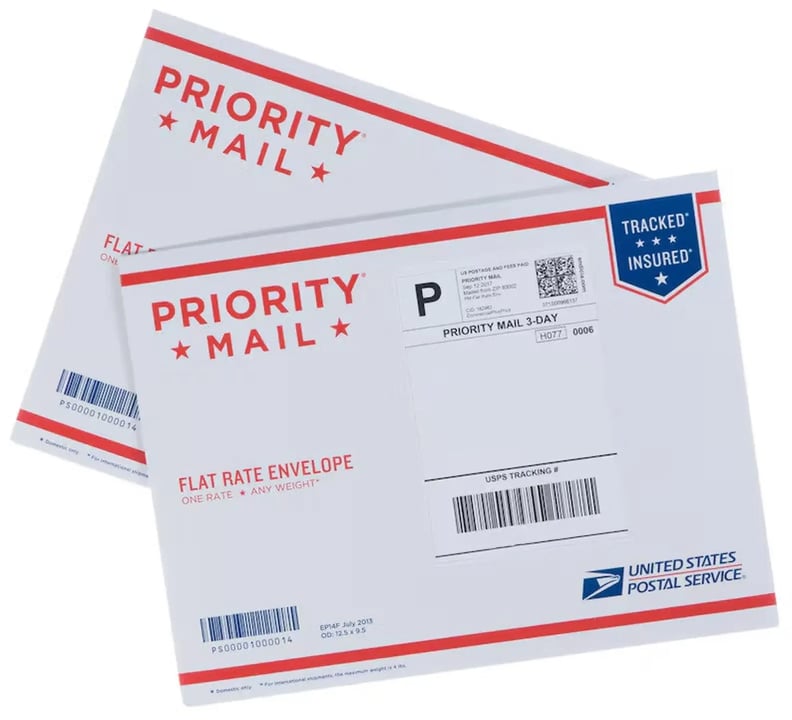
Flat Rate is the simplest version of Priority Mail. If the item fits into USPS’s branded Flat Rate packaging and stays under the 70-pound cap, it ships at a single fixed rate regardless of distance. That makes Flat Rate especially useful for dense, heavy items that fit in standard packaging.
USPS offers multiple Flat Rate envelopes and boxes, including small, medium, and large. Because the packaging is free, Flat Rate also reduces supply costs and keeps pricing easy to predict.
How does Priority Mail weight-and-zone pricing work for your own packaging?
If you use your own box, Priority Mail is usually priced by weight and destination zone. It can be a better deal than Flat Rate when the shipment is lighter, or the destination is closer. It also gives businesses more flexibility if they want branded packaging or ship products that do not fit USPS Flat Rate formats.
This service type is the one many ecommerce brands use most often because it offers greater packaging flexibility without sacrificing Priority Mail's speed and included services.
What is Priority Mail Cubic pricing and how do small businesses use it?
Priority Mail Cubic is the best fit for small, dense parcels. It uses package volume rather than just weight to determine price, which can lead to better economics for products that are compact but not especially light. USPS offers Cubic pricing through approved commercial shipping tools rather than at regular retail counters.
For frequent shippers, Cubic can be one of the most effective ways to reduce Priority Mail costs without changing delivery speed. It is less visible than Flat Rate, but often more useful for ecommerce operations with predictable parcel sizes.
Source: USPS Priority Mail, USPS Notice 123, USPS Price Change
How much does USPS Priority Mail cost in 2025?
Priority Mail pricing depends on which version of the service you are using. USPS currently lists Post Office prices starting at $10.20 for Priority Mail, with lower commercial rates available online. Flat Rate pricing is fixed by package type, while weight-and-zone pricing changes based on the parcel and destination. Cubic pricing is a commercial option for small, dense packages.
USPS Priority Mail Flat Rate pricing 2025
USPS’s current retail Flat Rate pricing includes these common starting points:
- Flat Rate Envelope: $11.95
- Small Flat Rate Box: $12.65
- Medium Flat Rate Box: $22.95
- Large Flat Rate Box: $31.50
These prices come from USPS Notice 123 and the current USPS Priority Mail pages.
USPS Priority Mail weight-and-zone pricing explained
When you use your own packaging, USPS calculates Priority Mail by weight and zone. That means a lighter package going a short distance can cost less than a flat-rate box, while a heavier package going farther may cost more. USPS provides online postage calculators and rate tables to estimate this.
USPS Cubic pricing for commercial shippers
Cubic pricing is intended for commercial shippers sending small, dense packages. It is not a regular retail-counter product, and the rates are tied to parcel dimensions and cubic tiers rather than standard retail flat-rate packaging.
How to calculate Priority Mail rates for your shipments
The cleanest way to calculate Priority Mail is to decide first whether the shipment fits Flat Rate packaging, then compare that against weight-and-zone or Cubic pricing if you qualify. USPS's online shipping tools and price tables are the most reliable source for live rates. Many multi-carrier shipping platforms also offer Priority Mail rate calculators that compare all three pricing models automatically.
How does USPS Priority Mail work step-by-step?
Using Priority Mail is fairly simple once you know which pricing model you want. USPS lets shippers use free Flat Rate supplies, create labels online, schedule pickups, and track shipments through the standard USPS network. That makes it a relatively low-friction service for both personal and business shipping.
Get free Priority Mail boxes and supplies
USPS provides free Priority Mail Flat Rate envelopes and boxes. You can pick them up at a Post Office or order them online, which reduces supply costs and makes Flat Rate especially easy to use.
Pack your items securely
The shipper still needs to package the contents properly. Even with USPS packaging, items should be secured so they do not move excessively or arrive damaged in transit. Insurance helps, but good packing still matters first.
Label the package with USPS Priority Mail shipping labels
You can buy postage and print Priority Mail labels online through USPS Click-N-Ship or at a Post Office. The label must be attached flat and clearly so the barcode can be scanned through the network. For businesses managing multiple carriers, ecommerce shipping software can generate USPS labels alongside other carrier options.
Send and track the shipment
Once the package is ready, you can drop it at a USPS location, hand it to a carrier, or schedule Package Pickup. USPS tracking follows the shipment from acceptance through delivery. Businesses can integrate parcel tracking software to monitor Priority Mail shipments alongside other carriers in a single dashboard.
Methodology and editorial note
This article was written using current USPS Priority Mail service pages, USPS FAQ materials, USPS price tables, and USPS insurance and refund resources. The aim was to explain Priority Mail as USPS currently positions it, with pricing and service descriptions aligned to current USPS sources rather than older third-party summaries.
Why USPS Priority Mail remains the practical choice for most ecommerce shipments
Priority Mail works well because it does not try to be everything. It is not the cheapest USPS service, nor the fastest. But for many packages, it gives the best mix of speed, tracking, included protection, and manageable cost. That is why it remains one of the most useful everyday shipping options from USPS. For brands looking to optimize across multiple carriers and shipping services, implementing carrier allocation strategies can help route Priority Mail shipments more efficiently based on cost, speed, and destination zones.
Frequently asked questions
What is USPS Priority Mail and how does it work?
USPS Priority Mail is a domestic shipping service that usually delivers in 2 to 3 business days and includes tracking. It is designed for packages and envelopes that need to move faster than standard mail without stepping up to express pricing.
How long does USPS Priority Mail take to deliver packages?
Most Priority Mail shipments arrive in 2 to 3 business days, depending on origin and destination. USPS treats that as a service standard, not a guaranteed delivery commitment. For guaranteed delivery timing, shippers need Priority Mail Express.
What is the weight limit for USPS Priority Mail in 2025?
Priority Mail supports packages up to 70 pounds. That gives it far more flexibility than First-Class Mail, which is built for letters and large envelopes rather than regular parcel shipping.
Does USPS Priority Mail include free packaging?
Yes. USPS provides free Priority Mail Flat Rate envelopes and boxes for eligible shipments. If you use your own packaging instead, the shipment is usually priced by weight and destination zone.
Does USPS Priority Mail charge extra for Saturday or residential delivery?
No. Priority Mail does not use the same fuel, residential, or rural surcharge model common with private carriers. USPS also delivers on Saturdays without a separate Saturday delivery surcharge. This makes Priority Mail a cost-effective option for last-mile delivery to residential addresses.
What is the difference between Priority Mail Flat Rate and weight-based pricing?
Flat-rate pricing is tied to the USPS box or envelope you use, not the shipping distance, which makes it useful for dense items. Weight-based pricing varies by weight and zone, so that it can be cheaper for lighter parcels or shorter routes.
Can USPS Priority Mail deliver to PO Boxes and military addresses?
Yes. Because it moves through the USPS network, Priority Mail can deliver to PO Boxes as well as military and many remote domestic addresses. That remains one of its clearest advantages over many private-carrier parcel services. For businesses comparing carriers, understanding which shipping carriers serve different address types is essential for order fulfillment strategy.



We use cookies to keep the site working, understand usage, and improve your experience. Learn more
Always active for essential site performance and security.
Enables anonymous usage analysis to refine our services.
Used to present relevant promotions and advertising.