.png?width=193&height=27&name=ClickPost%20Logo%20(Blue).png)
.svg)
.svg)
.svg)
.svg)
.webp?width=286&height=206&name=ROI%20Calculator%20(2).webp)
.svg)
.svg)
.svg)
.svg)
.svg)
.svg)
.svg)
.svg)
.svg)
.webp?width=286&height=206&name=Frame%201171276203%20(11).webp)
.svg)
.svg)
.svg)
.svg)
.webp?width=286&height=206&name=ROI%20Calculator%20(3).webp)
.svg)

.svg)
.svg)
.svg)
.webp?width=286&height=206&name=ROI%20Calculator%20(4).webp)
Key benefits of a Shopify returns app for store owners in 2026


Ready to delight customers after checkout?
Trusted by 600+ brands
In this blog
TL;DR Summary
The National Retail Federation projects 19.3% of U.S. online sales will be returned in 2025, representing $849.9 billion in total retail returns. Poor returns experiences drive away repeat buyers, with 71% of consumers avoiding retailers after a negative return interaction.
Automated returns portals reduce support ticket volume by handling approvals, carrier label generation, and status notifications without staff intervention. Return fraud affects 9% of all transactions, leading merchants to implement eligibility rules, return-window enforcement, and SKU-level validation. Exchanges and store credit presented alongside refunds retain purchase intent, helping merchants recover revenue that standard refund flows lose.
Introduction
Returns are now a core part of the customer experience, not a post-sale afterthought. The National Retail Federation projects that 19.3% of online sales will be returned in 2025, part of $849.9 billion in total U.S. retail returns.
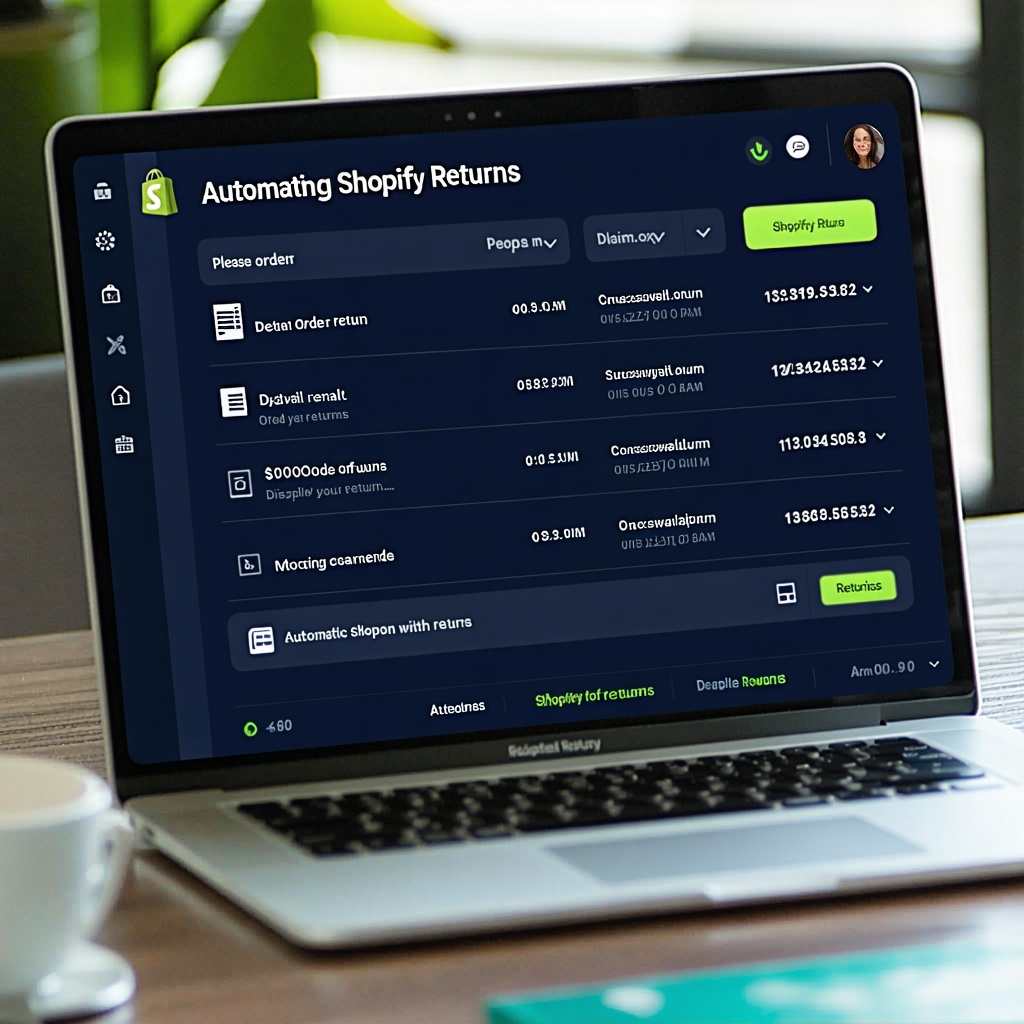
For Shopify merchants, handling that volume manually leads to slow processing, higher costs, and customer frustration. A Shopify returns app can reduce that friction by automating routine steps, improving visibility, and giving merchants more control over how each return is resolved.
Consumer expectations have moved in step. NRF found that 71% of consumers are less likely to shop with a retailer again after a poor returns experience. Reviewing ecommerce return statistics shows how directly the returns process now shapes retention and repeat revenue.
Key Ecommerce Return Metrics
-
82% of consumers say free returns matter when they shop online, and 76% prefer a return option with an instant refund or exchange.
-
Returns apps now cover self-service returns, exchanges, store credit, fraud controls, carrier labels, and analytics.
-
Automation reduces manual work and support volume, though results vary by catalog, policy, and customer base.
Why returns management matters for your Shopify store
Shopify returns are unavoidable, since customers judge fit, color, and quality from photos and descriptions rather than in person. A poorly run returns process costs revenue, frustrates shoppers, and lowers customer lifetime value. Handled well, returns give merchants clearer visibility into product performance, operational gaps, and buyer behavior. Many merchants find this work connects directly to their broader post-purchase experience strategy.
-
Customer loyalty: a clear, predictable return builds trust and supports future purchases.
-
Lower operational effort: automating approvals and refunds reduces manual support tickets. Pairing returns with a wider ecommerce automation approach cuts repetitive work across the operation.
-
Revenue retention: offering store credit and exchanges alongside refunds helps keep purchase intent inside the store.
-
Inventory accuracy: feeding returned items back into inventory management keeps stock levels correct.
-
Quality insight: return data surfaces defective products, sizing problems, and listing gaps.
-
Fraud and abuse control: NRF found that 9% of all returns are fraudulent, and 45% of consumers said bending the truth on a return is acceptable when they are unhappy with a purchase. Eligibility rules, return-window enforcement, order and SKU validation, and exception handling reduce that exposure.
What are the key benefits of using a Shopify returns app?
1. Better customer experience and loyalty
Customers expect returns that are fast, transparent, and flexible. A Shopify returns app supports that with a self-service portal, automated status updates, and multiple resolution options, which is part of building a strong post-purchase platform for ecommerce brands.
-
Self-service returns: customers start returns from your store without waiting on your support team.
-
Transparent updates: automated email and SMS notifications keep customers informed on return status.
-
Flexible resolutions: refund to the original payment method, store credit, or exchange, managed from one interface.
-
Branded experience: a return portal that matches your store keeps the experience consistent with your brand.
Example: A U.S. fashion brand lets customers request a size exchange, print a prepaid or QR-code label, drop the item at a carrier location, and receive a faster refund or store credit, all without contacting support. That convenience turns a return into a reason to buy again.
2. Lower manual work and more control over return costs
Managing returns by hand is slow and error-prone. A Shopify returns app automates approvals, label generation, and refunds, which reduces manual work and gives merchants more control over what each return costs. Pairing it with dedicated reverse logistics software removes more repetitive steps across the operation.
Automation does not automatically lower shipping cost; prepaid or free return labels can raise direct return expense. The real savings come from:
-
automated eligibility checks and approvals
-
fewer manual support interactions
-
carrier routing and consolidated reverse shipments, tied into your wider ecommerce logistics setup
-
returnless refunds where they make economic sense
-
faster inspection, restocking, and resale
-
fraud and abuse controls, which work alongside ecommerce fraud prevention software
3. Revenue retention instead of refund losses
Returns do not have to mean lost revenue. Understanding what reverse logistics is and how it works helps merchants build recovery-focused policies through exchanges, store credit, and quicker resale.
-
Exchanges and store credit: present these prominently alongside refunds, and configure eligibility and incentives to fit your category. Forcing store credit as the only default can work against customer expectations, so keep it a clear, well-placed option rather than the sole outcome.
-
Cross-sell during returns: recommend alternatives at the point of return to hold the sale.
-
Faster resale: quicker processing restocks returned goods sooner, which lowers holding cost. Brands working to reduce their ecommerce returns rate compound these savings.
4. Return data and analytics
Return data shows what drives returns and where to intervene. This is useful for brands investing in streamlining their ecommerce returns process over time. Track and act on:
-
return rate by SKU, size, and variant
-
return reason
-
customer cohort and acquisition channel
-
geography, carrier, and fulfillment location
-
refund vs. exchange vs. store credit
-
recovery value and disposition outcome
Example: A footwear brand saw a spike in returns for one size, refined its sizing guide, and cut future returns for that product. Aligning analytics with a clearly defined shipping policy also sets accurate expectations before purchase.
5. Scaling with your store
As your Shopify store grows, your returns system has to keep pace. A scalable returns platform can handle rising return volumes without the same rise in manual processing. Brands that invest in automating Shopify returns are better positioned for peak-season surges without adding headcount.
-
Growing volumes: a returns app can process high request volumes while keeping manual effort contained.
-
Ecosystem integration: connect with inventory management, email marketing, and return shipping labels to keep workflows aligned. Fashion merchants can look at how a Shopify returns app for fashion stores handles sizing and style-driven returns.
-
Adaptability: configure refund methods, policies, and workflows for final-sale items or seasonal peaks. Merchants with complex fulfillment can connect returns with order fulfillment services to keep restocking tight.
Where U.S. return policy rules fit in
The U.S. has no general federal law giving consumers a blanket right to return an online purchase for a change of mind. Retailers set their own return policies, though specific federal and state rules still apply.
The FTC’s Mail, Internet, or Telephone Order Merchandise Rule, for example, governs shipping representations and delays rather than acting as a general return-window law.
In practice, merchants should disclose return and refund terms clearly, keep policies consistent with applicable state requirements, communicate final-sale, restocking-fee, and return-window terms up front, and recognize that defective-product and warranty situations can carry separate legal rights.
How ClickPost Returns supports Shopify returns
ClickPost Returns extends Shopify returns management with a logistics-focused workflow, built for merchants running carrier, warehouse, and reverse-logistics operations at scale. It frames returns as a revenue-recovery and operations problem rather than a support task, which is why growing brands treat it as the platform they graduate to.
Instead of manual triage, it handles returns through rules-based eligibility, routing, approvals, and exception handling, with carrier connectivity that helps U.S. brands operating across multiple carriers and fulfillment locations.
Customers get a branded self-service portal that matches your store, while resolutions stay configurable: exchanges, refunds, and store credit set up as options you control rather than a single forced outcome. Returns analytics tie return reasons, high-return SKUs, recovery value, and reverse-logistics performance back to operational decisions.
ClickPost Returns offers a free plan for lower monthly return volumes, with paid plans for higher-volume merchants, so it is workable to start with and scale into. Merchants already using ClickPost's ecommerce order tracking gain visibility across both outbound and return shipments.
How to choose a Shopify returns app
Shopify’s App Store lists hundreds of returns, exchange, and warranty apps, so the category rewards careful evaluation. Note first that Shopify provides native returns capabilities; a third-party app is worth adding when you need automation, carrier connectivity, custom policies, exchange flows, or reverse-logistics functionality beyond the basics. When comparing options, weigh:
-
Shopify integration and self-service returns
-
exchange and store-credit support
-
refund automation and return eligibility rules
-
carrier integrations, including USPS, UPS, and FedEx, plus QR-code or label-free options
-
fraud and abuse controls
-
analytics, and integration with your order management software, OMS, or WMS
-
scalability and volume-based pricing
Stores with high return volumes should also check compatibility with reverse logistics companies and carriers to speed item recovery and restocking. The right app should reduce your team’s workload rather than add to it.
Conclusion: build returns that support repeat sales
Handled well, returns build trust, bring customers back, and create a feedback loop that sharpens product and operations. For U.S. Shopify merchants in 2026, returns are a revenue-recovery, reverse-logistics, fraud-management, and retention workflow, not just a customer-service step. Pairing a returns app with a wider logistics automation approach positions a store to scale while keeping customers. Brands looking to cut return-related losses further can review strategies to reduce return-to-origin rates in ecommerce alongside a stronger returns program.
Frequently asked questions
What is a Shopify returns app?
A Shopify returns app manages the return process for a store, giving customers a self-service portal to request returns, exchanges, or refunds and giving merchants a dashboard to set policies, approve requests, generate labels, and track outcomes. It automates routine steps that would otherwise be handled manually.
Does Shopify have built-in returns management?
Yes. Shopify includes native returns features for basic workflows such as accepting requests and issuing refunds. Third-party apps add more advanced automation, carrier connectivity, custom policies, exchange flows, store credit, and reverse-logistics functionality, which higher-volume merchants often need beyond what the native tools cover.
What should a U.S. Shopify store look for in a returns app?
Prioritize Shopify integration, self-service returns, exchange and store-credit support, refund automation, and eligibility rules. Also weigh carrier integrations across USPS, UPS, and FedEx, QR-code or label-free options, fraud controls, analytics, and volume-based pricing. The app should fit your category and reduce manual work rather than add to it.
Can a Shopify returns app automate refunds and exchanges?
Most can. Returns apps automate approvals, label generation, refunds to the original payment method or store credit, and exchange workflows based on rules you set. This reduces manual processing and support volume, though you keep control over eligibility, return windows, and which resolutions appear to customers.
How can returns apps help reduce return-related costs?
They reduce manual work rather than shipping cost directly. Savings come from automated eligibility checks, fewer support interactions, carrier routing, consolidated reverse shipments, returnless refunds where sensible, faster restocking, and fraud controls. Prepaid return labels can raise direct expense, so cost outcomes depend on how you configure the workflow.
Can Shopify returns apps help prevent return fraud?
They can. NRF reports that 9% of all returns are fraudulent, and returns apps help through eligibility rules, return-window enforcement, order and SKU validation, and exception handling. These controls flag high-risk requests before approval, which limits abuse without adding friction for legitimate customers.
Should Shopify stores offer refunds, exchanges, or store credit?
Offer all three and present exchanges and store credit prominently alongside refunds. Configuring incentives and eligibility helps retain revenue without forcing one outcome. The right mix depends on your category, customer expectations, and applicable policies, so keep resolutions flexible rather than defaulting everyone to store credit.
Is ClickPost Returns Plus suitable for high-volume Shopify stores?
It is built for that. ClickPost Returns Plus focuses on logistics-first returns management, with rules-based automation, multi-carrier connectivity, configurable resolutions, and reverse-logistics analytics. This suits mid-market and enterprise merchants managing complex carrier and warehouse operations, which is where it positions itself against lighter returns apps.





We use cookies to keep the site working, understand usage, and improve your experience. Learn more
Always active for essential site performance and security.
Enables anonymous usage analysis to refine our services.
Used to present relevant promotions and advertising.