.png?width=193&height=27&name=ClickPost%20Logo%20(Blue).png)
.svg)
.svg)
.svg)
.svg)
.webp?width=286&height=206&name=ROI%20Calculator%20(2).webp)
.svg)
.svg)
.svg)
.svg)
.svg)
.svg)
.svg)
.svg)
.svg)
.webp?width=286&height=206&name=Frame%201171276203%20(11).webp)
.svg)
.svg)
.svg)
.svg)
.webp?width=286&height=206&name=ROI%20Calculator%20(3).webp)
.svg)

.svg)
.svg)

.svg)
.webp?width=286&height=206&name=ROI%20Calculator%20(4).webp)
Post-Purchase Customer Care: Solutions to Boost Loyalty


Ready to delight customers after checkout?
Trusted by 600+ brands
In this blog
TL;DR Summary
For US DTC brands, the window between checkout and the second purchase is where lifetime value is built or lost. A few points of added retention can produce profit gains that no paid acquisition channel can match.
-
Branded tracking can cut WISMO support tickets by up to 60 percent.
-
Post-purchase SMS updates see open rates of roughly 90 to 98 percent.
-
With 19.3 percent of online orders returned, returns are a margin problem, not just a service one.
-
Lifting the repeat purchase rate toward 40 percent grows repeat revenue from the same ad spend by more than 40 percent.
-
Proactive delay alerts head off chargebacks and lost trust before a customer files a ticket.
-
A 5 percent lift in retention can raise profits by 25 to 95 percent.
Introduction
Repeat purchases are hard to win for DTC brands. A 2026 analysis of 156,110 DTC customers found that only 18.8 percent placed a second order within 365 days. That means roughly four out of five first-time buyers never came back. The number deserves a bit of precision.
The 18.8 percent is a strict 365-day second-order rate. It runs lower than the 25 to 30 percent blended repeat purchase rate quoted across the industry because the two measure different things. Either way the pattern holds. Most first-time buyers do not come back, and that is more than a marketing problem.
It is a post-purchase customer care problem, and it sits with the CX team. The stretch between order confirmation and the second purchase is the part of the journey CX owns, and it decides whether a hard-won acquisition becomes lifetime value or a one-time cost.
Post-purchase customer care is the full set of brand interactions after checkout. It runs across the whole post-purchase journey: order confirmation, shipment tracking, delivery exceptions, delivery, returns and exchanges, and post-delivery engagement. The goal is to build trust, catch problems early, and earn the next order.
This guide gives CX leaders three things most competitors skip: a five-part framework built for the US market, cost and volume benchmarks you can take to a CFO, and a 90-day roadmap you can start on Monday. Bain & Company research puts it plainly. A 5 percent increase in customer retention can raise profits by 25 to 95 percent, and the post-purchase window is where that lift is won or lost.
Why Do US DTC Brands Face a Distinct Post-Purchase Challenge?
Returns, Delivery Exceptions, and WISMO Are CX Problems First
Three realities shape the US post-purchase experience, and each deserves close attention from CX leaders. The first is returns. The National Retail Federation estimates that 19.3 percent of online orders were returned in 2025, a rate far higher than in-store purchases. A high return rate is rarely only a product failure. More often it is an expectation and communication failure, and communication is a CX function.
The second is delivery exceptions. Failed delivery attempts, misroutes, weather delays, and porch theft all land in the window after dispatch, while the carrier still holds or is moving the shipment.
That window is a CX intervention point. Proactive, milestone-level communication is the strongest trust signal a brand can send before the parcel even arrives, and it keeps an anxious buyer from opening a ticket or filing a chargeback.
The third is WISMO. Where-is-my-order queries often make up a large share of DTC support tickets, and during busy periods like the holidays they climb further. First-time buyers carry the most purchase anxiety, so silence between checkout and doorstep is what drives them to contact support.
Post-Purchase Care Benchmarks Every US DTC Brand Should Track
The numbers below turn post-purchase care into a business case a VP of CX can defend in a budget meeting. These are not soft metrics. Every return carries a hard reverse-logistics cost, and every WISMO ticket carries an agent-time cost.
| Metric | Industry Average | Top Quartile | Source |
| Repeat purchase rate (US DTC) | 25-30% | 40%+ | Blended DTC benchmarks |
| Second-order rate (365-day) | 18.80% | 40%+ | BS&Co 156K-customer analysis |
| WISMO share of support tickets | 30-50% | under 15% (target) | Our internal data |
| Online return rate | 19.30% | - | NRF (2025 estimate) |
| SMS message open rate | 90-98% | - | SMS industry reports |
| WISMO call reduction (branded tracking) | - | Up to 60% | Our internal data |
| NPS lift with branded tracking | - | Up to 47% | Our internal data |
Read the repeat purchase row carefully. A brand moving from a 28 percent repeat rate toward 40 percent grows the repeat revenue it earns from the same acquisition spend by more than 40 percent. That is about the most capital-efficient growth lever a brand has, and it runs entirely through the post-purchase experience.
How to Improve Post-Purchase Customer Experience in the US?
Improving the post-purchase experience in the US market takes five coordinated moves across communication, returns, support, personalization, and loyalty.
-
Send proactive order updates by SMS and email at every shipment milestone.
-
Segment returns and exchange policies by customer persona and category.
-
Use AI-assisted triage for predictable post-purchase queries.
-
Trigger personalized post-delivery engagement within 48 to 72 hours.
-
Close the loop with post-purchase feedback and a recovery workflow.
1. Proactive Order Communication by SMS and Email
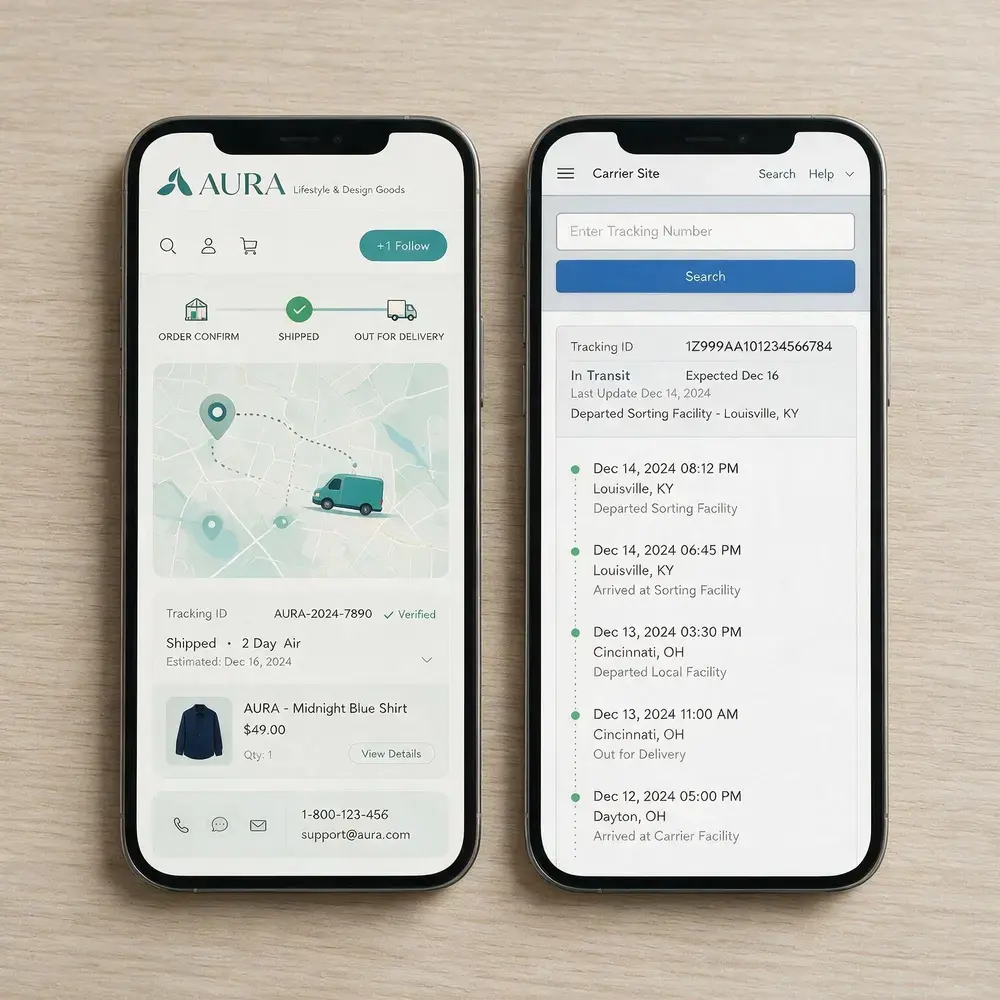
Automate status updates at every milestone, including confirmed, shipped, out for delivery, delivered, and delayed, through SMS and email rather than leaving customers to check a carrier page.
SMS open rates sit around 90 to 98 percent in industry reports, which makes it a strong channel for urgent delivery updates. Email can carry richer content and gives you more room for cross-sell.
WISMO queries can make up 30 to 50 percent of support tickets. Event-triggered updates stop many of those questions before they reach an agent. When a shipment is delayed, a proactive update with a revised delivery window reassures the customer and cuts both support tickets and payment disputes.
2. Intelligent Returns and Exchange Management
Replace a single blanket returns policy with policy segmentation by customer persona, such as first-time, repeat, and high-value, and by product category. A rigid no-questions-asked policy bleeds margin, and a punitive one loses customers.
Top-quartile brands route by persona. They offer first-time buyers an instant exchange instead of a cash refund to protect revenue while removing friction, and they give loyal customers priority processing and prepaid return labels.
Segmented policies lower the refund rate while protecting NPS (Net Promoter Score), because loyal customers feel the differentiated treatment. The NRF reports that 82 percent of shoppers consider free returns an important factor when they shop online, which makes the returns experience a real driver of conversion. ClickPost's returns and exchange workflows support this kind of persona-based routing directly.
3. AI-Assisted Support Triage for Post-Purchase Queries
Deploy a GenAI first-response layer for order status, return eligibility, refund status, and exchange requests, and escalate only emotional complaints and complex cases to human agents.
Post-purchase queries are structurally predictable, which makes them a good fit for automation. Automate the routine work like order status and eligibility checks, and send complex issues such as damaged items, delivery disputes, and repeat-customer questions to an agent who has the full order and conversation history.
4. Post-Delivery Engagement and Personalized Upsells
Trigger a post-delivery sequence, such as a review request, a usage tip, and a cross-sell, within 48 to 72 hours of confirmed delivery, personalized to the product bought. A skincare buyer gets a routine recommendation, an apparel buyer gets a style match, and a first-time buyer gets a loyalty onboarding nudge. This early, well-timed outreach is what turns a single transaction into a second order while the brand is still top of mind.
5. Closing the Loop, Post-Purchase Feedback at Scale
Collect CSAT (Customer Satisfaction Score) or CES (Customer Effort Score) at two moments, post-delivery and post-resolution, and route low scores into a recovery workflow within 24 hours. Keep feedback simple.
A two-question survey by SMS or email earns far more responses than a long form. If a customer reports a poor experience, connect them with a senior agent who already has their full order and conversation history. Feedback at scale also gives the VP of CX a live KPI dashboard instead of a monthly guess.
The US Post-Purchase Edge, Proactive Delivery and Delay Flows
Two connected flows carry most of the load for US brands: the delivery-milestone flow and the delay recovery flow.
Delivery milestone flow, in three steps
-
Trigger the flow automatically at each milestone, from label created through to delivery.
-
Send an SMS at the time-sensitive moments and an email at the content-rich ones, each with a live tracking link.
-
On the day of delivery, confirm the window and give the customer a way to reroute or hold if they will not be home, which cuts porch theft and failed attempts.
Delay recovery flow. When a shipment misses its expected window, an automated SMS and email go out quickly with the reason and a revised estimate. Customers who hear the bad news proactively are far less likely to open a ticket than those who discover the delay themselves. Left in the dark, they reach out for answers, and the support team spends its time fielding avoidable questions.
How ClickPost Delivers Post-Purchase Customer Care at Scale
Every strategy above needs infrastructure to run at volume, and ClickPost maps to the five pillars directly. The platform connects with 600+ carriers to keep customers informed throughout the order journey, with automated updates sent by SMS, email, and more at every key milestone.
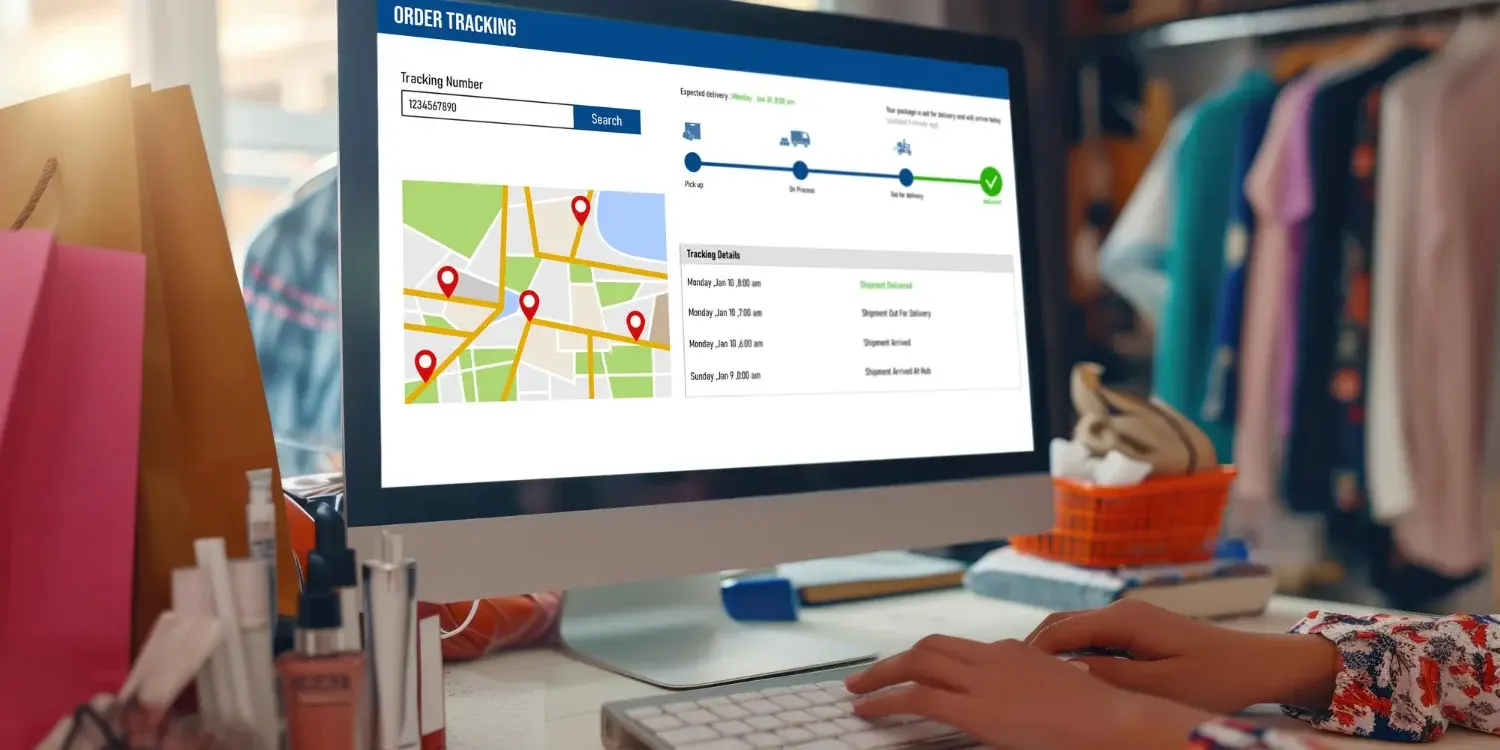
Customers also get branded tracking pages, which can lift NPS by up to 47 percent and cut WISMO calls by up to 60 percent. For returns and exchanges, ClickPost supports exchange-first logic and automated return workflows that protect revenue.
For delivery exceptions, its AI voice agent handles order confirmations and exception management to resolve routine issues quickly. ClickPost brings tracking, notifications, returns, and exception management onto a single platform, which simplifies post-purchase operations and improves the customer experience.
90-Day Post-Purchase CX Roadmap
A Head of CX can run this in three phases without a large upfront lift.
Month 1, Foundation (Reactive to Proactive)
-
Audit current WISMO ticket volume and return rate, and set baseline KPIs.
-
Activate SMS and email order status notifications at shipped and out-for-delivery.
-
Launch a two-question post-delivery CSAT survey by SMS or email.
Month 2, Automation
-
Deploy AI-assisted first response for WISMO, return status, and refund ETA.
-
Turn on the delay recovery flow for all delayed shipments.
-
Segment return policies by customer tier, such as first-time, repeat, and VIP.
Month 3, Personalization
-
Activate post-delivery engagement sequences by product category.
-
Add post-purchase upsell triggers to branded tracking pages.
-
Review the KPI dashboard, targeting a WISMO rate under 15 percent and a falling return rate.
Conclusion
Post-purchase customer care is not a support cost. It is the primary revenue-retention mechanism for US DTC brands running on high acquisition costs and modest natural repeat rates.
The CX leaders who treat it as a strategic function, with dedicated infrastructure, the right channels, and a phased roadmap, are the ones moving from the 25 to 30 percent average toward the 40 percent-plus top-quartile repeat purchase rate.
The post-purchase window, from order confirmation to post-delivery engagement, is where customer lifetime value is built or permanently lost.
FAQs
What is post-purchase customer care?
Post-purchase customer care is the support customers receive after placing an order. It includes order updates, delivery tracking, returns, refunds, and post-delivery engagement. A strong post-purchase experience builds trust, reduces support requests, and encourages repeat purchases.
How do you improve the post-purchase customer experience in ecommerce?
Improve the post-purchase experience by sending proactive order updates, offering self-service tracking, simplifying returns, using AI for routine queries, and following up with personalized engagement after delivery.
What are the key post-purchase customer journey touchpoints?
The main touchpoints include order confirmation, dispatch, delivery updates, delivery confirmation, returns or exchanges, refunds, and post-delivery interactions such as feedback requests, product recommendations, and loyalty offers.
How can brands reduce WISMO tickets in US ecommerce?
Brands can reduce WISMO tickets by sending proactive shipping updates through SMS and email, providing accurate delivery estimates, and offering self-service order tracking. This answers customer questions before they contact support.
What metrics should CX teams track for post-purchase performance?
CX teams should track WISMO rate, return rate, CSAT, repeat purchase rate, refund turnaround time, and NPS. These metrics measure both operational efficiency and customer satisfaction.
How does post-purchase experience affect customer retention?
A positive post-purchase experience builds customer confidence and increases repeat purchases. Timely communication, easy returns, and quick issue resolution help improve retention and customer lifetime value.
What tools are used for post-purchase customer support?
Most brands use shipment tracking platforms, AI-powered helpdesks, returns management software, SMS and email notification tools, customer feedback platforms, and loyalty solutions to automate and improve post-purchase support.
How do US DTC brands handle returns and post-purchase care?
US DTC brands send proactive delivery updates, offer self-service tracking, and steer returns toward exchanges or store credit where possible. This protects revenue and margin while keeping the customer experience smooth.




We use cookies to keep the site working, understand usage, and improve your experience. Learn more
Always active for essential site performance and security.
Enables anonymous usage analysis to refine our services.
Used to present relevant promotions and advertising.