.png?width=193&height=27&name=ClickPost%20Logo%20(Blue).png)
.svg)
.svg)
.svg)
.svg)
.webp?width=286&height=206&name=ROI%20Calculator%20(2).webp)
.svg)
.svg)
.svg)
.svg)
.svg)
.svg)
.svg)
.svg)
.svg)
.webp?width=286&height=206&name=Frame%201171276203%20(11).webp)
.svg)
.svg)
.svg)
.svg)
.webp?width=286&height=206&name=ROI%20Calculator%20(3).webp)
.svg)

.svg)
.svg)

.svg)
.webp?width=286&height=206&name=ROI%20Calculator%20(4).webp)
How to Prepare Your Post-Purchase Experience for Peak Season



Ready to delight customers after checkout?
Trusted by 600+ brands
In this blog
TL;DR Summary
Peak season post-purchase failures are calculable liabilities — a single WISMO ticket costs up to $12, and they can consume 80% of support volume at scale. Preparation starting in July, not December, separates teams that absorb the spike from those buried by it.
-
WISMO Cost Math – quantifies exact support cost before peak hits
-
Branded Tracking Pages – cuts WISMO volume 50–80% at source
-
Returns Policy Segmentation – blocks fraud while rewarding loyal buyers
-
Mobile Returns Gap – 18-point UX failure hiding in plain sight
-
Dual-Peak Return Calendar – January spike now rivals December volume
-
AI-Referred Traffic Surge – first-time buyers need extra post-purchase trust-building
-
July–August Start Window – integrations need 8–12 weeks to configure properly
Introduction
A single WISMO ticket costs $5 to $12 to resolve, and during peak season those tickets can climb to 30% to 80% of your entire support queue. Run that against 50,000 monthly orders and peak season becomes a five-figure monthly liability, built almost entirely from one preventable problem, customers who cannot tell where their order is.
Most guides treat this as a December fire drill. It is a planning problem that starts much earlier. Preparation that holds up begins in July or August, because tracking integrations, returns-portal testing, and policy setup each take eight to twelve weeks to configure and to train teams on.
This playbook is written for three specific people, not a generic “you.” They are the fulfillment manager who owns carrier feeds and reverse logistics, the director of ecommerce who owns the P&L, and the CX manager who owns notifications and returns runbooks. Every section flags who does what.
Two quick definitions. WISMO stands for “where is my order,” the support contacts customers open when they lack visibility. The post-purchase experience covers everything after checkout, from confirmation and tracking to delivery, returns, and retention. And peak season now runs on a dual-peak return calendar, with one return spike before Christmas and a second in January.
What's at stake when post-purchase breaks down at peak volume
The cost of doing nothing is easier to calculate than most teams expect, and it lands in three places. Start with support. Multiply monthly order volume by a peak WISMO rate of 10% to 15%, then by $5 to $12 per ticket. A store shipping 50,000 orders a month is staring at 5,000 to 7,500 avoidable contacts, tens of thousands of dollars, every month of peak.
The second cost is repurchase intent. When a delivery arrives late, half of shoppers say they are less likely to buy from that retailer again, and 6% stop buying from it entirely. Silence during the shipping window makes it worse, quietly inflating customer acquisition cost.
The third cost is fraud. Fraudulent and abusive returns made up 12% of January returns, so a blanket extended-return policy hands margin straight to bad actors. There is also a newer pressure. AI-referred holiday traffic jumped 693% year over year in 2025 (Adobe). More first-time buyers now arrive from ChatGPT and similar tools with zero brand familiarity, so the post-purchase experience has to do more trust-building work than in any prior year.
The 2026 data every ops and CX team needs before planning
Plan against current numbers, not the 2022 figures most competing guides still quote.
| Metric | Prior benchmark | 2025 reality |
| US holiday online spend | $241.4B (2024) | $257.8B, up 6.8% (Adobe) |
| Peak WISMO ticket share | ~40% of support volume | 30% to 80% of peak tickets (ReadyCloud) |
| Shipping exception rate | Not widely tracked | ~11% of all packages (project44) |
| Holiday return rate growth | Baseline | #ERROR! |
| Fraudulent / abusive returns | Lower; abusive returns nearly doubled (Signifyd) | 12% of January returns (Signifyd) |
| AI-referred holiday traffic | Negligible | #ERROR! |
| Mobile returns gap | Not tracked | 56.4% bought, 38.8% returned (Adobe) |
Two figures deserve attention before you plan. The first is the mobile returns gap. In 2025, 56.4% of holiday purchases happened on a smartphone but only 38.8% of returns did, a gap of almost 18 points and a UX failure hiding in plain sight, one where customers start a return on a phone, hit friction, and either abandon it or call support.
The second is the return-rate jump of 41% between November and December 2025 versus the same window a year earlier. As Seel chief revenue officer Laura Huddle put it, “post-purchase behavior now tells the truest story of consumer confidence.”
Five strategies to peak-proof your post-purchase experience
1. Deploy branded tracking to eliminate WISMO at the source
Carrier tracking pages and generic shipping emails leave a visibility gap, and that gap is exactly where WISMO tickets come from. Replace them with branded tracking pages and proactive notifications triggered by real shipment events such as order confirmed, shipped, out for delivery, exception detected, and delivered.
For split shipments, send a separate message per parcel labeled “package 1 of 2” so a partial delivery does not read as a lost order. Done well, proactive branded tracking cuts WISMO volume 50% to 80%, which at $5 to $12 a ticket is the fastest-payback change in the whole peak-prep stack.
2. Segment your returns policy by customer persona before volume spikes
One return policy for everyone is the wrong tool for peak season. A blanket extended window invites the 12% January fraud rate while adding friction for the loyal customers you most want to keep. Segment instead. Give VIP and repeat buyers longer windows and instant refunds, keep first-time buyers on standard terms, and flag high-frequency returners for manual review.
For gift recipients, build a separate flow that does not demand the original order number, since the recipient rarely has it. Segmentation is the one approach that lowers fraud exposure and rewards loyalty at once.
3. Activate post-purchase upsell sequences during the shipping window
The three to seven days between confirmation and delivery are the highest-attention window in the customer lifecycle, and almost nobody uses it to sell. Post-purchase and transactional flows consistently earn far higher open rates than standard marketing campaigns, per Klaviyo's benchmarks. Put product recommendations on the branded tracking page.
Sequence a day-two “complete the look” email and a day-four “customers also bought” SMS. That turns tracking, normally a cost center, into a revenue line without new engineering. ClickPost's post-purchase upsells automate the sequence.
4. Build your self-service returns portal for peak volume before October
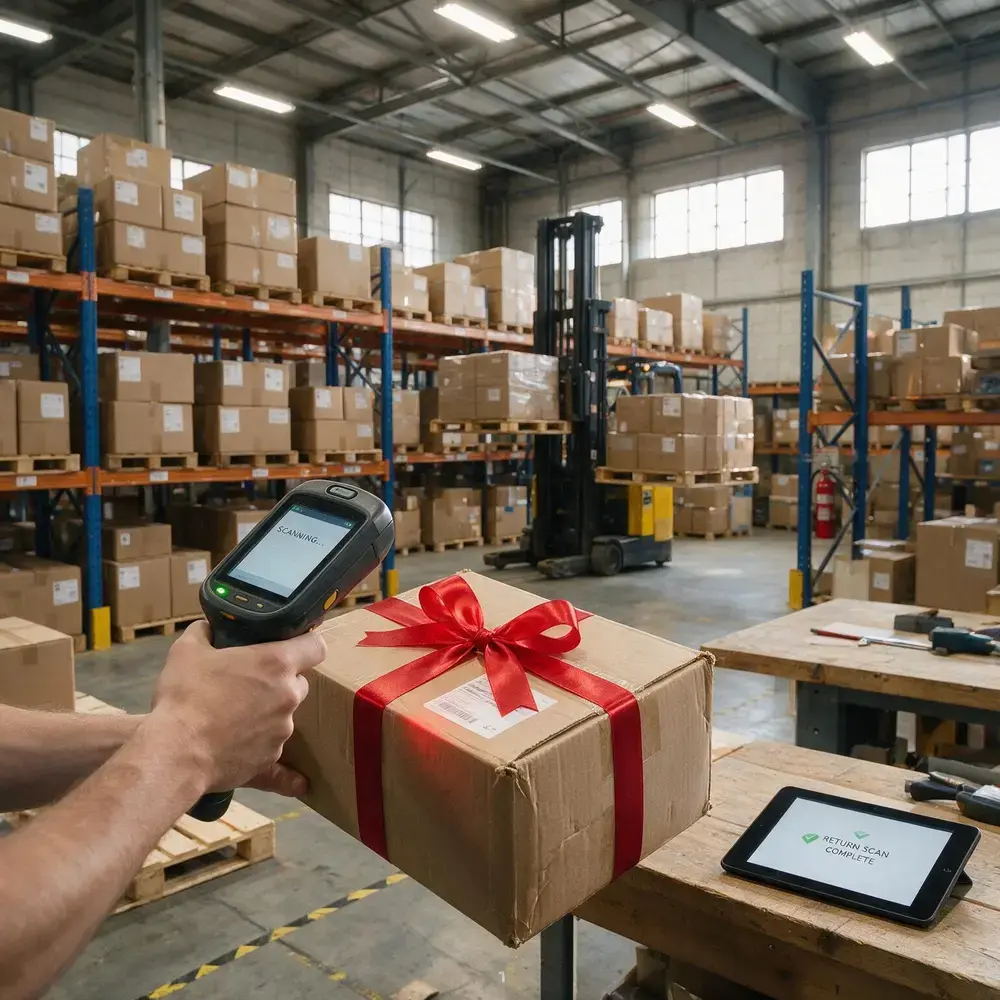
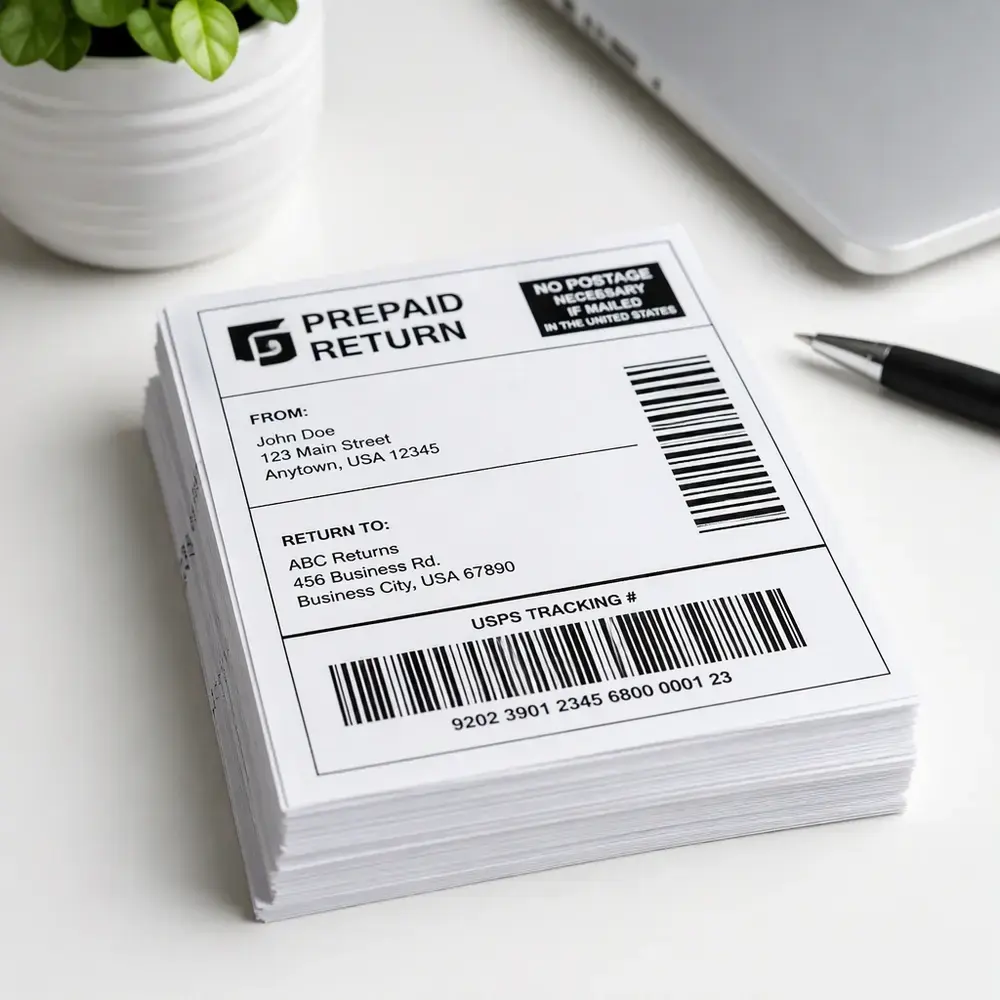
A portal that comfortably handles 500 returns a day in September will buckle at 1,200 in January if you have not tested it. Audit the daily transaction limit with your 3PL or carrier now, and expand label capacity ahead of the surge.
Then test the mobile flow specifically. With 56.4% of purchases on mobile but only 38.8% of returns processed there, most portals are losing customers who begin a return on a phone and give up. Complete a real return on your own phone; every point of friction you hit is one a customer will hit too.
5. Enable order editing to reduce pre-shipment contact volume
The cheapest return is the one that never happens. Wrong sizes and bad addresses drive a large share of peak returns, and both are fixable before dispatch. Let customers edit an order (address, size, color, quantity) inside a time-locked window, up to 30 to 60 minutes after checkout or until the fulfillment pick triggers, whichever comes first.
Surface the option right in the confirmation email so people act while they still can. This cuts inbound contacts and prevents the return in the same motion. ClickPost's order editing enables that pre-shipment correction window, a capability most post-purchase tools skip entirely.
The two peak-season crises nobody warns you about, and who owns each one
Peak season no longer produces one return wave. It produces two. The first hits before Christmas, from wrong-size gifts and early self-gifting. UPS handled a record 1.6 million returns in a single day on December 19, 2018, its first-ever pre-Christmas returns peak. The second is the familiar January wave.
As UPS chief marketing officer Kevin Warren put it, “gone are the days where returns were isolated to January.” The bind is that both overlap with peak outbound shipping, so operations teams run maximum fulfillment and maximum reverse logistics at the same time. Standard 30-day guides never plan for that.
Here is who owns each task, and when it needs to start.
| Preparation task | Fulfillment Manager | Director of Ecommerce | CX Manager | Start by |
| Branded tracking + proactive notifications | Integrate OMS/carrier feeds | Approve budget and vendor | Configure notification triggers | August |
| Returns portal volume stress test | Coordinate with 3PL/WMS | Review SLA and capacity contracts | Test mobile UX and flows | September |
| Policy segmentation by persona | N/A | Approve tiers and fraud thresholds | Build routing and agent runbooks | September |
| Order editing integration | OMS configuration | Approve feature scope | Update confirmation email copy | August |
| Post-purchase upsell sequences | N/A | Approve revenue targets | Build and test email/SMS flows | October |
| Post-peak win-back retention flow | N/A | Set LTV and repeat targets | Build segment and automation | November |
How ClickPost handles every post-purchase peak season risk
Every risk above maps to a specific part of the stack, and ClickPost covers the full arc from dispatch to retention rather than a single touchpoint.
On the outbound side, branded tracking with multi-carrier event triggers closes the visibility gap that generates WISMO, while order editing catches wrong addresses and sizes before they become returns.
On the returns side, policy segmentation applies different rules to VIPs, first-time buyers, and frequent returners, protecting margin from fraud without punishing loyal customers. Returns protection and instant exchange routing shorten the path from refund back to repurchase.
Between order and delivery, post-purchase upsells convert the shipping window into revenue, and data-driven WISMO deflection holds support cost flat as volume climbs. One platform, one post-purchase lifecycle.
Pre-peak post-purchase readiness checklist
-
Audit last peak season's WISMO ticket volume and calculate its cost (by August)
-
Configure a branded tracking page with product recommendations embedded (by September)
-
Enable proactive SMS and email triggers for shipped, out for delivery, exception, and delivered (by September)
-
Add split-shipment notification logic to the OMS (by September)
-
Stress-test the self-service returns portal at three times average daily return volume (by October)
-
Audit mobile returns UX by completing a return on a phone, then fix any friction (by October)
-
Activate order editing with a fulfillment-lock time window (by September)
-
Segment return policies by customer persona across VIP, first-time, and high-return-frequency (by October)
-
Build and schedule post-purchase upsell email and SMS sequences (by October)
-
Set up post-peak win-back automation for new Black Friday and Cyber Monday buyers (by November)
Start now: peak season rewards the prepared
Peak season rewards preparation, and preparation is a calendar problem. Brands that begin their post-purchase work in August own the season; brands that start in October spend it reacting. The split is simple. The fulfillment manager owns integrations and reverse logistics, the ecommerce director owns budget and policy, and the CX manager owns notifications, returns flows, and retention.
Assign the work now, then pressure-test it before volume climbs and rely on post-purchase platforms to cover the full lifecycle from tracking to retention.
Frequently asked questions
What is post-purchase experience in ecommerce?
Post-purchase experience is everything after checkout, from order confirmation and shipping notifications to tracking, delivery, returns, and retention messaging. During peak season it becomes the main driver of whether a first-time holiday buyer returns, because it is where most brand trust is either built or lost.
How do you reduce WISMO tickets during peak season?
Deploy branded tracking pages backed by proactive notifications for every shipment event, from confirmed and shipped to out for delivery, exception, and delivered. Giving customers real-time visibility before they need to ask deflects the questions at the source and cuts WISMO ticket volume by 50% to 80% during peak.
When should you start preparing for peak season ecommerce?
Begin in July or August, not 30 days before Black Friday. Tracking integrations, returns-portal stress tests, and policy segmentation each need eight to twelve weeks to configure, test, and train teams on. Brands that start in November are already reacting to peak instead of running it.
How do you handle returns during peak season?
Build a mobile-optimized self-service returns portal, stress-test it at three times average daily volume before October, and segment return policies by customer type. Plan for the dual-peak calendar specifically, the pre-Christmas spike from gift exchanges and the larger January wave after the holidays.
What is a good post-purchase communication strategy for the holidays?
Go past the standard three transactional emails. Trigger notifications for every shipment event, including exceptions and split shipments, across email, SMS, and a branded tracking page. Then use the shipping window, days two to five after the order, for upsell sequences that convert better than standard marketing email.
How can fulfillment teams prepare for holiday order volume spikes?
Fulfillment managers should focus on five actions:
-
Audit 3PL SLA contracts
-
Stress-test OMS, WMS, and carrier API integrations
-
Configure split-shipment notification logic
-
Validate reverse-logistics capacity for the dual-peak return surge
-
Confirm branded tracking feeds are pulling carrier data correctly
What KPIs should I track for post-purchase performance during peak season?
Track six metrics. WISMO ticket rate (share of orders that generate a contact), cost per ticket, shipping exception rate (benchmark near 11%), return rate versus last peak, mobile returns completion rate, and 90-day repurchase rate for new Black Friday and Cyber Monday buyers.
How do you convert first-time holiday buyers into repeat customers?
Use the post-purchase window to build familiarity through branded tracking pages, personalized recommendations during shipping, and an easy returns experience. Then trigger a win-back automation 14 to 30 days after delivery for buyers who have not reordered, aiming for a second purchase before the memory of the first fades.



We use cookies to keep the site working, understand usage, and improve your experience. Learn more
Always active for essential site performance and security.
Enables anonymous usage analysis to refine our services.
Used to present relevant promotions and advertising.