.png?width=193&height=27&name=ClickPost%20Logo%20(Blue).png)
.svg)
.svg)
.svg)
.svg)
.webp?width=286&height=206&name=ROI%20Calculator%20(2).webp)
.svg)
.svg)
.svg)
.svg)
.svg)
.svg)
.svg)
.svg)
.svg)
.webp?width=286&height=206&name=Frame%201171276203%20(11).webp)
.svg)
.svg)
.svg)
.svg)
.webp?width=286&height=206&name=ROI%20Calculator%20(3).webp)
.svg)

.svg)
.svg)
.svg)
.webp?width=286&height=206&name=ROI%20Calculator%20(4).webp)
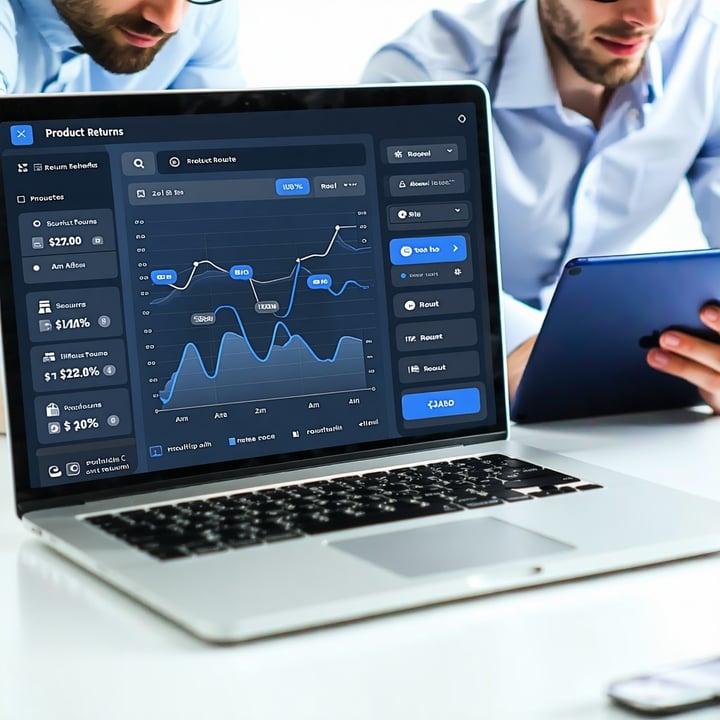
6 Key Touchpoints in the Returns Process That Drive Customer Satisfaction


Ready to delight customers after checkout?
Trusted by 600+ brands
In this blog
TL;DR Summary
Return journey touchpoints are the customer interactions that decide whether a return builds loyalty or costs you the relationship. Optimize the six moments below so that a return becomes a reason to buy again rather than a reason to leave.
-
Roughly 67% of shoppers read a retailer's return policy before buying, so pre-purchase transparency shapes conversion.
-
Salesforce found that 88% of customers are more likely to buy again after a positive service experience, which includes how you handle returns.
-
Offer more than one return method. US shoppers split their preference across drop-off, in-store, and home pickup, so a single option frustrates a large share of them.
-
About 30% of online shoppers say fast refunds are what make a return feel positive, so refund speed is worth engineering for.
-
Bonus store credit, real-time status updates by email and SMS, and quick refunds reduce post-purchase anxiety and lift repeat purchase rates.
Returns are a normal part of selling online. However well you describe a product, some customers will return items due to sizing issues, unmet expectations, or a change of mind.
Here is the part that gets missed: a return is not automatically a loss.
Returns can pressure margins, but when handled well, they build the kind of loyalty that wins customers back. Every touchpoint in the returns journey is a chance to earn trust and leave a better impression than the return itself.
This guide walks through six touchpoints in the returns journey and gives you specific ways to improve each one.
Why Return Touchpoints Matter for the Ecommerce Return Experience
Return touchpoints are the moments a customer interacts with your brand during a return. Each one shapes how the buyer sees you. Optimized well, they produce a few concrete outcomes.
1. They shape the post-purchase experience
A return runs from the moment a customer decides to send an item back to the moment the refund lands. Handle each step with clear communication and reasonable speed, and a frustrating moment turns into a reassuring one. A customer who feels heard tends to stay. The post-purchase experience starts the instant someone decides to return, not when the refund clears.
2. A smooth returns process protects brand image
A smooth return can help rebuild a customer’s trust after a disappointing purchase. If any part of the process feels confusing, slow, or difficult, that frustration can shape how they see the brand. By making each step simple and reliable, customers are more likely to feel confident buying from you again. Even when the original purchase shook their confidence, a clean return signals a brand worth buying from again. This matters most in e-commerce logistics, where customers cannot inspect a product before buying.
3. Optimized touchpoints drive loyalty and retention
A return is a frustrating moment for a shopper. Handle the touchpoints well, and they become opportunities to earn repeat business. Salesforce reports that 88% of customers are more likely to buy again after a positive service experience, and how you run a return is part of that. Reading up on e-commerce return statistics shows how much the returns experience feeds long-term retention.
4. A better return experience is a competitive advantage
When most brands compete for the same attention, a clean return experience is a way to stand out. Meet expectations at each step,p and you stay ahead of retailers that treat returns as an afterthought. Brands that invest in a strong post-purchase strategy for e-commerce tend to outperform those that do not.
Top 6 Touchpoints in an Ecommerce Return Journey (And How to Optimize Each One)
Now, let’s look at the six points in the return journey that have the biggest impact on customers and how you can improve each one.
1. Optimize your return policy page for pre-purchase transparency
The return experience starts before the purchase. Shoppers commit more readily when the terms are clear up front. Keep them guessing, and the odds of a return, and of friction during it: climb. Around 67% of shoppers read the return page before buying. A clearly written shipping and return policy that sets honest expectations is one of the more effective ways to reduce friction and prevent avoidable returns.
A few practices make the difference:
-
Publish a well-defined return policy: State the return window, eligibility, item condition, the process, and who pays for return shipping. Allbirds is a useful US example: its 30-day, no-questions-asked trial lets customers wear shoes outdoors and still return them, and the policy pairs quick facts with FAQs to head off confusion.
-
Write detailed product descriptions: Online shoppers cannot touch the product, so provide high-quality images, dimensions, materials, and sizing guides to reduce the guesswork that drives returns. Shoppable video helps more.
-
Collect and display reviews: PowerReviews found that 77% of shoppers seek out sites with ratings and reviews. Reviews set realistic expectations for the product in real life, reducing returns driven by surprise.
2. Simplify return initiation
A return already signals disappointment. Force the customer to email several departments to start one, and that disappointment deepens. Brands using automated Shopify returns or a self-serve portal report a lower customer-service load at this stage. To simplify initiation:
-
Add a visible "Start a return" option on the site or app.
-
Keep the number of steps to a minimum.
-
Automate the return-request review.
-
Offer live chat for the cases that need a human.
Do this, and you improve the odds that a customer buys again, even after a purchase that did not work out.
3. Offer more than one return method
The return method itself is a touchpoint. A process that feels restrictive amplifies disappointment, and shoppers have different preferences. Offering options helps: drop-off at a carrier point, in-store returns, parcel lockers, or home pickup. Brands working with reverse logistics companies are better placed to offer this range across regions.
Preference varies by shopper and generation, so no single method satisfies everyone. Carrier drop-off remains the most common choice for US shoppers, while a meaningful share, particularly younger buyers, prefer home pickup for its convenience. The point is to give customers control over how they return items, which increases satisfaction. The right reverse logistics software lets you manage several return methods without adding operational complexity.
Adidas is a practical US example: it offers home pickup in some cases and varies the return options based on where the item was bought.
4. Send real-time return status updates
Customers want updates on a return the same way they want tracking on a delivery. Clear status, whether a return is approved, in transit, received, or refunded, lowers anxiety by confirming the item is not lost or ignored.
Updates also set expectations on pickup timing and refund timing. And a timely update signals respect, which reinforces satisfaction and loyalty. Use multiple channels: email, SMS, and WhatsApp for e-commerce, where customers are already active, so they hear from you where they already are. The same proactive tracking notifications that work for outbound shipments work for returns.
5. Use bonus credit and loyalty perks during returns
Bonus credit and loyalty perks during a return do more than mark a touchpoint. Instead of a straight refund, offer bonus store credit, extra points, or a targeted discount to make the return worth something. It tells the customer you value them and turns disappointment into a reason to come back. This works well for direct-to-consumer brands that build relationships directly with buyers.
Bonus credit appears as an additional charge on the refund. Weighed against the repeat purchases and retention it drives, though, it often improves cash flow rather than draining it. Treat it as a retention lever, not a giveaway.
6. Offer fast, flexible refunds
The wait for a parcel becomes an anxious wait for a refund. Customers check their inboxes for the update. What matters is not only issuing the refund but how smoothly you do it. Invesp reports that about 30% of online shoppers say fast refunds make the return experience pleasant.
A common refund window runs about 5 to 10 business days, depending on the payment method, and slower windows erode goodwill. Supporting several payment and refund options, credit and debit cards, PayPal, Apple Pay, and store credit, gives customers flexibility and builds trust. The right returns management software can automate refund processing and reduce wait times, which directly affects whether a customer shops with you again.
Glossier, a US beauty brand, is a fair example: it accepts several payment methods, including credit and debit, PayPal, Apple Pay, and store credit, and refunds to the original payment method within roughly 5 to 10 business days. For merchants mapping out how return labels and refund workflows fit together end-to-end, a well-organized system is essential.
How to Refine Return Touchpoints With Returns Management Technology
Each touchpoint is a defining moment, and optimizing all six is how a return becomes a loyalty driver. The right technology makes it easier to run at scale. ClickPost is a multi-carrier shipping platform built to manage the logistics process from pre-purchase through post-purchase and refunds. It comes pre-integrated with 500+ logistics partners worldwide and supports end-to-end shipping operations.
Its returns product, ClickPost Returns and Exchange, is built to optimize the touchpoints above and cut avoidable return costs. Brands weighing Shopify returns apps or enterprise-grade tools will find that it handles returns at scale. Its main capabilities:
-
A customizable self-serve return portal so customers can start returns without contacting support.
-
Automated approvals and rejections to speed up the review step.
-
Automated return and refund notifications across channels to reduce anxiety and support loyalty.
-
Policy personalization and return-window configuration for tighter control.
-
Price-difference adjustments during exchanges.
-
Store credit, gift cards, and exchange nudges that keep revenue and support cash flow.
Rather than take the vendor's word for it, brands can request a walkthrough with sample data to see how the portal and notifications behave against their own return volume.
Every Return Counts, and So Does Every Touchpoint
Returns are about retaining customers as much as retrieving items. From the moment a shopper reads the policy to the moment the refund lands, every touchpoint either reinforces trust or spends it. Optimized well, these interactions reduce your return rate over time and turn an unhappy customer into a repeat one. Brands that apply e-commerce automation across returns workflows can maintain that consistency without adding headcount.
The right technology belongs in your stack for this. If you want to see how ClickPost handles each step, book a demo and walk through your own return scenarios.
Frequently Asked Questions
What is a return touchpoint?
A return touchpoint is any moment a customer interacts with your brand during a return, from reading the policy before buying to initiating the return, choosing a return method, receiving status updates, and getting the refund. Each one shapes how the customer views your brand afterward.
Which return touchpoints affect customer satisfaction the most?
Pre-purchase policy clarity, easy return initiation, flexible return methods, timely status updates, and refund speed tend to carry the most weight. Refund speed is especially visible: Invesp reports that about 30% of shoppers say fast refunds are what make a return feel positive.
How long should an e-commerce refund take?
A common window is roughly 5 to 10 business days, depending on the payment method and the customer's bank. Credit and debit refunds often take longer than store credit. Faster is better, and automating refund processing helps compress the wait.
Do shoppers really read the return policy before buying?
Most do. Around 67% of shoppers read a retailer's return policy before purchasing, per Invesp, and some 2026 surveys put the figure higher still. A clear, easy-to-find policy reduces hesitation at checkout.
Why offer more than one return method?
Preference varies by shopper and generation. Carrier drop-off is the most common choice for US shoppers, but a meaningful share, particularly younger buyers, prefer home pickup. Offering drop-off, in-store, locker, and pickup options gives customers control, which raises satisfaction.
Does bonus store credit during returns actually pay off?
It can. Offering bonus credit or points instead of a flat refund may look like an added cost, but it tends to boost repeat purchases and retention, which can improve cash flow over time. Treat it as a retention lever and measure the repeat-purchase rate to confirm it works for your margins.
How do real-time return updates help?
They reduce post-purchase anxiety by confirming the return hasn't been lost and by setting expectations for pickup and refund timing. Sending updates by email, SMS, and other channels customers use reinforces that you respect their time, which supports loyalty.
Can returns software reduce return-related costs?
Automating initiation, approvals, notifications, and refunds cuts manual handling and shortens refund cycles. An independent 2026 operations studies report finds that automated return processing can reduce labor hours per return by roughly 30%. Results depend on your volume and current process, so benchmarking against your own data is worthwhile before committing.
What role does the product page play in returns?
A lot happens before the sale. Accurate descriptions, sizing guides, high-quality images, video, and visible reviews reduce the mismatch between expectation and reality that drives many returns, especially in apparel and footwear.




We use cookies to keep the site working, understand usage, and improve your experience. Learn more
Always active for essential site performance and security.
Enables anonymous usage analysis to refine our services.
Used to present relevant promotions and advertising.