










Top 7 US Shipping Carriers Compared: 2026 Guide



Ready to delight customers after checkout?
Trusted by 600+ brands
In this blog
TL;DR: Top US Shipping Carriers for 2026
-
USPS Ground Advantage: cheapest for lightweight residential parcels, with no residential fee. A temporary 8% increase and holiday pricing apply until January 17, 2027.
-
UPS: best for heavy B2B and long-zone ground, with the top national on-time score in December 2025 (97.2%).
-
FedEx: best for overnight and time-definite delivery.
-
Amazon Shipping: low-fee residential ground with no residential surcharge, open to every business since May 2026.
-
OnTrac: coast-to-coast alternative for metro-dense order files.
-
GLS US: regional specialist for West Coast and Texas lanes.
-
DHL Express: international and cross-border volume.
Bottom line: No single carrier wins every shipment. Rank carriers on landed cost per shipment profile, not the 5.9% headline increase.
Every one of the top US shipping carriers raised prices in 2026, and the 5.9% headline hides most of it. UPS lifted its Ground residential fee to $6.50 in its 2026 accessorial update, fuel ran at 29.5% in late October, and USPS stacked a temporary 8% increase on its January prices.
We start with a side-by-side table, then rank the seven carriers and dig into the numbers that decide your invoice:
-
A master comparison table of UPS, FedEx, USPS, DHL Express, Amazon Shipping, OnTrac and GLS US.
-
Profiles of each carrier with a verdict, plus a worked landed cost example for one 2026 package.
-
Routing rules, a selection checklist and answers to the questions shippers ask most.
Which US shipping carrier is best in 2026? It depends on the shipment profile. USPS Ground Advantage is usually cheapest for lightweight residential parcels. UPS suits heavy B2B and long-zone ground. FedEx leads on overnight and time-definite delivery. Amazon Shipping charges no residential fee across the contiguous US, while OnTrac and GLS US undercut national carriers inside their own networks.
Top 7 US Shipping Carriers Compared: True Cost, Performance and Contract Data (2026)
On-time figures are ShipMatrix's December 2025 results against each carrier's own commit times. Carriers without audited data are marked rather than estimated.
| Carrier | Best for | 2026 price change | Residential fee | On-time (Dec 2025) | Coverage | Claims window |
| UPS | Heavy B2B, Zones 5 to 8 ground | 5.9% avg GRI | $6.50 Ground; $7.00 Air | 97.2% | All 50 states plus international | 60 days |
| FedEx | Overnight, time-definite | 5.9% avg GRI | $6.45 Ground and Home Delivery | 95.3% | All 50 states plus international | 60 days US; 21 days international damage |
| USPS | Lightweight residential | +6.6% PM, +7.8% GA, plus temporary 8% | $0 | 94.1% | Every US address, incl. PO boxes | Varies by service |
| DHL Express | International, cross-border | Per DHL 2026 rate guide | Not applicable (domestic limited) | Not comparable | 220+ countries and territories | 30 days (verify per product) |
| Amazon Shipping | Residential ground, 2 to 5 days | Contracted rates; peak $0.50 to $0.75 | $0 | No audited data | Contiguous US, about 95% of population | 60 days |
| OnTrac | Metro-dense residential | Per contract | $0 on Ground Essentials | No audited data | Coast to coast; 75%+ of US shoppers (per OnTrac) | Per service guide |
| GLS US | West Coast and Texas lanes | Per contract | Per contract | No audited data | Western US plus major Texas metros | Per service guide |
Sources: ShipMatrix via Logistics Management (on-time), Supply Chain Dive (UPS and FedEx surcharges), FedEx claims help page, Amazon Shipping help center, OnTrac and GLS US announcements.
Two columns deserve more weight than they usually get:
-
Residential fee: at $6.45 to $6.50 per package, plus the fuel charged on it, it can rival the base rate of a light parcel.
-
Claims window: a short window turns damaged goods into write-offs when your team files claims in monthly batches.
Among national carriers, UPS posted the highest December 2025 on-time rate at 97.2%, according to ShipMatrix's peak season data, while USPS and Amazon Shipping charge no residential delivery surcharge.
The Top 7 US Shipping Carriers for 2026, Ranked by Use Case
Each carrier wins a different shipment profile. In 2026, no single US carrier is cost-optimal for every shipment, so the best strategy segments volume by weight, zone, address type and service level.
1. UPS: Best for Heavy B2B and Long-Zone Ground
UPS runs the deepest commercial ground network in the US and posted the best December 2025 on-time rate among national carriers.
-
Strengths: 97.2% on time in December 2025, per ShipMatrix, and strong long-zone ground to business addresses.
-
2026 changes: 5.9% average GRI from December 22, 2025. The Ground residential fee rose to $6.50 and Air residential to $7.00.
-
Watch out for: Ground fuel hit 29.5% in late October and applies to fuel-eligible fees too. The published fuel tables changed again on November 2.
-
Best fit: B2B shippers with heavier parcels in Zones 5 to 8 and steady weekly volume.
Verdict: Pick UPS when reliability on commercial and long-zone ground matters more than the last dollar. Do not make it your residential default unless your contract caps the residential fee.
Shipping with UPS? See the ClickPost UPS integration for UPS label generation and tracking alongside your other carriers.
2. FedEx: Best for Time-Definite and Overnight Delivery
FedEx's edge is its express network, with one of the widest overnight and two-day menus in the US.
-
Strengths: deep time-definite options and a 95.3% on-time rate in December 2025.
-
2026 changes: 5.9% GRI from January 5, 2026. The Ground and Home Delivery residential fee rose about 8.4% to $6.45.
-
Watch out for: 2026 peak fees reach $0.80 per Ground residential package. Claims close after 21 days for international damage, against 60 days in the US.
-
Best fit: high-AOV or time-sensitive B2C orders where a guaranteed delivery day drives conversion.
Verdict: FedEx earns its premium on overnight and guaranteed-date shipments. For everyday residential ground, the gap to USPS or Amazon Shipping is hard to defend.
Shipping with FedEx? The ClickPost FedEx integration runs on FedEx Advanced Integrated Visibility for webhook-based tracking updates.
3. USPS: Best for Lightweight Residential Parcels
USPS reaches every US address, including PO boxes, and charges no residential surcharge.
-
Strengths: the price floor for light residential parcels. ShipMatrix president Satish Jindel said Ground Advantage on-time performance "compared very favorably to that of Ground services of FedEx and UPS."
-
2026 changes: Ground Advantage rose 7.8% in January, then a temporary 8% increase took effect April 26 and runs to January 17, 2027.
-
Watch out for: holiday pricing adds $1.05 per commercial Ground Advantage package at 4 to 10 lb in Zones 5 to 9. The 139 DIM divisor also ended its edge on boxes over one cubic foot.
-
Best fit: DTC brands shipping light residential orders, plus prepaid return labels.
Verdict: USPS is still the price floor for small residential parcels in 2026. Model the temporary 8% and the holiday increments before you assume last year's savings carry over.
Shipping with USPS? See the ClickPost USPS integration for label generation, tracking and return webhooks.
4. DHL Express: Best for International and Cross-Border Shipping
Exports and inbound cross-border parcels, rather than domestic delivery, are where DHL Express earns its place in a US carrier mix.
-
Strengths: reach to more than 220 countries and territories, plus strong customs brokerage.
-
2026 context: since the US suspended de minimis for all countries on August 29, 2025, every inbound commercial shipment needs a customs entry and pays duties.
-
Watch out for: DHL eCommerce is a separate unit, so confirm which DHL product your quote covers.
-
Best fit: brands exporting to Europe, the UK, Canada or Asia, or importing supplier parcels by air.
Verdict: Keep DHL Express for international lanes and leave domestic parcels to the US networks. It is rarely the right call for a domestic-only shipping profile.
Shipping with DHL? See the ClickPost DHL integration for domestic and international DHL tracking in one dashboard.
5. Amazon Shipping: Best for Low-Fee Residential Ground
Amazon Shipping picks up and delivers seven days a week and charges no residential surcharge.
-
Strengths: two- to five-day ground transit, packages up to 50 lb, and coverage of about 95% of the contiguous US population, per the Amazon Shipping help center.
-
2026 changes: open to every business since Amazon Supply Chain Services launched on May 4, 2026.
-
Watch out for: a peak demand fee of $0.50 to $0.75 per package through January 16, 2027, no Alaska or Hawaii service, and no independent on-time benchmark yet.
-
Scale: Amazon Logistics handled about 28% of US parcel volume in 2024, per the Pitney Bowes Parcel Shipping Index.
-
Best fit: residential-heavy DTC brands shipping within the contiguous US.
Verdict: Amazon Shipping is the strongest new option for residential ground in 2026. Pilot it on one lane first, because nobody independently publishes its on-time rate yet.
Shipping with Amazon Shipping? See the ClickPost Amazon Shipping integration for tracking and label creation next to your other carriers.
6. OnTrac: Best Lower-Cost Alternative for Metro-Dense Volume
Since merging with LaserShip, OnTrac has run a coast-to-coast network with seven-day operations.
-
Strengths: reach to 75%+ of US shoppers and 48 of the top 50 metros, according to OnTrac.
-
2026 changes: Ground Essentials launched with no residential surcharge and pricing OnTrac says is up to 30% below national economy services.
-
Watch out for: rural ZIPs and long cross-country lanes, which we would test hardest before moving real volume.
-
Best fit: DTC brands whose orders cluster in large metros on either coast or in Texas.
Verdict: OnTrac deserves a pilot for any brand with metro-heavy demand. Pair it with a national carrier for rural ZIPs instead of forcing it to cover everything.
Shipping with OnTrac? See the ClickPost OnTrac integration for automatic OnTrac status updates on your branded tracking page.
7. GLS US: Best for West Coast and Texas Regional Lanes
Part of Europe's GLS Group, GLS US concentrates on the western US and, increasingly, Texas.
-
2026 changes: added Houston in April, Austin and San Antonio in June, and El Paso in October, per GLS US's El Paso announcement.
-
Strengths: regional density shortens transit inside its footprint.
-
Watch out for: older comparisons label it a Southeast or Midwest carrier, which is out of date. Lanes outside its network rely on partner handoffs.
-
Best fit: brands with fulfillment in California, Arizona, Nevada or Texas shipping within the region.
Verdict: GLS US makes a strong second carrier for western and Texas lanes. Outside them, route elsewhere.
Shipping with GLS US? See the ClickPost GLS integration for GLS label generation and tracking from one dashboard.
What Changed for US Shipping Carriers in 2026
List prices rose in 2026, surcharges rose faster, and billable weight rules converged across carriers.
| Carrier | 2026 headline change | Effective | What sits on top |
| UPS | 5.9% average GRI | Dec 22, 2025 | Ground residential fee $6.10 to $6.50; Air residential $6.55 to $7.00; Ground fuel 29.5% (week of Oct 26, 2026); peak demand fee $0.50 to $0.75 per package from Oct 25 |
| FedEx | 5.9% average GRI | Jan 5, 2026 | Ground and Home Delivery residential fee up about 8.4% to $6.45; peak demand fee $0.50 to $0.80 per package from Oct 26 |
| USPS | Priority Mail +6.6%, Ground Advantage +7.8% | Jan 18, 2026 | Temporary 8% increase (Apr 26, 2026 to Jan 17, 2027); holiday increments from Oct 4; DIM divisor 139 from Jul 12 |
| Amazon Shipping | Contracted rates | Ongoing | Peak demand fee $0.50 to $0.75 per package from Oct 25 to Jan 16, 2027 |
Sources: Supply Chain Dive (UPS, FedEx and Amazon Shipping surcharges), Transport Topics (USPS January prices), CBS News (USPS temporary increase), UPS fuel surcharge page.
What the table means for your budget:
-
Fuel and accessorial tables move several times a year, while most contract discounts cover only the base rate.
-
USPS's 8% temporary increase was its first move of this kind and came on top of the January price change.
-
2027 is already priced: FedEx has posted another 5.9% average increase from January 4, 2027, and UPS has set 5.9% from December 21, 2026.
The USPS DIM Divisor Shift: Who Wins and Who Pays More
On July 12, 2026, USPS cut its dimensional weight divisor from 166 to 139 for packages larger than one cubic foot, matching UPS and FedEx.
-
What changed: the rule covers Priority Mail Express, Priority Mail, Ground Advantage and Parcel Select, and each dimension now rounds up to the next whole inch.
-
Example: a 1,848 cubic inch box moves from 12 lb to 14 lb billable, per DCL Logistics' worked example.
-
Who pays more: large, light products such as bedding and boxed home decor.
-
Who is unaffected: packages at or under 1,728 cubic inches, which USPS still bills on actual weight.
USPS's old edge on bulky, lightweight boxes is gone, so any carrier mix tuned before mid-2026 needs a fresh run.
Amazon and USPS: The Final-Mile Deal That Held
Early 2026 reports had Amazon cutting USPS volume by at least two-thirds when their contract ended on September 30. Instead, the two sides reached a new agreement in April 2026 that keeps most existing volume and focuses on rural delivery.
Amazon spokesperson Terrence Clark said the deal "furthers our longstanding partnership." For shippers, the risk is now slow drift in rural service, so watch transit times on rural ZIPs where Amazon-routed parcels hand off to USPS.
Which US Shipping Carrier Fits Your Business?
Start with the carrier that matches your main shipment profile, then add a second where the first is weakest. Treat these pairings as a starting point for a rate test.
| If you are... | Start with | Add as second carrier | Why |
| DTC apparel or beauty brand, mostly under 1 lb to homes | USPS Ground Advantage | Amazon Shipping | Neither charges a residential fee; compare their peak increments |
| B2B distributor shipping 10 to 70 lb to businesses | UPS Ground | FedEx Ground | No residential fee on commercial addresses; strongest long-zone reliability |
| High-AOV brand promising next-day delivery | FedEx Priority Overnight | UPS Next Day Air | Express depth; compare peak demand charges |
| Metro-heavy DTC brand, 1 to 10 lb | Amazon Shipping or OnTrac | USPS for rural ZIPs | Low or zero residential fees in dense areas |
| Fulfillment node in the West or Texas | GLS US or OnTrac | UPS or USPS outside the footprint | Regional density shortens transit |
| Cross-border seller | DHL Express | USPS or FedEx for domestic | Customs handling after the end of de minimis |
| Returns-heavy apparel brand | USPS prepaid labels | UPS for high-value returns | Broad drop-off reach; commercial claims process |
What Does a US Shipping Carrier Really Cost? A 2026 Landed Cost Example
Landed cost is the base rate plus every surcharge a package triggers. For a 5 lb residential Zone 5 ground parcel shipped in early November 2026, our model puts UPS and FedEx at about $25 and USPS and Amazon Shipping between about $10 and $11.
Package profile used in the model:
-
5 lb, 10 × 8 × 6 inch box (480 cubic inches).
-
Residential address, Zone 5, ground service, tendered November 2 to 21, 2026.
-
DIM check: 480 ÷ 139 = 3.5 lb, so every carrier bills the 5 lb actual weight.
| Cost component | UPS Ground | FedEx Home Delivery | USPS Ground Advantage (commercial) | Amazon Shipping |
| Base rate (planning placeholder) | $12.80 | $12.65 | $10.15 (incl. temporary 8%) | $9.10 |
| Residential surcharge | $6.50 | $6.45 | $0.00 | $0.00 |
| Peak or holiday charge | $0.50 | $0.50 | $1.05 | $0.50 |
| Fuel (29.5% on base plus fuel-eligible fees) | $5.84 | $5.78 | Included | Per contract |
| Estimated landed cost | ~$25.64 | ~$25.38 | ~$11.20 | ~$9.60 |
Base rates are planning placeholders, not published list prices; replace them with your contracted rates. Fuel uses UPS's published Ground rate for the week of October 26, 2026 for both UPS and FedEx; FedEx publishes its own table. Amazon Shipping fuel treatment depends on your agreement.
What the numbers tell you:
-
Residential fees, and the fuel charged on them, create almost all of the gap.
-
Strip them out and UPS's base sits about 25% above the USPS figure, not 130%.
-
A residential fee cap usually saves more than another point of base discount.
-
For heavier boxes going to business addresses the picture flips, since UPS and FedEx skip the residential fee there.
-
Above one cubic foot, rate every carrier at 139, USPS included, to find your real crossover point.
When residential, fuel and peak charges are added, a 5 lb residential Zone 5 ground parcel in November 2026 costs roughly 2.3 to 2.7 times more via UPS or FedEx than via USPS Ground Advantage or Amazon Shipping in our model.
How to Build a Multi-Carrier Shipping Strategy
A multi-carrier strategy sends each order to the carrier with the lowest landed cost that still meets the delivery promise. You write routing rules by weight, zone, address type and service level, then let your shipping platform rate-shop inside them.
Routing Rules That Lower Total Landed Cost
Use these as a starting rule set and adjust after your first rate test:
-
Under 1 lb, residential, any zone: USPS Ground Advantage.
-
1 to 50 lb, residential, ground transit acceptable, contiguous US: Amazon Shipping, with USPS as the fallback where pickup is not available.
-
Residential in a large metro and not time-sensitive: OnTrac Ground Essentials where the destination ZIP is covered.
-
Origin and destination both in the West or in Texas: GLS US.
-
5 lb and up to business addresses in Zones 5 to 8: UPS Ground.
-
Any weight with a guaranteed next-day or time-definite promise: FedEx, with UPS Next Day Air as the comparison quote.
-
International exports and inbound cross-border parcels: DHL Express.
Then add two overrides:
-
Rate any box over 1,728 cubic inches on DIM weight at 139 for every carrier.
-
Drop a carrier from a lane when its damage or delay rate on that lane passes the limit your team sets.
Recheck the rules whenever a table changes. UPS's November 2 fuel update was its ninth fuel table change of 2026.
Where ClickPost Fits in a Multi-Carrier Stack
We built ClickPost for the part of multi-carrier shipping that tends to break after the label prints. 600+ brands use it to run post-purchase across carriers:
-
One integration, 700+ carriers: adding OnTrac or Amazon Shipping beside UPS does not mean another tracking feed for your CX team to stitch together.
-
Branded tracking page: shoppers see one experience whichever carrier delivers the order.
-
Returns and exchanges: handled from the same platform as tracking.
-
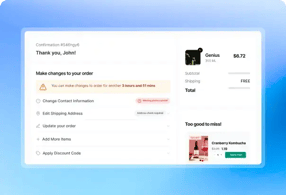
Order editing: shoppers can fix an address or swap a size before the parcel ships, which helps avoid address correction charges.
Carrier Selection Checklist: 6 Questions Before You Commit
Answer these with your own shipment data before you sign or renew a carrier agreement:
-
What is your package size and weight profile? Run DIM weight at 139 for every carrier on any box over 1,728 cubic inches.
-
Which zones carry most of your volume? If a large share sits inside one region, a regional carrier becomes viable.
-
What share of your deliveries go to homes? Residential fees, and the fuel charged on them, decide most comparisons.
-
When does your peak run, and how large is it? Price October through mid-January separately, since every carrier in this guide adds peak or holiday charges.
-
What is your claims exposure? Damage rate multiplied by average order value tells you how much weight claims windows deserve.
-
What do your systems need? Confirm label APIs, tracking webhooks and rate-shopping support before onboarding.
Evaluate carriers on six dimensions: package size profile, zone concentration, residential share, peak exposure, claims risk and integration fit.
Frequently Asked Questions About US Shipping Carriers
What is the most reliable shipping carrier in the US in 2026?
UPS posted the highest on-time rate among national carriers in December 2025 at 97.2%, ahead of FedEx at 95.3% and USPS at 94.1%, measured against each carrier's commit times by ShipMatrix. Under ShipMatrix's looser Cyber Week method the order held: 98.9%, 98.3% and 97.2%. Regional carriers do not publish comparable audited figures.
Which US shipping carrier is cheapest for small packages?
For residential packages under 1 lb, USPS Ground Advantage is usually the cheapest national option because it charges no residential surcharge. Amazon Shipping is competitive on 1 to 50 lb residential parcels in the contiguous US. In 2026, include USPS's temporary 8% increase and holiday pricing, both of which run until January 17, 2027.
What is the difference between UPS, FedEx, and USPS?
UPS and FedEx are private carriers with the deepest express and commercial networks, and both add residential, fuel and peak surcharges to their base rates. USPS is a self-funded federal agency that reaches every US address, charges no residential fee and is usually cheapest for light residential parcels, though its claims rules vary by service.
Which carrier has the best on-time delivery rates?
UPS leads the national carriers on both ShipMatrix measures from the 2025 peak. The Cyber Week method allows end-of-day delivery for express and an extra day for ground, so its numbers run higher.
| Carrier | December 2025 (commit time) | Cyber Week 2025 (holiday method) |
| UPS | 97.2% | 98.9% |
| FedEx | 95.3% | 98.3% |
| USPS | 94.1% | 97.2% |
Sources: ShipMatrix December data and ShipMatrix Cyber Week data, via Logistics Management.
What are regional shipping carriers and when should I use them?
Regional and alternative carriers such as OnTrac, GLS US and LSO deliver within defined networks, often with lower residential fees and faster transit inside them. Use one when a large share of your orders lands inside its coverage and your packages fit its weight limits. Keep a national carrier for every ZIP it does not serve.
How do I negotiate a shipping carrier contract?
The base discount is only one lever. Push on every term that moves landed cost:
-
Base rate discounts tied to volume tiers you can realistically hit.
-
Caps or discounts on residential and delivery area surcharges.
-
A dimensional divisor above the 139 default.
-
A cap on GRI pass-through for the contract term.
-
A fuel surcharge discount or table cap, since fuel now resets weekly.
-
Service credits when the carrier misses delivery commitments.
Is Amazon Shipping available to all businesses in 2026?
Yes. Since May 4, 2026, Amazon has offered parcel shipping, freight and fulfillment to businesses that do not sell on Amazon.com, under Amazon Supply Chain Services. Amazon Shipping covers the contiguous US for packages up to 50 lb, with pickup in eligible locations and no residential surcharge. Alaska and Hawaii are not covered.
Which shipping carrier is best for ecommerce returns?
For most consumer returns, USPS is the practical default: shoppers can drop a prepaid label at any post office or schedule a pickup, and USPS charges no residential fee. For high-value returns, UPS adds a commercial claims process with a 60-day window. Many brands offer both options inside one returns portal and let shoppers choose.
How do UPS and FedEx residential surcharges compare in 2026?
UPS charges $6.50 per Ground residential package and $7.00 for Air. FedEx charges $6.45 for Ground and Home Delivery residential packages. USPS and Amazon Shipping charge nothing. At 10,000 residential packages a month, the UPS fee alone adds about $780,000 a year, and fuel is then applied on top of it.
What is a multi-carrier shipping strategy and why does it matter?
A multi-carrier strategy sends each shipment to the carrier with the lowest landed cost that still meets the delivery promise, based on weight, zone, address type and service level. It matters in 2026 because surcharges, fuel tables and peak fees change several times a year, so a single-carrier default drifts away from the cheapest option quickly.
The Bottom Line: Choose US Shipping Carriers on Landed Cost
Carrier selection in 2026 is a landed cost problem. Residential fees, weekly fuel tables, peak schedules and the 139 divisor decide what you pay, far more than the 5.9% headline.
Act before the next rate cycle:
-
Re-run your carrier mix for USPS's 139 divisor and Amazon Shipping's open access.
-
Model your shipment file before UPS's 2027 increase on December 21 and FedEx's on January 4.
If you want one place to track, communicate and manage returns across every carrier you add, talk to the ClickPost team.





We use cookies to keep the site working, understand usage, and improve your experience. Learn more
Always active for essential site performance and security.
Enables anonymous usage analysis to refine our services.
Used to present relevant promotions and advertising.