






TL;DR: Ecommerce Consumer Complaints Statistics India 2026
Indian shoppers filed 511,198 ecommerce complaints on the National Consumer Helpline in 2025, up 16.1% in a year. Non-delivery now tops every category, and 77.1% of complaints trace to delivery, accuracy or refund failures.
-
India recorded 511,198 ecommerce complaints in 2025, or about 5.1 lakh.
-
Non-delivery complaints rose 67.9% to 79,818 in 2025.
-
Flipkart accounted for 26.1% of all complaints, with 133,566 cases.
-
The CCPA imposed ₹1.12 crore in penalties across 47 ecommerce platforms.
-
The amended E-Commerce Rules will take effect on 1 January 2027.
Introduction
Ecommerce consumer complaints in India reached a five-year high in 2025. The National Consumer Helpline (NCH) recorded 511,198 grievances against online platforms, according to a Lok Sabha written reply tabled on 12 August 2026. In 2021, the count was 224,592.
The bigger shift sits inside that total. Shoppers used to complain mostly about refunds. Today they report parcels that never arrived and items that were wrong or broken on arrival. Every one of those failures happens after checkout, inside the fulfillment chain, which is where operators have the most control.
Below, the data is broken down by complaint type, platform and segment, then set against the amended E-Commerce Rules that apply from 1 January 2027.
How many ecommerce consumer complaints were filed in India in 2025?
India's NCH received 511,198 ecommerce complaints in 2025, up 16.1% from 440,187 in 2024 and 127.6% from 224,592 in 2021. All were marked as disposed. Across 2021 to 2025, shoppers filed 1,987,480 complaints against ecommerce and quick commerce platforms.
| Year | NCH ecommerce complaints | Change vs prior year |
| 2021 | 224,592 | Baseline |
| 2022 | 365,370 | 0.627 |
| 2023 | 446,133 | 0.221 |
| 2024 | 440,187 | Down 1.3% |
| 2025 | 511,198 | 0.161 |
-
2024 was the only year in the series when volume fell, slipping 1.3% below the 2023 count of 446,133.
-
India's e-retail GMV grew 19% to 21% in 2025 to reach $65 to 66 billion, slightly faster than complaint growth that year.
-
E-retail GMV more than doubled from 2021 to 2025, while complaint volume grew 2.28 times over the same five years.
Complaints are rising in step with sales, so the complaint rate per rupee spent has barely moved in five years.
What are the most common ecommerce complaints in India?
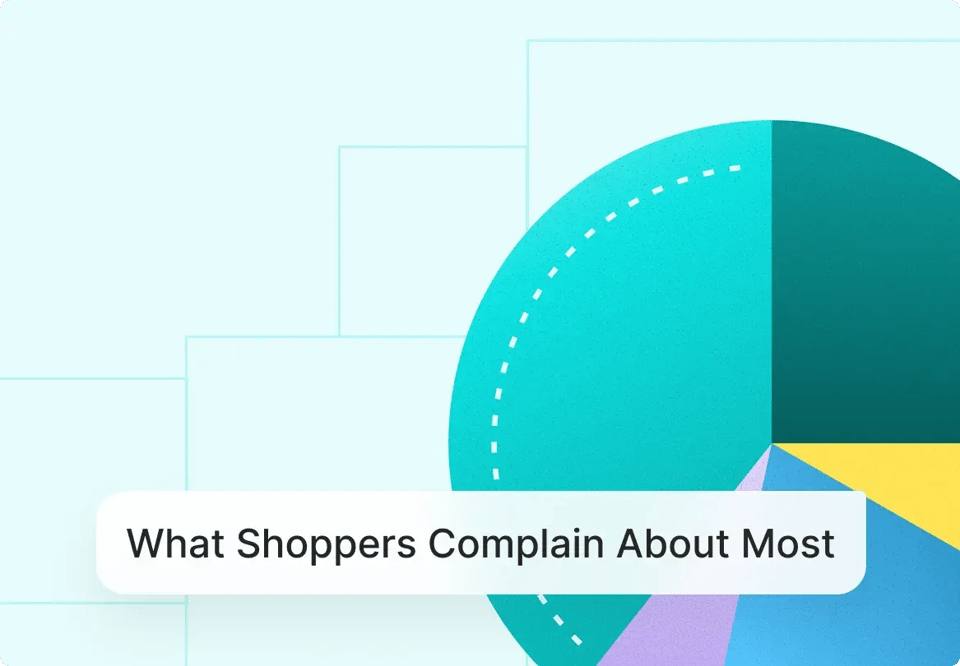
Non-delivery was the most common ecommerce complaint in India in 2025, with 79,818 cases, or 15.6% of the total. Wrong product delivered followed at 75,426. Refund or replacement denials (61,056) and defective goods (60,969) completed the top four, each near 12%.
| Complaint category | 2025 complaints | Share | Where it breaks |
| Non-delivery | 79,818 | 15.60% | Last mile |
| Wrong product delivered | 75,426 | 14.80% | Pick and pack |
| Refund or replacement denied | 61,056 | 11.90% | Returns |
| Defective or damaged product | 60,969 | 11.90% | Packaging and transit |
| Paid amount not refunded | 53,364 | 10.40% | Refunds |
| Delay in delivery | 43,446 | 8.50% | Line haul and last mile |
| Poor customer service | 37,864 | 7.40% | Support |
| Items or accessories missing | 19,815 | 3.90% | Pick and pack |
| Counterfeit product | 15,762 | 3.10% | Seller vetting |
| Debit without consent | 12,614 | 2.50% | Payments |
| Others | 51,064 | 10.00% | Mixed |
Grouped by failure point, delivery issues make up 28.0%, order accuracy 26.7% and refunds 22.4%. That is 77.1% of all complaints, nearly all of it after the customer has paid.
How has the mix of ecommerce complaints in India changed since 2021?
Non-delivery complaints rose 180% between 2021 and 2025, from 28,496 to 79,818. In 2021 and 2022, "paid amount not refunded" topped the list. By 2025 it had slipped to fifth, while non-delivery climbed from third to first place.
| Category | 2021 | 2024 | 2025 | 2024 to 2025 |
| Non-delivery | 28,496 | 47,525 | 79,818 | 0.679 |
| Delay in delivery | 10,989 | 29,264 | 43,446 | 0.485 |
| Wrong product | Combined* | 60,242 | 75,426 | 0.252 |
| Paid amount not refunded | 49,437 | 55,584 | 53,364 | Down 4.0% |
| Deficiency in services | 27,776 | 62,527 | 37,864 | Down 39.4% |
The cause is geographic. Tier 2+ cities drove about half of incremental orders in 2025, where first-time buyers, patchy addresses, and thinner courier coverage make first-attempt delivery harder.
Which ecommerce platform has the most consumer complaints in India?
Flipkart drew the most NCH complaints in 2025, with 133,566, or 26.1% of the total. Amazon followed with 91,248 (17.8%) and Meesho with 29,284 (5.7%). The top 10 platforms together accounted for 321,644 complaints, or 62.9% of all ecommerce grievances.
| Rank | Platform | Business model | 2025 complaints | Share |
| 1 | Flipkart | General marketplace | 133,566 | 26.10% |
| 2 | Amazon | General marketplace | 91,248 | 17.80% |
| 3 | Meesho | Value marketplace | 29,284 | 5.70% |
| 4 | Myntra | Fashion | 25,384 | 5.00% |
| 5 | Netmeds | Online pharmacy | 19,895 | 3.90% |
| 6 | Zepto | Quick commerce | 5,774 | 1.10% |
| 7 | Blinkit | Quick commerce | 5,102 | 1.00% |
| 8 | Naaptol | Online retail | 4,079 | 0.80% |
| 9 | VLE Bazaar | Rural commerce | 3,907 | 0.80% |
| 10 | Nykaa | Beauty | 3,405 | 0.70% |
-
Amazon's complaint count rose 71.1% in two years, from 53,334 in 2023 to 91,248 in 2025.
-
Flipkart's count rose just 1.3% in 2025, from 131,788, and sits 22.5% below its 2023 peak of 172,282.
-
Meesho complaints climbed 41.9% in 2025, from 20,632 to 29,284.
-
Zepto and Blinkit appeared in the top 10 for the first time in 2025, displacing Zomato, Swiggy and Tata 1MG from the 2024 list.
How many consumer complaints do quick commerce platforms get in India?
Zepto and Blinkit together drew 10,876 NCH complaints in 2025, just 2.1% of the total, despite quick commerce holding 16% to 17% of e-retail GMV. Low order values likely keep many grievances off the helpline, so the gap points to underreporting rather than flawless delivery.
-
Zepto logged 5,774 complaints and Blinkit 5,102 in 2025, ranking sixth and seventh nationally.
-
The CCPA fined Zepto ₹7 lakh on 4 December 2025 for drip pricing and basket sneaking in its checkout flow.
-
Food products flagged by FSSAI for misleading claims were still listed on five quick commerce apps in June 2026, including Blinkit, Zepto and Swiggy Instamart.
-
India's quick commerce network grew to more than 7,000 micro-fulfillment centers across 200+ cities by 2025.
How widespread are dark patterns in Indian ecommerce?
Dark patterns affect 88% of India's 304 million online shoppers and cost them ₹25,000 to 28,000 crore a year, according to Datum Intelligence's Q1 2026 survey of 2,590 consumers. Each affected shopper loses ₹78 to 87 a month to hidden fees and drip pricing.
-
85% of surveyed shoppers said they had been misled by dark patterns, even though 81% said they could recognize them.
-
73% of the 12 platforms analyzed still used forced-action mechanisms, and 69% used drip pricing.
-
63% of online payment users reported hidden fees or drip pricing in 2026, up from 52% in 2024.
-
Only 31 ecommerce and quick commerce platforms had filed dark pattern compliance self-declarations after the CCPA's June 2025 self-audit advisory.
Datum founder Satish Meena calls them "deliberate, engineered design choices that exploit consumer psychology." Yet 74% of shoppers would pay more for transparent platforms, so a hidden fee wins one basket and risks the next.
How much have Indian regulators penalized and refunded?
The Central Consumer Protection Authority (CCPA) has imposed about ₹1.12 crore in penalties on 47 ecommerce platforms. The NCH also facilitated over ₹91 crore in refunds between 25 April 2025 and 30 June 2026, including more than ₹63 crore from ecommerce grievances.
| Measure | Figure | Period |
| CCPA penalties | ₹1.12 crore across 47 platforms | To August 2026 |
| NCH refunds, all sectors | Over ₹91 crore | Apr 2025 to Jun 2026 |
| NCH refunds, ecommerce | Over ₹63 crore | Apr 2025 to Jun 2026 |
| Refund grievances resolved pre-litigation | Over 147,000 | Apr 2025 to Jun 2026 |
| Companies in NCH Convergence | 1,853 | August 2026 |
Penalties average under ₹2.4 lakh per platform. Refunds matter more: each one closes a dispute before it reaches a consumer commission.
What do India's 2026 E-Commerce Amendment Rules require?
The Consumer Protection (E-Commerce) (Amendment) Rules, 2026, notified on 9 September 2026, apply from 1 January 2027. They make NCH convergence mandatory, require annual dark pattern audits with a displayed certificate, and add origin, return-cost and seller-ID disclosures.
Compliance checklist before 1 January 2027:
1. Display your legal name, address and grievance officer contacts prominently.
2. Acknowledge complaints within 48 hours, share a copy, and resolve them within one month.
3. Join the NCH Convergence program so helpline complaints reach your support queue.
4. Audit annually against the CCPA's 13 listed dark patterns and display the certificate.
5. Show the lowest price of the past 30 days beside every announced discount.
6. Add country of origin, best-before dates, return shipping costs and seller GSTIN or MSME numbers to listings.
7. Label sponsored listings clearly and disclose the main search-ranking factors.
The 48-hour and one-month timelines date from 2020. What changes is exposure: contraventions from 2027 fall under the Consumer Protection Act, 2019.
How large could ecommerce complaint volumes in India get by 2030?
Bain & Company projects India's e-retail market will reach $170 to 180 billion in GMV by 2030, up from $65 to 66 billion in 2025. If complaints keep tracking GMV as they did from 2021 to 2025, NCH ecommerce complaints would reach roughly 1.3 to 1.4 million a year.
-
Projection: e-retail GMV compounds at more than 20% a year through 2030.
-
Projection: quick commerce GMV reaches $65 to 70 billion by 2030 and supplies 45% to 50% of incremental e-retail GMV.
-
Projection: e-retail rises to 10% to 12% of total retail spend in India by 2030.
-
Illustrative estimate (ClickPost editorial arithmetic, not a published forecast): scaling 511,198 complaints by Bain's 2030 GMV range gives 1.32 to 1.42 million complaints a year.
Trends shaping ecommerce consumer complaints in India for 2026
Delivery complaints are outpacing the market
Non-delivery complaints rose 67.9% in 2025, over three times faster than GMV. Checkout address validation, serviceability checks before confirming COD orders, and same-day follow-up on failed attempts address the main triggers.
Order accuracy breaks under sale-event volume
Wrong-product complaints rose 25.2% to 75,426 as daily traffic nearly tripled during Big Billion Days. Barcode scans at pick and pack, plus SKU audits before each sale, catch most errors before dispatch.
Counterfeit complaints are compounding
Counterfeit complaints rose 65.3% in two years, from 9,538 in 2023 to 15,762 in 2025, as the seller base tripled. Mandatory seller GSTIN or MSME disclosure from 2027 gives marketplaces a hard identity check.
Regulation is moving from disclosure to design
From 2027, every platform must audit against 13 dark patterns annually. Zepto was fined after filing a compliance self-audit, proof that a declaration offers no cover if checkout still adds late charges.
Ecommerce consumer complaints India: master statistics table
| Statistic | Figure |
| NCH ecommerce complaints, 2025 | 511,198 |
| Growth, 2024 to 2025 | 16.10% |
| Growth, 2021 to 2025 | 127.60% |
| Total complaints, 2021 to 2025 | 1,987,480 |
| Non-delivery complaints, 2025 | 79,818 (15.6%) |
| Wrong product complaints, 2025 | 75,426 (14.8%) |
| Delivery, accuracy and refund share | 77.10% |
| Flipkart complaints, 2025 | 133,566 (26.1%) |
| Amazon complaints, 2025 | 91,248 (17.8%) |
| Zepto and Blinkit complaints, 2025 | 10,876 (2.1%) |
| CCPA penalties | ₹1.12 crore on 47 platforms |
| NCH refunds facilitated | ₹91 crore (₹63 crore ecommerce) |
| Dark pattern self-declarations | 31 platforms |
| Online shoppers affected by dark patterns | 88% of 304 million |
| Annual consumer loss to dark patterns | ₹25,000 to 28,000 crore |
| India e-retail GMV, 2025 | $65 to 66 billion |
| Quick commerce share of e-retail GMV | 16% to 17% |
| E-retail GMV projection, 2030 | $170 to 180 billion |
| Amendment Rules effective date | 1 January 2027 |
| CCPA fine on Zepto | ₹7 lakh |
Conclusion: complaint data is a fulfillment scorecard
India's 511,198 ecommerce complaints in 2025 read best as a fulfillment report card. Delivery, accuracy and refunds drove 77.1% of them, and each maps to a process with an owner and a fix. With NCH convergence and dark pattern audits mandatory from 2027, and a market Bain expects to nearly triple by 2030, an unchanged complaint rate will cost far more.
FAQs: ecommerce consumer complaints in India
How many consumer complaints were filed against ecommerce platforms in India in 2025?
511,198 complaints were filed against ecommerce platforms on India's National Consumer Helpline in 2025. That is 16.1% more than the 440,187 filed in 2024 and 127.6% more than in 2021. The total includes quick commerce platforms, and all were marked disposed.
Which ecommerce platform has the most consumer complaints in India?
133,566 complaints named Flipkart in 2025, the most of any platform and 26.1% of the national total. Amazon ranked second with 91,248 and Meesho third with 29,284. Because raw counts track order volume, growth rates give a fairer comparison between platforms.
What are the most common ecommerce complaints in India?
79,818 non-delivery complaints made it the top ecommerce grievance in 2025. Next came wrong product (75,426), refund or replacement denied (61,056), defective goods (60,969), paid amount not refunded (53,364) and delivery delays (43,446). Delivery, accuracy and refund failures made up 77.1% of complaints.
How do I file a consumer complaint against Amazon or Flipkart in India?
1915 is the National Consumer Helpline's toll-free number. You can also file at consumerhelpline.gov.in, on WhatsApp at 8800001915, or in the NCH app. Keep your order ID and payment proof ready. Unresolved cases can go to a consumer commission via e-Jagriti.
What is the National Consumer Helpline for ecommerce complaints in India?
1,853 companies answer shoppers directly through the National Consumer Helpline's Convergence program. The NCH is the Department of Consumer Affairs' pre-litigation grievance channel, available in 17 languages. It facilitated over ₹91 crore in refunds between April 2025 and June 2026.
What are dark patterns in Indian ecommerce and how do I report them?
13 dark patterns are banned under the CCPA's 2023 guidelines, including false urgency, basket sneaking, drip pricing and subscription traps. Shoppers can report them to the National Consumer Helpline on 1915 or online. From 2027, platforms must also audit themselves every year.
What is the Consumer Protection (E-Commerce) Amendment Rules 2026?
1 January 2027 is when the Consumer Protection (E-Commerce) (Amendment) Rules, 2026 take effect. They mandate NCH convergence, annual dark pattern audits, 30-day reference pricing on discounts, clearer sponsored listings, and new seller and country-of-origin disclosures.
How long does an ecommerce platform have to resolve a consumer complaint in India?
48 hours is the deadline to acknowledge a consumer complaint, and platforms must resolve it within one month of receipt. These timelines come from the 2020 E-Commerce Rules and are restated in the 2026 amendment, which takes effect on 1 January 2027.