.png?width=193&height=27&name=ClickPost%20Logo%20(Blue).png)
.svg)
.svg)
.svg)
.svg)
.svg)
.svg)
.svg)
.svg)
.svg)


.svg)
.svg)
.svg)
.svg)
.svg)
.svg)


.svg)
.svg)
.webp?width=286&height=206&name=ROI%20Calculator%20(1).webp)
.svg)
.svg)

.svg)

.webp?width=286&height=206&name=RTO%20Playbook%20(1).webp)
What Is a Distribution Center? Functions, Features, and 2026 Trends


Ready to ship smarter? Talk to our logistics experts.
Trusted by 600+ brands
In this blog
TL;DR Summary
A distribution center is a logistics facility engineered for rapid intake, processing, and outbound dispatch of goods rather than long-term storage.
-
Goods typically dwell inside a DC for hours to days, versus weeks or months in a traditional warehouse, directly accelerating supply chain throughput.
-
Ecommerce return rates running 15–25% by category have forced modern DCs to build dedicated reverse logistics workflows, replacing ad hoc returns handling.
-
AI-powered orchestration unlocks 7–15% additional network capacity by dynamically re-slotting inventory based on real-time demand signals, resulting in 10–20% forecast accuracy gains.
-
By 2030, 50% of new warehouses in developed markets will be robot-centric, because AMR fleets reduce labor costs 30–50% while improving accuracy.
-
The global distribution logistics market is projected to reach $10.86 trillion in 2026, growing at a 7% CAGR according to Research and Markets.
What Is a Distribution Center in Supply Chain and Logistics?
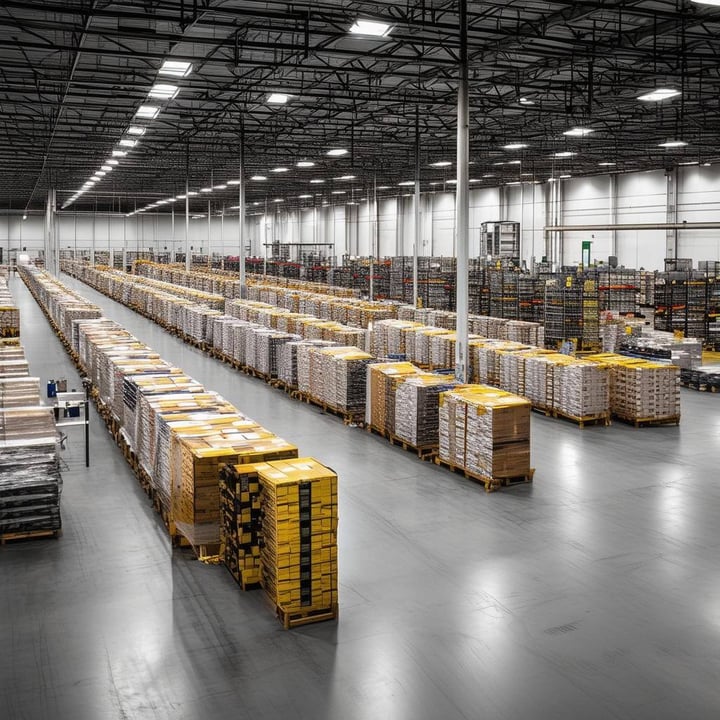
A distribution center is a logistics facility designed for the rapid intake, processing, and outbound dispatch of goods. The defining characteristic is throughput speed. Goods typically spend hours or days inside a DC, not weeks or months as they would in a long-term storage warehouse.
DCs sit between manufacturers, suppliers, and end destinations (which can be retail stores, fulfillment centers, B2B customers, or consumers directly). Their location, size, and operational sophistication directly affect how quickly products move through the supply chain. A DC's job is not to store goods; it's to move goods.
For ecommerce brands, DCs reduce zone distance for last-mile delivery, which translates directly to shorter promised delivery dates and lower shipping costs. For B2B and wholesale operations, DCs handle bulk break-bulk, cross-docking, and value-added services such as kitting and labeling to prepare goods for downstream movement.
6 Key Functions of a Distribution Center Explained
A modern DC operates as a multi-function hub rather than a single-purpose facility. Six core functions define its operational scope.
1. Receiving and quality inspection- Inbound shipments arrive from manufacturers or suppliers and are checked for quantity, condition, and conformance to purchase orders before being processed into the system.
2. Cross-docking- Goods are moved directly from inbound to outbound transportation with minimal storage time. This is one of the highest-value functions a DC performs, since it reduces handling cost and accelerates throughput. For high-velocity SKUs, cross-docked goods may spend less than 24 hours in the facility.
3. Bulk breakdown and consolidation- DCs receive bulk cargo (full pallets, container loads) and break it down into smaller distribution units for retail stores, fulfillment centers, or B2B customers. Conversely, smaller inbound shipments can be consolidated into bulk outbound loads for cost efficiency.
4. Order picking and packing- For e-commerce integrated DCs, individual customer orders are picked from inventory, packed, labeled, and prepared for carrier handoff. This function overlaps most with traditional ecommerce fulfillment center operations.
5. Value-added services- Kitting (combining multiple SKUs into a single package), labeling, light assembly, and customization happen here. For brands selling on multiple channels, value-added services in the DC mean the same SKU can be prepared differently for different sales channels without duplicate inventory.
6. Reverse logistics processing- Returns flow back through DCs for inspection, restocking, refurbishment, or disposition. With ecommerce return rates running between 15-25% by category, modern DCs increasingly carry dedicated reverse logistics workflows rather than treating returns as an afterthought.
Distribution Center vs Warehouse vs Fulfillment Center vs Dark Store: What's the Difference?
These four facility types are often confused, but they serve materially different roles in the supply chain. The differences matter because choosing the wrong facility model creates structural cost and speed disadvantages that no amount of operational tuning can fix.
| Feature | Distribution Center | Warehouse | Fulfillment Center | Dark Store |
| Primary purpose | Rapid redistribution of goods | Long-term storage | B2C/D2C order fulfillment | Hyperlocal/quick commerce fulfillment |
| Typical inventory dwell time | Hours to days | Weeks to months | Days to weeks | Hours |
| Customer-facing | Indirect (ships to retail or fulfillment center) | No | Yes (ships to consumer) | Yes (ships to consumer) |
| Order handling | Bulk and break-bulk | Bulk only | Individual orders | Individual orders, often <30 min |
| Typical user | Retailers, wholesalers, manufacturers | Manufacturers, importers | D2C brands, marketplaces | Quick commerce platforms, Q-comm grocers |
| Geographic location | Regional, often near transport hubs | Variable, often low-cost zones | Regional, near population centers | Hyperlocal, inside dense urban areas |
| Tech intensity | Medium to high | Low to medium | High | Very high |
The practical decision tree:
-
If you need long-term storage at low cost, you want a warehouse.
-
If you need to redistribute goods at scale across multiple downstream channels, you want a DC.
-
If you're a D2C brand shipping individual orders to consumers, you want a fulfillment center (which often functions as a specialized DC).
-
If you're operating quick commerce with sub-30-minute delivery promises, you need dark stores positioned inside the catchment area.
Most growing brands eventually use multiple facility types together. A typical D2C operation at scale might run two regional DCs feeding three fulfillment centers, with dark stores in priority metros for same-day or hyperlocal delivery.
4 Key Benefits of Using a Distribution Center for Ecommerce and Retail
DCs deliver four benefits that warehouses and other facility types can't match at scale.
How distribution centers reduce shipping costs and speed up last-mile delivery
A DC positioned closer to end customers reduces last-mile distance, which translates to shorter delivery times and lower per-shipment shipping costs. According to Baymard Institute, 70.22% of online carts are abandoned, and 21% of those abandonments are specifically due to slow delivery speeds. A decentralized DC model directly addresses this conversion leak by enabling tighter delivery promises at the product page. For a deeper look at how logistics costs compound across the network, the math behind zone reduction is particularly instructive.
How distribution centers lower inventory carrying costs and free up working capital
A single regional DC can support multiple downstream retail stores, fulfillment centers, or B2B customers. This means brands hold less safety stock at each downstream location because the DC acts as the buffer. Embedding AI in distribution operations can drive 20-30% reductions in inventory and 5-20% reductions in logistics costs. Effective inventory management at the DC level is what makes this buffer model work without creating overstock risk.
Operational specialization and value-added services inside a DC
DCs handle picking, packing, kitting, labeling, and light assembly that would be inefficient or impossible in a pure storage warehouse. For brands operating across multiple sales channels (D2C, marketplace, retail, B2B), the ability to prepare the same SKU differently for different channels without duplicate inventory is structurally important. This is especially relevant for brands managing ecommerce supply chain complexity across regions.
Network resilience and supply chain risk distribution across multiple DCs
Brands operating multiple DCs across geographies absorb regional disruptions (weather, labor strikes, infrastructure failures) better than brands relying on single-warehouse operations. The risk of a single-point-of-failure facility goes up materially as ecommerce volumes scale. Supply chain disruption events in recent years have underscored why geographic redundancy is no longer optional for high-volume operations.
Technology Inside a Modern Distribution Center in 2026
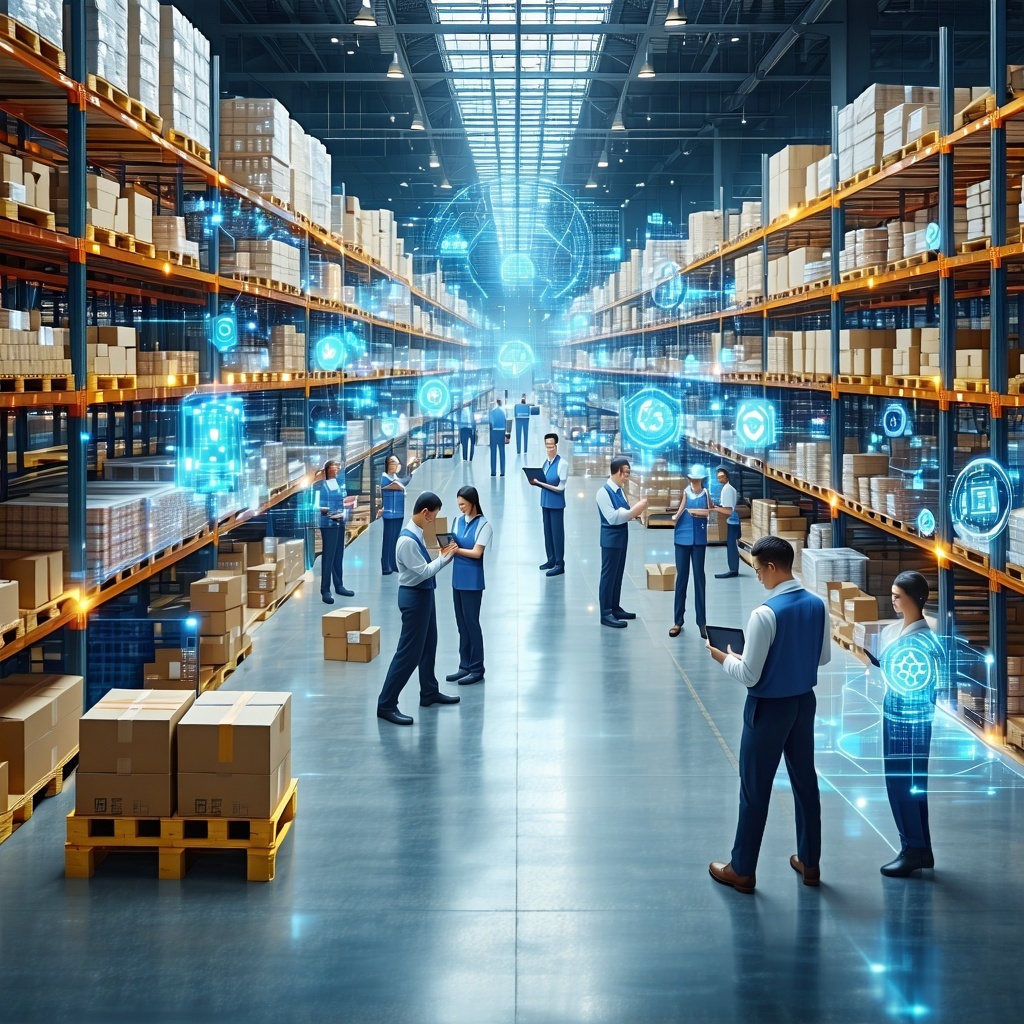
The technology stack inside a 2026 DC has shifted significantly from the WMS/IMS-led approach of even three years ago. The current standard stack includes four major components.
Warehouse Management Systems and Inventory Management Systems: the operational foundation
These are the foundational software layers managing SKU-level inventory, location tracking, picking workflows, and receiving operations. A modern warehouse management system is now considered table stakes rather than a competitive differentiator — it's the baseline every DC needs before layering on automation.
Autonomous Mobile Robots (AMRs) and cobots: how DC automation is changing picking and palletization
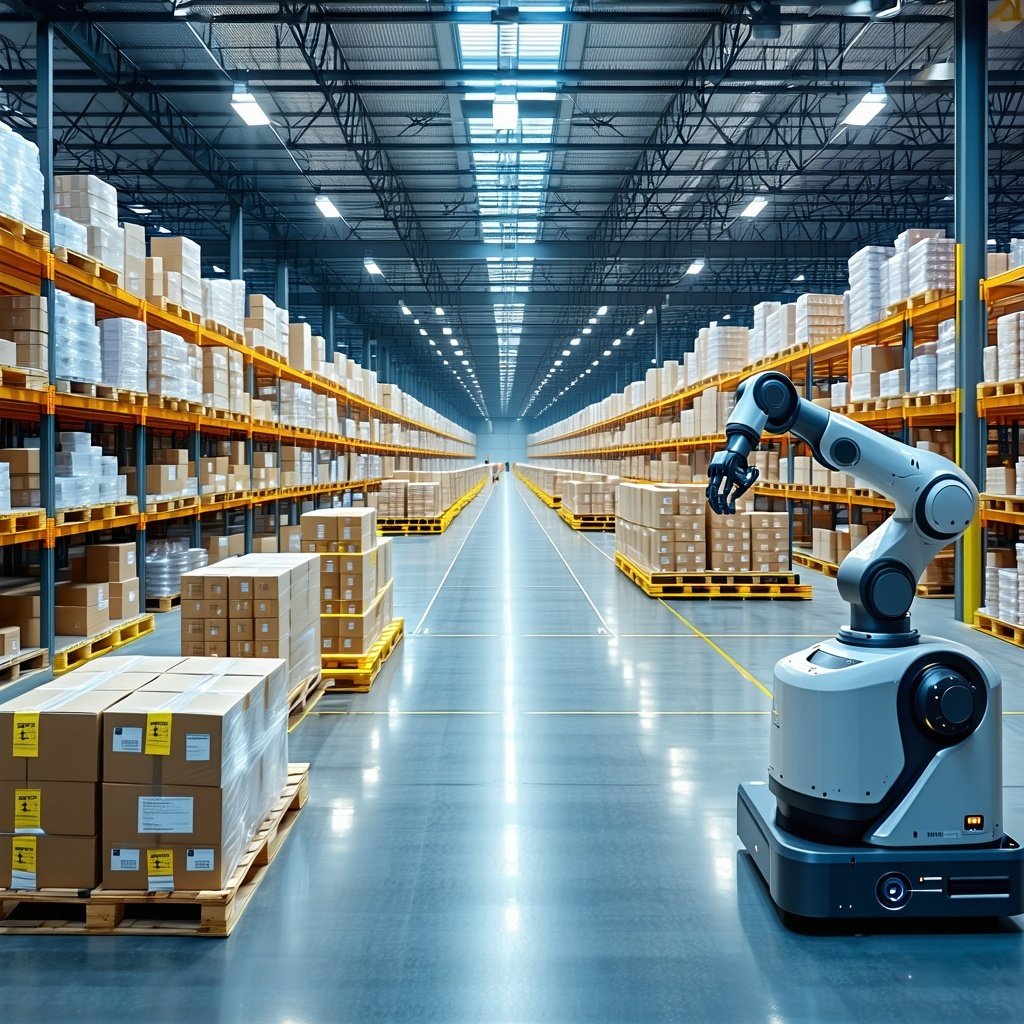
AMRs (which physically resemble robotic vacuums more than humanoids) transport goods between picking, packing, and dispatch zones. Cobots work alongside human workers on picking and palletization.
Amazon has deployed AI-driven cobots across its warehouses to automate both pick-and-place and palletization tasks, significantly boosting throughput and accuracy. The market for service robots in logistics is growing 20-35% annually, far outpacing industrial robot growth. This momentum is also driving broader supply chain automation adoption across mid-market and enterprise DC operators.
AI-powered orchestration: dynamic inventory slotting, carrier allocation, and demand forecasting
This is the layer that's changed most dramatically. Beyond static rule-based software, AI agents now dynamically re-slot inventory based on real-time demand signals. AI agents adjust outbound carrier allocation dynamically in response to weather or capacity changes, and also identify phantom inventory before it causes stockouts.
These AI tools can unlock 7-15% additional capacity in warehouse networks by finding daily spare capacity and improving resource allocation. Companies deploying AI-driven supply chain transformation are seeing concrete outcomes: 10-20% increases in forecast accuracy, 95-97% stock availability, and 5-7% reductions in logistics costs. Intelligent AI-driven carrier allocation is one of the most immediate places DC operators are capturing this value.
Sustainability infrastructure inside modern distribution centers
Modern DCs increasingly incorporate solar-ready roofing, high-efficiency cooling systems, and integrated reverse logistics workflows to support circular-economy compliance. Supply chain leaders are now expected to turn ESG and Scope 3 challenges into competitive differentiators (KPMG, 2025).
The investment behind these capabilities is substantial. In Q2 2025 alone, spending on compute and storage hardware for AI deployments surged 166% year-over-year to $82 billion. DC operators are part of this surge, and the gap between high-tech and low-tech facilities is widening.
What Makes an Efficient Distribution Center? 4 Features to Evaluate
When evaluating a DC (whether building, leasing, or contracting through a 3PL), four features determine whether the facility actually delivers on the promise.
1. Strategic location: A DC's location directly affects last-mile speed and cost. The right location balances proximity to customers, access to transportation infrastructure (highways, rail, ports, airports), and labor availability. For ecommerce, locating DCs within 1-2 days of ground transit to major population centers is the operational standard.
2. Right-sized capacity: A DC that's too small bottlenecks at peak; one that's too large carries unnecessary fixed costs. The right size depends on current throughput plus 18-24 months of projected growth, with built-in mezzanine or expansion capacity for surge periods.
3. Technology integration: WMS, IMS, AI orchestration, AMR fleets, and integrations with carrier networks and ecommerce platforms determine the facility's actual operational ceiling. Companies with next-generation supply chain capabilities achieve 23% greater profitability than peers. Logistics automation at the DC level is increasingly where that profitability gap originates.
4. Operational track record: For existing DCs (especially when contracting with a 3PL), past performance matters more than facility specs. Look at peak-season throughput, accuracy rates, dispute resolution history, and stability of the operations team. Beautiful facilities run badly are common; modest facilities run well are rarer and more valuable.
2026 Distribution Center Trends Reshaping the Industry Through 2030
The global distribution logistics market is projected to reach $10.86 trillion in 2026, growing at a 7% CAGR (Research and Markets, 2026). Three trends within this market are reshaping how DCs are built and operated through the end of the decade.
The rise of human-optional, robot-centric distribution facilities
By 2030, 50% of new warehouses built in developed markets will be designed as robot-centric facilities, with humans needed only for exception handling. The economics behind this shift are real. AMR fleets, automated storage and retrieval systems, and AI orchestration together reduce labor cost by 30-50% while improving throughput and accuracy. The gap between automated and manual facilities will widen materially over the next four years.
Distributed multi-node DC networks replacing centralized warehouse hubs
Brands are moving from one or two large central DCs to networks of smaller, geographically distributed facilities. The driver is delivering speed: a customer 150 miles from a DC can get same-day or next-day delivery; a customer 800 miles from a centralized warehouse cannot. With 21% of cart abandonments tied to slow delivery, the conversion math increasingly favors distributed networks even at higher fixed-cost overhead.
The implementation gap between DC technology investment and actual outcomes
Despite massive investments in technology, many companies aren't capturing the expected returns. A 2026 PwC survey of 767 operations and supply chain leaders found a paradox. 85% said they're ahead of competitors in digital transformation. Yet 89% said their tech investments haven't fully delivered the expected results.
The gap is rarely the technology itself; it's integration depth, change management, and operational discipline. The DCs that capture the full value of their tech stack treat technology as an operational rebuild rather than a layer on top of legacy processes.
How ClickPost Helps Brands Manage Multi-DC Operations and Post-Purchase Logistics
For brands operating multiple DCs and fulfillment centers across geographies, the operational challenge isn't running any single facility well. It's coordinating order routing, carrier allocation, and post-purchase visibility across the full network.
ClickPost is a post-purchase logistics intelligence platform integrated with 600+ carriers globally. The structural value of multi-DC operations lies in unification. A single layer determines which DC fulfills each order, which carrier handles each shipment, and how the customer experience remains consistent across the network.
Here's what ClickPost brings to multi-DC operations:
-
Smart carrier allocation: Routes each order to the optimal DC + carrier combination based on inventory location, customer pin code, carrier performance, and cost. See how intelligent carrier allocation works across a distributed network.
-
Unified post-purchase tracking: Branded tracking pages that surface consistent EDDs and delivery status regardless of which DC fulfilled the order
-
Returns and reverse logistics workflows: Centralized return management across multiple DCs with automated routing to the right reverse logistics destination
-
NDR automation: Proactive non-delivery report workflows that reduce RTO in ecommerce across all carriers in your stack
-
Apex Control Tower: Single dashboard for tracking carrier and DC performance across the full network
If you want to dig deeper into how this would work for your operation, the ClickPost team is the right place to ask. Talk to the team.
Why Distribution Center Strategy Is Now a Customer Experience Decision
Distribution centers have quietly become one of the most consequential pieces of infrastructure in modern commerce. A brand's ability to promise next-day delivery, absorb peak-season volume spikes, or compete on speed against larger rivals comes down to DC-level choices. Location, technology stack, and how the facility integrates with the broader ecommerce logistics network all shape what's possible on the customer end.
The shift through 2030 is structural. Robot-centric facilities, AI orchestration, and distributed multi-node networks are moving from competitive advantage to operational baseline. Brands that treat DC strategy as a logistics problem will keep optimizing the physical infrastructure. Brands that treat it as a customer experience problem will consider the entire chain, from inventory placement to the moment the customer opens the box.
Frequently Asked Questions About Distribution Centers
What is the definition of a distribution center in logistics?
A distribution center is a specialized logistics facility designed for the rapid receipt, processing, and outbound dispatch of goods. Unlike traditional warehouses that prioritize long-term storage, DCs prioritize throughput velocity. Goods typically spend hours or days inside a DC rather than weeks or months. DCs sit between manufacturers and end destinations (retail stores, fulfillment centers, B2B customers, or consumers), handling cross-docking, bulk break-down, picking, packing, and value-added services.
What is the difference between a distribution center and a warehouse?
Warehouses are designed for long-term storage with goods often staying weeks to months; distribution centers are designed for rapid throughput with goods typically dwelling hours to days. Warehouses serve as inventory holding points; DCs serve as redistribution hubs that actively process and move goods. DCs also offer value-added services like cross-docking, kitting, picking, packing, and reverse logistics that warehouses typically don't.
How is a distribution center different from a fulfillment center?
A distribution center handles bulk redistribution to multiple downstream channels (retail stores, fulfillment centers, B2B customers), while a fulfillment center is built specifically for B2C/D2C individual order fulfillment to consumers. Many fulfillment centers function as specialized DCs optimized for parcel-level operations. The distinction matters for brand operations: B2B-heavy operations need DCs, while D2C-heavy operations need fulfillment centers, and most growing brands eventually use both.
What is a dark store and how does it differ from a distribution center?
A dark store is a hyperlocal fulfillment facility positioned inside dense urban areas to support quick commerce delivery, typically under 30 minutes. Unlike DCs (which serve regional or national networks), dark stores serve a small geographic radius (typically 2-5 km). Dark stores stock high-velocity SKUs only and operate with very high tech intensity, including AMR-driven picking and AI-powered demand forecasting. Quick commerce platforms and Q-comm grocers are the primary users.
What are the main types of distribution centers?
The three main types are conventional (manual operations with minimal automation), mechanized (conveyor systems and basic automation supporting human workers), and automated (AMR-driven, robot-centric facilities with AI orchestration). By 2030, Gartner forecasts 50% of new warehouses in developed markets will be designed as human-optional facilities, marking a structural shift toward the third category for new construction.
How does AI improve distribution center operations and reduce costs?
AI in distribution operations drives three primary improvements, per McKinsey research. Inventory drops 20-30% through better demand forecasting. Logistics costs drop 5-20% through optimized routing. Warehouse capacity gains 7-15% through better resource allocation. AI agents also handle dynamic inventory re-slotting, autonomous carrier dispatching, and phantom inventory detection. Companies with next-generation supply chain capabilities achieve 23% greater profitability than peers. The same principles power supply chain management software at the enterprise level.
How many distribution centers does a D2C brand need to scale efficiently?
Most D2C brands operate with 1 DC up to roughly 10,000 monthly orders. They scale to 2-3 regional DCs between 10,000 and 100,000 monthly orders, and 4+ DCs above 100,000 monthly orders. The driver isn't volume itself but delivery speed. Each additional regional DC reduces average shipping zone by 1-2 zones, which translates to 1-2 days shorter delivery times and 15-25% lower shipping costs for that geography.
What is cross-docking in a distribution center and how does it work?
Cross-docking is a process where inbound goods move directly from receiving to outbound transportation with minimal or no storage time, often less than 24 hours. The benefit is reduced handling cost, faster throughput, and lower inventory carrying cost. Cross-docking works best for high-velocity SKUs with predictable demand, perishable goods, and orders consolidated for specific customers. Modern DCs use cross-docking extensively for retail supply chain replenishment and ecommerce fulfillment.
How do distribution centers reduce shipping costs across a logistics network?
DCs reduce shipping costs by placing inventory closer to customers, which lowers the zone distance for last-mile delivery. Each shipping zone reduction typically saves 10-15% on per-shipment cost. Multi-DC networks also enable consolidated outbound shipments to retail and B2B customers, cross-docking that eliminates handling steps, and route optimization across the carrier network. Understanding last-mile delivery costs by zone is the starting point for modeling where additional DCs pay off. The cumulative cost reduction for a well-designed multi-DC network typically lands at 15-25% versus single-warehouse operations.
How do modern distribution centers handle ecommerce returns?
Modern DCs incorporate dedicated reverse logistics stations that process returned goods through inspection, restocking, refurbishment, or disposition workflows. With ecommerce return rates running 15-25% by category, returns are increasingly treated as a primary DC function rather than an afterthought. Circular economy mandates and ESG compliance are pushing DCs further toward refurbishment and resale workflows rather than simple restock-or-discard logic, reflecting broader shifts in supply chain accountability.




We use cookies to keep the site working, understand usage, and improve your experience. Learn more
Always active for essential site performance and security.
Enables anonymous usage analysis to refine our services.
Used to present relevant promotions and advertising.