.png?width=193&height=27&name=ClickPost%20Logo%20(Blue).png)
.svg)
.svg)
.svg)
.svg)
.webp?width=286&height=206&name=ROI%20Calculator%20(2).webp)
.svg)
.svg)
.svg)
.svg)
.svg)
.svg)
.svg)
.svg)
.svg)
.webp?width=286&height=206&name=Frame%201171276203%20(11).webp)
.svg)
.svg)
.svg)
.svg)
.webp?width=286&height=206&name=ROI%20Calculator%20(3).webp)
.svg)

.svg)
.svg)
.svg)
.webp?width=286&height=206&name=ROI%20Calculator%20(4).webp)
Branded Tracking Page: Redefining the Post-Purchase Journey in 2026


Ready to delight customers after checkout?
Trusted by 600+ brands
In this blog
TL;DR Summary
A branded tracking page is a custom post-purchase interface that keeps e-commerce customers within a retailer's digital ecosystem during shipment tracking.
- 81% of shoppers abandon purchases when preferred delivery options aren't available, per DHL's 2025 E-Commerce Trends Report across 24,000 shoppers.
- 79% of customers leave when return processes fall short, making post-purchase experience a direct revenue driver.
- McKinsey research found CX-leading companies achieved more than twice the revenue growth of laggards between 2016 and 2021.
- Branded tracking pages reduce WISMO support tickets because customers access real-time order status without contacting customer service.
- Embedded product recommendations and promotions convert tracking visits into upsell opportunities, generating revenue from a high-engagement touchpoint.
Why Your Post-Purchase Experience Needs a Branded Tracking Page in 2026
Customer expectations around the post-purchase experience are higher than ever. Delivery and returns can directly influence whether a customer completes a purchase. DHL's 2025 E-Commerce Trends Report, based on 24,000 online shoppers across 24 markets, found that 81% of shoppers abandon their purchase when their preferred delivery option isn't available, while 79% leave if the return process doesn't meet their expectations.
A branded tracking page does more than display where a package is. It gives customers a direct, familiar place to stay informed after checkout, turning a routine tracking interaction into an extension of the brand experience.
When customers can easily access shipment updates, delivery estimates, and relevant support information without being redirected to a third-party carrier, the post-purchase journey feels more connected and reassuring. This matters because report found that 3 in 4 shoppers will not buy from a retailer if they don't trust the delivery provider.
Without a branded tracking strategy, even a strong product risks being overshadowed by a fragmented delivery experience. On the other hand, a well-designed branded order tracking page strengthens brand recognition, reduces support costs, and opens new revenue channels at a touchpoint customers return to throughout the post-purchase journey.
What Is a Branded Tracking Page and How Does It Work for E-commerce?
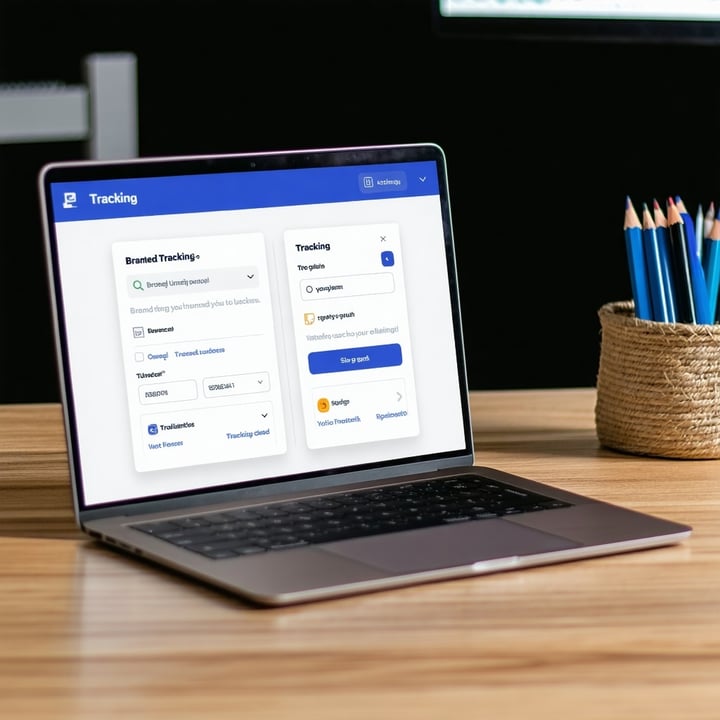
A branded tracking page is a custom tracking interface hosted by a business, designed to reflect the company's logo, colors, typography, and messaging. Unlike standard carrier tracking pages, this page is built to stay within the business's digital ecosystem, often embedded directly into the store website or accessed via a tracking link in shipment notification emails.
You may also hear it referred to as a custom tracking page, white-label tracking page, or order status page. They all describe the same core concept.
Branded tracking offers more than just a real-time status update. It creates a cohesive post-purchase experience, reinforces the brand identity, and turns every tracking interaction into an opportunity for engagement. From product recommendations to social media links, it is the digital equivalent of good packaging: practical, polished, and on-brand.
Branded Tracking Page vs. Carrier Tracking Page: What's the Difference and Why It Matters
Many e-commerce businesses still rely on default carrier tracking pages. While those pages serve a basic function, they fall short in delivering a branded, loyalty-building experience. Here is how the two compare:
| Feature | Branded Tracking Page | Carrier Tracking Page |
| Branding | Your logo, colors, fonts, and messaging | Carrier's branding only |
| Domain | Hosted on your own website or subdomain | Hosted on the carrier's website |
| Customer Experience | Consistent with your store's look and feel | Generic, no personalization |
| Product Recommendations | Can embed cross-sell and upsell offers | None |
| WISMO Reduction | Proactive updates reduce support load | Customers often contact you anyway |
| Data Ownership | You retain engagement and behavior data | Data stays with the carrier |
| Notification Control | Customizable SMS, email, WhatsApp alerts | Limited to carrier defaults |
| EDD Visibility | Display estimated delivery dates (your logic) | Shows carrier's default estimates |
| Multi-carrier Support | Unified experience across all carriers | Different page per carrier |
| Revenue Potential | Promotions, banners, loyalty program nudges | Zero |
The core difference is control. A branded shipment tracking page keeps the customer in your ecosystem. A carrier tracking page sends them away from your brand at the exact moment they are most engaged with their purchase.
For businesses using a multi-carrier shipping solution, this distinction matters even more. Without a branded layer, every carrier presents a different, disconnected experience.
Why Are Branded Tracking Pages Crucial for a Rewarding Post-Purchase Experience?
Before we move on, let’s look at some quick numbers:
-
68% of consumers consider real-time package tracking an essential part of a convenient online shopping experience.
-
58% of consumers expect estimated delivery dates, yet research found that only 1% of brands provide them.
-
Three out of four shoppers won't buy from a retailer if they don't trust its delivery and returns provider.
In a world where customer satisfaction defines long-term revenue, the branded tracking page is a frontline interface between your business and your customers after they hit 'Buy.'
It plays a pivotal role in shaping the post-purchase experience, reinforcing your brand, and keeping customers informed and reassured. Businesses that invest in e-commerce order tracking consistently report fewer support tickets and higher repeat purchase rates.
Why it matters:
-
Builds trust: Customers receive real-time tracking updates directly on your site, reducing confusion and increasing transparency.
-
Strengthens brand identity: Every detail from your logo to your messaging stays consistent, reinforcing brand recognition.
-
Reduces WISMO calls: Clear order status and updates decrease customer inquiries about delivery.
-
Drives repeat purchases: With embedded product recommendations or promotions, tracking pages act as revenue drivers.
-
Improves retention: A smooth post-purchase journey improves the overall customer experience and increases loyalty.
-
Enables feedback loops: Collect ratings, reviews, or delivery experience scores right from the page.
-
Keep them on your site: Customers stay connected to your brand rather than getting redirected to a third-party carrier site.
9 Must-Have Elements in a High-Converting Branded Tracking Page
A branded tracking page should feel like a seamless extension of your store. It is not just about visuals but functionality that assures customers and builds your brand. Below are the essential components that every high-performing branded tracking page must include:
1. Real-Time Order Status and Visual Progress Tracker
It shows the real-time status of the customer's order, from warehouse dispatch to delivery. This feature builds confidence, reduces anxiety, and sets accurate expectations. A visual indicator of movement reassures customers that their purchase is on its way, which reduces the need to contact customer support. Combining this with automated shipment tracking further streamlines the experience.
2. Shipment Details, Carrier Info, and Tracking Number
Displays complete shipping information, including the tracking number, carrier, estimated delivery date, and shipping method. It ensures clarity and adds a layer of credibility to the tracking process, especially for international shipments or time-sensitive packages.
3. Order Summary and Purchase Details
Presents a detailed summary of the customer's order, including product name, quantity, order ID, and payment information. This element ensures customers can cross-check what they ordered and confirm the delivery's accuracy.
4. Visual Progress Bar or Shipment Timeline for Last-Mile Visibility
This graphical element shows different stages of shipment progress. It helps deliver a seamless experience by visualizing each milestone and provides a quick snapshot of where the order stands, from processing to in transit to delivery. This is especially effective for last-mile delivery visibility.
5. Order History and Re-Order Options
Offers easy access to past and current orders in one interface. Whether it is to track a recent order or re-order a past one, this function empowers customers with quick access and builds a sense of control and trust.
6. Branding Elements: Logo, Colors, and Typography
The page should carry consistent branding elements such as the company's logo, brand colors, and fonts. It strengthens brand recognition and ensures that customers stay immersed in your ecosystem, reinforcing every interaction.
7. Personalization: Greetings, Language, and Customer Preferences
From personalized greetings to displaying the customer's first name and preferred language, these subtle touches create a more intimate experience. It shows you value their business and can even help boost customer satisfaction and repeat sales. This kind of personalization is a cornerstone of effective e-commerce automation.
8. Social Media Sharing Buttons for Post-Purchase Engagement
These links allow customers to share their excitement or feedback on platforms like Instagram, Facebook, or X. This not only improves brand visibility but also encourages community engagement.
9. Customer Support Contact Information and Live Help Options
Providing contact details or a direct link to support ensures customers can quickly resolve concerns. Whether it is a delayed package or a missing item, this element reduces friction and displays your commitment to excellent service.
5 Key Features That Make a Branded Tracking Page Stand Out in 2026
Great branded tracking is about utility, responsiveness, and the ability to engage customers beyond the basics of tracking. Here are the defining features that set successful tracking pages apart:
1. Consistent Branding Across Every Post-Purchase Touchpoint
The page should reflect your brand's visual language. The consistent use of logo, colors, and design elements builds trust and reinforces identity. It creates a branded experience that feels professional and intentional rather than a generic post-purchase add-on. This consistency matters even more when you are using a multi-carrier shipping solution where customers may interact with different carriers.
2. Mobile-First Responsiveness and Fast Load Times
Today's customers check tracking links on the go. Mobile optimization ensures a smooth user experience across all screen sizes. DHL's 2025 research found that 91% of shoppers worldwide use smartphones to shop online, reinforcing the importance of mobile-first experiences for e-commerce brands.
3. Live Shipment Tracking with Real-Time Carrier Updates
Providing real-time status updates is a core requirement. Customers should be able to see where their shipment is at any given time, including the estimated delivery window, current location, and even the last carrier scan. This is powered by robust last-mile carrier tracking integrations.
4. Social Proof: Reviews, Testimonials, and User-Generated Content
Incorporating elements such as product reviews, customer testimonials, or influencer mentions enhances trust. It validates the purchase and strengthens brand reinforcement through the voice of other satisfied customers.
5. Customizable Shipping Notifications via SMS, Email, or WhatsApp
Let customers choose how they want updates: whether via SMS, email, or in-app. These notifications should be customizable in content and frequency, reducing unnecessary contact and aligning with customer preferences. Pairing notifications with a strong shipping policy sets clear expectations from the moment of purchase.
How Branded Tracking Pages Reduce WISMO Tickets and Customer Support Load
WISMO or Where Is My Order, is one of the most common post-purchase support queries, and one of the most expensive. For high-volume e-commerce operations, WISMO tickets can account for a significant portion of customer service costs. A well-built branded tracking page directly addresses this problem at its root.
Here is how:
Self-serve visibility replaces support tickets
When customers can see their order status, shipment location, and estimated delivery date on a single branded page, they do not need to call, email, or open a chat. The information is already there.
Proactive notifications intercept anxiety
Rather than waiting for the customer to wonder where their order is, branded delivery notifications via SMS, email, or WhatsApp push updates at every milestone — order confirmed, shipped, out for delivery, delivered. This reduces the impulse to contact support.
Clear next steps reduce escalation
A branded tracking page can surface support contact options, return initiation links, or delay explanations right when they are relevant. When customers can see that a shipment is delayed and understand why, they are far less likely to file a complaint.
Centralized multi-carrier tracking eliminates confusion
For businesses working with multiple carriers, a branded order tracking page unifies the experience. Instead of sending customers to different carrier websites with different interfaces, one consistent page handles all updates. This is especially important for brands using multi-carrier order tracking at scale.
The cumulative effect is measurable
Rather than using a universal 30–40% WISMO reduction figure, brands should measure WISMO ticket volume before and after implementing branded tracking. Self-service visibility, proactive notifications, and clear exception handling can help reduce avoidable support interactions while giving customer service teams more time to focus on higher-value issues.
How Branded Tracking Pages Drive Customer Retention and Repeat Purchases
The post-purchase window is one of the most underused marketing opportunities in e-commerce. Between checkout and delivery, a customer is at peak engagement with your brand, and the branded tracking page is the primary interface during this window.
Here is how it converts attention into retention:
Repeat visits create repeat impressions
Every shipment-tracking interaction is an opportunity to reinforce the brand, provide useful post-purchase information, and introduce relevant products or loyalty initiatives. Rather than relying on a universal tracking-frequency benchmark, retailers should use their own analytics to understand how often customers return to tracking pages and what actions they take there.
Embedded product recommendations drive cross-sell revenue
A branded tracking page can display personalized product suggestions based on the customer’s purchase history, browsing behavior, or category affinity. In advanced setups, brands can also use dynamic product showcases to enhance cross-sell performance and engagement.
Promotional banners and discount codes incentivize the next purchase
Time-limited offers shown on tracking pages, such as "10% off your next order if you shop within 7 days" create urgency and a direct path back to the storefront.
Delivery satisfaction builds long-term loyalty
A positive delivery experience can turn a one-time purchase into a repeat relationship. Research published in 2026 found that 65% of shoppers would buy from a retailer again, even if its price was higher than a competitor's, after having a positive delivery experience.
Real-time tracking also matters, with 71% of frequent shoppers valuing it as part of the delivery experience. A branded tracking page helps brands deliver this visibility while keeping customers connected to the brand throughout the post-purchase journey.
Feedback collection closes the loop
Asking for a delivery rating or product review directly on the tracking page captures sentiment at the right moment, while the experience is still fresh.
Brands that treat the tracking page as a retention channel rather than a logistics utility can use it to strengthen customer engagement and support their broader post-purchase strategy for e-commerce end-to-end.
How to Build a Branded Tracking Page for Your Ecommerce Store: Step-by-Step Guide
Building a branded tracking page requires alignment between your logistics operations, your brand guidelines, and your customer communication strategy. Here is a step-by-step approach:
Step 1: Choose a Post-Purchase Platform or Build In-House
Decide whether to build a custom solution or use a platform like ClickPost that offers out-of-the-box branded tracking with deep carrier integrations. For most e-commerce brands, especially those scaling across multiple carriers, a platform approach is faster and more sustainable. Evaluating post-purchase platform alternatives can help you identify the right fit for your stack and budget.
Step 2: Integrate Your Carriers for Real-Time Tracking Data
Connect your shipping carriers so that real-time tracking data flows into your branded page. If you use a multi-carrier shipping software, ensure the platform supports unified tracking across all your carrier partners. ClickPost, for example, supports 500+ carriers globally.
Step 3: Design the Branded Interface
Apply your brand's logo, colors, typography, and messaging to the tracking page. The goal is to make the page feel like a natural extension of your storefront, not a third-party widget.
Step 4: Configure Estimated Delivery Dates (EDD) to Reduce WISMO
Set up EDD logic based on carrier SLAs, shipping method, origin-destination pairs, and historical delivery data. Understanding how to calculate expected delivery dates accurately is one of the most effective ways to reduce WISMO and set the right customer expectations upfront.
Step 5: Set Up Notification Rules Across SMS, Email, and WhatsApp
Define when and how customers receive updates: order confirmation, shipped, in transit, out for delivery, delivered, and exception alerts. Configure channels — SMS, email, WhatsApp — and personalize message templates with order details and branding.
Step 6: Add Revenue-Driving Engagement Elements
Embed product recommendations, promotional banners, loyalty program prompts, social media links, and feedback collection widgets. These turn the tracking page from a utility into a marketing surface.
Step 7: Enable Analytics and Performance Monitoring
Track page visits, click-through rates on recommendations, notification open rates, and WISMO ticket volume before and after launch. Use this data to iterate on layout, messaging, and notification timing.
Step 8: Test Across Devices and Carriers Before Going Live
Ensure the page renders correctly on mobile, tablet, and desktop. Test with live shipments across your carrier mix to confirm that tracking data populates accurately and in real time.
How ClickPost Helps You Build a Branded Shipment Tracking Solution at Scale
ClickPost helps e-commerce businesses create intuitive, high-performing branded tracking pages that build loyalty and reduce support load. With support for over 600+ carrier integrations, ClickPost allows you to display real-time order updates while embedding your own logo, color palette, and brand messaging throughout the tracking page. It is one of the most comprehensive post-purchase shipping solutions available for growing e-commerce brands.
Key features from ClickPost:
-
Branded tracking pages with complete design control.
-
Live carrier status updates and delivery timelines.
-
EDD display on the tracking page to live up to customer expectations.
-
Personalized shipment notification emails with a direct tracking link.
-
Embedded intelligent product recommendations and promotional banners.
-
Analytics dashboards to track user behavior and satisfaction.
-
Customizable branded delivery notifications across SMS, email, and WhatsApp.
With ClickPost, businesses can reduce customer inquiries, promote cross-selling, boost repeat purchases, and create a professional, branded, personalized experience that stays with the customer long after checkout.
Brands focused on e-commerce shipping at scale particularly benefit from the platform's ability to unify tracking across dozens of carriers.
Book a demo today and transform how your brand delivers post-purchase experiences.
Beyond Delivery: Turning Every Order Into a Lasting Brand Moment
E-commerce is no longer just about a product reaching a doorstep. It is about how the customer felt along the way. The branded tracking page is a strategic asset. It shifts customer perception from transactional to relational. Instead of redirecting them to a cold, faceless carrier site, you give them a warm, branded interface that assures, informs, and even excites.
Each tracking visit becomes an extension of your marketing, an opportunity to build trust and remind customers why they chose you in the first place. Businesses that also optimize their e-commerce fulfillment operations alongside their tracking experience can create a stronger overall customer journey.
More than a logistics feature, a branded tracking page is now the face of post-purchase customer experience. It gives customers easy access to order status, integrates personalization, and uses design thinking to enhance engagement.
In 2026 and beyond, businesses that master this space will not just be delivering packages; they will be delivering lasting impressions. Pairing a great tracking page with a proactive approach to managing shipping delays ensures that even when things go wrong, your brand comes out ahead.
Frequently Asked Questions About Branded Tracking Pages
What is a branded tracking page and how does it work?
A branded tracking page is a custom order tracking interface hosted on your own website or domain that displays real-time shipment updates while reflecting your brand's logo, colors, fonts, and messaging. It replaces the default carrier tracking page and keeps customers within your digital ecosystem throughout the post-purchase journey.
What is the difference between a branded tracking page and a carrier tracking page?
A carrier tracking page is hosted on the shipping carrier's website and shows only the carrier's branding and basic shipment status. A branded tracking page is hosted on your own domain, displays your brand identity, and can include product recommendations, promotional banners, and personalized messaging, giving you control over the customer experience after checkout.
What should a branded tracking page include to be effective?
At a minimum, it should include real-time order status, a visual shipment timeline, estimated delivery date, carrier and tracking number details, order summary, your brand's logo and colors, customer support contact options, and notification preferences. High-performing pages can also include product recommendations, social sharing buttons, and feedback collection.
How does a branded tracking page reduce WISMO tickets?
By providing self-serve order visibility, proactive notifications at every shipment milestone, and clear next steps for exceptions or delays, a branded tracking page can reduce the need for customers to contact support. Brands should measure WISMO ticket volume before and after implementation to determine the actual reduction achieved.
Can a branded tracking page increase repeat purchases and customer retention?
Yes. A branded tracking page creates additional opportunities to engage customers after checkout through relevant product recommendations, loyalty prompts, promotions, and useful post-purchase content. The impact should be measured through engagement and repeat-purchase data rather than assumed as a guaranteed outcome.
Should a branded tracking page be indexed by search engines?
It depends on your strategy. If your tracking page includes useful, publicly accessible content such as general tracking guidance, shipping FAQs, or brand storytelling, indexing it can bring organic traffic. However, if the page only displays order-specific data behind a lookup, it is better left unindexed to avoid thin-content issues. Most brands keep the tracking lookup page itself nonindexed while indexing surrounding support and tracking hub pages.
How does a branded tracking page work with multiple carriers?
A branded tracking page built on a platform like ClickPost aggregates real-time tracking data from all your carrier partners into a single, unified interface. Regardless of which carrier handles a specific shipment, the customer sees one consistent branded experience with the same design, messaging, and notification structure. This is a key advantage for any brand running a multi-carrier shipping strategy.
Is a branded tracking page relevant for Shopify and D2C brands?
Absolutely. Shopify and direct-to-consumer brands benefit significantly because the tracking page is often one of the most important post-purchase touchpoints. For Shopify order tracking, owning this touchpoint, rather than sending customers to a carrier website, helps brands maintain control of the customer experience after checkout.
What role do SMS, email, and WhatsApp notifications play alongside a branded tracking page?
Notifications, via SMS, email, or WhatsApp, complement the branded tracking page by proactively pushing updates to customers at key milestones: order confirmed, shipped, out for delivery, delivered, and delays. Together, the tracking page and notifications form a complete post-purchase communication system that reduces anxiety and support load. For brands exploring WhatsApp for e-commerce notifications, this is one of the highest-impact use cases available.
How do I measure the ROI and impact of a branded tracking page?
Track key metrics including WISMO ticket volume before and after implementation, tracking page visit frequency, click-through rates on product recommendations or banners, notification open and engagement rates, repeat purchase rates among customers who interacted with the tracking page, and customer satisfaction or NPS scores tied to the delivery experience.





We use cookies to keep the site working, understand usage, and improve your experience. Learn more
Always active for essential site performance and security.
Enables anonymous usage analysis to refine our services.
Used to present relevant promotions and advertising.