.png?width=193&height=27&name=ClickPost%20Logo%20(Blue).png)
.svg)
.svg)
.svg)
.svg)
.svg)
.svg)
.svg)
.svg)
.svg)


.svg)
.svg)
.svg)
.svg)
.svg)
.svg)


.svg)
.svg)
.webp?width=286&height=206&name=ROI%20Calculator%20(1).webp)
.svg)
.svg)

.svg)

.webp?width=286&height=206&name=RTO%20Playbook%20(1).webp)
eCommerce Order Tracking: The 2026 Buyer Guide, Benchmarks and Software Comparison


Ready to ship smarter? Talk to our logistics experts.
Trusted by 600+ brands
In this blog
TL;DR Summary
-
Best overall for multi-carrier brands: ClickPost. Per-order carrier scoring plus tracking, exceptions and returns on one record, sold on custom quotes.
-
Best self-serve for Shopify: AfterShip. Essentials from 29 dollars a month, Premium from 59, and the largest integration library in the category.
-
Best budget pick: CWILL Post-Purchase, formerly ParcelPanel. Free tier at 20 orders a month, Essential at 11 dollars, roughly 3 cents per order at Professional volume.
-
Best global enterprise: parcelLab. 175 countries, 550 plus carriers, and the platform now behind FedEx Tracking+.
-
Best for theft, claims and returns abuse: Narvar. Strongest coverage of the money-losing edge cases, weakest ease-of-setup scores.
-
The 2026 headline: three of the best known tools in this category changed owner or name in the last two years, and most comparison articles still use the old names and old prices.
Introduction
Most buying guides for this category are stale in a specific and expensive way. They quote prices from aggregator pages rather than vendor pricing pages, and they recommend products under names their owners abandoned. Every price, plan name, carrier count and rating below was pulled from a primary source in August 2026, and where a vendor has been renamed or acquired, that is stated plainly.
What is eCommerce order tracking?
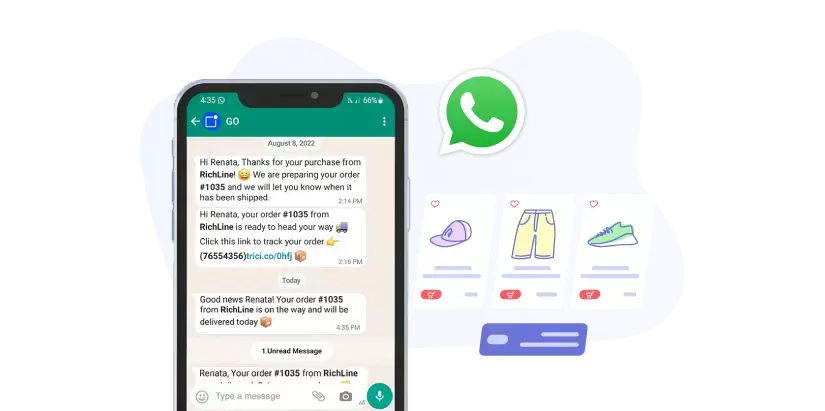
eCommerce order tracking is the system that turns raw carrier scan events into a customer-facing status for an online order. Software collects scans from every carrier you use, normalises them into one status timeline, shows that timeline on a page you control, and sends proactive updates at each milestone so the shopper never has to ask.
Three layers sit underneath that definition, and confusing them is the most common buying mistake:
-
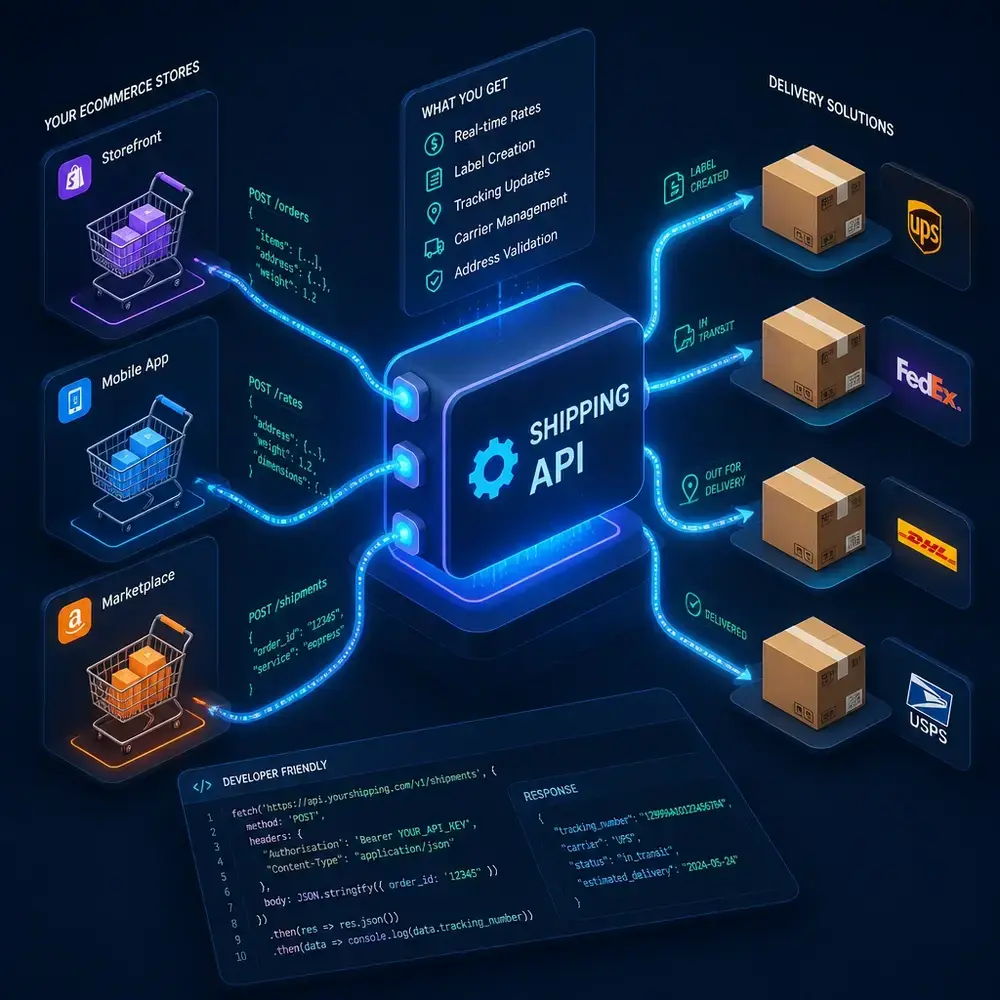
Data layer. A tracking API that pulls scan events from carriers and normalises inconsistent status codes into one schema.
-
Experience layer. A branded tracking page, milestone emails and SMS, an estimated delivery date, and product recommendations while the shopper is engaged.
-
Operations layer. Exception detection, delay prediction, carrier performance reporting, non-delivery resolution and returns.
Cheap tools do the first two. The third is where the money is, and it is the layer most brands discover they needed only after a peak season goes badly.
Why order tracking is a revenue lever, not a support cost
Order status is the highest-volume question in eCommerce support. Salesforce's explainer on WISMO describes these contacts as among the highest-volume and lowest-value interactions in retail, and industry benchmarks commonly place them between a quarter and a half of all inbound contacts, climbing past half during peak weeks. Every one of those tickets is a cost you chose by staying quiet.
The revenue side is easier to underrate. Malomo puts the average shopper at roughly 4.6 tracking checks per order, which means a brand shipping 10,000 parcels a month is generating something close to 46,000 visits to a page it may not even own. Sending that traffic to a carrier website is handing away your most attentive audience of the month.
The demand-side numbers are the ones worth taking to a finance meeting. In Narvar's survey, 73 percent of shoppers said estimated delivery dates influenced a purchase decision, and 40 percent said they would not complete a purchase at all when no date was shown. Chain Store Age's coverage of the same study highlights a second cost line: 40 percent abandoned a purchase in the past year specifically because they feared the parcel would be stolen.
Vendors report the improvement side in similar terms. Figures published in FedEx's February 2026 announcement of Tracking+ and Returns+, drawn from parcelLab data, cite 42 percent fewer WISMO enquiries, 42 percent more repeat purchases and branded tracking pages converting at above 3 percent on average. Those are vendor numbers rather than independent research, so treat them as a directional case rather than a forecast for your own store.
Jason Brenner, senior vice president of digital portfolio at FedEx, framed the strategic point in the same release: "Customer loyalty is often earned after the sale". When a carrier the size of FedEx starts selling white-label post-purchase software, the category has stopped being a plugin decision.
The 2026 shake-up most comparison articles missed
Before any shortlist, four changes matter, because they affect who you sign a contract with and whose roadmap you are betting on.
ParcelPanel is now CWILL Post-Purchase. The app renamed to ParcelWILL and then to CWILL Post-Purchase. Its current pricing page still sits on the parcelpanel.com domain and carries a 2026 CWILL copyright, which is why third-party guides quoting a 399 dollar Enterprise tier are out of date. It is 479 dollars.
Wonderment is now Track by Loop. Loop acquired Wonderment and folded tracking and delivery promise into its returns platform, confirmed in Loop's own FAQ. Help documentation still lives on Wonderment domains, so expect naming inconsistency during evaluation.
Malomo has been acquired by Redo. The acquisition is announced on Malomo's own pricing page. The product still ships, but roadmap ownership has moved, which is a fair question to raise before an annual commitment.
FedEx entered the category. Tracking+ and Returns+, built in collaboration with parcelLab and available to US customers since February 2026, put white-label AI tracking inside a carrier relationship many brands already have.
If a comparison article you are reading still lists Wonderment and ParcelPanel as independent products, it was not verified this year.
Best eCommerce order tracking software compared
All ten tools reviewed in this guide, with entry pricing verified against vendor pricing pages in August 2026. G2 ratings are approximate and move with review volume.
| Platform | Best for | Entry price | Carriers | Named AI features | G2 rating |
| ClickPost | Multi-carrier brands with allocation and exception problems | Custom quote, no free tier | 600+ | Carrier allocation ML, predicted EDD, AI voice agents for NDR, returns segmentation | Low review volume |
| AfterShip | Self-serve Shopify brands scaling past the free tier | Free, then 29 USD/mo | 1,300+ | AI-powered EDD, AI product recommendations, AI email parser | 4.7 (approx. 310) |
| parcelLab | Global enterprise retail across many markets | Enterprise quote only | 550+ | Assistive and autonomous AI agents, Trending Late, predictive promises, Copilot | 4.6 approx. |
| Narvar | US enterprise brands fighting theft, claims and returns abuse | Enterprise quote only | Not published | Narvar Agentic, Promise AI dates, IRIS insights | 4.2 (approx. 165) |
| CWILL Post-Purchase (formerly ParcelPanel) | Budget-conscious Shopify stores and dropshippers | Free, then 11 USD/mo | $1,642.00 | None named; rules-based EDD and recommendations | 5.0 self-reported |
| Track by Loop (formerly Wonderment) | Klaviyo-led lifecycle and retention teams | Volume-based public plans | 60 to 100 | Delay and stall prediction, delivery date estimation | Loop approx. 4.7 |
| Malomo (now part of Redo) | Design-led brands treating tracking as marketing | Quick Start and Growth tiers | 2,000 approx. | Delay detection, page personalisation | Low review volume |
| TrackingMore | Developers who need a cheap multi-carrier tracking API | Free for 50 shipments/mo | 1,000+ | Courier auto-detection, delivery estimates | 4.8 (approx. 60) |
| Track123 | Smallest stores wanting a branded page fast | Free, then approx. 9 USD/mo | 1,000+ | Rules-based notifications only | Thin G2 data |
| Shopify native | Single-carrier stores under a few hundred orders a month | Included in every plan | Carrier links only | None | Not applicable |
The 10 best e-commerce order tracking platforms reviewed
1. ClickPost: Best for multi-carrier brands with allocation problems
ClickPost is a logistics intelligence platform that sits between an order management system and the carriers, handling allocation, tracking, notifications and returns through a single API. Its standout capability is per-order carrier scoring: the allocation engine ranks every eligible carrier on pincode-level serviceability, SLA history, cost and past performance before dispatch, instead of defaulting each parcel to one rate card. Recent releases pushed further into automation with AI voice agents that call customers to resolve non-delivery reports before a parcel bounces back as a return to origin, plus a Control Tower view that surfaces SLA breaches at warehouse level. Because you keep your existing carrier contracts rather than buying bulk rates through an aggregator, the savings come from routing decisions rather than negotiated discounts. Reference customers include Walmart, Puma, Mars, Jackery and Nykaa, which tells you the sales motion is enterprise. The honest trade-off is access: there is no self-serve tier and no published price ladder, so a store shipping 300 orders a month cannot sign up on Tuesday and launch on Wednesday.
-
Pricing: Custom quotes scoped by shipment volume and selected modules, with no published tiers and no free plan. The Shopify App Store listing shows 500 USD a month.
-
AI: Carrier allocation machine learning, predicted delivery dates, AI voice agents for non-delivery resolution, returns segmentation by customer lifetime value.
-
G2 rating: Too few G2 reviews for a reliable average; the Shopify App Store listing shows 4.2 out of 5 from a small review base.
Pros:
-
600 plus carrier integrations while keeping your own carrier contracts and rates.
-
Tracking, non-delivery handling and returns run on one shipment record instead of three disconnected tools.
Cons:
-
No self-serve onboarding and no published entry price, so evaluation starts with a sales call.
-
Reviewers on GetApp mention too many API calls for simple tasks and awkward navigation across brands in enterprise accounts.
Verdict: Right if carrier allocation and delivery exceptions are your real problem, wrong if you only want a branded tracking page by Friday.
2. AfterShip: Best self-serve platform for growing Shopify brands
AfterShip is the default answer in the Shopify ecosystem and the most reviewed product in the category. Its pricing model is now built on annual shipment allowances rather than monthly counts, which trips up a lot of buyers: on the official Tracking pricing page, Essentials starts at 29 USD a month and Premium at 59 USD a month, both quoted at 6,000 shipments per year, with the price climbing as you move the volume slider. Annual billing takes 18 percent off. The feature split matters more than the headline number, because AI-powered estimated delivery dates, a custom domain, order edits, full analytics and API access all begin at Premium, so the API is an upgrade rather than a starter feature. Apple Wallet order tracking is available on every tier including free, which is a small but genuinely useful addition for repeat buyers. Carrier coverage is listed at 1,300 or more. The trade-off shows up on the invoice and in reviews: seats cost 10 to 12 USD per member per month, premium support is priced at 20 to 30 percent of subscription with monthly minimums, and Trustpilot reviewers repeatedly report difficulty cancelling and unexpected charges after trials.
Pricing: Free tier; Essentials from 29 USD a month; Premium from 59 USD a month; Enterprise custom. Overages 0.08 USD per extra shipment on Essentials and 0.12 USD on Premium. Team seats 10 USD annually or 12 USD monthly per member.
AI: AI-powered EDD, AI product recommendations on tracking pages, AI email parser, AI Predictive EDD API on Enterprise.
G2 rating: 4.7 out of 5 across roughly 310 reviews.
Pros:
-
The widest integration library here, including Klaviyo, Attentive, Gorgias, Zendesk and Salesforce.
-
A free tier that is actually usable for validating the branded page before spending anything.
Cons:
-
API and webhooks sit behind Premium, which is awkward if you need data early and experience later.
-
Seats, SMS and support add-ons push the real bill well past the advertised entry price.
Verdict: Best value for a brand under roughly 10 million USD GMV that wants tracking live this week, provided you model the overage and seat maths before signing.
3. parcelLab: Best for global enterprise retail
parcelLab is the enterprise option with the widest geographic reach, managing post-purchase across 175 countries and tracking shipping data from more than 550 carriers. Its recent development has centred on AI agents across the post-purchase journey, split between assistive agents that support human teams and autonomous agents that resolve WISMO enquiries and claims without one. The clearest signal of its market position arrived in February 2026, when FedEx launched Tracking+ and Returns+ as white-label products built in collaboration with parcelLab, which is an unusual endorsement for a software vendor to earn. Named capabilities include Trending Late for delay prediction, predictive delivery promises the company quotes at 92 percent precision, returns volume forecasting with 40 percent improved accuracy, and an in-app assistant called Copilot. Reference customers run to IKEA, Urban Outfitters, YETI and Chico's. What you give up is speed and simplicity, because this is a procurement cycle and an integration project rather than an app install, and there is no published price to sanity-check a quote against.
Pricing: Enterprise quotes only, with no public tiers and no free trial.
AI: Assistive and autonomous AI agents, Trending Late delay prediction, predictive delivery promises, returns forecasting, Copilot in-app assistant.
G2 rating: Approximately 4.6 out of 5, with category leader placement in G2 post-purchase reports.
Pros:
-
Genuine multi-country coverage, including local carrier handling and language localisation.
-
FedEx now ships parcelLab-built tooling, which materially lowers vendor risk for a long contract.
Cons:
-
No published pricing makes internal budgeting guesswork until a sales conversation is complete.
-
Considerable overkill for single-market brands shipping under a few thousand orders a month.
Verdict: The safest enterprise choice if you ship across borders, and an expensive mismatch if you do not.
4. Narvar: Best for theft, claims and returns abuse
Narvar organises its products around consumer confidence rather than parcel data: Promise for delivery dates, Track for the tracking experience, Notify for proactive messaging, Secure for theft, Shield for returns and Assist for delivery claims. That coverage of the ugly edge cases is the real reason to shortlist it, because most tracking tools stop at the branded page and leave porch piracy and claims fraud to your support team. Narvar also runs the most-cited consumer research in the category, and its 2025 report supplies most of the benchmark figures in this article, including the finding that retailers absorbed 103 billion USD in fraudulent returns in 2024. The 2026 direction is Narvar Agentic, an agentic AI layer, alongside IRIS, an insights service the company says draws on more than 74 billion interactions. Chief executive Anisa Kumar makes the commercial case directly, arguing that "shopper trust has become a retailer's most valuable asset". The catch is a G2 score that trails the category leaders at 4.2, where reviewers rate ease of setup lowest of all subscores, which matches its reputation for long implementations.
Pricing: Custom enterprise quotes, modular by product, with no public plans or free trial.
AI: Narvar Agentic, Promise AI delivery estimates, IRIS insights service, fraud and claims scoring.
G2 rating: 4.2 out of 5 across roughly 160 to 170 reviews.
Pros:
-
Deepest handling of package theft, delivery claims and returns abuse of any tool in this list.
-
Publishes primary consumer research you can benchmark your own experience against.
Cons:
-
Lowest G2 ease-of-setup scores among the enterprise options here.
-
Modular pricing means the configuration you actually want costs noticeably more than the entry conversation implies.
Verdict: Choose Narvar when theft, claims and returns abuse are visibly eating margin, and budget for a longer implementation than the demo suggests.
5. CWILL Post-Purchase, formerly ParcelPanel: Best budget pick and best for dropshipping
This is the app most 2026 listicles still call ParcelPanel. It renamed to ParcelWILL and now trades as CWILL Post-Purchase, with the pricing page still hosted on the parcelpanel.com domain. Billing runs on credits where one order equals one credit, split shipments still cost one credit, and customer lookups are free, which makes forecasting far easier than shipment-based tiers. Free covers 20 credits a month, Essential is 11 USD for 200, Professional is 59 USD for 2,000 and Enterprise is 479 USD for 25,000, with extra credits at 0.05 USD and 20 percent off annual billing. Carrier coverage is listed at 1,642, and the dropshipping controls are the real differentiator, since origin masking hides Chinese fulfilment details in a single click. Its weakness is depth rather than breadth: API access, webhooks, auto-translated tracking details and branding removal all start at Professional, and the WooCommerce build trails the Shopify one.
Pricing: Free at 20 credits a month; Essential 11 USD; Professional 59 USD; Enterprise 479 USD. Additional credits 0.05 USD each. Annual billing saves 20 percent.
AI: None named. Post-purchase EDD, custom statuses and product recommendations are rules-based rather than model-based.
G2 rating: 5.0 out of 5, self-reported on the vendor's own site footer, from a small review base. Shopify App Store ratings are strong across thousands of reviews.
Pros:
-
Lowest real cost per order at volume, roughly 3 cents at the Professional tier.
-
Order-based credits are far easier to forecast than shipment-based allowances with overage rates.
Cons:
-
Two rebrands in about a year, so vendor documentation and third-party guides disagree on the product name.
-
The thinnest AI capability of any paid tool reviewed here.
Verdict: The best value per order for Shopify stores under 20,000 orders a month, as long as predictive delivery estimates are not on your requirements list.
6. Track by Loop, formerly Wonderment: Best for Klaviyo-led lifecycle teams
Wonderment built its reputation on shipment events that feed marketing flows rather than on the tracking page itself, and that is still the reason to pick it. Loop acquired the company and the product now ships as Track by Loop, confirmed in Loop's own FAQ, with tracking and delivery promise folded into Loop's returns platform. Delay and stall detection is the core capability: the platform identifies stalled, delayed and lost shipments and pushes those events into Klaviyo, Attentive, Gorgias or Slack so flows you already own do the talking. Delivery Promise adds delivery dates on product pages and at checkout, billed separately from 99 USD a month at up to 10,000 orders, though the checkout block requires Shopify Plus with checkout extensibility enabled. Because tracking and returns now sit with one vendor, the pitch is consolidation. The risk is the one every acquisition carries, which is that roadmap attention follows the larger product.
Pricing: Public self-serve plans keyed to monthly shipment volume with per-shipment fees above plan limits. Delivery Promise is billed separately, from 99 USD a month at up to 10,000 orders. Confirm current tiers with Loop.
AI: Modest. Delay and stall prediction plus delivery date estimation, with no customer-facing AI agent.
G2 rating: Not rated separately post-acquisition; Loop Returns sits around 4.7 out of 5.
Pros:
-
The best shipment event data for retention teams already building flows in Klaviyo.
-
One vendor for tracking and returns after the Loop merge, which simplifies contracts and support.
Cons:
-
Naming and documentation remain inconsistent across help sites and the App Store listing.
-
Carrier coverage in the 60 to 100 range, well behind the aggregators, which limits international use.
Verdict: A strong fit for Shopify brands whose retention lives in Klaviyo, and a weak one if you need broad international carrier coverage.
7. Malomo, now part of Redo: Best for treating tracking as a marketing channel
Malomo's founding argument was that shoppers check tracking around 4.6 times per order, so those pages are impressions a brand already owns and usually wastes. The product delivers fully custom tracking pages built inside the Shopify theme rather than a hosted template, which removes the design ceiling most competitors impose, plus pre-built Klaviyo flows for transactional messaging. Malomo has been acquired by Redo, announced on its own pricing page, which places tracking alongside Redo's returns and shipping protection products. Carrier coverage is listed at roughly 2,000, and transactional email sent from the platform is priced at 0.0045 USD per message, which is unusually transparent for this category. Third-party price reports vary wildly, from 39 USD to 400 USD a month depending on which stale aggregator you read, so treat any figure not published by the vendor as unverified. The scope trade-off is clear: this is a tracking page and notification tool, not carrier allocation or exception management.
Pricing: Quick Start and Growth tiers, with a design-led onboarding option. Transactional email 0.0045 USD per message. Third-party figures conflict, so confirm directly.
AI: Minimal. Delay detection and page personalisation, with no named predictive or agentic feature.
G2 rating: Limited review volume, so no reliable average.
Pros:
-
Effectively unlimited page design, because tracking pages live inside your own theme.
-
Per-message email pricing that suits high-volume senders better than bundled tiers.
Cons:
-
Ownership change introduces roadmap uncertainty worth raising before an annual commitment.
-
The least consistent published pricing of any tool in this comparison.
Verdict: Pick Malomo if a designer owns your post-purchase experience and you want no template ceiling, but ask Redo directly about roadmap commitments first.
8. TrackingMore: Best low-cost multi-carrier tracking API
TrackingMore is the pragmatic choice when your requirement is data rather than experience. The free tier tracks 50 shipments a month and API access is not gated behind an enterprise plan, which is the opposite of how AfterShip structures its tiers and the main reason engineering teams shortlist it. Coverage spans well over a thousand carriers with automatic courier detection, webhooks for status changes, and a branded page if you want one. Its G2 profile skews heavily small business at about 83 percent of reviewers, and support scores 9.8 out of 10, the highest in this comparison set. What you do not get is a post-purchase platform: there is no allocation engine, no claims handling, no serious returns product, and analytics that stop at descriptive reporting. For a marketplace or a third-party logistics provider that needs to normalise carrier events into one schema and build the rest itself, that limitation is not a problem.
Pricing: Free for 50 shipments a month, then four published paid tiers scaling by volume.
AI: Limited to courier auto-detection and delivery estimates, with no agentic or predictive suite.
G2 rating: 4.8 out of 5 across roughly 60 reviews.
Pros:
-
API and webhooks available from the free tier, with no premium upgrade required.
-
Highest quality-of-support score of any vendor in this comparison on G2.
Cons:
- Small-business skew means very few enterprise reference customers to check.
- Thin on returns, claims and exception workflows, so operations work stays with you.
Verdict: The cheapest credible way to get clean multi-carrier tracking data into your own product, provided you are willing to build the customer experience yourself.
9. Track123: Best entry price for a first branded tracking page
Track123 competes almost entirely on price and setup speed, with paid plans reported from around 9 USD a month for 300 orders and a free tier below that. It covers the expected basics: a branded page, multi-carrier detection, email notifications, upsell blocks on the tracking page and a dropshipping mode. As a first upgrade from Shopify's native order status page for a store shipping a few hundred parcels a month, it is a sensible and low-risk purchase. Depth is where it stops. Exception management is shallow, analytics are basic, enterprise references are scarce, and reported pricing has moved more than once, so verify current tiers in the Shopify App Store before you budget. Treat this as a stepping stone rather than a five-year platform decision.
Pricing: Free tier available; paid plans reported from approximately 9 USD a month for 300 orders. Verify current tiers in the Shopify App Store.
AI: Minimal, with rules-based notifications and estimated delivery windows only.
G2 rating: Insufficient G2 volume for an average; Shopify App Store reviews are strong.
Pros:
-
Among the lowest entry prices anywhere for a branded page plus notifications.
-
Fast setup that needs no developer time or theme work.
Cons:
-
Little meaningful exception, claims or carrier performance tooling.
-
Pricing published by third parties is frequently out of date, so plan to verify.
Verdict: Fine for a store under roughly 1,000 orders a month that wants to stop sending customers to carrier websites, and something you should expect to outgrow.
10. Shopify native order tracking: Best for single-carrier stores at low volume
Every Shopify store already has order tracking, and a surprising number of brands buy an app before exhausting it. Adding a tracking number to a fulfilment sends a shipping confirmation email, updates the order status page, and syncs delivery status into the Shop app for customers who use it. That costs nothing and handles a single-carrier operation adequately. Shopify's own guide to package tracking apps is refreshingly candid about the ceiling: no white-label page on your own domain, one confirmation email rather than milestone updates, limited customisation, and Shop app tracking that only reaches customers who have installed the app. The gap that hurts most is operational, because there is no exception alerting, so a stuck parcel gets discovered by your customer rather than by you. Shopify Flow can automate a little more on Basic plans and above, and it is worth exhausting that before spending anything.
Pricing: Included in every Shopify plan at no additional cost.
AI: None in the native tracking flow.
G2 rating: Not applicable.
Pros:
-
Zero cost, zero integration risk and nothing new to maintain.
-
Perfectly adequate at low volume with a single carrier and no split shipments.
Cons:
-
No branded page, no milestone notifications and no exception alerts.
-
Shop app tracking only covers customers who already use the Shop app.
Verdict: Run native tracking until WISMO tickets or split shipments cost you more than an app would, then upgrade deliberately rather than reflexively.
Which order tracking tool fits your role?
The best tool depends far less on feature counts than on whose problem you are solving.
Founder, under 1,000 orders a month. Stay on Shopify native, add Shopify Flow automation, and upgrade to CWILL Free or Track123 when WISMO tickets start eating your own week. Do not buy an enterprise platform for a problem you can measure on one screen.
Customer experience lead drowning in WISMO. Your metric is WISMO rate, meaning tickets divided by shipped orders. AfterShip Premium gets milestone notifications and AI delivery dates live quickly; at enterprise scale, parcelLab's autonomous agents answer the question without a human touching it.
Retention or lifecycle marketer. Track by Loop if your flows live in Klaviyo, Malomo if a designer owns the page and you want no template limits. Both treat shipment events as marketing triggers rather than status updates.
Head of logistics with a carrier problem. ClickPost, because allocation, non-delivery handling and exception visibility are the product rather than an add-on. No tracking page fixes a carrier that misses 12 percent of its promises.
Enterprise eCommerce director, multi-market. parcelLab for cross-border coverage, Narvar if you are US-focused and theft, claims and returns abuse are your visible margin leak.
Engineer building in-house. TrackingMore for API access from the free tier, or ClickPost if you need one API across carriers plus allocation logic you would otherwise build yourself.
AI capability comparison
AI in this category means four distinct things, and vendors use the same word for very different depths of capability. Rules-based delivery windows are not machine learning, and a chatbot on a help page is not an autonomous agent.
| Platform | Predictive EDD | Delay prediction | WISMO automation | Carrier allocation AI |
| ClickPost | Yes | Yes | AI voice agents for NDR | Yes, core capability |
| parcelLab | Yes, 92% precision claimed | Yes, Trending Late | Autonomous and assistive agents | No |
| AfterShip | Yes, AI-powered EDD | Sub-status alerts | Self-serve page and notifications | No |
| Narvar | Yes, Promise | Yes | Narvar Agentic | No |
| Track by Loop | Estimated dates | Yes, stall detection | Event-driven flows | No |
| Malomo | No | Delay detection | No | No |
| CWILL Post-Purchase | Rules-based only | No | No | No |
| TrackingMore | Basic estimates | No | No | No |
| Track123 | Rules-based only | No | No | No |
| Shopify native | No | No | No | No |
One warning worth stating plainly: an inaccurate AI delivery date is worse than no date at all, because it converts a shopper on a promise you then break. Ask any vendor for precision measured against actual delivery on your own lanes, not a global average from their marketing page.
How much does eCommerce order tracking cost?
Published subscription prices tell you roughly a third of what you will pay. The table below lists every cost line that shows up in real invoices, with figures verified from vendor pricing pages in August 2026.
| Cost line | Verified range | What triggers it |
| Subscription | 0 to 479 USD a month published, custom above | Your shipment or order volume tier |
| Volume overage | 0.05 to 0.12 USD per extra shipment | Exceeding the plan allowance, which is annual on AfterShip and monthly on CWILL |
| SMS notifications | About 0.04 USD in the US to 0.09 USD in the UK per message | Every message sent, priced by destination country |
| Transactional email | From about 0.0045 USD per message | Sending branded email from the platform rather than your ESP |
| Team seats | 10 to 12 USD per member per month | Adding anyone beyond the first user |
| Premium support | 20 to 30 percent of subscription, with monthly minimums | Silver or Gold support tiers, applied per product |
| Implementation | Zero to several weeks of design and developer time | Custom domain, theme work, OMS or ERP integration |
Two structural traps deserve attention during procurement. First, allowance periods differ: AfterShip quotes shipments per year while CWILL quotes credits per month, so comparing 59 USD against 59 USD tells you nothing until you normalise the volume. Second, per-product support pricing compounds, because a brand running tracking and returns on the same vendor can pay the support minimum twice.
For a rough business case, take your monthly shipped orders, multiply by your WISMO rate, and multiply that by your own cost per support contact. Benchmarks reported across the industry sit somewhere between 4 and 12 US dollars per handled contact, with phone contacts higher, but use your own figure since it is the only one your finance team will accept. If proactive notifications remove even a third of those contacts, the arithmetic usually clears an entry-tier subscription several times over.
How to implement order tracking in 30 days
Week 1: measure before you buy. Calculate your WISMO rate as WISMO tickets divided by orders shipped in the same period. Tag the whole ticket family, including "has it shipped", "why is it delayed" and "it says delivered but it is not here". Record your own cost per contact and list your carriers by share of volume.
Week 2: shortlist against your carriers, not the feature grid. Name your top three carriers and confirm each is supported, ideally with a test tracking number. Check which tier includes the API if you need one. Confirm allowance periods and overage rates in writing.
Week 3: build the experience. Host the tracking page on a subdomain you own. Configure notifications for shipped, out for delivery, delivered, delayed and exception, and resist the urge to add more. Localise pages and messages if you ship internationally. Route exception alerts into an operations channel your team actually reads.
Week 4: instrument and prove it. Compare WISMO rate against your week one baseline. Track tracking-page conversion, since anything above 1 percent is real revenue. Review carrier on-time performance by lane and destination, then act on the worst lane.
Ongoing: review carrier performance quarterly and re-verify vendor pricing before every renewal, because tiers in this category change more often than annual contracts do.
eCommerce order tracking FAQs
What is eCommerce order tracking?
eCommerce order tracking is the system that collects carrier scan events for an online order, normalises them into one status timeline, and shows that status to the customer on a page the retailer controls. Most platforms also send proactive milestone notifications so shoppers never need to contact support.
How does order tracking software work?
The software connects to your store and to carrier APIs, then matches each fulfilment to a tracking number. As carriers log scans, the platform translates inconsistent carrier status codes into standard statuses, updates your branded tracking page, and triggers email or SMS notifications at each milestone you configure.
Does Shopify have built-in order tracking?
Yes. Adding a tracking number to a fulfilment sends a shipping confirmation email, updates the order status page, and syncs status into the Shop app. Shopify's own documentation notes the limits: no white-label page on your domain, one email rather than milestone updates, and no exception alerts.
What does WISMO mean and how much does it cost?
WISMO stands for "where is my order", the most common post-purchase support enquiry in eCommerce. Reported benchmarks place these contacts between a quarter and a half of inbound support volume, rising during peak, at roughly 4 to 12 US dollars each. Best-in-class retailers keep WISMO rate under 8 percent of shipped orders.
What is the best order tracking software in 2026?
There is no single winner. ClickPost suits multi-carrier brands with allocation problems, AfterShip suits self-serve Shopify stores from 29 USD a month, parcelLab suits global enterprises, Narvar suits US brands fighting theft and claims, and CWILL Post-Purchase is the cheapest credible paid option.
How much does order tracking software cost?
Published entry prices run from free to 479 USD a month, with enterprise platforms quoting custom contracts. Expect the real bill to exceed the subscription once you add volume overages of 0.05 to 0.12 USD per shipment, SMS at roughly 0.04 USD per message, seats at 10 to 12 USD, and premium support at 20 to 30 percent.
How do I reduce WISMO tickets?
Answer the question before it is asked. Show an accurate estimated delivery date at checkout, send notifications at shipped, out for delivery and delivered, and message proactively when a shipment stalls. Vendor data reported by FedEx and parcelLab cites 42 percent fewer WISMO enquiries from proactive, personalised communication.
Can one platform track multiple carriers?
Yes, and this is the main reason to buy one. Aggregators normalise events across large carrier networks, with CWILL listing 1,642 carriers, AfterShip 1,300 or more, Malomo around 2,000 and ClickPost 600 plus. Always test your own top three carriers before committing, since coverage counts include many you will never use.
Why do estimated delivery dates matter?
They change buying behaviour before checkout. In Narvar's 2025 survey, 73 percent of shoppers said a delivery date influenced a purchase decision and 40 percent said they would not buy at all if no date was shown. An accurate date also reduces the anxiety that generates WISMO contacts later.
Is a branded tracking page worth it?
For most brands above a few hundred orders a month, yes. Shoppers check tracking roughly 4.6 times per order, so a carrier page hands your most engaged audience to someone else. Vendor data cites branded pages converting above 3 percent, which turns a support cost centre into a measurable revenue channel.
What KPI should I use to measure order tracking?
WISMO rate is the single most useful number: WISMO tickets divided by orders shipped in the same period, times 100. Track it weekly, segment by carrier and destination, and pair it with tracking-page conversion rate and on-time delivery percentage by lane.
Do I need a tracking API?
Only if you are building the customer experience yourself or piping events into your own systems. If you do, check tier placement carefully. TrackingMore includes API access on its free plan, while AfterShip places the API and webhooks behind its Premium tier, which changes the entry cost considerably.
Choosing your eCommerce order tracking platform
The decision comes down to which layer is actually failing you. If shoppers cannot see where their parcel is, buy the experience layer, and almost anything on this list will do. If parcels are genuinely going wrong, buy the operations layer, because a prettier tracking page reporting the same failures changes nothing except the font.
Two practical instructions before you sign anything. Verify pricing on the vendor's own page on the day you build your business case, since three of the ten products here changed name or owner within two years and the aggregators have not caught up. Then measure your WISMO rate for one week before the demo, because it is the only number that will tell you afterwards whether the purchase worked.




We use cookies to keep the site working, understand usage, and improve your experience. Learn more
Always active for essential site performance and security.
Enables anonymous usage analysis to refine our services.
Used to present relevant promotions and advertising.