%20%20-%20Menu.svg)




.png?width=879&height=549&name=Page%2074%20(1).png)



In this blog
TL;DR — The Best Narvar Alternatives in 2026:
- ClickPost — Best overall alternative for combined logistics intelligence and post-purchase CX, with 500+ carrier integrations and AI-driven returns on one platform.
- parcelLab — Best for branded post-purchase communication across global markets and multi-language CX.
- AfterShip — Best fast-launch alternative for ecommerce tracking and notifications.
- Outvio — Best all-in-one post-purchase stack for mid-market European brands.
- Loop Returns — Best for Shopify D2C brands with high return volumes and exchange-led recovery.
- ZigZag Global — Best for cross-border and multi-region returns routing.
- ReBound — Best enterprise alternative for managed global returns logistics with grading and consolidation.
- ReturnGO — Best for D2C brands needing flexible, rule-driven returns automation.
- Sendcloud — Best for European shipping operations and carrier rule management.
- WISMOlabs — Best for reducing WISMO ticket volume through proactive tracking communication.
Narvar Alternatives in 2026: A Buying Guide for Ops, CX, and Ecommerce Teams
Narvar has been the default post-purchase platform for enterprise retailers for years. Branded tracking, proactive notifications, and concierge returns — that's the pitch, and for a long time it was a strong one.
But the post-purchase market in 2026 looks different than it did when Narvar took the lead. Brands now want carrier-level operations control, faster returns workflow changes, transparent pricing, and the ability to ship updates in days rather than quarters. Narvar wasn't built for that pace.
Some of the patterns we hear most often from teams evaluating a switch:
- The setup took longer than the sales cycle promised — sometimes 60 to 90 days before go-live.
- Returns logic changes go through a support queue instead of a configuration screen.
- Pricing only makes sense at enterprise volumes, and even then, the contract is opaque.
- Reporting is built for CX teams, not for ops teams chasing carrier SLA breaches.
This guide walks through the 10 strongest Narvar alternatives in 2026 — what each one is genuinely good at, where it falls short, what it costs (where pricing is public), and which type of brand it actually fits. We've built ClickPost, so we have a point of view, but we've tried to be honest about where other tools win.
5 Reasons Brands Start Looking for Narvar Alternatives
The triggers we hear from teams in active evaluation calls are usually a mix of cost, speed, and operational depth. Stacked together:
- Pricing that only scales one way. Annual contracts often start in the $28,000–$45,000 range and climb fast with shipment volume. There's no public pricing to benchmark against.
- Implementation timelines measured in months. A G2 reviewer described a returns onboarding that took close to a year. Even typical setups land in the 30–90 day window.
- Limited flexibility on multi-carrier and multi-region setups. Adding a new regional carrier or changing routing logic frequently requires support involvement.
- Analytics built for CX, not ops. Tracking page engagement is well covered. Carrier SLA breaches, NDR patterns, and exception root cause are thinner.
- Hard to extend into B2B, omnichannel, or hybrid fulfillment. The product was designed for D2C ecommerce flows; bolting on warehouse or POS workflows is non-trivial.
If two or more of these match your situation, the platforms below are worth a serious look.
Narvar Alternatives Comparison (2026): Pricing, G2 Ratings, Carrier Depth & Best Fit
| Platform | G2 | Best For | Carrier Depth | Returns | Pricing | Setup Time |
| ClickPost | 4.8/5 | Logistics intelligence + post-purchase CX on one platform | 500+ global carriers via single API | AI-driven returns & exchanges | Custom (volume-based) |
Days to weeks
|
| parcelLab | 4.6/5 | Branded post-purchase comms across global markets | Moderate, market-dependent | Plan-dependent | From ~$40k/year | 4–10 weeks |
| AfterShip | 4.7/5 | Fast-launch tracking and notifications for ecommerce | Moderate to high | Returns module available | $11–$579/month | 1–7 days |
| Outvio | 4.8/5 | All-in-one post-purchase stack for mid-market EU brands | Moderate, EU-strong | Returns portal + workflows | From $4,500/year | 1–3 weeks |
| Loop Returns | 4.7/5 | Shopify D2C brands with high return volumes | Not the focus | Exchange-first specialization | From $155/month | 1–2 weeks |
| ZigZag Global | 4.6/5 | Cross-border and multi-region returns routing | 1,500+ carriers, returns-focused | Global returns program management | Custom | 2–6 weeks |
| ReBound | — | Enterprise global returns with grading and consolidation | Network-dependent | End-to-end returns operations | Enterprise only |
Weeks to months
|
| ReturnGO | 4.8/5 | D2C brands needing flexible, rule-driven returns | Not the focus | Configurable rules + automation | From $147/month |
Days to weeks
|
| Sendcloud | 4.6/5 | European shipping ops and carrier rule management | High in EU ecosystem | Available, plan-dependent | From €199/month | 1–2 weeks |
| WISMOlabs | 5/5 | Reducing WISMO ticket volume via proactive comms | Moderate | Limited / not core | Custom | 1–2 weeks |
Editorial Disclosure & Methodology — This 2026 ranking was put together by ClickPost's product research team. We pulled it from three sources:
- Hands-on testing of dashboard UX, configuration depth, and API responsiveness across the platforms we could trial.
- Technical review of carrier integration depth, returns automation logic, and exception handling capabilities.
- Market data drawn from 1,500+ verified user reviews on G2, Capterra, and CB Insights.
ClickPost is included as the top option for combined logistics + CX use cases. We've worked hard to keep the comparisons grounded in observable benchmarks rather than positioning. Where another platform is a better fit for a given use case, we've said so.
10 Best Narvar Alternatives and Competitors in 2026 [Updated]
1. ClickPost — Best Narvar Alternative for Logistics Intelligence + Post-Purchase CX
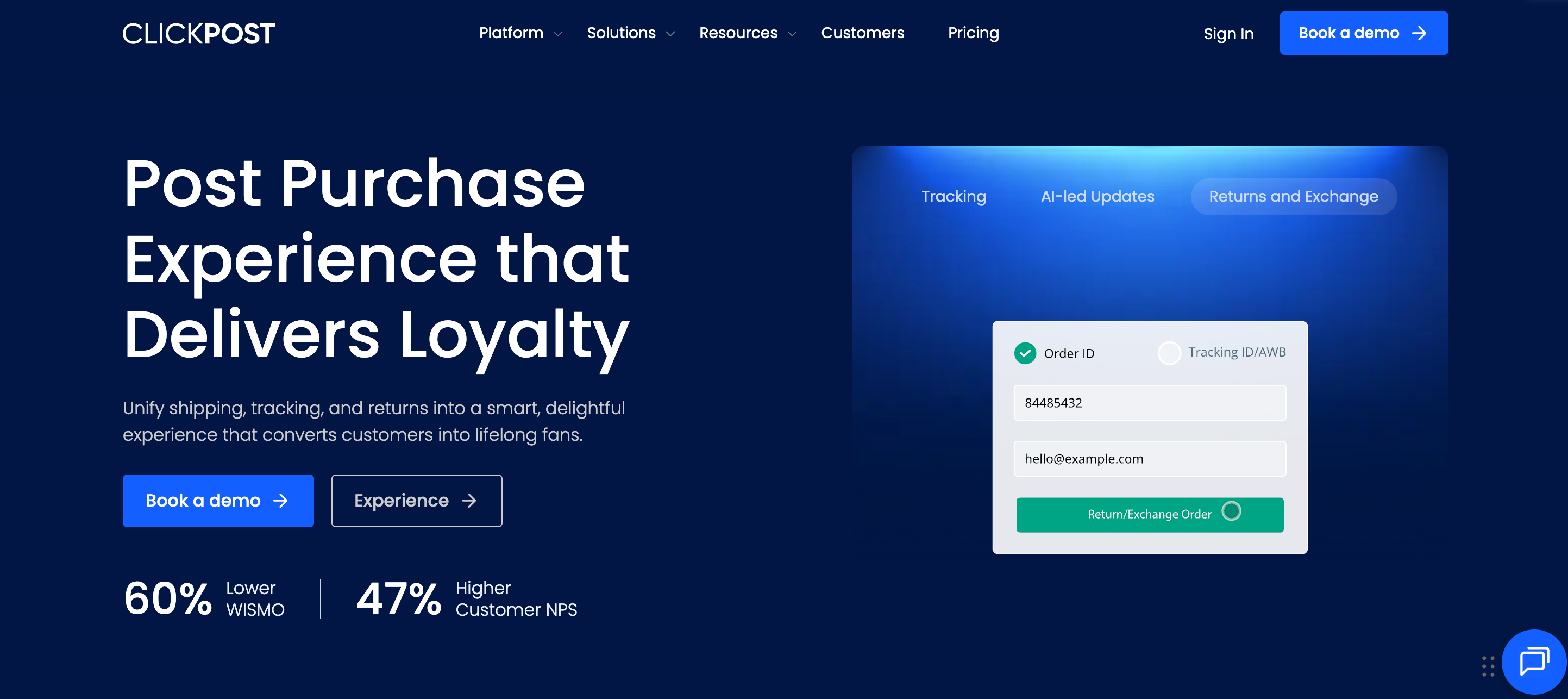
ClickPost sits between your OMS or WMS and your carrier network. The platform handles two jobs at once: it gives ops and support teams operational visibility into every shipment — SLA risk, exception type, NDR pattern, RTO probability — while delivering the kind of branded tracking and notification experience customers see on a Narvar setup.
The reason this matters: most brands evaluating Narvar alternatives in 2026 don't actually need a separate logistics platform on top of a separate CX platform. They need one system that does both, with carrier integrations that don't require a quarterly engineering project to maintain. That's the gap we built into.
What ClickPost is good at:
- Branded tracking pages and configurable customer notifications across SMS, WhatsApp, email, and IVR.
- Returns and exchanges automation — including AI-led return reason classification and policy enforcement.
- 500+ global carrier integrations through a single API. Adding a new carrier doesn't require new dev work.
- Real-time exception alerts on stuck shipments, delivery delays, and SLA breaches — surfaced before the customer notices.
- Carrier performance analytics and intelligent carrier allocation that re-routes shipments based on lane performance.
- Support for B2C, D2C, B2B, omnichannel, and hybrid fulfillment in one workspace.
Implementation: Most ClickPost go-lives land in the days-to-weeks range, not months. We've published case studies on enterprise rollouts that completed in under three weeks.
G2 rating: 4.8/5
Best for: Mid-market and enterprise brands where logistics performance directly affects revenue, retention, and CX cost — and where running separate ops and CX platforms is becoming a pain.

If your brand is ready to modernize logistics and turn post-purchase into a competitive edge:
👉 Get a personalized ClickPost demo and see what next-gen logistics looks like.
2. Claimlane
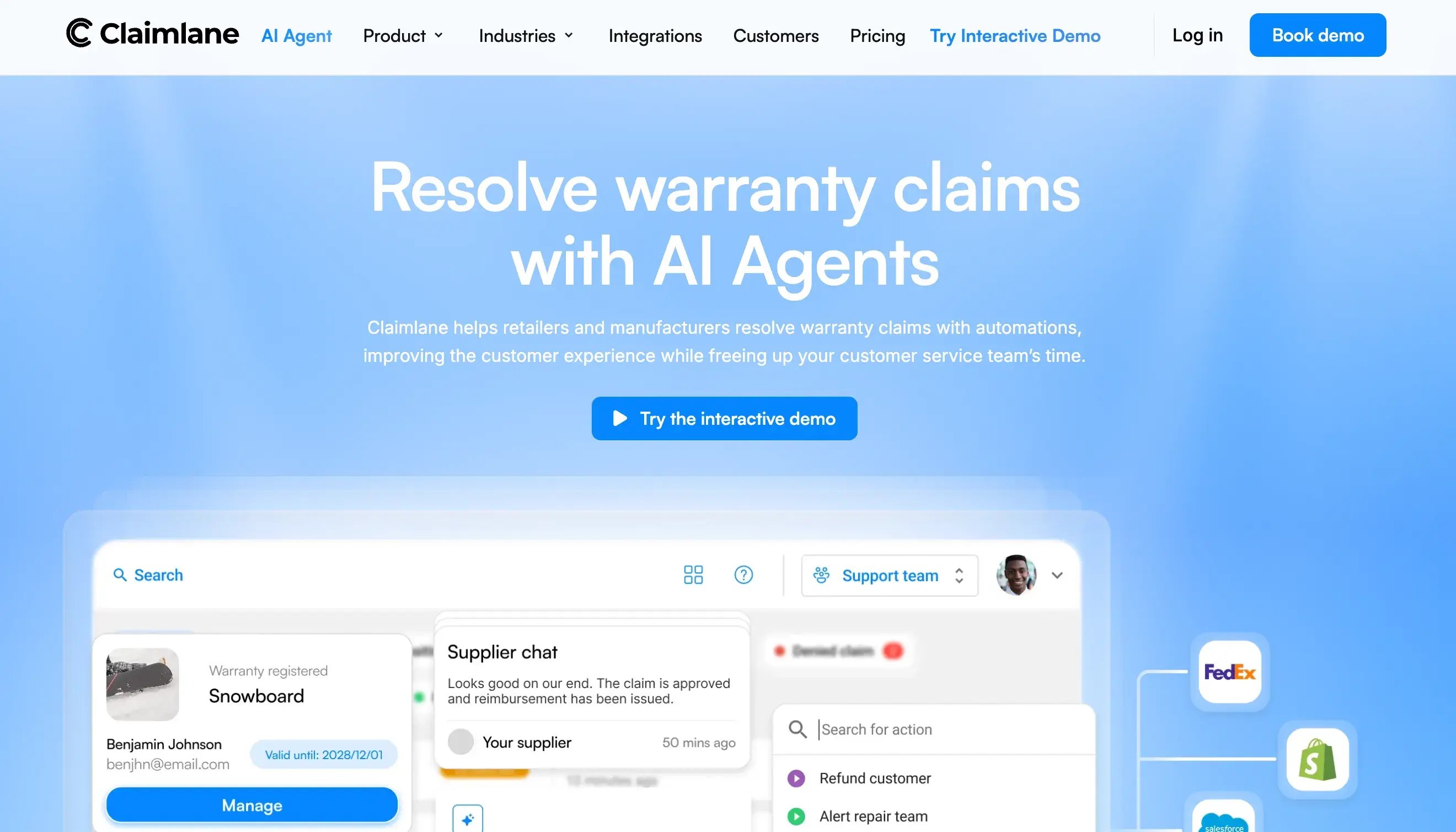
Claimlane is a warranty and returns platform built for brands that need more than a simple return portal. It focuses on advanced warranty processes, including registration, claims handling, and repair management. Moreover, it supports complex product catalogs, supplier relationships, and enterprise-level requirements through configurable processes.
Strengths
-
Handles complex warranty scenarios like product defects
-
Dedicated workflows and interfaces for wholesalers and B2B partners
-
Supports spare-part shipments and local repair vouchers as a resolution
Limitations:
-
Not a full post-purchase platform
- Limited focus beyond warranties and returns
Best for: Scaling brands where warranty handling is a significant part of the post-purchase experience.
3. parcelLab: Best for Branded Post-Purchase Communication Across Global Markets
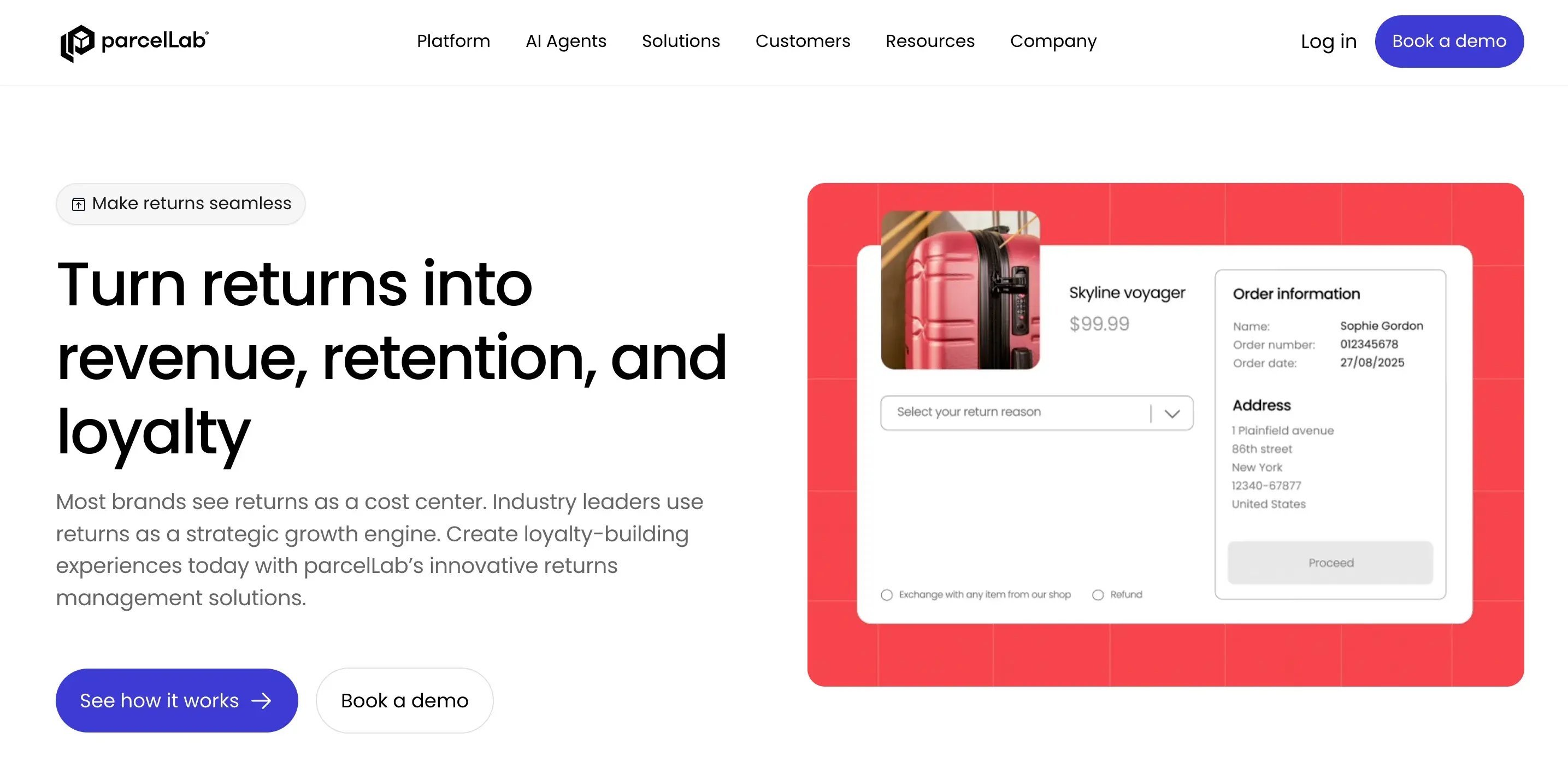
parcelLab focuses on branded tracking, delivery promises, and customer messaging. It helps brands surface delivery promises at checkout and enable customers to choose protection against parcel theft or damage. The platform is primarily used by CX and marketing teams that want to localize post-purchase communication and brand experience without rebuilding the process for every market.
Strengths
-
Strong branded tracking and notification customization
-
Multi-language support for consistent global post-purchase communication
-
Enterprise-ready UI for CX teams
Limitations
-
Not optimized for deep carrier performance intelligence
-
Operational workflows like SLA governance and exception resolution are more limited
Best for: Global brands optimizing post-purchase CX consistency across multiple markets.
G2 Rating: 4.6/5
4. AfterShip: Best Fast-Launch Narvar Alternative for Ecommerce Tracking
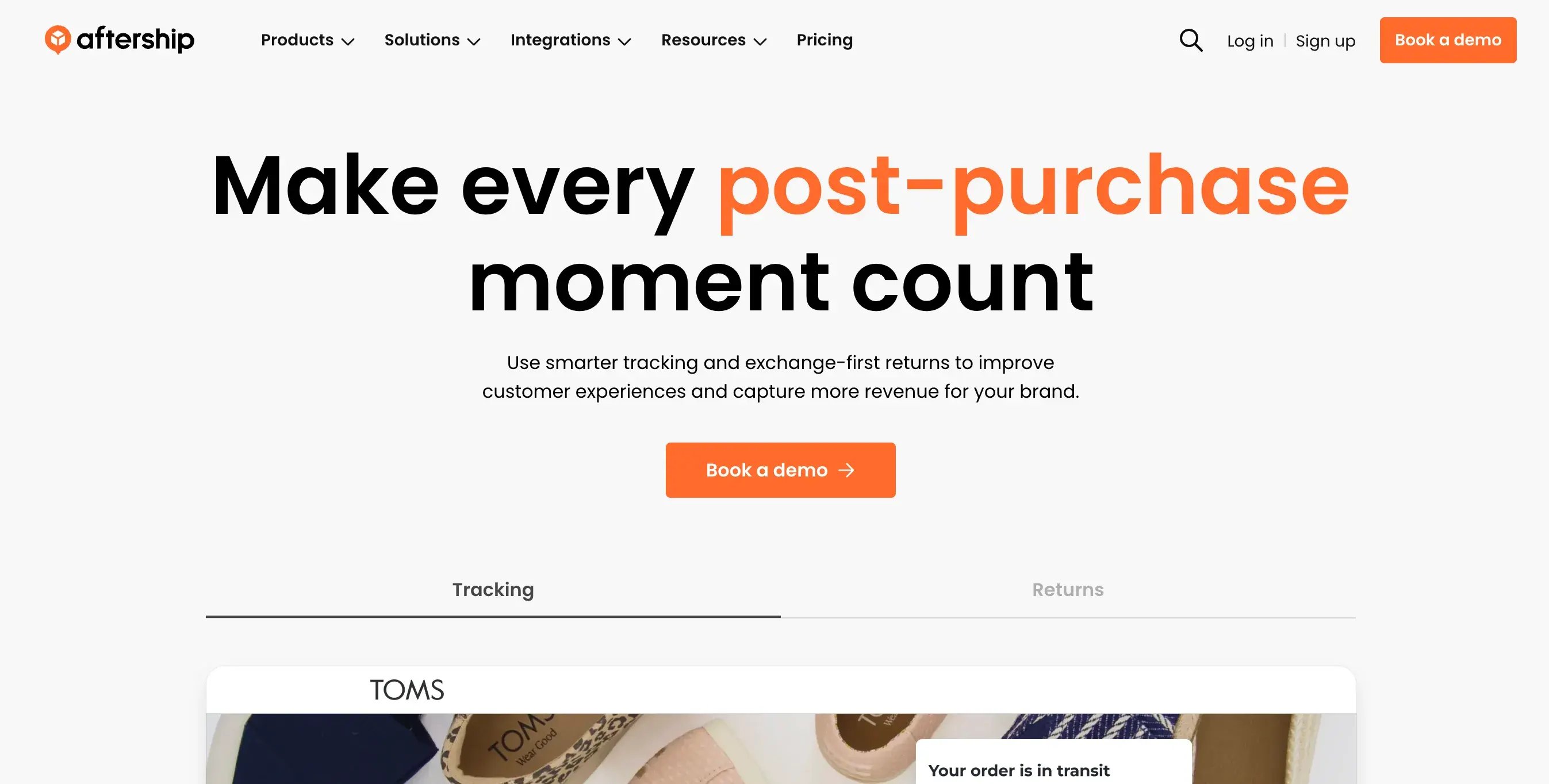
AfterShip is a tracking-first post-purchase platform known for fast deployment and broad ecommerce integrations support. It is commonly used by ecommerce teams that look for responsive tracking and notification updates tied to carrier events, with additional modules for returns and shipment protection. It strongly focuses on customer visibility.
Strengths
-
Quick-to-launch tracking and notification modules
- Broad compatibility with ecommerce platforms and carriers
-
Widely adopted, easy for teams to operationalize
Limitations
-
Limited depth in logistics workflows and carrier performance intelligence
-
Teams with complex SLA governance may require additional tooling
Best for: E-commerce brands that want fast post-purchase tracking visibility with broad platform and carrier integration coverage
5. Outvio: Best All-in-One Post-Purchase Stack for Mid-Market European Brands
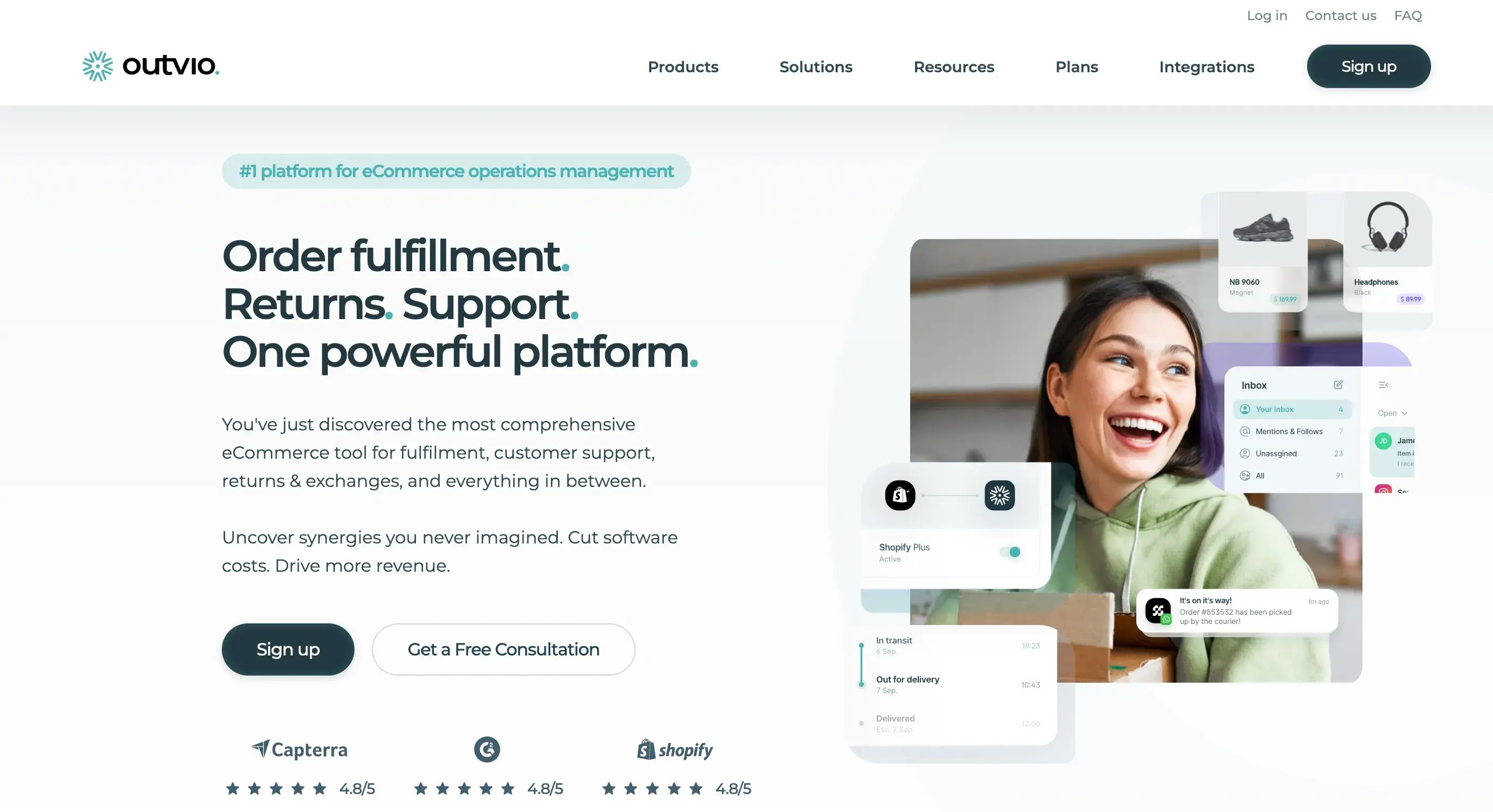
Outvio is a post-purchase platform that brings together tracking, returns, and customer communication into a single system. It also functions as an eCommerce support and helpdesk tool for delivery and returns-related queries. The platform is most commonly used by brands that want visibility and coordination across shipping and returns operations to improve the customer experience.
Strengths
-
Flexible shipping and routing logic for ops teams
-
Exchange-first returns and branded tracking
-
Strong fit for European delivery and pickup models
Limitations
-
Not designed for inventory or order allocation decisions
- Analytics depth is limited for advanced performance-based decisions
- Enterprise onboarding may require additional coordination
Best for: Mid-market brands wanting an all-in-one post-purchase stack with simpler rollout
G2 Rating: 4.8/5
6. Loop Returns: Best Narvar Alternative for Shopify Brands With High Return Volumes
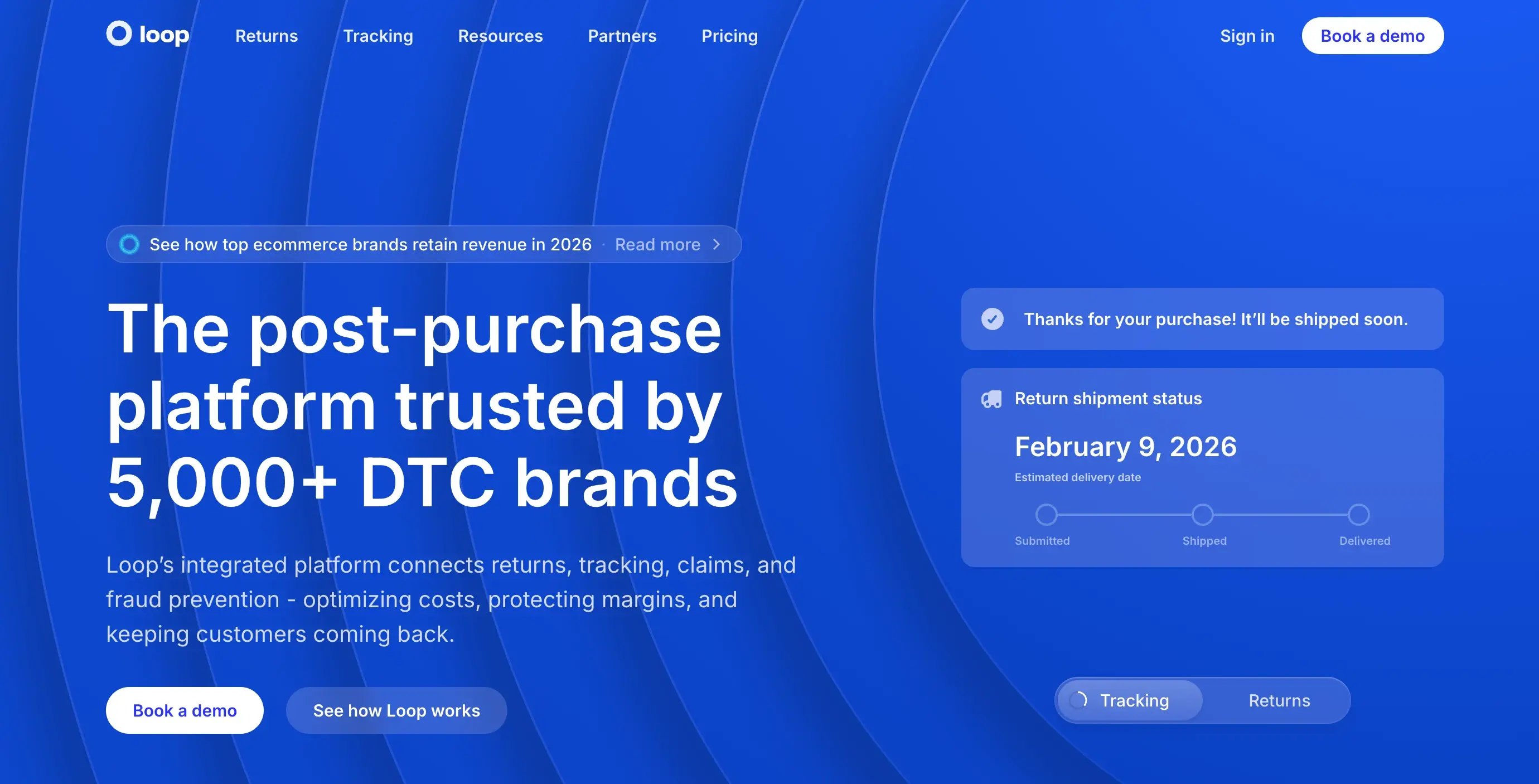
Loop Returns is a Shopify-native returns platform built around exchanges, store credit, and policy-controlled refunds. It has begun supporting branded tracking, order notifications, and delivery estimates. It is most suitable for apparel and lifestyle brands that use Loop to drive instant exchanges and simplify return drop-offs.
Strengths
-
Exchange-first controls for easy swaps and store credit
-
Policy rules and automation designed for returns-heavy categories
-
Shopify ecosystem fit and fast adoption for ecommerce teams.
Limitations
-
Tracking and notifications depth is secondary to returns depth
-
Less flexible for complex global return workflows
Best for - Shopify-led ecommerce brands with high return volumes.
G2 Rating: 4.7/5
7. ZigZag Global: Best for Cross-Border and Multi-Region Returns Management
ZigZag Global is tailor-made for cross-border and international return operations. It helps brands control where their returned items go, how they move across regions, and whether they are resold, refurbished, or disposed of locally. Brands typically adopt it when they require better control overmulti-region returns and costs associated with reverse logistics and product performance.
Strengths
-
Purpose-built for cross-border return workflows
-
Centralized control over routing, carriers, and destinations
-
Enforces consistent return policies across regions
Limitations
-
Lacks strong integrations with major US-based or global carriers
-
Scope is largely confined to return operations
Best for: Brands operating across multiple countries that need centralized control over cross-border returns.
G2 Rating: 4.6/5
8. ReBound: Best Enterprise Narvar Alternative for Global Returns Logistics
ReBound offers end-to-end returns solutions that combine a branded returns portal, a multi-carrier network, and decentralized warehousing. It is typically used by enterprise brands operating across multiple countries. Its specialty lies in managing physical inspections, grading, and shipment consolidation for returned items.
Strengths
-
Strong focus on operational standardization across regions
-
Quick refund triggers to improve customer experience
-
Advanced grading logic enables local item resale
Limitations
-
Less emphasis on branded tracking journeys
-
May require significant technical and operational setup
Best for: Enterprise brands that need global returns logistics and operational standardization.
9. ReturnGO: Best Flexible Returns Automation for D2C Brands
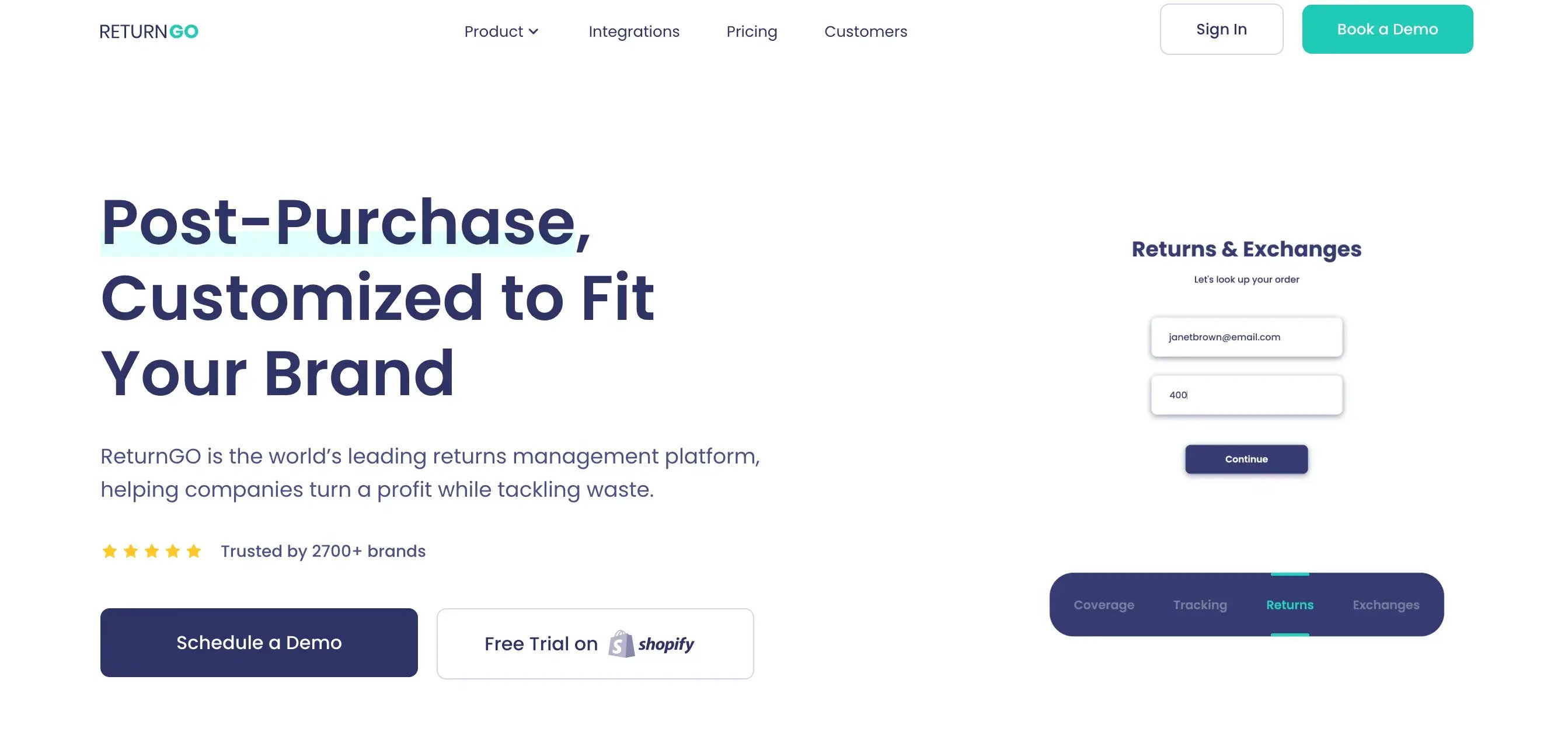
ReturnGO is built for returns automation and flexibility, offering configurable rules and policy-driven automation. It enables users to define granular return rules, steer customers towards exchanges or store credit, and adapt return logic without the hassle of heavy implementation. It’s often selected by D2C brands that favor speed, control, and experimentation in their returns programs.
Strengths
-
Highly configurable returns rules and automation workflows
-
Exchange and store-credit first return handling
-
Easy to adapt as return policies evolve
Limitations
-
Less suitable for complex, multi-country enterprise setups
-
Primarily scoped to returns, not broader post-purchase features like tracking
Best for: D2C brands looking for flexible returns automation and smart policy implementation.
G2 Rating: 4.8/5
10. Sendcloud: Best Narvar Alternative for European Shipping Operations & Carrier Management
Sendcloud sits firmly on the shipping operations side of ecommerce more than on the solid post-purchase experience software. However, it does offer a strong tracking interface and addresses post-purchase communications. Its returns module focuses more on carrier selection, return label generation, and policy automation.
Strengths
-
Streamlines outbound shipping and carrier rule management
-
Strong carrier connectivity across European markets
-
Useful for standardizing warehouse shipping processes
Limitations
-
Post-purchase experience depth may be lighter than CX-first platforms
-
Analytics and advanced workflows depend on the plan and region
Best for: Brands and 3PLs prioritizing efficient shipping execution over post-purchase feature depth.
G2 Rating: 4.6/5
11. WISMOlabs: Best for Reducing WISMO Tickets Through Proactive Tracking Communication
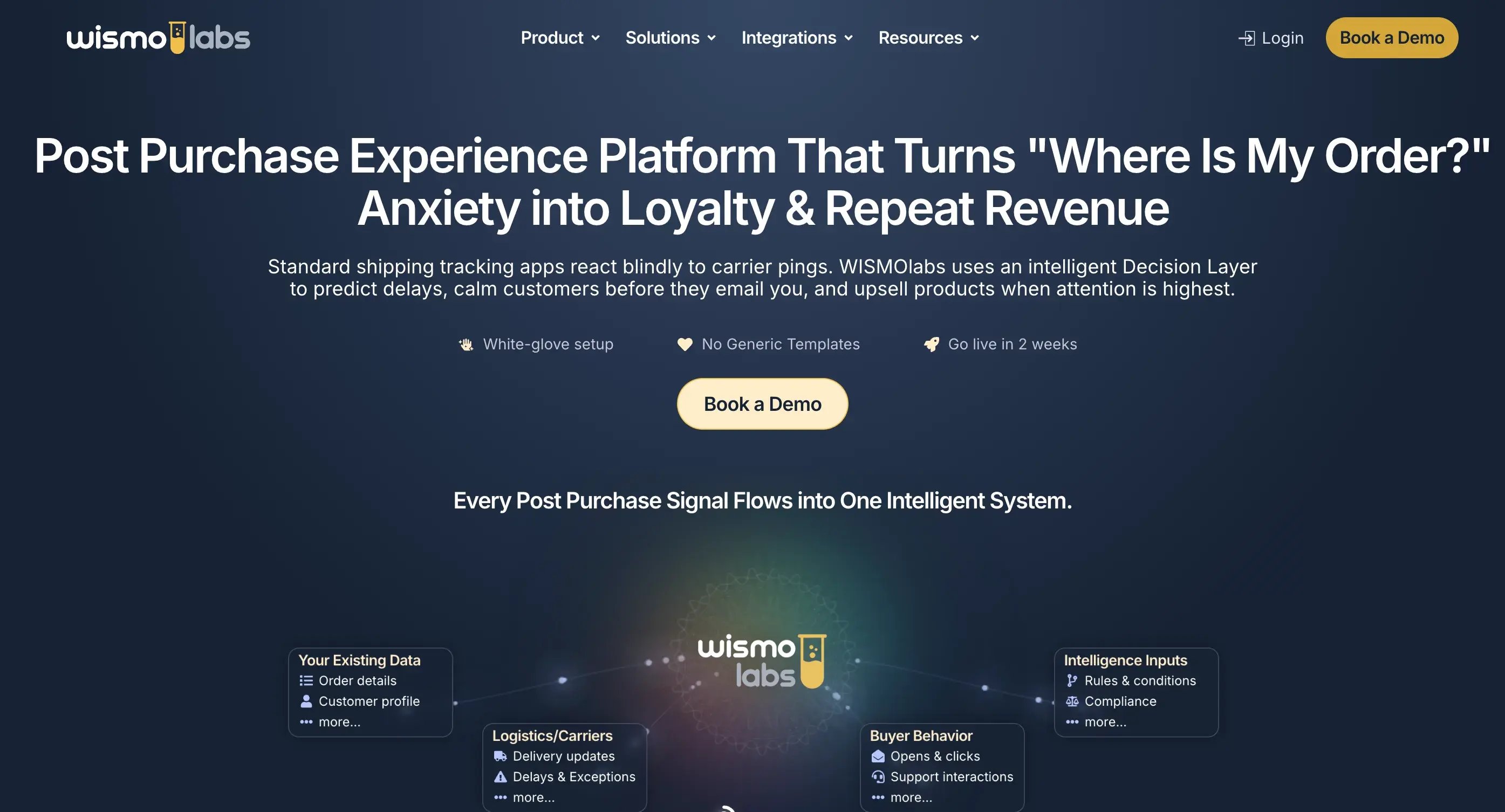
WISMOlabs focuses on reducing “Where Is My Order?” pressure by improving proactive tracking communication and improving shipment visibility for customers. The best time to integrate with the platform is when support tickets spike alarmingly, such as during peak seasons, or when tracking experiences feel fragmented.
Strengths
-
Improves clarity of shipment status updates
-
Multichannel delivery status updates
-
Proactive delay notifications that set clearer delivery expectations
Limitations
-
Less of an ops intelligence system for allocation, SLA governance, and carrier optimization
-
International tracking handoff visibility can be limited.
Best for: Brands trying to reduce WISMO volume and improve tracking clarity for customers.
G2 Rating: 5/5
How to Choose the Right Narvar Alternative for Your Business
The honest answer is that the best alternative depends on what's broken about your current setup, not which platform tops a comparison table. Here's how we'd map common scenarios:
- If you need both ops control and branded CX on one platform: ClickPost or parcelLab. ClickPost goes deeper on carrier intelligence; parcelLab goes deeper on branded comms.
- If you're a Shopify D2C brand with high return rates: Loop Returns for exchange recovery, or ReturnGO if you want more rule flexibility.
- If your problem is cross-border returns costs: ZigZag Global for software-led routing, ReBound for managed service.
- If you're a European brand prioritizing shipping ops: Sendcloud for carrier depth, Outvio for an all-in-one post-purchase stack.
- If you want fast tracking deployment without heavy logistics: AfterShip wins on time-to-launch.
- If WISMO tickets are your main pain: WISMOlabs is purpose-built for it.
Narvar Alternatives FAQs
What are the best alternatives to Narvar in 2026?
The most commonly evaluated Narvar alternatives in 2026 are ClickPost (for combined logistics intelligence and post-purchase CX), parcelLab (for branded global communications), AfterShip (for fast-launch tracking), and returns-led platforms like Loop Returns and ReturnGO. The right choice depends on whether your priority is operational control, customer experience, returns automation, or some combination of the three.
Why do companies look for alternatives to Narvar?
Companies typically look beyond Narvar for four reasons: implementation timelines that run 60–90 days or longer, contract pricing that only makes sense at enterprise volumes, limited flexibility when adding carriers or changing return logic, and analytics that report on customer experience but not on root-cause logistics performance.
Is Narvar a good post-purchase experience platform?
Yes — Narvar remains a strong post-purchase platform for enterprise retailers prioritizing branded tracking and returns consistency across channels. Brands begin evaluating alternatives when their needs shift toward faster customization, lower cost-per-shipment, or deeper operational visibility into carrier performance.
How much does Narvar cost?
Narvar pricing is not publicly disclosed and is typically contract-based. Customer reports and procurement disclosures suggest annual contracts start in the $28,000–$45,000 range for basic functionality, scaling up with shipment volume and feature scope. Several alternatives — including AfterShip, Loop Returns, ReturnGO, and Sendcloud — publish modular monthly pricing instead.
How effective is Narvar at improving order tracking and delivery experience?
Narvar is effective at the customer-facing layer of order tracking — branded tracking pages, proactive notifications, and delivery estimates. Where it's thinner is operational diagnostics: the platform surfaces carrier updates but doesn't pinpoint where a shipment is stuck mid-network or surface root-cause data on delivery exceptions, which can limit ops team visibility.
Can Narvar reduce customer support tickets and WISMO queries?
Yes. Narvar reduces routine WISMO queries by making tracking clearer and more proactive. The caveat: if a brand has high underlying exception rates, no amount of customer communication fixes the root cause — operational tools and carrier-level visibility do.
How do Narvar alternatives compare on pricing?
Most alternatives offer more transparent pricing structures than Narvar. AfterShip starts at $11/month, Loop Returns at $155/month, ReturnGO at $147/month, Sendcloud at €199/month, and Outvio from $4,500/year. Enterprise platforms like ClickPost, parcelLab, ReBound, and ZigZag use custom pricing tied to shipment volume and module scope.
Which Narvar alternative is best for returns and exchanges?
It depends on your model. Loop Returns leads for Shopify D2C brands prioritizing exchange recovery. ReturnGO is the strongest pick for flexible, rule-driven return policies. ZigZag Global and ReBound own the cross-border and enterprise returns logistics use cases. ClickPost handles returns alongside the broader post-purchase stack.
How does Narvar handle returns management and shipping protection?
Narvar offers shopper-friendly returns workflows and an optional shipping protection program. The protection product can offset some delivery loss costs, but several retailers reassess the ROI over time — especially when claim recovery starts trailing protection program costs.
How does Narvar compare to ClickPost for post-purchase and logistics?
Narvar is a CX-led post-purchase platform — branded tracking, returns experiences, and customer communication. ClickPost is built across both layers: it covers branded tracking and returns, but also handles logistics intelligence (carrier performance, SLA monitoring, exception management, intelligent allocation). The choice usually comes down to whether you need a CX platform or a combined CX + ops platform on one stack.
How accurate are Narvar's shipping estimates and delivery assurance features?
Narvar's delivery estimates are based on carrier data and historical delivery patterns. Accuracy varies by carrier and region, and tends to be weaker for non-standard shipments or international routes. Narvar's estimates are designed to communicate expectations to customers — not to actively optimize carrier performance against those expectations.
Do Narvar alternatives include analytics and reporting?
Most alternatives include analytics, but the focus differs significantly. parcelLab and AfterShip emphasize customer engagement and tracking metrics. Loop Returns and ReturnGO emphasize returns-specific analytics like reason classification and exchange recovery. ClickPost, ZigZag, and ReBound emphasize operational intelligence — carrier SLA performance, exception trends, and lane-level insights.
How long does it take to migrate from Narvar to an alternative?
Migration timelines vary by platform and complexity. Lighter SaaS tools like AfterShip, Loop Returns, and ReturnGO can be live in 1–2 weeks. Mid-market platforms like Outvio and Sendcloud typically run 2–4 weeks. Enterprise platforms like ClickPost, parcelLab, and ReBound take 4–10 weeks depending on carrier integrations, custom workflows, and parallel-running periods. The single biggest predictor is how clean the brand's existing carrier data and webhook configuration is going in.