.png?width=193&height=27&name=ClickPost%20Logo%20(Blue).png)
.svg)
.svg)
.svg)
.svg)
.svg)
.svg)
.svg)
.svg)
.svg)


.svg)
.svg)
.svg)
.svg)
.svg)
.svg)


.svg)
.svg)
.webp?width=286&height=206&name=ROI%20Calculator%20(1).webp)
.svg)
.svg)

.svg)

.webp?width=286&height=206&name=RTO%20Playbook%20(1).webp)
Top 15 Courier Services Companies in Australia (Fastest & Cheapest in 2026)



Ready to ship smarter? Talk to our logistics experts.
Trusted by 600+ brands
In this blog
TL;DR Summary
-
Australia Post covers every postcode nationally, including rural and PO Box addresses across 4,000+ post offices and a growing parcel locker network.
-
Australian ecommerce revenue is forecast to reach USD 55.8 billion by 2027, growing at approximately 8.7% CAGR, making carrier selection a direct revenue decision.
-
Brands shipping 1,000+ monthly parcels typically secure contract rates 20–40% below published prices, because volume leverage unlocks tiered carrier discounts.
-
Sendle, Aramex, and CouriersPlease collectively serve SME ecommerce from AUD 7.60–9.50 per parcel, targeting merchants below StarTrack and Australia Post contract thresholds.
-
DHL Express, FedEx, and UPS dominate Australian cross-border freight, covering 220+ countries with customs handling and time-definite international transit.
Why Courier Choice Is Now an Ecommerce Revenue Decision in Australia
Australia's ecommerce logistics sector has moved past the stage where logistics is a back-office cost centre. It's a revenue lever that shapes conversion, lifetime value, and brand perception.
According to Statista's Digital Market Insights, Australian ecommerce revenue is forecast to grow at a compound annual rate of roughly 8.7% through 2027, reaching approximately USD 55.8 billion in total market value.
Various other reports highlight that post-purchase delivery experience has become one of the top three differentiators in competitive retail categories, alongside price and product availability. That reality reframes a question most Australian merchants don't ask often enough: which couriers should you actually ship with? The answer isn't one name.
Australia Post still handles the largest share of residential parcels by volume, but StarTrack, CouriersPlease, Aramex, and Sendle collectively hold a meaningful portion of the ecommerce segment. International couriers like DHL Express, FedEx, and UPS dominate cross-border flows.
Brands with high SKU counts or 10,000+ monthly orders almost always operate a multi-carrier stack rather than relying on a single provider, because no single carrier is cheapest, fastest, and most reliable across every lane.
This guide ranks the top 15 courier services in Australia for 2026, compares them on cost, speed, and operational fit, and explains how to pick the right combination for your business.
Top 15 Australia's Fastest and Cheapest Courier Services at a Glance (2026)
Before breaking down each carrier, the table below compares all 15 couriers on the dimensions most merchants care about at a glance.
| Courier | Best For | Domestic Speed | International | Starting Price (Small Parcel) | Coverage |
| Australia Post | Residential parcels, PO Box access | 1 to 6 business days | Yes (220+ countries) | From AUD 10.60 (500g) | Every postcode |
| StarTrack | B2B and premium B2C | Same-day metro, next-day | No (domestic only) | Contract-based | National, metro-focused |
| CouriersPlease | Metro ecommerce | 1 to 4 business days | Via Ezysend | From AUD 9.50 | National, metro-strong |
| Aramex | SME ecommerce | 1 to 5 business days | Yes (60+ countries) | From AUD 8.95 | National franchise network |
| Sendle | Small business ecommerce | 1 to 7 business days | Yes (limited) | From AUD 7.60 | National (partner network) |
| Toll Group | Freight, B2B, bulk | Same-day to 5 days | Yes (Asia-Pacific strong) | Contract-based | National & International |
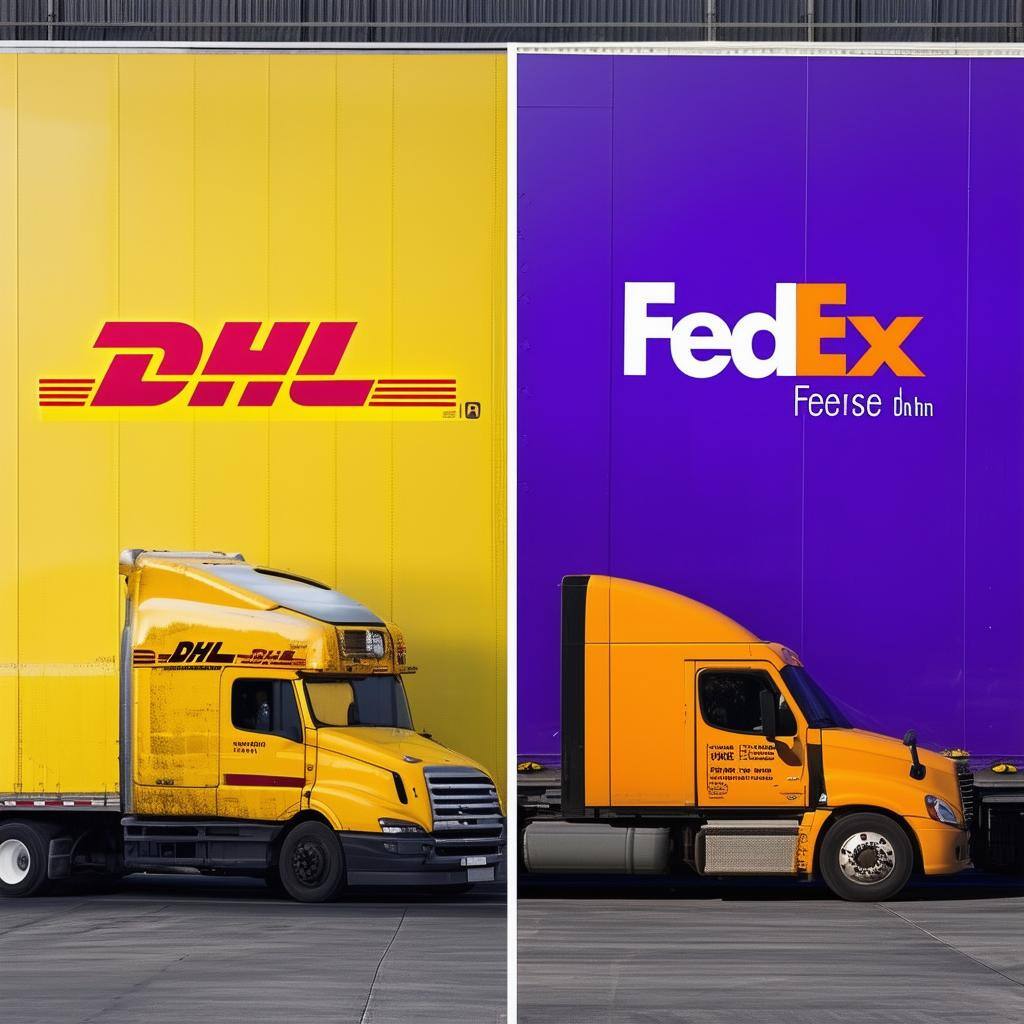
| DHL Express | International express | 1 (Metro) to 5 days | Yes (220+ countries) | From AUD 35+ | Global |
| FedEx | International, temp-sensitive | 1 (Metro) to 5 days | Yes (220+ countries) | From AUD 32+ | Global |
| UPS | International bulk and B2B | 1 to 5 days | Yes (220+ countries) | From AUD 30+ | Global |
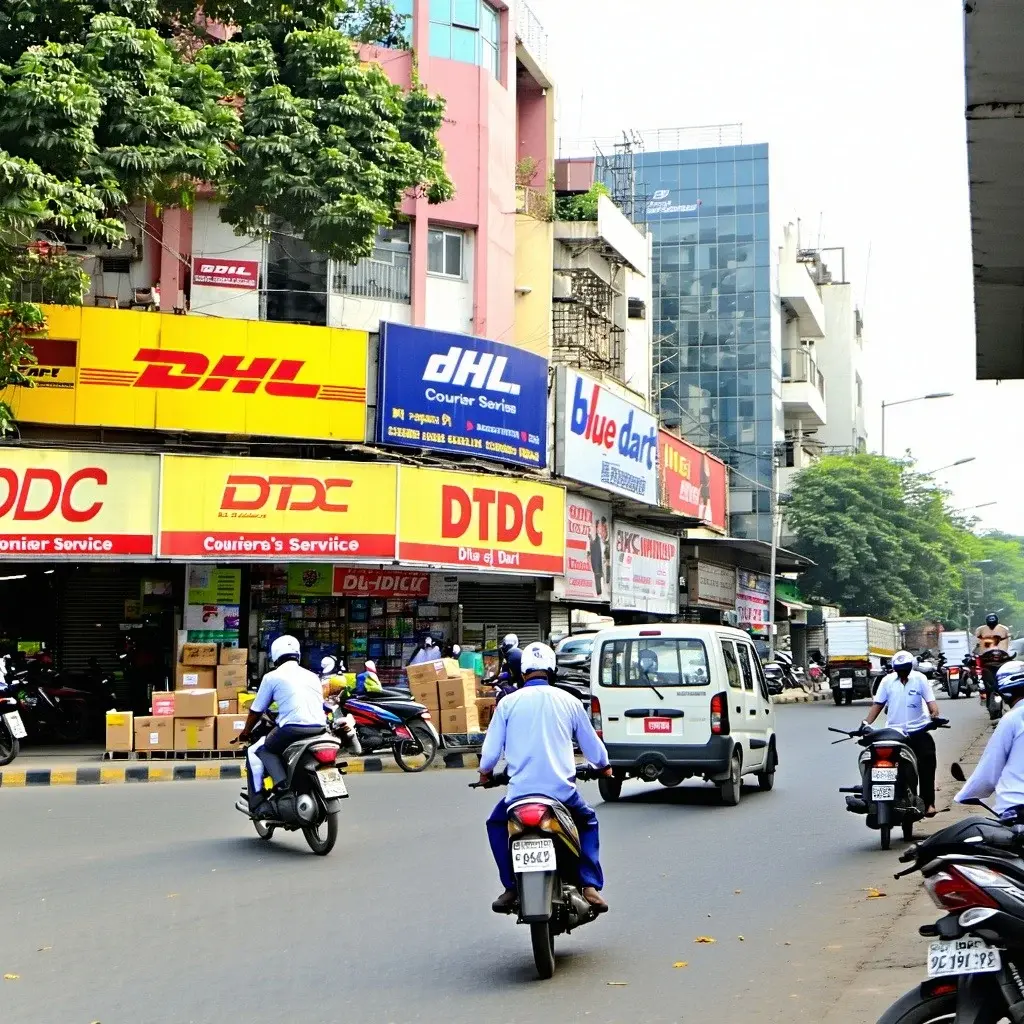
| DTDC | Affordable international | 2 to 7 days | Yes (220+ countries) | Competitive mid-tier | National & International |
| Pack and Send | Oversized, fragile, service | 1 to 5 days | Yes | From AUD 15+ | National retail network |
| Transdirect | Multi-carrier broker | Varies by carrier | Yes | From AUD 6.32 (5kg) | National |
| Austrans Logistics | Freight forwarding | Next-day overnight | Yes | Contract-based | National & International |
| Crane Worldwide | 3PL, freight forwarding | Varies | Yes | Contract-based | Global |
| MAERSK | Ocean freight, cold chain | Freight timelines | Yes | Contract-based | Global |
A note on pricing: the figures above reflect publicly listed rates for a 500g to 1kg parcel travelling metro to metro. Regional, remote, and bulky items cost significantly more. Contract rates for brands shipping over 1,000 parcels per month can be 20% to 40% lower than these starting prices.
Top 15 Courier Services in Australia for Ecommerce in 2026 (Ranked)
1. Australia Post: Best Courier for Nationwide Residential Delivery
Australia's national postal operator and the only carrier that delivers to every postcode in the country, including rural, remote, and PO Box addresses. Operates 4,000+ post offices, a growing 24/7 parcel locker network, and StarTrack as its premium courier arm.
For ecommerce, the most relevant products are the MyPost Business account (which offers tiered discounts based on monthly volume), the Express Post next-business-day satchel service, and the Parcel Post standard service. Tracking granularity can be inconsistent in regional zones, and same-day metro delivery is limited compared to pure-play commercial couriers.
Best for: Brands selling to all of Australia (including regional and remote zones), PO Box deliveries, and merchants on Shopify or WooCommerce who need reliable residential reach without negotiating a commercial contract.
Why it wins in 2026: Postcode coverage no commercial courier can match, combined with the MyPost Business discount tier that scales with volume. Australia Post's consistency across metro and non-metro lanes remains structurally hard to replace.
2. StarTrack: Best for Same-Day Metro and SLA-Backed B2B Delivery
Australia Post's premium courier brand, operating as a separate commercial entity focused on B2B and time-critical ecommerce. Known for same-day metro, next-business-day interstate delivery, and SLA-backed contracts. Pricing is contract-based rather than published.
Proof of delivery, automated SMS and email updates, and API-based integrations are standard. StarTrack also offers 3PL services through Australia Post's fulfillment network, which can be a fit for brands wanting carriers and warehousing under one contract. It's rarely the cheapest option, but it's a common choice for brands shipping high-value goods where failed delivery is expensive.
Best for: B2B merchants, premium D2C brands shipping high-value products, and ecommerce operators running SLA-critical lanes between Sydney, Melbourne, Brisbane, Perth, and Adelaide.
Why it wins in 2026: SLA-backed same-day metro and next-day interstate performance that commercial couriers struggle to match consistently. For brands where a missed delivery window costs more than the shipping premium, StarTrack's reliability and PoD workflow continue to justify the price.
3. CouriersPlease: Best for Metro Ecommerce Shipping at Scale
Singapore Post-owned courier with strong metro coverage across Sydney, Melbourne, Brisbane, Perth, Adelaide, and the Gold Coast. One of the most common carriers in Australian ecommerce contracts, particularly for brands shipping 500 to 5,000 parcels per month.
Its POPStations (pickup lockers located in retail and transit locations) and POPPoints (manned counter locations) give end customers flexibility on where they collect parcels, which measurably reduces failed first-attempt deliveries. Ezysend is CPL's international lane for global shipping. Regional and remote delivery is weaker than Australia Post.
Best for: Metro ecommerce brands shipping 500 to 5,000 parcels a month, apparel and small-parcel D2C merchants, and operators who need flexible customer pickup options as a failed-delivery fallback.
Why it wins in 2026: A growing pickup-network footprint (POPStations and POPPoints) that cuts RTO risk on the trickiest segment of the lane: CBD apartments and unattended daytime deliveries. Competitive metro-to-metro satchel pricing continues to make it a core allocation in most Australian multi-carrier stacks.
4. Aramex (formerly Fastway): Best for SME Ecommerce on a Budget
Franchise-model courier where local operators run territory-based routes under the Aramex brand. Cost-effective for SMEs shipping 50 to 2,000 parcels a month, though service quality can vary by region depending on the local franchise.
Aramex's MyAramex platform offers Shopify and WooCommerce integrations, automated pickup scheduling, and address validation. International shipping covers 60+ countries via the global Aramex network, though it's typically slower and less premium than DHL or FedEx for urgent international orders. B2B pallet freight and same-day metro are not its strengths. You can estimate costs in advance using an Aramex shipping calculator before committing to a lane.
Best for: SMEs with consistent volume in a single metro area, ecommerce brands shipping standard satchels, and merchants looking for an affordable mid-tier international option to the Middle East and South Asia.
Why it wins in 2026: Predictable satchel pricing for high-volume SME shippers and a franchise network that keeps per-parcel costs below the major national couriers for small parcels. The MyAramex ecommerce integrations have matured enough that label generation and pickup booking are low-friction for Shopify and WooCommerce stores.
5. Sendle: Best Cheap Courier for Small Businesses and Carbon-Neutral Shipping
Carbon-neutral courier designed specifically for small businesses and ecommerce sellers. Doesn't operate its own fleet. Instead, it aggregates capacity from couriers like CouriersPlease and Aramex and sells door-to-door shipping for small businesses with a flat, transparent per-parcel pricing model.
Sendle integrates with Shopify, WooCommerce, eBay, Amazon, and Etsy, and handles pickup scheduling automatically. It's one of the cheapest options for small parcels under 5kg shipped domestically. The trade-off: because Sendle uses partner carriers, service quality depends on the underlying courier's network, and rural delivery timelines can exceed published estimates.
Best for: Micro and small businesses under 500 orders per month, Etsy and eBay sellers, and sustainability-focused D2C brands who value carbon-neutral shipping as a customer-facing claim.
Why it wins in 2026: Flat, predictable per-parcel pricing with no volume commitments, zero account setup friction, and carbon-neutral certification that increasingly matters in categories like beauty, apparel, and home goods where sustainability influences conversion. For merchants below contract-rate thresholds, Sendle's pricing is hard to beat.
6. Toll Group: Best for B2B Freight and Bulky Item Delivery
One of Australia's largest freight and logistics operators, with strength in B2B freight, pallet delivery, contract logistics, and Asia-Pacific supply chain services. Toll IPEC (express parcel) and Toll Priority (time-critical) are the two services most relevant to ecommerce brands shipping larger or heavier items.
Toll operates warehouses, customs and quarantine services, freight forwarding, and port operations, which makes it useful for brands that want multiple logistics functions under one contract. For small parcel ecommerce, Toll is rarely the most cost-effective option and is typically chosen by B2B or heavy-item merchants. Brands needing end-to-end visibility should also consider a last-mile delivery software layer on top of their freight carrier.
Best for: B2B shippers, furniture and heavy-goods retailers, brands with bulky SKUs that exceed standard courier weight caps, and operators who need freight forwarding or contract logistics alongside parcel delivery.
Why it wins in 2026: Deep freight and pallet capabilities that small-parcel couriers can't match, plus an Asia-Pacific network that handles customs, quarantine, and port services end-to-end. For brands shipping oversized or bulk freight, Toll's integrated stack reduces vendor sprawl.
7. DHL Express: Best International Courier from Australia for Urgent Shipments
The category leader for international express shipping out of Australia, with coverage across 220+ countries and territories. For cross-border ecommerce brands, it's the default for urgent, high-value international shipments where transit time and reliability matter more than price.
DHL's Time Definite services (next-business-day to major international cities) come with full customs handling, real-time tracking, and recovery support if shipments are delayed. Domestic DHL service in Australia is limited compared to Australia Post or CouriersPlease, so it's rarely used for purely local delivery. A 500g parcel from Sydney to London typically starts at AUD 60+ on published rates. For a detailed breakdown of what to expect, see our guide to DHL courier charges.
Best for: International D2C brands shipping to North America, Europe, and Asia; exporters of high-value goods (electronics, luxury, pharmaceuticals); and merchants where customs handling quality and transit reliability outweigh cost.
Why it wins in 2026: The most mature international logistics network out of Australia, combined with integrated customs clearance that most domestic couriers can't replicate. For urgent cross-border lanes where a single missed delivery can cost more than the freight, DHL remains the benchmark.
8. FedEx: Best for Temperature-Sensitive and North America-Bound Shipments
Global express courier with 220+ country coverage, particularly strong for temperature-sensitive shipments, dangerous goods, and shipments into North America. Its SenseAware tracking platform provides location and condition data (temperature, humidity, light exposure) for sensitive cargo.
FedEx Australia also handles domestic express delivery, though like DHL, its domestic network is smaller than the local players. Free packaging supplies are available for FedEx account holders. International Priority covers 1 to 3 business days to major destinations; International Economy stretches to 4 to 6 business days at lower rates. Review the full FedEx courier charges before comparing against DHL or UPS for your specific lane.
Best for: Pharmaceutical, biotech, and cold-chain shippers; US-bound exports; brands shipping dangerous goods or lithium batteries; and high-value electronics or luxury goods that need condition monitoring.
Why it wins in 2026: SenseAware-level shipment visibility for sensitive cargo, plus the densest North American network of any carrier serving Australia. For categories where shipment condition (not just location) is part of the product promise, FedEx is frequently the only viable carrier.
9. UPS: Best for B2B Exports and Bulk International Consignments from Australia
The third major international express courier alongside DHL and FedEx. A common choice for B2B exporters and brands shipping bulk international consignments, especially to the US where UPS has its densest network and most competitive transit times.
UPS Worldwide Expedited and UPS Worldwide Express cover next-business-day to 5-business-day international delivery. UPS's rate calculator and shipment tracking are mature, and its Shopify and WooCommerce integrations are straightforward to set up. Heavyweight and bulk freight are handled natively without aggressive dimensional weight penalties on dense items. Use the UPS shipping cost calculator to compare rates against FedEx and DHL before booking.
Best for: B2B exporters shipping to the US, wholesale and industrial suppliers, brands with heavy or bulk international consignments, and operators who want direct Shopify or WooCommerce integration for international lanes.
Why it wins in 2026: Strongest US transit network from Australia of the three major international couriers, combined with competitive rates for heavier parcels where DHL and FedEx apply aggressive dimensional weight. UPS is the pragmatic choice for B2B lanes rather than urgent D2C parcels.
10. DTDC: Best Budget Courier for International Shipping to Asia and the Middle East
India-headquartered courier with a Sydney-based Australian operation, offering both domestic and international shipping at competitive mid-tier prices. Covers 10,000+ locations globally, with particular strength into the Indian subcontinent, Southeast Asia, and the Middle East.
DTDC integrates with Shopify, WooCommerce, and eBay, and supports business and retail returns. For brands that need international reach without DHL or FedEx pricing, DTDC fills the gap between budget economy shipping (5 to 10 day transit) and full express service. A full breakdown of lane-specific pricing is available in our DTDC courier charges guide.
Best for: Brands shipping to South Asia, Southeast Asia, and the Middle East at mid-tier speed; ecommerce operators testing international expansion without premium-tier shipping costs; and merchants who need returns handling on international lanes.
Why it wins in 2026: Competitive pricing for international lanes into South and Southeast Asia that DHL, FedEx, and UPS can't match on cost. As cross-border ecommerce from Australia into these markets grows, DTDC's mid-tier positioning is increasingly relevant for brands balancing speed against landed cost.
11. Pack and Send: Best Courier for Fragile, Oversized, and Specialty Items
Retail franchise network with physical service counters across Australia where customers can drop off items and receive packaging assistance. Particularly useful for fragile, oversized, or awkwardly shaped items that standard couriers decline or surcharge heavily.
Services include domestic and international shipping, small-business fulfillment, travel baggage shipping, and art and antique specialty handling. Because it's retail-counter-based, Pack and Send is more expensive than pure courier options, but it fills a niche for items that need professional packaging and handling.
Best for: Fragile goods retailers (ceramics, art, wine), oversized or awkwardly shaped items, small businesses without in-house packing capability, and specialty categories like antiques and musical instruments.
Why it wins in 2026: The retail-counter model remains the only viable option for items that standard couriers won't accept or surcharge into unprofitability. As shipping insurance, customs, and specialty packaging become more complex for high-value or fragile goods, having a physical counter handle the logistics is a durable advantage.
12. Transdirect: Best Shipping Broker for Micro-Businesses Without Volume Commitments
Shipping booking platform and broker that compares rates across Toll, TNT, CouriersPlease, Aramex, and other Australian carriers. Not a courier itself. Acts as a rate broker, letting small businesses access discounted rates they couldn't negotiate directly with individual carriers — similar in concept to how courier aggregators work globally.
Published rates start at AUD 6.32 for a 5kg satchel, making Transdirect one of the cheaper options for micro-businesses shipping fewer than 100 parcels a month. For brands that grow past that threshold, direct carrier contracts usually become cheaper than broker rates, so Transdirect is typically a starting point rather than a long-term solution.
Best for: Occasional shippers, micro-businesses under 100 parcels a month, Etsy or Gumtree sellers, and merchants who want rate comparison across carriers without negotiating individual contracts.
Why it wins in 2026: Zero commitment, zero account minimums, and multi-carrier rate comparison in a single booking flow. For sellers too small to access direct contract rates, broker pricing through Transdirect beats walking up to Australia Post with a credit card.
13. Austrans Logistics: Best for Commercial Import and Export Freight Forwarding
Freight forwarder offering air, sea, and overland freight, with a focus on international commercial shipments. Its published claim of 24-hour international delivery applies only to specific lanes and cargo types (typically urgent air freight between major hubs), not all destinations.
Austrans is best positioned for brands with bulk international shipments, cross-border B2B orders, or specialty cargo that needs customs brokerage. It's not a typical fit for single-parcel ecommerce delivery, but it plays a role for merchants importing inventory or handling commercial B2B logistics export lanes.
Best for: Commercial importers, B2B exporters, brands consolidating bulk inventory shipments, and merchants that need customs brokerage alongside freight handling.
Why it wins in 2026: Multimodal freight capability (air, sea, road) plus customs brokerage under one vendor, which is useful for brands that are scaling international inventory sourcing rather than shipping individual ecommerce parcels.
14. Crane Worldwide Logistics: Best 3PL for Enterprise Supply Chain Management in Australia
US-headquartered 3PL and freight forwarder with Australian warehouses in Perth, Melbourne, Darwin, Brisbane, and Karratha. Services span air freight, ocean freight, customs brokerage, cargo insurance, and contract logistics, with a focus on enterprise supply chain management rather than parcel delivery.
Crane is relevant for enterprise brands or importers running complex global supply chains that need integrated warehousing, freight, and customs handling. For standalone ecommerce parcel delivery, it's generally over-specified and under-economical. Brands evaluating this tier of provider should also compare 3PL logistics companies to find the right operational fit.
Best for: Enterprise importers, brands managing global supply chains, businesses that need integrated warehousing plus freight, and operators in resource-heavy industries (mining, energy) with Perth or Karratha logistics footprint.
Why it wins in 2026: End-to-end global supply chain capability with Australian warehouses strategically placed in Perth and Karratha (rare outside major eastern-seaboard providers). For brands coordinating international inventory flows into and out of Australia, the warehouse footprint is a real differentiator.
15. MAERSK: Best for Ocean Freight, Cold Chain, and Global Containerised Volumes
The world's largest container shipping company, with expanding services in ecommerce logistics, 4PL, and cold chain. For Australian ecommerce brands, MAERSK is most relevant when shipping bulk inventory internationally (into Australia from overseas suppliers, or exporting containerised volumes).
Its ecommerce logistics arm handles warehousing, home delivery, and international transit for larger brands. Smaller merchants rarely need MAERSK's scale, but brands expanding globally often encounter it when they move beyond parcel-level shipping into containerised freight and multi-country warehousing. At this tier, 4PL logistics coordination becomes relevant for managing multiple providers.
Best for: Brands importing bulk inventory from overseas suppliers, exporters shipping containerised volumes, cold chain operators, and global brands setting up multi-country warehousing and distribution.
Why it wins in 2026: Container shipping scale plus expanding ecommerce and cold-chain services means brands can consolidate ocean freight, warehousing, and final-mile distribution with a single provider. For ambitious D2C brands expanding globally, MAERSK's vertical integration is increasingly a practical alternative to stitching together multiple freight and 3PL vendors.
Which Australian Courier Service Is Best for Your Use Case?
No single carrier wins in every dimension. The right choice depends on what you're shipping, where, and how fast. The breakdown below maps the 15 couriers to specific operational scenarios.
Which Courier Offers the Fastest Same-Day Delivery in Australian Cities?
McKinsey research suggests that same-day delivery typically accounts for less than 5% to 10% of total e-commerce orders in most countries, with demand largely concentrated in highly urgent categories like grocery, pharmacy, and urgent gifting.
StarTrack Premium is the most reliable same-day metro option for B2B and premium B2C, with SLA-backed contracts. CouriersPlease Same Day works well for metro ecommerce with smaller parcels. Toll Priority handles time-critical freight and heavier items.
What Is the Best Courier for Interstate Express Delivery in Australia?
Interstate next-business-day is the sweet spot for most Australian ecommerce brands shipping nationally.
Australia Post Express Post is the most common choice, with predictable 1-business-day coverage between capital cities. StarTrack Premium offers SLA-backed interstate next-day. CouriersPlease and Aramex compete aggressively on metro-to-metro interstate pricing for volume shippers. For managing shipping delays across multiple carriers, a centralised tracking layer becomes essential at scale.
What Is the Cheapest Way to Ship Internationally from Australia?
Cross-border ecommerce from Australia has a distinct cost and speed trade-off.
For urgent, high-value shipments: DHL Express or FedEx International Priority. For budget-conscious international with acceptable 5 to 10 business day timelines: DTDC or Australia Post International. For bulk commercial exports: UPS Worldwide or MAERSK (for containerised volumes). Brands shipping to Australia from the USA face the same trade-offs in reverse.
Which Courier Is Best for Small Businesses and Startups in Australia?
Brands under 500 orders per month typically don't qualify for contract rates and need predictable per-parcel pricing.
Sendle is the go-to for carbon-neutral shipping under 5kg. Transdirect offers multi-carrier broker pricing without volume commitments. Aramex franchise pricing can work for SMEs with consistent volume in a single metro area. For a broader view of ecommerce shipping software that can help small businesses manage multiple carriers from one dashboard, see our dedicated guide.
Which Australian Courier Handles Heavy Freight and Bulky Items?
Parcel couriers typically cap at 25kg to 30kg per item and surcharge heavily above that.
Toll Group handles pallet freight and bulky items nationally. Pack and Send specialises in fragile, oversized, and awkward items via its retail counter network. Crane Worldwide Logistics handles pallet-level international freight.
How to Choose the Right Courier Service in Australia: 8 Criteria That Matter
Carrier selection for ecommerce isn't a one-time decision. It's an ongoing operational process that changes as your volume, SKU mix, and geographic footprint evolve. The criteria below are what most logistics teams use when evaluating or re-negotiating carrier contracts.
1. Serviceability and Postcode Coverage
The first question is whether the carrier actually delivers to every postcode you sell into. Australia Post covers every postcode. Commercial couriers don't. CouriersPlease, Aramex, and Sendle all have postcode exclusions or surcharges for rural and remote zones. For brands selling to regional Australia, either Australia Post or a multi-carrier allocation strategy is usually necessary.
2. Weight and Dimension Limits by Carrier
Each carrier has specific limits. Sendle caps at 25kg. Australia Post Parcel Post caps at 22kg (with higher-weight services available at premium rates). DHL, FedEx, and UPS handle up to several hundred kilograms per piece but charge volumetric weight for low-density items. Dimensional weight pricing is the single biggest reason "cheap" carriers become expensive for apparel, bedding, and other light-but-bulky categories. Understanding logistics costs including dimensional weight fees is essential before committing to any carrier contract.
3. How to Negotiate Shipping Rates and Contract Terms
Published rates are starting points, not actual costs. Most carriers offer volume discounts starting at 500 to 1,000 parcels per month, and aggressive contract rates for brands above 10,000 parcels. PwC's Global Consumer Insights Pulse Survey notes that shipping cost is consistently among the top three reasons for cart abandonment globally, which makes carrier negotiation a direct revenue lever.
4. How Fast Do Australian Customers Expect Delivery?
Consumer expectations have shifted faster than most carrier networks. Omnichannel retail found that roughly 25% of consumers will pay a premium for same-day delivery, while 2-3 business days has become the baseline expectation for standard domestic orders. Setting accurate estimated delivery dates at checkout reduces both cart abandonment and WISMO enquiries post-purchase.
5. Hidden Shipping Costs and SLA Terms to Watch For
Watch for: fuel surcharges (typically 4% to 12% of base rate), residential delivery fees, regional and remote surcharges, RTO fees, redelivery fees, dimensional weight calculations, and peak season surcharges (November to January). A "cheap" base rate with high surcharges often ends up more expensive than a higher base rate with inclusive pricing. SLA terms matter too: if a carrier misses its promised delivery window, what compensation do you get?
6. Tracking Quality and Post-Purchase Customer Communication
Post-purchase communication is one of the highest-ROI investments in retention. A branded tracking page with proactive SMS, email, or WhatsApp updates measurably reduces WISMO calls (customer enquiries asking "Where is my order?"). Most carrier-native tracking pages are functional but un-branded, which is why most mid-to-large brands overlay a branded tracking experience on top of carrier data.
7. How to Reduce Returns and RTO Rates in Australia
RTO (return to origin) is the single largest avoidable cost in ecommerce logistics. Industry data varies by category, but RTO rates in Australia typically sit between 3% and 8% for prepaid ecommerce, and can spike higher for COD-heavy categories. Before signing a carrier, clarify the reattempt policy (how many delivery attempts before RTO), how RTO fees are calculated, and whether the carrier supports automated NDR (non-delivery report) workflows. A dedicated RTO reduction strategy typically delivers measurable cost savings within the first quarter of implementation.
8. Technology, API Integration, and Ecommerce Platform Compatibility
Every carrier claims Shopify integration. Not every integration is equivalent. Some generate labels only. Others support tracking, returns, shipping rate APIs at checkout, and full two-way data sync. For brands running headless commerce or custom checkouts, raw API access matters more than plug-and-play plugins. A multi-carrier shipping platform that normalises data across all carriers is often more practical than managing separate integrations per courier.
How We Evaluated and Ranked These 15 Australian Courier Services
Every carrier was scored against seven criteria built for ecommerce operators, not casual shippers:
- Network serviceability — share of Australian postcodes covered, including rural and remote zones where many couriers add surcharges or simply opt out.
- Delivery speed — every available tier: same-day metro, next-day express, two-to-three-day standard, and economy road freight.
- Pricing transparency — published rate calculators, volume discounts, and predictable satchel pricing for small parcels.
- Ecommerce platform integration — native Shopify, WooCommerce, BigCommerce, or Magento plugins that skip manual label entry.
- Tracking quality — real-time scans, branded tracking pages, and SMS or email notifications.
- Returns and RTO handling — self-serve returns, reattempt policies, and fee structures when deliveries fail.
- Specialised capability — cold chain, dangerous goods, oversized freight, and customs clearance.
Data sources: public carrier documentation (service schedules, rate cards, coverage maps), PwC's Global Consumer Insights Pulse Survey, and Statista Digital Market Insights. Pricing reflects published base rates as of April 2026 — live contract rates for volume shippers typically run 15% to 40% lower, so verify with each carrier before signing.
Rankings are grouped by primary use case rather than a single ordinal list, because "best" depends on whether you're shipping a 500g apparel parcel to Parramatta or a pallet from Fremantle to Dubai.
How ClickPost Helps Australian Ecommerce Brands Manage Multiple Couriers
ClickPost is a post-purchase logistics intelligence platform that sits on top of a brand's own carrier contracts. It doesn't replace Australia Post, CouriersPlease, or DHL. Instead, it adds an operational layer across whichever carriers you use, so the multi-carrier stack behaves like a single system.
For brands running 10,000+ orders per month across multiple Australian carriers, ClickPost handles AI-driven carrier allocation (picking the right carrier per shipment based on serviceability, SLA, and cost), automated shipment tracking across 600+ carriers globally, branded tracking pages that replace generic carrier tracking links, proactive notifications via SMS, email, and WhatsApp, NDR management that detects failed deliveries and triggers automated customer outreach, estimated delivery dates at checkout to reduce abandonment, and a self-serve returns and exchanges portal that converts 54% of return requests into exchanges.
ClickPost powers 450+ global brands across D2C, retail, marketplace, B2B, and quick commerce. It's typically the platform brands graduate to once they've outgrown the aggregator model or the stitched-together combination of carrier plugins, tracking apps, and manual workflows.
If you're running a mature multi-carrier operation and want a single system across allocation, tracking, NDR, and returns, book a demo.
Final Verdict: How to Pick the Right Courier Mix for Your Australian Ecommerce Business
Picking the right courier in Australia in 2026 isn't about finding the single best carrier. It's about matching carrier capabilities to shipment profiles, then building the operational layer that makes the whole system run cleanly.
For residential reach and PO Box access, Australia Post remains the default. For metro ecommerce at scale, CouriersPlease and Aramex compete on price and network. For urgent B2B and premium deliveries, StarTrack and Toll lead. For international, DHL, FedEx, UPS, and DTDC cover different price and speed tiers. For small businesses under 500 parcels a month, Sendle and Transdirect offer accessible pricing without contract commitments.
Most successful Australian ecommerce brands ship across three or more carriers. What separates the operationally mature from the rest isn't which carrier they picked. It's whether they built the post-purchase experience layer — tracking, NDR automation, returns, analytics — that turns a multi-carrier stack into a coherent customer experience.
Frequently Asked Questions About Courier Services in Australia
What is the cheapest courier service in Australia for small parcels?
Sendle and Transdirect are the cheapest courier services in Australia for small parcels under 5kg, with starting rates from AUD 6.32 to AUD 7.60 per parcel. For volume shippers above 1,000 parcels per month, direct contracts with Australia Post MyPost Business, CouriersPlease, or Aramex typically beat broker or aggregator rates by 20% to 40%. Actual cost depends on weight, dimensions, origin, destination, and volume commitment.
Which courier service is the fastest for domestic delivery in Australia?
StarTrack Premium and Toll Priority are the fastest courier services in Australia for same-day metro and next-business-day interstate delivery, both offering SLA-backed timelines. For international express, DHL Express and FedEx International Priority deliver to major global cities in 1 to 3 business days. Australia Post Express Post is the most widely used next-day delivery domestic service, covering all capital city lanes.
Is Sendle cheaper than Australia Post for ecommerce businesses?
Sendle is typically cheaper than Australia Post for small parcels under 5kg shipped by businesses without an Australia Post MyPost Business contract. Once MyPost Business discounts kick in (starting at 250 parcels per year), Australia Post becomes competitive on price, especially for regional and PO Box deliveries where Sendle's partner carriers either don't serve or surcharge. Sendle's advantage shrinks above 1kg and disappears above 5kg for most lanes.
Which couriers offer same-day delivery across Australian capital cities?
StarTrack, Toll Priority, CouriersPlease, and DHL Express offer same-day delivery in Australian capital cities, primarily Sydney, Melbourne, Brisbane, Perth, and Adelaide. Same-day service is typically limited to metro postcodes and requires booking before a cutoff time (usually 10am to 12pm). Regional same-day delivery is rare outside specific city-pair lanes and typically costs 3 to 5 times standard express pricing.
What is the best courier for ecommerce in Australia in 2026?
The best courier for ecommerce in Australia depends on order volume and customer geography. For residential orders across all postcodes, Australia Post is the default. For metro ecommerce shipping 500 to 5,000 parcels monthly, CouriersPlease and Aramex offer competitive rates and Shopify integrations. For volumes above 10,000 parcels monthly, most brands run a multi-carrier allocation strategy across Australia Post, CouriersPlease, Aramex, and StarTrack.
How much does it cost to ship a 20kg parcel within Australia?
Shipping a 20kg parcel within Australia typically costs AUD 25 to AUD 75 on published rates, depending on carrier, distance, and service tier. Australia Post Parcel Post is usually the cheapest for 20kg residential shipments. StarTrack, Toll, and CouriersPlease offer next-day options at higher rates. International 20kg shipments start at AUD 150+ via DHL, FedEx, or UPS, and can exceed AUD 400 for remote destinations or premium service tiers.
Which international courier is best for shipping out of Australia?
DHL Express is the most widely used international courier out of Australia for urgent and high-value shipments, with coverage across 220+ countries. FedEx is preferred for temperature-sensitive and North American shipments. UPS has the densest network into the US and is commonly used for B2B exports. For budget-conscious international ecommerce with longer transit times (5 to 10 business days), DTDC and Australia Post International are the main cost-effective alternatives.
What is the difference between StarTrack and Australia Post?
StarTrack is the premium B2B and time-critical courier brand owned by Australia Post, operating as a separate commercial entity. Australia Post handles mass-market residential parcels across all postcodes with published rate cards. StarTrack focuses on same-day metro, next-business-day interstate, and SLA-backed contract shipping for businesses, and operates a modern depot and linehaul network that's generally faster than standard Australia Post services.
Do Australian couriers deliver to rural and remote areas?
Australia Post delivers to every Australian postcode, including rural and remote zones, which is why it's the default for regional ecommerce. Commercial couriers including CouriersPlease, Aramex, and Sendle have postcode exclusions, extended transit times, or surcharges for rural and remote deliveries. DHL, FedEx, and UPS can deliver to remote addresses internationally but typically route final-mile through Australia Post for residential delivery to these zones. Our full guide to last-mile delivery solutions covers how to structure carrier mix for regional coverage.
How do I reduce failed deliveries and RTO rates in Australia?
Reducing failed deliveries in Australia involves address validation at checkout, accurate delivery date communication, proactive SMS and email notifications before delivery, and automated NDR (non-delivery report) workflows when a first attempt fails. Proactive communication can reduce delivery-related support contacts by 30% or more. Platforms like ClickPost automate NDR detection and customer outreach, which helps brands recover failed deliveries before they convert to RTO. For a full breakdown of tactics, see our guide to reducing return-to-origin rates in ecommerce.




We use cookies to keep the site working, understand usage, and improve your experience. Learn more
Always active for essential site performance and security.
Enables anonymous usage analysis to refine our services.
Used to present relevant promotions and advertising.