.png?width=193&height=27&name=ClickPost%20Logo%20(Blue).png)
.svg)
.svg)
.svg)
.svg)
.svg)
.svg)
.svg)
.svg)
.svg)


.svg)

.svg)
.svg)
.svg)
.svg)


.svg)
.svg)
.webp?width=286&height=206&name=ROI%20Calculator%20(1).webp)
.svg)
.svg)

.svg)

.webp?width=286&height=206&name=RTO%20Playbook%20(1).webp)



In this blog
TL;DR – The Best Order Management Software Platforms in 2026
Order management breaks down fast across multiple channels, fulfillment nodes, and delivery promises — and no single platform wins every use case.
-
Salesforce Order Management – Best for Salesforce-first omnichannel enterprises
-
Blue Yonder OM – Best for large global retailers and manufacturers
-
Kibo OM – Best for mid-market omnichannel brands
-
Zoho Inventory – Best for SMB ecommerce and wholesale sellers
-
Fluent OMS – Best for complex omnichannel fulfillment networks
-
Körber OMS – Best for high-complexity enterprise omnichannel operations
Why Order Management Is Now a Margin and Growth Problem, Not Just a Back-Office Task
Order management used to be the “boring middle” between checkout and delivery. In 2026, margins are either protected or quietly lost.
The global OMS market was valued at USD 3.2 billion in 2023 and is projected to reach USD 6.1 billion by 2032 (a 7.4% CAGR). That growth is not happening because brands suddenly love operational software. It is happening because order complexity is increasing faster than most teams can hire or train for.
Customer expectations are also unforgiving. When 84% of consumers say the experience matters as much as the product (Salesforce), the order lifecycle becomes part of your brand. When 73% of shoppers use multiple channels throughout their journey, your order data cannot reside in a single channel’s admin panel. When 41% of consumers are willing to pay extra for same-day delivery (PwC), fulfilment speed becomes a revenue driver, not just a cost. And when shoppers walk away after late deliveries, “good enough” order tracking stops being good enough.
What is breaking for most businesses?
Order operations usually fail in predictable places:
-
Channel sprawl: Shopify, marketplaces, retail, WhatsApp orders, B2B replenishment, all feeding separate pipelines.
-
Inventory truth gaps: Stock looks available in one system, but is already committed elsewhere. Overselling and backorders follow.
-
Fulfilment complexity: Multiple warehouses, multiple partners, store fulfilment, split shipments, and promised delivery dates that are hard to keep.
-
Manual workflows: Teams still rely on spreadsheets, inbox approvals, and copy-paste rules. Shopify notes that manual processing error rates can reach up to 1%, and a robust OMS can reduce them to nearly zero. That “1%” is not small at scale.
-
Returns and reverse logistics: Returns are not a back-office afterthought. They shape repeat purchases, support load, and resale value.
-
Order orchestration pressure: When fulfilment is distributed, the hard part is not shipping. It is deciding where to fulfil from, when to split, and how to protect delivery promises without wasting margin.
A modern Order Management Software layer fixes this by acting as the operating system for orders. It connects demand (orders), supply (inventory), execution (warehouse and shipping), and aftercare (tracking and returns) into a single, governed flow.
What this guide covers, and who it is for?
This article explains what an Order Management System (OMS) is, how it fits within the full order lifecycle, and how it differs from ERP and CRM. It then unpacks the features that matter in 2026, the advanced capabilities that future-proof an OMS, and a practical framework to evaluate tools.
It is best for:
-
D2C and e-commerce teams managing multi-channel order management and fast fulfilment expectations
-
Mid-market operators adding warehouses, 3PLs, and automation without losing control
-
Enterprise teams needing order orchestration, governance, and deep OMS integration across ERP, CRM, and warehouse
We evaluated tools on workflow depth, orchestration capability, integration maturity (ERP, CRM, and shipping), reporting strength, and how realistically they handle exceptions, returns, and distributed fulfilment.
Key highlights
-
OMS is much more than just order-tracking software. It is order lifecycle control, from payment to post-delivery.
-
Manual order processing rates have risen to 1% (Candrone), and an efficient OMS platform can reduce them to zero.
-
Real-time inventory sync prevents overselling, reduces backorder-related firefighting, and supports stock replenishment automation.
-
Strong order routing and orchestration reduce late deliveries and improve fulfilment speed without mindlessly upgrading shipping services.
-
Nearly 69% of the customers avoid buying from a retailer if delivery is >2 days late. That makes reliable order tracking more important than ever.
-
The best platforms show ROI through fewer errors, faster dispatch, lower support load, and cleaner fulfilment analytics.
What Is an Order Management System (OMS)? Definition, Core Functions & How It Works
An Order Management System (OMS) is software that centralizes and automates the full lifecycle of an order, from the moment it is placed to fulfilment, delivery tracking, and returns. It sits between your sales channels, inventory sources, fulfilment locations, and customer communication. An OMS ensures that orders move through a consistent, rule-based workflow rather than manual handoffs.
A good way to think about an OMS is as the “traffic controller” of commerce operations. As businesses scale into multiple channels and multiple fulfilment points, the challenge is not receiving orders. The challenge is processing them correctly, allocating inventory accurately, routing them to the right location, and resolving exceptions quickly, without damaging customer trust.
6 Core Functions of a Modern OMS (And Why Each One Affects Your Bottom Line)
1. Centralized order capture
Pulls orders from your website, marketplaces, retail, and B2B channels into one dashboard. For CPG brands and wholesale distributors, B2B order management software can bring field and self-service orders into the same workflow. Validates key details (payment status, address quality, fulfilment rules) before the order moves forward.
2. Real-time inventory visibility and allocation
Creates one inventory picture across warehouses, stores, 3PLs, and sometimes suppliers. That is where overselling is prevented, and stock is allocated according to rules, not guesswork.
3. Order routing and orchestration
Decides where an order should be fulfilled from based on factors such as location, promised delivery date, inventory availability, warehouse capacity, shipping cost, and split-shipment logic. This is the operational heart of modern OMS features.
4. Fulfilment and shipping integration
Connects the OMS to warehouse management, pick-pack workflows, and carrier tools. Supports label creation, tracking updates, service selection, and handoff confirmations so that fulfillment moves fast but remains traceable.
5. Returns and reverse logistics
Manages return requests, exchange workflows, refunds, and restocking decisions. A well-built OMS treats returns as part of the fulfilment strategy, not as an isolated portal.
Related read: Best Return Management Software: Automate & Protect eCommerce
6. Visibility, reporting, and accountability
Provides fulfillment analytics across cycle times, late dispatch reasons, cancellation patterns, inventory turnover, and SLA performance. That is where teams spot leakage before it becomes a monthly surprise.
Order Management Software replaces scattered manual steps with automated order workflows. It gives operations teams control over routing, inventory, and exceptions, while providing customers with clearer delivery promises and improved communication.
OMS vs. ERP vs. CRM: Key Differences, Overlaps & When You Need All Three
OMS, ERP, and CRM are often bundled into the same “business systems” conversation, but they address different problems.
The function of an OMS is to run orders accurately and efficiently across channels and fulfilment points. An ERP is the backbone of company-wide processes, including finance, procurement, and enterprise reporting. A CRM focuses on customer relationships, sales pipelines, and service history. Most growing businesses eventually need all three, but the value comes from how well they integrate.
| System | Primary focus | What it manages best | Typical users | Where it fits |
| OMS | Order lifecycle execution | Order capture, order orchestration, order routing, inventory allocation, fulfilment, returns | Operations, fulfilment, support, logistics |
The operational layer between the storefront, warehouse management, and shipping
|
| ERP | Business-wide control | Finance, procurement, inventory valuation, compliance, enterprise reporting | Finance, leadership, IT, ops |
The back-office system of record for the organisation
|
| CRM | Customer relationships | Lead and account management, customer history, service interactions, sales workflows | Sales, marketing, customer support |
The front-office system for growth and retention
|
Why integration matters?
When you do OMS integration well, ERP holds the financial truth, Cloud-based CRM holds the customer truth, and OMS holds the execution truth. That means orders flow cleanly, inventory and promises stay accurate, returns are accounted for properly, and support teams can see the full story without opening five systems. The goal is not to replace one with another. The goal is to make the handoffs invisible.
6 Reasons Your Business Needs Order Management Software (Before Growth Breaks Your Operations)
As order volumes grow and sales channels multiply, manual coordination begins to break down. Spreadsheets, disconnected dashboards, and email approvals cannot keep pace with real-time inventory expectations and fast fulfillment promises. Order Management Software serves as the operational backbone, keeping orders moving accurately, predictably, and profitably.
Below are the core reasons businesses adopt an OMS, and why it quickly becomes mission-critical.
1. Reduced errors and operational friction
Manual order workflows introduce small errors that compound at scale. A missed inventory sync or incorrect routing decision can trigger cancellations, re-shipments, refunds, and lost loyalty. An OMS reduces this operational drag by enforcing consistent logic across the order lifecycle.
-
Automated validation of orders before fulfillment
-
Real-time inventory sync to prevent overselling
-
Rule-based routing instead of manual allocation
-
Fewer cancellations caused by stock mismatches
-
Lower return rates that are tied to incorrect shipments
When systems communicate in real time, you eliminate spreadsheet reconciliation and reactive firefighting.
2. Faster fulfillment and dispatch
Fulfillment speed begins long before a package reaches a carrier. It depends on how efficiently orders are processed, allocated, and released to the warehouse. An OMS removes queue-based bottlenecks and replaces them with automated workflows.
-
Automatic order tagging and prioritization
-
Instant allocation to the nearest or most efficient warehouse
-
Reduced approval delays between systems
-
Streamlined pick-pack workflows through warehouse integration
-
Shorter time from checkout to label creation
The result is shorter order-to-ship cycles and better alignment with same-day or next-day delivery expectations.
3. Stronger customer experience
Customer expectations have shifted from “fast shipping” to “reliable and transparent fulfillment.” An OMS supports both. It ensures you can support your delivery promises with real-time inventory visibility and inform your customers throughout the order lifecycle.
-
Accurate delivery promises based on inventory position
-
Real-time tracking updates across channels
-
Consistent communication during delays or exceptions
-
Smoother exchange and return handling
-
Reduced “Where is my order” support tickets
A predictable post-purchase experience directly affects repeat purchase behavior and brand perception.
4. Multi-channel coordination without chaos
Selling across multiple channels without a unified system creates data silos. Orders arrive from different storefronts, inventory updates lag, and reporting becomes fragmented. An OMS centralizes control, allowing teams to operate from a single source of truth.
-
Unified dashboard across web, marketplace, and offline orders
-
Centralized control over inventory allocation
-
Channel-level performance visibility
-
Consistent order workflows across platforms
-
Cleaner accounting and reconciliation
Multi-channel order management becomes structured instead of reactive.
5. Smarter order orchestration in distributed networks
Modern fulfillment often spans multiple warehouses, stores, and 3PLs. Deciding where to fulfill an order affects cost, delivery speed, and margin. Order orchestration engines inside an OMS make these decisions dynamically.
-
Dynamic order routing based on location and SLA
-
Intelligent split-shipment handling
-
Margin-aware allocation logic
-
Better control over service levels
It becomes critical as distributed fulfillment networks grow more complex.
6. Improved reporting and operational visibility
Without clean reporting, scaling becomes guesswork. An OMS captures data at every stage of the order lifecycle and turns it into actionable insight.
-
Fulfillment analytics by location and channel
-
Inventory turnover and aging reports
-
Order lifecycle tracking
-
Exception trend monitoring
-
Clear ROI measurement from automation
Clear visibility enables leadership to optimize fulfillment strategy rather than react to isolated issues.
7 Must-Have OMS Features in 2026: What Separates Serious Platforms From Basic Tools
Modern Order Management Software goes beyond basic order capture. It coordinates inventory, fulfillment, shipping integration, and reverse logistics within a single, controlled environment. Below are the core OMS features that define serious platforms in 2026.
1. Centralized multi-channel dashboard
A centralized dashboard acts as the operational control tower. It aggregates order data from websites, marketplaces, retail systems, and B2B portals into one unified interface. That eliminates channel silos and provides real-time visibility across the business.
-
Consolidates website, marketplace, retail, and B2B orders
-
Real-time status visibility across channels
-
Central exception monitoring
-
Unified reporting by channel performance
-
Reduced platform switching for operations teams
2. Real-time inventory management & allocation
Inventory accuracy directly impacts customer trust and margin control. Real-time inventory management ensures stock updates occur instantly across all connected channels and locations.
-
Live stock updates across warehouses and stores
-
Allocation rules based on priority and location
-
Backorder prevention logic
-
Stock buffering and safety thresholds
-
Visibility into committed vs. available inventory
3. Automated order processing & workflow rules
Automation replaces repetitive decision-making with consistent logic. Workflow rules determine how orders are tagged, routed, and prioritized without manual oversight.
-
Rule-based order tagging and prioritization
-
Automatic fraud or payment checks
-
Conditional routing logic
-
Bulk order processing capabilities
-
Configurable approval hierarchies
4. Shipping & fulfillment integrations
An OMS must extend beyond order capture. Integration with shipping carriers and warehouse systems ensures that fulfillment actions happen without delay or data re-entry.
-
Carrier rate shopping and service selection
-
Tracking data synchronization
-
Integration with warehouse management systems
-
Support for split shipments and partial fulfillment
5. Returns & reverse logistics
Reverse logistics can erode margin if unmanaged. OMS platforms provide structured return workflows that simplify refund, exchange, and restocking decisions.
-
Exchange-first workflows
-
Automated refund triggers
-
Restocking status visibility
-
Reason-code tracking for product insights
6. Reporting & analytics
Data-driven operations outperform reactive ones. Modern OMS platforms surface metrics that help teams track fulfillment performance and inventory efficiency.
-
Sales trend monitoring
-
Fulfillment KPIs and SLA tracking
-
Inventory turnover analysis
-
Exception reporting
-
Performance benchmarking by location
7. Customer communication & notifications
Communication closes the loop between operations and customer experience. Automated notifications reduce uncertainty and support load.
-
Automated email and SMS updates
-
Delay notifications
-
Return status communication
-
Configurable message triggers
5 Advanced OMS Capabilities That Future-Proof Your Operations at Scale
As commerce evolves, foundational features are no longer enough. Advanced capabilities allow an OMS to adapt to demand volatility, distributed networks, and expanding integration requirements.
1. AI-driven demand forecasting
Demand forecasting uses predictive analytics to anticipate future sales patterns. Instead of reacting to stockouts, businesses can proactively adjust inventory levels and purchasing decisions.
-
Historical sales pattern analysis
-
Seasonal trend modeling
-
Channel-specific forecasting
-
Automated replenishment recommendations
-
Reduced stockouts and excess inventory
2. Smart replenishment & purchase order management
Replenishment logic connects inventory movement to procurement strategy. Automated purchase order creation reduces the time between low-stock signals and supplier action.
-
Automated reorder triggers based on thresholds
-
Support for standard, blanket, planned, and contract POs
-
Supplier lead-time tracking
-
Centralized purchase order visibility
-
Integration with inventory management systems
3. Multi-warehouse & distributed order orchestration
Distributed networks require intelligent coordination. Advanced orchestration engines analyze cost, proximity, inventory levels, and SLA commitments before allocating an order.
-
Dynamic allocation across fulfillment centers
-
Store-as-warehouse capabilities
-
Margin-aware routing logic
-
Cross-border fulfillment handling
-
SLA-based fulfillment prioritization
4. Deep integrations (ERP, CRM, Ecommerce)
Disconnected systems create reconciliation friction. Deep integrations ensure financial, customer, and operational data flows in sync across platforms.
-
ERP integration for financial accuracy
-
CRM integration for unified customer profiles
-
Ecommerce platform synchronization
-
Bi-directional data exchange
-
Elimination of duplicate data entry
5. API & customization options
Every business operates differently. Open APIs and customization layers allow companies to extend functionality beyond out-of-the-box workflows.
-
Open API order management architecture
-
Custom workflow extensions
-
Integration with bespoke internal tools
-
Third-party app ecosystem support
-
Modular feature activation
How to Choose Order Management Software: A 5-Step Evaluation Framework for 2026
Choosing Order Management Software is a structural decision. It affects inventory control, fulfillment efficiency, and customer experience. A structured evaluation process prevents costly mismatches.
1. Assess your business requirements.
Before evaluating vendors, clarify your operational footprint. Volume, channel diversity, warehouse complexity, and international exposure shape what your OMS must support.
-
Monthly order volume and projected growth
-
Number of sales channels and marketplaces
-
Warehouse and 3PL complexity
-
International shipping requirements
-
Return volume and policies
Questions to ask:
-
Can this system handle peak season volume?
-
Does it support distributed inventory visibility?
-
How does it prevent overselling?
Avoid:
-
Platforms with limited channel integrations
-
Tools lacking real-time inventory sync
-
Systems built only for single-warehouse models
2. Scalability & flexibility
Commerce does not stay static. Your OMS must support expansion into new regions, new marketplaces, and higher order volumes without full system replacement.
-
Configuration without heavy coding
-
Modular feature upgrades
-
Support for new sales channels
-
Cloud-based scalability
-
Multi-warehouse expansion support
Questions to ask:
-
What happens when volume doubles?
-
Can workflows be adjusted without requiring a developer?
Avoid:
-
Rigid platforms that require custom rebuilds for small changes
-
Systems that charge steep upgrade fees for core scalability
3. Implementation & user experience
Time-to-value matters. A platform that takes a year to implement delays ROI and strains teams. Usability also affects adoption and training time.
-
Realistic onboarding timeline
-
Clear documentation and training resources
-
Intuitive dashboard design
-
Role-based access controls
-
Minimal workflow disruption
Questions to ask:
-
What is the average implementation timeline?
-
How much technical involvement is required?
Avoid:
-
Vague onboarding plans
-
Poorly documented APIs
-
Interfaces that require constant manual navigation
4. Pricing models & ROI calculation
Evaluate cost beyond subscription fees. Consider the impact on integration, maintenance, labor savings, and fulfillment optimization.
-
Subscription vs. usage-based pricing
-
Total cost of ownership (TCO)
-
Integration and customization costs
-
Automation-driven labor savings
-
Fulfillment cost reduction impact
Questions to ask:
-
What hidden costs appear post-contract?
-
How does the vendor define measurable ROI?
Avoid:
-
Pricing models that penalize growth
-
Long-term contracts without performance transparency
5. Vendor reputation & support
Technology evolves. Vendor responsiveness, customer reviews, and roadmap clarity determine long-term reliability.
-
SLA commitments and uptime history
-
Customer support responsiveness
-
Active user community
-
Partner ecosystem strength
-
Transparent product roadmap
Questions to ask:
-
What is the average support response time?
-
How frequently are features updated?
Avoid:
-
Vendors with inconsistent support reviews
-
Platforms without visible product development momentum
Choosing the right Order Management Software is not about picking the most popular brand. It is about selecting the platform that aligns with your operational maturity, integration needs, and long-term growth model.
Top 10 Order Management Software Platforms for 2026: Compared by Use Case, Scale & Integration
Order management gets messy fast once you sell in more than one place, ship from more than one node, and promise delivery dates you actually intend to keep. The tools below sit at the center of that complexity. Some are “true OMS” platforms focused on distributed order orchestration. Others blend OMS with inventory, accounting, or broader commerce operations.
Use the following information to shortlist based on your order volume, channel mix, fulfillment model, and integration footprint.
| Name | Best for | Key features | Pricing | Integrations | G2 rating |
| Salesforce Order Management | Salesforce-first enterprises, omnichannel retail | DOM routing, returns, service console, store fulfillment | Quote-based, ecosystem licensing | Native Salesforce + APIs for ERP/WMS/carriers | 4.2/5 |
| Blue Yonder OM | Large global retailers/manufacturers | Inventory visibility, promising, routing, and store fulfillment | Quote-based enterprise | ERP/WMS/TMS/ecommerce via API/EDI | 4.1/5 |
| Kibo OM | Mid-market/enterprise omnichannel brands | Routing rules, unified inventory, CSR tools | Quote-based SaaS | Commerce + ERP + payments + shipping partners | 4.0/5 |
| Zoho Inventory | SMB ecommerce and wholesale | Multichannel orders, inventory, shipping, and warehouses | Public tiered plans | Zoho suite + marketplaces + carriers | 4.4/5 |
| Fluent OMS | Complex omnichannel networks | DOM, inventory visibility, store app, returns | Quote-based SaaS | Commerce platforms + ERP/WMS via APIs | 4.9/5 |
| Körber OMS | High-complexity omnichannel enterprises | Routing depth, segmentation, and store fulfillment | Quote-based enterprise | ERP + ecommerce + WMS/POS/CRM | 4.5/5 |
| Deck Commerce | Scaling DTC and omnichannel retail | Routing, inventory, returns, CSR portal | Quote-based annual | SFCC/Adobe/Shopify Plus + ERP/payments | 4.8/5 |
| Brightpearl | Mid-market multichannel retail/wholesale | Orders, inventory, WMS, accounting, automation | Quote-based | Ecommerce + marketplaces + shipping + apps | 4.5/5 |
| Extensiv (Skubana) | Multi-channel, multi-warehouse sellers | Automation rules, purchasing, analytics | Premium subscription | Marketplaces + 3PL + accounting + carriers | 4.4/5 |
| Unicommerce | India/MENA/SEA multi-channel scale brands | Inventory sync, bulk dispatch, returns/RTO | Volume-linked subscription | Marketplaces + logistics + ERP/POS | 4.5/5 |
How a Shipping Intelligence Layer Complements Your OMS (And When You Need Both)
Most OMS platforms still rely on specialized logistics layers to handle high-volume shipping, tracking, exceptions, and returns. That is where ClickPost tends to complement an OMS stack. It offers multi-carrier allocation, branded tracking, NDR automation, returns workflows, and analytics that reduce the “where is my order?” burden while improving delivery performance.
In practice, many teams pair a strong OMS for orchestration with a shipping intelligence platform to make last-mile execution and post-purchase communication predictable.
How We Evaluated These OMS Platforms: Methodology & Selection Criteria (2026)
This list is designed for operators, not for SEO theater. We focused on what matters once you are shipping at scale, and exceptions are a daily reality.
-
Reviewed product capabilities across order capture, orchestration, inventory visibility, and returns workflows
-
Studied review patterns across major platforms (favoring consistent themes over one-off comments)
-
Assessed integration depth: ERP/WMS/3PL connectivity, APIs, and workflow automation controls
-
Compared pricing structures by business stage (SMB, mid-market, enterprise), including implementation realities
-
Cross-checked vendor claims against common operational constraints: split shipments, backorders, store fulfillment, and exception handling.
1. Salesforce Order Management — Best for Salesforce-Ecosystem Enterprises & Omnichannel Retail
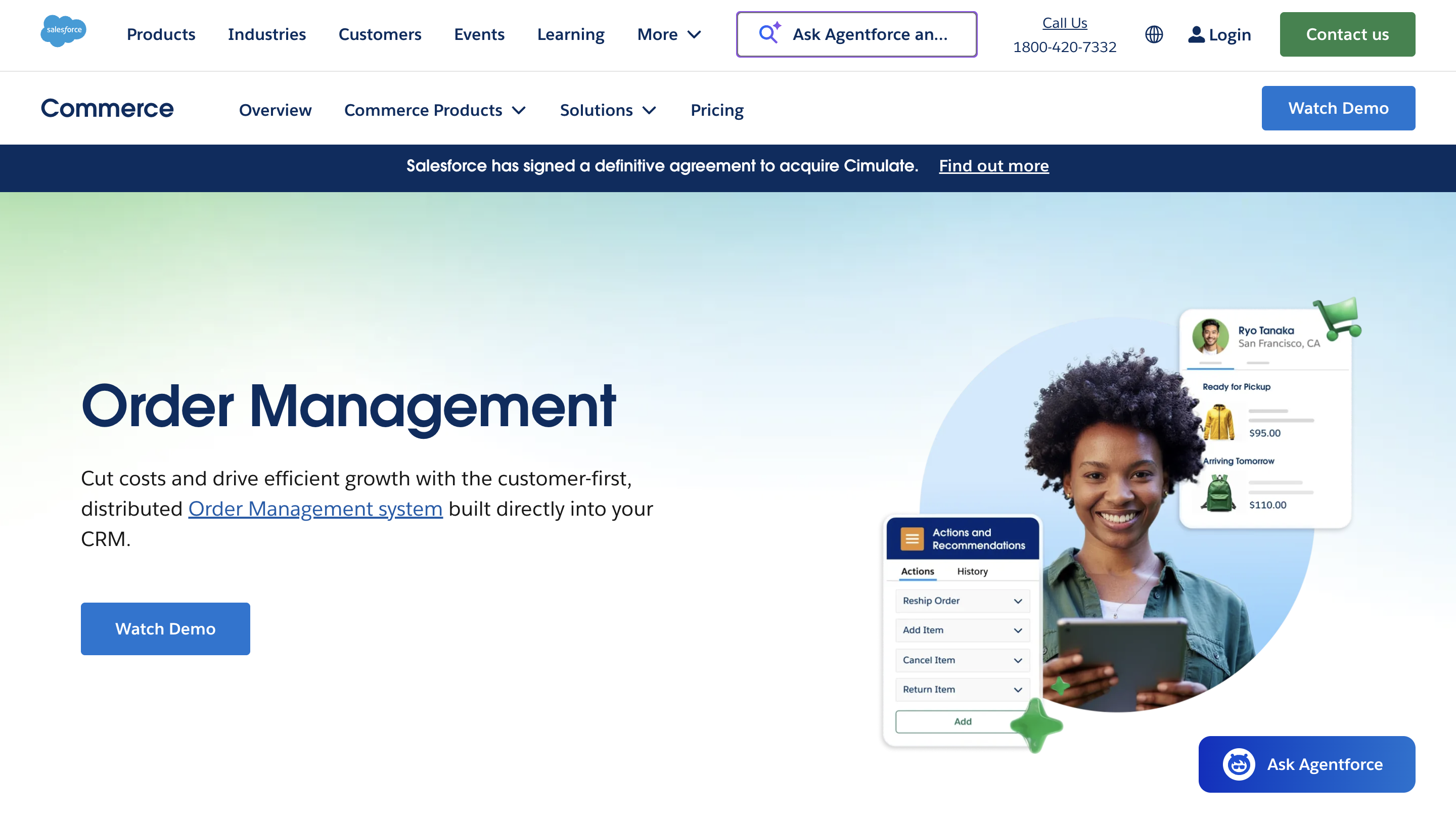
Salesforce Order Management is a cloud OMS built on the Salesforce platform to manage the post-purchase lifecycle in one place, especially when customer service and fulfillment need the same truth. It connects order data to Service Cloud workflows, supports distributed order management logic, and makes returns, cancellations, edits, and exceptions easier to run without jumping between systems.
Key features
-
Centralized order repository across channels
-
It is a native fit inside the Salesforce ecosystem (Commerce, Service, Sales, Payments)
-
Distributed order management and rules-based routing
-
Returns/refunds and post-purchase self-service
-
Store fulfillment app for ship-from-store and pickup flows
-
Real-time dashboards for fulfillment performance and returns patterns
Best for
-
Mid-market and enterprise brands already invested in Salesforce
-
Omnichannel retailers running store + ecommerce fulfillment
-
Businesses where support teams handle frequent order edits and exceptions
Integrations: Salesforce Commerce Cloud, Service Cloud, Sales Cloud, Salesforce Payments; APIs for ERP/WMS, carriers, tax, and payments.
Pricing: Typically quote-based and packaged within Salesforce licensing. Common models include GMV and/or order record volumes, as well as implementation and ecosystem license costs.
Pros
-
Deep Salesforce connectivity with a true shared data model
-
Strong automation options without heavy custom code
-
Excellent for service-led order operations (returns, edits, exception handling)
Cons
-
High total cost of ownership, once you include licensing and implementation
-
Best value shows up only if you commit to the Salesforce ecosystem.
2. Blue Yonder OMS — Best for Large Global Retailers with Distributed Fulfillment Networks
Blue Yonder Order Management is an enterprise-grade, AI-forward orchestration platform designed for complex networks, including stores, distribution centers, suppliers, and third parties that serve as fulfillment nodes. It focuses on inventory visibility, real-time “promise” logic at checkout, and dynamic sourcing decisions that adapt to disruptions.
Key features
-
Real-time inventory visibility across stores, DCs, and vendors
-
Strong order promising and inventory-aware delivery commitments
-
Order orchestration and multi-node routing logic
-
Intelligent rebalancing and exception-aware sourcing decisions
-
Store fulfillment support (pickup, ship-from-store)
-
Role-based assistance for service and fulfillment teams
Best for
-
Large retailers and manufacturers with distributed fulfillment networks
-
Organizations needing accurate delivery promises at checkout
-
Teams that are modernizing orchestration without ripping out core ERP/WMS immediately
Integrations: Commonly integrates with SAP, Oracle, Dynamics, ecommerce platforms, WMS/TMS, and CRM layers via APIs/EDI.
Pricing: Quote-based enterprise subscription, typically shaped by modules, volume, and implementation scope.
Pros
-
Strong orchestration depth for high-complexity networks
-
Built for scale, with robust promise and sourcing logic
-
Modular adoption options for phased transformation
Cons
-
Expensive and implementation-heavy compared to mid-market OMS tools
-
Longer time-to-value if data quality and integrations are not mature.
3. Kibo OMS — Best Cloud-Native DOM for Mid-Market Omnichannel Brands
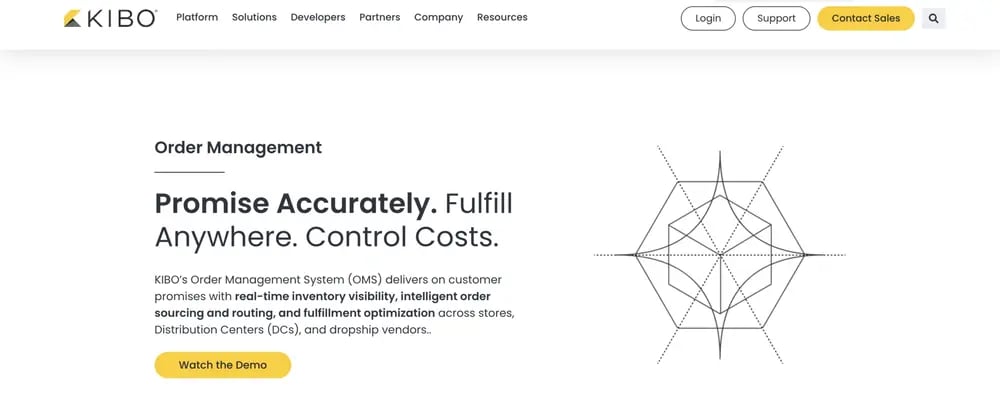
Kibo Order Management is a cloud-native distributed order management system designed for mid-market and enterprise brands that need real-time inventory visibility across stores, DCs, and 3PLs. It works best when you need modern DOM capabilities without the overhead of the most complex legacy enterprise suites.
Key features
-
Unified inventory view across nodes
-
Practical omnichannel fulfillment support (store and DC execution)
-
Rules-driven order routing and splitting logic
-
Store/warehouse fulfillment UI for picking, packing, shipping
-
CSR tools for edits, cancellations, returns, and exceptions
-
Subscription and recurring-order support (where applicable)
Best for
-
Mid-market to enterprise retailers and manufacturers
-
Omnichannel operations needing store-as-node fulfillment
-
Teams that want configurable routing logic without rebuilding everything
Integrations: Common integrations include Shopify, BigCommerce, and Salesforce Commerce Cloud; ERPs such as NetSuite and Dynamics; payments and fraud tools; and shipping and carrier connectivity via partners/APIs.
Pricing: Quote-based SaaS subscription. Typically packaged by modules and volume, with one-time implementation services.
Pros
-
Strong inventory and routing foundation for omnichannel execution
-
Store/fulfillment tooling is built for real operator workflows
-
Modular approach supports phased rollout
Cons
-
Implementation depends heavily on partner expertise and data readiness
-
Reporting depth may require additional BI work for advanced use cases
4. Zoho Inventory — Best Affordable OMS for SMB Multi-Channel Sellers
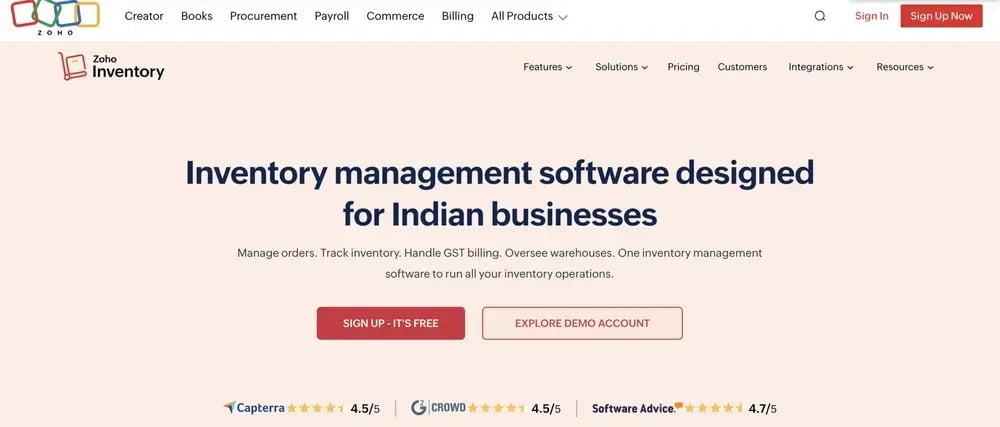
Zoho Inventory is a cloud OMS + inventory tool designed for small and mid-sized businesses that need a reliable control center for orders, stock, shipping, and basic warehouse operations. Its main advantage is practical day-to-day usability: multichannel order capture, inventory synchronization, shipping connectors, and clean integration with Zoho’s finance and CRM products.
Key features
-
Multichannel order management across major marketplaces and carts
-
Tight integration across Zoho Books and Zoho CRM
-
Inventory control: reorder points, kitting, barcode support (plan-based)
-
Multi-warehouse stock and transfers
-
Shipping label generation and tracking workflows
-
Sales, stock aging, and SKU performance reporting
Best for
-
SMB ecommerce brands and wholesalers selling across multiple channels
-
Teams already using Zoho Books, Zoho CRM, or Zoho Commerce
-
Businesses needing multi-warehouse inventory control without enterprise DOM complexity
Integrations: Shopify, Amazon, eBay, Etsy, WooCommerce; Zoho Books; QuickBooks Online; Xero; shipping carriers/connectors and payment gateways.
Pricing: Tiered subscription from Free to Enterprise, primarily based on order volume, users, and warehouses. Add-ons available for extra users, orders, and locations.
Pros
-
Excellent price-to-capability ratio for SMBs
-
Clean ecosystem fit for accounting and CRM alignment
-
Strong multichannel inventory sync for everyday operations
Cons
-
Advanced manufacturing and complex orchestration are limited
-
Costs can rise as order volume and warehouses expand
5. Fluent Commerce OMS — Best for Configurable Distributed Order Management at Scale
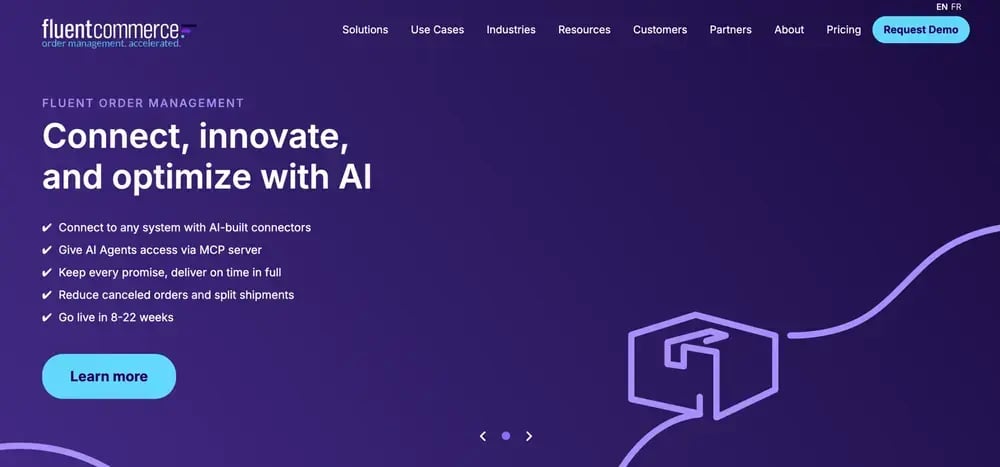
Fluent Order Management (Fluent Commerce) is a cloud-native distributed order management platform built for complex omni-channel fulfillment. Its value is control, which means you can adjust fulfillment logic, inventory rules, and routing decisions without constantly rewriting code, as long as your upstream and downstream data feeds are clean.
Key features
-
Distributed order management and routing logic
-
Global inventory visibility across stores, DCs, and third parties
-
Configurable workflows for splits, safety stock, and fulfillment constraints
-
Store fulfillment app for pick/pack/ship and collections
-
Returns and exchange workflows aligned to omnichannel operations
Best for
-
Mid-market and enterprise retailers with complex fulfillment networks
-
Brands that need frequent changes to routing logic and promise rules
-
Omnichannel programs scaling ship-from-store and click-and-collect
Integrations: Common connectors include Adobe Commerce, Salesforce Commerce, Shopify, commerce tools, ERP and tax tools, 3PL/WMS connectivity via APIs, and integration tooling.
Pricing: Quote-based SaaS subscription typically driven by order volume, modules, and implementation scope.
Pros
-
Very adaptable when fulfillment logic changes often
-
Strong fit for distributed inventory and store-fulfillment models
-
Enterprise-grade orchestration without forcing a single commerce stack
Cons
-
Configuration can feel complex until your rules model is stable
-
Requires good upstream data discipline to avoid “garbage in, chaos out.”
6. Körber OMS — Best for High-Complexity Omnichannel Routing & Inventory Segmentation
Körber OMS (a part of the Enspire Commerce lineage) is suitable for high-complexity omnichannel retail where routing logic, inventory segmentation, and multi-node fulfillment are non-negotiable. Its core strength is orchestration. That means deciding where an order should ship from, what should be split, what should be reserved, and how exceptions are handled when the network is under stress.
Key features
-
Distributed order management and cost/speed-aware routing
-
Omnichannel fulfillment: pickup, curbside, ship-from-store
-
Store fulfillment tooling for associate execution
-
Vendor dropship and extended assortment support
-
Rules simulation and workflow control for routing changes
Best for
-
Mid-to-large enterprises running complex omnichannel fulfillment
-
Retailers scaling store-as-warehouse execution
-
Organizations needing sophisticated allocation, segmentation, and routing controls
Integrations: ERP connectivity (often SAP and others), ecommerce platforms, WMS/warehouse tech, CRM/POS, loyalty, and payment systems via API and integration frameworks.
Pricing: Quote-based enterprise subscription plus implementation services. Costs typically vary by nodes, integrations, volumes, and modules.
Pros
-
Excellent orchestration depth for high-complexity networks
-
Strong inventory visibility and allocation controls
-
Designed for enterprise scale and long-term extensibility
Cons
-
Not a “quick install”; requires serious implementation planning
-
Pricing is harder to estimate without scoping and vendor engagement
7. Deck Commerce — Best OMS for Scaling DTC & Omnichannel Retail Brands
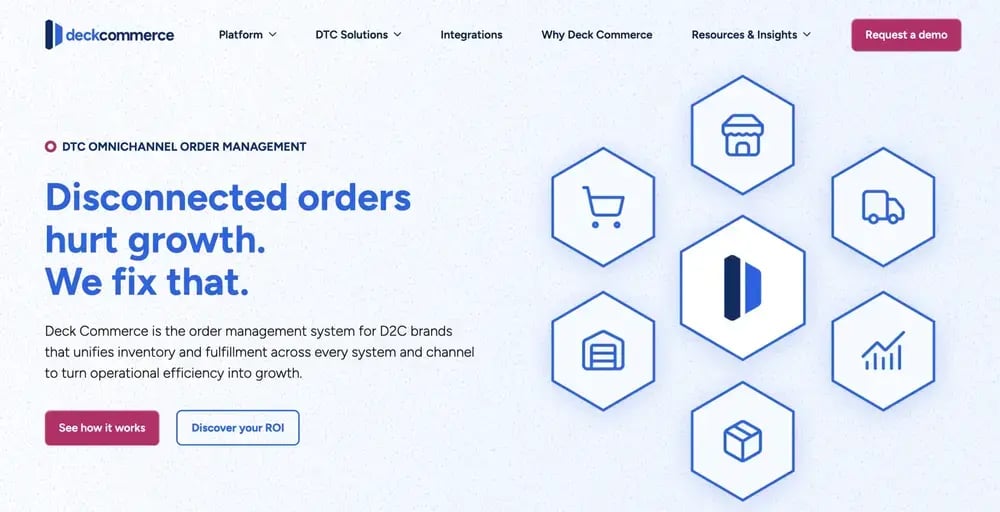
Deck Commerce is a distributed order management platform built specifically for DTC and omnichannel retail operators that have outgrown basic storefront-native order tools. It sits between ecommerce front ends, ERP, 3PLs, and stores to automate routing, inventory decisions, and post-purchase workflows such as returns and service interventions.
Key features
-
Rules-based distributed order routing
-
Strong automation coverage for common complex scenarios (splits, backorders, fraud checks)
-
Real-time inventory aggregation with safety stock controls
-
Returns and exchanges with self-service flows
-
CSR portal for order edits, cancellations, and exception handling
-
Payment and transaction handling across gateways
Best for
-
Mid-market to enterprise DTC brands with growing fulfillment complexity
-
Omnichannel retailers enabling ship-from-store and pickup
-
Brands needing a faster path to enterprise-grade DOM capabilities
Integrations: Salesforce Commerce, Adobe Commerce, Shopify Plus, BigCommerce, NetSuite, and Dynamics; payment gateways include Adyen, PayPal, Klarna, and Braintree.
Pricing: Quote-based annual SaaS subscription, which is typically shaped by order volume, modules, and implementation/integration scope.
Pros
-
Strong for high-volume retail automation without extreme complexity overhead
-
Returns and service tooling reduce operational friction
-
Good integration ecosystem for common mid-market stacks
Cons
-
Not designed for small brands with simple single-node fulfillment
-
Advanced self-service configuration depth can vary by workflow and setup
8. Brightpearl — Best All-in-One OMS + Inventory + Accounting for Multichannel Retail
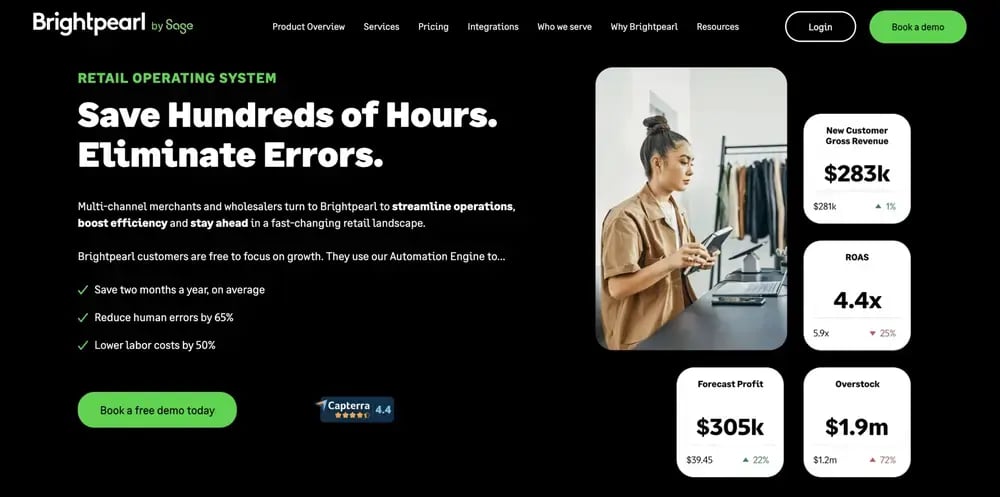
Brightpearl is closer to a retail operating system than a pure OMS: it combines order management, inventory, accounting, and warehouse workflows into one platform built for multichannel retail and wholesale. That “unified core” can be a serious advantage when you want fewer systems and fewer reconciliation gaps between orders, stock, and financials.
Key features
-
Multichannel order capture and centralized processing
-
Retail-first design: OMS + inventory + accounting in one system
-
Real-time inventory sync across channels and warehouses
-
WMS workflows with scanning and pick/pack/ship
-
Integrated accounting tied to inventory and landed cost concepts
-
Demand planning and operational reporting
Best for
-
Scaling multichannel retailers and wholesalers (often $1M+ revenue band)
-
Brands that want OMS + accounting alignment without stitching tools together
-
Teams with seasonal peaks that need automation and operational discipline
Integrations: Shopify/Shopify Plus, BigCommerce, Adobe Commerce; Amazon/eBay/Walmart; shipping tools and carriers; marketing, EDI, and 3PL connectors via marketplace integrations.
Pricing: Quote-based subscription, which users, channels, and order volume typically influence. Expect a one-time implementation/setup fee.
Pros
-
Strong all-in-one operational backbone for retail teams
-
Automation reduces manual processing and reconciliation work
-
Inventory + accounting alignment improves visibility and control
Cons
-
Higher upfront cost and more involved implementation than lightweight tools
-
Reporting and analytics flexibility can depend on add-ons or external BI.
9. Extensiv Order Manager — Best for High-Volume Multi-Channel Sellers & 3PL Networks
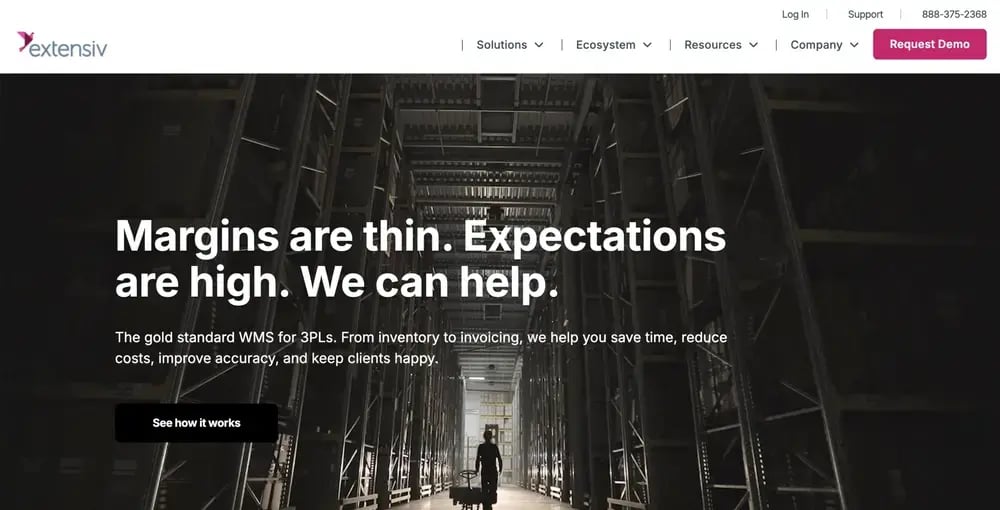
Extensiv Order Manager (formerly Skubana) is an OMS and ecommerce operations platform designed for high-volume, multi-channel sellers who need automation across inventory sync, order routing, purchasing, and shipping coordination.
Key features
-
Real-time multichannel inventory synchronization
-
Strong routing and workflow controls (the “Orderbots” concept)
-
Rules-based order routing, splitting, and processing automation
-
3PL and warehouse connectivity with pick/pack support
-
SKU-level profitability and cross-channel performance analytics
-
Purchasing workflows and supplier management
Best for
-
High-volume sellers running multiple channels and fulfillment nodes
-
Brands working with multiple 3PLs or warehouses
-
Operations teams that are trying to reduce manual routing, purchasing, and exception handling
Integrations: Common integrations include Amazon, Walmart, eBay, Shopify, BigCommerce, Magento, WooCommerce; shipping carriers, QuickBooks Online/Xero; 3PL and operations tooling.
Pricing: Typically, a premium subscription, which is driven by volume and scope. Reported starting points vary by package; implementation/setup fees are common.
Pros
-
Strong automation that reduces manual ops load
-
Good visibility across orders, inventory, and purchasing decisions
-
Built for a complex multichannel reality, not simple single-store shipping
Cons
-
Not budget-friendly for early-stage sellers
-
Setup and rule tuning can take time before you hit “steady state.”
10. Unicommerce — Best OMS for India, MENA & SEA Multi-Channel E-Commerce at Scale
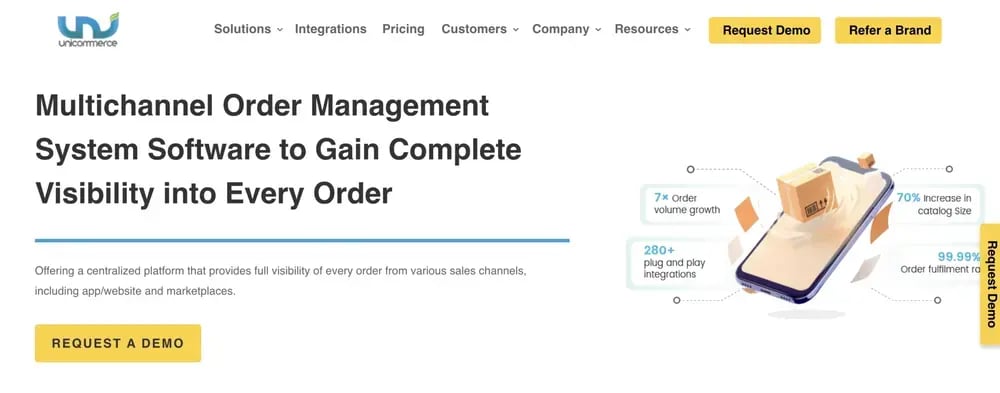
Unicommerce is a cloud OMS built for high-volume ecommerce operations, especially across India, the Middle East, and Southeast Asia. Its strength is practical marketplace execution: managing orders, inventory, warehouse workflows, and returns across multiple channels with broad integration coverage.
Key features
-
Centralized order and inventory control across channels
-
Automated routing to warehouses based on stock and cost logic.
-
Bulk invoice/label workflows to speed dispatch
-
Barcode-enabled warehouse operations for accuracy
-
Analytics for sales, fulfillment performance, and stock turnover
Best for
-
Mid-market and enterprise brands doing multi-channel ecommerce at scale
-
Marketplace-heavy sellers needing stable inventory synchronization
-
Fashion, FMCG, and electronics brands with returns and multi-warehouse complexity
Integrations: Marketplaces and webstores, logistics providers, ERP/accounting systems, and POS/retail systems via a broad connector ecosystem.
Pricing: Typically subscription-based and volume-linked, with pricing bands for starter vs enterprise use. Final pricing is usually quote-driven based on modules and order volume.
Pros
-
Strong multi-channel inventory sync and dispatch workflows
-
Broad logistics and marketplace integrations
-
Practical returns handling for high-volume operations
Cons
-
Initial setup can feel heavy for new teams without process maturity
-
Reporting customization can be limited without additional configuration
Order Management Software FAQs: 12 Buyer Questions Answered for 2026
1. What is Order Management Software?
Order Management Software (OMS) is the system that manages the full order lifecycle: capture, validation, inventory allocation, fulfillment routing, shipping updates, and returns. It replaces manual coordination across channels with a consistent workflow.
2. What is the difference between an OMS and order fulfillment software?
Order fulfillment software focuses on warehouse execution: pick, pack, ship, and sometimes returns. An OMS sits above that layer and decides how orders should be routed across warehouses, stores, or 3PLs.
3. Does an OMS replace an inventory management system?
Sometimes, but not always. Many OMS platforms include real-time inventory sync and allocation, which can cover core inventory needs. If you need deeper purchasing, manufacturing, or advanced costing capabilities, you can still keep a dedicated inventory management system or ERP module connected.
4. What does “order orchestration” mean in an OMS?
Order orchestration is the logic that decides where an order should be fulfilled from, whether it should be split, what stock gets reserved, and how exceptions are handled. It accounts for constraints such as delivery promises, shipping costs, inventory rules, and node capacity.
5. Can OMS platforms handle multichannel order management?
Yes, that is a core purpose. A modern OMS consolidates orders from DTC sites, marketplaces, and, in some cases, retail/POS into a single view. It keeps inventory consistent across channels so you do not oversell and then scramble to cancel orders.
6. How does OMS help reduce shipping and fulfillment costs?
OMS reduces cost through smarter routing: shipping from the closest node, avoiding unnecessary splits, and using rules that minimize premium shipping. It also reduces avoidable cost leakage from errors, cancellations, and late deliveries. When paired with shipping integrations, it tightens label workflows and tracking accuracy.
7. What integrations should a modern OMS support?
At minimum: ecommerce platforms, shipping tools/carriers, and an accounting layer. At scale, you typically need ERP integration, WMS/3PL connectivity, returns tools, tax, and CRM integration. API quality matters as much as the integration list.
8. How long does OMS implementation usually take?
SMB tools can go live in days to a few weeks. Mid-market and enterprise OMS programs often take weeks to months, depending on integrations, data cleanup, and workflow design. Implementation speed is mostly determined by process maturity and integration complexity, not the vendor demo.
9. Can OMS handle both B2B and B2C orders?
Many can, but capability varies. B2B often needs bulk orders, custom pricing, partial shipments, and EDI workflows, while B2C prioritizes speed, tracking, and returns. Enterprise OMS platforms typically support both; lighter tools may be stronger on B2C.
10. How does OMS improve returns and reverse logistics?
OMS helps by linking returns to the original order, enforcing policy rules, and triggering correct refund/exchange workflows. In stronger platforms, returns also update inventory availability quickly, so sellable stock returns to circulation faster.
11. What should I track to measure OMS ROI?
Focus on operational metrics that move money: order cycle time, cancellation rate, split shipment rate, late delivery rate, return processing time, and support ticket volume. Also track inventory accuracy and stockout/backorder frequency.
12. Do I need a separate shipping platform if I already have an OMS?
Often, yes. Many OMS tools orchestrate “what should happen,” but shipping platforms execute “how it happens” across carriers: label generation, tracking, exceptions, NDR workflows, and post-purchase notifications. The combination is usually what produces measurable improvements in delivery performance and support load.
OMS in 2026: How to Treat Order Management as Orchestration, Not a Back-Office Database
In 2026, order management is no longer a quiet back-office function. It is the control system that connects demand, inventory, fulfillment, and customer promises across channels. The best OMS platforms do not just “track orders.” They decide how an order should move through your network, keep inventory truthful across nodes, and reduce the manual interventions that slow teams down during peak volume.
The practical takeaway is to match the OMS to your operating model. If you run distributed fulfillment, prioritize orchestration and inventory accuracy. If you are a growth-stage brand, prioritize speed of implementation, usability, and clean integrations. If service teams spend their day fixing orders, prioritize workflows that allow them to act without disrupting fulfillment.
Your next steps?
-
Map your current order lifecycle from checkout through delivery to returns, and identify where handoffs occur.
-
Identify your real constraints (channels, warehouses/3PLs, backorders, split shipments, SLAs)
-
Shortlist two to three OMS platforms, then run a proof of concept with live order data.
-
Measure ROI using order cycle time, inventory accuracy, cancellation rate, late-delivery rate, and support ticket volume