%20%20-%20Menu.svg)







In this blog
TL;DR: USPS Delivery Times in 2026 at a Glance
USPS delivery times in 2026 range from 1 day to 8 days, depending on service class, origin-destination ZIP pair, acceptance timing, and weekend or holiday placement.
-
Priority Mail Express guarantees delivery in 1–3 days by 6 PM with a money-back guarantee, starting at $33.00 retail.
-
USPS Ground Advantage covers 2–5 days at $7.30, making it the highest-value option for non-urgent parcels up to 70 lbs.
-
April and July 2025 service standard updates extended some Ground Advantage and First-Class Mail routes by one day, leading to inaccurate ETAs for brands using pre-2025 checkout logic.
-
Priority Mail achieved approximately 93.4% on-time performance in fiscal year 2024, according to Postal Regulatory Commission filings.
-
Sundays and holidays are excluded from USPS performance measurement, causing customer-facing expected delivery dates to shift forward automatically.
What Are USPS Delivery Times in 2026? A Complete Guide for Ecommerce Brands
United States Postal Service delivery times depend on the service class, ZIP codes, package handoff time, and whether holidays or Sundays fall within the transit window. For ecommerce brands, accurate delivery promises directly impact customer satisfaction and repeat purchases.
This guide explains major USPS services, the service-standard updates introduced in 2025, and how brands can build more accurate delivery estimates in 2026.
USPS Delivery Times by Service Class in 2026: Full Comparison Table
The table below reflects USPS published service standards and current entry-level retail pricing as of 2026. These are expected windows. Only Priority Mail Express carries an explicit money-back guarantee. One important note on pricing: USPS implemented new Competitive product prices effective January 19, 2026. The average increases were 6.6% for Priority Mail, 5.1% for Priority Mail Express, 7.8% for Ground Advantage, and 6.0%
| USPS Service | Domestic Delivery Window | Starting Retail Price | Best Fit |
| First-Class Mail | 1 to 5 days | $0.78 |
Letters, postcards, flats under 13 oz
|
| USPS Ground Advantage | 2 to 5 days | $7.30 |
Non-urgent packages up to 70 lbs
|
| Priority Mail | 2 to 3 days | $10.20 |
Faster parcel delivery with tracking and insurance
|
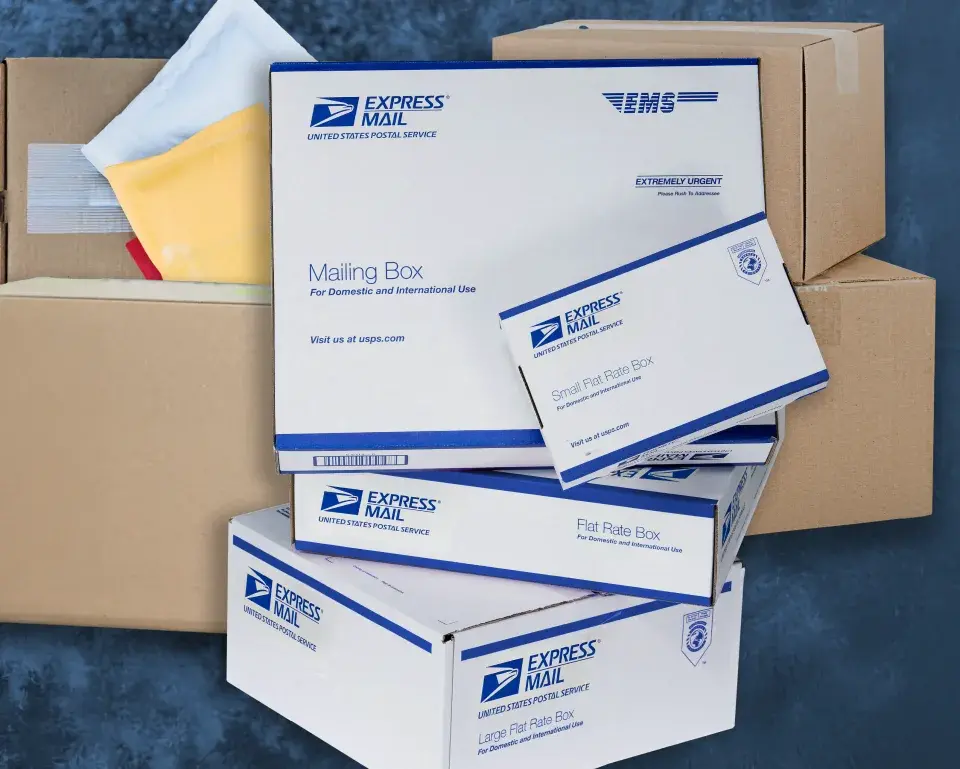
| Priority Mail Express | 1 to 3 days by 6 PM | $33.00 |
Urgent domestic shipments with guarantee
|
| Media Mail | 2 to 8 days | $4.47 |
Books, CDs, DVDs, educational materials
|
| Priority Mail Next Day | 1 business day (eligible ZIPs) | Contract-based |
Regional next-day for qualifying businesses
|
One important note on pricing: USPS implemented new Competitive product prices effective January 19, 2026. The average increases were 6.6% for Priority Mail, 5.1% for Priority Mail Express, 7.8% for Ground Advantage, and 6.0% for Parcel Select. The 1-ounce First-Class Mail stamp price did not rise in January 2026. The price updates affect shipping cost planning but do not change the published transit windows.
International USPS Delivery Times in 2026: What to Expect by Service
International transit involves USPS handing off to destination-country postal networks, which means customs, local disruptions, and temporary service suspensions can all affect actual arrival. USPS maintains a list of active international service alerts on its official site. One major update: Global Express Guaranteed (GXG) was suspended on September 29, 2024, and remains suspended as of 2026. Any content still listing GXG as active should be treated as outdated. For broader context on international logistics challenges, the handoff to foreign postal networks is a key variable brands should account for in their delivery promises.
| USPS International Service | Published Delivery Window | Starting Retail Price | Notes |
| Priority Mail Express International | 3 to 5 business days | $62.70 |
Fastest mainstream option; covers approx. 170 countries.
|
| Priority Mail International | 6 to 10 business days | $32.65 (Flat Rate) / $43.55 (Weight) |
Broad coverage; flat-rate box options available.
|
| First-Class Package International | Varies by destination | $19.40 |
Best for packages under 4 lbs and up to $400 value.
|
| First-Class Mail International | Varies by destination | $1.70 (1 oz letter) |
Affordable option for letters and postcards only.
|
How Did the 2025 USPS Service Standard Updates Change Delivery Times?
The most consequential changes to USPS delivery windows did not happen in 2026. They rolled out in two phases in 2025, on April 1 and July 1, and remain fully in effect now. Understanding them is essential for setting accurate delivery promises.
Key Changes from the 2025 USPS Service Standard Updates:
-
Priority Mail Express expanded to 1, 2, or 3 days. Before the revision, Priority Mail Express was a 1 or 2-day service. The 3-day tier was added for certain origin-destination ZIP pairs where the distance or routing makes a 2-day commitment unrealistic. The money-back guarantee and seven-day delivery availability remain in place.
-
Ground Advantage and single-piece First-Class Mail gained one day on some routes. Shipments originating more than 50 miles from the origin Regional Processing and Distribution Center (RPDC) may have one additional day added to their standard window. This is the change most likely to produce a "late" label in a customer's mind even when USPS is technically on time.
-
Critical entry times were adjusted. If a package is accepted before the CET, the performance clock starts that calendar day. If accepted after, the clock starts the following day. Brands tendering large volumes near the CET boundary are most exposed to this rule.
-
Sundays and holidays are now excluded from service performance measurement for items accepted on a Saturday or the day before a holiday. This does not mean delivery cannot happen on those days; it means those days are not counted against USPS's on-time metrics, and the expected delivery date displayed to customers will shift forward accordingly.
These are not simply operational footnotes. A brand that built its checkout delivery-promise logic before April 2025 and has not updated it since is almost certainly showing inaccurate ETAs to some customers on some routes. Understanding what ETA and ETD mean in the context of carrier performance is the first step toward fixing this.
How Does USPS Calculate Delivery Times by ZIP Code?
USPS delivery time is not a flat number applied to all routes under a given service. It is calculated using a combination of factors, and the published "2 to 3 day" or "2 to 5 day" windows are ranges that span the full spectrum of likely scenarios.
The Four Variables That Drive USPS Transit Time:
-
Service class: This is the single biggest determinant. Ground Advantage and Priority Mail have different processing priorities, different facility routing, and different vehicle assignments inside the USPS network.
-
Origin and destination ZIP codes: Two shipments traveling the same distance can have different transit times if one crosses a regional processing boundary and the other stays within it. USPS publishes a Transit Time Map and Service Standards tool that accounts for this.
-
Acceptance date and time relative to the critical entry time: A package dropped off at 4 PM may be processed the same day or the next day depending on the facility's CET. This is where many "late by one day" situations originate.
-
Weekends and holidays inside the window: Under current service standards, a Saturday acceptance before CET starts the clock that day, but any Sunday or holiday inside the window is excluded from performance measurement. The customer-facing expected date adjusts accordingly.
Practical tip: Use USPS's Retail Postage Price Calculator with the exact origin ZIP, destination ZIP, planned mailing date, and shipment weight. Do not rely on city names or regional generalizations. For accurate USPS shipping cost comparisons alongside transit time, use the same inputs.
How Often Does USPS Actually Hit Its Published Delivery Windows?
According to USPS's own Postal Regulatory Commission filings, First-Class Mail on-time performance for fiscal year 2024 hit approximately 91.7% for 2-to-3 day routes and 87.5% for longer 4-to-5 day routes. Priority Mail performed at approximately 93.4% on-time. These numbers confirm that while USPS windows are not perfect, they are reliable enough to build brand delivery promises around, provided you account for the factors above.
Does USPS Deliver on Saturdays and Sundays in 2026?
Weekend delivery is one of the most frequently misunderstood areas of USPS delivery rules. Here is a clear breakdown.
-
Saturday delivery: USPS delivers most mail classes, including Priority Mail, Ground Advantage, and First-Class Mail, on Saturdays at no extra charge.
-
Sunday delivery: Standard services do not deliver on Sundays. Priority Mail Express is available on Sundays in most major markets. Amazon Logistics-handled USPS packages may also be delivered on Sundays, but that is a separate arrangement.
-
Holiday delivery: Priority Mail Express delivers on most federal holidays. Standard services do not.
-
Critical nuance for service measurement: Under the April 2025 updates, if you accept a Ground Advantage or First-Class Mail package on a Saturday, the following Sunday is excluded from the performance measurement clock. The expected delivery date moves forward by one day to reflect this exclusion.
USPS Holiday Shipping Deadlines: When to Send for On-Time Delivery
Published service windows become less reliable in the final weeks of November and December due to volume. USPS addresses this by publishing separate recommended send-by dates each season. The 2026 holiday deadlines have not yet been published as of this writing. The 2025 recommendations are included here as historical reference. Brands should check the USPS holiday shipping page for the official 2026 dates once available.
2025 USPS Recommended Send-By Dates for December 25 Delivery (Lower 48 States)
| USPS Service |
Recommended 2025 Send-By Date
|
| Priority Mail Express |
December 20, 2025
|
| Priority Mail |
December 18, 2025
|
| First-Class Mail |
December 17, 2025
|
| USPS Ground Advantage |
December 17, 2025
|
Alaska, Hawaii, Puerto Rico, and U.S. Territories: 2025 USPS Holiday Send-By Dates
| USPS Service |
Recommended 2025 Send-By Date
|
| USPS Ground Advantage | December 17, 2025 |
| First-Class Mail | December 17, 2025 |
| Priority Mail | December 18, 2025 |
| Priority Mail Express | December 20, 2025 |
For APO, FPO, and DPO military mail, some routes required Ground Advantage to ship as early as November 4, 2025, with faster military mail options running through December 9 or December 16 depending on ZIP group. Military mail lead times are consistently the longest to plan around.
Common USPS Delivery Exceptions and Delays: What Ecommerce Brands Should Know
Even when USPS is running on-time network-wide, individual packages encounter exceptions. Knowing the common ones makes it easier to set accurate customer expectations and respond quickly when something goes wrong.
Common USPS Delivery Exceptions:
-
In transit with no scan updates: This typically means the package is moving between facilities that do not scan at every handoff. It is most common on long ground-transport legs. If there is no update after three or more days, USPS recommends filing a Missing Mail search at usps.com.
-
Delivery attempted, no access: USPS carriers leave a PS Form 3849 when delivery fails. The recipient can pick up at the local post office or request redelivery online.
-
Missorted or misrouted packages: These are rare but add 1 to 3 days to transit time. Tracking updates will usually reflect the rerouting.
-
Weather-related delays: USPS does not issue money-back refunds for weather delays, even on Priority Mail Express, when the carrier declares a weather service disruption.
-
Address issues: Incomplete or unrecognized ZIP codes are a leading cause of delayed or returned packages. USPS offers Address Verification tools through its Business Customer Gateway that brands can integrate at order entry.
Data point: According to Easyship's analysis, address-related delivery failures account for a disproportionate share of USPS exceptions, particularly for DTC brands shipping to apartment buildings without full suite details in the address field. For high-volume shippers, last-mile delivery solutions that include address validation can meaningfully reduce this failure rate.
USPS Priority Mail Express vs. Priority Mail: Which Service Is Worth the Upgrade?
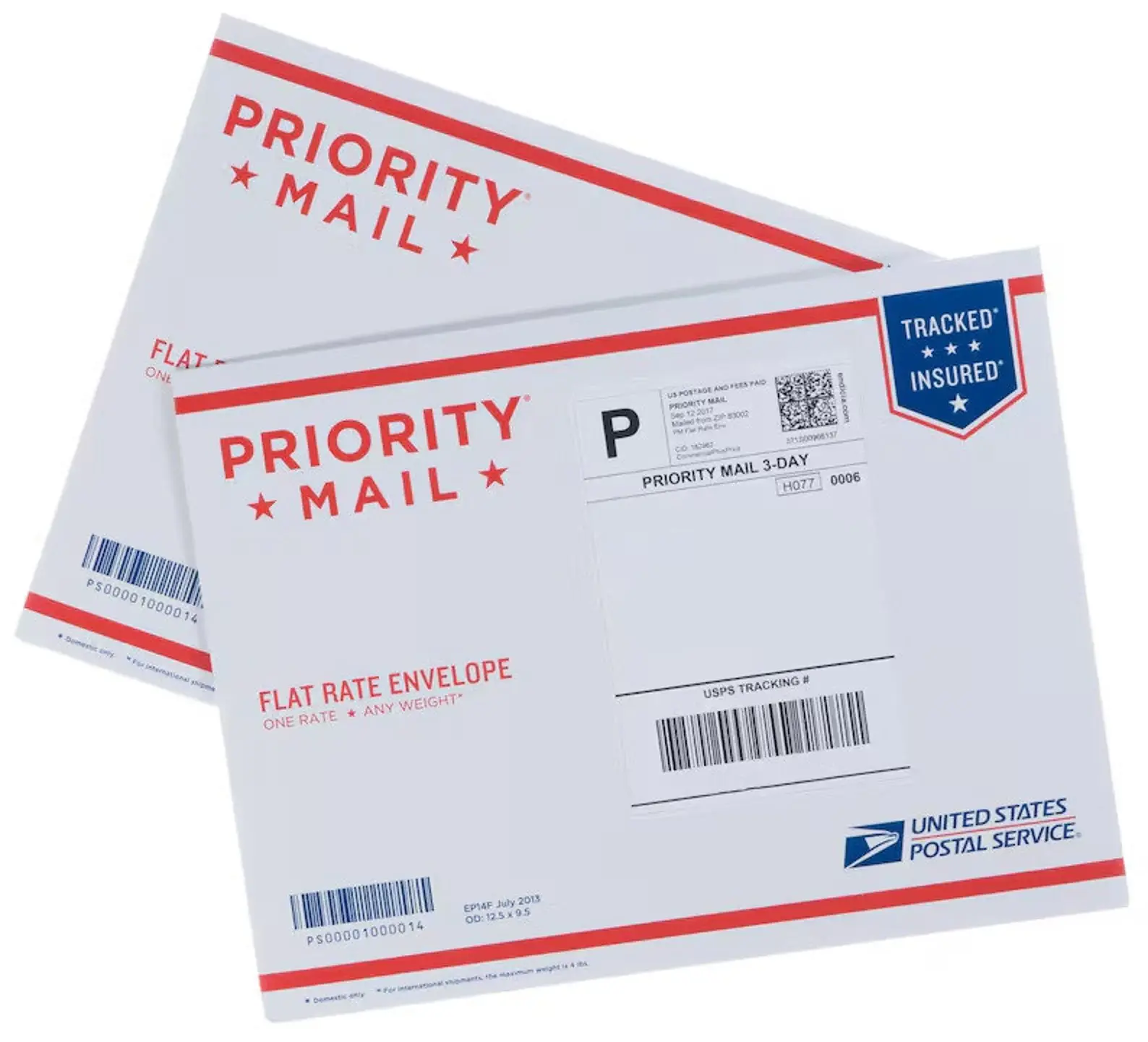
The biggest difference between these two services is the guarantee. United States Postal Service Priority Mail Express is the only mainstream domestic USPS service with a money-back guarantee if the shipment misses its committed delivery time. Priority Mail does not include this guarantee.
Priority Mail usually delivers in 2 to 3 days, while Priority Mail Express delivers in 1 to 3 days by 6 PM. In many nearby zones, standard Priority Mail can arrive just as quickly, making the higher Express cost worthwhile only for urgent or high-value shipments.
Priority Mail Express also offers Sunday and holiday delivery in many major markets for an added fee, which is not standard with Priority Mail. For a deeper breakdown, see our full comparison of USPS Priority Mail vs. Priority Mail Express.
Key USPS Delivery Statistics Ecommerce Brands Should Know in 2026
Here are five data points that provide important context for understanding USPS delivery performance and the competitive landscape in 2026.
-
USPS delivered approximately 7.2 billion packages in fiscal year 2024, representing the vast majority of last-mile delivery volume for small and medium-sized ecommerce businesses in the United States.
-
USPS reaches nearly 170 million delivery points nationally, a coverage footprint that UPS and FedEx do not match for residential last-mile without USPS hand-off agreements.
-
Ground Advantage saw a 7.8% rate increase in January 2026, the steepest increase among Competitive USPS products. For high-volume Ground Advantage shippers, this alone justifies a renewed carrier mix analysis for 2026. (Source: USPS Competitive Rate Filing, January 2026)
-
Priority Mail on-time performance was approximately 93.4% in fiscal year 2024, meaning roughly 6 in 100 Priority Mail shipments experienced some form of delay relative to published service standards. Brands building delivery promises at checkout should factor this in, especially for time-sensitive products. (Source: USPS Postal Regulatory Commission Service Performance Report FY2024)
-
USPS has expanded Priority Mail Next Day coverage for contract-based business customers, adding regional next-day delivery capability for qualifying ZIP pairs in several metropolitan markets as part of its Delivering for America network modernization.
How Ecommerce Brands Can Optimize USPS Shipping to Reduce Delays in 2026
Managing USPS delivery performance at scale is not just a carrier question. It is a logistics operations question. Here is what high-performing brands do differently.
1. Tender Before the Critical Entry Time to Avoid Losing a Full Day
The CET is the cutoff after which USPS starts the delivery clock the following day. Missing it by an hour costs a full day. Brands with consistent late-afternoon pickup schedules are the most likely to experience systematic "one day late" outcomes without understanding why.
2. Use ZIP-Specific Tools, Not Generic Carrier Estimates
A "2 to 3 day" headline estimate can become 4 days if the destination ZIP is beyond the 50-mile RPDC boundary under the current service standards. The USPS Transit Time Map accepts exact ZIP codes and a mailing date and returns a specific expected delivery date. Build this into your checkout EDD logic. Tools that help you calculate an accurate expected delivery date are essential for brands shipping to diverse ZIP codes.
3. Segment by Service Class for Cost Efficiency
Not every order needs Priority Mail. USPS Ground Advantage, with its 2 to 5-day delivery window, works for most routine ecommerce shipments. Priority Mail fits tighter deadlines, while Priority Mail Express is best reserved for truly urgent orders. If your volume justifies it, a multi-carrier shipping strategy lets you route by cost and performance simultaneously.
4. Build Proactive Exception Communication Before WISMO Calls Arrive
When a package hits an "in transit" hold or a scan gap, the worst outcome is the customer contacting support before you reach them. Platforms built for post-purchase experience, like ClickPost's shipment tracking solution, monitor USPS tracking events and trigger automated customer notifications when exceptions occur. This reduces WISMO volume and preserves customer trust.
5. Generate Accurate Estimated Delivery Dates at Checkout
The delivery promise at checkout is the contract the customer is agreeing to. If the EDD is wrong because it is using static carrier estimates rather than live route-specific data, the brand is setting itself up to fail. Estimated delivery dates that rely on static windows consistently underperform compared to dynamic, route-specific calculations. ClickPost's EDD engine dynamically calculates expected delivery dates using carrier data and route conditions, providing the accuracy that generic estimates cannot.
6. Evaluate Multi-Carrier Mix Annually to Control Logistics Costs
The January 2026 rate adjustments, particularly the 7.8% Ground Advantage increase, create a real incentive to re-evaluate carrier mix. USPS remains highly competitive on residential last-mile delivery costs, but regional carriers and competing products may offer better economics on specific lane types. A multi-carrier setup allows brands to route by cost and performance rather than default.
Methodology and Research
The insights in this article draw from USPS official service-standard documentation, Postal Bulletin notices, and January 2026 Competitive rate filings. On-time performance figures were sourced from Postal Regulatory Commission annual compliance reporting and USPS Annual Reports. Pricing and international service details, including the GXG suspension, were confirmed through USPS newsroom releases. ZIP-to-ZIP routing rules and critical entry time guidelines reflect USPS service-standard FAQ documentation published following the April and July 2025 network changes. Holiday send-by dates are based on official 2025 USPS recommendations, clearly noted as such since 2026 deadlines were not yet published at the time of writing.
Managing USPS Delivery Times at Scale: Tools and Platforms for High-Volume Shippers
For individual shipments, the USPS tools in this article are enough. For brands shipping at volume, the challenge is different: surfacing exceptions across hundreds of orders, generating accurate checkout delivery promises for every route, and communicating proactively when something slips. That is where a post-purchase platform becomes relevant. ClickPost addresses the specific variables this article covers:
-
ZIP-specific EDD at checkout using live carrier and route data, not static service-window averages that miss CET timing and weekend placement.
-
Unified USPS exception tracking across carriers in one view, with automated customer notifications before WISMO contacts occur.
-
Dynamic delivery estimates that account for the 2025 service-standard changes still shaping 2026 transit windows.
If your checkout EDD has not been updated since early 2025, it is likely showing inaccurate dates on some routes. Book a Demo
Conclusion: Getting USPS Delivery Times Right in 2026
United States Postal Service delivery times in 2026 are reliable when shippers use the right service class, ZIP-to-ZIP estimates, and proper cutoff timings. The 2025 service-standard changes added extra transit days on some routes, changed how Sundays and holidays are counted, and expanded Priority Mail Express to a three-tier model.
For ecommerce brands, the takeaway is simple: use ZIP-specific USPS tools, update checkout EDD logic if it has not been revised since 2025, and treat holiday send-by dates as firm deadlines to avoid delivery issues and support tickets. Brands that want to go further should also compare FedEx vs. USPS vs. UPS performance on their specific lanes to ensure they are using the most cost-effective carrier for each route.
FAQs: USPS Delivery Times and Service Standards in 2026
How long does USPS Priority Mail take to deliver in 2026?
Priority Mail typically delivers in 2 to 3 business days. The exact window depends on the origin ZIP, destination ZIP, and acceptance timing. It includes tracking and insurance but does not carry a money-back guarantee. Learn more about what Priority Mail includes and when it makes sense versus other service classes.
Does USPS deliver on Sundays and holidays in 2026?
USPS delivers Priority Mail Express on Sundays and most holidays in major markets. Standard services like Ground Advantage and First-Class Mail are not delivered on Sundays. Under the 2025 service-standard updates, Sundays and holidays are excluded from performance measurement for packages accepted on a Saturday or the day before a holiday.
What determines USPS delivery time by ZIP code?
USPS uses the origin ZIP, destination ZIP, mail class, acceptance date and time relative to the critical entry time, and whether a Sunday or holiday falls in the transit window. Distance alone is not the deciding factor. Crossing a regional processing boundary can add a day even on a short-distance route.
Is USPS Ground Advantage faster than First-Class Mail for packages?
For packages, Ground Advantage (2 to 5 days) and First-Class Mail overlap in delivery speed. First-Class Mail only handles items up to 13 oz, so the comparison is most relevant for lightweight parcels. For anything heavier, Ground Advantage is the applicable service. Ground Advantage also falls under the broader category of ground shipping options that prioritize cost over speed.
Why is my USPS delivery later than the estimated date?
Common causes of USPS delays include late package acceptance, Sundays or holidays in the transit window, long-distance routing, peak-season volume, and weather disruptions. The 2025 service-standard updates also added an extra day to some routes, which is why older delivery estimates may no longer be accurate.
How can ecommerce brands reduce USPS shipping delays in 2026?
Tender before the critical entry time, use ZIP-specific tools for accurate ETAs, segment orders by service class, and pair USPS shipping with a post-purchase order tracking solution like ClickPost's shipment tracking to catch exceptions early and communicate proactively.
Related read: Shipping Delays: Causes, Solutions & Tips for eCommerce Success
Does USPS First-Class Mail guarantee next-day delivery?
No. First-Class Mail has a published window of 1 to 5 days but carries no guarantee. Local 1-day delivery is possible on some routes, but it is not promised. Only Priority Mail Express includes a money-back guarantee. For shipments where speed is critical, USPS overnight shipping options should be evaluated against Priority Mail Express rates.
How do holidays affect USPS delivery times and estimated dates?
Holidays are excluded from service performance measurement when a package is accepted on the day before a holiday. The customer-facing expected delivery date shifts forward accordingly. During the peak holiday period in late November and December, real-world delivery can also exceed published windows due to volume.
Can USPS transit times vary significantly between ZIP codes?
Yes, significantly. The same mail class can show different windows depending on whether the origin and destination ZIPs share a USPS processing region or not. Shipments crossing more than 50 miles from the origin RPDC can have one day added under the current service standards.
Which tools help ecommerce brands track USPS deliveries and reduce WISMO contacts?
ClickPost's shipment tracking platform aggregates USPS tracking events into a single dashboard, triggers automated customer notifications, and flags exceptions before they escalate to support contacts. The EDD engine dynamically generates accurate delivery promises at checkout using live carrier data and route conditions. Brands looking to reduce WISMO inquiries can also explore proven strategies for cutting "where is my order" contacts across their entire carrier mix.