%20%20-%20Menu.svg)







In this blog
Why Your Shopify Store Needs a Returns App in 2025
Returns are no longer just a post-sale obligation; they are a critical part of a brand's customer experience. With over 20% of online purchases being returned, Shopify store owners must rethink how they manage returns to keep customers engaged and operations lean. Businesses still handling returns manually face delayed processing, rising costs, and growing customer frustration. That is where a Shopify returns app becomes essential.
Designed to streamline the entire return management process, these apps automate tasks, improve visibility, and boost customer satisfaction. In today's competitive ecommerce environment, failing to adopt a returns management app is not only inefficient but also a missed opportunity to build long-term customer loyalty. Understanding ecommerce return statistics makes it clear just how significant this challenge has become for online stores of all sizes.
Why Returns Management Is Critical for Your Shopify Store's Growth in 2025
Returns on Shopify are inevitable, especially since customers often rely on product photos, descriptions, and sizing charts instead of in-person trials. A poorly managed returns process results in lost revenue, dissatisfied shoppers, and lower customer lifetime value. Optimizing the return management process with the right tools ensures that every return is resolved efficiently, improving both brand reputation and retention rates.
With effective returns management, you also gain deeper visibility into product performance, operational gaps, and customer behavior. All these are essential for sustainable business growth. Many merchants also find that improving returns is closely tied to their broader post-purchase experience strategy.
Key reasons why efficient returns management matters for Shopify store owners
-
Boost Customer Loyalty: A smooth return builds trust and encourages future purchases.
-
Lower Operational Costs: Automate returns and reduce manual support tickets. Pairing your returns process with a broader ecommerce automation strategy can dramatically cut down on repetitive tasks across your operation.
-
Reduce Refund Losses: Offer store credit to retain revenue and maintain purchase intent.
-
Improve Inventory Accuracy: Integrate returned items back into your inventory management system to ensure accurate stock levels.
-
Identify Quality Gaps: Analyze return data to identify defective products or listing issues.
What Are the Key Benefits of Using a Shopify Returns App for Store Owners?
A Shopify returns app can completely transform how Shopify store owners manage returns. From operational efficiency to boosting customer loyalty, these apps available on the Shopify App Store can create a win-win for both businesses and their customers.
1. How Does a Shopify Returns App Improve Customer Experience and Loyalty?
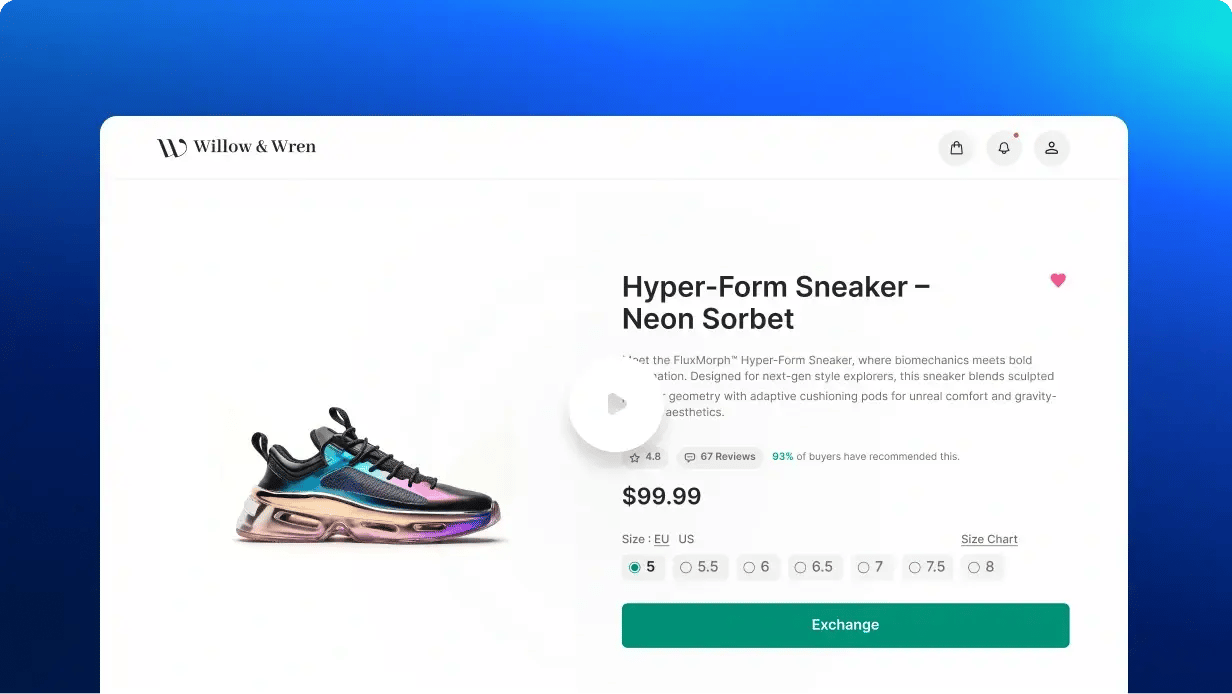
Customers expect fast, transparent, and flexible returns. A Shopify returns app delivers all of that. It helps create a post-purchase experience that encourages repeat business and drives higher satisfaction. Brands that invest in a strong post-purchase platform for ecommerce brands consistently see improvements in repeat purchase rates.
Example: A fashion brand using a returns app allows customers to initiate returns, get instant updates, and select an exchange. The customer can do all of it without contacting support. This convenience turns returns into a loyalty driver, bringing repeat customers.
-
Self-serve empowerment: A Shopify Returns App lets customers initiate returns directly from your online store. Hence, it helps reduce dependency on the customer service team.
-
Transparent communication: An efficient app can keep customers informed about return status through automated email and SMS updates.
-
Flexible resolution options: Modern-day returns apps can support refunds to the original payment method, store credit, or exchanges. The store owner can do so with just one interface.
-
Brand consistency: It helps maintain your store's visual identity with branded return portals that reflect your ecommerce business values.
2. How Do Shopify Returns Apps Reduce Operational Costs and Manual Work?
Managing returns manually is both time-intensive and prone to errors. A Shopify returns app streamlines workflows, automates approvals, and reduces return shipping costs. Pairing a returns app with dedicated reverse logistics software can eliminate even more repetitive tasks across your entire operation.
Example: A skincare brand can save a significant number of work hours a month by automating return approvals and generating return shipping labels through their Shopify returns app.
-
Automation of repetitive tasks: Store owners can use a Shopify Returns App to automate return approvals, label generation, and refund methods. It will help them save time.
-
Reduced customer support load: Using an efficient app, you can allow your customers to initiate returns independently. It will reduce support ticket volumes and reduce load on your customer support teams.
-
Streamlined logistics: Using a returns app, one can easily connect with shipping carriers to automatically generate return labels and track packages. This also ties directly into your broader ecommerce logistics setup.
-
Minimized human error: A Shopify Returns App will digitize returns. Digitized returns eliminate data entry mistakes and mismatched SKUs.
-
Fraud Prevention: You can easily set return eligibility rules to prevent fraudulent returns or abuse of free return shipping. Tools like ecommerce fraud prevention software work alongside returns apps to protect your store.
3. How Can Shopify Returns Apps Help Retain Revenue Instead of Losing It to Refunds?
Returns do not have to mean lost revenue. Shopify returns apps help retain value through alternative resolution methods. These alternatives include exchanges, store credit, cross-selling and upselling, as well as quick reselling of returned goods. Understanding what reverse logistics is and how it works can help merchants build smarter policies around these recovery strategies.
Example: A DTC electronics brand can easily reduce refund-related losses by offering store credit for returned items. It will result in a considerably high conversion into future purchases.
-
Encouraging exchanges & store credit: An intelligent returns app like ClickPost will make exchanges and store credit the default option instead of cash refunds. That will help prevent revenue losses.
-
Cross-selling & upselling opportunities: During return initiation, a returns app can recommend alternative products to retain sales.
-
Faster reselling of returned goods: Shopify Returns Apps can help you process returns quickly. Quick processing enables faster re-stocking and resale, reducing return costs. Brands focused on reducing their ecommerce returns rate can compound these savings significantly.
4. What Kind of Return Data and Analytics Insights Do Shopify Returns Apps Provide?
It is no secret that data is everything. Returns apps provide access to return data, helping you understand what is driving returns and how to reduce them. Using this data, you can easily boost your business strategies. This is especially valuable for brands investing in streamlining their ecommerce returns process over time.
Example: A footwear brand noticed a spike in return requests for a specific size, prompting them to refine their sizing chart and reduce future returns.
-
Comprehensive analytics & reporting: Using a Shopify Returns App, you can easily track return volume, reasons, and timelines for better planning.
-
Identifying product/process issues: A smart returns app will help you spot recurring problems and adjust product descriptions or quality controls.
-
Optimizing return policies: You can use return data to revise policies based on what works for your customer base. Aligning this with a clearly defined shipping policy helps set the right customer expectations from the start.
-
Understanding customer behavior: Using a returns app, you can easily analyze return behavior by customer segment to offer personalized solutions.
5. How Do Shopify Returns Apps Scale With Your Store as It Grows?
As your Shopify store grows, your returns system must scale with it. A Shopify returns app adapts to evolving customer expectations and business needs. With its help, you can easily scale your business to meet the changing needs of your customers. Brands that also invest in automating Shopify returns are far better positioned to handle peak-season surges without adding headcount.
Example: Using a returns management app, a subscription-based apparel brand scaled from 100 to 1000 monthly returns with no extra support hires. They simply used the app to scale their online business.
-
Handles growing volumes: An RMA can process thousands of return requests with zero performance lag. It helps handle growing volumes and reduce the burden on your team.
-
Integration with the Shopify ecosystem: A returns app can easily connect with apps for inventory management, email marketing, and shipping labels. That ensures smooth workflow management. Fashion-focused merchants can also explore how a Shopify returns app for fashion stores addresses their unique sizing and style-related return challenges.
-
Adaptability to market trends: A smart app can easily configure refund methods, policies, and workflows to suit final sale items or peak seasons. Merchants managing complex fulfillment needs can also benefit from connecting their returns app with order fulfillment services to keep restocking cycles tight.
How ClickPost Returns Plus App Transforms the Shopify Returns Experience in 2025
ClickPost Returns Plus is not a normal Shopify returns app; it is a comprehensive returns management solution designed for modern merchants. Built for speed, clarity, and scale, it enables store owners to automate returns, reduce refund losses, and enhance customer satisfaction. It is consistently recognized among the top returns management software options available for growing ecommerce brands.
Why ClickPost Stands Out:
-
Automated return approvals with customizable rules
-
Pre-paid return labels for easy returns across carriers
-
Self-serve returns portal that matches your store's branding
-
Smart workflows for refunds, store credit, and exchanges
-
Real-time updates to notify customers of return status
-
Actionable dashboards to track return trends and revenue retention
ClickPost helps Shopify stores manage returns efficiently while maintaining strong customer relationships. Whether you want to boost customer loyalty or streamline backend operations, ClickPost makes it simple. Merchants who also use ClickPost's ecommerce order tracking capabilities benefit from end-to-end visibility across both outbound and return shipments. Stores that pair ClickPost with a post-purchase platform gain even greater control over the entire customer journey from checkout to return.
How to Choose the Best Shopify Returns App: What Store Owners Should Look For in 2025
With so many options on the Shopify App Store, selecting the right returns app requires careful evaluation. The best returns apps are those that align with your store's size, product category, and customer expectations. Consider whether the app integrates with your existing order management software and whether it supports the carriers you already work with. Look for apps that offer branded return portals, flexible refund options, and detailed analytics. Also evaluate how well the app supports your ecommerce logistics workflows so your team does not have to manually reconcile return shipments. Stores with high return volumes should also look for compatibility with reverse logistics companies and carriers to speed up item recovery and restocking. The right app should reduce your team's workload, not add to it.
Conclusion: Deliver Returns That Build Long-Term Customer Relationships and Drive Repeat Sales
Returns do not have to be a cost center; they can be your secret weapon. When managed well, they build trust, encourage customers to come back, and create a feedback loop that sharpens your product and operations. With the right Shopify returns app, you are not just handling returns, but also elevating the entire customer journey.
Returns are the most personal part of post-purchase interaction. They reflect how much your store values transparency, reliability, and empathy. If done right, returns show your brand's integrity and commitment to customer care. In 2025, investing in smart returns management is mission-critical, not optional. Brands that pair their returns strategy with a broader logistics automation system will be best positioned to scale profitably while keeping customers loyal for the long term. For stores looking to reduce return-related losses even further, exploring strategies to reduce return-to-origin rates in ecommerce can deliver significant cost savings alongside a stronger returns program.