.png?width=193&height=27&name=ClickPost%20Logo%20(Blue).png)
.svg)
.svg)
.svg)
.svg)
.webp?width=286&height=206&name=ROI%20Calculator%20(2).webp)
.svg)
.svg)
.svg)
.svg)
.svg)
.svg)
.svg)
.svg)
.svg)
.webp?width=286&height=206&name=Frame%201171276203%20(11).webp)
.svg)
.svg)
.svg)
.svg)
.webp?width=286&height=206&name=ROI%20Calculator%20(3).webp)
.svg)

.svg)
.svg)
.svg)
.webp?width=286&height=206&name=ROI%20Calculator%20(4).webp)
Flat-Rate Shipping: Benefits, Drawbacks & When to Use It



Ready to delight customers after checkout?
Trusted by 600+ brands
In this blog
Flat-Rate Shipping Explained: Pricing, Carriers, and When It Makes Sense
This article explains what flat-rate shipping is, how it differs from standard shipping, how USPS, UPS, and FedEx handle it, and when it makes sense to use it.
Flat Rate Shipping is a shipping method in which the price is tied mainly to the packaging format or size tier, rather than being recalculated for each shipment based on weight, dimensions, and distance in the usual way. That makes it easier to predict shipping spend, especially for small, dense items.
Key Points: Flat-Rate Pricing, Packaging Rules & Carrier Differences
-
Flat-rate shipping simplifies pricing because the rate is largely determined by the box, envelope, or size tier you choose.
-
It tends to work best for heavier items packed into relatively small boxes.
-
USPS and UPS offer domestic flat-rate options that are not zone-priced in the same way standard shipping is, while FedEx One Rate still varies by zone and service.
-
USPS and FedEx require their own eligible packaging for flat-rate programs, while UPS Simple Rate lets you use your own box or mailer within its size limits.
-
Flat rate is not automatically the cheapest option. Lightweight items and short-zone shipments are often better on standard rates.
Why Flat-Rate Shipping Remains Popular for Ecommerce Businesses
Shipping costs get messy fast. Weight matters, dimensions matter, delivery speed matters, and distance definitely matters. That is exactly why flat rate shipping remains popular. It strips away part of that complexity, giving shippers a simpler pricing structure to work with. For businesses that want more predictable logistics costs and faster fulfillment decisions, that simplicity can be a real advantage.
What Is Flat-Rate Shipping? Definition and How It Works
Flat-rate shipping is a pricing method in which the cost is based on a predefined package type or size category, rather than recalculating each shipment based on the usual mix of weight, dimensions, and zone. That means if your item fits within the carrier's flat-rate packaging or size band and stays under the program's weight cap, you pay the flat-rate price for that format.
USPS Priority Mail Flat Rate, UPS Simple Rate, and FedEx One Rate all follow that logic, though they apply it differently.
The appeal is straightforward. Flat-rate shipping makes cost forecasting easier, reduces measurement and rating work, and can be a strong value when the package is dense for its size. Understanding when flat rate beats standard shipping vs. when it doesn't is one of the most impactful shipping cost decisions a business can make. For small businesses in particular, the right choice between flat-rate and standard can have a significant impact on shipping for small business margins.
Sources: USPS Priority Mail, UPS Flat-Rate Shipping, FedEx One Rate Shipping
Flat-Rate Shipping vs. Standard Shipping: Key Differences Explained
Standard shipping and flat-rate shipping solve different problems. Standard shipping gives you more shipment-specific pricing because the carrier usually looks at actual weight, package dimensions, and distance. Flat-rate shipping gives you a simpler structure, but only within specific packaging or size limits. For a deeper look at how standard rates work, see our guide to how much it costs to ship a package.
| Factor | Flat Rate Shipping | Standard Shipping |
| Core pricing logic | Based on a flat-rate package or size tier | Based on weight, dimensions, service, and destination |
| Distance effect | Often reduced or simplified; carrier-dependent | Usually significant |
| Packaging rules | Often program-specific | More flexible |
| Best fit | Dense, heavier items in compact packaging | Lightweight items, local shipments, irregular packaging |
| Cost predictability | High | Lower |
| Branded packaging flexibility | Limited to USPS and FedEx; higher with UPS Simple Rate | Usually higher |
The short version is that flat rate favors predictability, while standard shipping favors precision. Businesses that ship a wide mix of products usually need both options available. Comparing carriers side by side — including rates, packaging rules, and service levels — is covered in detail in our FedEx vs. USPS vs. UPS breakdown.
Source: USPS Priority Mail, UPS Flat Rate Shipping, UPS Shipping Support, FedEx One Rate
How Does Flat-Rate Shipping Work? Step-by-Step Process
Flat-rate shipping is simple on the surface, but the process still involves a few decisions. You are not just picking a cheap box. You are choosing a carrier program, a packaging format, and a service level that match the product and the margin you are trying to protect.
Four decisions that determine your cost, carrier, and packaging
How Long Does Flat-Rate Shipping Take? Delivery Times by Carrier
Transit times depend on the carrier and service. USPS Priority Mail advertises 2 to 3 days — for more detail on what that service includes, see our guide to USPS Priority Mail. UPS Simple Rate offers multiple delivery speed options, including within 5 days, within 3 business days, second day, and next day. FedEx One Rate is tied to FedEx Express services, covering 1-, 2-, and 3-day options.
Advantages of Flat-Rate Shipping for Ecommerce and Small Business
Flat-rate shipping is useful because it removes some of the variables that make parcel pricing difficult to manage. The right product mix can save both money and operational time.
- More predictable costs: You know the price band before rating every order individually, which helps with budgeting and checkout logic.
- Strong value for dense, heavy items: The closer you get to the program's weight cap without increasing the size tier, the more attractive the flat rate becomes.
- Less measuring and rating work: A flat rate can simplify the fulfillment line because staff do not have to recalculate every shipment from scratch. This is especially valuable when paired with automated shipping workflows.
- Free carrier packaging in some programs: USPS and FedEx provide eligible flat-rate packaging at no charge.
- Some surcharges are already baked in: USPS says Priority Mail has no surcharges for fuel, residential or rural delivery, or Saturday delivery. FedEx One Rate states that residential, delivery area, and fuel surcharges are included in One Rate pricing, though other accessory charges can still apply.
Sources: FedEx US Services, USPS Store
Disadvantages of Flat-Rate Shipping: When It Costs You More
Flat rate is not a universal fix. It works well in some products and routing profiles, but it can easily become the more expensive option when used in the wrong places.
- You can overpay on lighter shipments: If the item is light and compact, standard rates may beat the flat-rate floor.
- Packaging rules can limit flexibility: USPS and FedEx require eligible carriers to use packaging for flat-rate programs. That can limit branded unboxing.
- Size and weight caps still apply: If the package crosses the program's size or weight threshold, you fall back to the standard rating.
- FedEx flat-rate pricing is still zone-sensitive: So while it simplifies pricing, it does not erase distance as a factor, the way many shippers expect.
Flat-Rate Shipping With USPS, UPS, and FedEx: How Each Carrier Program Works
All three major carriers offer a flat-rate style option, but the mechanics differ enough that businesses should not treat them as interchangeable. USPS is the simplest national flat-rate play. UPS gives the most packaging flexibility. FedEx gives fast express-style flat-rate options, but it still uses zone-based pricing. For a full cost breakdown by carrier, see our comparison of best shipping carriers.
How Does USPS Priority Mail Flat Rate Work? Pricing, Packaging, and Weight Limits
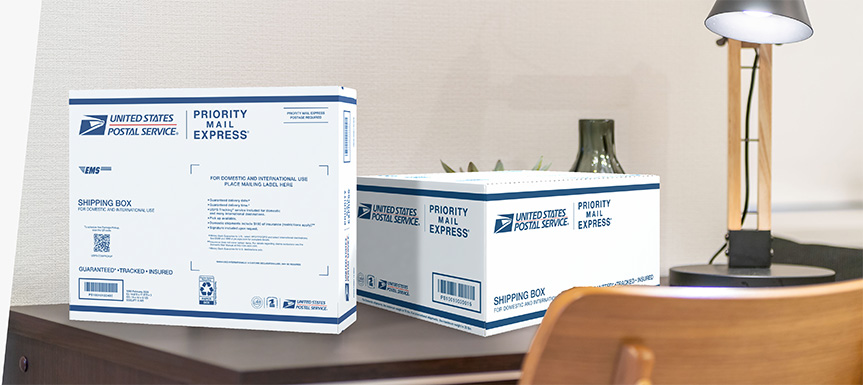
USPS Priority Mail Flat Rate ships domestically at the same price to any state, as long as you use USPS Flat Rate packaging and stay within the 70-pound limit. USPS also provides free packaging, and current retail prices start at $11.95 for a Flat Rate Envelope and $12.65 for a Small Flat Rate Box. You can estimate costs in advance using the USPS shipping calculator.
| USPS detail | Current rule |
| Program | Priority Mail Flat Rate |
| Packaging | USPS Flat Rate envelopes and boxes |
| Weight limit | Up to 70 lbs domestic |
| Distance pricing | Same domestic price to any state |
| Speed | 2 to 3 days |
| Current entry price | From $11.95 retail |
USPS also provides free packaging, and shipping insurance is included on eligible shipments.
UPS Simple Rate Flat-Rate Shipping: Packaging Rules, Size Tiers, and Pricing
UPS Simple Rate is different because it lets you use your own packaging. Pricing is based on five size tiers measured in cubic inches, with domestic delivery options ranging from within five days to next day. The current public page shows starting prices from $12.20, and packages must stay within 1,728 cubic inches and 50 pounds. Businesses can use the UPS shipping cost calculator to estimate rates across tiers before committing to a program.
| UPS detail | Current rule |
| Program | UPS Simple Rate |
| Packaging | Your own box or mailer |
| Weight limit | Up to 50 lbs |
| Size limit | Up to 1,728 cubic inches |
| Distance pricing | National flat-rate structure for domestic shipments |
| Current entry price | From $12.20 |
FedEx One Rate is built around FedEx packaging and express services. It uses local, regional, and national zones, so distance still affects price. FedEx says envelopes must be 10 pounds or less, while boxes, paks, and tubes must be 50 pounds or less. For a more complete picture of FedEx pricing across services, see our breakdown of FedEx courier charges.
Current local-zone pricing starts at $11.90 for a FedEx Envelope on qualifying services, with higher rates for longer distances and faster service levels.
| FedEx detail | Current rule |
| Program | FedEx One Rate |
| Packaging | Eligible FedEx envelopes, paks, boxes, and tubes |
| Weight limit | 10 lbs for envelopes; 50 lbs for paks, boxes, tubes |
| Distance pricing | Zone-based: local, regional, national |
| Speed | Express services only |
| Current entry price | From $11.90 local zone |
Sources: USPS Priority Mail, USPS Mail Shipping Services, UPS Flat-Rate Shipping, FedEx One Rate Shipping, FedEx One Rate Pricing 2026.
When to Use Flat-Rate Shipping — and When to Avoid It
For businesses managing both flat-rate and standard shipments across multiple carriers, a multi-carrier shipping platform automatically selects the cheaper option per order. AI-based carrier allocation makes this decision at scale without manual rate comparison. Businesses evaluating their carrier allocation strategy will find that pairing flat-rate and standard rate options within a single system reduces both cost and decision overhead.
Editorial and methodology note
This article was researched using current USPS, UPS, and FedEx flat-rate program pages and 2026 pricing documentation where relevant. The aim was to explain flat rate shipping from a practical US shipping perspective, not to promote one carrier over another. Because carrier prices and packaging rules can change, the article focuses on live program structure and current public pricing signals rather than treating any one rate table as permanent.
Flat-Rate Shipping: Key Takeaways for Ecommerce Shippers
Flat-rate shipping is useful when predictability matters and the package is heavy for its size. It is less useful when shipments are light, local, or when packaging flexibility matters more than pricing simplicity.
For most businesses, the smart move is knowing when each option gives you the better outcome. For ecommerce logistics teams managing this at scale, pairing flat-rate and standard options with centralized delivery management software and package tracking ensures the cheapest reliable service is selected for every order. Teams focused on ecommerce fulfillment operations will benefit from integrating carrier rate comparison directly into their shipping workflow.
Flat-Rate Shipping FAQ
Is flat-rate shipping always cheaper than standard shipping?
No. Flat rate usually works best for dense, heavier items in compact packaging. For lightweight products or short-zone shipments, standard shipping often comes in lower.
Does flat-rate shipping price change based on distance or delivery zone?
It depends on the carrier. USPS Priority Mail Flat Rate and UPS Simple Rate are structured to simplify or neutralize destination pricing domestically, while FedEx One Rate still varies by zone and service.
Can you use your own box or packaging for flat-rate shipping?
With UPS Simple Rate, yes. With USPS Priority Mail Flat Rate and FedEx One Rate, you generally need to use the carrier's eligible flat-rate packaging.
What is the weight limit for flat-rate shipping with USPS, UPS, and FedEx?
USPS Priority Mail Flat Rate goes up to 70 pounds domestically. UPS Simple Rate and FedEx One Rate generally cap at 50 pounds, and FedEx envelopes are limited to 10 pounds.
Does flat-rate shipping include surcharges like residential delivery fees or fuel fees?
Some do. USPS Priority Mail has no fuel, residential, rural, or Saturday surcharges. FedEx One Rate includes residential, delivery area, and fuel surcharges, though other charges may still apply. For the full fee picture, see our best shipping carriers guide.
When should a business stop using flat-rate shipping and switch to standard rates?
When the product mix shifts toward lighter items, nearby deliveries, or custom packaging needs. Comparing both across a real shipment sample is the cleanest way to decide. For businesses evaluating this alongside expedited shipping options, the decision is about matching speed and cost tier to each order. Teams running high volumes can also benefit from reviewing how shipping delays factor into carrier selection decisions — not just cost.
Related reading: Shipping Cost Guide | How to Ship a Package | Ecommerce Shipping Software | Shipping Delays Guide



We use cookies to keep the site working, understand usage, and improve your experience. Learn more
Always active for essential site performance and security.
Enables anonymous usage analysis to refine our services.
Used to present relevant promotions and advertising.