.png?width=193&height=27&name=ClickPost%20Logo%20(Blue).png)
.svg)
.svg)
.svg)
.svg)
.webp?width=286&height=206&name=ROI%20Calculator%20(2).webp)
.svg)
.svg)
.svg)
.svg)
.svg)
.svg)
.svg)
.svg)
.svg)
.webp?width=286&height=206&name=Frame%201171276203%20(11).webp)
.svg)
.svg)
.svg)
.svg)
.webp?width=286&height=206&name=ROI%20Calculator%20(3).webp)
.svg)

.svg)
.svg)
.svg)
.webp?width=286&height=206&name=ROI%20Calculator%20(4).webp)
USPS Box Sizes, Prices & Flat Rate Guide for 2026


Ready to delight customers after checkout?
Trusted by 600+ brands
In this blog
USPS Boxes: Quick Summary
USPS Boxes are useful, but only if you know what each one is actually for. Some are free, some come with postage already built in, and some only make sense when your package is heavy enough or traveling far enough.
Key Points: USPS Box Types, Pricing & What's Free
- Most Priority Mail and Priority Mail Express boxes and envelopes are free from USPS.
- Regional Rate boxes are no longer a live USPS product, so old guides that treat them as a current shipping option are out of date.
- Forever Prepaid Flat Rate packaging is not free, but it locks in postage at the time of purchase.
- Flat Rate packaging only works at Flat Rate pricing when you use the matching USPS-produced box or envelope.
This guide cuts through that confusion and shows you which USPS Boxes exist today, what they cost, when they save money, and where people usually make mistakes.
Why USPS Box Choice Affects Your Shipping Cost
A shipping box looks like a simple choice until it changes the price of the label. Pick the wrong one, and you can pay more than you need to, lose Flat Rate eligibility, or end up using packaging that does not match the service at all.
That is why USPS Boxes deserve a closer look. USPS gives shippers a mix of free Priority Mail packaging, free Priority Mail Express packaging, Flat Rate options, and prepaid versions that already include postage.
The trick is knowing which box is tied to which service, and when it is smarter to skip USPS packaging altogether and use your own box instead. For a step-by-step walkthrough of the full shipping process, see our guide on how to ship a package.
For businesses shipping branded products in their own packaging, following good packaging design tips can help create a more professional unboxing experience while still meeting carrier packaging requirements.
3 Types of USPS Boxes You Should Know About
If you ignore the outdated information floating around online, today’s USPS packaging story is much cleaner than it looks.
The three box categories that matter most for everyday shippers are Priority Mail Flat Rate packaging, standard free Priority Mail and Priority Mail Express packaging, and Forever Prepaid Flat Rate packaging.
Regional Rate boxes used to be a part of this conversation. Still, USPS discontinued Regional Rate pricing in 2023. Hence, it is no longer a viable option, contrary to the information on the internet suggesting otherwise.
What follows is the practical version of the USPS box guide, built around what you can actually use now.
1. USPS Flat Rate Boxes
Flat Rate is the best-known USPS packaging category for a reason. It gives you a single set price for domestic delivery, regardless of where the box is going, as long as the shipment stays within the service rules. Weight still matters in one way, though. That is because domestic Flat Rate packages cap at 70 pounds.
That makes Flat Rate most useful when the item is dense, the distance is long, and you want price predictability more than dimensional flexibility. It is not always the cheapest choice, but it is often the easiest one to understand. For businesses comparing this against other carrier options, understanding flat rate shipping across carriers helps benchmark whether USPS Flat Rate is truly the best deal.
Common Flat Rate formats available from USPS include:
-
Flat Rate Envelope
-
Legal Flat Rate Envelope
-
Padded Flat Rate Envelope
-
Small Flat Rate Box
-
Medium Flat Rate Box, top-loading
-
Medium Flat Rate Box, side-loading
-
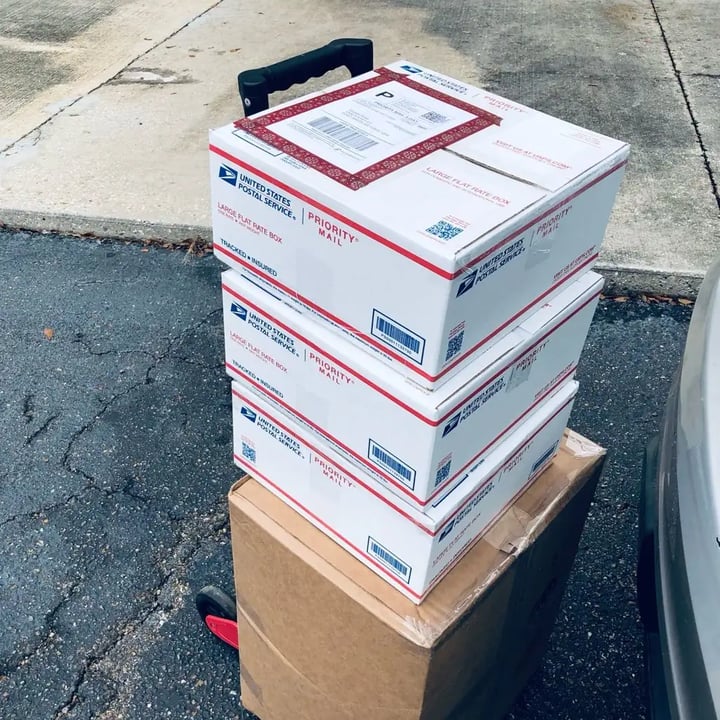
Large Flat Rate Box
-
APO/FPO/DPO Large Flat Rate Box
These are tied to Priority Mail Flat Rate. That means you cannot use a Flat Rate box with Ground Advantage, Media Mail, or a standard weight-and-zone Priority Mail label. If you do, USPS will re-rate the shipment.
USPS Flat Rate Box Dimensions and Retail Prices (2026)
Here are the core domestic Flat Rate box and envelope sizes in the current USPS price list:
| USPS Flat Rate packaging | Outside dimensions | 2026 retail price |
| Flat Rate Envelope | 12-1/2" x 9-1/2" | $11.95 |
| Legal Flat Rate Envelope | 15" x 9-1/2" | $12.25 |
| Padded Flat Rate Envelope | 12-1/2" x 9-1/2" | $12.95 |
| Small Flat Rate Box | 8-11/16" x 5-7/16" x 1-3/4" | $12.65 |
| Medium Flat Rate Box, top-loading | 11-1/4" x 8-3/4" x 6" | $22.95 |
| Medium Flat Rate Box, side-loading | 14-1/8" x 12" x 3-1/2" | $22.95 |
| Large Flat Rate Box | 12-1/4" x 12" x 6" | $31.50 |
| APO/FPO/DPO Large Flat Rate Box | 12-1/4" x 12" x 6" | $30.15 |
Source: USPS Notice 123, January 2026.
Flat Rate is straightforward once you stop trying to force it into situations where it does not belong. It works best when your package is compact, heavy, and moving far enough that weight-based Priority Mail would otherwise get expensive.
2. Standard Free USPS Priority Mail and Priority Mail Express Packaging
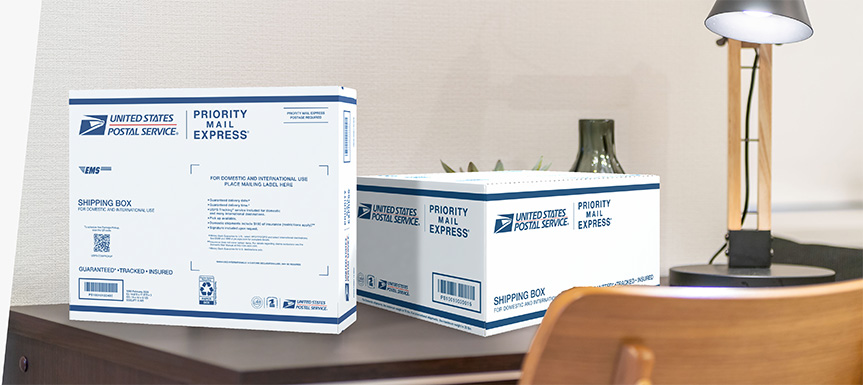
This is the category a lot of people miss. USPS offers more than Flat Rate packaging. It also offers free branded boxes and envelopes for standard Priority Mail and Priority Mail Express service. Those are not prepaid, and they are not Flat Rate unless specifically marked as such.
It is crucial because not every shipment should go in a flat-rate box. If you are shipping something light, local, or simply awkwardly shaped, a standard Priority Mail box with weight-and-zone pricing can be the better value, just as enterprise catalog management helps businesses choose the right product packaging strategy for different scenarios.
The same goes for Priority Mail Express, where USPS provides free packaging but charges postage separately unless you buy a prepaid product.
You will find these supplies online through the USPS store and, depending on stock, at local Post Office counters.
Typical formats include:
-
Priority Mail mailing boxes and mailing tubes
-
Priority Mail shoe boxes and gift-card boxes
-
Priority Mail Express envelopes and boxes
-
Flat Rate and non-Flat Rate versions across several lines
What Matters Most With Free USPS Packaging
-
The packaging itself is usually free.
-
Postage is not included.
-
The service printed on the packaging matters
-
Some packaging types are only available online through USPS
-
You can also skip USPS packaging and use your own box for standard Priority Mail or Priority Mail Express
It is the part of the USPS box system that gives you flexibility. You still get USPS-supplied packaging, but you are not locked into Flat Rate pricing just because the box came from USPS. For businesses printing their own labels, see our shipping label guide for formatting and compliance tips.
3. USPS Forever Prepaid Flat Rate Boxes
Forever Prepaid Flat Rate packaging is the simplest concept in the lineup. You buy the box or envelope with postage already built in, and that postage remains valid even if USPS raises prices later. That is the whole point of the “Forever” part.
These are useful for people or businesses that want ready-to-go packaging without having to create a label each time. However, the tradeoff is obvious. Unlike standard Priority Mail packaging, these are not free.
USPS currently offers Forever Prepaid versions of:
-
Flat Rate Envelope
-
Legal Flat Rate Envelope
-
Padded Flat Rate Envelope
-
Small Flat Rate Box
-
Medium Flat Rate Box, top-loading
-
Medium Flat Rate Box, side-loading
-
Large Flat Rate Box
These products also include the sender’s return address on the label, which makes them less flexible if your shipping origin changes later.
USPS Forever Prepaid Flat Rate Dimensions and Prices (2026)
| USPS Forever Prepaid packaging | Outside dimensions | 2026 price |
| Flat Rate Envelope | 12-1/2" x 9-1/2" | $11.95 |
| Legal Flat Rate Envelope | 15" x 9-1/2" | $12.25 |
| Padded Flat Rate Envelope | 12-1/2" x 9-1/2" | $12.95 |
| Small Flat Rate Box | 8-11/16" x 5-7/16" x 1-3/4" | $12.65 |
| Medium Flat Rate Box, top-loading | 11-1/4" x 8-3/4" x 6" | $22.95 |
| Medium Flat Rate Box, side-loading | 14-1/8" x 12" x 3-1/2" | $22.95 |
| Large Flat Rate Box | 12-1/4" x 12" x 6" | $31.50 |
Source: USPS Postal Store, current Forever Prepaid listings.
The bottom line here is that Forever Prepaid is not cheaper because it is prepaid. It is useful because it is convenient and price-protected.
How Much Do USPS Boxes Cost?
Most USPS Boxes do not cost anything upfront. Standard Priority Mail, Priority Mail Flat Rate, and Priority Mail Express packaging is generally free through USPS, whether you order online or pick it up at a Post Office while supplies last.
Where people get tripped up is mixing up free packaging with free shipping. USPS gives you the box for free, but you still have to pay the postage unless you are buying a prepaid product. That is why Forever Prepaid Flat Rate packaging is the exception.
In general, the USPS Box pricing starts at $11.95 and goes up to $31.50. Understanding your total shipping cost — box plus postage plus any surcharges — is what actually determines whether you are getting a good deal.
A practical cost breakdown looks like this:
- Free: Priority Mail boxes and envelopes
- Free: Priority Mail Flat Rate boxes and envelopes
- Free: Priority Mail Express boxes and envelopes
- Paid: Forever Prepaid Flat Rate products
- Paid indirectly: Any postage tied to the service you choose
Disclaimer: Regional Rate pricing is no longer available. If you still have old Regional Rate boxes, USPS will no longer process them under Regional Rate pricing. They are rated as weight-and-zone packages instead.
How to Get the Cheapest USPS Shipping
The cheapest USPS option depends less on the logo on the box and more on the combination of weight, distance, and packaging type. The mistake most people make is starting with the box instead of the shipment itself.
A better approach is to think in scenarios:
| USPS Forever Prepaid packaging | Outside dimensions | 2026 price |
| Flat Rate Envelope | 12-1/2" x 9-1/2" | $11.95 |
| Legal Flat Rate Envelope | 15" x 9-1/2" | $12.25 |
| Padded Flat Rate Envelope | 12-1/2" x 9-1/2" | $12.95 |
| Small Flat Rate Box | 8-11/16" x 5-7/16" x 1-3/4" | $12.65 |
| Medium Flat Rate Box, top-loading | 11-1/4" x 8-3/4" x 6" | $22.95 |
| Medium Flat Rate Box, side-loading | 14-1/8" x 12" x 3-1/2" | $22.95 |
| Large Flat Rate Box | 12-1/4" x 12" x 6" | $31.50 |
This decision pattern lines up with USPS’s own pricing structure. Flat Rate ignores destination for domestic pricing, while standard Priority Mail pricing still follows weight and zone. That is why Flat Rate starts to make more sense as packages get heavier and travel farther.
Two simple rules help most shippers:
-
First, do not default to Flat Rate just because the box is free.
-
Second, do not assume your own box is always better, either.
The cheapest choice is usually the one that matches the shipment’s weight and travel distance, not the one that feels most familiar. USPS’s online tools and Click-N-Ship commercial pricing can also shift the math in your favor if you are buying labels online. For businesses comparing USPS against other carriers, our best shipping carriers guide and FedEx vs USPS vs UPS comparison cover pricing, speed, and service differences in detail.
Editorial Methodology
This USPS Boxes guide was created using information from official USPS resources, including the USPS Postal Explorer (Notice 123 price list), USPS shipping service documentation, and the USPS Postal Store product catalog. Dimensions, packaging types, and pricing structures were cross-checked against the latest publicly available USPS service guides to ensure accuracy. Because USPS periodically updates postage rates and packaging availability, this article is reviewed and verified against official USPS documentation regularly to keep the information current.
USPS Boxes: What to Remember
USPS Boxes are easy to use once you stop treating them like a single category. Some are free service packages. Some are flat-rate tools. Some are prepaid convenience products. Once you know which one you are holding, the rest of the shipping decision becomes much less confusing.
For businesses managing shipments across USPS and other carriers, a multi-carrier shipping platform helps standardize packaging decisions alongside carrier selection — ensuring the right box and the right service are matched for every order.
USPS Box Sizes FAQ
Are USPS boxes free?
Most USPS-branded Priority Mail and Priority Mail Express boxes and envelopes are free. But they are tied to the services they were designed for, so you cannot use a Priority Mail Flat Rate box and then pay for Ground Advantage or Media Mail without creating a pricing problem.
What USPS box sizes are available?
The most commonly used Flat Rate formats are the Flat Rate Envelope, Legal Flat Rate Envelope, Padded Flat Rate Envelope, Small Flat Rate Box, two Medium Flat Rate Boxes, and the Large Flat Rate Box. USPS also offers additional non-Flat-Rate Priority Mail and Priority Mail Express packaging in other shapes and sizes.
What is the weight limit for USPS Flat Rate boxes?
The domestic weight limit for USPS Flat Rate boxes is 70 pounds. That applies to all Flat Rate box formats, even though the price itself does not change with weight, as long as the shipment stays within USPS rules.
When does USPS Flat Rate shipping actually save money?
Flat Rate usually starts making sense when the item is relatively heavy and traveling farther across zones. For lighter shipments or short-distance deliveries, standard weight-and-zone Priority Mail pricing is often the better value.
Can I use my own box with USPS Flat Rate pricing?
No. Flat Rate pricing only applies when you use the matching USPS-produced Flat Rate packaging. If you use your own box, the shipment is rated under the regular weight-and-zone structure instead.
Can I use a USPS Flat Rate box for international shipping?
You can use it, but only where USPS offers an international Flat Rate version of that packaging. The rules differ from those for domestic shipping, and international weight limits are lower for several Flat Rate formats. For businesses managing cross-border shipments, our international shipping guide covers the full picture.
What happens if a USPS Flat Rate box does not close properly?
It stops qualifying for Flat Rate treatment if the flaps cannot close within their normal folds. Tape can reinforce the box, but it cannot be used to justify an overstuffed or reshaped Flat Rate package.
How do USPS retail and commercial Flat Rate prices compare?
Commercial pricing is lower, and the difference becomes meaningful at volume. USPS gives all Click-N-Ship users access to discounted commercial pricing online, so businesses shipping regularly should not ignore that gap. For shipping for small business operations, this discount alone can meaningfully improve margins.
Related reading: Shipping Cost Guide | Shipping Insurance Explained | Shipping Delays Guide | Ecommerce Shipping Software




We use cookies to keep the site working, understand usage, and improve your experience. Learn more
Always active for essential site performance and security.
Enables anonymous usage analysis to refine our services.
Used to present relevant promotions and advertising.