.png?width=193&height=27&name=ClickPost%20Logo%20(Blue).png)
.svg)
.svg)
.svg)
.svg)
.svg)
.svg)
.svg)
.svg)
.svg)


.svg)
.svg)
.svg)
.svg)
.svg)
.svg)


.svg)
.svg)
.webp?width=286&height=206&name=ROI%20Calculator%20(1).webp)
.svg)
.svg)

.svg)

.webp?width=286&height=206&name=RTO%20Playbook%20(1).webp)
What Is an RMA (Return Merchandise Authorization)?


Ready to ship smarter? Talk to our logistics experts.
Trusted by 600+ brands
In this blog
TL;DR Summary
An RMA (Return Merchandise Authorization) is a formal approval a retailer issues to a customer before accepting a product return or exchange. RMAs are the backbone of a structured returns and exchange process. They control what gets returned, capture the reason why, and route items to the right destination. When automated through returns management software, RMAs reduce processing costs, prevent fraudulent returns, and turn a typically painful experience into a loyalty driver.
Key takeaways
- RMA stands for Return Merchandise Authorization (also called Return Authorization or Return Goods Authorization). It is the formal approval step before a customer can ship back a product.
- Automated RMA rules can approve or reject return requests instantly based on criteria like return window, item condition, product category, and customer segment.
- An effective RMA process captures return reason data, which helps brands identify product issues and reduce overall return rates over time.
- 97% of shoppers say a positive return experience makes them more likely to shop again, while 82% say easy returns influence their decision to try new brands
- Automated RMAs can help ecommerce brands recapture up to 35% of return revenue by encouraging exchanges over refunds.
- The National Retail Federation classified nearly 6% of returns as fraudulent in 2020 — RMA technology helps limit this through photo verification, eligibility checks, and rule-based approvals.
What Does RMA Stand For?
RMA stands for Return Merchandise Authorization. It is also referred to as Return Authorization (RA) or Return Goods Authorization (RGA).
An RMA is the formal approval a retailer issues to a customer who has requested to return or exchange a product. It acts as a gatekeeper in the ecommerce returns process so only customers whose return requests meet the brand's defined criteria receive an RMA number and return instructions.
Without an RMA system, returns flow into warehouses without context, reason codes, or routing instructions. This creates bottlenecks in warehouse operations, increases processing costs, and makes it nearly impossible to identify patterns in why products are being returned.
RMA Definition in Simple Terms
An RMA is a pre-approval that tells a retailer: this customer is authorized to send this product back, for this reason, under these conditions. Think of it as a return ticket — without one, the return does not get processed.
The RMA typically includes an RMA number (a unique tracking identifier), a return form documenting the reason for return, and shipping instructions for getting the item back to the seller.
What Is an RMA Number and How Is It Used?
An RMA number is a unique identifier assigned to every approved return request. It serves three purposes: it lets warehouse teams identify incoming returns, match them to the original order, and process them according to the correct resolution (refund, exchange, or restocking).
When a customer ships a return, the RMA number is printed on the return label or included inside the package. This ensures the return is not processed blindly. The warehouse already knows what to expect, why the item is being returned, and where it should be routed.
For brands using an order management system or ERP, the RMA number ties the return back to the original transaction, creating a clean audit trail.
What Is RMA Used For in Ecommerce?
RMAs are a critical part of the reverse logistics cycle. They serve four distinct purposes in ecommerce returns management:
1. Capturing Return Reason Data
When a customer initiates a return, RMA technology collects details about the issue — wrong size, defective product, changed mind, item not as described, and so on. This information determines how the return should be handled and where the item should be routed.
For example, say a customer is returning a pair of jeans because they ordered two sizes to try (a behavior known as bracketing). If the item is likely in good condition, you might route it to the nearest store to re-enter inventory quickly. But if the zipper is broken, the item should go back to a distribution center where it gets batched with other defective items for return to the manufacturer.
2. Automating Return Approvals and Rejections
Depending on your ecommerce system, RMA rules can automatically approve or reject return requests based on predefined criteria. Common automated rules include time-limited return windows (e.g., 30 days after purchase), condition-based eligibility (damaged or defective items only), and category-based exclusions (swimwear, intimates, final-sale goods). Automation eliminates manual review for the vast majority of return requests.
3. Notifying Warehouse Teams About Incoming Returns
When an RMA is approved and an RMA number is assigned, the system can automatically notify your warehouse or WMS that return merchandise is inbound. This allows teams to prepare for receiving, inspection, and restocking, rather than processing returns blind.
4. Generating Return Analytics and Insights
One of the most overlooked uses of RMAs is data capture. With the right analytics and reporting tools, brands can leverage RMA data to identify product quality issues, flag sizing problems, benchmark return rates against industry averages, and make informed decisions that reduce returns over time.
How Does the RMA Process Work? (Step-by-Step)
The RMA process follows five steps, from policy setup to return resolution. Here is how each step works:
Step 1: Define Return Policies and RMA Rules
Your company sets its own return and shipping policies, including return windows, eligible product categories, condition requirements, and refund/exchange options. These rules form the framework that the RMA system uses to approve or reject requests. Advanced returns platforms allow you to apply different rules to different product types or customer segments for a more personalized experience.
Step 2: Customer Initiates the Return Request
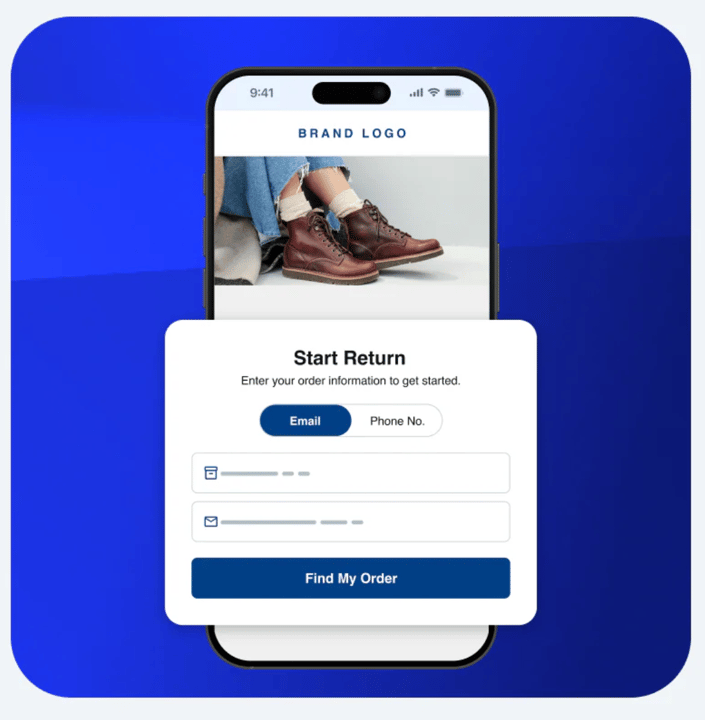
The customer starts the process through a branded self-service returns portal on your website. The portal should let customers specify the return reason, upload photos if required, and choose whether they want a refund, exchange, or store credit. A well-designed portal reduces support tickets and gives customers control over the process.
Step 3: RMA Request Is Approved or Denied
If the product meets your return criteria, the system issues an RMA — typically including an RMA number, a return form, and instructions for shipping the item back. If the request does not meet criteria, the system denies it with a clear explanation, reducing confusion and back-and-forth with support teams.
Step 4: Customer Ships or Drops Off the Return
Depending on your setup, the customer either ships the return using a prepaid return label or drops the item at a designated return location. Offering multiple return methods, like home pickup, drop-off points, in-store returns, improves convenience and completion rates.
Step 5: Brand Processes the Return and Issues Resolution
Once the package arrives at your warehouse, the RMA data associated with the shipment enables staff to process it efficiently. After inspection confirms the item matches the return request, the customer's account is credited, a replacement order is issued, or the appropriate resolution is triggered. Integration with your order management system ensures this happens without manual intervention.
Why Is RMA Important for Ecommerce Brands?
RMAs deliver value across three critical areas: customer experience and retention, operational efficiency, and fraud prevention. Here is why each matters:
How Does RMA Improve Customer Retention?
An easy returns experience directly impacts whether a customer shops with you again. 76% of first-time customers who had a smooth return said they would buy from that retailer again. For ecommerce brands investing in the post-purchase experience, RMAs are a fundamental building block.
When returns are frictionless — the portal is self-service, approval is instant, labels are auto-generated, and tracking updates arrive in real time — customers go from being dissatisfied to becoming repeat buyers. Brands that treat returns as a customer experience touchpoint rather than a cost center consistently see higher lifetime value.
How Does RMA Reduce Returns Processing Costs?
Without RMAs, returned merchandise arrives at warehouses with no context. Staff don't know why it was returned, where it should be routed, or whether it was even authorized. This creates inspection backlogs, restocking delays, and inventory inaccuracies.
Automated RMA workflows solve this by tagging every return with reason codes, routing instructions, and resolution type before the item even ships back. For brands processing hundreds or thousands of returns daily, this is the difference between a manageable operation and a bottleneck that bleeds margin.
A structured RMA process also feeds into reverse logistics software, enabling brands to optimize return routing, reduce transportation costs, and get sellable inventory back on shelves faster.
How Does RMA Help Prevent Returns Fraud?
While most customers are honest, returns fraud is a real and growing problem. The National Retail Federation classified nearly 6% of returns as fraudulent in 2020. Common tactics include wardrobing (wearing and returning), returning counterfeit items, and receipt fraud.
RMA technology helps limit fraud by requiring photo uploads with return requests, enforcing strict eligibility windows, flagging serial returners, and using rule-based checks before issuing approval. For brands looking for a more comprehensive approach, pairing RMA rules with ecommerce fraud prevention tools provides layered protection.
RMA vs Return Policy: What Is the Difference?
A return policy and an RMA are related but serve different functions. The return policy is the set of rules a brand publishes. It lists what can be returned, within what timeframe, and under what conditions. The RMA is the operational mechanism that enforces those rules on a per-request basis.
Think of it this way: the return policy defines the framework, and the RMA system executes it. A return policy without an RMA system is just a page on your website. An RMA system without a clear return policy has no rules to enforce.
Brands need both a clear, customer-facing return policy and automated RMA technology to enforce it at scale without manual review.
| Return Policy | RMA (Return Merchandise Authorization) | |
| What it is | A set of published rules | An operational approval system |
| Who sees it | Customers (on website, at checkout) | Internal teams + customer (via RMA number) |
| What it controls | Eligibility, timeframes, conditions | Per-request approval, routing, resolution |
| Where it lives | Website, help center, packaging | Returns management software, OMS, WMS |
| Can it be automated? | No (it is a document) | Yes (through rule-based returns software) |
Who Pays for Return Shipping on an RMA?
There are no universal rules on who pays return shipping costs, but industry norms and competitive pressure play a significant role.
When the brand should pay: If the product is damaged, defective, or doesn't match the listing description, the brand is generally expected to cover return shipping. Absorbing this cost prevents dissatisfied customers from churning and protects your brand reputation.
When the customer pays: If the customer simply changed their mind, ordered the wrong size, or wants a different product, they are typically expected to pay return shipping. Among nearly 200 retailers studied, only Fortune 50 retailers cover return shipping costs across the board. Approximately 45% of omnichannel retailers and 22% of D2C brands charge for return shipping.
Exchanges as a middle ground: One increasingly popular approach is to offer free return shipping for exchanges but charge for refund returns. This incentivizes customers to swap for a different size or product rather than getting their money back, essentially keeping revenue within your ecosystem. Automated RMA rules can apply these policies dynamically based on return type.
Understanding how return shipping costs affect your bottom line is part of a broader strategy to reduce ecommerce return rates and lower RTO (return to origin) rates.
What Are the Best Practices for RMA in Ecommerce?
Implementing RMAs effectively goes well beyond approving or rejecting individual return requests. Here are seven practices that high-performing ecommerce brands follow:
1. Set Clear, Enforceable Return Policies Before Configuring RMA Rules
Define return windows, eligible categories, condition requirements, and resolution options (refund, exchange, store credit) before configuring your RMA rules. Make your return policy easy to find on your website — ambiguous policies generate more support tickets and customer frustration.
2. Automate RMA Approvals to Reduce Processing Time
Manual RMA review is unsustainable at scale. Use returns management software to auto-approve requests that meet criteria, auto-generate return labels, and auto-notify warehouses. Automation reduces processing time from days to minutes.
3. Use RMA Workflows to Encourage Exchanges Over Refunds
Automated RMA workflows can suggest exchanges, offer store credit with bonus incentives, or display alternative product recommendations during the return flow. Brands that actively encourage exchanges over refunds can recapture up to 35% of return revenue.
4. Offer Multiple Return Methods to Increase Completion Rates
Give customers the choice between home pickup, carrier drop-off, and in-store returns. More options mean higher completion rates and fewer abandoned return requests. For Shopify brands, automating returns workflows through dedicated apps simplifies this further.
5. Use RMA Data and Return Analytics to Reduce Future Returns
Every RMA captures a return reason. Aggregate this data through analytics tools to spot patterns. Are certain products returned more than others? Is sizing consistently off? Are product descriptions causing mismatched expectations? Acting on this data reduces return volume over time.
6. Require Photo Verification to Prevent RMA Fraud
Asking customers to upload photos of the item and its packaging before issuing an RMA adds a fraud prevention layer without adding friction for honest customers. This is especially important for high-value items and categories with high wardrobing rates.
7. Send Automated Notifications at Every Stage of the RMA Process
Keep customers informed throughout the return lifecycle. Send automated notifications at each stage. These are: RMA approved, item received at warehouse, inspection complete, refund processed. Brands that provide real-time return tracking see significantly fewer "where is my refund" support tickets.
How to Automate Your RMA Process with ClickPost
Managing RMAs manually — or through disconnected tools — creates delays, errors, and a frustrating experience for both your team and your customers.
ClickPost's returns and exchange platform gives you a single system to manage the entire reverse logistics flow:
Configurable RMA rules. Set approval criteria by return window, product category, item condition, customer segment, and more. Auto-approve eligible returns instantly, or route edge cases to manual review. Everything can be managed from a single dashboard.
Branded self-service returns portal. Give customers a white-labeled portal to initiate returns, select their reason, choose between refund/exchange/store credit, and generate return labels, all without contacting support.
Exchange-first workflows. ClickPost's returns engine nudges customers toward exchanges and store credit, helping you retain revenue that would otherwise walk out the door.
Automated return tracking and notifications. Track every return shipment across 500+ carriers in real time. Push status updates to customers via email, SMS, and WhatsApp through automated notifications, reducing WISMO tickets on returns.
Return analytics. Identify top return reasons, flag problem products, benchmark return rates, and measure the revenue impact of your exchange-first strategy through built-in analytics and reporting.
Fraud prevention. Photo verification, eligibility rule enforcement, and serial returner flagging help protect your margins without adding friction for genuine customers.
See how ClickPost Returns works → | View pricing → | Take the returns management assessment →
Editorial information
Our logistics research team reviews return policies, industry benchmarks, and reverse logistics best practices using published research and carrier documentation. This article is reviewed and updated on a regular basis to ensure accuracy.
Sources referenced in this article:
- New Data From Route Shows Returns Are Shaping Where Shoppers Buy and If They Come Back
- National Retail Federation: Consumer Returns in the Retail Industry 2020 — 6% fraudulent returns statistic
Frequently Asked Questions
What does RMA stand for in ecommerce and shipping?
RMA stands for Return Merchandise Authorization. It is also known as Return Authorization (RA) or Return Goods Authorization (RGA). An RMA is the formal approval a retailer issues before accepting a product return or exchange from a customer.
How does the RMA return process work step by step?
The RMA process follows five steps: (1) the brand defines return policies and rules, (2) the customer initiates a return through a self-service portal, (3) the system approves or denies the request based on predefined criteria, (4) the customer ships or drops off the item, and (5) the brand processes the return and issues a refund, exchange, or store credit. Automated returns management software handles most of these steps without manual intervention.
What is an RMA number and why is it important?
An RMA number is a unique identifier assigned to an approved return request. It helps warehouse teams identify incoming returns, match them to the original order, and process them according to the resolution type (refund, exchange, restocking). The RMA number also enables return tracking throughout the reverse logistics process.
What is the difference between an RMA and a return policy?
A return policy is the set of rules a brand publishes about what can be returned, when, and under what conditions. An RMA is the operational mechanism that enforces those rules on a per-request basis. The return policy defines the framework; the RMA system executes it. Brands need both a clear return policy and automated RMA technology to enforce it at scale.
Is RMA the same as RGA or RA?
Yes. RMA (Return Merchandise Authorization), RGA (Return Goods Authorization), and RA (Return Authorization) all refer to the same process, i.e., the formal approval a retailer issues before accepting a return. The term used varies by industry and region, but the function is identical.
Who pays for return shipping on an RMA — the brand or the customer?
It depends on the return reason and the brand's policy. If the product is defective, damaged, or doesn't match the listing, the brand typically covers return shipping. If the customer changed their mind or wants a different product, the customer usually pays. About 45% of omnichannel retailers and 22% of D2C brands charge customers for return shipping.
Can RMA approvals and rejections be fully automated?
Yes. Modern returns management platforms allow brands to set rules that automatically approve or reject return requests based on criteria such as return window (e.g., 30 days from purchase), product category, item condition, and customer segment. Automated RMAs eliminate manual review for the majority of return requests and reduce processing time from days to minutes.
How do RMAs help prevent ecommerce returns fraud?
RMA technology helps prevent fraud by requiring photo uploads before issuing approval, enforcing strict return windows, flagging customers with abnormally high return rates, and rejecting returns that do not meet eligibility criteria. For more comprehensive protection, brands can pair RMA rules with dedicated fraud prevention tools.
How can RMA workflows help retain revenue from returns?
Automated RMA workflows can suggest exchanges, offer store credit with bonus incentives, and display alternative product recommendations during the return process. Brands that actively encourage exchanges over refunds through their RMA process can recapture up to 35% of return revenue that would otherwise be lost.
What return data and analytics do RMAs capture?
Each RMA records the return reason, product details, customer information, resolution type (refund, exchange, or credit), and timestamps for each stage of the process. Aggregating this data through return analytics helps brands identify product quality issues, sizing problems, and description mismatches, enabling them to reduce future returns.
How do RMAs integrate with warehouse management and inventory systems?
When an RMA is approved, the system can automatically notify your warehouse management system that a return is inbound. This allows warehouse staff to prepare for receiving, inspection, and routing — whether the item goes back to sellable inventory, to a repair queue, or to the manufacturer. Integration with inventory management ensures returned stock is accurately reflected in real time.
How long does the RMA process typically take?
With automated returns management software, the RMA approval itself can happen instantly — within seconds of the customer submitting a request. The total return cycle time (from RMA approval to refund or exchange) depends on return shipping speed, warehouse processing time, and the brand's refund policy. Most brands aim to complete the full cycle within 5 to 10 business days.






We use cookies to keep the site working, understand usage, and improve your experience. Learn more
Always active for essential site performance and security.
Enables anonymous usage analysis to refine our services.
Used to present relevant promotions and advertising.