.png?width=193&height=27&name=ClickPost%20Logo%20(Blue).png)
.svg)
.svg)
.svg)
.svg)
.webp?width=286&height=206&name=ROI%20Calculator%20(2).webp)
.svg)
.svg)
.svg)
.svg)
.svg)
.svg)
.svg)
.svg)
.svg)
.webp?width=286&height=206&name=Frame%201171276203%20(11).webp)
.svg)
.svg)
.svg)
.svg)
.webp?width=286&height=206&name=ROI%20Calculator%20(3).webp)
.svg)

.svg)
.svg)

.svg)
.webp?width=286&height=206&name=ROI%20Calculator%20(4).webp)
What Is Last-Mile Carrier Tracking? Benefits, Tracking Number & How It Works


Ready to delight customers after checkout?
Trusted by 600+ brands
In this blog
TL;DR: What Is Last-Mile Tracking and Why Does It Matter?
Last-mile tracking gives businesses and customers real-time visibility into the final leg of delivery, from the local hub to the doorstep. It is the most expensive, most unpredictable, and most customer-facing part of the shipping journey, and getting it right directly impacts satisfaction, repeat purchases, and support costs.
Key takeaways:
-
Last-mile tracking monitors the final delivery stretch using GPS, carrier APIs, and centralized dashboards, giving both businesses and customers live shipment visibility.
-
The last mile accounts for over 53% of total last-mile delivery costs, making tracking and optimization essential for margin protection.
-
Real-time updates and branded tracking pages reduce WISMO (Where Is My Order?) calls by keeping customers informed proactively.
-
A last-mile tracking number is a unique shipment ID that activates at the local hub and lets recipients follow every step until doorstep delivery.
-
Businesses that invest in last-mile tracking software see fewer failed deliveries, lower return-to-origin rates, and stronger post-purchase customer loyalty.
Why Last-Mile Tracking Is Now a Core Part of E-Commerce Logistics
In a world where instant gratification has become the norm, the demand for fast, reliable, and visible deliveries has never been greater. At the heart of this expectation lies last-mile tracking.
It is a critical component of the modern e-commerce logistics experience. Whether it is a local florist delivering a bouquet or a retail giant fulfilling a bulk order, knowing exactly where a shipment stands during its final stretch is a necessity.
Recent data shows that the global last-mile delivery market was valued at nearly $133 billion in 2022 and is on track to surpass $258 billion by 2030, expanding at roughly 8.8% annually.
The broader e-commerce logistics industry is fueling this growth, with the market climbing from approximately $843 billion in 2025 to an estimated $967 billion in 2026 at close to 15% year-over-year growth. This segment is especially noteworthy because it accounts for over 53% of the total delivery costs. With roughly 80% of customers now expecting same-day delivery from retailers, the pressure on brands to get this phase right has intensified.
Shoppers today do not want surprises. They want to track their packages in real-time, understand their estimated arrival window, and stay updated at every stop along the journey. This article breaks down the nuances of last-mile tracking, including its importance, challenges, and key components like the last-mile tracking number. It also shows how businesses can turn this final leg of the delivery journey into a strategic advantage.
What Is Last-Mile Carrier Tracking and How Does It Work?
Last-mile carrier tracking monitors a package's journey during its final leg, from the distribution hub to the customer's doorstep, making last mile tracking essential for live delivery visibility. It gives customers real-time visibility into delivery status, expected arrival windows, and driver identity.
Recipients can enter delivery instructions like "leave at the door" or "call upon arrival" through the tracking portal. For logistics teams, it enables route monitoring, bottleneck detection, and proactive communication that reduces delays and improves customer retention.
How Is Last-Mile Tracking Different from Standard Shipment Tracking?
Standard shipment tracking covers the entire journey of a package, from the moment it leaves the seller's warehouse through long-haul transport, sorting hubs, and customs (for international orders) until it reaches the local distribution center. It provides broad milestone updates like "shipped," "in transit," and "arrived at facility."
Last-mile tracking picks up where standard tracking ends. It focuses exclusively on the final delivery stretch, from the local hub or sorting center to the customer's doorstep. The key differences include:
-
Granularity: Last-mile tracking provides minute-level updates such as "out for delivery," "3 stops away," and "delivered," whereas standard tracking operates on milestone-level timestamps.
-
Delivery ETA precision: Last-mile systems calculate dynamic ETAs based on real-time GPS data, traffic conditions, and route progress. Standard tracking typically offers a delivery date range, not a live window. Learn more about how expected delivery dates are calculated and why accuracy matters.
-
Customer interaction: Last-mile tracking often allows recipients to provide delivery instructions, reschedule, or communicate with the driver. Standard tracking is passive and read-only.
-
Exception management: Last-mile systems flag delivery exceptions (recipient unavailable, access issues, incorrect address) in real time and can trigger automated rescheduling or rerouting. Standard tracking only reports exceptions after the fact.
For e-commerce businesses, the distinction matters because the last mile is where customer experience is won or lost. A package can move flawlessly across continents, but a single failed delivery attempt at the doorstep erases that trust. Understanding the latest last-mile delivery statistics helps illustrate just how much is at stake.
Why Is Last-Mile Tracking Important for Customer Satisfaction and Retention?
74% of customers demand accurate tracking information, and 67% check tracking statuses daily. Visibility at the final stage creates peace of mind, reduces support tickets, and prevents negative reviews. Without it, missed deliveries and lack of communication chip away at brand trust.
Benefits of last-mile tracking:
-
Empowers customers to plan their day with precise estimated delivery ETAs.
-
Reduces WISMO calls and builds confidence in the delivery process. Brands can find actionable strategies to cut Where Is My Order inquiries by investing in proactive tracking.
-
Helps businesses identify delivery inefficiencies for better decision-making.
-
Turns post-purchase logistics into a brand-building opportunity.
Why Last-Mile Delivery Tracking Is Critical for E-Commerce Success in 2025
1. How real-time last-mile tracking enhances the customer post-purchase experience
Live updates, delivery maps, and the ability to interact with drivers give customers visibility and control. This leads to fewer complaints, better reviews, and increased repeat business. A strong post-purchase experience starts with reliable delivery visibility from the moment an order leaves the warehouse.
2. How last-mile tracking reduces failed deliveries and repeat delivery attempts
When customers can track deliveries in real-time and receive advance notice, they are far more likely to be available. This reduces repeat delivery attempts, fuel waste, and operational costs. Fewer missed deliveries also directly lower your RTO rate in e-commerce, protecting revenue and reducing reverse logistics overhead.
3. Cost efficiency and operational optimization through last-mile visibility
Visibility into each delivery leg helps companies plan better routes, reduce driver idle time, and manage inventory cycles more accurately. Fewer failed deliveries mean lower overheads at scale. Pairing delivery visibility with delivery route planning and optimization software amplifies these savings significantly.
4. How last-mile tracking supports better communication with delivery partners
Tracking data helps delivery personnel operate with better route information and respond to disruptions quickly. Businesses can use tools like AI Phone Calls to provide automated voice updates on delivery schedules or route changes. Third-party carrier allocation and integration ensures shared visibility and accountability across your entire courier network.
Overcoming the 6 Biggest Challenges of Last-Mile Deliveries
1. Why last-mile delivery costs are so high — and how tracking helps control them
The final leg involves high fuel consumption, dispersed drop-off points, and repeated stops, making it disproportionately expensive compared to long-haul transport. Understanding the full breakdown of logistics costs helps brands identify where tracking-driven optimization delivers the biggest ROI.
2. How traffic and urban congestion cause last-mile delivery delays
Urban bottlenecks and unpredictable traffic patterns cause delays, missed stops, and re-deliveries that spike operational fatigue. Proactive shipping delay management tools help teams reroute and communicate with customers before a missed delivery becomes a support ticket.
3. How to reduce delivery delays and missed deliveries with proactive tracking
Variable customer availability leads to undelivered packages, increased return rates, and WISMO inquiries that burden support teams. Proactive tracking alerts give customers enough advance notice to ensure they are available or to reschedule, directly lowering failure rates.
4. Address accuracy issues in last-mile delivery and how to fix them
Incorrect or incomplete addresses force drivers to halt, reroute, or abandon attempts, wasting person-hours and inflating costs. Pre-shipment address validation, covered in detail in guides on pre-shipment processes, is one of the most effective ways to prevent these failures before they occur.
5. Managing returns and reverse logistics as part of last-mile operations
Coordinating pick-ups, validating returned items, and rerouting goods to inventory hubs is resource-heavy without streamlined systems. Investing in reverse logistics software gives operations teams the visibility needed to manage returns as efficiently as outbound deliveries.
6. How to meet customer delivery speed expectations without sacrificing accuracy
Customers expect next-day or instant delivery. Balancing speed with precision requires intelligent dispatch logic and regional fulfillment support. Exploring options like next-day delivery solutions and hyperlocal delivery models can help brands close the gap between speed expectations and operational reality.
What Is a Last-Mile Tracking Number and How Do You Use It?
A last-mile tracking number is a unique ID assigned to a shipment that monitors its progress during the final delivery stage. It activates when the package is scanned at a local fulfillment center and allows real-time status checks through carrier portals. The number carries metadata including shipping method, destination zip code, and assigned carrier. Businesses embed it in transactional emails so customers can follow every movement until delivery.
Key points to note:
-
It links a unique shipment ID to its final-mile journey and feeds into e-commerce order tracking systems for end-to-end visibility.
-
Customers can enter it into carrier portals to track status, or view it on a branded tracking page without leaving your website.
-
It allows dispatchers and businesses to monitor delays or rerouting in real time.
-
It ensures accurate delivery logs and helps reduce misdeliveries.
How to Track a Last-Mile Carrier in 2025: 7 Proven Methods for Real-Time Visibility
While challenges persist, the right systems can demystify the last stretch. Monitoring your delivery partner during the final stage is all about choosing the right mix of platforms and data visibility tools. Here are seven proven methods to keep your hand firmly on the pulse:
1. Use a centralized tracking platform for multi-carrier last-mile visibility
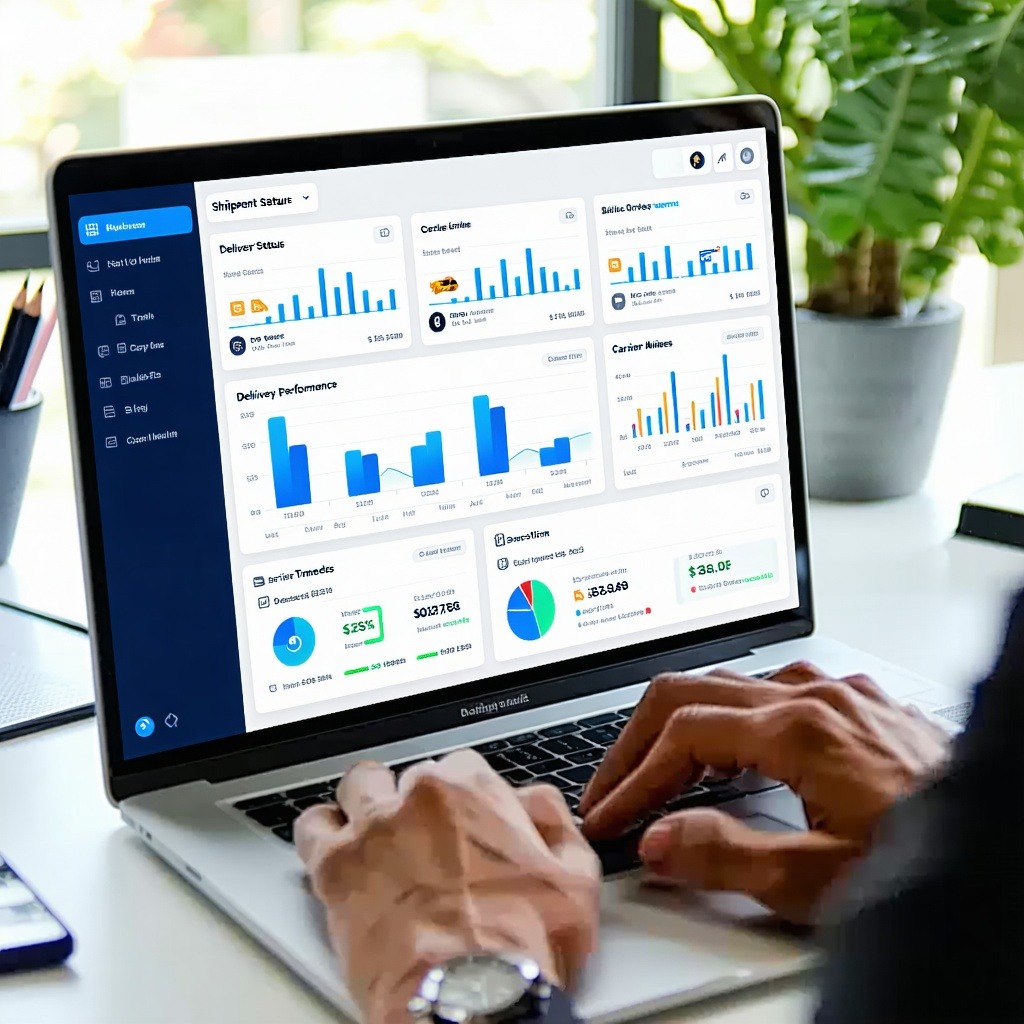
One of the most effective ways to monitor delivery status across different couriers is through a unified dashboard. These platforms consolidate status logs from multiple carriers and bring all movement updates under a single view.
No matter how many partners you use, the control panel stays the same. A purpose-built delivery management software solution can serve as the operational nerve center for your entire last-mile operation. Businesses managing high shipment volumes often pair this with a multi-carrier software platform to eliminate blind spots across all their courier partners.
2. Leverage carrier-specific tracking systems and portals for granular shipment data
Most national or regional shippers offer branded interfaces where you can trace the latest handover status. Logging into their portals and entering the unique shipment ID can often reveal timestamps, hub scans, and movement trails in minutes. Understanding which shipping carriers offer the most granular tracking data can help you make smarter carrier selection decisions.
3. Use delivery management software to streamline last-mile fulfillment workflows
Platforms designed to streamline fulfillment workflows usually include modules for route allocation, delay alerts, and milestone monitoring. These help dispatchers evaluate team performance, identify lag patterns, and make quick adjustments when needed. Pairing your tracking capabilities with dispatch management software gives your operations team the tools to act, not just observe.
4. Implement real-time GPS tracking for driver-level last-mile visibility
Integrating GPS solutions with driver devices enables real-time positioning updates. You get granular insights into estimated handovers, route behavior, and idle time. All these are vital when dealing with time-sensitive packages. For brands using multiple couriers, a dedicated last-mile delivery software platform can unify this GPS data across all carriers into a single operational view.
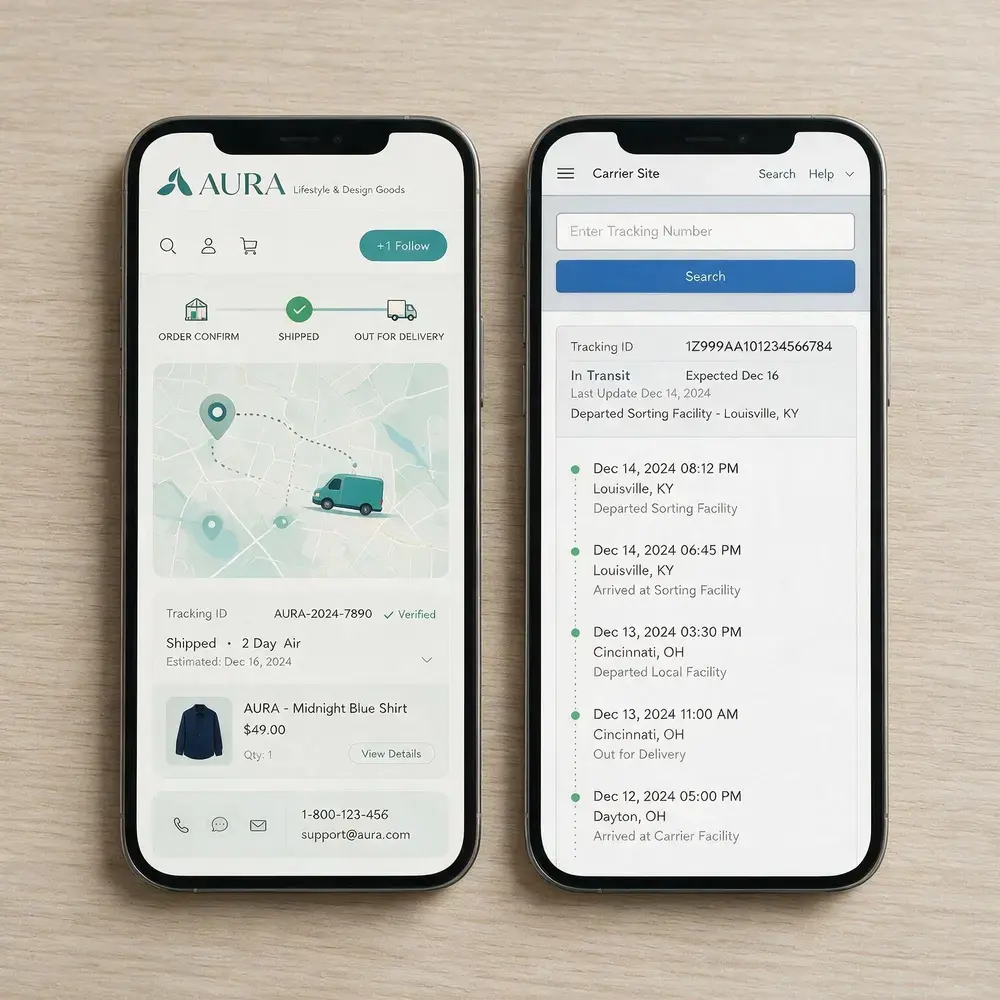
5. Offer branded tracking pages that keep customers on your site after purchase
For customer-facing transparency, brands often embed white-labeled interfaces into their stores. It allows buyers to check status without switching sites. These pages reflect live status pulled via APIs, aligned with your brand's tone and look. Investing in a dedicated branded tracking page keeps customers engaged and reduces the volume of support contacts. Many brands also use WhatsApp delivery tracking notifications to push proactive updates directly to customers' phones.
6. Use NDR management systems to recover failed last-mile deliveries and reduce RTOs
These tools allow you to identify and solve failed attempts faster. They highlight why a parcel was not handed over (whether due to recipient absence, incorrect address, or gate access) and often allow quick action triggers to reschedule or reroute.
For brands struggling with high failure rates, a focused approach to reducing delivery failures and RTOs can recover significant revenue that would otherwise be lost. A broader strategy to reduce return-to-origin rates in e-commerce combines NDR management with proactive customer communication.
7. Integrate carrier tracking APIs to automate last-mile status updates at scale
When the scale is large and systems need to talk to each other, APIs are your best friend. By connecting fulfillment engines directly with carrier systems, updates happen dynamically and can even trigger internal alerts for escalations or success tracking. This is also where automated shipping tools become invaluable, removing the need for manual status checks across dozens of carriers. Combining API-driven tracking with automated shipment tracking practices further reduces manual workload and speeds up exception resolution.
What Features Should Businesses Look for in Last-Mile Tracking Software in 2025?
Not all tracking solutions are built the same. When evaluating platforms, prioritize these capabilities:
-
Real-time GPS visibility: Live driver and package location updates, not just milestone-based scans.
-
Branded tracking pages: Customer-facing pages that reflect your brand identity and reduce the need to visit carrier websites.
-
Dynamic ETA calculations: ETAs that update based on real-time traffic, route progress, and delivery sequence, not static date ranges.
-
Automated delivery notifications: Proactive SMS, email, or WhatsApp alerts at key milestones (out for delivery, arriving soon, delivered) to reduce WISMO contacts. Brands using WhatsApp API for e-commerce notifications report significant drops in inbound support queries.
-
NDR and exception management: Tools that flag failed delivery attempts with reason codes and enable automated rescheduling or customer outreach.
-
Proof of delivery (POD) capture: Photo, signature, or OTP-based delivery confirmation that closes the loop and reduces disputes.
-
Multi-carrier support: A single platform that aggregates tracking data from all your carriers into one dashboard, regardless of how many you use. This is especially important for brands working with a shipping or courier aggregator to manage multiple carrier relationships.
-
Analytics and SLA dashboards: Reporting on carrier performance, delivery success rates, average delivery time, and exception trends to drive continuous improvement. A robust logistics management software platform typically bundles these analytics capabilities alongside tracking.
Gartner forecasts that by 2030, roughly 60% of enterprises using supply chain management software will have adopted agentic AI capabilities, up from just 5% in 2025. For last-mile tracking, this means AI-driven features like predictive delay detection, autonomous rerouting, and intelligent carrier allocation are quickly moving from nice-to-have to table stakes.
How ClickPost Helps Businesses Overcome Last-Mile Delivery Tracking Challenges
ClickPost helps brands move beyond visibility gaps and redefines how businesses handle the final leg of the shipment experience. With a scalable logistics intelligence layer, it empowers teams to unify and automate their dispatch-to-door process across carriers.
By partnering with over 300 courier partners globally and offering plug-and-play integrations, ClickPost simplifies the final mile complexity without draining internal resources. Its suite of tools spans pre-shipment accuracy, mid-way alerts, and last-yard confirmations. Brands looking for a competitive edge can also explore how last-mile delivery solutions for supply chain leaders are reshaping fulfillment strategy at scale. Teams managing high return volumes can also benefit from ClickPost's returns management software capabilities, which bring the same visibility and automation principles to reverse logistics.
ClickPost’s core features:
-
Branded Tracking Pages: Build trust and reduce anxiety with status updates aligned with your tone and design.
-
Courier Performance Dashboard: Identify delays, optimize allocations, and refine SLAs with actionable insights.
-
Real-Time Delay Alerts: Stay ahead of escalations with proactive triggers for exceptions or unscanned movements.
-
NDR Suite: Minimize delivery failures with reason codes, customer outreach tools, and auto-rescheduling.
-
AI-Powered Allocation Engine: Route the shipment to the most optimal courier based on region, volume, and past success data.
Want to reduce handover errors, increase traceability, and improve your customers' post-checkout experience? Book a demo with ClickPost now and discover how to gain an edge through more innovative shipping.
Making the Final Stretch the Strongest Link in Your Delivery Chain
The last leg of the shipping experience is no longer a backend problem; it is now a front-row seat to your brand's reliability. Every scan, every step, and every timestamp reflects how much attention your brand gives to detail. The post-checkout journey may be invisible to the cart, but it is obvious to the customer. They remember it. And they judge you for it.
As we move into an era of predictive commerce, reactive systems will no longer cut it. Today's buyers are constantly toggling between apps that show food being flipped, taxis being rerouted, and parcels being dropped. They do not just want updates; they demand certainty. The brands that win in this landscape are those that treat the final step as an opportunity, not an afterthought. Building a stronger post-purchase strategy for e-commerce brands is no longer optional — it is a competitive necessity.
Precision logistics, intelligent coordination, and proactive outreach are the new baseline. And while the final mile may be short on distance, it is long on impact. You can either stumble at the finish line or use it as your moment of truth. The choice, as always, is strategic.
Frequently Asked Questions About Last-Mile Carrier Tracking
What is last-mile carrier tracking in logistics and how does it work?
Last-mile carrier tracking is the process of monitoring a package during its final delivery stage, from the local distribution hub to the customer's doorstep. It uses GPS, carrier APIs, and centralized dashboards to provide real-time visibility into delivery status, estimated arrival time, and driver location.
What is a last-mile tracking number and where can I find it?
A last-mile tracking number is a unique shipment ID assigned when a package reaches the local fulfillment or sorting center. You can find it in your shipping confirmation email, the carrier's notification, or your order management dashboard. Enter it into the carrier's tracking portal or a centralized tracking platform to follow the package's final-mile progress.
How is last-mile tracking different from regular shipment tracking?
Standard shipment tracking covers the entire journey from warehouse to local hub with milestone-level updates. Last-mile tracking focuses specifically on the final delivery stretch and provides more granular data, including live GPS location, dynamic ETAs, delivery exception alerts, and the ability for recipients to interact with the driver or reschedule.
Why is last-mile tracking important for e-commerce brands in 2025?
The last mile is where customer experience is made or broken. Real-time tracking reduces WISMO inquiries, lowers failed delivery rates, and builds post-purchase trust. For e-commerce brands, it directly impacts customer satisfaction scores, repeat purchase rates, and support costs. Brands investing in a dedicated post-purchase platform are best positioned to turn last-mile tracking into a loyalty driver.
How do customers track a package during the final mile of delivery?
Customers can track their package by entering the last-mile tracking number into the carrier's portal, clicking the tracking link in their shipping notification email, or visiting the brand's branded tracking page. Most platforms show live status updates, estimated delivery windows, and driver proximity. For Shopify merchants specifically, Shopify order tracking integrations make this experience seamless and fully on-brand.
What are the biggest challenges in last-mile carrier tracking?
The most common challenges include high delivery costs due to dispersed drop-off points, traffic congestion in urban areas, failed deliveries from recipient unavailability, incorrect addresses, managing reverse logistics for returns, and meeting increasingly fast delivery speed expectations from customers. Many of these challenges are documented in depth in last-mile delivery statistics research.
How does last-mile tracking reduce WISMO calls and support costs?
By sending proactive delivery notifications at key milestones (out for delivery, arriving soon, delivered) and offering branded tracking pages where customers can self-serve their delivery status, businesses eliminate the need for customers to contact support. This can reduce WISMO-related tickets by 30% or more.
What features should businesses look for in last-mile tracking software?
Prioritize real-time GPS visibility, branded tracking pages, dynamic ETA calculations, automated delivery notifications, NDR and exception management, proof of delivery capture, multi-carrier support from a single dashboard, and analytics dashboards for carrier performance and SLA monitoring. Reviewing the top package and parcel tracking software options on the market is a good starting point for evaluating the right fit.
Can last-mile tracking help reduce failed deliveries and NDRs?
Yes. Real-time tracking alerts customers before delivery, increasing the likelihood that they are available to receive the package. NDR management tools identify the specific reason for a failed attempt (recipient absent, wrong address, access issue) and trigger automated rescheduling or customer outreach, reducing return-to-origin rates. Brands can explore detailed tactics for this in guides focused on reducing RTOs in health and wellness and other verticals.
How do branded tracking pages improve the last-mile delivery experience?
Branded tracking pages keep customers on your website instead of redirecting them to carrier portals. They display live delivery status, estimated arrival times, and order details in your brand's visual identity. This reinforces trust, reduces support inquiries, and creates opportunities for cross-selling or collecting feedback during the post-purchase window. For brands focused on real-time tracking for fashion stores or other high-return categories, branded pages also serve as a key touchpoint for managing customer expectations proactively.



We use cookies to keep the site working, understand usage, and improve your experience. Learn more
Always active for essential site performance and security.
Enables anonymous usage analysis to refine our services.
Used to present relevant promotions and advertising.