%20%20-%20Menu.svg)




.png?width=879&height=549&name=Page%2074%20(1).png)


In this blog
Introduction
The eCommerce landscape has changed dramatically in the past few years. It is mainly due to technological advancements like order tracking in eCommerce that have made buying goods online more accessible and convenient.
While this growing trend has its own perks, it has also set a competitive zone for businesses that are now selling their products and services online.
So, these businesses need to find ways to differentiate themselves from the competition to stay ahead in the game. Here, offering a thorough order tracking service can help.
This article will provide a detailed breakdown of order tracking in eCommerce. Let’s get started.
What is Order Tracking in eCommerce?
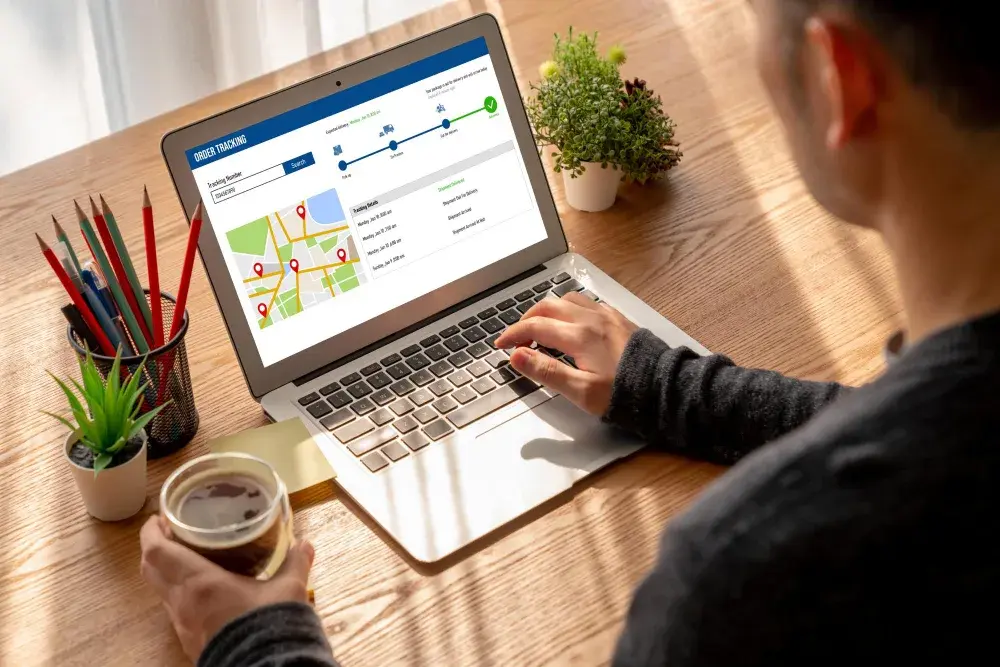
Ecommerce order tracking is a process that allows both retailers and customers to monitor orders in real-time throughout the fulfillment process.
It typically involves offering a tracking portal, providing a unique tracking number, showing the estimated delivery date, and reflecting timely eCommerce order status. Your customers can also use the information to monitor their orders on their own.
As a result, they can stay updated on the progress of their delivery demands. At the same time, eCommerce order tracking also helps you identify unexpected delays or issues in the shipment journey so you can solve them beforehand.
How Does Order Tracking in eCommerce Work?
Most eCommerce businesses use order tracking software to manage and track their orders. This software is typically integrated with the company's website or store to streamline everything, including eCommerce delivery tracking information in just one place.
When an order is placed, it assigns a unique tracking number to each shipment. Your customer can enter this number into the order tracking system to get real-time eCommerce tracking updates.
The software also updates the tracking information on its own as the order progresses through the shipping process.
What happens once a purchase has been made online?
Order tracking is a major part of the post-purchase activities. To understand the role of order tracking in eCommerce, you first need to have an idea of what exactly happens when a customer hits the buy button. The following steps can typically be expected when the purchase is made online.
-
Step 1: Once the order is placed, an email/SMS is sent to the customer with all the order information. It includes the product name, quantity, price, and shipping address.
-
Step 2: The order is then forwarded to the logistics provider, who starts processing the order.
-
Step 3: Next, an order ID is assigned to that shipment. Both customers and the retailer can use the same number to get detailed information on eCommerce shipment tracking.
-
Step 4: The final step is delivering the order to the customer. The tracking information gets updated accordingly to reflect that the order has been successfully delivered.
11 Best Order Tracking Software in eCommerce
Every decision you make as an e-commerce entrepreneur can make a huge difference in the long run. So, we have lined up the 11 best order tracking software to align your shipping goals and stay ahead of the competition.
| Company Name | Key Features | Ratings (Website) |
| ClickPost | Multi-carrier integration , Real-time tracking updates , Branded tracking pages , Advanced analytics | 4.5/5 |
| AfterShip | Automated tracking notifications , Branded tracking pages , Shipment analytics , Global carrier support | 4.6/5 |
| ShippingEasy | Shipping label printing , Order management , Inventory management , Customer marketing tools | 4.8/5 |
| ShipStation | Batch label printing , Multi-carrier shipping , Customizable branding , Automated order imports | 4.6/5 |
| Shippo | Pay-as-you-go pricing , Multi-carrier shipping , Real-time tracking , Discounted postage rates | 4.3/5 |
| Narvar | Post-purchase experience , Branded tracking , Returns management , Personalized delivery notifications | 4.2/5 |
| Easyship | Shipping rate comparison , Automated customs forms , Tax and duty calculation , Global fulfillment centers | 4.3/5 |
| FreightPop | Rate comparison across carriers , Freight quoting , Logistics analytics , Integrations with ecommerce tools | 4.5/5 |
| Shipway | Shipment tracking & notifications , Branded tracking page , Multi-carrier integrations , Automated alerts | 4.5/5 |
| Shipwell | Freight management , Automated quoting , Real-time visibility , Analytics & reporting | 4.3/5 |
1. ClickPost
ClickPost is an Indian logistics intelligence platform that helps businesses ease their shipping operations. The software lets you allocate carriers, send real-time notifications, display estimated delivery dates, manage returns and non-delivery reports to ensure a smooth post-purchase experience. It can integrate with numerous sales channels and marketplaces like ebay, as well as other ecommerce management tools.
Key Features of Clickpost
-
ClickPost is integrated with 500+ carriers that can be monitored on a single dashboard.
-
The platform’s Returns Pro solution automates and eases the reverse logistics process for brands.
-
Merchants can send real-time notifications to customers via email and SMS.
-
Customers can convert their COD (cash-on-delivery) orders to prepaid and use online payment modes.
For Shopify businesses, our order tracking software integrates natively with your store, giving you branded Shopify order tracking without any custom development work.
2. Aftership
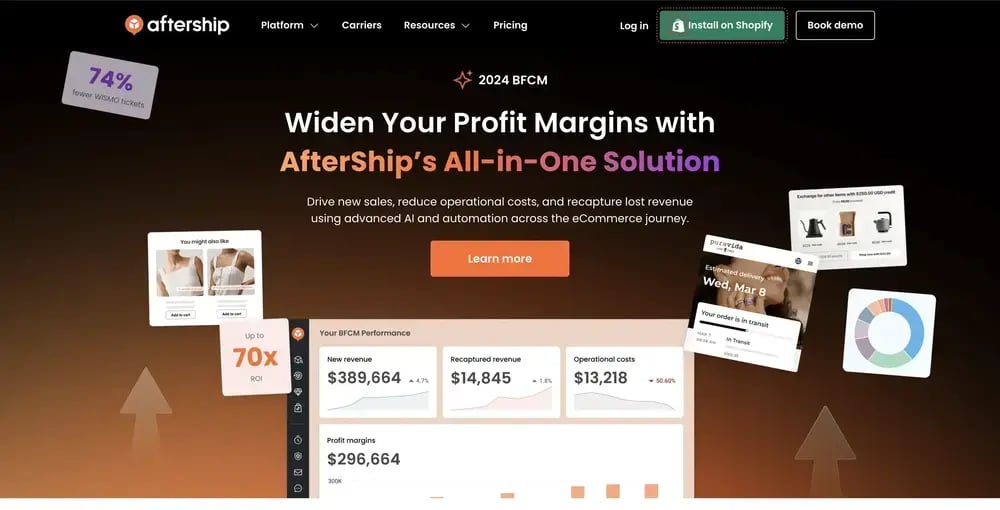
Aftership is a delivery management platform with several functionalities and features. Brands rely on its tracking API with 9 statutes to tag multiple delivery checkpoints while acquiring order information.
Key Features
-
Aftership provides a branded tracking page that can be used to promote your products.
-
Its delivery data prediction has 90% accuracy based on AI-driven historical tracking delivery data and shipping rules from over 900 carriers.
-
Aftership’s order lookup widget is its track button which enables enterprises to gauge the overall performance of shipping operations. Brands can also customize the widget setting for customers to track orders.
Pros
Aftership offers an easy-to-use interface for customers to navigate and manage their orders
Cons
Customer support may not be their best offering due to inconsistencies and issues from the customer’s end.
Stands out for:
Aftership stands out for its wide range of carriers and quick integrations with them.
3. ShippingEasy
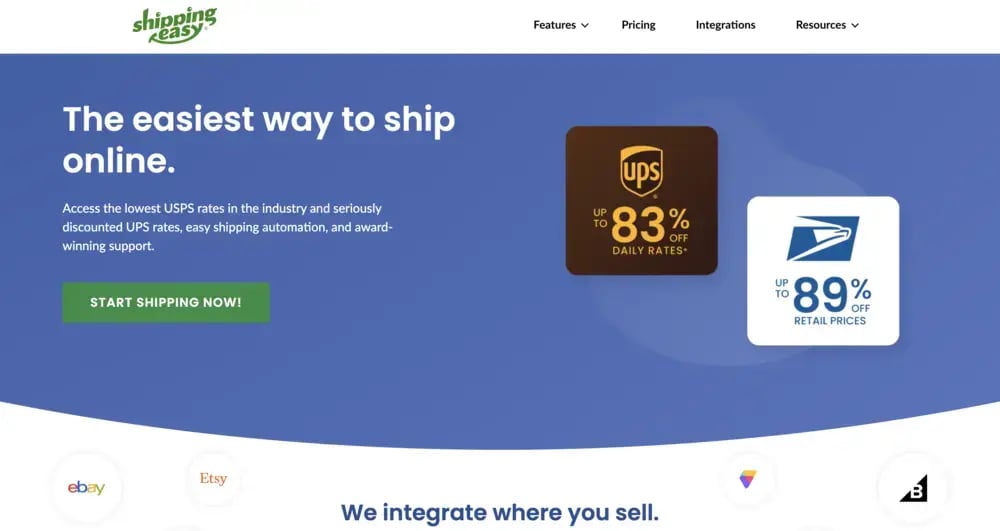
ShippingEasy is known for its effortless delivery services across the globe. It was established in Sydney, Australia, and is headquartered in Austin, Texas. Its customer service is highly commendable among others.
Key Features
-
Generate shipping labels instantly in a couple of clicks to ship numerous orders.
-
Recall previous shipment selections when re-ordering them.
-
The Amazon Alexa voice shipping feature comes in handy for users to manage their shipments through voice commands.
Pros
Integrate seamlessly with Shopify and WooCommerce and manage orders.
Cons
Advanced features are only exclusive to high-tier plans, limiting the number of users.
Stands out for:
Shipping Easy stands out for its discounted shipping rates.
4. ShipStation
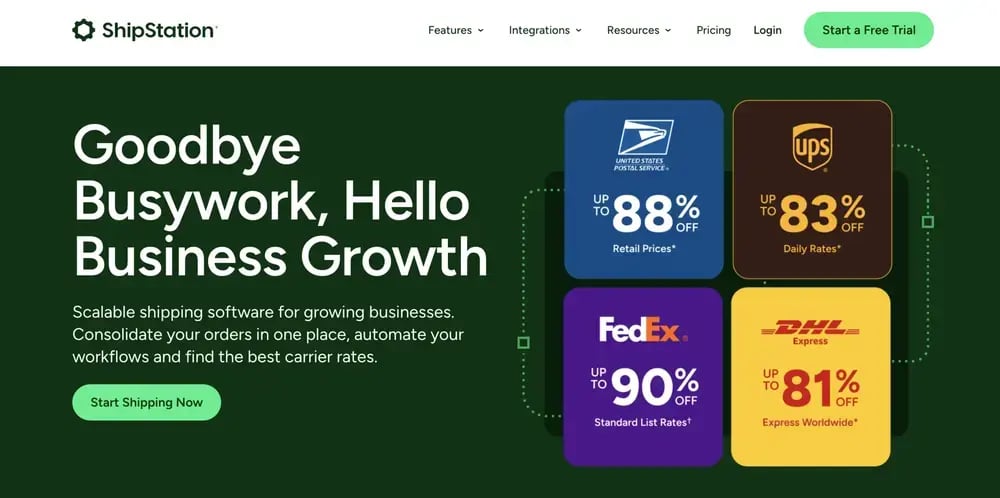
ShipStation also operates from Austin, Texas. It is a SaaS (Software-as-a-service) shipping company that helps businesses cater to their shipping needs including LTL and small parcels. It simplifies shipping operations and makes them painless.
Key Features
-
ShipStation lets you print discounted labels in large numbers and find the best rate.
-
It offers robust inventory management to stay in sync and up-to-date with stocks.
-
With Google shipping data integration, brands can get delivery estimates and present it to Google customers for future delivery.
Pros
It offers a mobile app to help customers manage their shipments when they’re on the move.
Cons
Printer incompatibility when printing shipping labels.
Stands out for: It is unique for its customizable features and automation.
5. Shippo
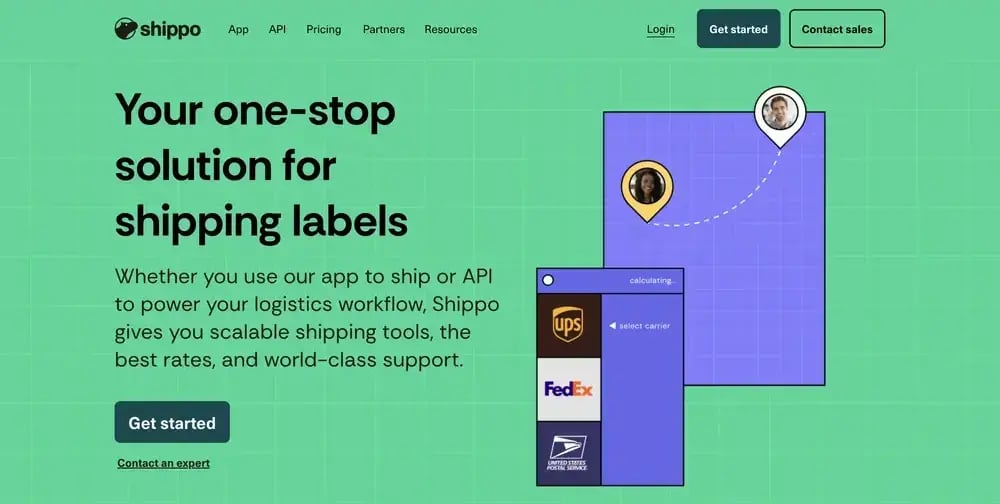
Founded in San Francisco, California, Shippo hosts 10,000 ventures with its logistics expertise. Since 2013, they have paved the way for numerous businesses to improve their shipping exceptionally. Merchants can choose from Shippo’s subscription plans and start shipping.
Key Features
-
Manage your returns efficiently with Shippo with its returns management API
-
Customizable push notifications to stay on top of important schedules
-
Shippo has a rate comparison feature to fetch the most affordable carriers.
Pros
Shippo provides a real-time rate comparison during checkout for customers to make the best decision.
Cons
Shippo lacks few advanced features such as automated shipping rules.
Stands out for:
Its exclusive Pay-As-You-Go Pricing Model offers flexible price options for the labels businesses use.
6. Narvar
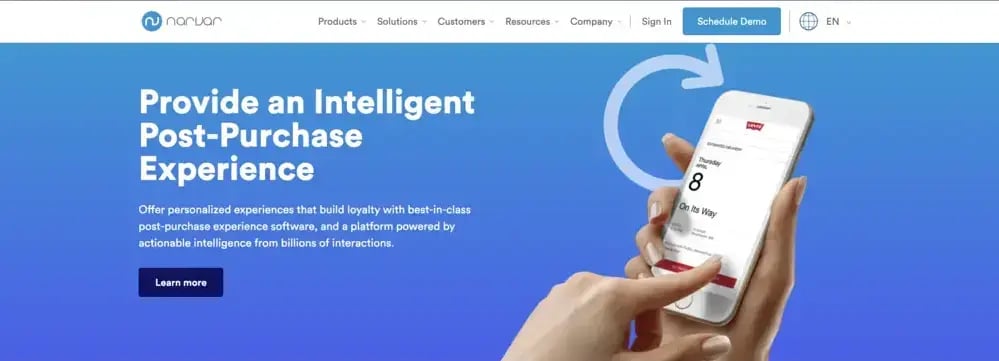
Narvar is an American post-purchase experience-providing fully integrated platform for businesses looking to step up their logistics game. It helps brands build long-term customer relationships and enhance their delivery experience.
Key Features
-
Narvar offers boxless and printerless returns through QR code scan.
-
Its Concierge offering allows enterprises to drop off orders across 9000+ locations.
-
Narvar Track lets you create a personalized branded tracking page based on your consumer’s location or shipment.
Pros
Narvar offers great customer support during issues and complexities faced by customers.
Cons
Narvar's initial setup can be time-consuming and complex. The integration of platforms and existing systems will require technical expertise.
Stands out for:
Narvar stands out for its Lumi Marketplace which is ideal for print suppliers and packaging. It allows businesses to connect and collaborate with suppliers.
7. Easyship
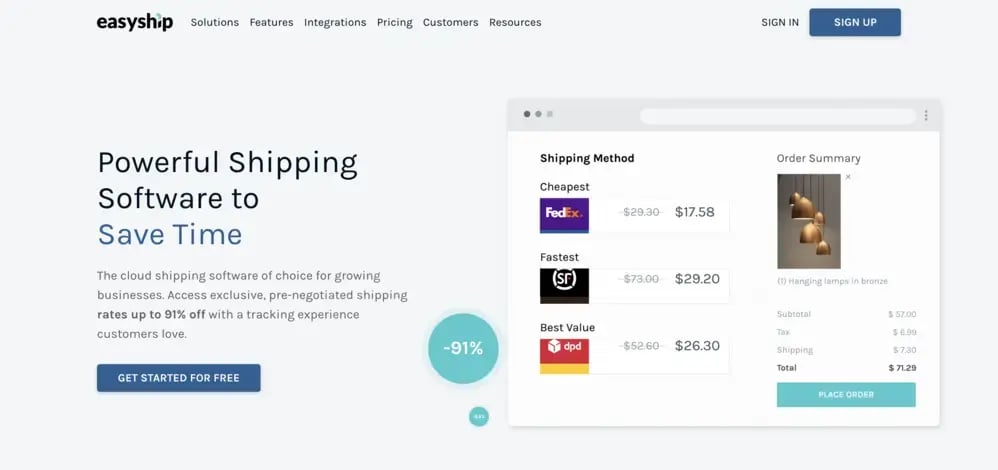
Easyship is a prominent logistics expert from Hong Kong that offers more than 250 carrier integrations for free. Easyship offers pre-negotiated prices from its delivery partners and a solid tracking prowess.
Key Features
-
Easyship lets you connect with several crowdfunding platforms.
-
Access APIs to expand your shipping capabilities.
-
Manage shipments from anywhere through the EasyShip mobile app.
Pros
Brands can quote accurately to customers as there are no hidden fees
Cons
Easyship offers a limited number of carriers to connect with.
Stands out for:
Easyship stands out for its competitive pricing options and international shipping operations.
8. FreightPop
As a transportation management and order-tracking software provider, FreightPop offers nothing less than a powerful shipping experience that encompasses custom workflows, an easy-to-use interface, real-time tracking, and more.
Key Features
-
The FreightPop platform comes pre-integrated with more than 1500 carriers.
-
The Bi-directional Integration can make data entry less boring and faster.
-
It offers a modern user interface to track shipments.
Pros
FreighPop offers various shipping methods such as air, sea, less than truckload, and full.
Cons
There are additional fees for certain features.
Stands out for:
It allows brands to invite unlimited users with granular user permissions so they can stay on the same page with them.
9. Shipway
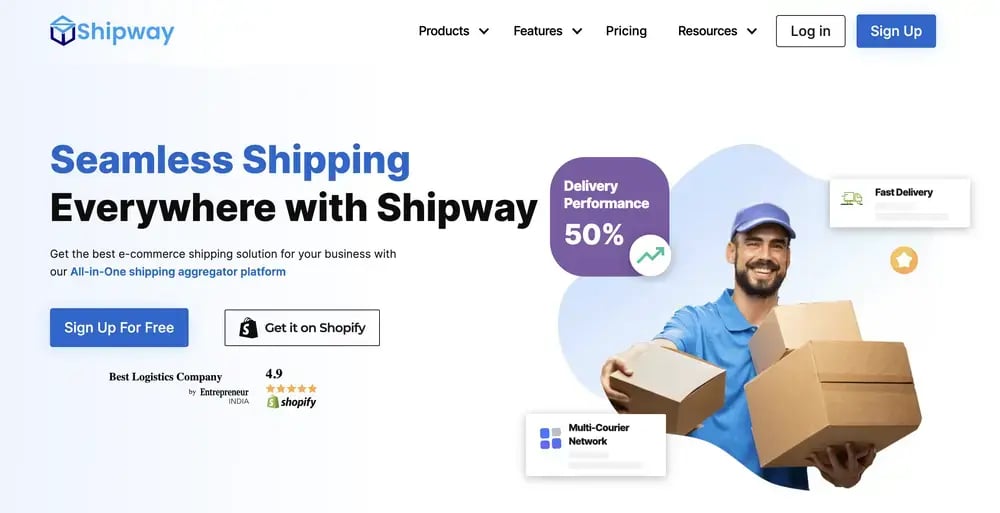
Shipway is a great alternative to the abovementioned order tracking solutions. Shipway’s all-in-one capabilities help Indian and international e-commerce businesses automate the reverse logistics process and support shipping operations through its API adeptness.
Key Features
-
Shipway has over 600 carriers in its library allowing brands to set their parameters on its AI-driven carrier selection algorithm.
-
Shipway is known for its exceptional reverse logistics automation process through smart payment gateways.
-
It offers a branded returns portal and allows enterprises to send notifications over SMS and email.
Pros
The unified tracking page enables users to track orders on their website.
Cons
The carrier integration process can be time-consuming.
Stands out for:
It stands out for its customer-friendly approach that includes Live Chat for order information from the end customer.
10. Shipwell
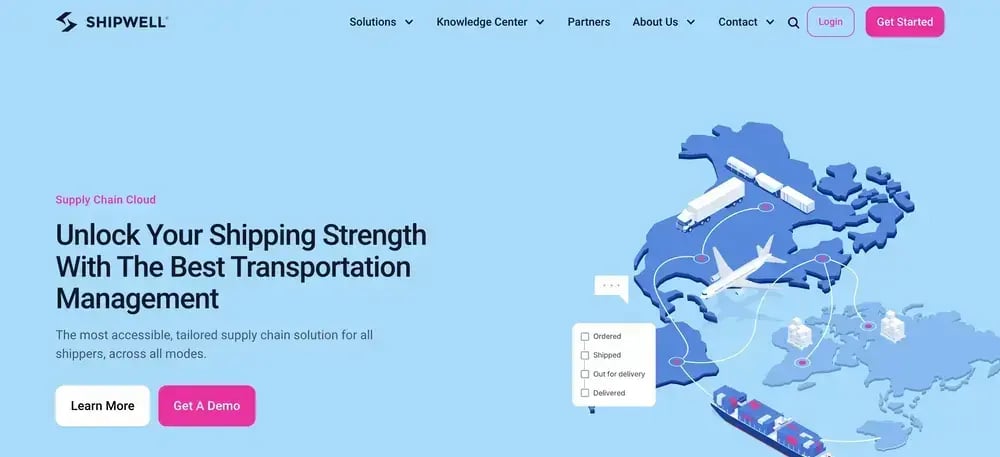
This logistics and freight management startup has strong American roots in supply chain efficiency. Shipwell is pre-integrated with numerous carriers and data-driven technology to offer an unforgettable shopping experience.
Key Features
-
Shipwell has a vast network of 2 million ELD-connected vehicles and connectivity with more than 850000 drivers.
-
The platform supports REST (Representational State Transfer), XML(Extensible Markup Language), and APIs to help you import and export bulk data such as locations, order details, and contracts.
-
The platform offers a compass dashboard to ensure revised estimated delivery times in peak traffic hours and bad weather conditions.
Pros
It is easier to manage shipping costs, book shipments, and track deliveries because of its ease of use.
Cons
Occasional software glitches resulting in inconvenience at the customer’s end.
Stands out for:
Stands out for its loyalty program that offers discounts based on orders.
11. ShippyPro
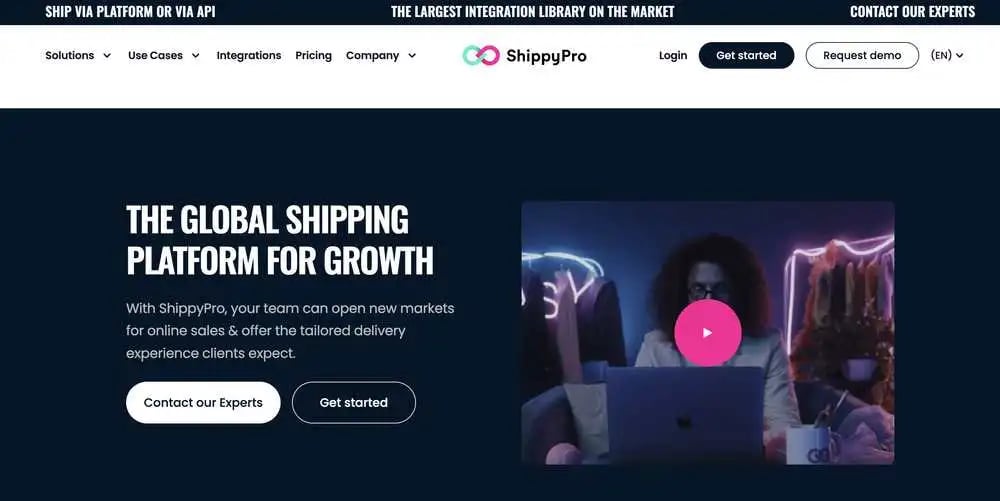
ShippyPro caters to a global audience and assists them in automating their shipping operations. It connects brands with more than 170 carriers and 80+ sales channels. They are ideal for businesses of all sizes across 50 nations worldwide.
Key Features
-
ShippyPro allows you to customize your notification templates through your voice and by inserting promotional links and banners.
-
Business owners can automate their returns process by setting conditions.
-
Choose filters and apply them to personalize your homepage.
Pros
The ShippyPro software is easy to operate and it has several functionalities that are exclusive to the platform.
Cons
Order processing can be time-consuming.
Stands out for:
ShippyPro stands out for its unified shipping management feature that simplifies shipping operations from start to finish.
What are the types of order tracking in eCommerce?
There are different types of order tracking systems businesses can adopt to get real-time eCommerce delivery updates. Some common examples include:
1. Automated order tracking systems
This online tracking system uses advanced software and algorithms to monitor orders automatically - without the need for human intervention. Large, high-volume businesses that handle hundreds or thousands of orders each day use this type of automation to simplify eCommerce courier tracking.
It provides them with periodic notifications, which is a significant boon for customers who want to know exactly when their orders will arrive. On the other hand, it frees you from manual tasks, and you can invest that time in acquiring more sales.
2. Manual order tracking systems
Unlike the automated ones, manual eCommerce order-fulfillment tracking systems mostly rely on human input. Smaller or mid-sized businesses that deal with fewer orders mainly use this type of system to handle the order tracking process.
At the most basic level, it often involves manually entering each new order details, regularly checking the order status, and manually sending notifications to customers.
3. Hybrid order tracking systems
Hybrid order tracking systems are a combination of both automated and manual processes.
They typically involve using an automated system for tasks like data entry, eCommerce real-time delivery updates, and incorporating human input at specific points in the process, such as when fulfilling orders or responding to customer queries.
Why is the order tracking important in eCommerce?
Tracking orders throughout their journey can benefit you from all fronts. For example:
1. It ensures customer satisfaction
Fulfilling orders on time is one of the best ways to improve customer satisfaction. In fact, 90% of online customers want to track eCommerce couriers. It becomes more convenient when they prepay for their orders.
Delivery tracking helps in such situations to a great extent. It allows businesses to see where each order is in the fulfillment journey. It further helps them provide accurate updates to customers that reduce their anxiety, which, in turn, improves customer experience.
2. It helps to improve operational efficiency
Another reason why eCommerce logistics tracking is essential is that it can help businesses improve their operational efficiency.
When orders are correctly tracked, businesses have visibility into every aspect of the fulfillment process. This visibility allows companies to identify any bottlenecks or areas of inefficiency.
3. It helps in preventing unnecessary delays or missed deadlines
The ability to effectively track orders can help businesses reduce unnecessary delays in their fulfillment process. When order tracking is done correctly, you can identify and prevent potential issues before they become a problem. This helps ensure that your shipments reach your customers on time and without delay.
4. It provides a clear picture of your business's performance
Order tracking can also help businesses get a clear picture of their performance. By having visibility into the entire fulfillment process, companies can identify areas excelling and areas where they need to improve.
This information can be used to make necessary changes to improve efficiency and optimize the fulfillment process.
What are the challenges you can face without order tracking in eCommerce?
Various challenges can arise while running an eCommerce business, such as issues with supply chain visibility and managing complex fulfillment processes.
Here is the list of the top 5 challenges your business can face without a proper order tracking system in eCommerce. We’ll also provide you with some tips so you can easily mitigate them.
1. Lack of Visibility into the Fulfillment Process
One of the main issues businesses face is a lack of visibility into their fulfillment process. It can lead to problems such as misplaced inventory, late shipments, and lost or damaged products.
It is essential to have a robust order-tracking system that provides visibility into every step of the process to overcome this challenge. This way, you can identify any potential issues and make necessary changes to improve efficiency.
2. Managing Complex Fulfillment Processes
Another common challenge is managing complex fulfillment processes. It can be especially difficult for businesses that fulfill different orders, such as eCommerce and in-person purchases.
Thankfully, several tools are available to help businesses manage these complex processes more effectively. These include order-tracking software that provides real-time visibility into the fulfillment process and automated warehouses that can quickly move products through the system.
3. Ensuring Order Accuracy
Ensuring accurate orders is another common challenge businesses face. It can be daunting to do manually, but again, there are numerous tools available to streamline this.
For example, many order-tracking software programs offer features that allow businesses to verify orders before they are processed. It can help reduce the number of errors and ensure that customers receive the products they ordered.
4. Meeting Customer Expectations
Meeting customer expectations often gets tricky for businesses. It includes ensuring that orders are delivered on time and excellent customer service.
There are several ways to meet these expectations, such as investing in quality control measures and using order tracking software to provide real-time updates to customers.
5. Managing Returns
Finally, businesses need to be prepared to handle returns. It can be difficult as it requires developing a dedicated process.
There are a few ways to manage returns, such as setting up a return policy and offering refunds or exchanges. Additionally, businesses can use order tracking software to track returned items and ensure they safely reach the inventory.
Tips on how to use order tracking effectively in your eCommerce business:
As you saw, eCommerce order tracking is no longer “a nice to have” feature; it’s a necessity. So, here are a few expert tips to help you effectively maintain the order-tracking process.
1. Go for an Easy-to-Use Order tracking system
Ensure that the order tracking software is easy to navigate and offers detailed information about customer orders. It will help make order management faster, easier, and more efficient.
2. Ensure the system offers an integrated tracking portal
When businesses grow, they need to rely on multiple carriers to effectively serve their customers and strengthen their business reach.
Now, tracking orders delegated to each carrier can be overwhelming and time-consuming. Thus, go for such an order tracking system that allows you to view eCommerce order tracking across multiple carriers on a single centralized dashboard.
Take the example of ClickPost shipping software. Here, you can track your eCommerce orders across all your logistics partners on an integrated dashboard. As a result, you don’t need to visit each carrier’s website to get order status. It, in turn, eases the eCommerce order tracking process.
3. Adopt customization in order tracking
As per the study, more than 80% of customers are more likely to buy from a company that offers personalized experiences.
Considering this data, you must look for such a customer order tracking software that provides a branded tracking experience.
This can be in the form of providing customized order statuses and offering a branded tracking portal to customers.
ClickPost can help you in this case, too. It offers a dedicated customized tracking portal with cross-selling opportunities.
In fact, it also automates sending milestone-wise personalized notifications to customers. It not only boosts your customer retention rate but also improves your overall ROI.
4. Consider various channels for communication
Different customers prefer different channels to get eCommerce order updates. While some want to receive notifications via SMS, some prefer WhatsApp or email.
Likewise, shipment tracking software, too, considers different communication channels to send customer notifications. For instance, ClickPost considers various channels, including WhatsApp, SMS, and emails, for sending order status. Consequently, it improves customer experience and reduces frequent WISMO (Where Is My Order) calls.
Final Thoughts!
As you saw, eCommerce order tracking plays a vital role - not only to improve customer experience but also to optimize your operational efficiency. Now that every business has integrated this solution into their service package, you must go a step further.
Now, one of the ways out is personalization. Personalize customer notifications, offer a branded tracking portal, and solve customer queries promptly to stand out in this competitive market. And, in this process, if you need a helping hand, book a demo for ClickPost.