.png?width=193&height=27&name=ClickPost%20Logo%20(Blue).png)
.svg)
.svg)
.svg)
.svg)
.svg)
.svg)
.svg)
.svg)
.svg)


.svg)
.svg)
.svg)
.svg)
.svg)


.svg)
.svg)
.webp?width=286&height=206&name=ROI%20Calculator%20(1).webp)
.svg)
.svg)

.svg)

.webp?width=286&height=206&name=RTO%20Playbook%20(1).webp)



In this blog
TL;DR – The Best Shopify Returns & Exchange Apps in 2026
Shopify handles return initiation, but at real volume, operational friction — eligibility rules, labels, fraud, exchanges, and refund speed — is where margin lives or dies.
-
ClickPost Returns & Exchanges – Best for mid-market and enterprise reverse logistics
-
Loop Returns & Exchanges – Best for high-volume DTC exchange-first retention
-
AfterShip Returns & Exchanges – Best for scaling ops teams needing analytics
-
ReturnGO Returns & Exchanges – Best for automation-heavy exchange-first teams
-
Return Prime: Return & Exchange – Best for value seekers needing depth and analytics
Why Returns Are Now a Margin Decision, Not a Back-Office Chore
Returns are no longer a back-office chore. They are customer-facing workflows that can quietly drain margins, inflate support tickets, and slow inventory recovery when handled via email threads and manual labels. Industry data is blunt. For every $1 billion in sales, merchants typically see about $165 million in returned merchandise. That makes returns tech a profitability decision, not a nice-to-have.
Among the best Shopify apps available today, a modern Shopify Returns App stands out by giving you a self-service returns portal, policy-driven automation, and exchange-first incentives. All these keep revenue in your store. It also gives operations teams what they actually need. That includes fewer manual steps, clearer approvals, faster restocking, and returns analytics you can act on.
The best Shopify return experiences start before the return request—a Shopify order tracking page that surfaces exceptions early helps resolve delivery issues before they become returns.
The bigger shift in 2026 is that returns are now part of the post-purchase experience stack. The best setups do not just “process refunds.” They reduce return friction for the customer while steering outcomes toward exchanges, store credit, and smarter return routing.
What this guide covers
-
The business case for using a Shopify Returns App (beyond basic returns)
-
The key features that separate a portal from a real returns workflow engine
-
How to set up a returns app in Shopify, step by step
-
A practical framework to evaluate the top returns tools for your operating model
Why Every Shopify Store Needs a Returns App (Not Just Native Refund Tools)
Shopify’s native tooling can handle basic refund actions. The problem is everything around it: eligibility checks, label creation, customer updates, exchange routing, inventory sync, and exception handling. That is where teams get buried.
A Shopify Returns App matters because returns are both a cost center and a retention moment. When the process is slow or unclear, customers churn, and support gets flooded. When it is fast and self-serve, customers come back. The repurchase impact is not subtle: 92% of consumers say they will buy again if returns are easy.
Read more: Complete Guide on How to Reduce Ecommerce Return Rates
What a dedicated app changes operationally:
-
Deflects repetitive tickets by letting customers initiate returns without support intervention
-
Enforces policy automatically (windows, product conditions, final sale logic, regional rules)
-
Retains more revenue by making exchanges and store credit the default, not the afterthought
-
Moves inventory faster with structured statuses and restock triggers
-
Creates visibility into return reasons so teams can fix product, sizing, content, or packaging issues upstream
7 Features That Separate a Real Returns Workflow Engine from a Basic Portal
Not all the return tools are the same. Some only generate labels. Others actually control cost, protect revenue, and reduce support pressure. A serious Shopify Returns App should automate policy enforcement, guide customers toward exchanges, and provide operations teams with clear visibility into every return case.
Here is what truly matters.
1. Branded Self-Service Returns Portal: What to Look For and Why It Reduces Tickets
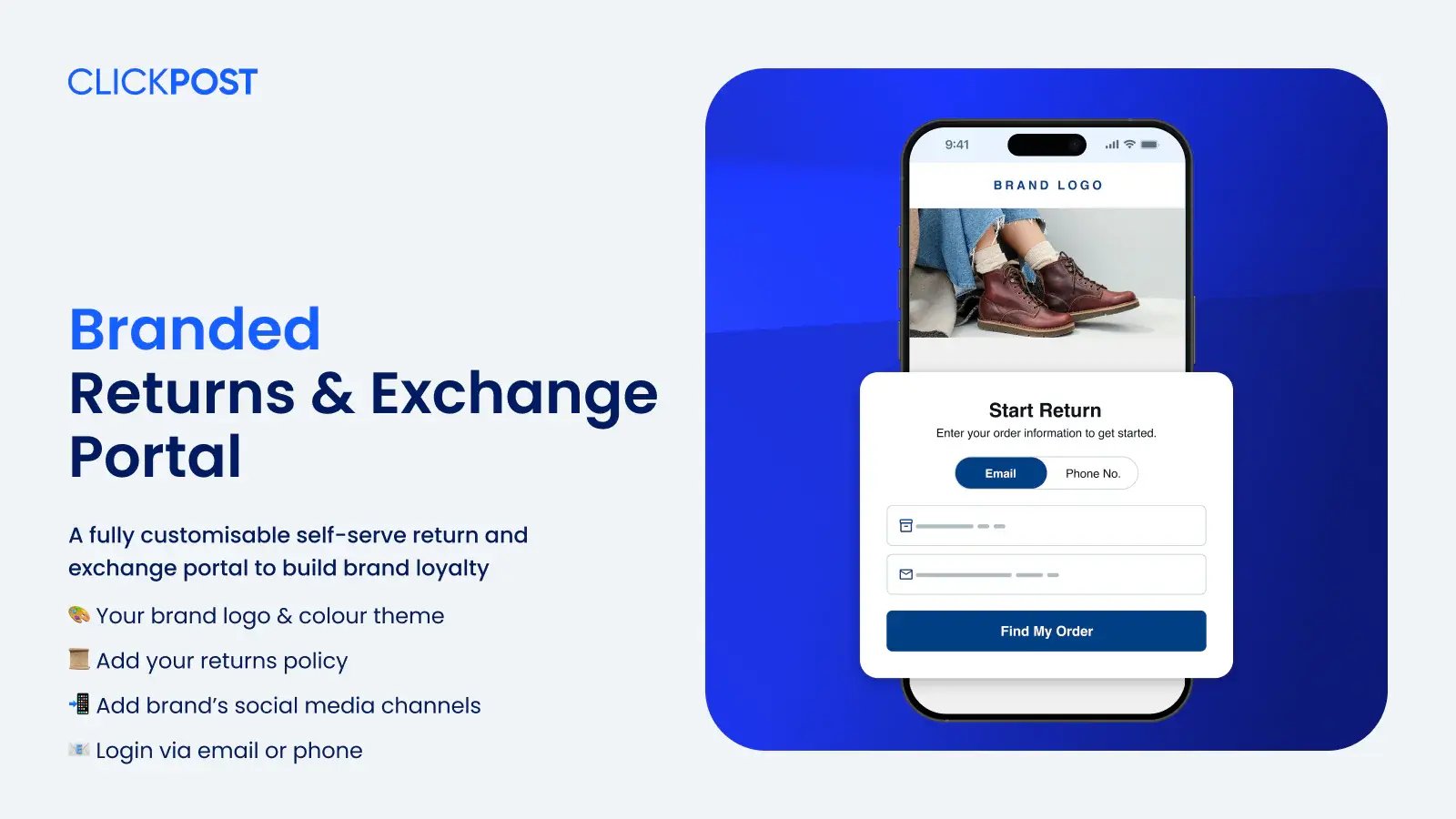
A branded self-service returns portal is the foundation of any modern returns management app. Returns are often the second-most-visited page after checkout, and customers judge your brand by how easy it is to navigate. If the experience feels confusing or third-party, trust erodes immediately.
What to look for and why
-
On-domain experience: Keeps customers on your store URL, reinforcing brand credibility.
-
Simple order lookup (email + order number or phone): Reduces friction and reliance on support.
-
Clear eligibility messaging: Prevents customers from initiating ineligible returns.
-
Live status updates: Minimizes “Where is my refund?” tickets.
-
Mobile-optimized UI: Most return requests are initiated on mobile.
A well-designed portal reduces the need for support tickets before they are created. More importantly, it frames returns as structured, controlled, and transparent rather than chaotic.
2. Automated Rules Engine: How to Enforce Policy Without Manual Approvals
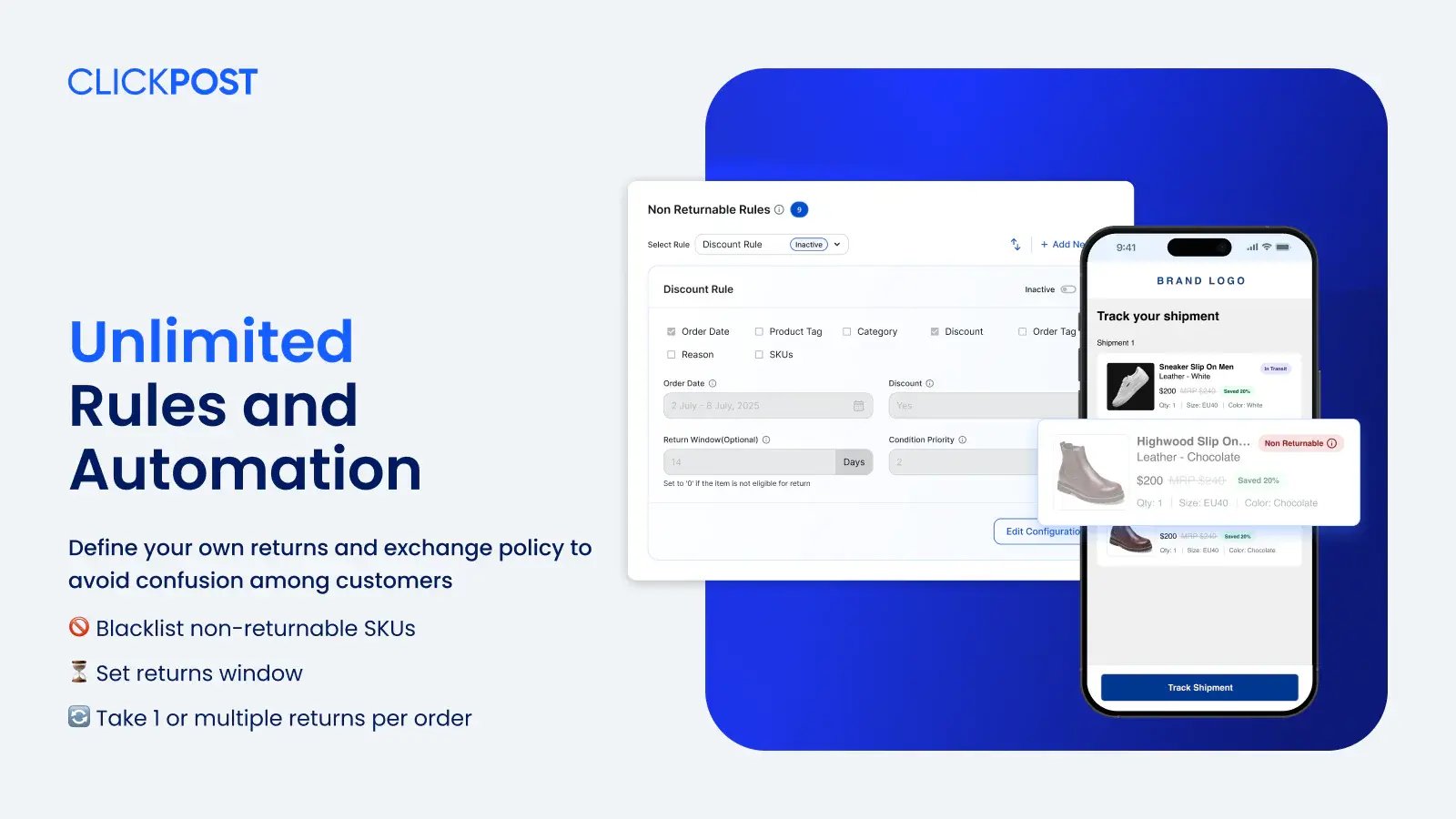
A rules engine turns manual review returns chaos into scalable operations. Without automation, every return becomes a decision that your support team must manually approve, investigate, and process.
What to look for and why
-
Time-based eligibility rules: Automatically enforce return windows based on delivery date.
-
Product-based exclusions: Block final sale, personalized, or hygiene-sensitive items.
-
Conditional approvals: Auto-approve low-risk returns, flag high-risk ones for review.
-
Fee logic automation: Apply restocking fees or label deductions automatically.
-
Fraud detection triggers: Identify serial returners or high-risk patterns.
The stronger the rules engine, the fewer manual approvals your team needs to handle. Over time, this protects the margin while ensuring policy consistency across thousands of orders.
3. Exchange-First Logic & Store Credit Incentives: How to Retain Revenue on Every Return
Refunds drain revenue. Exchanges and store credit retain it. The best Shopify exchange app functionality actively nudges customers toward revenue-neutral outcomes without making the process feel restrictive.
What to look for and why
-
One-click variant exchanges: Size or color swaps without refund cycles.
-
Instant exchange flows: Ship replacement before the original item is returned (if risk profile allows).
-
Bonus store credit incentives: Offer slightly higher credit value than cash refunds.
-
Catalog recommendations during return flow: Keep customers browsing rather than exiting.
-
Clear pricing difference handling: Automatically collect or refund price differences.
When implemented correctly, exchange-first logic can meaningfully improve retained revenue. Returns stop being a loss event and become a second chance to convert.
4. Shipping Label Automation & Drop-Off Options: Where Return Costs Are Won or Lost
Returns logistics is where cost compounds. Manual label creation slows teams down and increases error rates. Automated label workflows create speed and predictability.
What to look for and why
-
Automatic label generation: Eliminates manual carrier dashboards.
-
Dynamic label rules: Decide who pays for shipping based on return reason or customer segment.
-
QR code returns: Enables printless returns for customer convenience.
-
In-person drop-off networks: Support consumer preference for physical return locations.
-
Multi-carrier flexibility: Route returns based on geography or cost optimization.
Efficient shipping label automation reduces processing cost per return and shortens refund timelines. Faster processing improves customer perception immediately.
5. Returns Analytics Dashboard: How to Reduce Return Rates, Not Just Manage Them
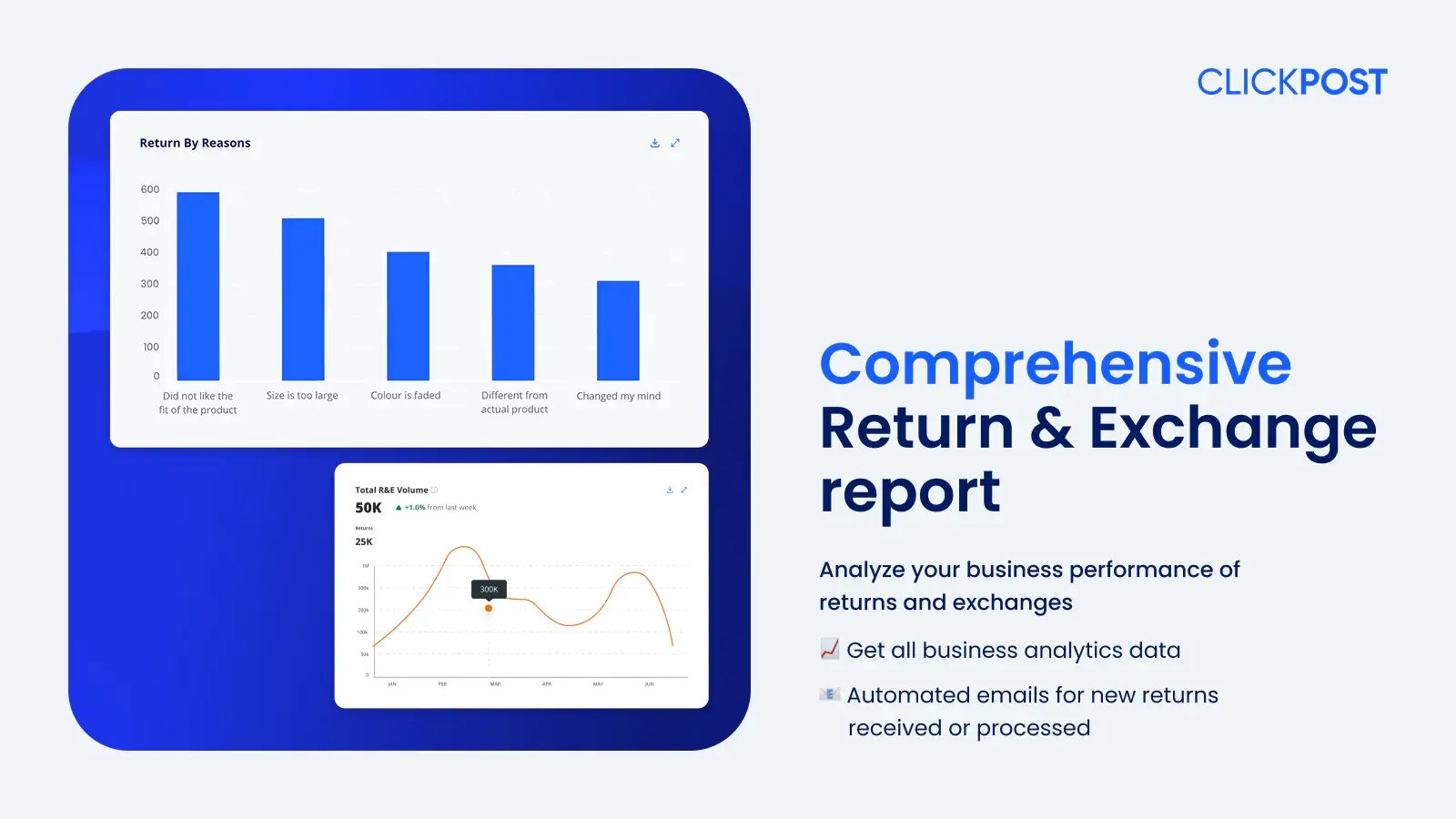
If you cannot measure returns, you cannot reduce them. A strong returns analytics dashboard transforms return data into product, content, and operational insights.
What to look for and why
-
Return reasons by SKU and size: Identify systematic fit or quality issues.
-
Refund vs. exchange rate tracking: Measure the impact on revenue retention.
-
Processing time metrics: Track time-to-refund and bottlenecks.
-
Cohort-level analysis: Compare return behavior across campaigns or acquisition channels.
-
Exportable data: Share insights with merchandising, marketing, and supply chain teams.
Returns analytics closes the loop between operations and merchandising. It helps reduce return rates over time rather than simply managing them.
6. Integrations & Scalability: Why Your Returns App Must Connect to Your Full Commerce Stack
Returns do not operate in isolation. Your returns management app must connect with the rest of your commerce stack. Otherwise, it creates more work instead of less.
What to look for and why
-
Helpdesk integration: Sync return status with support tickets.
-
3PL/WMS/ERP connectivity: Automate restocking and disposition workflows.
-
Marketing platform sync: Trigger retention campaigns after exchanges.
-
Carrier and shipping integration: Centralize return logistics.
-
Scalability by order volume: Pricing that scales without breaking margins.
Strong integrations ensure that returns are visible across teams, not trapped in a silo. As volume grows, this connectivity becomes critical to maintaining operational speed.
How to Set Up a Shopify Returns App: 5-Step Configuration Guide
A strong setup is not complicated, but it does need structure. The goal is to make returns self-serve for customers and policy-driven for your team.
Step 1. Install & connect to your Shopify store.
Start with a clean installation and permissions so the app can read orders, fulfillments, and customer context.
-
Install from the Shopify App Store and approve permissions
-
Confirm order lookup logic (email + order number, phone + order number)
-
Verify that test orders appear correctly in the returns dashboard
Step 2. Configure return policy & eligibility rules.
This step prevents chaos later. Translate your policy into rules that the app can enforce.
-
Set return window (from delivery date, fulfillment date, or purchase date)
-
Define exclusions (final sale, perishable, personalized items)
-
Decide fee logic (free returns, label deducted from refund, restocking fee)
Step 3. Brand your Returns Portal
Your portal is a conversion and trust page, not just a utility.
-
Match fonts, colors, and tone to your storefront
-
Add policy highlights and clear next steps
-
Include exchange-first language that feels helpful, not pushy
Step 4. Set exchange, refund, and credit options
These settings determine whether returns become retained revenue.
-
Configure exchanges (variant swaps, equal-value swaps, instant exchange rules)
-
Set store credit incentives (bonus amount, credit expiration rules if used)
-
Define refund methods (original payment, gift card, split refund logic if needed)
Step 5. Integrate shipping carriers & add portal links.
Make the portal easy to find and easy to complete.
- Connect carriers or label providers supported by your workflow
- Add the returns link to the footer navigation and order confirmation emails
- Run a full test: initiate return → approve → label → tracking → restock/refund
Top 15 Shopify Returns & Exchange Apps in 2026: Full Comparison by Use Case & Pricing
Shopify has made returns easier to initiate than before. But once you are handling real volume, the friction shifts to the operational layer, which includes eligibility rules, label creation, exchanges, fraud control, return routing, refunds, and the speed at which inventory returns to sellable stock. A strong Shopify Returns App turns that messy middle into a controlled workflow, while protecting margin with exchange-first logic and store credit incentives.
|
App |
Key features |
Pricing (USD) |
Best for |
Integrations |
Shopify rating |
|
Portal, rules, labels, exchanges, green returns |
$0–$299/mo |
Dropshipping + DTC ops |
Stack varies |
||
|
Portal, policies, labels, email updates |
$0–$29.99/mo |
SMB + apparel exchanges |
Shopify + Shippo/EasyPost/FedEx |
||
|
Logistics-first automation, carriers, analytics |
Free to install |
Mid/enterprise reverse logistics |
Carrier/ops stack varies |
||
|
Shipping protection + claims handling |
Free to install |
Cross-border risk + disputes |
Shopify Checkout |
||
|
Protection + claims, confidence layer |
Free to install |
Final-sale trust + protection |
Shopify |
||
|
Exchange-first, workflows, retention |
From $59/mo |
High-volume DTC |
Broad ecosystem |
||
|
Portal, rules, automation, labels |
$0 + from $19.99/mo |
Mid-size automation |
Stack varies |
||
|
Portal, routing, rules, analytics |
$0 + from $11/mo |
Scaling ops + reporting |
Ecosystem varies |
||
|
Exchange-first, automation, portal |
From $23/mo |
Automation-heavy teams |
Stack varies |
||
|
Built for Shopify, fixed pricing style, rules |
From $29.95/mo |
Predictable pricing + exchanges |
Shopify + carriers + Gorgias |
||
|
Portal, automation, exchanges, analytics |
$0 + from $19.99/mo |
Value + depth |
Stack varies |
||
|
Portal, automation, exchanges, analytics |
Free plan |
Simple automation |
Shopify |
||
|
AI reduction + portal + incentives |
$0 + from $29/mo |
Reduce return rates |
Stack varies |
||
|
Automation, smart exchange, and credit promotion |
$0 + from $19/mo |
Automation-first |
Stack varies |
||
|
Premium workflows, retention, routing |
Free + from $129/mo |
Premium ops control |
Stack varies |
Editorial disclosure & methodology (2026)
This 15 shortlist is written for operators making day-to-day decisions, not for surface-level feature checklists. Returns become expensive when policy, labels, exchanges, routing, and inventory restocking are handled manually.
How we evaluated apps:
-
Looked for a true self-service returns portal (not just a form) and a workable returns rule engine
-
Prioritized exchange-first and store credit controls that protect revenue, not just refund processing
-
Checked for label workflows, drop-off options, and practical routing support as volume grows
-
Used Shopify App Store pricing and ratings as the source of record
-
Treated “shipping protection” tools separately from full returns management, even when positioned as returns-adjacent
ClickPost is included here because it sits at the intersection of returns and logistics execution, which matters once reverse pickup and carrier performance become real constraints.
1. ParcelWILL Returns & Exchange (ParcelPanel)
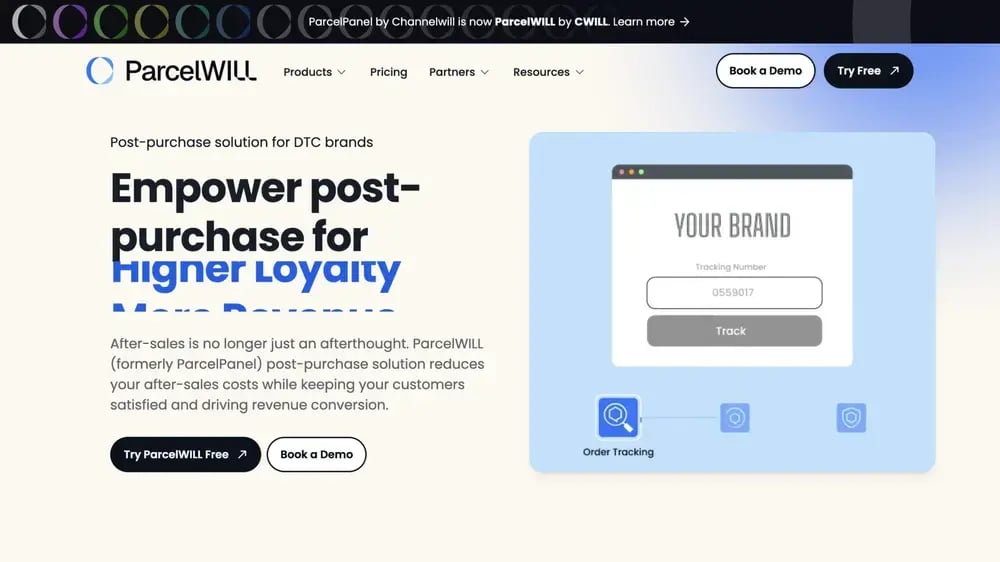
ParcelWILL is for merchants who want returns to run like a system, not a shared inbox. It gives you a branded self-service portal, rule-driven approvals, and exchange flows that can retain revenue. It is also one of the more dropshipping-friendly tools in this list, with controls that help keep the customer experience “store-native” even when fulfillment is complex.
Key features
-
Branded self-service returns portal embedded on your storefront
-
Exchanges, store credit, and refund paths with policy controls
-
Automated approvals, notifications, and workflow steps
-
Return label generation with carrier connections
-
“Green returns” options for low-cost, not-worth-shipping-back items
Best for
-
Dropshipping and cross-border DTC brands
-
Stores that are trying to reduce refund loss via exchanges and credit
Integrations: Typical marketing and support stack + carriers (varies by plan)
Pricing (USD)
-
Free: $0
-
Essential: $29/month
-
Professional: $99/month
-
Enterprise: $299/month
Pros
- Strong portal + rules foundation for day-to-day ops
- Exchange-first tools help retain revenue
- Good fit for higher-volume workflows
Cons
-
The Free tier is very limited
-
Advanced automation sits in higher tiers
2. Yanet Returns & Exchanges
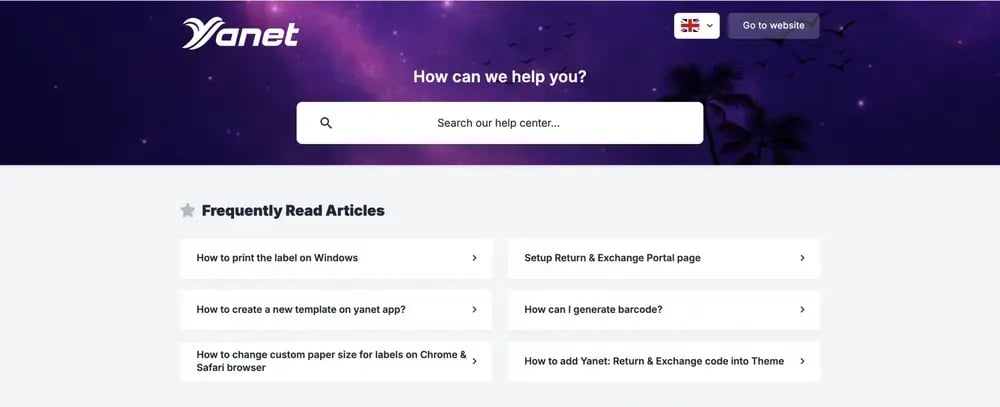
Yanet is a practical choice when you want a clean returns portal, solid policy controls, and dependable day-to-day workflows without paying “enterprise tax.” Its “Built for Shopify” badge is meaningful for teams that want the app to feel like a native extension of the admin, not a bolted-on system.
Key features
-
Embedded return portal with branding controls
-
Return/exchange policies and reason capture
-
Email notifications at each stage
-
Shipping label support and carrier connections
-
Automation in higher tiers
Best for
- SMB and mid-market stores that want strong basics
- Apparel brands managing frequent size/variant exchanges
Integrations: Shopify Admin + carrier tools like Shippo/EasyPost/FedEx
Pricing (USD)
-
Free: $0 (10 requests/month)
-
Professional: $9.99/month
-
Ultimate: $29.99/month
Pros
-
Excellent value for the feature set
-
Simple to roll out and run
-
Strong merchant feedback on usability
Cons
-
Large-scale workflows may outgrow it
-
Deep 3PL/ERP style integrations can be limited
3. ClickPost Returns & Exchanges (Returns Plus by ClickPost)
ClickPost is a logistics-first returns engine, not just a portal. It is built for teams that care about carrier connectivity, automation depth, and reverse logistics performance. If your returns are operationally heavy (multiple warehouses, multiple carriers, cross-region pickups), ClickPost is your best match.
Key features
-
Branded self-serve portal for returns, exchanges, and refunds
-
Rules-based workflows for approvals, exceptions, and segmentation
-
Carrier integrations at scale (reverse pickup/label creation)
-
Post-purchase updates (Email/SMS/WhatsApp options may vary)
-
Analytics for return reasons, product issues, and revenue retention


Best for
-
Mid-market and enterprise brands with complex logistics
-
Teams that treat returns as an ops workflow, not a support task
Integrations: Carrier and ops stack options (varies by plan)
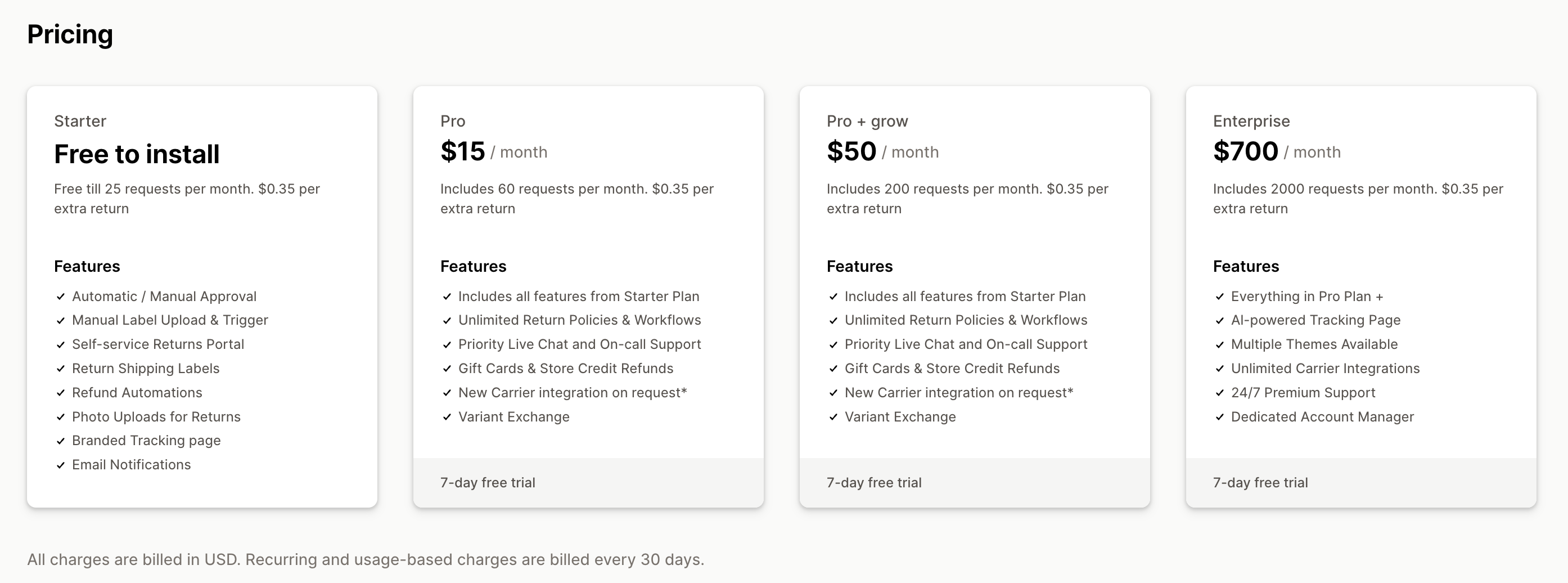
Pricing (USD): Free to install (plan-based pricing)
Pros
-
Strong fit for multi-carrier reverse logistics
-
Automation depth supports scale
-
Built for ops teams, not just support
Cons
-
It can be overkill for low-volume stores
-
Pricing can become complex as usage scales
Looking for a hassle-free way to manage your returns and exchanges? Book a demo with ClickPost today!
4. Xcotton Post Purchase Guard
Xcotton is not a classic returns management portal. It is closer to post-purchase protection: coverage for lost, damaged, stolen, or misdelivered packages, with claims handling that can take the workload off your support team. Use it when “returns” includes a meaningful slice of delivery-risk disputes.
Key features
-
Checkout protection option for customers
-
Claims portal and managed resolution flow
-
Dashboard for claims and protected orders
-
Coverage options for multiple risk types
Best for
-
Cross-border stores with high delivery risk
-
Electronics/high-value categories that attract disputes
Integrations: Shopify Checkout integration
Pricing (USD): Free to install
Pros
-
Reduces time spent on delivery-risk cases
-
Claims workflow shifts effort away from your team
-
Simple setup
Cons
-
Not a full returns workflow tool
-
Claims outcomes can depend on documentation thresholds
5. Seel Worry-Free Purchase
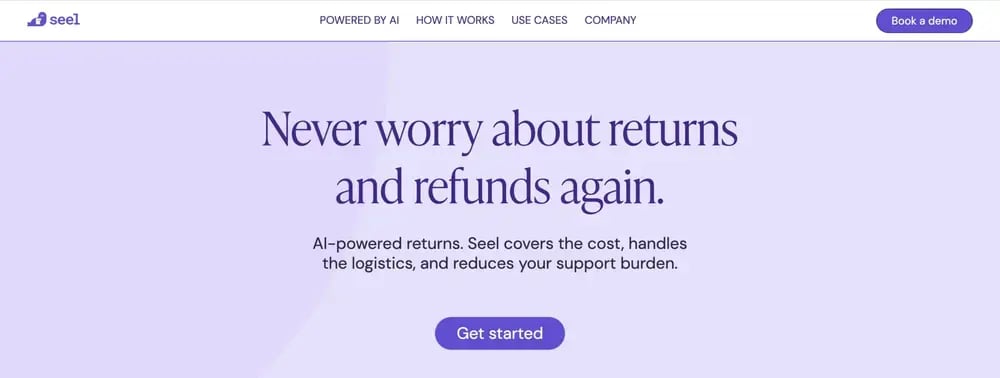
Seel is also protection-first, but with a distinctive angle: “worry-free” purchase protection plus optional return assurance on specific conditions. It aims to boost conversion and reduce post-purchase friction for shoppers who hesitate because of delivery risk or final-sale anxiety.
Key features
-
Shipping protection (lost/damaged/theft)
-
Claims portal for customer self-service
-
Optional return assurance mechanics (plan-dependent)
-
Handles the Payout flows externally
Best for
-
Stores selling clearance/final sale, where trust is a blocker
-
Teams that are trying to reduce the time spent on protection/claims tickets
Integrations: Shopify integration
Pricing (USD): Free to install
Pros
-
Can improve shopper confidence at checkout
-
Offloads claims handling effort
-
No subscription barrier to try
Cons
-
Adds a customer-paid fee dynamic
-
Not a replacement for true returns ops workflows
6. Loop Returns & Exchanges
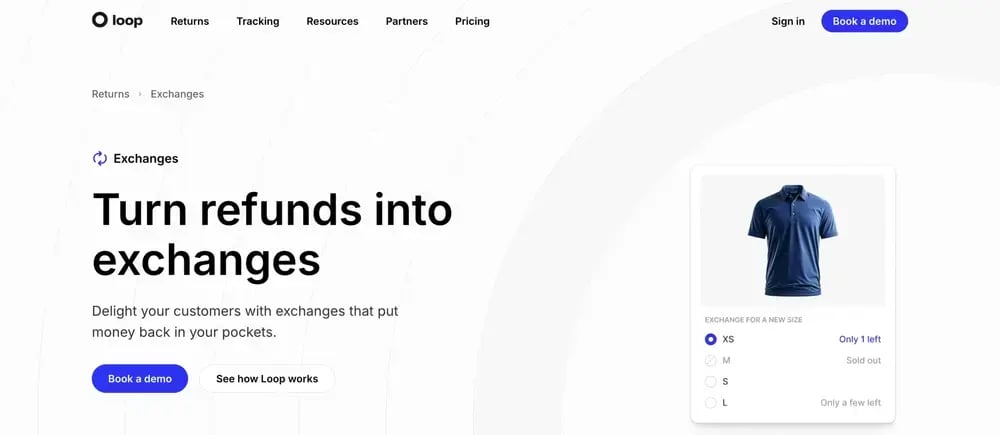
Loop is the exchange-first heavyweight. It is built for brands that want to retain revenue through instant exchanges, store credit bonuses, and return journeys that keep customers shopping instead of requesting refunds. That is where you go when returns volume is high, and retention is a real KPI.
Key features
-
Branded self-service portal
-
Exchange-first flows + store credit incentives
-
Advanced rules, fraud controls, and workflows
-
Return routing and operational reporting
Best for
-
Scaling DTC brands with meaningful return volume
-
Apparel/footwear where exchanges are frequent
Integrations: Broad Shopify ecosystem integrations (stack-dependent)
Pricing (USD): From $59/month
Pros
-
Best-in-class exchange-first experience
-
Strong automation for scale
-
Built around retention, not refunds
Cons
-
Price is not SMB-friendly
-
Setup depth can be heavy if you want full value
7. Synctrack: Returns & Exchanges (Omega Returns Drive)
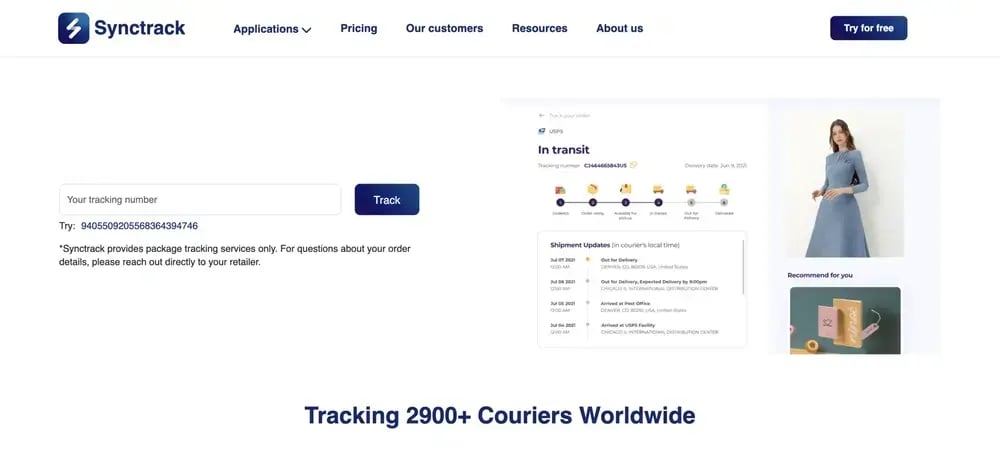
Synctrack gives you a branded portal and a rules engine, with a strong emphasis on automation and options to steer customers toward exchanges or credit. It is a practical “ops + CX” middle-ground for teams that want structure without stepping straight into premium pricing.
Key features
-
Branded returns portal
-
Returns/exchanges with configurable policies
-
Automation rules and notifications
-
Return label support (carrier breadth varies)
Best for
-
Mid-size stores that need a dependable portal + rules
-
Brands pushing exchanges and credit as default outcomes
Integrations: Shopify ecosystem connections (varies)
Pricing (USD): Free plan available. Paid plans from $19.99/month
Pros
-
Strong value for automation + portal
-
Flexible policy controls
-
Good for exchange-first setups
Cons
-
Free tier is tiny for real businesses
-
Advanced workflows can require careful configuration
8. AfterShip Returns & Exchanges
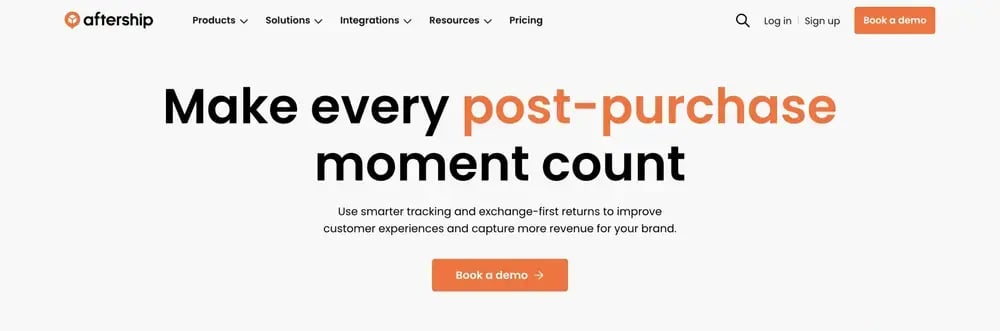
AfterShip Returns is an excellent fit for teams that want a mature returns platform with strong routing, rule automation, and a clean customer-facing portal. It pairs well with AfterShip products or with a well-known suite that can scale across regions.
Key features
-
Branded self-service portal
-
Automated approvals, labels, and return routing
-
Exchange-first workflows and store credit options
-
Analytics and operational visibility
Best for
-
Growing brands that need structured workflows and reporting
-
Multi-region operations that need routing and policy complexity
Integrations: Common helpdesk, marketing, and 3PL ecosystem integrations (stack-dependent)
Pricing (USD): Free plan available. Paid plans from $11/month
Pros
-
Strong platform maturity and breadth
-
Good automation + portal experience
-
Scales well as volume increases
Cons
-
Costs can rise quickly with volume
-
Feature depth can make the setup feel complex
9. ReturnGO Returns & Exchanges
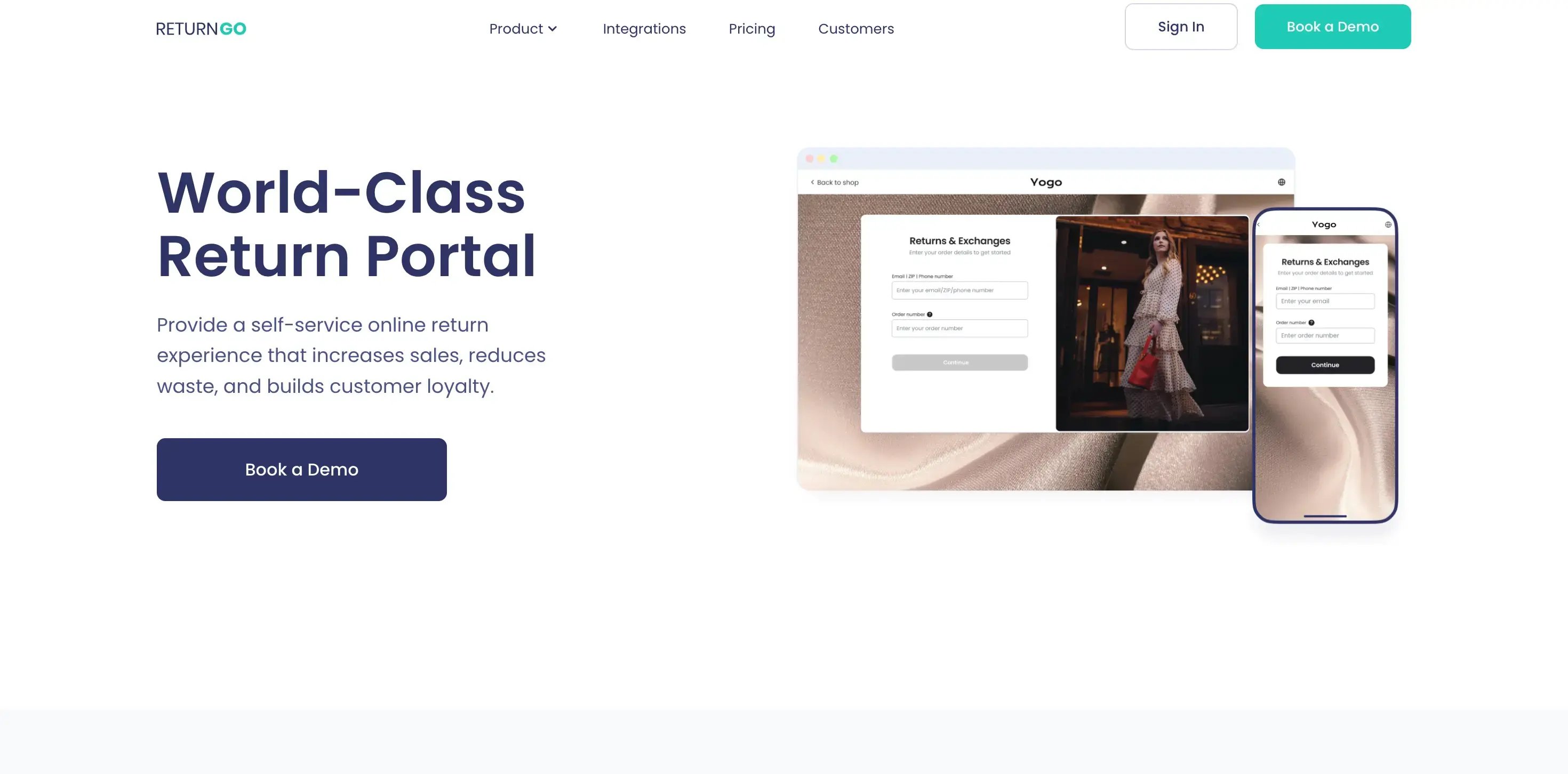
ReturnGO is a good fit for automation-heavy returns with a strong emphasis on reducing refunds through exchanges and store credit. It is a good fit when you want a rules-driven system and a branded experience without sacrificing control.
Key features
-
Branded portal and return workflows
-
Exchange-first logic + store credit incentives
-
Automation rules and return analytics
-
Policy controls for eligibility and exceptions
Best for
-
Mid-market and larger brands that want customization and automation
-
Stores aiming to reduce refund rates through structured alternatives
Integrations: Stack integrations vary by workflow
Pricing (USD): From $23/month
Pros
-
Strong automation and policy control
-
Good for exchange-first operations
-
Clean portal experience
Cons
-
It can be pricey for small stores
-
Setting up takes time if you use advanced rules
10. ReturnZap Returns & Exchanges
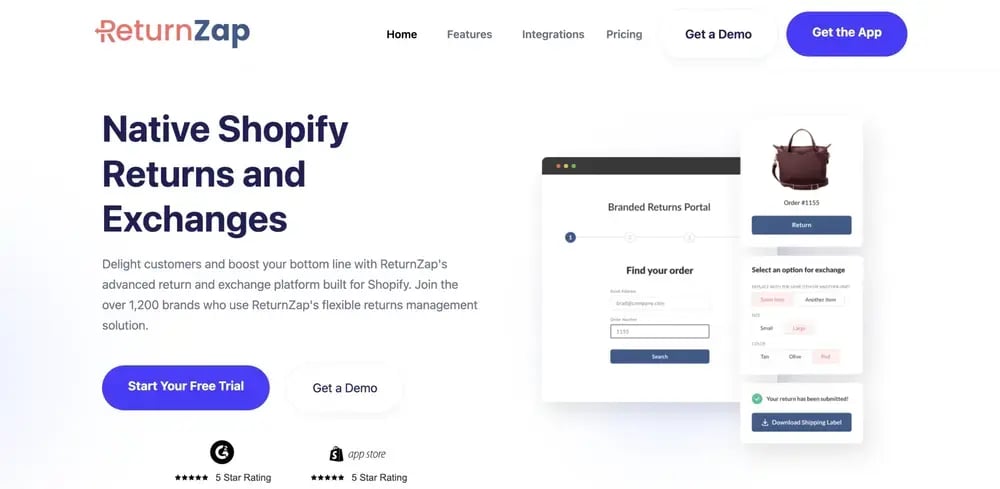
ReturnZap is “Built for Shopify” and feels like a native workflow layer inside Shopify. Its fixed monthly pricing structure is attractive for teams tired of hidden per-label or per-return fees. It is especially useful when you want flexible exchange logic without making the process feel complicated for customers.
Key features
-
Branded self-service portal
-
Labels + rules engine for approvals and fees
-
Exchanges across products (not only variants)
-
Analytics for reasons and trends
Best for
-
SMB and mid-market brands that want predictable pricing
-
Merchants prioritizing exchange flexibility and policy control
Integrations: Shopify-native + carriers via integrations; Gorgias listed
Pricing (USD): From $29.95/month
Pros
-
Predictable subscription pricing
-
Deep Shopify-native feel
-
Strong exchange logic for retention
Cons
-
Advanced features live in higher tiers
-
Carrier setup can vary by region
11. Return Prime: Return & Exchange
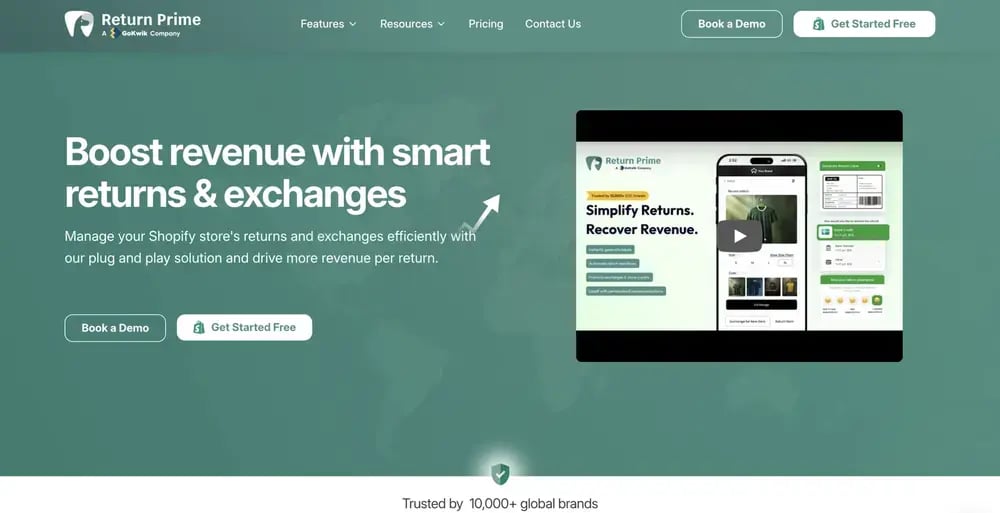
Return Prime is a feature-rich returns platform that competes well on value: portal, automations, exchanges, store credit incentives, and analytics. It works for stores that want “most of the enterprise playbook” without a premium-only price point.
Key features
-
Branded portal + automated workflows
-
Exchange and store credit incentives
-
Policy/rules engine for eligibility and handling
-
Analytics and operational tracking
Best for
-
Growth-stage brands that want depth without enterprise pricing
-
Apparel and high-return categories that rely on exchanges
Integrations: Stack integrations vary, Shopify-based core
Pricing (USD): Free plan available; Paid plans from $19.99/month
Pros
-
Strong feature-to-cost ratio
-
Good exchange and credit tooling
-
Flexible rules and policies
Cons
-
Advanced setups still take time
-
Very high volume may push you into pricier tiers
12. E-stebdal Returns & Exchanges
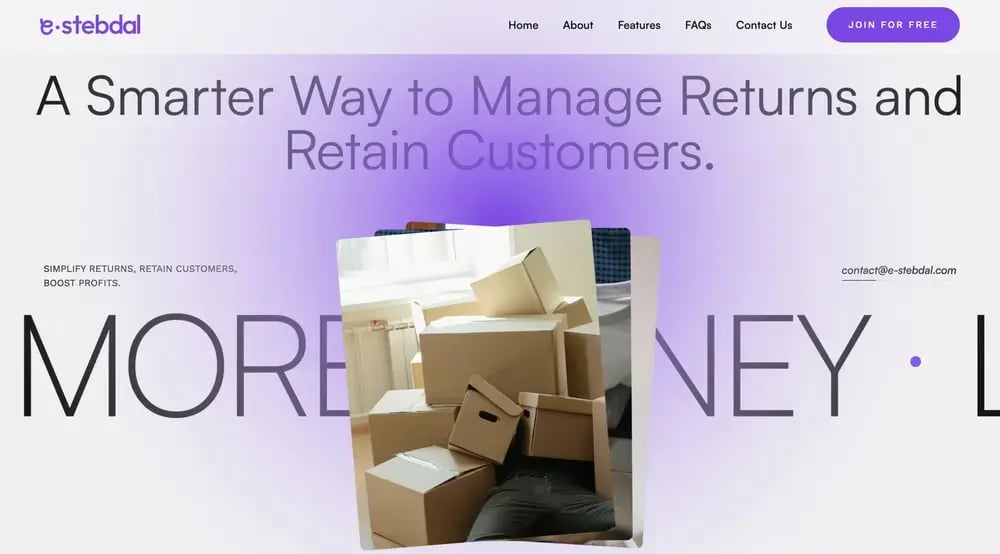
E-stebdal is positioned as a straightforward returns and exchanges workflow for merchants who want automation, a branded portal, and reduced manual handling without a large implementation burden.
Key features
-
Self-service portal
-
Automated approvals and notifications
-
Exchanges and refunds with policy controls
-
Return analytics basics
Best for
-
SMB merchants that want simple returns automation
-
Stores with frequent variant exchanges
Integrations: Shopify integration
Pricing (USD): Free plan available
Pros
-
Simple to deploy and run
-
Covers the essentials well
-
Strong merchant satisfaction signals
Cons
-
May lack advanced enterprise controls
-
Regional strengths can shape carrier workflows
13. EcoReturns: AI-powered Returns
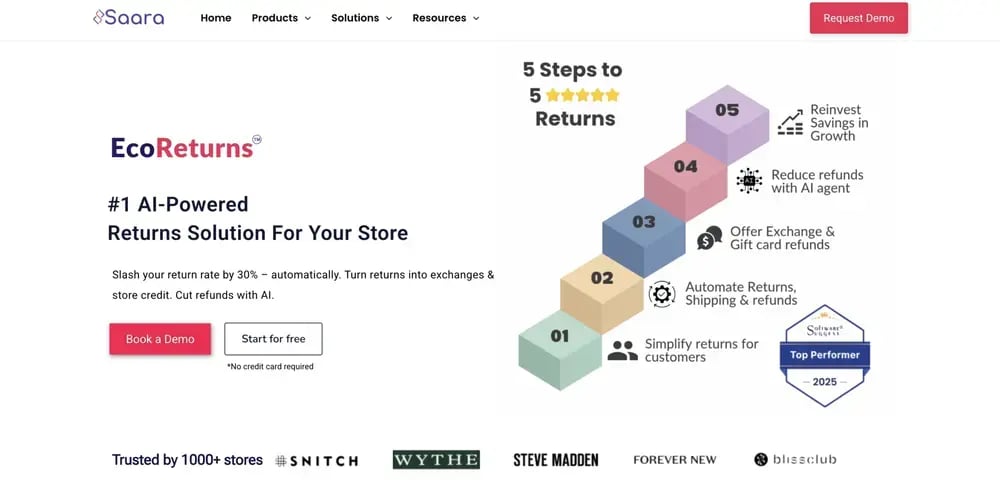
EcoReturns leverages AI and policy intelligence to reduce return volume, spot risks, and nudge shoppers toward alternatives such as exchanges and store credit. It is an excellent fit for brands where returns are both a margin issue and a fraud/abuse surface.
Key features
-
Branded portal + automated workflows
-
AI-led return reduction and incentives
-
Risk signals and customer segmentation mechanics
-
Deep return analytics for product and customer patterns
Best for
-
High-return categories (fashion, footwear, electronics)
-
Teams that are trying to reduce return rates, not just process them
Integrations: Shopify core + ops/support stack varies.
Pricing (USD): Free plan available; Paid plans from $29/month
Pros
-
Strong “reduce returns” orientation
-
Useful analytics for root-cause fixes
-
Good for policy sophistication
Cons
-
Feature depth can feel heavy at first
-
AI value depends on clean data and configuration
14. Quick Returns and Exchanges
 Quick Returns is built around automation. It offers a branded portal, smart exchanges, store credit promotion, and rules that remove manual handling. Hence, it is a strong choice when your team wants to lower the workload fast without sacrificing control.
Key features
-
Branded portal and automated workflows
-
Smart exchanges and store credit promotion
-
Label generation and tracking mechanics
-
Analytics for reasons and outcomes
Best for
-
Growth brands seeking automation-first returns
-
High-return categories that benefit from exchange incentives
Integrations: Shopify and the common ops stack vary.
Pricing (USD): Free plan available; Paid plans from $19/month.
Pros
-
Automation removes support workload
-
Strong exchange-first controls
-
Good value for growing stores
Cons
-
The Free tier is only for tiny volumes
-
Costs rise with request limits
15. PostCo Returns & Exchanges
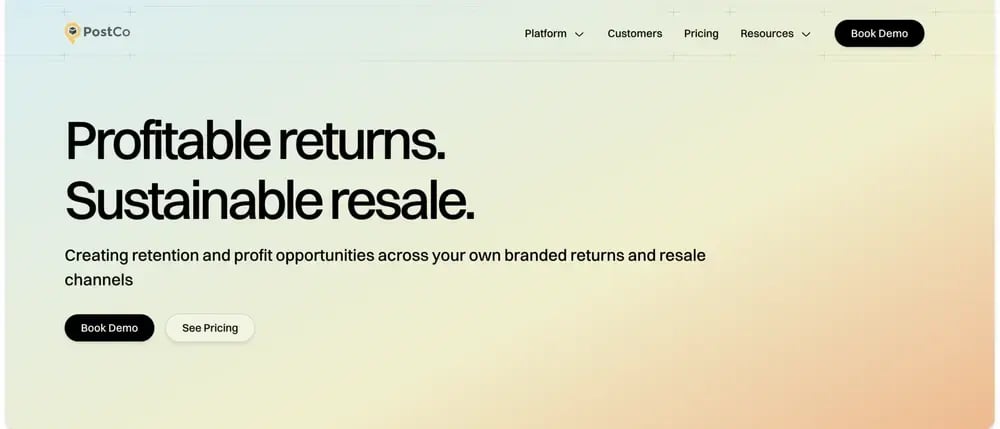
PostCo is a premium, workflow-rich returns platform focused on retention, fraud control, and exchange conversion. It is an excellent fit for brands that want a highly configurable engine and are willing to pay for depth.
Key features
-
Branded portal with advanced rules
-
Exchange for different items, bonus credit incentives
-
AI-led fraud signals (positioning varies by plan)
-
Analytics and multi-location routing support
Best for
-
Mid-market brands that want premium workflow control
-
International sellers managing cross-border returns
Integrations: Shopify ecosystem + support/3PL stack varies
Pricing (USD): Free to install; Paid plans from $129/month.
Pros
-
Strong retention tooling (exchanges + credit incentives)
-
Deep configurability for policies and workflows
-
Good fit for advanced operations
Cons
-
Premium pricing
-
Setup can take time to get right
At its core, a Shopify returns app replaces back-and-forth emails with a structured workflow, especially when paired with a Shopify Chatbot that can guide customers through the return process in real time.
How to Choose the Right Shopify Returns App: A 5-Step Evaluation Framework
Picking a returns tool is less about “features” and more about operational fit. The right Shopify returns app should reduce support workload, protect revenue through exchanges and store credit, and keep reverse logistics predictable as volumes grow.
Step 1: Audit Your Returns Volume, Category, and Root Causes Before Choosing a Tool
If you sell apparel, footwear, or beauty, exchanges and variant swaps are not a nice-to-have. If you sell high-value items, fraud controls and policy enforcement matter more than portal cosmetics.
What to consider
-
Monthly return volume: This determines whether you need light workflow support or automation at scale.
-
Top return reasons: Size, damage, wrong item, or buyer’s remorse each need a different rules approach.
-
Your fulfilment model: Multi-warehouse and cross-border returns need routing and carrier flexibility.
-
Your support load: If returns create ticket spikes, prioritise self-service plus auto-approvals.
Best fit apps: Yanet (lightweight), Return Prime (growth), ReturnGO (automation depth), Loop (exchange-first scale), ClickPost (logistics-heavy operations).
Step 2: Evaluate the Returns Portal Experience and Revenue Retention Mechanics
A return portal is not only a form. It is the moment where you either lose revenue to refunds or keep it through exchanges and credit incentives.
What to look for and why
-
Branded, mobile-first portal: Reduces friction and lowers “follow-up” tickets.
-
Exchange-first paths: Keep revenue in-house, especially for size or preference returns.
-
Store credit incentives: Make credit a rational choice, not a forced choice.
-
“Shop now” or catalogue swap flows: Converts return intent into another purchase session.
-
Clear messaging on timelines and eligibility: Prevents disputes and escalations later.
Best fit apps: Loop (exchange-first journeys), ReturnGO (shop-now style flows), Return Prime (value-driven retention features), ParcelWILL (DTC-friendly portal + policy), PostCo (premium retention controls).
Step 3: Pressure-Test the Rules Engine Against Your Hardest Return Scenarios
Most returns programmes fail in the exceptions: worn items, final sale exclusions, repeat returners, partial bundles, damaged-in-transit, and multi-SKU requests. A rules engine is what keeps policy consistent without making your team the decision layer.
What to look for and why
-
Eligibility rules by product/collection: Enforces policy without manual checks.
-
Auto-approve/auto-reject logic saves time and eliminates inconsistent decisions.
-
Fee controls (restocking, label deduction) protect margins and discourage abuse.
-
Condition checks and evidence uploads: Helps validate “damaged” claims when needed.
-
Customer-level controls: Useful when return abuse is a real pattern.
Best fit apps: ReturnGO (automation and customisation), AfterShip (workflow maturity), Synctrack (automation at value tiers), PostCo (premium rule depth), EcoReturns (risk and reduction angle).
Step 4: Match Pricing Tiers to Your Actual Return Volume, Not Your Order Volume
Most returns apps price by return requests, labels, and automation features. A plan that looks cheap can become expensive once you cross thresholds or need key features (exchanges, routing, analytics).
What to consider
-
Base monthly fee vs included returns: Check what you actually get at your volume.
-
Overage pricing: Avoid surprises when returns spike seasonally.
-
Feature gating: Ensure exchanges, store credit incentives, routing, and analytics are in the tier you need.
-
Label economics: Understand whether labels are included, charged per label, or routed through your carrier account.
Best fit apps: Yanet and Return Prime (cost-efficient entry), ReturnZap (predictable subscription style), AfterShip (tiered entry), ReturnGO and Loop (premium tiers for exchange-first scale).
Step 5: Plan for Scalability Across Carriers, Systems, and Reporting Needs
An app scales when it still works at higher volumes without forcing a replatform, and when it integrates cleanly with your operational stack.
What to look for and why
-
Carrier and pickup flexibility: Critical for cross-region returns and consistent SLAs.
-
Multi-location routing sends returns to the correct location rather than the default.
-
Helpdesk and WMS/3PL integration: Keeps support and operations aligned on one source of truth.
-
Returns analytics that inform action: Helps reduce return rates, not only report them.
-
Support and onboarding quality: Implementation quality often determines success more than features.
Best fit apps: ClickPost (logistics integration depth), AfterShip (suite maturity), Loop (scale and retention), PostCo (premium workflows), ReturnGO (automation at volume).
Shopify Returns App FAQs: 6 Buyer Questions Answered for 2026
Does Shopify have a built-in returns feature?
Yes. Shopify supports return processing in the admin, including refund and restock workflows. A dedicated returns app becomes useful when you need a self-service portal, rule automation, exchange-first flows, and stronger analytics.
How do I create a return portal on Shopify?
Install a returns app, configure return eligibility (window, exclusions, conditions), brand the portal, set refund and exchange options, connect carriers for labels, then link the portal in your site navigation and post-purchase emails.
What makes a returns app the best for Shopify?
The best tools combine a branded portal, a practical rules engine, exchange and store credit incentives, label automation, and reporting that helps you reduce return rates and protect margin.
Which returns app is best for exchanges and revenue retention?
Loop and ReturnGO are strong when exchange-first flows are the goal. Return Prime and ParcelWILL also work well when you want exchange and credit incentives without moving into premium-only pricing.
Which returns app works best for complex logistics or multi-carrier reverse pickups?
ClickPost is built for logistics-heavy operations where reverse pickup and carrier performance matter. AfterShip can also work well when you want a mature workflow layer across regions.
Can I offer store credit incentives for returns on Shopify?
Yes. Most dedicated returns apps support store credit and often allow bonus credit incentives. Use this carefully, tied to eligibility rules, so incentives protect the margin rather than becoming a blanket discount.
How to Turn Shopify Returns Into a Revenue and Loyalty Advantage in 2026
In 2026, returns are not an afterthought. They are a margin decision, a loyalty moment, and a daily operational workflow. The right Shopify Returns App reduces ticket volume, enforces policy automatically, and nudges customers toward exchanges and store credit without making the experience feel restrictive.
Your next steps
-
Map your current returns journey from request to restock, and identify where delays and manual work happen.
-
Decide your priority: lower refunds, faster processing, better logistics control, or better customer experience.
-
Shortlist two to three apps from this list, run a controlled trial for two weeks, and measure outcomes using exchange rate, refund rate, return turnaround time, and support ticket volume.