.png?width=193&height=27&name=ClickPost%20Logo%20(Blue).png)
.svg)
.svg)
.svg)
.svg)
.svg)
.svg)
.svg)
.svg)
.svg)


.svg)

.svg)
.svg)
.svg)
.svg)


.svg)
.svg)
.webp?width=286&height=206&name=ROI%20Calculator%20(1).webp)
.svg)
.svg)

.svg)

.webp?width=286&height=206&name=RTO%20Playbook%20(1).webp)

In this blog
When fans look at a jersey, a boot, or a running tee, they rarely think about lead times, trade compliance, or network design. But in sports, the real contest is not just on the field; it is in the way product flows from factory to fan.
The leaders in this list sit in that quiet space between demand spikes and stockouts, between hype drops and order fulfilment. Their decisions will shape how reliably India’s athletes and everyday consumers get their gear in 2025.
Sports supply chain leaders powering the industry
From global giants to scrappy performance-first brands, sportswear and equipment companies now run on complex, multi-channel supply chains. Senior leaders are redesigning those engines with data, automation, and new manufacturing bets, while frontline managers keep the day-to-day execution honest. Together, they determine whether a brand is just visible in campaigns or truly available when it matters.
| Leader Name | Company | Role |
Short Experience / Impact Summary
|
| Raushan Rishu | Jockey India (Page Industries) | VP, Supply Chain |
Leads end-to-end supply chain; strong in network optimisation & ERP; drives tech-led forecasting and store restocking.
|
| Puneet Shankar | Adidas India | Senior Director, SCM |
30+ years in planning & IT; modernised POS + distribution; made supply chain a strategic growth function.
|
| Naman Bhandula | Decathlon | Supply Chain Director |
Leads sourcing to last-mile; uses ML/AI for planning; focuses on profitable availability across channels.
|
| Narayanasamy V | Nike India | Product Supply Chain Director |
Lean/Six Sigma expert; aligns factory performance with sourcing strategy; drives continuous improvement.
|
| Gifi Gopalakrishnan | Wildcraft | Head, Manufacturing & Supply Chain |
Built operations from ground up; manages 2,500+ staff; runs multi-factory, multi-channel logistics.
|
| Nikhil Nagare | Under Armour India | Head, SCM |
Manages B2B + D2C supply chain; strong in trade compliance, customs, and 3PL partnerships.
|
| Manpreet Singh Kalra | Hummel India | Head, SCM |
20+ years in planning & logistics; manages import + domestic sourcing; ensures timely retail distribution.
|
| Anurag Pandey | Athlos Activewear | Head of Planning |
Leads forecasting, OTB, and range planning; optimises lean D2C inventory for sustainable apparel.
|
| Deepak Ranjan Swain | Skechers India | Supply Chain Manager |
Manages sourcing, warehousing, and order flow; focuses on operational discipline and smooth execution.
|
| Rambhul Vats | Nivia Sports | Supply Chain Manager |
Oversees in-house manufacturing flow; aligns production, QC, and dispatch for nationwide demand.
|
| Vasanth Annadurai | TechnoSport | Supply Chain Manager |
Optimises production-to-distribution cycle; strengthens visibility and stock control in a high-volume model.
|
| Sandeep K. Mukherjee | Rupa & Co. | Supply Chain Manager |
Runs hybrid supply chain; manages warehousing, distribution, and category expansion readiness.
|
| Roshan Dias | Elevar Sports | Head, Ops – Warehouse & SCM |
Scaled D2C ops; improved import logistics, freight contracts, and inventory processes.
|
| Narayanasamy K | PUMA India | Manager, Warehouse Supply Chain (D2C) |
Leads automation + 3PL execution; boosts picking accuracy & speeds up D2C fulfilment.
|
| Sahil Mehra | Dida Sports | Supply Chain Management |
Manages outsourced production and warehouse flow; supports high-volume activewear distribution.
|
Raushan Rishu – Vice President, Supply Chain, Jockey India (Page Industries)
“Driving the rhythm of India’s athleisure revolution with precision logistics.”


Page Industries, the exclusive licensee of Jockey, runs one of the most sophisticated innerwear and athleisure networks in the country, and Raushan Rishu is responsible for keeping that machine in rhythm. As Vice President of Supply Chain, he oversees a system that stretches from fabric sourcing to automated restocking at the store level. His background in network optimisation, ERP rollouts, and plant operations gives him a rare, end-to-end view of how manufacturing, planning, and logistics fit together.
Under his watch, Jockey India has leaned harder into technology for demand forecasting and inventory optimisation, using tools like automated restocking systems to keep shelves productive without overstocking. The supply chain team works with a mix of strategic suppliers, regional hubs, and tight quality and sustainability standards. Rishu’s job is to keep that web responsive as the brand grows deeper into smaller towns and expands its performance and activewear lines.
Puneet Shankar – Senior Director, Supply Chain Management, Adidas India
“Turning supply chain into a competitive edge for Adidas, blending strategy with agility.”
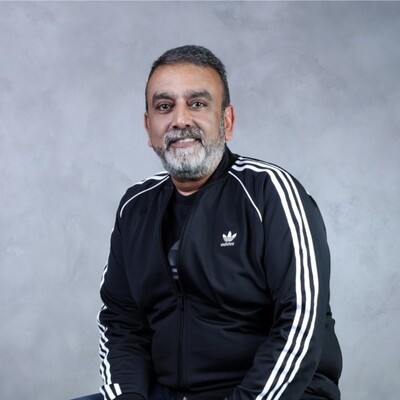
For Adidas India, supply chain is not a support function; it is a core part of how the brand competes. Senior Director Puneet Shankar leads that agenda across both Adidas and Reebok, combining almost three decades of experience in planning, IT, and operations. He has been instrumental in turning the supply chain from a cost centre into a strategic partner that sits at the table when growth decisions are made.
His remit spans demand planning, distribution strategy, and the integration of technology across the franchise and own-store network. Projects under his leadership include standardising IT infrastructure, rolling out a cloud-based point-of-sale platform across franchisees, and streamlining data flows from stores to warehouses. In a market where launches, collaborations, and seasonal collections arrive faster than ever, Shankar focuses on reliability: the ability to promise availability and actually deliver it.
Naman Bhandula – Supply Chain Director, Decathlon Sports India
“Balancing scale and speed, delivering performance gear to every athlete, everywhere.”

Decathlon’s proposition is designed for customers but extremely demanding on its logistics. It's made of a deep assortment of tools, sharp pricing, and availability from big-box stores to smaller towns and digital channels. As Supply Chain Director, Naman Bhandula is responsible for making that equation work in India. He leads end-to-end value chain projects, ranging from sourcing and inbound logistics to downstream optimisation pilots using machine learning and artificial intelligence.
Bhandula’s background combines engineering, power management, and years inside Decathlon, building India-specific offers. That mix shows up in how he approaches supply: market studies inform range decisions, planning teams work with global and local suppliers on supply methods, and technology layers like SAP help orchestrate the movement. His focus is on profitable availability, which means getting the right product to the right place at the right cost without sacrificing the speed and breadth that make Decathlon attractive to everyday athletes.
Narayanasamy V – Product Supply Chain Director, Nike (India)
“Merging lean manufacturing with seamless product flow to fuel Nike’s innovation.”
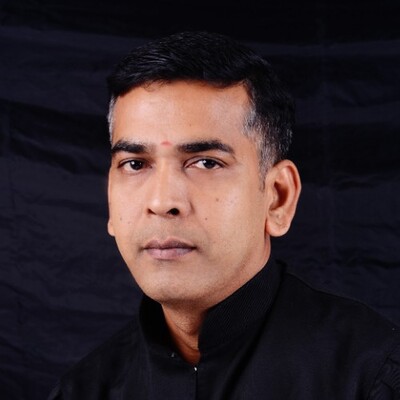
Nike’s sourcing and manufacturing operations in India sit inside a global system that runs on lean principles and constant improvement. In that environment, leaders like Narayanasamy V play a pivotal role. With experience across Nike Sourcing India, Unilever, and Whirlpool, he brings a manufacturing-first lens to supply chain questions. His toolkit includes Six Sigma, lean manufacturing, and process engineering, all pointed at one goal: reliable, efficient product flow.
As Product Supply Chain Director, he helps link factory performance, capacity decisions, and long-term sourcing strategy to what the commercial side of the business is trying to achieve. That means balancing cost efficiency with responsiveness, pushing continuous improvement on the shop floor, and using data to make the network more resilient. In a category where customers expect the latest performance innovations without disruption, his work keeps the engine underneath that promise running smoothly.
Gifi Gopalakrishnan – Head, Manufacturing & Supply Chain, Wildcraft India
“Building Wildcraft’s backbone, where quality meets adventure-ready logistics.”

Wildcraft sits at the intersection of outdoor gear, travel, and an active lifestyle, with a supply chain spanning multiple factories, central and regional warehouses, and a truly multi-channel distribution setup. Heading Manufacturing and Supply Chain, Gifi Gopalakrishnan has grown with the company since its early days, helping build that backbone almost from scratch.
He leads over 2,500 manufacturing associates, manages inbound and outbound logistics, and oversees the warehouses that feed exclusive stores, general trade, modern retail, and marketplaces. The operation handles imported inputs like zippers and technical fabrics alongside domestic sourcing, all while keeping product quality and availability on a tight leash. Gopalakrishnan’s role is part industrial leadership, part orchestration. It ensures that as Wildcraft expands categories and channels, its operations remain agile rather than overloaded.
Nikhil Nagare – Head of Supply Chain Management, Under Armour India (Underdog Athletics)
“Empowering Under Armour’s expansion with streamlined supply chains that never miss a beat.”

Under Armour operates in India through Underdog Athletics, using a partner-led model that depends heavily on a well-tuned supply chain. As Head of Supply Chain Management, Nikhil Nagare is responsible for both B2B and B2C flows: franchise and wholesale orders on one side, direct-to-consumer volumes on the other. His experience across Reliance Digital, Nike, and multi-format retail gives him a sharp sense of how to design networks that can flex with demand.
Nagare focuses on international trade compliance, customs, warehouse performance, and pan-India distribution, working closely with 3PL partners such as DSV India and Avaniko. With an APICS CSCP certification and strong comfort with WMS and analytics, he aims to achieve high on-time in-full levels without bloating costs. As Under Armour grows its footprint in training, running, and lifestyle segments, his decisions quietly define how quickly the brand can back up its marketing with product on shelves and at doorsteps.
Manpreet Singh Kalra – Head of Supply Chain Management, Hummel India
“Integrating global sourcing with Indian precision for timely sports gear delivery.”

Hummel may evoke images of European football and handball kits, but a meaningful slice of its apparel now comes out of India. Overseeing supply chain for Hummel India, Manpreet Singh Kalra brings nearly two decades of experience in planning, procurement, and logistics from the automotive and manufacturing world. That grounding in precision and delivery discipline is invaluable as the brand expands its local manufacturing and import mix.
On the ground, Hummel’s India operation relies on a blend of domestic production, imports from hubs like China and Bangladesh, and partnerships with distribution platforms. Kalra’s job is to coordinate that patchwork: ensuring sourcing complies with Hummel’s global policies, maintaining tight quality checks, and aligning logistics so that both performance lines and lifestyle collections reach retailers and online partners on time. His work helps translate a global sourcing strategy into something that works in Indian reality.
Anurag Pandey – Head of Planning, Athlos Activewear
“Navigating the future of sustainable fashion with sharp planning and efficient supply chains.”

Athlos is still on its way to match some global giants on this list, but its ambitions in sustainable performance apparel are anything but modest. As Head of Planning, Anurag Pandey sits at the intersection of category strategy, demand planning, and supply chain. His career in fashion and lifestyle has been built around growing businesses from a few crores to meaningful scale by getting assortment, pricing, and inventory decisions right.
Athlos runs a lean, direct-to-consumer model focused on long-lasting, eco-friendly materials. Pandey’s role is to ensure that this philosophy does not clash with commercial reality. He works on range architecture, open-to-buy plans, and demand forecasting across the brand’s own site and marketplace channels, while keeping an eye on stock turns and margin health. In effect, he sets the brief that manufacturing and logistics must deliver against, making planning a quiet but central part of Athlos’ supply chain story.
Deepak Ranjan Swain – Supply Chain Manager, Skechers
“Bridging global sourcing and local execution to keep Skechers running at full speed.”

Skechers operates one of the more complex global footwear and sportswear networks, manufacturing largely in China and Vietnam and serving customers through a web of distribution centres across continents. In India, managers like Deepak Ranjan Swain help translate that global architecture into reliable local execution. With over a decade of experience in supply chain across manufacturing, telecom, and consumer products, he covers sourcing and inventory, warehouse operations, and order management.
For Skechers, long lead times and peak-season spikes are everyday realities. Swain works within technology frameworks such as advanced order and inventory management platforms to keep inbound and outbound flows aligned with demand. His focus is on process discipline and continuous improvement. It includes conducting tightening audits, ensuring compliance, and fine-tuning day-to-day operations to ensure the larger network runs smoothly. The brand’s promise of availability and variety in India depends on this level of quiet, operational control.
Rambhul Vats – Supply Chain Manager, Nivia Sports
“Delivering game-changing sports equipment with a perfectly synchronized supply chain.”

Nivia is one of the few Indian sports brands with a long history of manufacturing its own equipment at scale, including FIFA-approved footballs, basketballs, and footwear. That integrated approach puts significant responsibility on its supply chain managers. In his role at Nivia Sports, Rambhul Vats oversees the coordination between in-house factories, vendors, warehouses, and sales channels.
The company’s supply chain spans raw material sourcing, production, quality control, and dispatch to teams, retailers, and federations across the country. Vats’ work revolves around keeping this system synchronised: ensuring that production slots align with demand, that logistics can handle tournament-driven peaks, and that technology and processes are in place for traceability and reliability. As Nivia continues to compete with international names on both price and performance, the predictability of its operations remains a key advantage.
Vasanth Annadurai – Supply Chain Manager, TechnoSport
“Optimizing every stitch and step in TechnoSport’s activewear journey from factory to customer.”

TechnoSport has built its position in the Indian activewear market on the back of a vertically integrated, high-throughput manufacturing model. Supply chain managers like Vasanth Annadurai are central to making that approach work. With a background in apparel planning and inventory control, he focuses on streamlining procedures and improving visibility across the production and distribution cycle.
The brand invests heavily in its own facilities and technology, giving it strong control over cost, quality, and speed to market. Annadurai’s role is to translate that structural advantage into everyday performance: aligning capacity with demand, tightening stock management, and working with sales and product teams to avoid both shortages and overhang. For a value-driven performance label, these choices decide whether the brand can grow without diluting its price–quality equation.
Sandeep K. Mukherjee – Supply Chain Manager, Rupa & Co. Ltd.
“Ensuring efficiency in Rupa’s expanding activewear network without missing a beat.”

Rupa & Co., best known for innerwear, has been steadily expanding its presence in activewear and athleisure. Sitting behind that expansion is an asset-light, distributed supply chain that relies on both in-house units and a vast network of outsourced partners. As Supply Chain Manager, Sandeep K. Mukherjee works within this hybrid model to ensure operations remain dependable.
His responsibilities touch warehouse and logistics operations, distribution planning, and order and supply management. The company’s products move through a pan-India network that serves traditional trade, modern retail, and emerging channels in sports and casual wear. Mukherjee’s focus is on ensuring that this network can accommodate new performance lines without losing the efficiency built over decades in core categories. When Rupa decides to push a new activewear range, it is the quiet readiness of this system that makes the launch viable.
Roshan Dias – Head of Operations – Warehouse & Supply Chain, Elevar Sports
“Scaling Elevar’s operations for smart growth, balancing digital-first strategies with logistics excellence.”

Elevar Sports is part of a newer wave of sports brands that have grown rapidly by combining smart product design with digital-first distribution. To support that growth, its warehouse and supply chain operations have had to scale from startup volumes to thousands of daily orders. As Head of Operations – Warehouse & Supply Chain, Roshan Dias has been deeply involved in that journey.
His work covers logistics, vendor management, process design, and the build-out of operational teams. Under his leadership, Elevar has strengthened its import logistics, negotiated smarter freight contracts, implemented CRM-driven inventory tracking, and systematised returns and customer support flows. The result is a backbone that can handle everything from B2C spikes during campaigns to new B2B relationships, without losing control of cost or service quality.
Narayanasamy K – Manager, Warehouse Supply Chain (D2C), PUMA India
“Driving PUMA’s race to the future with smart warehouses and faster deliveries.”
PUMA India’s consumer-facing supply chain is in the middle of an interesting shift, with the company investing in AI, digital twins, and redesigned warehouse networks to cut delivery times and boost express capacity. Managers like Narayanasamy K play a key role in turning those strategic bets into operational reality at the warehouse level.
He is responsible for managing third-party logistics operations, driving process automation, and aligning B2C warehouse practices with the expectations of e-commerce and D2C teams. That includes improving picking accuracy, strengthening safety and quality standards, and working with cross-functional stakeholders to resolve bottlenecks quickly. As PUMA pushes for faster, more reliable deliveries across channels, the work done in these facilities becomes a visible part of the brand experience.
Sahil Mehra – Supply Chain Management, Dida Sports
“Redefining active living through lean, responsive supply chains that keep Dida ahead of the pack.”
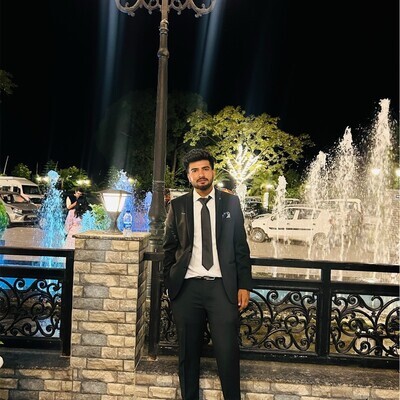
Dida is a home-grown activewear brand that has quietly built a sizeable customer base by focusing on functionality, style, and accessibility. Behind the scenes, its supply chain has had to support that growth while staying lean. In the supply chain management function, professionals like Sahil Mehra focus on aligning inventory, production, and logistics with the brand’s promise.
Dida’s model combines outsourced manufacturing with a strong emphasis on product performance and design. The supply chain has to balance large production runs for popular styles with experimentation in new categories and fits. Mehra’s role is to help ensure that the company’s systems (from vendor coordination to warehouse practices and dispatch) can keep up with over three million customers worldwide. When Dida talks about redefining “active living”, it is this operational consistency that allows the message to land.
Move Your Sports Brand’s Supply Chain into the Future with ClickPost.ai
Unlock the power of smarter logistics to ensure timely deliveries, efficient inventory, and seamless customer experiences—no matter where your products are needed.
Key Features:
-
Multi-Channel Fulfillment: Optimize supply chains across e-commerce, B2B, and retail channels to keep your products available when they’re needed the most.
-
AI-Driven Delivery Predictions: Keep fans and athletes happy with precise delivery forecasts, ensuring products arrive on time, every time.
-
Global and Local Supply Chain Integration: Connect with 500+ carriers and 3PL partners to streamline both domestic and international logistics.
-
Automated Returns Management: Make returns effortless for customers, ensuring a smoother post-purchase experience.
-
Sustainability-Focused Logistics: Reduce environmental impact with optimized routes, packaging, and energy-efficient processes.
Ready to Take Your Sports Supply Chain to the Next Level?
Book a Demo today and discover how ClickPost can help you win the logistics game, ensuring your products are available, fast, and reliable—on and off the field!
Beyond the scoreboard: Where the next advantage will come from
Over the coming year, the most interesting answers in sports may not come from marketing slogans or new sponsorships, but from people like these leaders. They are the ones deciding how much risk to take on inventory, how fast to localise manufacturing, how aggressively to adopt new tools, and how to build resilience without killing agility.
As brands prepare for their next season, their voices on supply chain strategy will matter as much as those of any coach or captain, because no performance story travels far if the product does not show up on time.
Disclaimer:
This list was developed through an independent editorial review aimed at identifying key leaders shaping India’s sports supply chain landscape in 2025. The evaluation criteria included measurable operational impact, contributions to digital and process transformation, leadership in demand planning and fulfillment, and influence on multi-channel availability. This compilation is illustrative, not exhaustive, and does not represent a ranking. All insights are based on publicly available information and industry understanding at the time of publication. No commercial affiliations or endorsements influenced the selection.