






Best 8 Logistics Management Software for eCommerce in India



Ready to ship smarter? Talk to our logistics experts.
Trusted by 600+ brands
In this blog
TL;DR: Best logistics management software for eCommerce in India (2026)
-
ClickPost: best overall for end-to-end logistics automation on your own courier contracts. 700+ carriers, AI carrier allocation and the Parth AI voice agent for NDR and COD confirmation.
-
Shiprocket: best aggregator for early-stage D2C. Free Lite plan, paid plans from ₹199 to ₹799 a month.
-
Unicommerce: best OMS/WMS for multichannel marketplace sellers running their own warehouses.
-
Shipway: best for Shopify brands that want returns, exchanges and NDR follow-up inside an aggregator.
-
NimbusPost: best pay-per-shipment option for COD-heavy Tier 2 and Tier 3 sellers.
-
WareIQ: best fulfillment-led platform when storage, packing and quick commerce POs are the bottleneck.
-
EasyEcom: best for multichannel inventory sync and marketplace payment reconciliation.
-
iThink Logistics: best for courier-level rate visibility on a public rate card.
-
Rule of thumb: under 100 orders a day, an aggregator is usually enough. Past roughly 500 a day on direct courier contracts, NDR recovery and COD reconciliation move your margin more than the per-shipment rate does.
Every COD parcel that comes back undelivered costs an Indian D2C brand somewhere between ₹150 and ₹300 in direct logistics, and most brands run RTO rates of 20% to 35%, with fashion often past 40%. On a 10,000-order month, that gap decides whether the month makes money. Picking the right logistics management software for ecommerce is one of the few decisions that moves the number quickly.
The market keeps getting bigger and harder to serve. Bain and Flipkart's How India Shops Online 2026 puts India's e-retail GMV at $65 to $66 billion in 2025 and expects more than 20% annual growth to 2030, with Tier 2 and smaller cities supplying about 65% of new shoppers. Those are the buyers most likely to pay cash. CSEP's India E-Commerce Report 2026 puts COD at almost half of all online orders and Indian return rates at 25% to 40%, against 16.9% to 24.5% globally. July 2026 coverage of D2C brands puts COD closer to 60%, rising to about 75% in smaller towns.
In India, logistics management software is the operating layer between your storefront and your couriers. It picks a carrier for each order, follows up when a delivery attempt fails (NDR), reconciles COD cash, keeps buyers informed and runs returns. A courier-booking dashboard handles the first job. The eight platforms below differ in how many of the other jobs they take on.
The comparison table and eight reviews come first, followed by customer evidence, a category guide, a growth-stage matrix, pricing, a selection checklist and FAQs.
Best Logistics Management Software for eCommerce in India: Quick Comparison (2026)
The best logistics management software for an Indian eCommerce brand depends on order volume and on which problem costs the most. ClickPost leads for automation on direct courier contracts, Shiprocket and NimbusPost suit early-stage shipping, Unicommerce and EasyEcom handle multichannel inventory, and WareIQ fits brands that want fulfillment outsourced.
All 8 platforms at a glance
| Platform | Category | Best for | Pricing model | COD remittance | G2 rating |
| 1. ClickPost | Logistics intelligence platform | 200+ orders a day on own courier contracts | Custom, usage-based modules | Per your courier contracts, reconciled in one view | 4.8 (130+ reviews) |
| 2. Shiprocket | Shipping aggregator | Early-stage D2C | Free Lite; ₹199 to ₹799 a month plus freight | D+8 standard; D+2 for 0.99% | 4.0 (109 reviews) |
| 3. Unicommerce | OMS/WMS | Multichannel sellers with warehouses | Quote-based subscription | Not a COD remitter; payout reconciliation via UniReco | 4.5 (65 to 75 reviews) |
| 4. Shipway | Aggregator with post-purchase tools | Shopify returns and exchanges | Free Basic; freight from ₹19/500g | Early COD, D+2 to D+4 | Too few G2 reviews; Shopify 4.4 (184) |
| 5. NimbusPost | Shipping aggregator | COD-heavy Tier 2 and 3 sellers | Per shipment, ₹19 to ₹25.50 per 500g | T+3 free; T+1 or T+2 for up to 2% | No G2 listing; Shopify 2.8 (52) |
| 6. WareIQ | Fulfillment-led platform | Outsourced warehousing and quick commerce | Shipping from ₹21/500g; fulfillment quoted | Early COD available | Not rated |
| 7. EasyEcom | OMS/WMS | Inventory sync and marketplace reconciliation | Starter, Growth, Enterprise (quoted) | Not a COD remitter; EasyReco add-on | 4.5 (12 reviews) |
| 8. iThink Logistics | Shipping aggregator | Courier-level rate visibility | Public rate card from ₹38.50 per 0.5 kg | Early COD available | No G2 rating; Shopify 4.2 (83) |
Operations details are below.
| Platform | Pincode reach (vendor claim) | RTO reduction tools | Channel integrations | Free trial or plan |
| ClickPost | Carrier-dependent (700+ carriers) | AI carrier allocation, Parth voice agent for NDR and COD confirmation, Apex exception alerts | Shopify, Magento, WooCommerce; two-way WMS/OMS sync | Demo-led, no self-serve trial |
| Shiprocket | 19,000+ | NDR automation, courier recommendation engine | Sales channel and catalog sync | Free Lite plan |
| Unicommerce | Not applicable (ships through integrated couriers and Shipway) | ShipSense allocation through Shipway | 280+ platforms including Amazon, Flipkart, Shopify | Demo; contact for pricing |
| Shipway | 29,000+ | WhatsApp COD confirmation, NDR follow-up, ShipSense | Shopify first; Unicommerce | Free Basic tier |
| NimbusPost | 29,000+ | WhatsApp or IVR COD confirmation; NDR automation as paid add-on | Shopify and major marketplaces | No plan fee |
| WareIQ | 24,000+ | RTO Shield COD screening | Amazon, Flipkart and Shopify from shared inventory; Blinkit, Zepto, Instamart POs | Quote |
| EasyEcom | Not applicable (OMS) | Limited; EasyVMS video proof for disputes | 455+ integrations | No self-serve trial |
| iThink Logistics | 29,000+ | Six-step NDR workflow | Shopify, WooCommerce and marketplaces (confirm your list) | No plan fee |
Figures checked on October 24, 2026 from vendor pricing pages, G2 and the Shopify App Store. Pincode counts are vendor claims and are not counted the same way across platforms.
Disclosure: ClickPost publishes this guide and ranks its own platform first. Every other platform is assessed on public pricing, review data and product documentation checked in October 2026, and each review says plainly who should not buy it.
The 8 Best Logistics Management Software for eCommerce in India (2026)
Each review uses the same format so you can compare like for like: what the platform is, what changed in 2025 and 2026, named AI features, pricing, ratings, two pros, two cons and a one-line verdict.
1. ClickPost: Best Overall for End-to-End eCommerce Logistics Automation
ClickPost is a logistics intelligence platform that runs on your own courier contracts, connecting 700+ carriers through one API and handling allocation, NDR, COD reconciliation, tracking and returns from one dashboard. Its AI carrier allocation, trained on 5 billion+ shipments, picks a courier per order on SLA, transit time and cost. Parth, an AI voice agent, confirms COD orders and recovers failed deliveries, while the Apex control tower flags exceptions. The trade-off: you need your own carrier accounts, and pricing is quoted.
How ClickPost maps to India's logistics problems:
-
Failed deliveries: NDR journeys over WhatsApp, SMS, IVR and Parth voice calls. Snitch now converts 75% of failed deliveries, up from 40% to 45% before.
-
Wrong courier for the pincode: performance-based allocation. PlatinumRx cut RTO by 33% and Tata 1mg cut delivery TAT by 10%.
-
COD cash flow: COD reconciliation across every courier in one view, with discrepancies flagged.
-
WISMO tickets: branded tracking, delivery date estimates on product pages and proactive delay alerts. Kapiva reports 94% delivery date accuracy and complaints down 30% to 40% year on year.
-
Returns: a self-serve returns and exchange portal that nudges buyers toward exchanges instead of refunds.
-
Channels: storefront connectors for Shopify, Magento and WooCommerce plus two-way WMS/OMS sync, so it can sit beside Unicommerce or EasyEcom.
Mahadevan Pillai, VP Operations and Supply Chain at Snitch, put the reason his team stayed simply: "What sets ClickPost apart is the foundation."
Pricing: Custom and usage-based. You pick modules (Essential APIs, Pre-Dispatch Automations, Post-Purchase Suite, Returns and Exchanges) and add Intelligence products as needed. Courier freight is billed by your carriers. See ClickPost pricing.
AI: AI Carrier Allocation, Parth AI voice agents (COD confirmation and NDR recovery), Apex control tower, Ally agentic support, Returns Intelligence.
G2 rating: 4.8 out of 5 (130+ reviews)
Pros:
-
Direct courier contracts plus 700+ integrations let you keep your negotiated rates and switch carriers lane by lane.
-
NDR and COD automation are built in, with published customer outcomes on RTO.
Cons:
-
No free plan or public price list, so expect a demo and a quote.
-
Too much platform for a brand shipping a few hundred orders a month without its own courier accounts.
Verdict: The strongest pick for brands past roughly 500 orders a day that want RTO, COD and post-purchase run as one system on their own courier contracts.
Book a ClickPost demo or estimate your NDR savings first.
2. Shiprocket: Best Shipping Aggregator for Early-Stage D2C Brands
Shiprocket is the aggregator most Indian sellers start on, shipping on its negotiated rates across 25+ couriers and 19,000+ pincodes. It listed on the NSE and BSE on August 19, 2026 and now also sells checkout, fulfillment and working capital. Cash flow is the weak spot: standard COD remittance runs D+8, and D+2 costs 0.99%.
Pricing: Lite free (average ₹45 a shipment); Business ₹199 a month (average ₹41); Advanced ₹499 a month (average ₹39); Pro ₹799 a month (average ₹36). Plan fees are refunded once you hit 100, 500 or 1,000 shipments in a month, depending on the plan. Enterprise is quoted.
AI: fastrr AI pre-order suite, Sense, Voice AI, courier recommendation engine.
G2 rating: 4.0 out of 5 (109 reviews)
Pros:
-
You can start free with no minimum sign-up period.
-
One account covers shipping, checkout, fulfillment and financing add-ons.
Cons:
-
D+8 standard COD ties up cash unless you pay for Early COD.
-
Little control over which courier handles a problem lane.
Verdict: The easiest way to start shipping, and the platform most brands outgrow once COD float and RTO begin to show up in the P&L.
3. Unicommerce: Best OMS/WMS for Multichannel Marketplace Sellers
Unicommerce's Uniware platform syncs orders and inventory across 280+ integrations, including Amazon, Flipkart and Shopify, and runs warehouse work from receiving to dispatch. It owns Shipway and recently launched the UniBot assistant and Catalyst voice agent. Setup effort is the trade-off, as Capterra reviewers point out.
Pricing: Quote-based subscription priced on order volume, warehouses and modules. Software review sites list a prepaid entry point around USD 100 a month; confirm in a demo.
AI: UniBot assistant for Uniware, ShipSense allocation (via Shipway), Catalyst voice agent (in its Convertway marketing product).
G2 rating: 4.5 out of 5 (65 to 75 reviews depending on the page, per G2's comparison page)
Pros:
-
The deepest marketplace and warehouse coverage on this list.
-
Uniware, Shipway and UniReco come from one vendor and share order data.
Cons:
-
Implementation takes weeks, where an aggregator takes a day.
-
Carrier-side NDR depth depends on Shipway or a separate logistics layer.
Verdict: The default choice when the mess is inventory and orders across five marketplaces and three warehouses, rather than which courier delivers.
4. Shipway: Best for Post-Purchase Experience and Returns on Shopify
Owned by Unicommerce, Shipway bundles WhatsApp COD confirmation, branded tracking, NDR follow-ups and D+2 to D+4 early COD into its free Basic tier. Paid Shopify plans add a returns portal with one-click exchanges, but every tier caps monthly orders.
Pricing: Basic free; freight from ₹19 per 500g; Shopify plans are one-time charges of $39.99, $99.99 and $169.99 with caps of 1,200, 3,000 and 5,000 orders; the returns module is billed on top.
AI: ShipSense AI courier allocation; fraud order detection on the Platinum Shopify plan.
G2 rating: Not enough G2 reviews to rate (2 reviews); 4.4 out of 5 on the Shopify App Store (184 reviews)
Pros:
-
COD confirmation, tracking and NDR follow-up on the free tier.
-
One-click exchanges keep revenue that refunds would lose.
Cons:
-
Order caps on every paid Shopify tier.
-
Fewer tools outside post-purchase than a full logistics platform.
Verdict: A smart pick for Shopify brands under about 1,000 orders a day whose biggest leak is returns that should have been exchanges.
5. NimbusPost: Best Pay-Per-Shipment Option for COD-Heavy Tier 2 and 3 Sellers
NimbusPost has no plan fee: you pay ₹19 to ₹25.50 per 500g depending on monthly volume, across 25+ couriers and a claimed 29,000+ pincodes. COD remits T+3 at no extra cost, but NDR automation is a paid add-on, and about half of its Shopify App Store reviews are one star.
Pricing: Essential from ₹25.50, Elevate from ₹24 and Elite from ₹19 per 500g; no plan fee.
AI: AI smart courier allocation.
G2 rating: No G2 listing; 2.8 out of 5 on the Shopify App Store (52 reviews)
Pros:
-
No plan fee to earn back in a slow month.
-
T+3 COD without paying extra.
Cons:
-
NDR automation costs extra, and that is the feature COD sellers need most.
-
The ₹19 rate needs 1,000+ orders a month.
Verdict: Good for small COD-heavy sellers who want reach and per-parcel pricing, provided a two-week pilot shows the support is responsive.
6. WareIQ: Best Fulfillment-Led Platform for Fast-Growing D2C Brands
Part 3PL and part software company, WareIQ runs 20+ fulfillment centers and dark stores and fulfills purchase orders for Blinkit, Zepto and Instamart. Shipping alone starts at ₹21 per 500g. The catch is commitment: moving to a 3PL means moving stock, and public reviews are scarce.
Pricing: Shipping from ₹21 per 500g; warehousing, pick-pack and quick commerce fulfillment quoted case by case.
AI: Inventory LogIQ, RTO Shield.
G2 rating: Not rated (no meaningful G2 or Shopify review base)
Pros:
-
Quick commerce PO fulfillment for Blinkit, Zepto and Instamart.
-
Storage, packing and shipping sit under one contract.
Cons:
-
Lock-in risk once your inventory lives in their warehouses.
-
Almost no public reviews to vet before you sign.
Verdict: Worth a serious look when storage and packing, more than courier choice, are what is holding growth back.
7. EasyEcom: Best for Multichannel Inventory and Reconciliation
Inventory accuracy is EasyEcom's focus, with channel sync in under 60 seconds and 455+ integrations. Its EasyReco and EasyVMS add-ons cover marketplace payout reconciliation and video proof for disputes. It has no NDR or COD follow-up of its own, so plan on a logistics layer beside it.
Pricing: Starter, Growth and Enterprise, quoted on orders, SKUs, warehouses and modules; EasyReco and EasyVMS priced separately; no self-serve free trial.
AI: Intelligent order routing and splitting; no named AI agent listed.
G2 rating: 4.5 out of 5 (12 reviews)
Pros:
-
Order-linked video evidence helps win marketplace disputes.
-
Monthly billing, with upgrades and downgrades as volume changes.
Cons:
-
A thin G2 review base for an enterprise-grade buy.
-
You will still need another tool for NDR and courier performance.
Verdict: The right fit when stock mismatches and marketplace payout gaps cost more than failed deliveries do.
8. iThink Logistics: Best for Multi-Courier Rate Visibility
Rate transparency is the pitch at iThink Logistics: its public card shows each courier's price, from DTDC at ₹38.50 to Blue Dart at ₹51.50 for a 0.5 kg parcel. It claims 29,000+ pincodes and runs a six-step NDR workflow, though Shopify reviewers flag pickup execution and slow support.
Pricing: ₹38.50 to ₹51.50 per 0.5 kg on the standard card; custom pricing for volume.
AI: Intelligent courier recommendation.
G2 rating: No G2 rating; 4.2 out of 5 on the Shopify App Store (83 reviews)
Pros:
-
Courier-level prices are visible before you ship.
-
Wide claimed pincode reach for small-town demand.
Cons:
-
Reviewers report pickup and delivery execution gaps.
-
Support response is a recurring complaint.
Verdict: Useful for sellers who want to choose couriers on price themselves, as long as someone on the team watches pickups closely.
What ClickPost Customer Stories Show About Cutting RTO
We went through the case studies on the ClickPost customers page and kept the ones that report logistics outcomes rather than general praise. Fashion, wellness and pharmacy brands show the same pattern.
| Brand | Category | What changed | Reported result |
| Snitch | Menswear, D2C and quick commerce | 8 to 10 direct couriers on one platform, allocation across 23,000 pincodes, multi-channel NDR journeys | 75% NDR-to-delivery conversion (from 40% to 45%), RTO held at 5%, 60% of shipments delivered in under 2 days |
| DaMENSCH | Innerwear | Automated allocation, delay alerts, EDD on site, branded tracking | RTO down 54%, late deliveries down 15%, complaints down 31%, NPS up 21% |
| MyMuse | Intimate wellness | Parth AI voice agent handles every NDR | 80% of NDRs resolved the same day, against up to 72 hours before |
| PlatinumRx | Online pharmacy | Performance-based carrier allocation | RTO down 33% |
| Tata 1mg | Pharmacy | AI carrier allocation | Delivery TAT down 10% |
| Kapiva | Ayurvedic wellness | AI delivery date estimates, carrier allocation and Parth for NDR | 94% EDD accuracy, complaints down 30% to 40% year on year |
| Hopscotch | Kids' fashion | EDD optimization on product pages | PDP conversion up 5% |
| Bestseller | Fashion | Moved off aggregator shipping to direct carrier management | Faster pre-dispatch operations |
Three things stand out.
NDR recovery is the biggest lever. Snitch, which runs a ₹1,100 crore operation with a logistics team of six, went from converting 40% to 45% of failed deliveries to 75%. MyMuse had seen 30% of its Valentine's Day orders turn into NDRs and was spending up to three hours a day chasing them; Parth now handles every one. Sharad Narayanan, who leads operations at MyMuse, said bringing AI into operations, "where it's a fitting solution, is a must." No courier discount of ₹2 a parcel comes close to that kind of recovery.
Routing on courier performance beats routing on rate. PlatinumRx cut RTO by a third, Pilgrim took three points off its RTO rate with AI allocation, and Tata 1mg delivered 10% faster, all by choosing couriers on delivery data by pincode.
Honest delivery dates reduce both RTO and tickets. DaMENSCH's 54% RTO drop came with EDD and delay alerts, and Kapiva reached 94% EDD accuracy. COD exposure does not have to fall first, either: Miraggio still takes about 44% of its orders as COD, according to July 2026 reporting, and has brought RTO down with ClickPost.
Why Indian eCommerce Logistics Software Is a Different Problem Entirely
Generic global lists recommend ERP and freight tools that never touch COD or NDR. Indian eCommerce logistics software has to handle three problems that are much smaller in most Western markets.
The RTO and NDR problem: India's hidden logistics cost
RTO varies sharply by category. ClickPost's benchmarks put fashion and apparel at 25% to 40%, beauty at 18% to 25%, electronics at 10% to 15% and FMCG at 8% to 12%. NDR management, the automated follow-up after a failed delivery attempt, is the main lever for pulling those numbers down. Many basic aggregators sell it as an add-on or leave it at a flag in the dashboard.
COD dominance and remittance complexity
With roughly half of online orders paid in cash, and far more in smaller towns, the gap between a courier collecting cash and the brand receiving it matters. Remittance cycles on this list run from D+1 to D+8. A brand collecting ₹10 lakh of COD a day has ₹10 lakh more working capital stuck for every extra day of float.
Pincode serviceability: the Tier 2 and 3 coverage gap
Tier 2 and smaller cities now bring in most new shoppers, and BCG's 2026 connected commerce report estimates that about 30% of India's roughly 300 million online shoppers live in rural areas. Vendors quote pincode reach anywhere from 16,000 to 30,000, counted in different ways. Ask each one for delivery success rates on your top 500 pincodes instead of a headline total.
The Four Types of Ecommerce Logistics Software: Know Which One You Need
A shipping aggregator resells courier capacity and handles booking, labels and basic tracking. A logistics management platform runs on your own courier contracts and adds carrier allocation, NDR automation, COD reconciliation, branded tracking and returns. OMS/WMS tools manage orders and inventory, and fulfillment-led platforms bundle warehouses with software.
Table 4: Software categories
| Category | What it does | Best for | Typical stage | Examples |
| Shipping aggregator | Multiple couriers through one account; labels, booking, basic tracking | Rate access without courier contracts | Under 200 orders a day | Shiprocket, NimbusPost, iThink Logistics |
| Logistics intelligence platform | Carrier allocation, NDR automation, COD reconciliation, branded tracking, returns, analytics | Cutting RTO and WISMO on direct contracts | 200 to 50,000+ orders a day | ClickPost (Shipway partly) |
| OMS/WMS | Inventory sync, multichannel order routing, pick-pack-ship, stock reconciliation | 3+ marketplaces or several warehouses | 500+ orders a day | Unicommerce, EasyEcom |
| Fulfillment-led platform | Warehousing plus software; a 3PL with a tech layer | Brands outsourcing storage and packing | Any, once fulfillment is the bottleneck | WareIQ |
A simple decision rule: if you book couriers through a basic aggregator and RTO keeps climbing, you need a logistics intelligence platform. If inventory across marketplaces never reconciles, you need an OMS/WMS first. Choosing the wrong category usually costs more than choosing the wrong vendor inside the right one.
Which Logistics Software Fits Your Growth Stage?
Find your daily order volume, then the problem costing you most. The cell gives the category and a starting shortlist.
Table 5: Growth-stage decision matrix
| Orders a day | High RTO | Multichannel complexity | Fulfillment cost | Post-purchase experience |
| 0 to 100 | Aggregator with COD confirmation: NimbusPost or Shiprocket | Shiprocket channel sync | Shiprocket Fulfillment or WareIQ | Shipway Basic |
| 100 to 500 | Aggregator with an NDR workflow: Shipway or iThink Logistics | EasyEcom Starter | WareIQ | Shipway paid tier |
| 500 to 2,000 | ClickPost on direct courier contracts | EasyEcom or Unicommerce, with ClickPost on the carrier side | WareIQ | ClickPost |
| 2,000+ | ClickPost with negotiated courier contracts | Unicommerce with ClickPost | Own warehouses on Unicommerce or EasyEcom | ClickPost |
Recommendations by role
-
Founder of a new D2C brand: start on Shiprocket's free Lite plan or NimbusPost's pay-per-parcel pricing, and turn on COD confirmation from day one.
-
Head of operations at a scaling brand: once you hold two or more direct courier contracts, move allocation and NDR to ClickPost and measure NDR conversion weekly.
-
Marketplace seller on three or more channels: fix inventory first with Unicommerce or EasyEcom, then add a logistics layer for courier performance.
-
CFO or finance controller: ask every vendor for its COD remittance terms in writing, and pair courier COD reconciliation with marketplace payout tools such as UniReco or EasyReco.
-
CX lead: prioritise branded tracking, delivery date estimates and delay alerts, which is where WISMO tickets come from.
-
Brand entering quick commerce: WareIQ for PO fulfillment to dark stores, or ClickPost's hyperlocal delivery if you run your own D2C quick commerce.
AI Capability Comparison
Every vendor now says AI. The useful question is where in the order journey the AI acts and what you can test in a demo.
Table 6: Named AI features
| Platform | Named AI features | Where it acts | What to test in a demo |
| ClickPost | AI Carrier Allocation; Parth voice agents; Apex; Ally; Returns Intelligence | Before dispatch, after a failed attempt, returns | A live Parth NDR call in Hindi and English; allocation decisions on your own pincodes |
| Shiprocket | fastrr AI pre-order suite; Sense; Voice AI; courier recommendation engine | Checkout, data, courier choice | How the recommendation engine ranks couriers on a problem lane |
| Unicommerce | UniBot; ShipSense (via Shipway); Catalyst voice agent | Warehouse tasks, allocation, cart recovery | UniBot running a real warehouse action from a text prompt |
| Shipway | ShipSense; fraud detection on higher tiers | Allocation, fraud screening | Which signals ShipSense uses to switch couriers |
| NimbusPost | AI smart courier allocation | Allocation | Allocation overrides when a courier underperforms |
| WareIQ | Inventory LogIQ; RTO Shield | Inventory planning, COD screening | RTO Shield false positives on your COD orders |
| EasyEcom | No named agent; rule-based routing and splitting | Order routing | Routing rules across warehouses during a sale |
| iThink Logistics | Intelligent courier recommendation | Allocation | Recommendation accuracy against its own rate card |
Pricing and Total Cost of Ownership
Aggregators charge per shipment with an optional plan fee. Logistics platforms such as ClickPost and OMS/WMS tools such as Unicommerce and EasyEcom quote a SaaS fee based on volume and modules, and your couriers bill freight separately. Fulfillment-led platforms quote storage and handling on top of shipping.
Table 7: Pricing at a glance
| Platform | Entry price | At scale | Costs on top |
| ClickPost | Custom quote | Usage-based; pay for the modules you switch on | Courier freight on your own contracts |
| Shiprocket | Lite free (average ₹45 a shipment) | Pro ₹799 a month (average ₹36) | COD fee, 18% GST, RTO freight, 0.99% for D+2 COD |
| Unicommerce | Quote; review sites cite about USD 100 a month prepaid | Tiered by orders, warehouses and modules | Implementation, add-on modules |
| Shipway | Basic free; freight from ₹19 per 500g | Shopify plans up to $169.99 | Returns module, order caps |
| NimbusPost | ₹25.50 per 500g | ₹19 per 500g past 1,000 orders a month | NDR add-on, up to 2% for faster COD |
| WareIQ | Shipping from ₹21 per 500g | Fulfillment quoted | Storage, pick-pack, inbound |
| EasyEcom | Starter (quoted) | Enterprise with SLAs | EasyReco, EasyVMS, assigned engineer |
| iThink Logistics | ₹38.50 per 0.5 kg card rate | Custom volume pricing | COD charges, early COD |
The plan fee is rarely the number that hurts. Here is an illustrative brand shipping 10,000 orders a month, half of them COD, at a ₹1,000 average order value, with 25% of COD orders returning to origin.
Table 8: Total cost of ownership, worked example
| Cost line | Monthly impact |
| COD value actually delivered (3,750 orders × ₹1,000) | ₹37.5 lakh |
| Cash locked by a D+8 cycle compared with D+2 (₹1.25 lakh a day × 6 days) | About ₹7.5 lakh of working capital |
| Buying D+2 remittance at 0.99% | About ₹37,000 |
| RTO at 25% of COD orders (1,250 parcels × ₹150 to ₹300) | ₹1.9 lakh to ₹3.75 lakh |
| Savings if RTO falls to 15% (500 fewer parcels × ₹150 to ₹300) | ₹75,000 to ₹1.5 lakh |
| Savings from a ₹3 lower freight rate on 10,000 parcels | ₹30,000 |
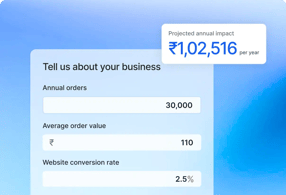
A ten-point RTO cut is worth two to five times a ₹3 freight discount, before you count the ad spend that bought those orders. Run the same sum on your own lanes with the NDR ROI calculator.
How to Choose the Right Logistics Management Software for Your eCommerce Business in India
Choose logistics management software in six steps: identify the category you need, match it to your order volume, compare COD remittance terms, test NDR automation in a live demo, confirm every channel integration, and calculate total cost per delivered order instead of comparing plan fees.
-
Identify your category. Use the four-category table above to decide whether you need an aggregator, a logistics intelligence platform, an OMS/WMS or a fulfillment partner before you compare vendors.
-
Map your order volume to the growth-stage matrix. Tools that work at 100 orders a day often break at 1,000. Ask for uptime commitments during Diwali and Big Billion Days, in writing.
-
Compare COD remittance and reconciliation. If COD is more than 30% of orders, one day of remittance makes a real difference to working capital. Get each vendor's D+X terms and fees.
-
Test NDR automation depth. A dashboard flag is not an automated multi-touch journey. Ask to watch a failed-delivery workflow run end to end, including WhatsApp and voice.
-
Check integrations for every channel. Confirm connectors for Shopify, Amazon, Flipkart, Meesho, Nykaa or whatever you sell on, and ask about webhook reliability and API uptime.
-
Calculate total cost per delivered order. Add platform fee, freight, COD charges, RTO reverse freight and a weight-dispute buffer. The lowest plan fee is rarely the lowest total cost.
Implementation checklist for the first 30 days
-
Record baseline numbers first: RTO by pincode, NDR conversion, COD float days and WISMO tickets per 100 orders.
-
List which courier contracts are yours and which you access through an aggregator, with current COD terms for each.
-
Connect storefronts and your OMS, then set allocation rules on one warehouse before rolling out to the rest.
-
Switch on COD confirmation and NDR journeys in week one, because they pay back fastest.
-
Review results after one full COD remittance cycle before moving the remaining volume. The 90-day RTO reduction playbook covers the longer plan.
Frequently Asked Questions: Logistics Management Software for eCommerce in India
What is the best logistics management software for ecommerce in India?
It depends on order volume and your biggest cost. ClickPost is the strongest pick for brands past about 500 orders a day on their own courier contracts. Shiprocket and NimbusPost suit early-stage sellers, Unicommerce and EasyEcom suit multichannel marketplace sellers, and WareIQ suits brands that want fulfillment outsourced.
What is the difference between a shipping aggregator and a logistics management platform?
A shipping aggregator resells courier capacity through one account and handles booking, labels and basic tracking. A logistics management platform runs on your own courier contracts and adds carrier allocation, NDR automation, COD reconciliation, branded tracking, returns and analytics, which are the problems that decide RTO and working capital.
How does logistics software help reduce RTO in Indian ecommerce?
It confirms COD orders before dispatch, routes each order to the courier with the best delivery record for that pincode, and follows up within hours of a failed attempt over WhatsApp, SMS or voice. ClickPost customers such as DaMENSCH and PlatinumRx report RTO reductions of 54% and 33%.
Which logistics software is best for D2C brands in India?
For D2C brands with direct courier contracts, ClickPost covers allocation, NDR, COD reconciliation, tracking and returns in one platform. Shopify brands under about 1,000 orders a day can start with Shipway for exchanges, and brands that want warehousing handled for them can look at WareIQ.
What features should I look for in ecommerce logistics software?
Look for NDR automation, COD remittance tracking, multi-carrier allocation on performance data, branded tracking with delivery date estimates, a returns and exchange portal, and connectors for every channel you sell on. For India, also check delivery success on your top pincodes and uptime commitments during festive sales.
How much does logistics management software cost in India?
Aggregators like Shiprocket and NimbusPost charge per shipment, with Shiprocket plans from free to ₹799 a month. Logistics platforms like ClickPost and OMS/WMS tools like Unicommerce and EasyEcom quote a SaaS fee on volume and modules. Total cost also includes COD fees, GST, RTO freight and faster remittance charges.
What is NDR management and why does it matter for Indian ecommerce?
NDR management is the process of recovering a shipment after a failed delivery attempt, before it turns into an RTO. It matters because COD buyers are often unreachable or undecided. Automated NDR journeys can change the outcome: Snitch converts 75% of failed deliveries with ClickPost, up from 40% to 45%.
Does logistics management software help with GST compliance and e-way bill generation?
OMS/WMS platforms such as Unicommerce and EasyEcom generate GST-compliant invoices and credit notes inside the order flow, and B2B tools such as ClickPost Darwin handle bulk shipments. Under GST rules, an e-way bill is required for consignments above ₹50,000, so check how each vendor generates it.
Conclusion: Choose by Stage, Then by Vendor
Brand recognition is a poor way to choose logistics software in India. COD habits, RTO rates and uneven pincode coverage make the decision more expensive to get wrong here than in most markets. Use the four-category table to find the type of tool you need, the growth-stage matrix to narrow the shortlist, and the total cost table to compare what each option costs per delivered order.
If you are past a few hundred orders a day, work with your own courier contracts and are watching RTO eat into margin, ClickPost was built for that stage. Book a demo and we will run allocation and NDR numbers on your own pincodes.






We use cookies to keep the site working, understand usage, and improve your experience. Learn more
Always active for essential site performance and security.
Enables anonymous usage analysis to refine our services.
Used to present relevant promotions and advertising.