.png?width=193&height=27&name=ClickPost%20Logo%20(Blue).png)
.svg)
.svg)
.svg)
.svg)
.svg)
.svg)
.svg)
.svg)
.svg)


.svg)

.svg)
.svg)
.svg)
.svg)


.svg)
.svg)
.webp?width=286&height=206&name=ROI%20Calculator%20(1).webp)
.svg)
.svg)

.svg)

.webp?width=286&height=206&name=RTO%20Playbook%20(1).webp)

In this blog
TL/DR summary
The health and wellness supply chain is no longer a back-office function. It is the control center for trust, availability, and product integrity.
-
Quality and traceability are now part of everyday supply chain work, especially in supplements, medical nutrition, and connected health devices.
-
Cloud visibility is becoming table stakes, but the advantage lies in connecting planning, quality events, and supplier performance into a single operating rhythm.
-
Leaders who scale well invest early in supplier qualification, change control, and realistic lead-time planning.
-
Hardware-led wellness brands (wearables and recovery devices) require consumer-electronics-level execution: component control, launch readiness, and returns discipline.
-
High-growth wellness brands win when they build procurement and co-manufacturing governance that protects service levels without inflating inventory.
If you are building or evaluating a health and wellness supply chain in the U.S., use this directory as a map. The titles vary, but the work is consistent: make growth operationally believable.
Introduction
In the United States, demand for health and wellness products has shifted from “general health” to condition- and lifestyle-specific routines, and that puts real pressure on planning, traceability, and supplier qualification.
A few signals are hard to ignore: nearly 70 percent of U.S. health organizations plan to adopt cloud-based supply chain management by 2026 (GHX, 2025), while life-sciences quality teams are increasingly testing AI-led quality workflows to speed decision-making and reduce rework (MasterControl, 2025).
Meanwhile, the broader health and wellness economy is still expanding, with global spending projected to move into the roughly $7 trillion range by 2026. For operators, growth is the easy headline. The harder story is building a supply chain that can prove what is in the product, where it came from, and why it is safe.
Key highlights
-
Wellness supply chains are not graded solely on “fast shipping.” They are graded on batch integrity, documentation, and the ability to answer auditors’ and customers' questions without scrambling.
-
Ingredient complexity is rising: more blends, more formats (gummies, powders, ready-to-mix), and more co-manufacturing. That makes supplier qualification and change control a daily discipline.
-
Cloud systems are becoming the baseline for visibility, but the value shows up when teams connect planning, quality events, and supplier performance into a single operating rhythm.
-
Direct-to-consumer growth is forcing tighter integration between demand signals, inventory policy, and last-mile execution, especially for subscription-heavy brands.
Top 25 Supply Chain Leaders in the U.S. Health and Wellness Industry
The leaders below span medical nutrition, supplements, connected devices, and consumer health. What they share is practical operating control. It involves planning that reflects reality, quality that holds up under scrutiny, and networks designed to scale without breaking.
|
Leader |
Company |
Current role |
What they are known for |
Supply chain lens |
|
Nestlé Health Science |
VP, Supply Chain (U.S.) |
Running a high-complexity nutrition and medical portfolio with disciplined planning and logistics |
Demand/supply planning, trade compliance, supplier collaboration |
|
|
AG1 |
Chief Supply Chain Officer |
Building procurement and manufacturing governance for a scale-driven wellness brand |
Network design, supplier standards, and sustainable procurement |
|
|
Oura |
Chief Supply Chain Officer |
Scaling the hardware supply chain with S&OP, sourcing, quality, and global logistics |
Component qualification, launch readiness, repair/recycling pathways |
|
|
WHOOP |
SVP, Operations & Supply Chain |
Hardening wearable operations for launch execution and quality at scale |
S&OP maturity, supplier performance, and global manufacturing |
|
|
Peloton |
Sr. Director, Supply Chain & International Ops |
Managing international operations and partner execution in a volatile demand environment |
3PL governance, inventory policy, cross-functional operating cadence |
|
|
Ritual |
Director, Supply Chain |
Planning and inventory discipline for subscription-heavy supplements |
Demand planning, master data, supplier communication |
|
|
OLLY PBC |
Chief Supply Chain Officer |
S&OP, launches, and fulfillment control across a fast-moving wellness portfolio |
Co-man management, change control, ERP/planning enablement |
|
|
NOW Foods |
Director of Supply Chain |
Stabilizing a broad natural products portfolio with quality-aware operations |
Sourcing, purchasing cadence, batch integrity, and release timing |
|
|
Chobani |
Chief Supply Chain Officer |
Manufacturing-rooted leadership, continuous improvement, and quality-forward execution |
Capacity, yields, traceability, repeatable systems |
|
|
Kenvue |
VP, E2E Self-Care Supply Chain |
Building an independent operating model post-separation with a traceability focus |
Contract manufacturing, serialization/traceability, network transfer |
|
|
SmartyPants Vitamins |
Sr. Director, Supply Chain Planning |
Planning discipline across capacity, inventory, and risk in a corporate environment |
Capacity planning, scenario work, inventory trade-offs |
|
|
USANA Health Sciences |
Director of Supply Chain |
Structured planning and process control, informed by regulated industries |
S&OP, production planning, procurement, Lean Six Sigma |
|
|
Fitbit |
Head of Global Supply Chain, Sourcing & Mfg Ops |
Hardware sourcing and manufacturing governance across international suppliers |
Outsourcing models, cost at launch, supplier network development |
|
|
poppi |
Supply Chain Director |
Scaling co-manufacturing and procurement in a high-growth wellness beverage model |
Procurement strategy, co-man partnerships, master data |
|
|
Elysium Health |
Director, Supply Chain & Ops |
Connecting supplier relationships, operations data, and execution discipline |
SCRM mindset, logistics strategy, service vs. working capital |
|
|
Nature’s Way |
VP, Supply Chain Operations |
Operations modernization tied to data and sustainability investments |
Technology adoption, multi-site execution, green infrastructure |
|
|
Thorne |
SVP, Supply & Channel Management |
U.S. manufacturing and distribution scale-up with quality as the anchor |
Forecasting, risk mitigation, and facility expansion |
|
|
Hyperice |
VP, Supply Chain |
Global logistics and inventory control for hardware-led recovery products |
Distribution execution, partner performance, lead-time realism |
|
|
Liquid I.V. |
Chief Supply Chain Officer |
FMCG transformation experience applied to growth and international expansion |
Systems integration, S&OP, delivered-cost improvement |
|
|
OLIPOP |
SVP, Supply Chain |
Beverage-scale supply chain leadership across retail and customer-facing flow |
Co-man reliability, warehouse network, transportation lanes |
|
|
MaryRuth’s |
VP, Supply Chain |
Building scalable systems to reduce stockouts and support rapid growth |
Forecasting, supplier contracts, operating cadence |
|
|
Bloom Nutrition |
Director, Supply Chain & International Ops |
Coordinating DTC, wholesale, and international fulfillment under one model |
Transportation, warehousing, channel planning |
|
|
hims & hers |
Supply Chain Director |
Vendor and fulfillment execution are tied directly to patient experience |
Vendor onboarding, commercialization readiness, service reliability |
|
|
Abbott |
Sr. Director, Global Supply Chain |
IBP and distribution leadership for diabetes care with a digital transformation lens |
IBP, global distribution, process, and tech enhancement |
|
|
Amway |
Chief Supply Chain Officer |
Global governance across planning, procurement, manufacturing, and trade |
Network resilience, standards, and inventory investment discipline |
Shawn Fanning — Vice President of Supply Chain, Nestlé Health Science
Manages scale and compliance across medical nutrition and wellness without compromising quality.


Shawn Fanning runs a U.S. supply chain portfolio spanning medical nutrition, wellness supplements, and products designed for specific life stages and health needs. His remit covers demand and supply planning, import and export coordination, purchasing, logistics execution, and customer supply chain.
Nestlé Health Science’s U.S. business also sits within a global company that has acquired several U.S.-facing wellness brands, which adds integration work to align factories, packaging standards, and supplier performance across legacy systems.
Fanning’s background in supply chain operations and materials management matters here because the day-to-day is trade compliance, lead-time variability, and building factory collaboration that can support growth without cutting corners on quality.
Tony Milikin — Chief Supply Chain Officer, AG1 (Athletic Greens)
Builds repeatable supply chains where trust, availability, and growth must rise together.

Tony Milikin brought a large-company supply chain toolkit to a brand that lives or dies on repeat purchase and trust. At AG1, the job is end-to-end, involving procurement, manufacturing network decisions, logistics, and the operating systems that keep availability steady while marketing demand spikes. His prior roles at Keurig Dr Pepper and Anheuser-Busch InBev shape how he approaches scale: disciplined sourcing, cost architecture, and supplier governance that can survive rapid growth.
Milikin is also closely associated with sustainability-led procurement and circularity programs from his earlier career. In a wellness context, that translates into practical choices: packaging decisions, supplier standards, and risk controls that do not collapse under scrutiny. His leadership is less about hype and more about building a network that can deliver the same product experience at higher scale.
Sheetal Shah — Chief Supply Chain Officer, Oura
Constructs a consumer-tech supply chain that holds margins, quality, and global growth in balance.
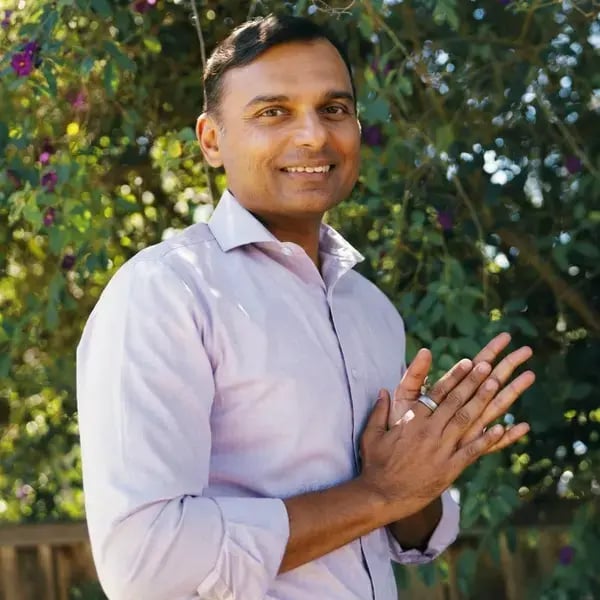
Sheetal Shah stepped into Oura as its first Chief Supply Chain Officer with a clear mandate. That mandate is to build a supply chain that can support global growth for a hardware product that must meet consumer-electronics expectations while operating in a health-adjacent trust space. Her remit spans S&OP, manufacturing, sourcing, product quality, and logistics. It is basically the full set of levers that determine whether Oura can ship reliably and protect margins.
Her background is a useful mix for Oura’s problem set. She has led operations and supply chain roles across tech and manufacturing environments, including scaling production. Oura’s challenge is also geographic. Expanding the manufacturing footprint and strengthening regional capabilities require a compliance-ready playbook and supplier discipline. Shah’s role is to make the operating backbone boring in the best way.
Raul Corella — Senior Vice President, Operations & Supply Chain, WHOOP
Applies consumer electronics discipline to wearable wellness at global scale.

Raul Corella operates in the wellness segment, where the supply chain resembles that of consumer electronics. That includes tight new-product launch windows, component constraints, and high-quality expectations. At WHOOP, he oversees global manufacturing, logistics, and supplier execution. These responsibilities are shaped by decades of experience in hardware operations across companies such as Meta (Oculus), Jawbone, and Bose.
Corella’s work tends to emphasize S&OP maturity, supplier performance management, and Lean-driven execution. His global experience also matters because supplier networks for wearables are inherently international, with risk sitting in lead times, regulatory requirements, and capacity allocation during peak periods.
Justine Bailey — Senior Director, Supply Chain and International Operations, Peloton
Aligns international operations with forecasting reality in a high-cost delivery model.

Justine Bailey has spent years within Peloton’s supply chain organization, moving through roles in 3PL management, inventory operations, and business operations before taking on a broader international scope. That progression is meaningful because Peloton’s operating environment demands both cost control and precise execution. This is because bulky products, complex delivery coordination, and customer expectations are shaped by premium pricing.
In her current seat, the problem extends beyond sourcing and freight; it also includes the supply chain. It is aligning international operations with forecasting, partner capacity, and the reality of demand volatility. Bailey’s strength is operational detail: understanding where data lives, how partners perform, and what changes actually stick in the field. Her background suggests a systems-thinking approach concerning integrating forecasting, budgeting, and process design so the organization can make decisions quickly without creating downstream messes.
Jackie Bacchia — Director, Supply Chain, Ritual
Turns demand planning into a stabilizing force for quality-led supplement brands.

Jackie Bacchia’s profile reads like a career in demand planning built for modern supplement brands. At Ritual, she moved from Senior Manager of Demand Planning to a Director role, signaling the company’s need for planning tightly linked to execution. Her earlier experience spans planning and buying roles across consumer categories, which helps when marketing campaigns, product launches, and shifts in consumer behavior drive forecasting.
At Ritual, Bacchia’s job is to set inventory policy that respects lead times and quality release constraints while maintaining a stable customer experience. That means clean master data, strong supplier communication, and a planning cadence that does not collapse when something goes off-script.
Sunil Phabiani — Chief Supply Chain Officer, OLLY PBC
Scales fast-moving wellness portfolios through systems-driven execution.
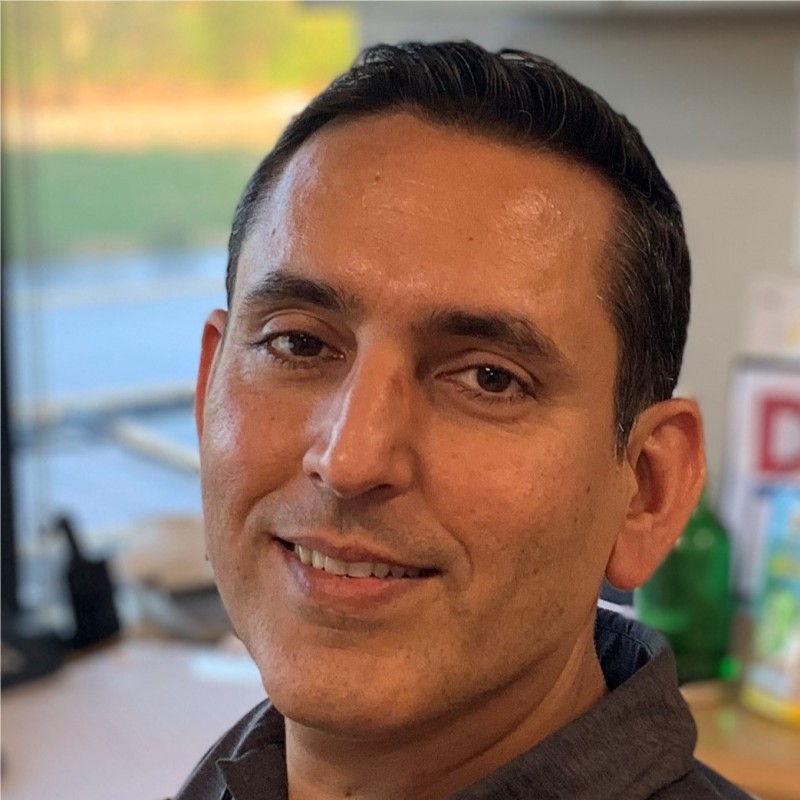
Sunil Phabiani runs the supply chain for a brand where velocity and new product launches matter as much as cost. At OLLY, his scope touches the full operating loop: S&OP, sourcing, manufacturing, logistics, distribution, and customer fulfillment. His long tenure at Dole Sunshine Company and earlier work at Siemens give him a blend of CPG execution and systems thinking.
He is also described as technology-forward, with experience across ERP and planning tools. That matters because the difference between “busy” and “in control” often lies in the planning system and how well teams use it. For high-growth brands, the goal is to scale without losing the basics.
Said Deeb — Director of Supply Chain, NOW Foods
Protects quality and availability across one of natural products’ broadest assortments.
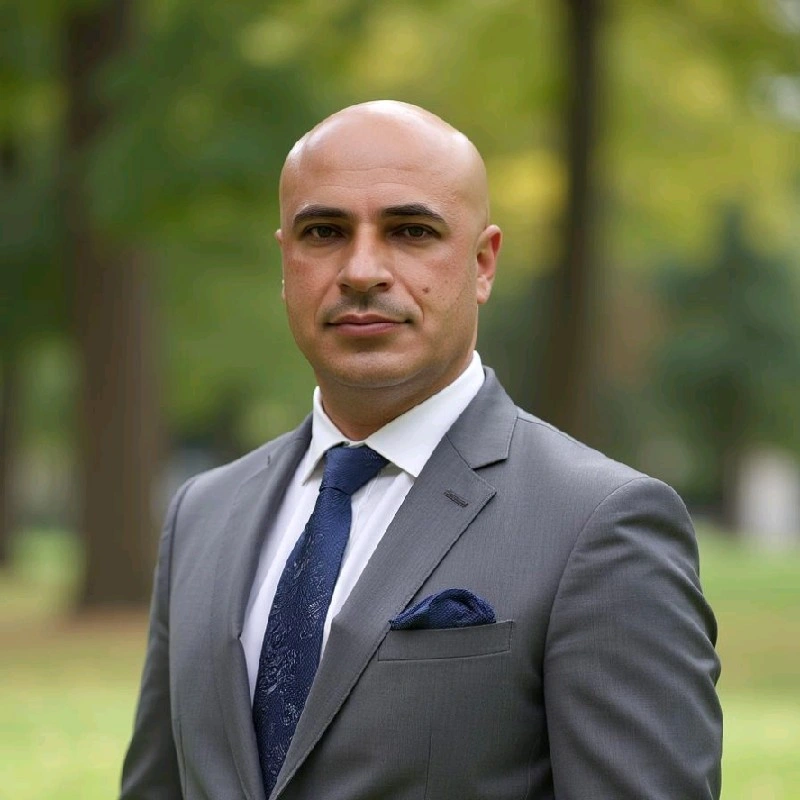
Said Deeb is a long-tenured operator inside a company that competes on breadth, value, and trust. At NOW Foods, he progressed through supply chain roles over more than a decade and now leads as Director of Supply Chain. That kind of internal climb usually signals deep knowledge of how the business actually runs. It includes supplier selection, purchasing cadence, inventory policy, and the rhythms of a high-SKU natural products portfolio.
Deeb’s job is to maintain a stable supply while meeting the quality standards that customers in this category care about. His earlier experience as a chemist is relevant because the product is the point. In the supplements and natural products supply chain, quality cannot be treated as someone else’s department. The best supply leaders understand testing requirements, batch release implications, and what a supplier change really means downstream.
Jason Blaisure — Chief Supply Chain Officer, Chobani
Leads supply chains from the plant floor up—where growth meets operational truth.

Jason Blaisure is a manufacturing-to-supply-chain leader, and that pathway shows up in how he likely thinks about execution. He rose through Chobani from plant roles into operations leadership and eventually Chief Supply Chain Officer. That matters because the strongest supply chain decisions are often rooted in plant realities: capacity, yields, changeovers, and what it takes to hit quality targets at speed.
Blaisure’s background includes quality and continuous improvement. That aligns with environments where scale creates new failure modes: supplier variability, equipment constraints, and workforce stability. His leadership is less about abstract “optimization” and more about building repeatable systems. This ensures that growth does not come with a quality tax.
Michael Altman — VP of End-to-End Self-Care Supply Chain, Kenvue
Rebuilds regulated supply chains end-to-end with minimal disruption.

Michael Altman’s job is unusually concrete: help build an independent end-to-end supply chain for Kenvue’s self-care portfolio after its separation from Johnson & Johnson. That means network design, operational transfers, and creating new governance where legacy systems used to do the work. In other words, he is not “improving” a supply chain as much as rebuilding one with minimal disruption.
His experience spans branded and OTC pharmaceuticals and adjacent chemical categories, which makes sense for self-care products where traceability, regulatory documentation, and product integrity are non-negotiable. He has also been linked to work on serialization and traceability solutions, as well as temperature-controlled distribution, both of which are critical in regulated environments.
Gabriela Martinez-Stucchi — Senior Director, Supply Chain Planning, SmartyPants Vitamins
Brings scenario-based planning discipline to ingredient-constrained categories.

Gabriela Martinez-Stucchi sits in the part of the supply chain that is easy to underestimate until it fails: planning. At SmartyPants Vitamins, she leads supply chain planning work that connects capacity, inventory policy, and risk mitigation. Her background includes Amazon and Foster Farms, suggesting comfort with fast-moving operations and planning cycles that demand high levels of accuracy.
Her stated strengths center on inventory management, capacity planning, and risk analysis. For vitamins, the fundamental constraint is not always the availability of manufacturing slots. Ingredient availability, quality release timing, and packaging components can delay an otherwise “ready” product. Planning is where teams decide how much buffer they can afford. Martinez-Stucchi’s role is to make those trade-offs explicit, so decisions are based on scenarios, not guesswork.
Chad Whipple — Director of Supply Chain, USANA Health Sciences
Applies regulated-industry rigor to wellness supply chain execution.

Chad Whipple leads supply chain at a company where customer trust depends on consistent product availability and reliable quality. At USANA, he oversees supply chain operations after building experience across medical devices, aerospace, and manufacturing-heavy environments. That blend is helpful in health and wellness because it pushes the organization toward disciplined planning and process control.
Whipple’s prior roles at companies like ICU Medical and Raytheon point to comfort with regulated thinking and structured operations. That translates into planning systems that withstand pressure, supported by clean master data, a working S&OP cadence, and supplier relationships that can handle change without creating compliance risk.
Gary Kessler — Head of Global Supply Chain, Sourcing, and Manufacturing Operations, Fitbit
Aligns global hardware sourcing with cost, capacity, and launch realities.

Gary Kessler is one of the few supply chain leaders closely tied to Fitbit’s hardware operations, and his background fits the environment. He has spent decades in electronics manufacturing, outsourcing, and supplier network development with extensive time in Asia. In wearables, the supply chain is the product roadmap’s shadow. If sourcing and manufacturing cannot support new launches at the right cost, the roadmap becomes a slide deck.
Kessler’s experience spans JDM/ODM/CM outsourcing models, commodity strategy, and supplier relationship building. Those capabilities matter when component constraints shift quickly and when launch costs determine whether a device can hit its intended price tier. He is also described as strong in cost reduction and operational change, which are essential in consumer electronics, where margins are thin and return rates can swing financial performance.
Patrick Fowler — Supply Chain Director, Poppi
Balances growth velocity with margin control in co-manufactured beverage networks.

Patrick Fowler operates in a high-growth environment where supply chain decisions quickly affect gross margin and shelf availability. At Poppi, his scope covers procurement, co-manufacturing, supply planning, and master data. This work is at the heart of scaling a consumer wellness brand. His experience includes earlier roles at Laird Superfood and beverage manufacturing environments, which give him a practical lens on co-man networks.
Fowler’s profile emphasizes margin improvement and waste reduction. That is a sign of a supply chain leader who understands that “growth” without control is expensive. The job is not to chase volume. It is to build a procurement strategy and planning cadence that can keep service levels stable while improving the unit economics.
Daniel Magida — Director, Supply Chain and Operations, Elysium Health
Connects supplier transparency, data visibility, and execution discipline.

Daniel Magida handles a modern wellness assignment involving supply chain and business operations. At Elysium Health, he leads supply chain and operations after prior work in supply planning and in supply-chain relationship management software at Anvyl. That combination is helpful for a science-led brand because it connects supplier relationships, data visibility, and execution discipline.
Magida’s earlier experience includes analytics and strategy work, which can show up in how he frames trade-offs. It means service levels versus working capital, short-term promotions versus longer-term supply agreements, and internal capacity versus external partners. In a category where customers pay attention to sourcing claims and product integrity, his job is to ensure the operating model supports the brand story without relying on wishful thinking.
Christine Greer — Vice President of Supply Chain Operations, Nature’s Way
Strengthens operational reliability while embedding sustainability into infrastructure.
Christine Greer leads supply chain operations at Nature’s Way with an operator’s focus. Her focus is to make the network more reliable, more measurable, and less wasteful. Nature’s Way sits in a category where consumers expect “clean” labels and consistent results, while regulators and retail partners expect documentation that holds up. Greer’s work is about keeping those standards intact as the product mix and demand patterns change.
What stands out in her profile is the combination of technology adoption and sustainability initiatives tied to real infrastructure, not just marketing language. Her work has included pushing operational improvements across global teams and backing investments like geothermal energy projects to reduce the company’s footprint. That type of initiative usually forces a supply chain leader to solve the hard parts: facilities integration, payback logic, vendor coordination, and change management on the plant floor.
Kenzie Goer — Senior Vice President, Supply and Channel Management, Thorne
Scales U.S.-manufacturing supply chains without sacrificing quality control.
Kenzie Goer runs supply and channel management at Thorne, where the operating model is shaped by quality expectations and a clear “made here” narrative tied to U.S. manufacturing. Thorne’s growth has required the unglamorous work that customers rarely see. It involves expanding facilities, hardening supplier agreements, and building a distribution setup that can handle more products and more channels without raising defect risk.
Goer’s background is rooted in manufacturing and planning, and his current remit blends long-range forecasting with day-to-day execution. That mix matters in supplements because demand does not always behave rationally. Product launches, influencer-driven spikes, and subscription behavior can all distort the forecast, and the supply chain leader has to protect service without letting inventory get out of control.
Sarah Harris — Vice President, Supply Chain, Hyperice
Stabilizes hardware-heavy wellness supply chains through disciplined execution.

Sarah Harris has been building Hyperice’s supply chain through the phases that expose weak systems: rapid growth, channel expansion, and the operational stress that comes with scaling a hardware-heavy wellness brand. She joined Hyperice in 2020, was promoted to Senior Director, and later promoted to Vice President in early 2024. Such a progression usually reflects ownership of outcomes, not just projects.
Her earlier career in industrial supply chain roles gave her a grounding in procurement discipline and materials management. That experience tends to translate well when you need to stabilize inbound flow, tighten forecasting cadence, and renegotiate partner expectations. She is also APICS CSCP certified, which is not the lesson. The lesson is that her work reads like a supply chain built for control: clear lanes, accountable partners, and an inventory policy that reflects lead times instead of hope.
Sébastien Millet — Chief Supply Chain Officer, Liquid I.V.
Brings global operations rigor to fast-growing health nutrition brands.

Sébastien Millet joined Liquid I.V. as Chief Supply Chain Officer with a profile built in high-velocity consumer operations. His prior role as Head of Global Operations at L’Oréal signals comfort with complexity: multi-site manufacturing, global distribution, and cross-functional transformations that touch systems, people, and product flow.
Liquid I.V. is positioned as a health-science nutrition within a large global ecosystem, creating a distinct supply chain challenge. The brand needs to grow without losing control of quality, packaging consistency, and the customer experience across channels. Millet’s mandate is typically the one leaders get when a company is ready for its next stage: bring more rigor to planning, improve delivered cost, and build an operating model that supports international expansion.
George Scobell — Senior Vice President of Supply Chain, OLIPOP
Translates beverage-scale complexity into predictable retail execution.

George Scobell leads supply chain at OLIPOP, with a résumé shaped by beverage-scale realities: enormous volumes, tight retail windows, and a constant need to balance service with cost. His prior senior roles at BODYARMOR, along with experience at Nestlé Waters and PepsiCo, suggest a leader who has seen what happens when demand surges faster than capacity can keep up.
Scobell’s background in customer-facing supply chain roles is particularly relevant here. In fast-moving retail environments, the supply chain leader often serves as the translator between sales promises and operational reality. It involves questions like what can be produced, when it can ship, and where inventory should sit to avoid out-of-stocks.
Connie Hunter — Vice President of Supply Chain, MaryRuth’s
Builds scalable supply chain foundations before growth exposes the cracks.

Connie Hunter’s role at MaryRuth’s is the kind that does not allow generic leadership. The company has grown quickly, and fast growth exposes every operational shortcut: forecasting gaps, supplier fragility, and inventory that either runs out or piles up. Hunter’s stated focus is building scalable infrastructure, including systems, supplier relationships, and planning discipline, that can support growth without turning the supply chain into a constant emergency.
Her background emphasizes the ability to move between tactical execution and long-term strategy, which is exactly what this category demands. Supplements are affected by ingredient availability, quality release timing, and sudden demand swings tied to campaigns or channel expansion.
Esther Kang — Director of Supply Chain and International Operations, Bloom Nutrition
Executes omnichannel wellness logistics with operational realism.

Esther Kang runs supply chain and international operations at Bloom Nutrition in a way that reflects how modern wellness brands actually ship. That means a mix of direct-to-consumer, wholesale, and retail fulfillment with fast changes in channel demand. Her remit spans global supply chain coordination, transportation, warehouse execution, and operational readiness for international expansion.
Kang’s background includes DTC and wholesale operations roles at Madison Reed and ThirdLove, as well as complex event logistics earlier in her career. That combination matters because Bloom’s work is partly systems and partly field reality: how orders get picked, how carriers perform, and how inventory policies behave under stress.
Kevin Zeck — Supply Chain Director, Hims & Hers
Keeps patient experience grounded in supply chain reliability.

Kevin Zeck leads supply chain at Hims & Hers, where supply chain is inseparable from patient experience. Telehealth and wellness products are not just “sold.” They are prescribed, packed, and delivered with tight service expectations and high sensitivity to availability. Stockouts here not only hurt revenue but also customer satisfaction.
Zeck has built his career within the company, moving from supply chain management roles to the Director role. That kind of progression usually signals a deep understanding of vendor onboarding, fulfillment mechanics, and the cross-functional decision-making required in regulated or health-adjacent businesses. Zeck’s contribution is keeping commercialization grounded in the operational truth of launching what the network can support and building capacity ahead of demand.
Federico Kalnicki — Senior Director, Global Supply Chain, Abbott
Ensures continuity and precision in health-critical global supply networks.

Federico Kalnicki leads global supply chain work at Abbott with a focus on a high-stakes area of diabetes care. His remit includes Integrated Business Planning, global distribution, and supply execution. These functions require both scale and precision. In health-adjacent categories, performance is not measured only in cost and service. It is measured in continuity.
Kalnicki’s profile also highlights digital transformation across manufacturing and commercial operations. In a global organization, “digital” only matters if it changes decisions: better planning signals, fewer surprises, and faster response when capacity or supply shifts. His background includes extensive international experience, which is essential when distribution spans regions with different regulatory expectations and lead time constraints.
Brian Kraus — Chief Supply Chain Officer, Amway
Orchestrates one of wellness’s most geographically complex supply chains.
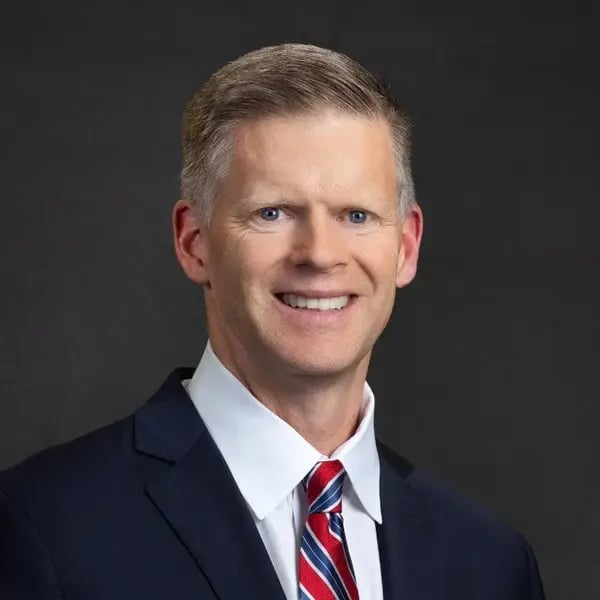
Brian Kraus runs one of the larger and more geographically complex supply chains in the category. As Amway’s Chief Supply Chain Officer, he oversees planning, procurement, manufacturing, engineering, global trade, warehousing, and transportation across more than 100 markets.
Kraus has been with Amway since 2002 and has led efforts across procurement, project management, manufacturing, and supply chain planning. That long internal arc matters because global direct selling depends on reliable availability without letting inventory balloon. It is a constant balancing act between service, working capital, and network resilience.
If your brand is ready to modernize logistics and turn post-purchase into a competitive edge:
Get a personalised ClickPost demo and see what next-gen logistics looks like.
Conclusion: The thread that connects these leaders
Health and wellness supply chains do not reward shortcuts. The category’s growth has brought more SKUs, more co-manufacturing, and more scrutiny, ranging from regulators, retailers, and customers who want proof, not promises.
The leaders in this directory stand out for the same reason. They are building operating systems that can scale while staying defensible. That means clean planning cadences, supplier discipline, integrated quality into supply chain decisions, and logistics networks designed for reality.
----------------------------------------------------------------------------------
Disclaimer: This list was compiled through an independent editorial review aimed at highlighting the key leaders currently shaping the U.S. health and wellness supply chain. The evaluation criteria included innovation in supplement transparency, leadership in temperature-controlled logistics, digital transformation in subscription fulfillment, and measurable influence on ingredient integrity and regulatory compliance. This compilation is illustrative rather than exhaustive and is not intended as a formal ranking. All insights are based on publicly available data and industry analysis at the time of publication. No commercial affiliations, sponsorships, or endorsements influenced the selection of these individuals.
About the Review: We conducted this review to identify the individuals who aren't just managing shipments, but are actively redesigning how wellbeing moves. Our team analyzed over 100 profiles across supplement leaders, fitness technology brands, and holistic wellness startups to select 25 leaders who represent the gold standard in health-focused supply chain management.