Best Multi-Carrier Shipping Software for Enterprise & Ecommerce Operations
What we’ll cover
Introduction
Shipping gets complicated faster than most teams expect.
What starts with a handful of carriers and simple routing rules often turns into a web of rate cards, service exceptions, regional partners, and operational workarounds. As volumes grow, managing shipping across multiple carriers—especially across regions or shipment types—becomes less about labels and more about control, visibility, and consistency.
Multi-carrier shipping software helps e-commerce and enterprise teams manage this complexity from a single system. Instead of switching between carrier portals or relying on manual processes, teams can execute, track, and optimize shipping across all carriers in one place.
This page breaks down what multi-carrier shipping system actually does, how it’s used in real operations, and what to look for when evaluating platforms built for scale.
What Is Multi-Carrier Shipping Software?
Multi-carrier shipping tool is a centralized platform that allows businesses to manage shipments across multiple carriers through a single interface or API.
Rather than working directly inside individual carrier systems, teams use multi-carrier software to connect carriers, order systems, and warehouses into one operational workflow. The software acts as an orchestration layer—deciding how shipments move, how labels are created, and how performance is tracked.
In practice, multi-carrier shipping platform is used to:
-
Access and manage multiple parcel and freight carriers from one system
-
Apply consistent shipping rules across carriers
-
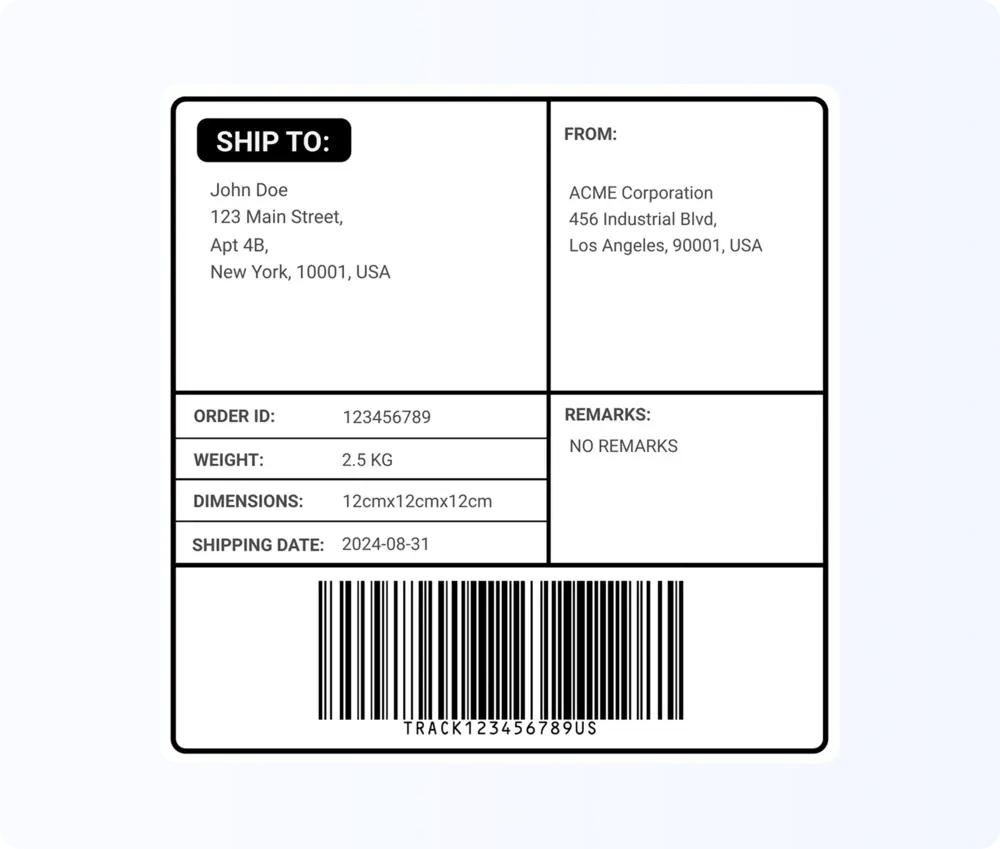
Generate labels, manifests, and shipping documents
-
Track shipments across carriers in real time
-
Monitor delivery performance and service reliability
-
Analyze shipping costs and carrier outcomes over time
It’s commonly used by ecommerce brands, manufacturers, retailers, and enterprises shipping at volume or across multiple regions.
6 Key Features of Multi-Carrier Shipping Software
While feature sets vary, platforms built for scale tend to focus on a few core capabilities.
1. Centralized Carrier Integrations
Instead of maintaining separate integrations for each carrier, teams manage parcel, LTL, and freight partners through a single system. This reduces maintenance overhead and simplifies onboarding.
2. Parcel and LTL Shipping Support
Many operations ship a mix of small parcels and larger freight. Multi-carrier platforms that support both allow teams to manage ecommerce and B2B shipments without switching tools.
3. Rule-Based Carrier Selection
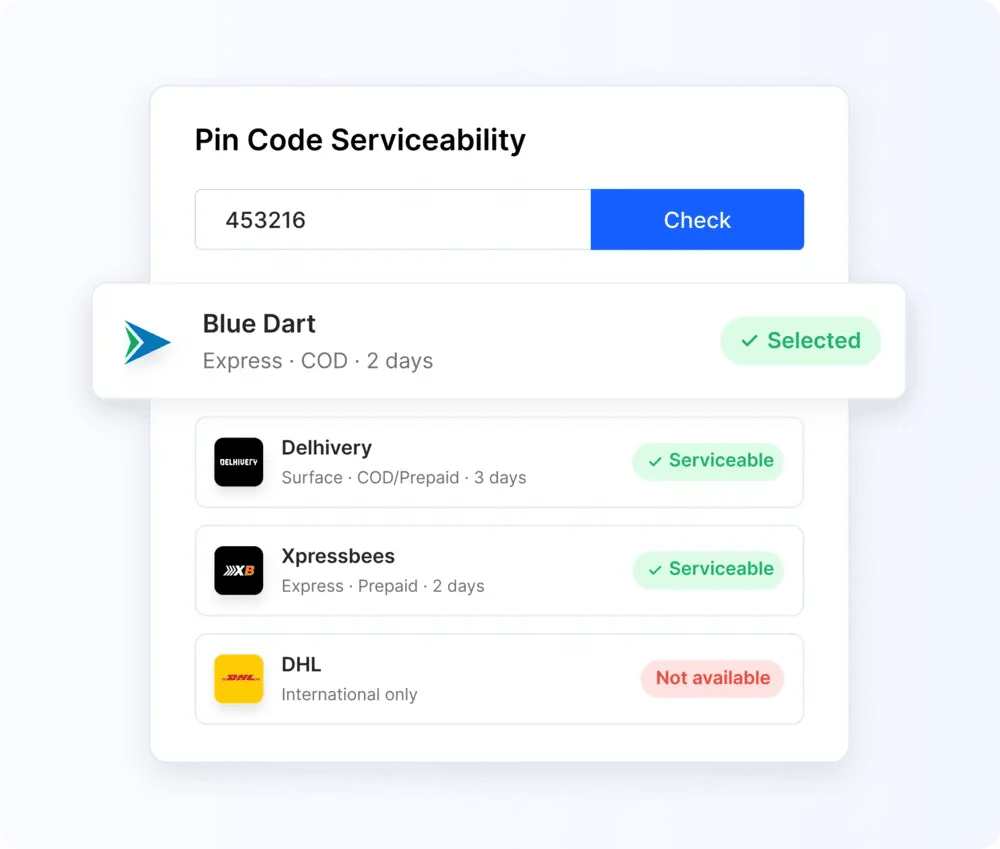
Carrier selection is driven by logic, not gut feel. Rules can be based on cost thresholds, delivery timelines, destination zones, or service reliability—removing manual guesswork from dispatch.
4. Automated Labeling and Documentation
Labels, manifests, and shipping documents are generated automatically, reducing manual errors and speeding up fulfillment workflows.
5. Unified Tracking and Status Visibility
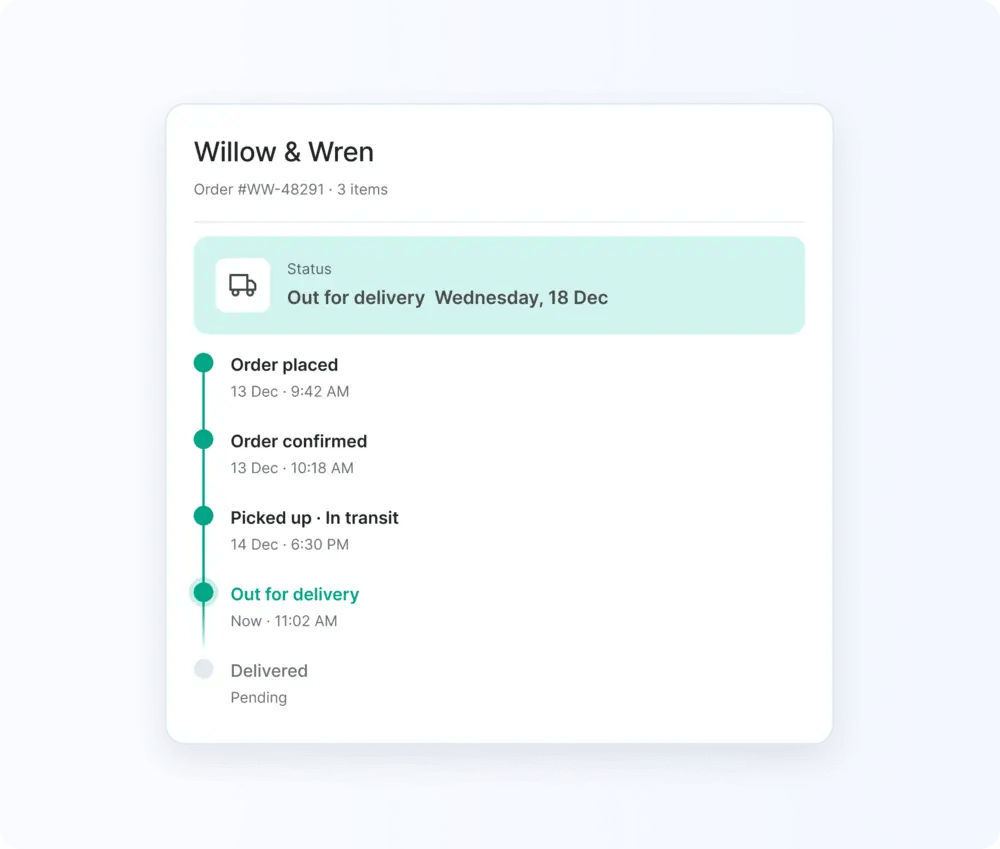
All shipment tracking updates flow into a single dashboard, regardless of which carrier is handling the delivery. This eliminates the need to monitor multiple carrier portals.
6. Performance and Cost Analytics
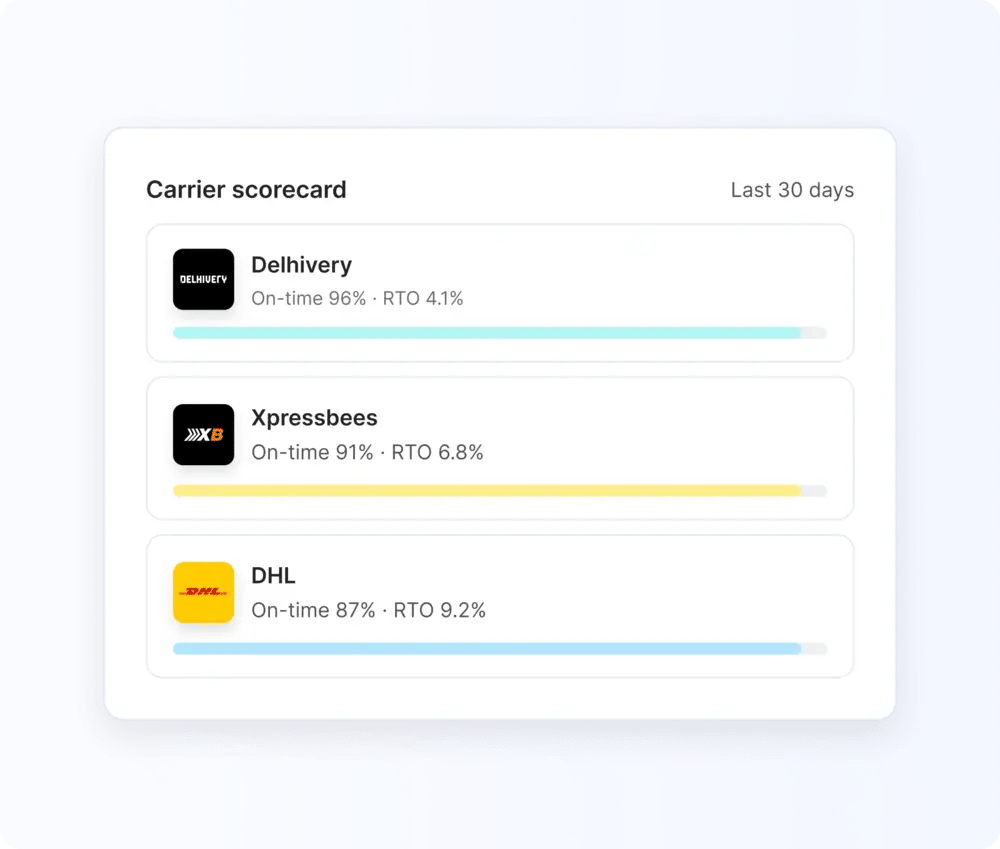
Shipping data is captured centrally, making it easier to analyze carrier performance, identify SLA risks, and understand cost trends by region or service type.
What to Look for in the Top Multi-Carrier Shipping Software
“Best” means different things depending on operational complexity.
When brands evaluate multi-carrier shipping software, they typically look beyond basic integrations and focus on:
-
How well the platform scales with volume and carrier diversity
-
Support for both parcel and LTL shipments
-
Depth of automation and configuration flexibility
-
Quality of performance and cost analytics
-
Ability to integrate cleanly with ERP, OMS, and WMS systems
For many teams, the right platform is the one that reduces operational friction as complexity increases—not the one with the longest feature checklist.
The Top 10 Multi Carrier Shipping Platform for eCommerce
Having the right multi-carrier shipping tools allows companies to optimize carrier selection, manage delivery tracking, and streamline logistics. Let us look at 10 of the top multi carrier shipping platforms.
| Platform | Primary focus | Typical fit | Multi-carrier depth | Parcel / LTL |
Enterprise readiness
|
| ClickPost | Shipping orchestration & logistics intelligence | High-volume ecommerce and enterprise logistics teams | Advanced (rules, SLAs, performance analytics) | Parcel + LTL | High |
| ShipStation | Shipping workflow & label management | SMB to mid-market ecommerce | Basic–moderate | Parcel | Medium |
| Shippo | API-first shipping & labels | Developer-led ecommerce teams | Moderate | Parcel | Medium |
| Easyship | Cross-border shipping enablement | Brands expanding internationally | Moderate | Parcel | Medium |
| ShippingEasy | Simplified shipping workflows | Small ecommerce businesses | Basic | Parcel | Low–medium |
| ShipBob | Fulfillment & 3PL network | Brands outsourcing warehousing | Shipping via ShipBob network | Parcel | Medium |
| Veeqo | Marketplace + shipping operations | Marketplace-heavy sellers | Basic–moderate | Parcel | Medium |
| ShipHero | WMS + shipping | Brands running own warehouses | Moderate | Parcel | Medium–high |
| Ordoro | Inventory + shipping | Small ecommerce operations | Basic | Parcel | Low–medium |
| SendCloud | EU shipping & returns | Europe-focused brands | Moderate | Parcel | Medium |
1. ClickPost
ClickPost is a leading multi carrier shipping platform that enables eCommerce businesses to easily manage domestic and international shipping operations. It is one of the most efficient platforms that offers quick integration times. ClickPost currently supports over 500 carriers globally, including prominent ones like FedEx, UPS, and regional carriers.
Key Features of Clickpost
-
Unified API Integration: ClickPost provides a single API for integration, which lets businesses streamline processes like label generation, order processing, and tracking. Moreover, the unified API integration lets eCommerce businesses have a smoother workflow across multiple carriers.
-
Automated Carrier Allocation: The ML-driven system by ClickPost assigns carriers based on criteria like shipment type, delivery time, and specific customer needs. This automation improves delivery speed and efficiency.
-
Real-Time Tracking: ClickPost offers real-time shipment tracking using a dual push-and-pull API system. It provides customers with accurate delivery updates.
-
NDR (Non-Delivery Report) Management: ClickPost’s NDR management automatically resolves failed deliveries. This tool identifies causes and recommends appropriate actions.
-
Returns Management: ClickPost’s return optimization enables customers to print return labels at home. This solution creates a hassle-free returns experience.
The ClickPost platform centralizes every stage of the shipping process, from order creation to return management. The platform comes with pre-built integrations for popular eCommerce platforms such as Shopify, Magento, and WooCommerce. Hence, it ensures seamless operations that reduce manual effort and boost overall efficiency.
2. ShipStation

ShipStation provides versatile shipping management with integrations across major sales channels like Shopify, Etsy, and Walmart. Businesses using ShipStation appreciate its flexibility, which helps eCommerce businesses streamline order processing and shipping from a single platform.
Pros:
-
Multi-channel support and QuickBooks integration
-
Customizable tracking and label options
-
Easy batch processing for high-volume orders
Cons:
-
Pricing may be prohibitive for small businesses
3. Shippo

Shippo enables eCommerce brands to access both domestic and international shipping solutions. It is particularly strong in North America. It offers real-time tracking and comprehensive shipment management features that simplify logistics for growing businesses.
Pros:
-
Import/export documentation support
-
Branded tracking pages for a better customer experience
-
Offers discounted rates with USPS and UPS
Cons:
-
Primarily focused on North American carriers, limiting global reach
4. Easyship

Easyship is a multi carrier shipping platform designed to support domestic and international deliveries. With a broad carrier network and transparent tax/duty management, Easyship is an ideal choice for eCommerce brands looking to expand globally.
Pros:
-
User-friendly integration with major eCommerce platforms
-
Transparent duties and taxes for international shipments
-
Real-time rate calculations for accurate shipping costs
Cons:
-
Limited to certain countries, affecting global reach
-
Monthly shipment caps in most payment plans
5. ShippingEasy

ShippingEasy is a cloud-based shipping solution from Auctane. It integrates with major marketplaces like Amazon and eBay. Its easy-to-use interface and automation options make it a go-to choice for small to medium-sized eCommerce businesses.
Pros:
-
Excellent customer support and user-friendly interface
-
Integrates with multiple marketplaces and shipping providers
-
Automated order tracking and notifications
Cons:
-
Limited carrier options for international shipping
-
Some users report confusion with cost-reporting features
6. ShipBob

ShipBob is a fulfillment provider specializing in 2-day shipping for small and medium businesses. ShipBob offers complete inventory and order management, which makes it suitable for brands seeking streamlined fulfillment in the US.
Pros:
-
Strong inventory management and support
-
Focused on fast 2-day delivery options
-
Great customer support
Cons:
-
Occasional shipping delays reported by users
-
Some issues with billing and inventory management
7. Veeqo

Veeqo offers shipping and inventory management software for eCommerce brands. This tool is particularly effective in the UK market. Known for its inventory forecasting and multi-channel support, Veeqo helps brands prevent stockouts and optimize logistics.
Pros:
-
Advanced inventory management features
-
Multi-channel synchronization for seamless stock tracking
-
Accurate stock forecasting
Cons:
-
Limited global reach with a primary focus on the UK
-
Some advanced features are costly
8. ShipHero

ShipHero provides a cloud-based warehouse management solution with real-time inventory and order tracking. Since it easily integrates with platforms like Shopify, WooCommerce, and Amazon, it is suitable for businesses that prioritize efficient warehouse operations.
Pros:
-
Integrates with top eCommerce platforms
-
Real-time stock notifications and reorder points
-
Mobile pick-and-pack functionality
Cons:
-
Limited data visualization on the dashboard
-
Complex billing for 3PL providers
9. Ordoro
Ordoro is an inventory and shipping management tool for small to large eCommerce businesses. It provides multi carrier support, label customization, and inventory tracking across multiple sales channels.
Pros:
-
Free plan with unlimited shipping labels
-
Kit-building functionality for simplified order bundling
-
Multi-channel and Multi carrier integration
Cons:
-
Regional limitations on carrier integrations
-
Limited features on the free plan
10. SendCloud
SendCloud is a shipping automation platform focused on quick setup and seamless integration. It provides customizability and efficient tracking. As a result, it allows businesses to create a branded shipping experience for their customers.
Pros:
-
User-friendly and customizable interface
-
Streamlines tracking and label generation
-
Supports integration with major marketplaces
Cons:
-
Limited courier service options
-
Occasional delays in customer support
11. MetaPack

MetaPack is a European-based platform that focuses on enhancing delivery options across 400+ carriers. It is suitable for eCommerce brands needing strong cross-border support in the UK and EU markets.
Pros:
-
Extensive network of pickup/drop-off points
-
Customs support for smoother international shipping
-
Customizable delivery options for customers
Cons:
-
Primarily focused on the UK and EU, limiting global options
Note: Buyers evaluating multi-carrier shipping software often focus on a few practical questions:
-
How reliable is the platform during peak volumes?
-
How easy is it to add or replace carriers?
-
Does the software provide actionable performance insights?
-
What level of operational support is available during implementation and scale-up?
Some tools are built primarily for SMB shipping needs, while others are designed for high-volume or enterprise logistics environments. The right choice usually depends on shipment volume, complexity, and long-term growth plans.
Multi-Carrier Shipping Software vs Single-Carrier Tools
| Area | Single-Carrier Tools |
Multi-Carrier Shipping Software
|
| Carrier flexibility | Locked into one carrier’s services, zones, pickup rules, and surcharges. Switching carriers is a separate project. |
Add/replace carriers without reworking the full workflow. Use different carriers per lane, service level, weight, or SLA needs.
|
| Visibility | Tracking, SLAs, exceptions, and invoices live in separate portals. Teams stitch updates manually. |
One dashboard for shipments across carriers—tracking, SLA risk, exceptions, POD, and performance in one place.
|
| Scalability | Works until volumes, SKUs, or warehouses grow—then ops becomes dependent on manual checks and carrier-specific processes. |
Designed for scale: multiple warehouses, multiple storefronts, multiple service types, bulk actions, automation rules, and role-based access.
|
| Optimization | Carrier selection is often habit-based (“use X for everything”) or manual rate checks. |
Automated decisioning: choose carrier by cost, promised date, failure rates, pincode/serviceability, cutoff times, and historical performance.
|
| Enterprise readiness | Limited controls for approvals, audit trails, user roles, and multi-entity reporting. |
Strong governance: RBAC, audit logs, multi-brand reporting, standardized workflows, and configurable policies.
|
| Cost control | Hard to compare true landed cost (base rate + fuel + RTO + reattempts + surcharges). |
Cost analytics across carriers and lanes; identify expensive zones, surcharge drivers, and negotiate with data.
|
| Exception management | NDR and delivery issues handled in carrier portals; inconsistent processes and slow follow-ups. |
Central exception queue with workflows, escalation rules, automated customer comms, and faster resolution loops.
|
| SLA management | SLA tracking is manual or based on carrier reports; hard to detect risk early. |
SLA monitoring and proactive alerts for delays, stuck scans, and breach risk—before tickets pile up.
|
| Integrations | Integrates well with one carrier, but adding OMS/WMS/storefront rules becomes fragmented across tools. |
Integrates once with OMS/WMS/storefronts and then scales across carriers; consistent labels, manifests, and tracking events.
|
| Returns & reverse logistics | Returns often handled as a separate tool/process; limited carrier options for reverse pickup. |
Returns can follow the same multi-carrier logic—optimize reverse pickups, costs, and turnaround times.
|
| Reporting & analytics | Basic shipment reporting; limited ability to benchmark carriers or lanes. |
Carrier scorecards, lane performance, zone-wise trends, delay reasons, RTO drivers, and weekly/monthly ops reports.
|
| Business continuity | Carrier disruptions (capacity caps, strikes, serviceability changes) directly hit deliveries. |
Redundancy by design—shift volume instantly to alternate carriers when constraints or failures happen.
|
Why this matters as you scale:
Single-carrier setups feel “simple” early on, but as order volumes and delivery promises grow, they typically create more manual work, more blind spots, and less leverage—especially when you need to optimize cost, improve SLA performance, or quickly switch capacity across carriers.
Why brands move to multi-carrier shipping software?
Most teams don’t adopt multi-carrier shipping software on day one. They switch when existing processes stop scaling.
Common breaking points include:
-
Fragmented operations
Each carrier operates in its own system, with different workflows and reporting formats. -
Limited visibility
Tracking and delivery performance data lives across emails, portals, and spreadsheets. -
Inconsistent carrier decisions
Manual routing leads to uneven delivery outcomes and rising costs. -
Slow onboarding of new carriers or regions
Adding carriers becomes an operational project instead of a configuration change.
Multi-carrier shipping software addresses these issues by standardizing execution while still allowing flexibility where it’s needed.
Conclusion
Selecting the right multi carrier shipping software can redefine the logistics experience for your business. Furthermore, it can enhance operational efficiency and customer satisfaction. As the eCommerce landscape continues to grow, companies need solutions that offer flexibility, speed, and reliability. The right software can help navigate these challenges. It can ensure that your logistics strategy supports both current operations and future expansion.
Among the options available, platforms like ClickPost stand out for their powerful tools and global carrier network. That makes them a reliable choice for brands aiming to elevate their logistics. By investing in a solution that aligns with your goals, you can meet customer expectations and create a more resilient, efficient shipping process.
Frequently Asked Questions
1. What is multi-carrier shipping software?
Multi-carrier shipping software lets businesses manage shipments across multiple courier partners from one system. Instead of logging into different carrier portals, teams can generate labels, track shipments, compare performance, and manage exceptions in a single, centralized workflow.
2. How is multi-carrier shipping software different from single-carrier tools?
Single-carrier tools are designed around one courier’s rules and services. Multi-carrier shipping software works across many carriers, giving businesses more flexibility, better cost control, centralized tracking, and the ability to switch carriers quickly when performance or capacity changes.
3. How should businesses evaluate multi-carrier shipping software reviews?
When evaluating reviews, businesses should look beyond feature lists. Useful reviews explain how the software performs at scale, how reliable carrier integrations are, how exceptions are handled, and whether reporting helps improve delivery performance and costs over time.
4. Is multi-carrier shipping software suitable for enterprise and ERP environments?
Yes. Many multi-carrier platforms are built for enterprise use and integrate with ERP systems like SAP, Oracle, and NetSuite. These setups support high volumes, multiple warehouses, role-based access, audit trails, and standardized shipping workflows across regions and business units.
5. How does multi-carrier shipping optimization software reduce costs and delays?
Optimization software uses data to select the best carrier for each shipment based on cost, delivery speed, serviceability, and past performance. This reduces over-reliance on a single courier, lowers shipping costs, and helps prevent delays caused by capacity or service issues.
6. How is AI used in modern multi-carrier shipping software?
AI is used to automate carrier selection, predict delivery delays, flag performance issues, and recommend better routing decisions. Over time, these systems learn from shipment data to improve delivery reliability and reduce manual decision-making in daily operations.
7. Is multi-carrier shipping software available for the UK, Europe, India, and global shipping?
Yes. Many multi-carrier shipping platforms support domestic and international shipping across regions like the UK, Europe, India, and North America. Global solutions typically offer region-specific carriers, cross-border compliance support, and localized tracking and reporting.
8. What should ecommerce brands look for in multi-carrier shipping software?
Ecommerce brands should look for fast integrations, automated label generation, real-time tracking, carrier performance insights, and easy returns handling. The software should support peak volumes, multiple storefronts, and consistent customer communication across carriers
9. What is the best multi-carrier shipping software in 2026?
The best multi-carrier shipping software in 2025 is one that combines carrier flexibility, automation, and visibility. Strong platforms support parcel and freight shipping, integrate with ecommerce and ERP systems, optimize carrier selection using data, and scale easily as order volumes grow.
10. How do multi-carrier shipping platforms compare in terms of scalability and reliability?
Platforms differ mainly in how well they handle growth. Scalable systems support automation, bulk actions, multiple warehouses, and performance monitoring. Reliable platforms also offer redundancy, allowing businesses to shift volumes quickly when a carrier underperforms.
11. which solution supports multi-carrier shipping label creation?
Multi-carrier shipping solutions such as ClickPost, Shippo and ShipStation support multi-carrier shipping label creation by integrating major carriers like FedEx, UPS, USPS, and DHL. These platforms allow users to compare rates, generate carrier-compliant labels, track shipments, and manage orders from a single dashboard, often with direct integrations into e-commerce platforms.