.png?width=193&height=27&name=ClickPost%20Logo%20(Blue).png)
.svg)
.svg)
.svg)
.svg)
.svg)
.svg)
.svg)
.svg)
.svg)


.svg)
.svg)
.svg)
.svg)
.svg)


.svg)
.svg)
.webp?width=286&height=206&name=ROI%20Calculator%20(1).webp)
.svg)
.svg)

.svg)

.webp?width=286&height=206&name=RTO%20Playbook%20(1).webp)

In this blog
India's D2C Apparel Market in 2026: Key Trends and Growth Drivers
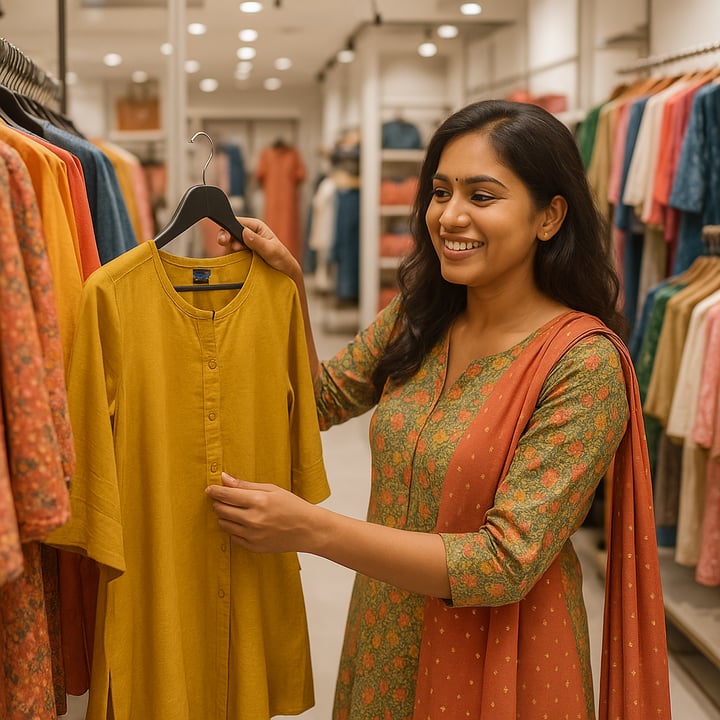
India’s D2C boom has transformed the apparel industry, making it one of the most competitive and fast-growing sectors. As e-commerce becomes increasingly digital-first, fashion brands are launching products faster to meet shorter trend cycles.
Tier-2/Tier-3 cities are driving growth, with more consumers embracing online shopping. However, apparel remains a high return-rate category, with return rates sometimes reaching 20-30%, impacting margins.
Key Trends for 2025–2026:
-
Digital-first discovery through platforms like Instagram
-
Faster product launches to match rapidly changing trends
-
Tier-2/Tier-3 adoption and omnichannel transitions
TL;DR
-
India’s D2C apparel market is scaling rapidly, fueled by digital discovery, Tier-2/3 adoption, and faster trend cycles.
-
Winning brands combine strong positioning with tight operational control across inventory, sizing, and returns.
-
High return rates (20–30%) make exchanges, fit transparency, and delivery reliability critical to margins.
-
Sustainable growth now depends more on retention, community, and post-purchase trust than pure paid acquisition.
-
Logistics intelligence platforms like ClickPost help apparel brands streamline tracking, automate NDRs, optimize carriers, and scale without operational chaos.
How Big Is India's D2C Clothing Market? Size, Growth & 2030 Projections
D2C apparel brands offer greater control over margins and customer relationships. By skipping traditional distribution models, brands can create direct connections with consumers. This model drives:
-
Faster product launches to meet immediate consumer demand
-
Data-driven merchandising and personalized offerings
-
Higher lifetime value (LTV) through repeat purchases and category expansion
-
Selective offline presence for brand experience rather than dependency on physical stores
A recent McKinsey India report indicates that brand-owned D2C channels can improve margins compared to marketplaces by reducing commissions and chargebacks while giving brands greater control over pricing, customer data, and the overall consumer experience.
With India’s D2C market already at $10–12B and projected to reach $60B by 2030, growing nearly three times faster than marketplace-led e-commerce, the model is emerging as both profitable and scalable for several brands.
What Is a D2C Apparel Brand? Definition and Business Model Explained
A D2C apparel brand sells directly to consumers through owned channels like websites and apps. The model ensures:
-
Better control over pricing, marketing, and brand positioning
-
Higher margins compared to relying on marketplaces
-
Closer relationships with customers, offering insights into their preferences
Biggest Challenges Facing D2C Apparel Founders in India (2026)
Scaling a D2C apparel brand presents unique challenges for founders, especially as the business grows and consumer expectations evolve. While the D2C model offers more control and higher margins, it also requires careful management of several operational hurdles.
Key challenges include:
-
Inventory risk: Predicting demand at the size and SKU level is complex. Overestimating or underestimating stock can lead to lost sales or dead inventory.
-
Returns and exchanges: With apparel, fit and style issues are the leading causes of returns. Founders must develop efficient systems to handle exchanges and maintain profitability.
-
Maintaining brand identity: As brands scale, staying true to their original values while appealing to a broader audience becomes a challenge. Ensuring that product quality and messaging remain consistent is vital for long-term brand loyalty.
-
Cash flow discipline: High-SKU businesses can strain working capital. Managing cash flow while scaling marketing, fulfillment, and production costs requires tight financial controls and strategic investments.
Balancing the excitement of viral growth with the reality of managing operations can be daunting. Yet, overcoming these obstacles is key to long-term success in the competitive D2C apparel market.
How D2C Changed the Way Indians Shop for Clothes
Before D2C, consumers relied on traditional retail or large marketplaces. Today, D2C-led discovery is the norm, with social media and brand websites taking center stage. This shift has transformed the shopping experience:
Before D2C:
-
Marketplace dependence
-
Traditional retail discovery
After D2C:
-
Online discovery via social platforms like Instagram
-
Faster deliveries, often with same-day or next-day options
-
Data-backed recommendations and virtual try-ons reducing returns
While operational complexity has increased due to high SKU churn and returns, data-driven loyalty programs are helping brands like Zouk and XYXX mitigate these issues.
25 Best D2C Clothing Brands in India — Full Brand Profiles (2026)
|
Brand |
Founder Story |
Product Range |
Target Audience |
USP |
Growth Stage |
Online Presence |
Price Range |
Brand Values |
|
Snitch |
Founded by Siddharth R. Dungarwal; started as a B2B menswear brand (2019) and pivoted to D2C during COVID. |
Men’s fast fashion—shirts, tees, jackets, bottoms |
Fashion-forward men |
Rapid trend drops + omnichannel scale |
Scale-up / omnichannel |
D2C site + offline presence + strong social |
Mid (generally ~₹700–₹3,000+) |
Trend-led, accessible style |
|
The Souled Store |
Founded in 2013 by Vedang Patel, Aditya Sharma, Rohin Samtaney, and Harsh Lal. |
Licensed pop-culture merch + casualwear (tees, hoodies, etc.) |
Pop-culture & fandom buyers |
Licensed merch depth (Marvel/Disney/sports, etc.) |
Scale-up |
D2C site + marketplaces + strong social |
Budget–mid (~₹499–₹2,499) |
Fandom, self-expression, comfort |
|
Bewakoof |
Co-founded by Prabhkiran Singh (and Siddharth Munot); founded 2012. |
Youth apparel + accessories (graphic tees, loungewear, etc.) |
Value-seeking youth |
Quirky graphics + affordability |
Scale-up |
D2C site + marketplaces + strong social |
Budget–mid (~₹399–₹1,999) |
Fun, affordability, everyday wear |
|
Bonkers Corner |
Founded by Shubham Gupta; brand emerged around 2020 as Gen-Z streetwear. |
Streetwear tees, hoodies, coords, etc. |
Gen-Z streetwear buyers |
Bold drops + streetwear positioning |
Growth |
D2C site + marketplaces + social |
Budget–mid (~₹699–₹2,499) |
Bold self-expression, youth culture |
|
XYXX |
Founded by Yogesh Kabra in 2017. |
Men’s innerwear, loungewear, athleisure |
Men (millennial + working professionals) |
Premium innerwear styling + comfort focus |
Scale-up |
D2C site + marketplaces + social |
Budget–mid (many items ~₹329+) |
Comfort, quality, modern essentials |
|
DaMENSCH |
Founded in 2018 by Anurag Saboo & Gaurav Pushkar. |
Men’s innerwear + essentials (briefs, trunks, vests, etc.) |
Men (often cited 20–45) |
Fabric innovation (e.g., odour/comfort propositions) |
Scale-up |
D2C site + marketplaces + social |
Mid (starts ~₹359+ on site) |
Comfort tech, everyday upgrades |
|
BlissClub |
Built as an India-first women’s activewear brand/community |
Women’s activewear (leggings, tops, sports bras, etc.) |
Indian women (body-inclusive activewear buyers) |
Body-inclusive, “judgment-free” positioning |
Growth |
D2C site + strong social/community |
Mid–premium (~₹1,200–₹3,500) |
Comfort, confidence, inclusivity |
|
Suta |
Founded by Sujata Biswas and Taniya Biswas; built as a modern Indian fashion brand rooted in handloom and artisanal storytelling. |
Sarees, blouses, dresses, kurtas, lehengas, shirts, and other handcrafted apparel. |
Women seeking modern Indianwear, handloom-inspired fashion, and occasion-to-everyday ethnic styling. |
Strong handcrafted identity with contemporary styling and a clear D2C storytelling-led brand presence. |
Scale-up |
D2C site + app/social + strong community presence. |
Mid–premium - ₹2,000 – ₹8,000 |
Craft, comfort, contemporary Indian fashion |
|
Libas |
Founded in 1985 by Sunil Keshwani |
Women’s ethnic + fusion wear |
Women value-fashion ethnic buyers |
Affordable, trend-forward ethnic wear |
Established/scaled |
D2C site + marketplaces + social |
Budget–mid (~₹699–₹3,999) |
Accessible ethnic fashion |
|
Jaypore |
Set up in 2012 by Puneet Chawla & Shilpa Sharma (as a craft-first curation platform). |
Handcrafted apparel, jewellery, home textiles/decor |
Craft/luxury-ethnic buyers |
Curated Indian crafts + artisan storytelling |
Established |
D2C site + social |
Mid–premium |
Craft preservation, curation |
|
FabIndia |
Founded in 1960 by John Bissell. |
Apparel, home, furnishings, etc. |
Socially conscious and educated consumers |
Artisan-sourced, India craft ecosystem |
Established |
D2C site + strong offline retail |
Mid–premium |
Craft, community, sustainability ethos |
|
Manyavar |
Brand journey began in 1999 with Ravi Modi (per brand). |
Men’s celebration ethnic wear |
Wedding/festive buyers |
Occasion-led ethnic specialization |
Established |
D2C site + deep offline network |
Mid–premium |
Tradition, celebration wear |
|
Rare Rabbit |
Started in 2015 under House of Rare / Radhamani Textiles, positioned as premium menswear. |
Premium men’s apparel |
Urban men |
“Accessible luxury” premium menswear positioning |
Scale-up / premium retail |
D2C + strong offline + marketplaces |
Premium (~₹2,500–₹8,000+) |
Premium styling, aspiration |
|
Berrylush |
D2C fast fashion for women; Alok Paul & Anusha Chandrashekar (2018). |
Women’s western wear (dresses, tops, jumpsuits, etc.) |
Young women value-fast-fashion |
Trendy + affordable western wear |
Growth |
D2C + marketplaces + social |
Budget–mid |
Trend access + affordability |
|
The Pant Project |
Founded in 2020 by Dhruv & Udit Toshniwal; started with a custom-made fit focus. |
Men’s & women’s pants (custom + RTW engineered fits) |
Fit-conscious professionals |
Fit + engineered trousers proposition |
Growth |
D2C site + offline studios |
Mid–premium |
Fit, craftsmanship, utility |
|
Campus Sutra |
Founded in 2013; youth-focused casualwear brand. |
Youth casualwear + accessories |
Students/young adults |
Youth-first designs + affordability |
Scale-up |
D2C + marketplaces + social |
Budget–mid |
Youth culture, made-in-India vibe |
|
House Of Chikankari |
Founded in 2020 by Poonam & Aakriti Rawal. |
Chikankari kurtas/kurtis, palazzos, dupattas; also sarees |
Ethnicwear buyers (women + some men) |
Heritage craft with modern silhouettes |
Growth |
D2C site + app + social |
Mid–premium |
Artisan uplift, heritage craft |
|
The Indian Garage Co. |
Founded by Anant Tanted in 2012, built as a fast-growing menswear brand inspired by global street and casual fashion. |
Casual shirts, tees, jeans, jackets, trousers, and everyday menswear |
Young urban men seeking affordable, trend-driven fashion |
Fast-moving casual menswear with a wide assortment and strong value positioning |
Scale-up |
D2C site + marketplaces + strong social presence |
Budget–mid (~₹599–₹2,999) |
Accessible fashion, trend-led casualwear |
|
Off Duty India |
Founded in 2019 by Madina S Khan & Shahbaaz Khan. |
Women’s denims + street staples |
Women denim buyers |
Denim-first, flattering fits; sharp pricing |
Growth |
D2C site + social |
Budget–mid (many items ~₹999–₹2,150) |
Fit, confidence, everyday denim |
|
Urban Monkey |
Mumbai-based Indian streetwear label |
Caps/headwear, apparel, eyewear, accessories |
Streetwear + skate culture buyers |
Headwear-led streetwear identity |
Scale-up |
D2C site + app + strong social |
Budget–mid |
Street culture, community |
How We Ranked These D2C Apparel Brands: Selection Criteria
To ensure this list reflects brands that are not just popular but also structurally strong, scalable, and category-defining, we applied a clear set of selection criteria grounded in business fundamentals and market impact, along with empirical data research.
-
Apparel as the core business focus
We only included brands where clothing/apparel is a primary revenue driver and not a side category within a broader lifestyle catalog. -
D2C-first or strong owned-channel presence
Brands had to build their brands primarily on their own website/app (or have a clearly visible owned-channel engine), not rely solely on marketplaces for demand. -
Clear positioning and a differentiated value proposition
Each brand needed a distinct “why”, e.g., a strong design language, a niche category focus (pants/denim/activewear), craft-led identity, or a clear audience they own. -
Evidence of traction and repeat demand
We looked for signals that customers come back, high-frequency new drops, strong community engagement, visible review volume, or repeat-friendly categories like essentials, denim, and occasionwear. -
Operational maturity
Brands on this list show the ability to deliver consistently at scale, stable catalog depth, availability across sizes, reliable fulfillment, and visible customer support/returns processes. -
Growth potential and category influence
Finally, we prioritized brands that shape consumer taste or category behavior, set trends, build communities, expand offline, or own a recognizable niche as the market matures through 2026.
Best D2C Fashion Brands in India 2026: Complete Guide to 25 Direct-to-Consumer Clothing Brands
1. Snitch
Snitch was launched as a D2C brand in 2019 by Siddharth Dungarwal. It is a men's fast-fashion brand offering trend-led drops and modern street styles. The brand focuses on sharp fits and consistent updates to stay up to date with the latest fashion trends.




Positioning - Built around sharp, contemporary fits with frequent newness for the modern Indian shopper.
Hero Category - Trend-led menswear (shirts, tees, denims, co-ords, jackets).
Why it's rising in 2026 - Quick trend response, consistent drops, and strong brand identity are driving its growth in men’s fashion.
2. The Souled Store
The Souled Store was founded in 2013 by Aditya Sharma, Harsh Lal, Rohin Samtaney, Vedang Patel. It is a pop-culture-focused brand offering licensed fandom-led apparel. The brand has built a strong presence by leveraging fandoms and community engagement to create loyal customers.
Positioning - Fandom-led designs with a casualwear core targeting youth and pop-culture enthusiasts.
Hero Category - Graphic tees, hoodies, fandom collections, casualwear staples.
Why it's rising in 2026 - Fandom-driven drops and casualwear demand create repeat purchases and brand loyalty.
3. Bewakoof
Bewakoof is a youth-focused D2C fashion brand founded in 2012 by Prabhkiran Singh. It is known for quirky designs and affordable casualwear. Bewakoof has gained a loyal following with its fun designs and value-for-money pricing.

Positioning - Youth-centric brand with quirky graphics, oversized fits, and affordable casualwear for men and women.
Hero Category - Graphic tees, oversized tees/hoodies, joggers, casualwear sets.
Why it's rising in 2026 - Strong value-fashion engine and wide distribution reach drive growth.
4. Bonkers Corner
Founded in 2020, Bonkers Corner is a Gen-Z streetwear brand and the brainchild of Shubham Gupta. With bold graphics and oversized silhouettes, it's designed for social-first, hype-driven youth culture, positioning itself as a trendy choice for streetwear lovers.

Positioning - Streetwear label with bold graphics, oversized fits, and hype-style drops for a social-first approach.
Hero Category - Oversized tees, hoodies, streetwear coords, graphic-led collections.
Why it's rising in 2026 - Streetwear’s growing relevance among Gen Z, combined with visual-first discovery and drop-led merchandising, is helping the brand scale faster.
5. XYXX
XYXX was founded in 2016 by Yogesh Kabra as a men's innerwear and essentials brand focused on comfort-first fabrics and modern basics. The brand is built around creating premium innerwear that balances comfort and style.
.webp?width=400&height=400&name=ezgif.com-resize%20(1).webp)
Positioning - Comfort-first essentials for men, focusing on everyday basics and loungewear.
Hero Category - Innerwear, lounge essentials, everyday basics.
Why it's rising in 2026 - The "basics + repeat purchase" model ensures strong growth.
6. DaMENSCH
DaMENSCH was founded in 2018 by Anurag Saboo. It is a men’s innerwear brand known for comfort and fabric innovation. The brand is positioned around elevated basics that are designed for everyday comfort.

Positioning - Premium fabric innovation in men’s innerwear and essentials for comfort and fit.
Hero Category - Innerwear, vests, loungewear, everyday essentials.
Why it's rising in 2026 - The essentials category's repeat cycles and performance fabrics fuel growth.
7. BlissClub
Founded in 2020 by Minu Margeret, BlissClub is a women's activewear brand designed around Indian body types, providing a perfect blend of comfort, fit, and function. The brand is dedicated to making activewear both functional and stylish.
Positioning - Activewear designed for comfort, fit, and movement for Indian women.
Hero Category - Leggings, activewear sets, movement-first wardrobe staples.
Why it's rising in 2026 - Strong WOM in the expanding women’s wellness market drives its growth.
8. Suta
Suta was founded by Sujata Biswas and Taniya Biswas as a modern Indian fashion brand rooted in handloom, softness, and everyday wearability. The brand has built a strong D2C identity by reimagining sarees and apparel through contemporary styling, strong storytelling, and an artisan-first approach.
Positioning - A handcrafted Indian fashion brand blending traditional weaves with modern silhouettes and a strong community-driven identity.
Hero Category - Sarees, blouses, dresses, kurtas, and other artisanal apparel.
Why it’s rising in 2026 - Its combination of craft-led differentiation, strong D2C storytelling, and expansion across multiple apparel categories makes it one of the more distinctive Indian fashion brands scaling through owned channels.
9. Libas
Libas was founded in 2010 by Sidhant Keshwani. It is an ethnic fashion brand offering a wide range of kurtas, sarees, and suits at accessible prices. The brand is known for its trend refreshes in ethnic wear.

Positioning - Affordable ethnicwear brand with trendy and accessible designs for the mass market.
Hero Category - Kurta sets, suits, sarees, dresses, co-ords.
Why it's rising in 2026 - Ethnicwear’s always-on demand and trend refreshes drive its growth.
10. Jaypore
Jaypore is a craft-led brand, founded in 2011 by Shilpa Sharma and Puneet Chawla, offering curated artisanal textiles, apparel, and jewelry. The brand is focused on bringing traditional Indian craftsmanship into the modern fashion fold.
Positioning - Curated artisanal Indian crafts, blending tradition with contemporary styling.
Hero Category - Artisan apparel, craft textiles, jewelry, and home.
Why it's rising in 2026 - Craft and modern styling continue to grow with premiumisation and conscious buying.
11. Fabindia
Founded in 1960 by John Bissell, Fabindia is a lifestyle brand specializing in handcrafted textiles, apparel, and home products. Known for its deep commitment to promoting Indian handicrafts.
Positioning - A trusted Indian brand offering handcrafted, ethnic-inspired apparel and home products.
Hero Category - Ethnic apparel, artisan fabrics, home products.
Why it's rising in 2026 - "Heritage + scale" works as consumers increasingly buy craft and choose tradition with reliability.

Positioning - Premium ethnic wear for weddings and festive occasions.
Hero Category - Sherwanis, festive kurtas, occasion sets.
Why it's rising in 2026 - Weddings and occasionwear remain durable spend categories with strong distribution.
13. Rare Rabbit (House of Rare)
Rare Rabbit is part of House of Rare (Radhamani Textiles), founded by Manish Poddar and Akshika Podder. It is a premium menswear fashion house offering modern and individualized clothing. The brand stands out for its focus on individuality and contemporary styling.
Positioning - Premium menswear with a focus on individuality and contemporary styling.
Hero Category - Premium shirts, jackets, and menswear fashion essentials.
Why it's rising in 2026 - Growth in premium menswear and brand differentiation beyond basics.
14. Berrylush
Berrylush was founded in 2018 by Anusha Chandrashekar and Alok Paul. It offers affordable and trendy women’s westernwear and fashion silhouettes. The brand is expanding rapidly by providing an extensive assortment.

Positioning - Trendy and affordable westernwear for women, offering fashion-forward styles.
Hero Category - Dresses, co-ords, tops, occasion westernwear.
Why it's rising in 2026 - Fast-fashion demand with a strong assortment and wider size inclusivity.
15. The Pant Project
The Pant Project was founded in 2020 by Dhruv Toshniwal and Udit Toshniwal with the mission of introducing engineered-fit, made-to-measure pants with a focus on fit and fabric quality. The brand caters to customers seeking personalized bottomwear.
.webp?width=400&height=400&name=ezgif.com-resize%20(2).webp)
Positioning - Custom-made, fit-focused pants that offer a tailored experience in D2C fashion.
Hero Category - Pants/chinos/trousers with fit customization.
Why it's rising in 2026 - Fit-led differentiation with a repeat-cycle model in bottomwear.
16. Campus Sutra
Campus Sutra was founded in 2013 as a youth fashion brand by Dhiraj Agarwal, Aditya Agarwal, and Sonal Agarwal. Its catalog consists of a wide range of affordable D2C fashion. The brand’s bootstrapped approach allows for cost-effective scaling.

Positioning - Youth fashion brand with a wide catalog breadth, focusing on casualwear for men and women.
Hero Category - Youth casualwear (jackets, tees, shirts, winterwear).
Why it's rising in 2026 - Scale and breadth in value-fashion, with bootstrapped operating discipline.
17. House of Chikankari
House of Chikankari is a modern brand, founded in 2019 by Aakriti Rawal and Poonam Rawal. It brings contemporary ethnic wear rooted in chikankari craft. The brand specializes in handcrafted, embroidered apparel.

Positioning - Craft-driven modern Indian wear with a focus on chikankari embroidery.
Hero Category - Chikankari kurtas/kurta sets, embroidered pieces.
Why it's rising in 2026 - It contributes to the revival of traditional craft, combined with modern styling, and appeals to premium-buying consumers.
18. The Indian Garage Co.
The Indian Garage Co. was founded in 2012 by Anant Tanted as a casual menswear brand inspired by global street and lifestyle fashion. Built as a digital-first apparel brand, it has scaled rapidly through a wide catalogue of everyday menswear designed for young Indian consumers.
Positioning - A trend-driven menswear brand offering accessible casual fashion for modern Indian consumers.
Hero Category - Casual shirts, denim, jackets, trousers, and everyday wardrobe staples.
Why it’s rising in 2026 - Its combination of value pricing, fast-moving fashion cycles, and strong marketplace visibility is helping the brand scale rapidly in India’s competitive menswear D2C segment.
19. Off Duty India
Off Duty India is a premium denim and bottoms-focused fashion brand. The brand was founded by Madina S Khan and Shahbaaz Khan in 2019, and it focuses on high-waist jeans, wide-leg jeans, and other modern fits.
Positioning - It is a premium denim and bottomwear brand focused on fit, fabric, and modern silhouettes.
Hero Category - High-waist jeans, wide-leg jeans, tech pants, cargos.
Why it's rising in 2026 - Fit and fabrication in denim create brand loyalty and repeat buyers.
20. Urban Monkey
Urban Monkey is a streetwear brand, founded in 2017 by Yash Gangwal, with the innovation of unisex drops and accessories-led designs. The brand thrives in creator culture, blending modern streetwear with bold visuals.

Positioning - Unisex streetwear brand with a strong focus on creator culture.
Hero Category - Its catalogue consists of streetwear tops, denims, bags, and headwear/accessories.
Why it's rising in 2026 - It's rising due to streetwear identity, community scale, and a drop model drive repeat demand.
Apparel Brands Featured on Shark Tank India
Shark Tank India has spotlighted a new wave of D2C apparel brands that are not just selling fashion online, but building category-led businesses with clear positioning, strong unit economics, and repeat-driven demand.
1. Aseem Sarees (Aseem Shakti)
Founded in 2020 by Swati Singh, Aseem Sarees focuses on ready-to-wear sarees, including pocket sarees, designed for modern working women. The brand revolutionized saree draping by simplifying it into an easy-to-wear format.

Positioning - Simplified saree draping for modern working women, making traditional wear more accessible and practical.
Hero Category - Ready-to-wear sarees, pocket sarees.
Why it's rising in 2026 - Innovation in saree-wearing formats, catering to the modern woman, combined with strong D2C traction.
2. D’Chica (Dchica)
D’Chica is a brand focused on teen innerwear and beginner bras. The brand caters specifically to the underserved 10–17 age segment, offering comfort-first, age-appropriate designs that boost confidence. It was co-founded by Richa Kapila in 2019.
.webp?width=400&height=400&name=D%E2%80%99Chica%20(Dchica).webp)
Positioning - Comfortable, age-appropriate, confidence-building innerwear for teens.
Hero Category - Teen innerwear and beginner bras.
Why it's rising in 2026 - Clear niche domination in a micro-category that many brands overlook.
3. Bummer
Founded in 2019 by Sulay Lavsi, Bummer is a D2C brand focused on innerwear and comfortwear for men and women. The brand has turned innerwear into a bold, design-led category with strong repeat purchase potential.

Positioning - Design-led innerwear and comfortwear with a focus on high-frequency essentials.
Hero Category - Innerwear and comfortwear for men and women.
Why it's rising in 2026 - Category clarity and strong D2C branding with repeat purchase potential in a high-frequency segment.
4. Angrakhaa
Angrakhaa is a size-inclusive women’s apparel brand, envisioned and co-founded by Vishakha Bhaskkar in 2021. It offers a wide range of sizes from XXS to 5XL. The brand positions itself against the "fat tax" pricing seen in many traditional fashion categories.
Positioning - Purpose-driven, size-inclusive fashion catering to a wide range of body types.
Hero Category - Size-inclusive women’s apparel (XXS to 5XL).
Why it's rising in 2026 - Purpose-driven positioning, solving a visible gap in Indian fashion sizing.
5. The Bear House
The Bear House was founded in 2019 by Tanvi Somaiya and Harsh Somaiya. It offers European-inspired smart casual menswear. The brand has strong unit economics and an omnichannel strategy that’s driving growth.
Positioning - European-inspired menswear with a focus on smart casual styles.
Hero Category - Smart casual menswear.
Why it's rising in 2026 - Strong financial performance and a blended equity + debt deal, showing scalability and profitability in the menswear market.
What Separates Scaling D2C Apparel Brands From Those That Plateau?
As D2C apparel matures, growth is increasingly driven by operational discipline, not just marketing. Brands that scale successfully optimize inventory, post-purchase experience, and retention systems.
1. Size-Level Inventory Intelligence
Brands forecast demand by SKU, size, and region to reduce dead stock and avoid size-outs on bestsellers.
2. Exchange-First Revenue Preservation
Leading brands design exchanges and store credits to retain revenue instead of losing orders to refunds.
3. Drop Discipline & Hero SKU Strategy
Fewer, focused launches centered on proven hero products improve demand predictability and brand recall.
4. Delivery Promise Accuracy
Reliable delivery dates matter more than speed, directly influencing trust and repeat purchases.
5. Community-Led Retention Loops
Loyalty programs, creator collaborations, and member drops drive repeat buying beyond paid ads.
How D2C Apparel Brands Build Customer Loyalty Through Post-Purchase Experience
As competition increases in D2C fashion, customers don’t just evaluate products, they evaluate confidence signals and the overall buying experience. Brands that win loyalty reduce uncertainty before purchase and friction after purchase.
Why Brand Trust Signals Buyers Look For
-
Fit transparency
Clear size guides, model references, and fit descriptions help customers buy with confidence and reduce returns. -
Fabric details
Material composition, feel, and usage context help shoppers understand quality beyond visuals. -
Real customer reviews
Authentic reviews and user photos validate expectations and build purchase trust. -
Clear returns & exchange policies
Simple, visible policies lower purchase hesitation and improve conversion. -
Care instructions
Washing and maintenance guidance signals product quality and long-term usability.
Apparel CX Benchmarks That Drive Loyalty
-
Accurate delivery promises
Reliable delivery timelines matter more than speed for customer satisfaction. -
Fast exchanges and refunds
Quick resolution builds trust, especially in high-return categories like apparel. -
Proactive communication
Order updates and delay notifications reduce anxiety and support tickets. -
Support responsiveness
Fast, helpful customer service directly impacts repeat purchase behavior.
How Top D2C Apparel Brands Use ClickPost to Reduce Returns & Improve Delivery
D2C clothing and apparel brands operate in one of the most operationally demanding ecommerce categories, with high shipment volumes, multiple courier integrations, frequent exchanges, and constant customer queries around delivery and returns.
ClickPost acts as a logistics intelligence layer that connects carriers, customer communication, and operational workflows into a single system, helping brands maintain consistency as they scale.
Instead of managing post-purchase operations across fragmented courier dashboards and manual processes, teams gain centralized visibility, automation, and performance insights across the entire delivery and reverse logistics lifecycle.
Core Capabilities Offered By ClickPost for Apparel Brands
Unified real-time tracking across 500+ carriers
Track all shipments in one dashboard with live status and exception visibility.
Branded tracking pages with automated notifications
Send proactive SMS, WhatsApp, and email updates through customized tracking pages.
ML-powered carrier allocation
Automatically assign shipments based on carrier SLA performance and delivery success rates.
Automated NDR workflows (Failed Delivery Resolution)
Resolve failed deliveries faster with automated customer communication and recovery workflows.
Reverse pickup visibility for returns and exchanges
Monitor reverse pickups and return progress in one centralized view.
Carrier performance & delay analytics dashboards
Track carrier reliability, delays, and regional performance to improve logistics decisions.
Customer Quote:
“ClickPost Integration is seamless. It has helped us with tracking, courier allocation, and returns management. We also appreciate the accuracy and smart allocation through the EDD app.” - Amit Singh, Project Manager, TMRW House of Brands
Get in touch with the ClickPost team to learn more!
Bottom Line
The success of D2C apparel brands in 2026 goes beyond design and trend appeal. The brands leading the category are those combining strong product identity with operational reliability, delivering fit confidence, consistent quality, and dependable post-purchase experiences.
As customer expectations rise and acquisition costs increase, growth will favor brands that build trust through accurate delivery promises, smooth exchanges, and seamless customer journeys. In the next phase of D2C apparel, winning brands won’t just sell fashion, they’ll deliver consistency and confidence at every step.
D2C Apparel Brands in India: Frequently Asked Questions
1. What drives repeat purchases for D2C apparel brands?
Repeat purchases are driven by consistent sizing, reliable delivery experiences, easy exchanges, product quality, and strong brand trust. Community engagement, loyalty programs, and clear post-purchase communication also play a significant role in retention.
2. How do brands reduce size-related returns?
Brands reduce size-based returns through detailed size guides, fit descriptions, customer reviews with photos, standardized measurements, and exchange-first workflows that make resizing simple for customers.
3. Which channels work best for apparel customer acquisition in 2026?
In India, performance marketing on Meta and Google remains important, but growth increasingly comes from creator-led commerce, influencer collaborations, short-form video platforms, owned communities, and retention-driven channels such as email and WhatsApp.
4. How do Indian apparel brands scale fulfillment across regions?
Brands scale by using multi-carrier logistics strategies, regional warehouses or fulfillment partners, data-driven carrier allocation, and accurate delivery promise systems that account for regional delivery performance differences.
5. What are the biggest operational risks when scaling a fashion D2C brand?
Key risks include poor inventory forecasting across sizes, rising return volumes, inconsistent supplier quality, delivery delays during growth phases, and support overload caused by shipment visibility gaps. Brands that fail to operationalize post-purchase processes often struggle to sustain growth.
6. How does ClickPost reduce WISMO for apparel brands?
ClickPost reduces “Where Is My Order?” queries by providing real-time shipment tracking combined with proactive customer notifications via SMS, WhatsApp, and email. Customers receive automatic updates at key delivery milestones, minimizing uncertainty and reducing the need to contact support teams.
7. Can ClickPost manage high exchange and return volumes?
Yes. ClickPost supports exchange-heavy apparel workflows by providing reverse pickup visibility, automated return tracking, and centralized monitoring of forward and reverse shipments. This helps operations teams manage large return volumes without manual coordination across multiple carriers.
8. How does ClickPost improve post-purchase communication?
ClickPost automates customer communication throughout the delivery journey using branded tracking pages and event-based notifications. Updates are triggered automatically for shipment dispatch, delays, delivery attempts, and return progress, ensuring consistent and timely communication.
9. Can ClickPost optimize carrier selection during peak sales?
Yes. ClickPost uses ML-powered carrier allocation based on historical SLA performance, delivery success rates, and regional efficiency. During peak periods, this helps brands route shipments through more reliable carriers and reduce delivery exceptions.
10. What logistics analytics matter most for fashion brands?
Fashion brands benefit most from analytics on on-time delivery rates, carrier performance, regional delay trends, failed delivery attempts, return turnaround time, and delivery success rates. These insights help brands optimize logistics costs while improving customer experience.