.png?width=193&height=27&name=ClickPost%20Logo%20(Blue).png)
.svg)
.svg)
.svg)
.svg)
.svg)
.svg)
.svg)
.svg)
.svg)


.svg)

.svg)
.svg)
.svg)
.svg)


.svg)
.svg)
.webp?width=286&height=206&name=ROI%20Calculator%20(1).webp)
.svg)
.svg)

.svg)

.webp?width=286&height=206&name=RTO%20Playbook%20(1).webp)

In this blog
TL;DR Summary
Fashion supply chains are being rebuilt in real time, pushed by demand volatility, channel complexity, and rising expectations on speed and transparency. This directory highlights the leaders who are doing the unglamorous work of making sourcing, planning, logistics, and technology function as one operating system.
Key takeaways
-
Planning and inventory discipline are becoming the competitive edge, especially for seasonal categories and large assortments.
-
Sourcing and product development are moving closer to supply chain leadership because decisions on cost, lead time, and quality are made early.
-
Technology only matters when it improves execution, visibility, and decision-making across teams.
-
Sustainability is increasingly operational, showing up in materials, repairs, reverse flows, and supplier standards.
-
The strongest organizations are building resilience by designing networks that can flex without losing reliability.
If you are tracking where fashion is headed next, start with the supply chain leaders. They are the ones turning strategy into product on shelves, on time, and at the right cost.
Introduction
Fashion supply chains sit at the intersection of creativity and constraint. Trends change quickly, margins are thin, and production often spans continents. In the United States, where the apparel market remains the largest in the world, supply chain leadership has shifted from volume to judgment. The leaders shaping fashion supply chains today are balancing speed with responsibility, technology with craftsmanship, and scale with resilience.
This directory examines the people making those decisions and quietly influencing how fashion brands design, source, manufacture, and deliver their products.
Key highlights
-
The global apparel market crossed USD 1.8 trillion in 2024, with the United States remaining its largest single market.
-
Fashion supply chains now span dozens of sourcing countries, making planning and risk management central leadership skills.
-
Nearshoring, supplier diversification, and inventory discipline are becoming more important than pure cost reduction.
-
Digital planning, demand sensing, and data-driven allocation are reshaping how brands respond to changing consumer behavior.
Top 25 supply chain leaders in the US fashion industry
The following leaders stand out for their ability to manage complexity across sourcing, production, logistics, and retail execution. Each has built deep operational experience while adapting to the changing realities of the fashion business.
|
Leader |
Title |
Company |
Supply chain focus |
What makes them stand out |
|
VP, Global Supply Chain Planning |
Tapestry |
Global supply planning and cross-functional coordination |
Deep international fashion leadership with strong planning discipline and team building across regions |
|
|
Chief Supply Chain Officer |
Levi Strauss and Co. |
Product development, sourcing, distribution, and sustainability |
Executive-level operator known for modernizing the supply chain for DTC heavy retail strategies |
|
|
VP and Head of Product and Supply Planning |
Ralph Lauren |
Product and supply planning, inventory strategy, transformation |
Long tenure leader who blends analytics with change management and talent development |
|
|
Senior VP, Global Sourcing and Supply Chain |
SKIMS |
Sourcing strategy, vendor management, lead time and cost control |
Known for scaling supplier networks and tightening cost and lead time in high growth apparel |
|
|
Global Head of Operations and Chief Supply Chain Officer |
PVH Corporation |
End to end operations from product to consumer |
Brings enterprise transformation experience and links operations to omnichannel performance |
|
|
SVP, Product and Sourcing |
Michael Kors |
Accessories and footwear sourcing, engineering, costing, quality |
Strong mix of technical product knowledge and sourcing strategy, also active in industry leadership |
|
|
VP, Supply Chain Planning and Analytics |
Victoria’s Secret and Co. |
Planning, analytics, network insights, transportation visibility |
Planning and analytics specialist who improves decision quality and inventory flow at scale |
|
|
SVP, Global Product Development and Supply Chain |
Gap Inc. |
Product development, sourcing, sustainability integration |
Connects product operations with sustainability and supply execution across large brand portfolios |
|
|
Group VP, Transportation and Supply Chain |
Abercrombie and Fitch |
Inbound transport, global trade, end to end visibility |
Recognized for modern logistics leadership and building resilience through visibility and capacity strategy |
|
|
Senior VP, Supply Chain |
J. Crew |
Supply chain strategy, logistics, analytics |
Uses data driven improvement to deliver measurable service and cost results in retail logistics |
|
|
VP, Supply Chain Planning |
Perry Ellis International |
Supply chain planning, merchandising alignment |
Experienced planner who blends retail merchandising instincts with supply planning discipline |
|
|
Director of Operations, Supply Chain |
REVOLVE |
Operations execution, continuous improvement, DC performance |
Industrial engineering mindset applied to fast moving ecommerce fulfillment and process design |
|
|
Senior Director, Supply Chain Services |
GUESS |
Supply chain services, inventory and operational management |
Long tenure operator with strong apparel execution focus and process leadership |
|
|
Head of Global Supply Chain |
The Row |
Global logistics, customer operations, 3PL management |
Luxury operations leader balancing premium service with tight logistics control |
|
|
Head of Supply Chain |
URBN |
Supply chain strategy, omni fulfillment, continuous improvement |
Leads collaboration and visibility across networks with a clear improvement driven operating style |
|
|
Chief Supply Chain and Transformation Officer |
Marc Jacobs |
Logistics, distribution, systems and network transformation |
Transformation leader with hands on experience in large multi brand supply environments |
|
|
Chief Supply Chain Officer |
Kontoor Brands |
Global operations, sourcing, logistics, trade and sustainability |
CPG trained operator who builds repeatable operating discipline for denim scale |
|
|
EVP and Chief Supply Chain Officer |
lululemon |
Vendor relations, quality, global logistics, sustainability programs |
Bridges material innovation and day to day execution without compromising brand trust |
|
|
Chief Supply Chain and Technology Officer |
American Eagle Outfitters |
Global supply chain and technology enablement |
Rare dual remit leader bringing operating model change and systems modernization together |
|
|
Vice President, Supply Chain |
Macy’s |
Omnichannel fulfillment modernization and automation |
Practical operator who turns automation into cycle time gains and predictable throughput |
|
|
EVP, Global Supply Chain |
Calvin Klein |
Sourcing, product development alignment, global supply execution |
Treats supply chain as part of the product, strengthening quality, cost, and lead time early |
|
|
Chief Supply Chain Officer |
Patagonia |
Global supply, distribution, repairs, circular commerce |
Runs supply chain through a lifecycle lens with strong sustainability grounded in operations |
|
|
Senior Director, Supply Chain Planning |
The North Face |
Demand and supply planning, inventory, on time performance |
Planning leader focused on execution quality and seasonal readiness across global markets |
|
|
Head of Supply Chain |
Quince |
DTC supply chain buildout, sourcing, and fulfillment design |
Builds the backbone while scaling, balancing value pricing with quality and speed expectations |
Aidan Le‑Devenish, VP Global Supply Chain Planning, Tapestry
Brings commercial-grade planning discipline to a multi-brand portfolio, translating creative intent into executable supply strategy.


Aidan Le‑Devenish brings a rare blend of regional depth and functional range to Tapestry’s global planning organization. His career spans Asia Pacific, the Middle East, and Australia, giving him first-hand exposure to sourcing markets and consumer regions that shape modern fashion supply chains. At Tapestry, he focuses on aligning supply planning with brand strategy across Coach, Kate Spade, and Stuart Weitzman.
His background in merchandising, buying, and retail operations allows him to translate creative intent into executable plans. Rather than treating planning as a back-office function, he positions it as a commercial lever that supports margin control and availability. Colleagues often point to his ability to build cross-functional teams that can operate inside complex matrix structures without losing accountability.
Chris Callieri, Chief Supply Chain Officer, Levi Strauss & Co.
Leads an integrated end-to-end supply chain agenda built for speed, visibility, and DTC readiness at global scale.
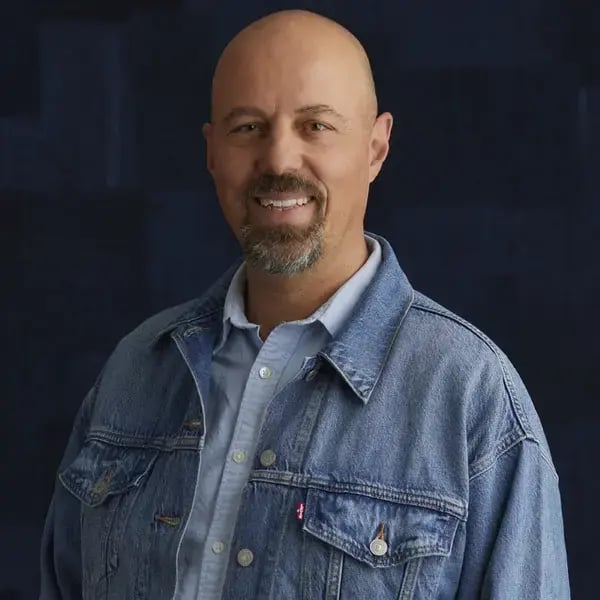
Chris Callieri stepped into the CSCO role at Levi Strauss & Co. at a moment when denim brands are redefining their operating models. With experience across Victoria’s Secret, Tory Burch, and Adidas, he brings a broad view of apparel categories and sourcing strategies. At Levi’s, he oversees product development, sourcing, logistics, and sustainability under one integrated vision.
His leadership emphasizes agility and direct-to-consumer readiness. Callieri has consistently pushed for systems that shorten decision cycles while improving visibility across suppliers and distribution partners. Sustainability also features prominently in his work, not as a separate initiative but as part of how supply networks are designed and governed.
Kristin Orlando Monteleone, VP and Head of Product and Supply Planning, Ralph Lauren
A steady hand in long-range planning and inventory discipline across one of fashion’s most complex lifestyle portfolios.

Kristin Monteleone has spent over two decades shaping supply planning for one of fashion’s most recognizable lifestyle brands. At Ralph Lauren, she leads product and supply planning across a diverse portfolio that spans luxury, casualwear, and home categories. Her work sits at the center of inventory discipline, product lifecycle management, and long-range planning.
Known for her calm and methodical approach, she has guided multiple business transformations without disrupting brand consistency. Digital tools play a role in her strategy, but the focus remains on decision quality rather than automation for its own sake. Her team credits her with creating space for analytical rigor while keeping the business grounded in consumer demand.
Kelly Lockhart, Senior Vice President, Global Sourcing and Supply Chain, SKIMS
Imposes sourcing structure without slowing growth—scaling vendor performance, quality, and lead-time control in a high-velocity brand.

Kelly Lockhart joined SKIMS during a phase of rapid scale, where sourcing discipline mattered as much as speed. Drawing on years of experience in apparel manufacturing, she expanded the brand’s supplier network while improving cost control and lead times. Her approach combines technical understanding of materials with pragmatic supplier management.
At SKIMS, Lockhart has focused on building repeatable systems that can support growth without eroding product quality. She is particularly known for strengthening vendor accountability and creating clear performance benchmarks. Internally, she is viewed as a leader who brings structure to fast-moving environments without slowing them down.
Patricia Gabriel, Global Head of Operations and Chief Supply Chain Officer, PVH Corp.
Runs one of the industry’s most complex global networks with a clear mandate: execution that directly supports brand growth.

Patricia Gabriel leads one of the most complex fashion supply chains in the industry, supporting global brands such as Calvin Klein and Tommy Hilfiger. Her role covers the full journey from product creation to consumer delivery, spanning sourcing, manufacturing, inventory, and logistics. Her experience across Capri Holdings, Mondelez, and AB InBev gives her a strong foundation in large-scale operations.
At PVH, Gabriel is closely tied to the company’s long-term transformation agenda. She emphasizes network design, omnichannel fulfillment, and disciplined execution across regions. Her leadership style is direct and commercially focused, with a clear expectation that supply chain decisions support brand growth rather than operate in isolation.
Jung Yoon, Senior Vice President, Product and Sourcing, Michael Kors
Balances engineering precision with design integrity—protecting quality, cost, and speed in accessories and footwear sourcing.

Jung Yoon oversees product sourcing and production for Michael Kors’ accessories and footwear businesses, where technical complexity and fashion sensitivity intersect. Her remit includes sourcing strategy, product engineering, costing, and quality, all within a highly competitive luxury segment.
She is widely respected for her ability to balance cost discipline with design integrity. Yoon has also been active in industry forums, contributing to broader conversations around footwear manufacturing standards. Inside the organization, she is known for building technically strong teams that can respond quickly to market shifts without compromising craftsmanship.
Eric Kertz, Vice President, Supply Chain Planning and Analytics, Victoria’s Secret & Co.
Turns planning and analytics into operating advantage—keeping inventory, capacity, and network decisions grounded in usable data.

Eric Kertz leads planning and analytics at Victoria’s Secret, where data plays an increasingly central role in inventory and network decisions. His background includes long tenures at L Brands and Owens Corning, giving him experience across both retail and industrial supply chains.
At Victoria’s Secret, Kertz focuses on turning data into practical insight. His work supports demand forecasting, network optimization, and long-term capacity planning. He has also played a role in international expansion efforts, helping the brand enter new markets with better planning discipline and risk awareness.
Michele Sizemore, Senior Vice President, Global Product Development and Supply Chain, Gap Inc.
Connects product creation to supply execution at scale, embedding responsible sourcing as operating practice—not a side program.

Michele Sizemore’s career spans product development, sourcing, and operations across multiple Gap Inc. brands. In her current role, she connects product creation with supply chain execution while embedding sustainability into core processes. Her earlier work at Athleta and Vince reflects a consistent focus on building scalable operating models.
She is particularly known for her role in advancing responsible sourcing and supplier standards. Sizemore approaches supply chain leadership as an organizational capability, investing heavily in talent development and cross-functional alignment. Her teams describe her leadership as structured, steady, and purpose-driven.
Kristen Kravitz, Group Vice President, Supply Chain, Abercrombie & Fitch
Modernizes global transportation and trade with stronger visibility, carrier discipline, and resilience under disruption.

Kristen Kravitz oversees global transportation and trade for Abercrombie & Fitch, a function that proved critical during recent supply disruptions. Her work focuses on inbound logistics, visibility, and network resilience across international sourcing lanes.
She is often credited with modernizing transportation operations through better data and stronger carrier partnerships. During periods of volatility, her teams maintained service continuity while managing cost pressure. Kravitz is also a visible advocate for developing future supply chain talent within retail organizations.
Jacy Baker, Senior Vice President, Supply Chain, J.Crew
Makes complexity actionable—translating analytics into clear priorities that lift service, cost control, and inventory performance.

Jacy Baker has grown her career within J.Crew, moving through planning and logistics roles before taking on overall supply chain leadership. Her work centers on using analytics to improve cost, service, and inventory performance across a global network.
She is known for translating complex data into clear operational priorities. Baker’s leadership emphasizes continuous improvement rather than large-scale disruption. That approach has helped stabilize supply operations while supporting the brand’s broader turnaround efforts.
David Crockett, Vice President, Supply Chain Planning, Perry Ellis International
Bridges merchant strategy and supply execution—aligning multi-brand plans to wholesale realities and margin economics.

David Crockett leads supply chain planning at Perry Ellis International, where the need for careful coordination arises from both assortment complexity and wholesale dynamics. His background at Macy’s gave him deep exposure to merchandise planning and inventory economics.
At Perry Ellis, Crockett focuses on aligning supply plans with sales strategy across multiple brands. He has managed large integration efforts and driven profitability through disciplined planning. His experience allows him to bridge merchant thinking with operational execution.
James Yein, Director of Operations Supply Chain, REVOLVE
Scales digital-native fulfillment with an engineering mindset—process design, throughput, and service performance under promotional pressure.

James Yein brings an engineering mindset to REVOLVE’s supply chain operations. His role spans logistics, warehouse operations, and continuous improvement initiatives that support a digitally native fashion business.
With experience across Amazon, Nordstrom, and industrial engineering roles, Yein emphasizes process design and data-driven decision-making. His work has helped REVOLVE scale fulfillment capacity while maintaining service levels in a highly promotional retail environment.
Coralee Lewis, Senior Director Supply Chain Services, GUESS?, Inc.
Operational continuity leader—keeps inventory and logistics execution stable while the business and markets shift.

Coralee Lewis has spent much of her career inside the GUESS? organization, building deep institutional knowledge of its supply operations. Her responsibilities cover inventory management, logistics coordination, and operational support across regions.
She is valued for her practical understanding of apparel flows and her ability to manage day-to-day complexity without losing sight of long-term objectives. Lewis has also played a role in developing internal teams and maintaining operational consistency during market shifts.
Stefano Falcone, Head of Global Supply Chain, The Row
Builds luxury-grade reliability without noise—protecting service quality and partner execution while preserving brand restraint.

Stefano Falcone leads global supply chain and customer operations for The Row, a brand known for understated luxury and precision. His role focuses on logistics, third-party partners, and service quality across international markets.
With prior experience at Burberry and Ralph Lauren, Falcone brings structured processes to a smaller, design-driven organization. He balances exclusivity with reliability, ensuring that operational decisions support the brand’s quiet positioning rather than overpower it.
Christopher Johnston, Head of Supply Chain, URBN
Drives end-to-end visibility and capacity discipline across a multi-brand omnichannel portfolio built for constant change.

Christopher Johnston oversees supply chain strategy for URBN’s portfolio of brands, including Urban Outfitters and Anthropologie. His background in procurement and logistics, including time at Caterpillar, gives him a strong foundation in structured operations.
At URBN, Johnston has focused on improving end-to-end visibility and capacity planning. His work supports omnichannel fulfillment and international expansion, with an emphasis on collaboration across brands and regions. He is known internally for combining operational discipline with a practical, execution-first mindset.
Brian O'Donnell, Chief Supply Chain and Transformation Officer, Marc Jacobs
Runs transformation with operator credibility—modernizing planning, imports, and DC performance while preserving luxury standards.

Brian O'Donnell operates at the intersection of distribution reality and transformation ambition. At Marc Jacobs, he is the person expected to modernize how the brand plans, moves, and fulfills product while protecting the feel of a luxury business. His background shows a steady pattern of taking complex networks and making them easier to run, from systems adoption to the practical work of import flows and distribution center performance.
What stands out is his comfort with scale. He has led supply chain teams inside large, multi-brand environments and brings that discipline into a fashion house that still needs agility.
Ezio Garciamendez, Chief Supply Chain Officer, Kontoor Brands
An end-to-end operator strengthening global denim networks through standardization, capability building, and repeatable execution.
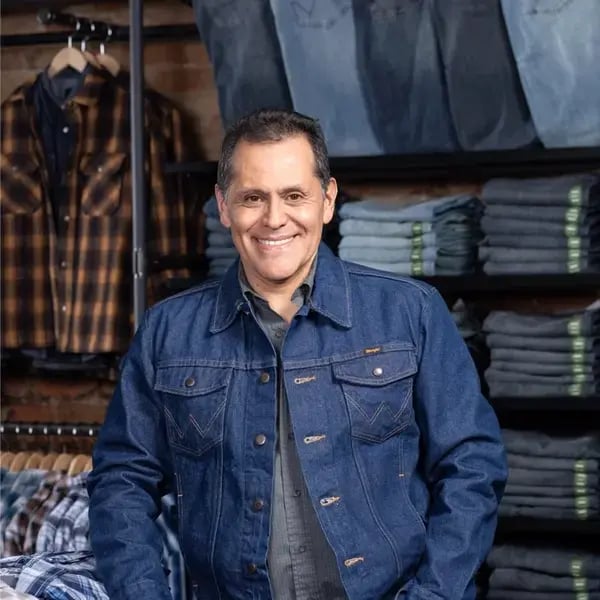
Ezio Garciamendez brings a proper end-to-end operator mindset into the denim world. Kontoor has to manage global sourcing, quality, trade, and logistics while keeping the core product moving at volume without losing consistency. His earlier experience across major CPG environments informs his approach to standardization and capability building, especially when processes are fragmented or teams operate in silos.
He tends to be brought in when the goal is not just running the machine, but making the machine smarter. That makes him especially relevant for brands like Wrangler and Lee that need reliability while the market keeps shifting.
Ted Dagnese, EVP and Chief Supply Chain Officer, Lululemon
Aligns material innovation with operational proof—scaling quality, partner performance, and reliability without compromising brand trust.
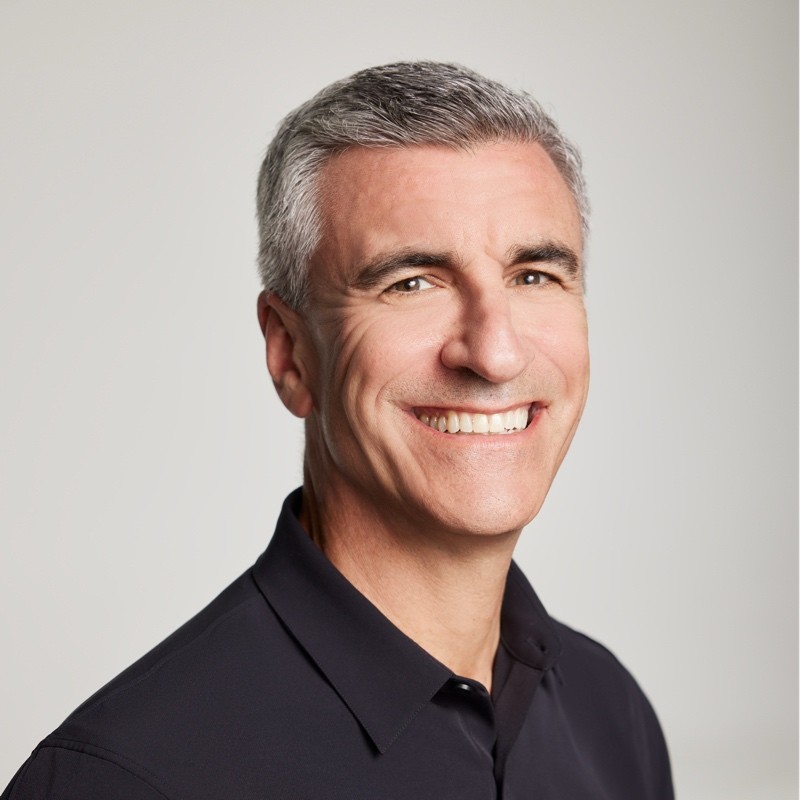
Ted Dagnese sits in one of the most visible supply chain seats in modern apparel. Lululemon has built a brand on product integrity and fast response, and the supply chain has to protect both. His work is often discussed through the lens of sustainability, but the deeper story is operational.
Material innovation only matters if it can be scaled, qualified, and delivered with predictable performance. He has spent years building partner relationships and quality discipline that support growth without sacrificing brand trust. The standout here is how he keeps long-term material bets tied to day-to-day execution.
Sarah Emily Clarke, Chief Supply Chain and Technology Officer, American Eagle Outfitters
Blends supply chain and technology leadership to rebuild operating models, visibility, and execution at retail scale.

Sarah Emily Clarke brings a rare combination of supply chain and technology leadership, precisely what a large, multi-brand retailer needs right now. At American Eagle, she is responsible for turning global sourcing and distribution into a customer-ready engine while also shaping the systems that enable visibility.
Her track record across major apparel organizations suggests she is comfortable with challenging work, such as redesigning operating models, aligning teams across regions, and making data useful for decision-making. What makes her stand out is the breadth of her remit. She is not just optimizing a process; she is rebuilding how the business runs.
Jodi Buhrman, Vice President, Supply Chain, Macy’s
Transforms fulfillment modernization into real performance—throughput, accuracy, and cycle time improvements that show up in customer outcomes.

Jodi Buhrman is working in a part of the fashion supply chain that gets less glamour and far more pressure. Department store fulfillment has to handle a huge assortment, variable demand, and high customer expectations across stores and digital channels. Her work is closely tied to facility modernization and automation, but the real value lies in how she translates technology into improved throughput, accuracy, and cycle time.
She has worked across some of the toughest retail operations environments, which shows in her focus on practical execution rather than hype. Her standout trait is making complex fulfillment networks behave more predictably.
Matthew Vierling, EVP, Global Supply Chain, Calvin Klein
Treats supply chain as part of the product—aligning sourcing, development, cost, and quality with global brand requirements.

Matthew Vierling sits at the intersection of brand identity and global sourcing reality. Calvin Klein operates across categories and channels, and the supply chain has to support both fashion storytelling and steady replenishment.
His experience across sourcing and product development functions is especially relevant because those are the levers that shape cost, lead time, and quality before a unit ever hits a warehouse. He is the kind of leader who treats the supply chain as part of the product, not a downstream function. That mindset is often what separates incremental improvement from real performance change.
Todd Soller, Chief Supply Chain Officer, Patagonia
Operationalizes sustainability through circular supply chains—repairs, lifecycle strategy, and Scope 3 grounded in execution reality.

Todd Soller leads supply chain at a company where the mission is not a poster on the wall. Patagonia’s approach to durability, repair, and circular commerce forces the supply chain to think beyond a single sale. That means planning for repairs, returns flows, and extended product life, while still running global production and distribution.
His background in transformation work shows up in how he frames operations as a system that can be redesigned, not just managed. What stands out is his ability to keep environmental commitments grounded in operational decisions, from logistics to product lifecycle programs.
Mike Firth, Senior Director, Supply Chain Planning, The North Face
Planning leader for seasonal precision—builds executable supply plans that protect margins when demand shifts.

Mike Firth’s work lives in the planning layer that most customers never see, but every brand depends on. The North Face must hit seasonal windows, manage inventory risk, and maintain steady service levels across global markets. Planning is where those pressures either get solved early or become expensive later.
His experience across VF brands gives him a practical understanding of how planning choices translate into on-time delivery and margin outcomes. The standout here is the focus on execution quality. A strong plan is only useful if it holds up when demand changes.
George Tucker, Head of Supply Chain, Quince
Builds a modern DTC backbone—delivering value, speed, and quality by designing the network as the brand scales.

George Tucker represents the modern DTC supply chain challenge. Quince competes on value and speed while promising quality that feels closer to premium. That combination forces hard choices in sourcing, lead time management, and fulfillment design.
His role is to build the backbone as the brand scales, which usually means tightening process discipline without slowing growth. What makes him stand out is the startup reality of the work. He is not inheriting a mature network; he is shaping one.
-webp.webp?width=1710&height=566&name=Snitch%20(1)-webp.webp)
Ready to Scale Your Fashion Brand’s Logistics?
Book a Demo today and see how ClickPost can help you create faster, smarter, and more sustainable supply chains—just like the leaders in US fashion industry.
Closing thought: Why these leaders inspire
Directories for the fashion supply chain are not just lists. They are a way to understand where the industry is actually headed. The best leaders are not only cutting costs or speeding up delivery. They are rebuilding how fashion moves through planning, sourcing, production, and fulfillment in a world that punishes slow decisions.
If you want a clear view of what is changing in the US fashion market, watch the people shaping the supply chain. The brands will follow.
----------------------------------------------------------------------------------
Disclaimer
This list was compiled through an independent editorial review aimed at highlighting the key leaders currently shaping the U.S. apparel and fashion supply chain. The evaluation criteria included cross-functional operational impact, innovation in network design, leadership in digital transformation, and measurable influence on logistics efficiency and product availability. This compilation is illustrative rather than exhaustive and is not intended as a formal ranking. All insights are based on publicly available data and industry analysis at the time of publication. No commercial affiliations, sponsorships, or endorsements influenced the selection of these individuals.
We conducted this review to identify the individuals who aren't just managing boxes, but are actively redesigning how fashion moves. Our team analyzed over 100 profiles across major retailers, heritage brands, and high-growth DTC startups to select 25 leaders who represent the gold standard in modern supply chain management.