.png?width=193&height=27&name=ClickPost%20Logo%20(Blue).png)
.svg)
.svg)
.svg)
.svg)
.svg)
.svg)
.svg)
.svg)
.svg)


.svg)

.svg)
.svg)
.svg)
.svg)


.svg)
.svg)
.webp?width=286&height=206&name=ROI%20Calculator%20(1).webp)
.svg)
.svg)

.svg)

.webp?width=286&height=206&name=RTO%20Playbook%20(1).webp)


In this blog
Packing Slips: Quick Summary
A packing slip is a shipment document that tells the warehouse team, recipient, and sometimes the support team exactly what is supposed to be in the box. It is not the same thing as a shipping label, invoice, bill of lading, or commercial invoice.
The shipping label moves the parcel, the packing slip explains the contents, and the invoice handles the money. Once you separate those roles, the rest of the fulfillment workflow gets much easier to understand.
Key Points: Packing Slips, Shipping Labels & Invoices — What's Different
- A packing slip lists the items included in a shipment and usually excludes pricing information.
- UPS explicitly describes a packing list as an optional document that provides details on shipment contents.
- FedEx provides formal packing list templates for customs and shipment documentation, especially in international shipping contexts.
- A shipping label is for carrier routing and scanning, while a packing slip is for verifying the shipment inside the box.
- For cross-border shipments, the commercial invoice is the primary customs document, even if a packing list is also included.
In this guide, we will break down what a packing slip is, what it usually includes, how major carriers handle related documentation, why it matters in ecommerce, and how it compares with other shipping documents used in domestic and international fulfillment.
Why Packing Slips Matter More Than They Look
Open almost any ecommerce package, and there is a good chance you will find a plain sheet of paper tucked inside. It is rarely flashy. It is often ignored. Yet that one document does a lot of quiet work. It helps confirm what was packed, gives the recipient a way to check the order, and gives support teams a reference point when something goes wrong.
A packing slip is one of the simplest documents in fulfillment, but it sits close to the center of order accuracy. Carriers and shipping platforms may generate labels, customs forms, freight paperwork, and invoices, but the packing slip has a narrower job. It shows what is in the shipment in an easy-to-verify way.
What Is a Packing Slip? Definition and Examples
A packing slip is a document included with a shipment that lists the items packed in that box. Its main purpose is to help confirm the contents of the shipment. In most ecommerce settings, it is created during the pick-pack-ship workflow and placed inside the parcel, or in a pouch attached to the outside if the shipment setup calls for that.
[Insert packing slip template image here]
A typical packing slip may look simple, but it usually pulls together data from several systems at once: order management, inventory, customer data, warehouse operations, and shipping method selection. That is why it is useful both operationally and after delivery.
What Information Usually Appears on a Packing Slip?
|
Information
|
Description
|
|
Order number
|
Unique identifier for the order
|
|
Order date
|
Date the order was placed
|
|
Recipient name and shipping address
|
Name and delivery address of the recipient
|
|
Sender or merchant name and address
|
Name and address of the seller or merchant
|
|
Itemized list of products in the shipment
|
List of products included in the shipment
|
|
SKU or internal item reference
|
Stock Keeping Unit or internal reference for each product
|
|
Quantity for each line item
|
Number of units of each product in the shipment
|
|
Product description
|
Description of each product included in the shipment
|
|
Package count if the order ships in multiple boxes
|
Total number of packages, if the shipment is divided into multiple boxes
|
|
Shipping method or service level
|
The shipping service used for the delivery
(e.g., Ground, Express)
|
|
Notes, gift message, or handling instructions where relevant
|
Special instructions, notes, or gift messages if applicable
|
Those fields align closely with the examples and definitions carriers use when discussing packing lists and related shipping documents.
The key point is not the exact layout. It is the function. A packing slip gives the receiving party a way to confirm that what was ordered is what was packed. For merchants, that same document doubles as a fulfillment checkpoint and a reference for support, returns, and claims.
How USPS, UPS, and FedEx Handle Packing Slips
USPS Packing Slip
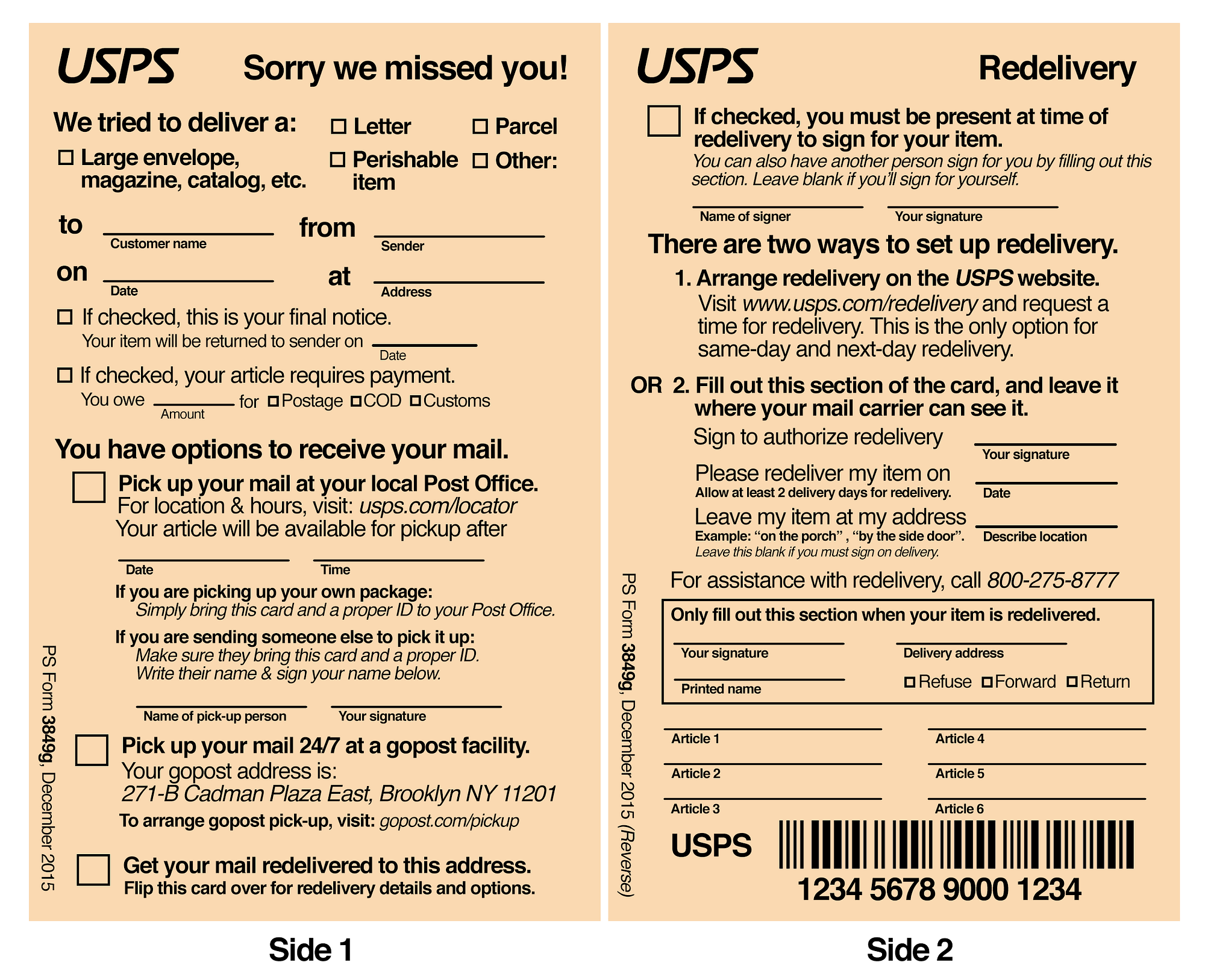
For USPS shipments, merchants commonly include their own packing slip inside the parcel, just as they would with any other carrier. USPS consumer-facing shipping tools primarily focus on labels, postage, and customs forms, rather than on publishing a standard ecommerce packing slip template for merchants.
USPS states that Click-N-Ship can be used to print shipping labels and customs forms, and its international forms guidance focuses on customs declarations and commercial documentation rather than parcel packing-slip templates.
That means a “USPS packing slip” is usually not a separate USPS-issued document in the way a USPS customs form is. In practice, it is the merchant’s own packing slip placed inside a package that travels through the Postal Service.
UPS Packing Slip
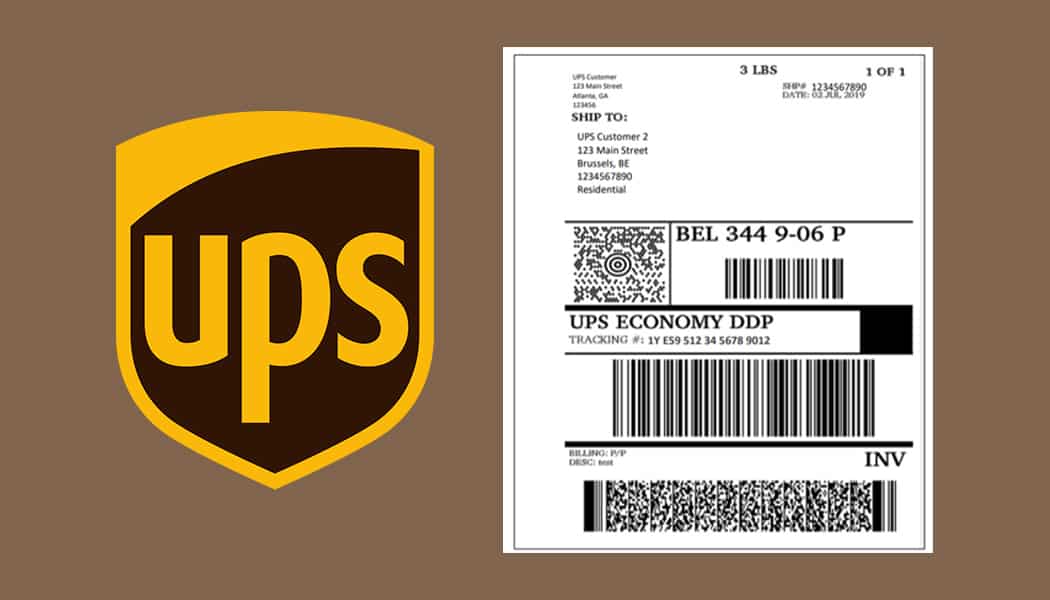
UPS is more explicit than most carriers in how it describes the packing list. UPS says a packing list is an optional document that allows shippers to provide specific details about a shipment’s contents. It also publishes a sample packing list form that includes shipment information, consignee data, purchase order details, tracking numbers, package counts, and line-item shipment details.
FedEx Packing Slip
FedEx also supports the use of formal packing lists, especially in international shipping workflows. FedEx’s shipping-document guidance directs shippers to determine which customs documents are needed, and the company publishes packing list templates that include ship date, tracking or air waybill number, invoice number, package type, exporter and consignee details, item descriptions, and gross and net weight.

Why Packing Slips Matter for eCommerce Businesses
Packing slips are basic documents, but they solve very real problems in ecommerce operations. They help warehouse teams pack the right items, help customers verify the order, and help support teams resolve disputes without guessing. That becomes more important as order volumes rise, SKU catalogs expand, and fulfillment gets distributed across multiple facilities or partners.
1. They Help Verify Order Accuracy Before the Box Ships
The most obvious value of a packing slip is also the most important. It gives the fulfillment team a final itemized checklist before sealing the package. If the pick list says one thing and the physical contents say another, the packing slip can catch that mismatch before the parcel leaves the dock.
That sounds basic, but it is where many avoidable support tickets begin. Missing units, duplicate units, incorrect colorways, incorrect sizes, or partial shipments often stem from control failures in the final packing step. A clean packing slip reduces those misses by turning the box into a verifiable record.
2. They Help Customers Confirm What Arrived
Once the shipment is delivered, the recipient can compare the contents of the box with the accompanying document. That is especially useful for multi-item orders, wholesale shipments, subscription boxes, and split shipments where not everything arrives at once.
For customer support teams, this matters because it shortens the path from complaint to resolution. Instead of starting from scratch, the brand can ask the customer to refer to the packing slip and compare it with the original order and shipment record.
3. They Make Split Shipments Easier to Manage
Split fulfillment is now common. One order may ship from different warehouses, inventory pools, or at different times due to backorders. In those cases, the packing slip helps show what is supposed to be in that specific box, not just in the order overall.
That is one reason the document remains useful even in highly digitized operations. The order confirmation email shows the entire purchase. The packing slip shows the physical truth of that one package.
4. They Support Returns and Exception Handling
Packing slips can also reduce friction in returns. If a returned item is missing context, damaged, or sent back in the wrong packaging, the original packing slip gives the receiving team a faster way to match the parcel to the original order and contents.
It is not just about convenience. It affects refund speed, restocking accuracy, claims handling, and even fraud control. The clearer the shipment documentation, the less manual investigation a returns team has to do.
5. They Can Support International Shipment Review
For cross-border shipping, the commercial invoice is the primary document customs authorities rely on to assess goods, duties, and taxes. The commercial invoice is required for all cross-border shipments except for documents with no commercial value.
USPS also centers international documentation around customs forms and, in some cases, a commercial invoice. Still, a packing list can provide a useful shipment-level breakdown of contents, quantities, and weight, as well as package-level details.
Packing Slip vs. Other Shipping Documents
A lot of shipping confusion starts because several documents overlap on the surface. They all mention shipment details. They all may include addresses or reference numbers. But they do not do the same job. Here is the cleanest way to separate them.
Packing Slip vs. Bill of Lading
A bill of lading is a legal transportation document. It is a legally binding document issued by a carrier that authorizes the movement of goods. At the same time, it serves as a receipt of freight transportation, a document of title, and a contract of transportation terms.
A packing slip is not that. It is not a title document. It is not a freight contract. It is a contents record used primarily to verify the contents of the shipment.
| Aspect | Packing Slip | Bill of Lading |
| Definition | A contents record, used to verify the shipment’s contents. | Legal transportation document, authorizing the movement of goods. |
| Legal Status | Not a legal document, just a record of contents. | Legally binding,Serves as a receipt,Document of title, and a contract. |
| Common Use | Common in parcel ecommerce. | Used for freight, LTL, FTL, and B2B transport. |
| Includes | - Itemized contents- SKU references- Quantities- Package-level notes- Recipient-facing shipment details | - Carrier details- Origin and destination- Freight terms- Shipment weight and classification- Contract and receipt details |
| Primary Purpose | Verify contents of the shipment. |
Authorization, receipt of freight, transportation contract. |
For parcel e-commerce, the packing slip is the common document. For freight, LTL, FTL, and more formal B2B transport, the bill of lading becomes much more relevant. Source: UPS, FedEx
Packing Slip vs. Delivery Note
A delivery note is usually a simpler receiving document. It confirms what was delivered, often without the deeper operational detail that appears on a packing slip. In many workflows, a delivery note functions more like a handoff summary than a warehouse verification document.
The packing slip is often created earlier in the fulfillment process and is more item-specific. The delivery note is more delivery-oriented and may be lighter on internal references.
Packing Slip vs. Shipping Label
A shipping label is on the outside of the package and tells the carrier where to move it. Every package needs a label, and its bill of lading guidance for freight also describes transport paperwork as part of carrier handling and shipment movement.
USPS and UPS both center their self-service shipping tools around creating and printing labels.
A packing slip does not replace a shipping label. It usually stays inside the package and explains what is inside. The label moves the box through the network. The packing slip helps humans verify the contents.
Packing Slip vs. Commercial Invoice
The commercial invoice is required for all cross-border shipments except documents with no commercial value, and it is the primary document used by customs. USPS international guidance also points shippers toward customs forms and, for certain services and destinations, commercial invoice requirements.
A packing slip is not a substitute for that. It may describe the contents in useful detail, but the commercial invoice carries regulatory weight because it includes declared value and customs-relevant product information.
Shipping Document Comparison Table
| Feature | Packing Slip | Bill of Lading | Delivery Note | Shipping Label | Commercial Invoice |
| Primary purpose | It lists what is in the box | Legal transport contract and receipt | Confirms delivered goods | Routes and tracks shipment | Supports customs clearance and valuation |
| Main users | Merchant, warehouse, recipient | Carrier, shipper, consignee | Recipient, merchant | Carrier, merchant | Merchant, buyer, customs |
| Includes itemized contents | Yes | Sometimes | Usually basic | Rarely | Yes |
| Includes pricing/value | Usually no | Sometimes | Usually no | No | Yes |
| Used by the carrier for routing | No | In freight contexts | No | Yes | No |
| Used for customs | Sometimes as support | Sometimes | No | Limited carrier data only | Yes |
| Usually placed | Inside the box or pouch | With freight paperwork | With delivered goods | Outside package | Shipment document set |
That is why smart shipping operations treat documentation as a stack rather than a single page. One document confirms the contents. One moves the shipment. One clears customs. One handles freight liability. Once those roles are separated, document workflows become easier to standardize.
Editorial Note
This article was written as an editorial guide for ecommerce managers fulfillment teams, and shipping decision-makers in the US market. To keep the guidance practical, we relied on carrier documentation and shipping glossaries that explain how major carriers describe packing lists, shipping labels, bills of lading, customs forms, and commercial invoices.
Packing Slips: What to Remember
A packing slip is easy to overlook because it is not the flashiest part of shipping. Customers care more about delivery speed. Finance cares more about invoices. Carriers care more about labels and scan events.
But inside the fulfillment workflow, the packing slip still does a lot of important work. It helps connect the order in the system to the physical goods in the box. It helps prevent avoidable shipping errors. And it gives support and returns teams a cleaner trail to follow when something breaks.
Packing slips may be simple, but in a high-volume environment, well-executed documents make the entire shipping operation feel more controlled.
Packing Slip FAQ
What is a packing slip, and what does it include?
A packing slip is a shipment document that lists the items packed in a box. It usually includes the order number, recipient and sender details, item descriptions, SKU references, quantities, and shipping notes, but it typically does not include pricing.
What is the difference between a packing slip and an invoice?
A packing slip explains what is physically inside the shipment. An invoice is the financial record of the order and usually includes item prices, totals, payment details, and billing information.
Is a packing slip legally required?
Usually, no. For most domestic ecommerce shipments, it is considered best practice rather than a legal requirement. In international shipping, it may support shipment review, but the commercial invoice and customs documents are the ones that matter legally.
What is the difference between a packing slip and a shipping label?
A shipping label goes on the outside of the package and tells the carrier where to send it. A packing slip is usually placed inside the package and tells the recipient and merchant what items are supposed to be in that shipment.
What is the difference between a packing slip and a bill of lading?
A packing slip is a contents checklist. A bill of lading is a legal transportation document used more often in freight and B2B shipping. One verifies the contents of the box, while the other governs the shipment contract and transfer.
Should a packing slip include prices?
In most domestic ecommerce shipments, no. Leaving prices off the packing slip is common because the document is meant for shipment verification, not payment. For international shipping, the item value must be listed on the commercial invoice.
How do packing slips help with returns?
They give the warehouse and support team a quick way to identify what the original shipment contained. That makes it easier to match a returned item to the original order, verify missing units, and process refunds or exchanges faster.
Can a packing slip be customized?
Yes. Many merchants customize packing slips with logos, support details, gift notes, return instructions, or brand messaging. As long as the core shipment details remain clear, customization can improve the customer experience.
Do USPS, UPS, and FedEx use the same type of packing slip?
The basic purpose is the same across carriers, but the document itself is often merchant-generated. UPS and FedEx publish clearer examples and templates, while USPS tends to focus more on labels and customs forms in its public-facing documentation.
Can a packing slip replace a commercial invoice for international shipping?
No. A packing slip can support the shipment record, but the commercial invoice is the primary customs document for most cross-border shipments. Merchants should not treat the two as interchangeable.