.png?width=193&height=27&name=ClickPost%20Logo%20(Blue).png)
.svg)
.svg)
.svg)
.svg)
.svg)
.svg)
.svg)
.svg)
.svg)


.svg)
.svg)
.svg)
.svg)
.svg)


.svg)
.svg)
.webp?width=286&height=206&name=ROI%20Calculator%20(1).webp)
.svg)
.svg)

.svg)

.webp?width=286&height=206&name=RTO%20Playbook%20(1).webp)

In this blog
TL/DR summary
Back in Stock Apps for Shopify convert temporary inventory gaps into structured demand signals. The strongest tools balance customer communication with inventory accuracy, helping teams recover revenue without creating fulfillment risk.
Key takeaways
-
Push‑based alerts cut through inbox fatigue for fast restocks.
-
Preorder integration turns waitlists into cash flow.
-
Wishlist data reveals long‑tail demand patterns.
-
Inventory‑linked alerts prevent overselling.
-
The best app depends on your goal: recovery, forecasting, or retention.
A disciplined 2026 approach is to treat restock alerts as part of inventory planning, not just marketing. When demand signals and fulfillment reality remain aligned, recovery becomes repeatable rather than reactive.
Introduction
Back in Stock Apps for Shopify have quietly become one of the highest-return tools in modern commerce. When a shopper hits a sold‑out product, interest does not disappear—it pauses. The right app captures that intent, routes it through a clean notification flow, and turns inventory replenishment into predictable demand recovery rather than guesswork.
Key highlights
-
Back-in-stock alerts often convert better than standard marketing emails because intent is already proven.
-
Multi‑channel alerts matter more in 2026 as inbox fatigue continues to rise.
-
Waitlists are now an inventory signal, not just a notification list.
-
Pre‑order and restock workflows are merging into a single demand‑capture layer.
-
Apps that sync tightly with inventory updates reduce overselling and fulfillment noise.
Top Back in Stock Apps for Shopify in 2026
These tools approach restock recovery from different angles, including push notifications, email and SMS alerts, reorder logic, and wishlist‑driven demand capture. Each earns its place based on reliability, configurability, and how well it fits into a real inventory and fulfillment workflow.
|
App |
Best suited for |
Typical pricing |
|
Push‑first restock alerts with omnichannel reach |
Free; $19–$79/month |
|
|
Simple, reliable email and SMS alerts |
Free; $5–$19/month |
|
|
Restock alerts, plus wishlist and preorder |
Free; $9.90–$59.90/month |
|
|
Inventory‑driven preorder and restock workflows |
Free; from $1/month |
|
|
Monetizing demand through preorders |
Free; $10–$69/month |
|
|
Cash‑flow focused preorder management |
Free; $19.95–$59.95/month |
|
|
Wishlist‑led retention and alerts |
$4.99–$24.99/month |
|
|
Lightweight restock and preorder setup |
Free; $9–$16/month |
|
|
Fast deployment of restock alerts |
Free; $19.99–$49.99/month |
|
|
Highly customizable notification design |
Free; $5.99–$39.99/month |
1. PushOwl Back In Stock
PushOwl, powered by Brevo, approaches restock recovery through browser push notifications first, then layers in email and SMS. Instead of waiting for shoppers to check their inboxes, it reaches them directly on their devices when inventory reverts to available.
Key features
-
Automated back‑in‑stock web push alerts
-
Email and SMS alerts under the same workflow
-
Subscriber segmentation by behavior and product interest
-
Price‑drop and browse‑abandonment notifications
-
Campaign analytics tied to revenue attribution
PushOwl offers a Free plan and paid bundles starting around $19/month, scaling to $79/month for higher volumes. Its 2026 strength is reach: push notifications cut through clutter and work well for fast‑moving restocks.
2. Notify Me: Kbite
Notify Me: Kbite by CartBite focuses on simple, dependable restock alerts with strong customization. It is widely used by stores that want email and SMS notifications without heavy setup or performance impact.
Key features
-
Automated email and SMS restock alerts
-
Customizable notify‑me buttons and forms
-
Multi‑language and multi‑location support
-
Price‑drop notifications alongside restock alerts
-
Demand analytics for waitlisted products
Kbite offers a Free tier, with paid plans starting at $5/month and scaling to $19/month, plus SMS charges. For 2026, it stands out for stability and clean execution across large catalogs.
3. Notify! Back in Stock
Notify! Back in Stock blends restock alerts, wishlists, and preorder functionality into one system. It is positioned for merchants who want to capture demand before inventory arrives and keep customers engaged across longer product cycles.
Key features
-
Email, SMS, push, and WhatsApp restock alerts
-
Wishlist functionality for logged‑in and guest users
-
Low‑stock counters to trigger urgency
-
Preorder support with partial payments
-
Integrations with Shopify POS and marketing tools
Plans range from a Free tier to paid options starting around $9.90/month, scaling to $59.90/month. The 2026 appeal is its versatility: it handles restocks, preorders, and wishlists without splitting data across apps.
4. Preorder | Notify Me – Timesact
Timesact is built for merchants who want complete control over a product’s lifecycle—from coming soon to preorder to restock. It operates through tags and inventory levels, keeping logic close to Shopify’s native systems.
Key features
-
Back‑in‑stock alerts tied to inventory changes
-
Preorder and coming‑soon workflows
-
Partial payments and preorder discounts
-
Automated customer communication
-
Order tagging for fulfillment visibility
Timesact offers a Free tier and paid plans starting at $1/month, with fixed plans from $19/month depending on Shopify tier. For 2026, its strength is precision: inventory state drives customer messaging without manual work.
5. Preorder, Back In Stock – STOQ
STOQ by Artos Software is a demand‑capture platform that combines preorder sales with restock notifications. It is widely used by DTC brands that want to monetize demand even when inventory is unavailable.
Key features
-
Preorder and back‑in‑stock widgets
-
Email and SMS restock alerts
-
Partial payments and deposit options
-
Klaviyo and marketing sync
-
Discount incentives for early buyers
Pricing starts with a Free planand scales from $10/month to $69/month based on volume. STOQ’s 2026 edge is its ability to convert stockouts into revenue rather than create waiting lists.
6. WOD: PreOrder Now
WOD: PreOrder Now focuses on keeping cash flow moving during stock gaps. It replaces sold‑out buttons with preorder options and manages customer expectations through clear messaging.
Key features
-
Preorder and restock alerts in one flow
-
Mixed‑cart warnings for preorder and in‑stock items
-
Partial or full payment support
-
Automated email notifications
-
Bulk product and variant management
WOD offers a Free entry plan, with paid tiers starting around $19.95/month and scaling to $59.95/month. For 2026, it remains relevant for brands testing demand before committing to replenishment.
7. WC Wishlist & Back in Stock
WC Wishlist & Back in Stock adds an intent layer on top of restock alerts. Customers save products, receive notifications, and return when availability or pricing changes.
Key features
-
Guest and registered user wishlists
-
Back‑in‑stock and price‑drop alerts
-
Shareable wishlists
-
Customizable email templates
-
Wishlist analytics for demand planning
Plans start at $4.99/month and scale to $24.99/month. Its 2026 value lies in retention: wishlists keep products top‑of‑mind long after the first visit.
8. Doran Back in Stock | Preorder
Doran combines restock alerts, preorder campaigns, and low‑stock reporting in a lightweight package. It is popular with smaller teams that want a quick setup and clear reporting.
Key features
-
Email and SMS back‑in‑stock alerts
-
Preorder and coming‑soon campaigns
-
Low‑stock daily reports
-
Branded notifications
-
Multi‑location inventory support
Doran offers a Free tier and paid plans starting at $ 9/month. In 2026, its appeal is simplicity: it covers the essentials without over‑engineering.
9. Appikon – Back In Stock
Appikon focuses on fast deployment and reliable alerts across email and SMS. It is often chosen by stores that want restock notifications to be live in minutes, not days.
Key features
-
Automated email and SMS restock alerts
-
Custom signup forms and buttons
-
Waitlist management
-
Demand analytics and exports
-
Marketing platform integrations
Pricing includes a Free plan and paid tiers starting at $19.99/month, with a maximum of $49.99/month. For 2026, Appikon remains strong for speed‑focused teams.
10. Back in Stock Restock Alert ZA
Restock Alert ZA by Zooomy is built around customizable notifications and clean UI components. It suits merchants who want control over how alerts look and behave.
Key features
-
Email, SMS, and push restock alerts
-
Customizable widgets and templates
-
Multi‑language and location support
-
Klaviyo and Mailchimp integrations
-
Performance tracking for alerts
Plans range from a Free tier to $5.99/month, $19.99/month, and $39.99/month. Its 2026 strength is customization without heavy development effort.
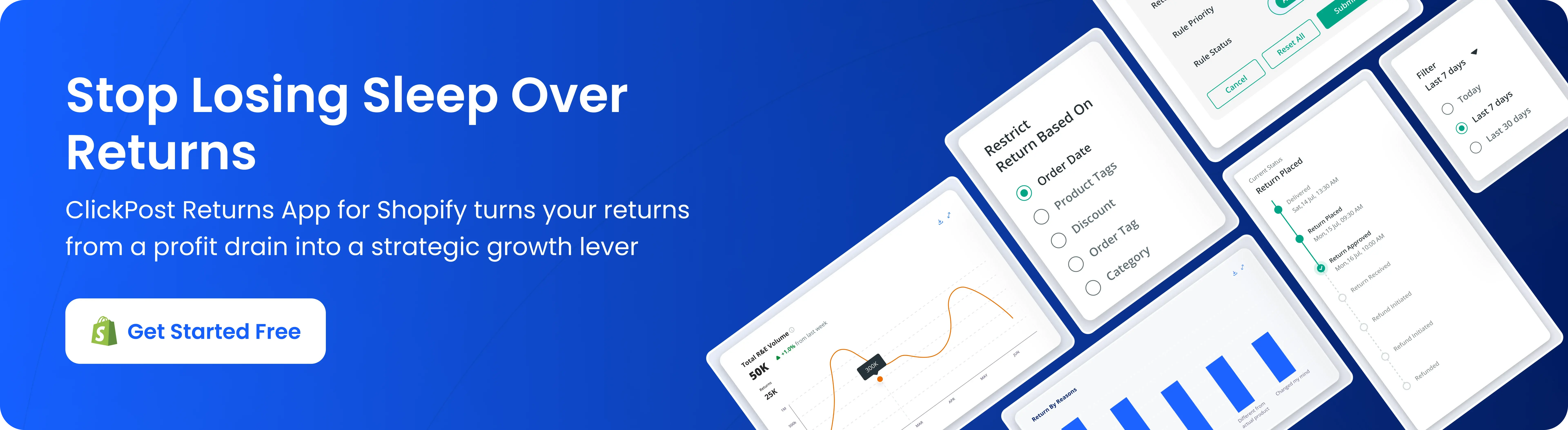
ClickPost turn returns into exchanges and repeat purchases, not losses
Automated returns & Exchanges with a self-serve portal, tracking, policies & analytics.
ClickPost Returns & Exchanges streamlines return and exchange management with automation, refunds, and a self-serve portal. Customers get real-time tracking, automated updates, and quick refunds. Merchants manage all return and exchange requests in one dashboard with customizable policies, eligibility rules, and reasons. Detailed return analytics and reporting give insights to cut costs and boost repurchases. Setup is fast, with everything ready in under 30 minutes.
-
Automated self-serve portal for easy returns, exchanges & refunds.
-
Dashboard to manage, track, and resolve return & exchange requests.
-
Process refunds to via gift cards or original payment methods.
-
Customizable return and exchange policies, rules, and eligibility.
-
Analytics & reporting with insights on return and Exchange trends.
ClickPost Returns Plus offers a free plan for up to 100 monthly returns. Paid plans start at $49/month. You can also integrate our returns management product with your ecommerce website. The total reviews on the ClickPost tool at Shopify are a testament to the ease it offers to merchants. The app support provided also makes it one of the best in the app categories for returns, exchanges, and refunds.
Closing thoughts: Restock alerts are inventory intelligence
Back‑in‑stock notifications are no longer just recovery tools. In 2026, they act as demand sensors, feeding real‑world signals into replenishment and planning decisions. The best apps do more than notify; they reduce uncertainty across the supply chain.
Managing inventory restock signals works best when paired with a streamlined returns process see how leading Shopify returns apps help recover inventory faster by automating the return-to-restock pipeline.