.png?width=193&height=27&name=ClickPost%20Logo%20(Blue).png)
.svg)
.svg)
.svg)
.svg)
.webp?width=286&height=206&name=ROI%20Calculator%20(2).webp)
.svg)
.svg)
.svg)
.svg)
.svg)
.svg)
.svg)
.svg)
.svg)
.webp?width=286&height=206&name=Frame%201171276203%20(11).webp)
.svg)
.svg)
.svg)
.svg)
.webp?width=286&height=206&name=ROI%20Calculator%20(3).webp)
.svg)

.svg)
.svg)
.svg)
.webp?width=286&height=206&name=ROI%20Calculator%20(4).webp)
10 Top Order Fulfillment Services Guide You Need Now!


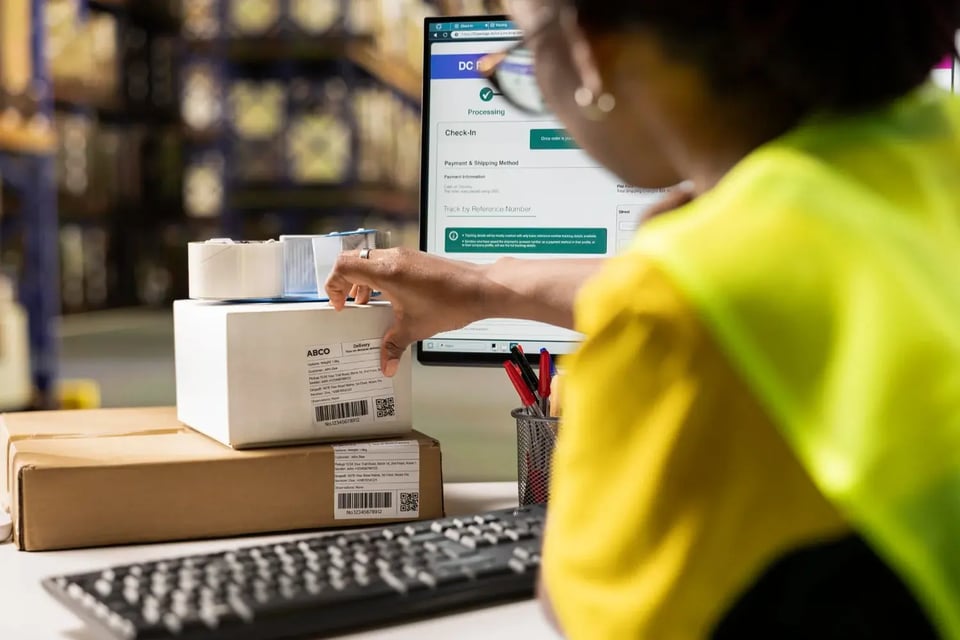
Ready to delight customers after checkout?
Trusted by 600+ brands
In this blog
Order Fulfillment Services: Quick Summary
Order fulfillment services help ecommerce brands outsource the operational side of selling online: storing inventory, picking and packing orders, shipping them to customers, and often handling returns. In 2026, the best order fulfillment services are not all built for the same kind of merchant.
Key Points: Best Fulfillment Providers by Use Case
- Order fulfillment services handle storage, picking, packing, shipping, and, in many cases, returns.
- The best provider depends on where you sell, how fast you need to ship, and whether your business is domestic, omnichannel, or international.
- FBA leads on Amazon scale and Prime access, while ShipBob, ShipMonk, and Radial are stronger fits for brand-controlled multi-channel fulfillment.
- Global players like DHL, UPS, FedEx, Easyship, and Delhivery matter more when cross-border reach or complex logistics are part of the requirements.
FBA is still the scale leader for Amazon sellers; ShipBob remains a strong independent 3PL for D2C brands; DHL and UPS stand out for global and enterprise operations; and newer partner-led models like Shopify Fulfillment Network serve merchants who want flexibility without building their own warehouse stack.
Why Choosing the Right Fulfillment Partner Matters
Order fulfillment looks simple from the outside until order volume starts rising. That is when brands realize fulfillment is not just about getting boxes out the door. It is about inventory placement, carrier speed, return workflows, channel integrations, packaging consistency, and the customer experience after checkout.
The right order fulfillment partner can help a brand scale without turning warehouse operations into a growth bottleneck. The wrong one can create slow delivery, stock errors, poor returns handling, and margin leakage.
What Is eCommerce Order Fulfillment?
eCommerce order fulfillment is the process of receiving inventory, storing it, picking the right items when an order is placed, packing those items, shipping them to the customer, and often managing returns after delivery. It is the operational layer between the online checkout page and the customer's doorstep.
When brands use a fulfillment partner, they outsource that workflow to a third-party logistics provider or platform. That partner runs the warehouse infrastructure, shipping operations, and in many cases, the returns process too. That is why fulfillment is often grouped with 3PL services, even though some providers are marketplace-native, some are carrier-backed, and some are software-led networks rather than traditional warehouse operators.
Sources: Amazon FBA | ShipMonk | Radial
How Does eCommerce Order Fulfillment Work?
The fulfillment process follows a predictable path, even though providers differ in software, warehouse networks, and service depth.
- Inventory is sent to the fulfillment provider's warehouse or network.
- The provider receives, checks, and stores the stock.
- Orders from Shopify, Amazon, marketplaces, or other sales channels flow into the provider's system.
- Warehouse teams or automation systems pick the ordered items.
- The items are packed, labeled with a shipping label, and shipped through the selected carrier or network.
- If the customer returns the order, the provider may inspect, restock, dispose of, or reroute the item — a core part of reverse logistics.
That is the general model, but execution differs sharply by provider. FBA is tightly optimized for Amazon orders. Independent 3PLs like ShipBob and ShipMonk focus more on multi-channel control. Enterprise providers like DHL, UPS, FedEx, and Radial bring deeper ecommerce logistics infrastructure, broader transport options, and stronger support for complex B2B or international workflows.
Sources: UPS eCommerce Fulfillment | Shopify Fulfillment Network | Radial Returns Management
Top 10 eCommerce Order Fulfillment Services (2026)
Not every strong fulfillment provider is strong for the same reason. Some win on scale. Some win on software. Some are better for international growth, while others are better for branded D2C shipping or retail distribution. Here are 10 order fulfillment services worth knowing in 2026.
1. Fulfillment by Amazon (FBA)
FBA remains the default choice for brands that sell heavily on Amazon and want Prime eligibility, marketplace trust, and access to Amazon's global fulfillment network. It is still the most dominant option for Amazon-native scale, though it gives merchants less control over branding and multi-channel flexibility than an independent 3PL.
Core features
-
Prime-eligible fulfillment
-
Amazon-managed picking, packing, shipping, returns, and customer service
-
Access to Amazon's global fulfillment center network
-
Strong fit for Amazon-first and marketplace-heavy sellers
Sources: Amazon FBA | Amazon Seller Central fee updates
2. ShipBob
ShipBob is still one of the strongest independent 3PL fulfillment companies for D2C and mid-market ecommerce brands. Its appeal is straightforward: multi-channel fulfillment, a broad warehouse footprint, 2-day shipping coverage in the continental US, and better brand control than marketplace-led fulfillment.
Core features
-
60+ fulfillment centers across the US, Canada, the UK, the EU, and Australia
-
2-day shipping coverage across the continental US
-
Omnichannel integrations and inventory visibility
-
Custom packaging and branded unboxing support
Sources: ShipBob 2026 fulfillment report
3. DHL Supply Chain & eCommerce
DHL is one of the clearest choices for businesses that need cross-border fulfillment, international shipping, or enterprise-grade logistics depth. Its fulfillment network spans major regions. Its position is strongest when the business is not confined to a single domestic market.
Core features
-
Global fulfillment network across Europe, the Americas, Asia, Africa, and Australia
-
Cross-border ecommerce and enterprise logistics strength
-
Scalable support for international market expansion
-
Strong fit for brands with global or regional distribution complexity
Sources: DHL Fulfillment Network | DHL Global Connectedness Report 2026 highlights
4. Easyship
Easyship is better understood as a technology-first fulfillment and shipping platform than as a classic warehouse-led 3PL. That makes it attractive for merchants that care about international shipping flexibility, landed-cost clarity, and access to a large carrier menu without stitching together separate tools.
Core features
-
Access to 550+ courier services through one platform
-
Strong duty, tax, and landed-cost tools
-
International logistics support across 220+ countries and regions
-
Useful for brands that want shipping and fulfillment orchestration more than a single-provider warehouse model
Sources: Easyship duties and taxes | Easyship checkout duties and taxes
5. FedEx Fulfillment
FedEx Fulfillment remains relevant for merchants that want warehousing and order fulfillment backed by FedEx's broader logistics infrastructure. Its positioning is more compelling for specialized or operationally complex ecommerce needs than for low-margin commodity parcel shipping.
Core features
-
Nationwide fulfillment network
-
Transportation flexibility across the broader FedEx ecosystem
-
Cloud-based intelligence and automation tools
-
Better fit for brands that want carrier-backed infrastructure and supply chain support
Sources: FedEx Supply Chain | FedEx Fulfillment expansion
6. UPS Supply Chain Solutions
UPS Supply Chain Solutions is a strong option for brands that need fulfillment tied closely to broader logistics, transportation, distribution, and B2B operations. It is less of a startup-friendly D2C tool and more of a serious logistics platform for businesses that need scale, structure, and shipping-network depth.
Core features
-
Outsourced ecommerce fulfillment with easy onboarding
-
Order and inventory management support
-
Broader logistics and distribution capabilities beyond parcel shipping
-
Strong fit for high-volume, B2B, and operationally complex fulfillment models
Sources: UPS Supply Chain Solutions
7. Shopify Fulfillment Network
Shopify Fulfillment Network has evolved into a partner-led model that connects merchants to vetted logistics providers rather than operating as a single closed fulfillment system. That makes it useful for Shopify merchants who want to stay inside the Shopify ecosystem while comparing capabilities across fulfillment partners.
Core features
-
Built for Shopify-native merchants
-
Access to vetted logistics partners through Shopify
-
2- and 3-day delivery support in eligible markets
-
Competitive rates on storage, prep, delivery, and returns through the partner network.
Sources: Shopify Fulfillment Network | Shopify Fulfillment Network app
8. Delhivery
Delhivery is the standout name on this list for merchants looking at India-focused fulfillment. It offers large domestic reach and growing international capabilities. It is not a US-first fulfillment company, but it matters to brands sourcing from or selling into India that need integrated parcel, warehousing, freight, and fulfillment capabilities.
Core features
-
Pan-India warehousing and fulfillment network
-
Integrated parcel, supply chain, freight, and cross-border services
-
Strong fit for India-focused and India-linked ecommerce operations
-
Useful for brands expanding into the Indian market or building regional supply chains. For pricing details, see our Delhivery carrier integration page.
Sources: Delhivery warehousing and fulfillment | Delhivery annual report FY25
9. ShipMonk
ShipMonk remains one of the most recognizable mid-market 3PLs for smaller and growing ecommerce brands. Its strongest angles are flexibility, software visibility, subscription-box support, and crowdfunding fulfillment. This makes it attractive to merchants with specialized packaging or launch-driven order patterns.
Core features
-
Ecommerce fulfillment and 3PL services for growing brands
-
Strong software layer for order, inventory, and warehouse visibility
-
Specialized support for crowdfunding and subscription-box fulfillment
-
Good fit for SMB and mid-market merchants that need flexibility
Sources: ShipMonk | ShipMonk crowdfunding fulfillment
10. Radial
Radial is built more for serious omnichannel retail operations than for lightweight startup fulfillment. It offers ecommerce fulfillment, B2B distribution, returns management, and scalable onboarding paths for larger brands that need channel breadth and process rigor.
Core features
-
Omnichannel ecommerce fulfillment
-
B2B distribution capabilities
-
Established returns-management infrastructure
-
Better fit for larger retailers and brands with complex channel needs
Sources: Radial | Radial returns management
Editorial Note and Methodology
This list was curated for US-based ecommerce readers, comparing order fulfillment services in 2026. No provider paid for inclusion. Rankings reflect independent assessment based on market relevance, network scope, channel fit, international capability, and returns infrastructure.
How to Choose the Right Fulfillment Partner?
Start with your order volume, average shipping zones, sales channels, returns profile, and growth plans. Then compare warehouse footprint, software integrations, pricing transparency, international capability, and support quality.
For businesses managing fulfillment across multiple providers or carriers, a multi-carrier shipping platform like ClickPost helps standardize package tracking, delivery management, and branded tracking pages regardless of which fulfillment partner or carrier is handling the shipment. Setting accurate estimated delivery dates at checkout — factoring in fulfillment processing time alongside carrier transit — is where the biggest customer experience gains happen.
Order Fulfillment Services: What to Remember
There is no single best order fulfillment service for every merchant. FBA is still hard to beat for Amazon-led scale. ShipBob and ShipMonk are easier fits for many D2C brands. DHL, UPS, and FedEx matter more when the operation gets more global or more complex. Shopify Fulfillment Network is useful for merchants who want partner choice without leaving the Shopify ecosystem.
The smarter move is to choose based on your actual order profile, channels, return patterns, and growth plans. A fulfillment partner should make shipping simpler, not make operations harder to explain six months later.
Order Fulfillment FAQ
What is an order fulfillment service, and how does it work?
An order fulfillment service stores a merchant's inventory, then picks, packs, and ships orders after customers buy. Many providers also handle returns, meaning the brand outsources most of the physical order-to-delivery workflow rather than running its own warehouse operation.
What are the best order fulfillment services?
Some of the strongest names are FBA, ShipBob, DHL Supply Chain & eCommerce, Easyship, FedEx Fulfillment, UPS Supply Chain Solutions, Shopify Fulfillment Network, Delhivery, ShipMonk, and Radial. The best choice depends on whether the business is Amazon-led, D2C, omnichannel, enterprise, or international.
When should an ecommerce business switch from in-house fulfillment to a 3PL?
When order volume creates errors, limits shipping speed, or consumes too many hours per week. For businesses evaluating this transition, understanding ecommerce fulfillment best practices helps benchmark readiness.
What is the difference between FBA and a third-party fulfillment service?
FBA is deeply tied to Amazon's ecosystem and is strongest for Prime-eligible Amazon orders. A third-party fulfillment service usually gives the merchant more control over branding, packaging, channel flexibility, and multi-platform operations.
How do I choose the right order fulfillment service for my business?
Start with your order volume, average shipping zones, sales channels, returns profile, and growth plans. Then compare warehouse footprint, software integrations, pricing transparency, international capability, and support quality before making the decision.
What does order fulfillment cost in 2026?
Most pricing is modular — receiving, storage, pick-and-pack, shipping, and special services are billed separately. Total cost depends on SKU mix, package complexity, and shipping cost by distance.
Which order fulfillment service is best for international shipping?
For international shipping, DHL Supply Chain & eCommerce, Easyship, UPS Supply Chain Solutions, and in some cases, FBA are among the strongest options. The right pick depends on whether the business needs a global warehouse presence, flexible shipping software, or marketplace-linked fulfillment.
Can a fulfillment service handle returns?
Many can. Depth varies — some only process and restock, while others offer broader reverse logistics workflows including inspection, exchanges, and disposition rules.
Related reading: Fulfillment Companies Guide | 3PL Fulfillment Companies | Ecommerce Shipping Software | Shipping for Small Business




We use cookies to keep the site working, understand usage, and improve your experience. Learn more
Always active for essential site performance and security.
Enables anonymous usage analysis to refine our services.
Used to present relevant promotions and advertising.