.png?width=193&height=27&name=ClickPost%20Logo%20(Blue).png)
.svg)
.svg)
.svg)
.svg)
.svg)
.svg)
.svg)
.svg)
.svg)


.svg)
.svg)
.svg)
.svg)
.svg)


.svg)
.svg)
.webp?width=286&height=206&name=ROI%20Calculator%20(1).webp)
.svg)
.svg)

.svg)

.webp?width=286&height=206&name=RTO%20Playbook%20(1).webp)


In this blog
TL/DR summary
In 2026, Google Shopping success starts with feed discipline. Merchants who treat their feed like an operational system, not a one-time setup, tend to see cleaner approvals, better relevance, and more stable campaign learning. The apps in this list cover a wide range of store sizes and selling models, but each supports the same core outcome: accurate listings that match what shoppers expect from click to delivery.
Key takeaways
-
A high-quality product feed reduces disapprovals and improves the speed of campaign learning.
-
Multi-feed setups are critical for international sales because each market has different languages, currencies, and availability requirements.
-
Feed rules and custom labels make it easier to align catalog and bidding strategies.
-
Reliable syncing prevents inventory mismatches that can hurt shopper trust and operational efficiency.
-
Strong diagnostics reduce time spent troubleshooting Merchant Center issues and keep your listings stable.
The right choice in 2026 is the app that matches your operational reality. Pick the one that gives you the right level of control, keeps your data clean, and supports your growth plan without creating new work every time your catalog changes.
Introduction
Google Shopping is not just another channel in 2026. It is where product discovery, price comparison, and intent-led buying collide in one scroll. The difference between a campaign that drives sales and one that burns budget often comes down to feed quality, data freshness, and how quickly you can resolve disapprovals without disrupting your store operations.
The best Google Shopping Apps for Shopify help merchants turn Shopify catalog data into Merchant Center-ready listings, keep inventory and pricing consistent, and give teams enough control to run smarter campaigns without living inside spreadsheets.
Key highlights
-
A clean product feed reduces disapprovals and accelerates ad learning, especially as you scale SKUs.
-
Automation matters because price changes, inventory swings, and variant updates are constant in modern catalogs.
-
Multi-market selling is easier when an app supports Shopify Markets, multi-currency, and multi-language output.
-
Feed rules and custom labels are practical levers for campaign structure, bidding tiers, and seasonal planning.
-
Conversion tracking and diagnostics are no longer optional if you want profitable Performance Max growth.
Top Best Google Shopping Apps for Shopify in 2026
In 2026, the strongest feed apps do three things well: they map your catalog correctly, they refresh data reliably, and they give you tools to troubleshoot Merchant Center issues without guesswork. Below are the best options merchants are watching closely, each with a clear fit based on catalog size, international reach, and the level of hands-on feed optimization you want.
|
App Name |
What It Does Well |
Starting Price |
|
It focuses on structured feed publishing with strong filtering and custom labels for campaign segmentation. |
From about $20/month |
|
|
It delivers easy feed creation, bulk edits, localization support, and clear visibility into Merchant Center issues. |
Free plan available; paid from about $9.90/month |
|
|
It supports multiple feeds across regions or channels, with robust rule control and alignment with Shopify Markets. |
Free tier; paid from about $5.95/month |
|
|
It offers reliable syncing, diagnostics, and multi-channel feed options that work well for growing catalogs. |
From about $4.99/month |
|
|
It emphasizes feed quality and optimization support, especially for merchants selling across multiple markets. |
Free to install; paid tiers typically from about $39.99/month |
|
|
It provides stable feed operations, mapping controls, and multi-market support for merchants who need consistency. |
Free tier; paid from about $8.99/month |
|
|
It helps merchants launch Google feeds quickly while still offering basic filtering and bulk edits. |
Free plan available; paid upgrades vary |
|
|
It supports international feeds and variant handling, ensuring listings remain consistent across regions. |
Free plan available; paid upgrades vary |
|
|
It combines fast syncing, rule-based edits, and multi-currency support to help merchants scale their catalogs. |
Free tier; paid from about $6.99/month |
|
|
It fits merchants who want a stable feed and campaign-oriented controls to scale Shopping performance. |
From about $4.99/month |
1. Google Shopping Shopping Feeder
Google Shopping: ShoppingFeeder is built for merchants who want a structured way to publish and maintain product listings across Google Shopping without manual feed maintenance. It focuses on building compliant fields, keeping product availability accurate, and offering rule-based tweaks for titles, categories, and identifiers.
Key features
-
The app syncs product data from Shopify to Google Merchant Center on a schedule, keeping listings aligned with storefront changes.
-
It supports attribute mapping so that you can send the correct values for identifiers such as GTIN and brand without cumbersome workarounds.
-
It lets you filter products by collection, tag, or inventory logic to control what appears in Shopping campaigns.
-
It provides feed health indicators that help you spot missing fields before Google flags them.
Pricing commonly starts around $20 per month, with trial options depending on the tier. In 2026, its standout appeal is that it behaves like a practical feed operations layer: steady syncing, clean field control, and the kind of filters that reduce feed clutter when your catalog gets noisy.
2. FeedHub: Google Shopping Feed
FeedHub: Google Shopping Feed is designed for merchants who want a straightforward feed builder with modern Shopify compatibility and fast iteration. It helps generate a structured feed, supports scaling variants, and makes it easier to adjust core attributes without rewriting product pages.
Key features
-
The app generates Google-ready feeds and keeps them up to date, so price and inventory changes do not create mismatched listings.
-
It supports bulk edits for titles, descriptions, and category mapping so you can improve relevance without touching every product.
-
It highlights Merchant Center issues in a way that guides fixes, reducing back-and-forth with disapproval warnings.
-
It provides product-level filtering rules so your feed matches your campaign strategy, not your full catalog by default.
Plans often include a free tier for smaller catalogs, with paid tiers typically starting around $9.90 per month. In 2026, the standout is its balance of simplicity and scale: it stays beginner-friendly while still giving enough mapping and filtering depth for performance-driven campaigns.
3. Multifeed Google Shopping Feed
Multifeed Google Shopping Feed is built for merchants who need multiple feeds, whether across different countries, storefront languages, or ad accounts. It is especially relevant when you run separate campaign structures by region, or when your product data needs localized titles, pricing, and availability rules.
Key features
-
The app supports multiple feeds, allowing you to publish different product sets for regions, channels, or business units.
-
It supports expression-based rules, allowing you to adjust attributes dynamically, which helps at scale.
-
It supports multiple feed formats, which is useful when you also submit data to additional marketplaces.
-
It offers scheduling controls that allow high-change catalogs to refresh more frequently without manual pushes.
Pricing typically starts at $5.95 per month after a free tier, with higher tiers available for larger catalogs and more feeds. In 2026, its standout appeal is control: it is one of the cleaner paths to running a multi-market feed strategy without maintaining separate product databases.
4. Simprosys Google Shopping Feed
Simprosys Google Shopping Feed is one of the most widely used Shopify feed tools for merchants seeking broad channel coverage and robust diagnostics. It focuses on securing product approvals, keeping listings up to date through robust sync options, and providing practical feed-optimization rules.
Key features
-
The app supports feed submission and synchronization with Google Merchant Center, with options to reduce stale inventory and pricing mismatches.
-
It includes rule-based optimization to refine titles, fix category mappings, and control attribute output at scale.
-
It supports multiple countries and language feeds so international stores can keep listings aligned with regional storefront settings.
-
It helps identify and resolve common Merchant Center errors before they become persistent disapprovals.
Pricing typically starts at $4.99 per month, depending on the number of products, with trials available. In 2026, its standout appeal is reliability at scale: it is strong when you want broad coverage, proven syncing, and a clear path from error to fix.
5. Nabu for Google Shopping Feed
Nabu for Google Shopping Feed is positioned for merchants who want feed compliance plus more competent optimization guidance built into the workflow. It focuses on improving data quality, helping resolve Merchant Center issues faster, and supporting multi-market setups where product data must be consistent across regions.
Key features
-
The app syncs product data to Google Merchant Center, reducing manual updates for large catalogs.
-
It supports multilingual and multicurrency selling, making it easier to maintain international feeds without creating duplicate products.
-
It provides structured optimization tools to improve Shopping relevance titles and attributes.
-
It supports bulk editing and import/export flows, enabling teams to fix data at scale quickly.
Plans often start with a free-to-install model and then scale into paid tiers at $39.99 per month or higher, based on usage. In 2026, the standout is its optimization-first posture: it is built for merchants who want fewer compliance headaches and more consistent feed quality across markets.
6. FeedNexa Google Shopping Feed
FeedNexa Google Shopping Feed is designed for merchants who need multi-channel feed output with strong mapping and rule control, especially when listings must remain clean across frequent catalog changes. It focuses on building correct attributes, keeping sync schedules predictable, and supporting teams that want fewer Merchant Center surprises.
Key features
-
It supports advanced mapping rules, ensuring attributes such as shipping settings and product identifiers are populated correctly.
-
It offers multi-currency and multi-language feed options for cross-border storefronts.
-
It provides bulk editing tools so you can correct missing fields without editing products individually.
-
It supports multiple feeds for parallel platforms, helping unify catalog distribution from a single setup.
Many stores start on a free tier, with paid tiers commonly beginning around $8.99 per month and scaling by catalog size. In 2026, the standout is steadiness: it is built around predictable feed operations and clear mapping for merchants who cannot afford listing interruptions.
7. SPD: Google Shopping Feed
SPD: Google Shopping Feed is designed for merchants seeking a lightweight, practical solution to generate and maintain Google Shopping feeds with minimal setup. It prioritizes core feed creation, easy filtering, and quick edits when errors appear.
Key features
-
The app generates a Google Shopping feed that stays updated as your Shopify catalog changes.
-
It supports bulk edits, allowing you to adjust key attributes such as categories and titles across multiple products.
-
It helps highlight common listing issues so merchants can correct errors before they impact visibility.
-
It supports structured attributes that reduce mismatches for variants and availability.
Many merchants begin on a free plan, with paid upgrades depending on catalog complexity and required features. In 2026, the standout appeal is speed-to-launch: it helps merchants get compliant listings live quickly while still leaving room for optimization.
8. Casa Google Shopping Feed
Casa Google Shopping Feed is built for merchants who want international feed flexibility, especially around region-specific listings and variant handling. It focuses on creating stable feeds that work across markets, while giving merchants enough rule control to avoid mismatched attributes.
Key features
-
The app supports multi-market feeds, allowing you to publish region-specific data without maintaining multiple catalogs.
-
It handles variant-rich products so that size, color, and availability remain consistent across Google listings.
-
It supports rule-based edits for category mapping and attribute adjustments when Google requirements change.
-
It automates feed updates, preventing seasonal inventory swings from creating outdated listings.
A free plan is often available, with paid options depending on feature depth and scale. In 2026, Casa stands out for merchants who need multi-region feed control without turning their catalog into a duplication nightmare.
9. Wixpa Google Shopping Feed
Wixpa Google Shopping Feed is built for merchants who want practical feed rules, multi-market support, and scalable control as catalogs grow. It focuses on clean submission to the Merchant Center, fast syncing, and bulk adjustments that keep listings accurate.
Key features
-
The app supports real-time syncing, so inventory and pricing changes reflect in Google with minimal delay.
-
It provides bulk editing and rule logic to help merchants improve listing quality at scale.
-
It supports multilingual and multicurrency feeds, ensuring international traffic sees accurate, localized listings.
-
It supports optional local inventory workflows for stores that need local store visibility and pickup alignment.
Wixpa often offers a free tier for very small catalogs, with paid plans typically starting at $6.99 per month and scaling with SKU volume. In 2026, its standout is control plus speed: you get solid rule tools without sacrificing day-to-day simplicity.
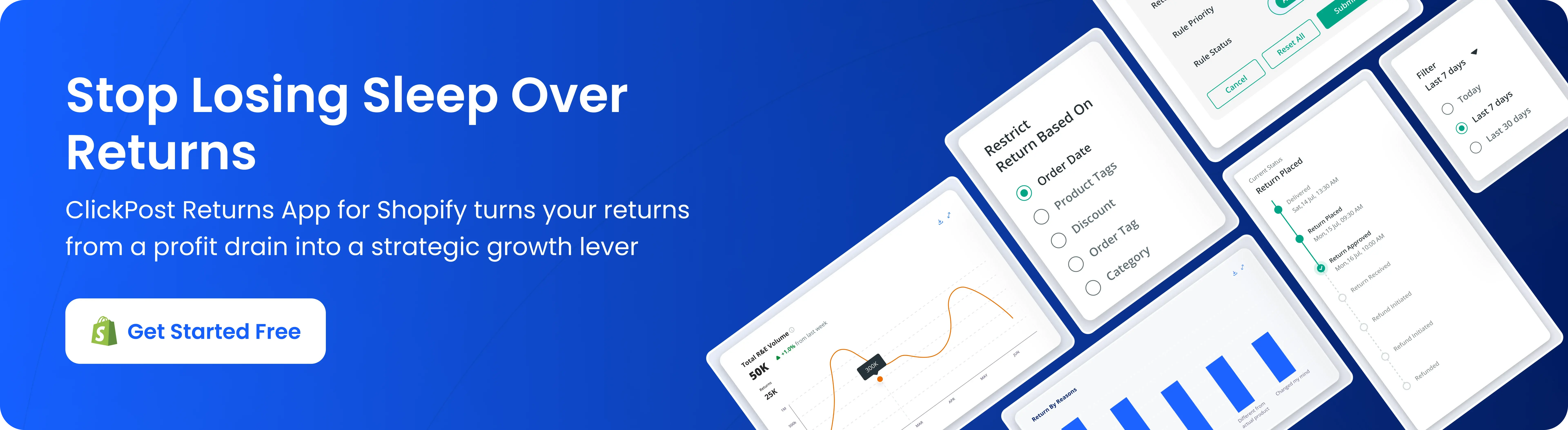
ClickPost turn returns into exchanges and repeat purchases, not losses
Automated returns & Exchanges with a self-serve portal, tracking, policies & analytics.
ClickPost Returns & Exchanges streamlines return and exchange management with automation, refunds, and a self-serve portal. Customers get real-time tracking, automated updates, and quick refunds. Merchants manage all return and exchange requests in one dashboard with customizable policies, eligibility rules, and reasons. Detailed return analytics and reporting give insights to cut costs and boost repurchases. Setup is fast, with everything ready in under 30 minutes.
-
Automated self-serve portal for easy returns, exchanges & refunds.
-
Dashboard to manage, track, and resolve return & exchange requests.
-
Process refunds to via gift cards or original payment methods.
-
Customizable return and exchange policies, rules, and eligibility.
-
Analytics & reporting with insights on return and Exchange trends.
ClickPost Returns Plus offers a free plan for up to 100 monthly returns. Paid plans start at $49/month. You can also integrate our returns management product with your ecommerce website. The total reviews on the ClickPost tool at Shopify are a testament to the ease it offers to merchants. The app support provided also makes it one of the best in the app categories for returns, exchanges, and refunds.
Conclusion: The smarter way to choose in 2026
The Best Google Shopping Apps for Shopify are not defined by how many channels they list on a feature page. They are defined by whether your listings stay approved, whether your feed reflects reality during inventory volatility, and whether your team can make changes without breaking reporting. If you run one market and a small catalog, simpler tools are often enough. If you run multiple regions, frequent promotions, or a high-variant catalog, you will benefit from multi-feed control, strict rule logic, and stronger diagnostics.