.png?width=193&height=27&name=ClickPost%20Logo%20(Blue).png)
.svg)
.svg)
.svg)
.svg)
.webp?width=286&height=206&name=ROI%20Calculator%20(2).webp)
.svg)
.svg)
.svg)
.svg)
.svg)
.svg)
.svg)
.svg)
.svg)
.webp?width=286&height=206&name=Frame%201171276203%20(11).webp)
.svg)
.svg)
.svg)
.svg)
.webp?width=286&height=206&name=ROI%20Calculator%20(3).webp)
.svg)

.svg)
.svg)
.svg)
.webp?width=286&height=206&name=ROI%20Calculator%20(4).webp)



In this blog
TL;DR – Who are the Best eCommerce Returns Management Software in 2026
This guide is for operations leaders, eCommerce heads, and customer experience teams who need to improve return speed, reduce return fraud, protect margins, and still deliver a return experience that customers trust.
- ClickPost Returns - Best for global enterprise with returns & exchange-first workflows
- AfterShip Returns – Best for fast-deploying portals with fraud controls
- ReturnGO – Best for Shopify stores pushing exchanges over refunds
- parcelLab – Best for enterprise post-purchase communication and routing
- Narvar – Best for omnichannel returns with boxless drop-off networks
- Loop Returns – Best for Shopify DTC exchange-first refund reduction
- Happy Returns – Best for labelless in-person drop-off via Return Bars
- ReverseLogix – Best for enterprise repairs, warranties, and refurbishment ops
- ReturnLogic – Best for mid-market analytics to cut avoidable returns
- Return Rabbit – Best for converting refunds via personalized recommendations
Curious about the latest trends in e-commerce returns? Download Online Returns eBooK
Key highlights
-
Online retail returns average 24.5%, which makes automation and policy control a necessity, not a nice-to-have.
-
57% of consumers will not shop at stores that do not offer free returns, so the real question becomes how to offer customer-friendly returns without losing margin.
-
71% of consumers avoid stores after a negative return experience. That is why fast resolution and clear communication matter as much as logistics cost.
-
The Returns Management Software market is projected to grow from $13.26 billion in 2025 to $26.38 billion by 2035. It reflects sustained investment in returns automation and recovery.
What Is Returns Management Software?
Return management software is a platform that helps a business manage returns as a controlled workflow rather than a set of disconnected manual tasks. It typically sits between your storefront, customer support, warehouse, and carrier network. The goal is simple. Make returns predictable, policy-driven, and measurable, while keeping the customer experience clear and fast.
A strong platform does more than create a return label. It determines eligibility, routes the return to the correct location, updates inventory correctly, and triggers the appropriate financial outcome, such as a refund, exchange, or store credit. It also captures structured data on return reasons and product condition, which is the foundation for reducing avoidable returns over time. For brands running on Shopify, pairing a robust returns management system with the best Shopify returns apps ensures a seamless, branded experience from return initiation to refund resolution.
What Are the Top 10 Returns Management Software Platforms for eCommerce in 2026?
Returns are no longer a side workflow. They are a strategic lever for revenue retention, fraud control, and customer loyalty. The right Return Management Software does not just generate labels. It enforces policy, orchestrates reverse logistics, protects margins, and gives your team structured data to reduce future returns.
Below are 10 leading platforms in 2026, evaluated on automation depth, exchange capabilities, integration flexibility, pricing transparency, and real-world operator feedback.
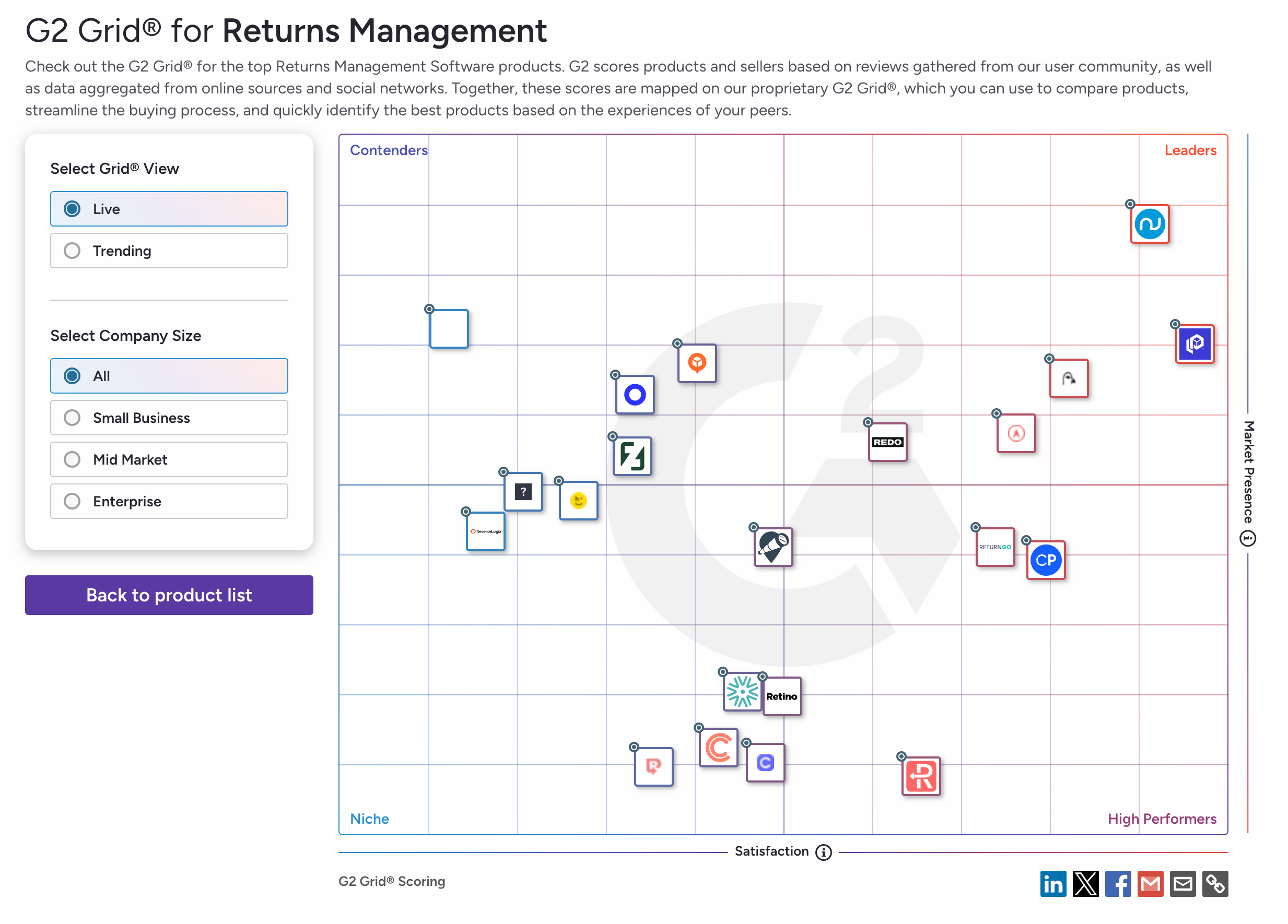
How We Built This Returns Management Software Comparison List
This list is created for operators who manage real return volumes, not for promotional placement. We evaluated the platforms on automation depth, exchange capability, integration maturity, pricing transparency, and verified customer feedback patterns.
How we built this list
-
Reviewed workflow coverage across the portal, policy engine, reverse logistics, warehouse, and financial resolution
-
Compared exchange-first logic and revenue retention capabilities
-
Assessed integration depth with storefronts, OMS, WMS, ERP, and carrier networks
-
Studied consistent review themes across G2 and returns industry directories
-
Evaluated pricing structure relative to business stage and complexit
ClickPost and all other vendors are included based on capability fit. No provider paid for placement or ranking.
| Name | Key features | Best for | Pricing | Integrations | Rating |
| ClickPost | Returns portal, exchange first, reverse pickup, rules, tracking, QC | High volume DTC, multi-warehouse, multi-carrier | Custom, as per features per month | Shopify, Magento, WooCommerce, BigCommerce, OMS WMS, 500-plus carriers | 4.8 |
| AfterShip Returns | Portal, labels, and QR flows, rules, exchanges, fraud tools, analytics | Growing ecommerce, international programs | From 9, 49, 199 dollars per month, enterprise custom | Shopify, BigCommerce, WooCommerce, Magento, SFCC | 4.7 |
| ReturnGO | Portal, AI rules, exchange incentives, returnless options, multilingual | Shopify brands, apparel, and sustainability-minded programs | From about 23 dollars per month, higher tiers around 147 and 297, enterprise custom | Shopify, Magento 2, helpdesk, and marketing tools | 4.8 |
| parcelLab | Enterprise portal, proactive comms, routing, analytics | Mid-market and enterprise retailers | Custom, often cited from enterprise annual levels | Shopify, Magento, SFCC, CRM, and WMS via API, 150-plus carriers | 4.6 |
| Narvar | Enterprise portal, drop off networks, routing, fraud signals | Enterprise retail, omnichannel returns | Custom enterprise contracts | Shopify Plus, Magento, BigCommerce, SFCC, APIs | 4.2 |
| Loop Returns | Exchange first portal, shop now, incentives, automation | Shopify DTC, apparel, and footwear | Often cited at about 155 dollars per month, higher tiers above | Shopify Plus ecosystem apps and 3PL tools | 4.7 |
| Happy Returns | Boxless drop-offs, QR intake, consolidated shipping | US programs, high return categories | Custom, subscription plus per-item fees | Shopify and partner platforms, network-based | 4.8 |
| ReverseLogix | End-to-end reverse ops, repairs, warranty, and disposition | Enterprise, manufacturers, 3PL returns ops | Custom enterprise pricing | Shopify, Magento, ERP WMS systems, and carriers | 4.4 |
| ReturnLogic | Portal, rules, incentives, analytics, warehouse intake | Growing ecommerce brands need discipline | Often cited at about 299 dollars per month, plan variants exist | Shopify, BigCommerce, Helpdesk, and 3PL connectors | 4.7 |
| Return Rabbit | Exchange first, recommendations, branded portal | Shopify brands optimizing retention | Often cited as about 250 dollars per month, higher tiers above | Shopify ecosystem, 3PL, and support tools | 4.5 |
1. ClickPost is a Returns Platform for High-Volume DTC Ecommerce Brands
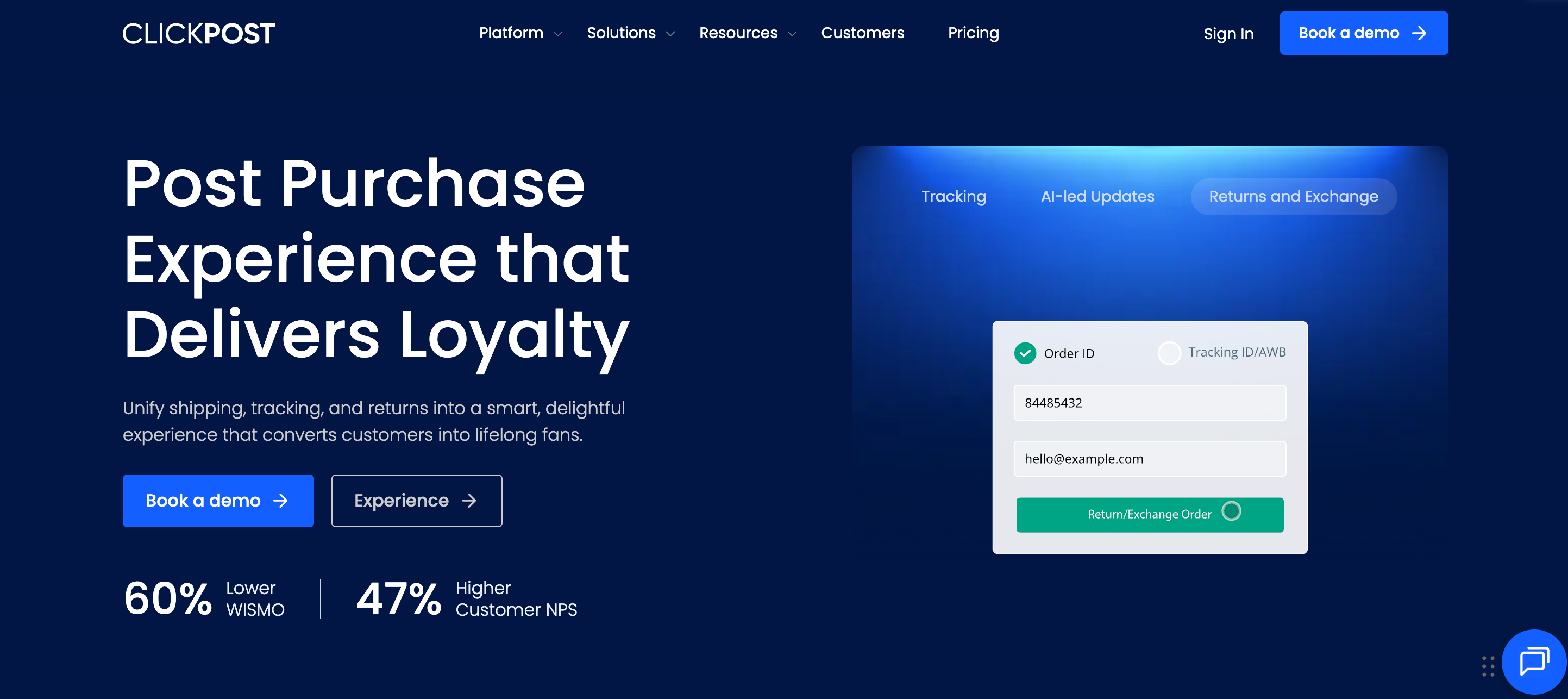
ClickPost is a post-purchase logistics platform for high-volume ecommerce brands seeking tighter control over returns & exchanges, with reverse pickups. Its returns layer is built for scale, with rule-driven approvals, exchange first flows, and reverse logistics orchestration across a large carrier network. It is strongest when you need automation plus operational visibility across multiple warehouses and courier partners.
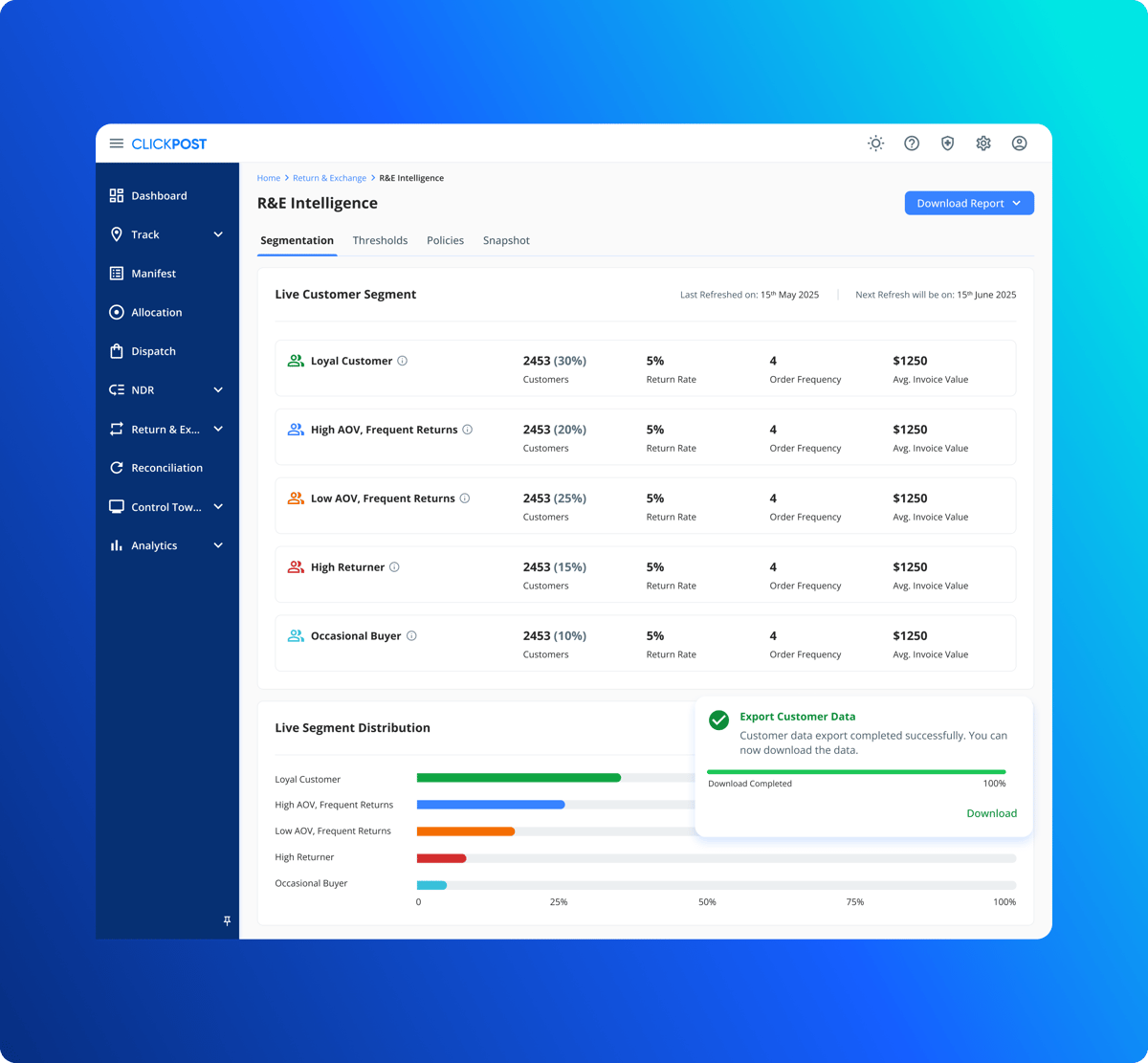
Key features
-
A branded self-service returns and exchange portal that reduces support tickets
-
Exchange first and store credit flows with automated price difference handling.
-
Rules engine for eligibility, windows, item conditions, and customer segmentation
-
Reverse pickup scheduling and label generation across a multi-carrier network
-
Return tracking and notifications to reduce "Where is my return” queries
-
Quality check support with photo uploads for pre-approval validation
Best for
-
High-volume DTC brands with frequent exchanges
-
Teams managing multiple carriers and multi-warehouse returns
-
Brands that want exchange-first outcomes and tighter policy enforcement
Integrations: Shopify, Magento, WooCommerce, BigCommerce. OMS and WMS connectors and APIs for custom stacks. The carrier network includes 500-plus carriers based on vendor disclosures and market reporting.
Pricing: Custom quote. The reported starting point is per feature for enterprise-style plans. Shopify app tiers vary by usage and plan level.
Pros
-
Strong automation for approvals, pickups, and tracking updates
- Built for high-volume operations with multi-carrier reverse logistics
-
Exchange first orientation helps retain revenue instead of defaulting to refunds
Cons
-
It can feel heavy for small brands with simple return rules
-
Implementation effort is higher when you need deep policy and system integration
2. AfterShip Returns: Best Returns Software for Growing International eCommerce Brands
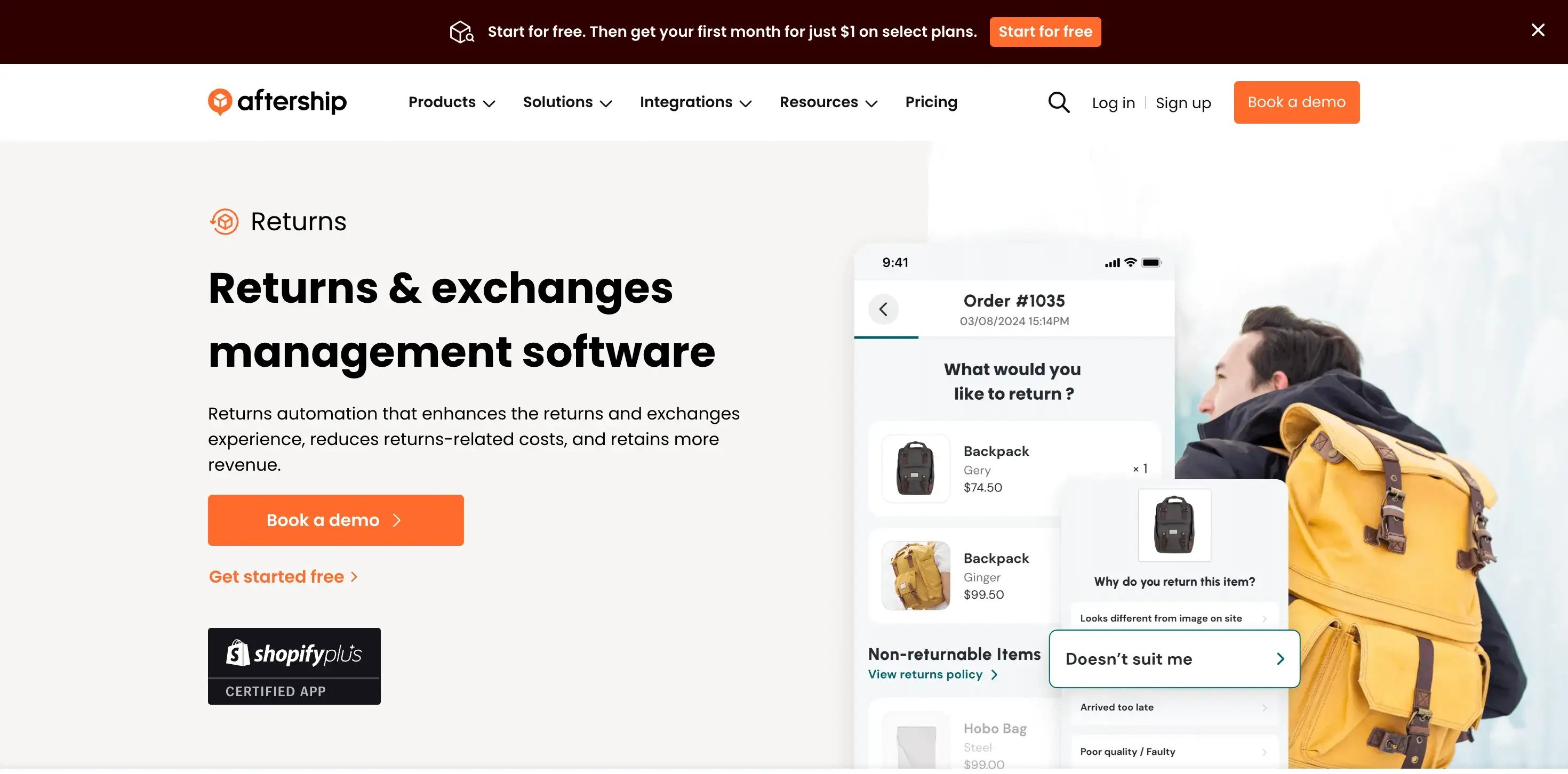
AfterShip Returns is a returns portal and workflow engine designed for ecommerce brands that want fast setup and a strong customer experience. It combines self-service returns, carrier-label options, rules-based approvals, and exchange incentives and reporting. Where it shines is standardization. You get consistent flows across countries, carriers, and channels, plus the ability to scale up to API driven enterprise setups.
Key features:
-
Branded returns portal with guided steps for shoppers
-
Automated label creation, including printless flows and QR-based options
-
Rules-based approvals, routing, and return window enforcement
-
Exchange and store credit incentives to reduce refund leakage
-
Return analytics by reason, item, region, and policy outcomes
-
Fraud controls and advanced workflows in higher plans
Best for
-
Growing ecommerce brands that want a mature returns portal quickly
-
Brands managing international returns and multilingual experiences
-
Teams that want exchange-first tooling without building custom logic
Integrations: Shopify, Shopify Plus, BigCommerce, WooCommerce, Magento, Salesforce Commerce Cloud. 3PL and tools vary by plan.
Pricing: Essentials from $9 per month. Pro from $49 per month. Premium is $199 per month. Enterprise is custom.
Pros
-
Clear pricing entry points and fast deployment for most brands
-
Strong automation for approvals, labels, and exchange workflows
-
Scales from basic portal needs to enterprise API requirements
Cons
-
Costs rise with advanced capabilities and higher volume
-
Deep customization is typically gated to higher tiers
3. ReturnGO: Best Returns Software for Shopify Apparel Brands Focused on Exchanges
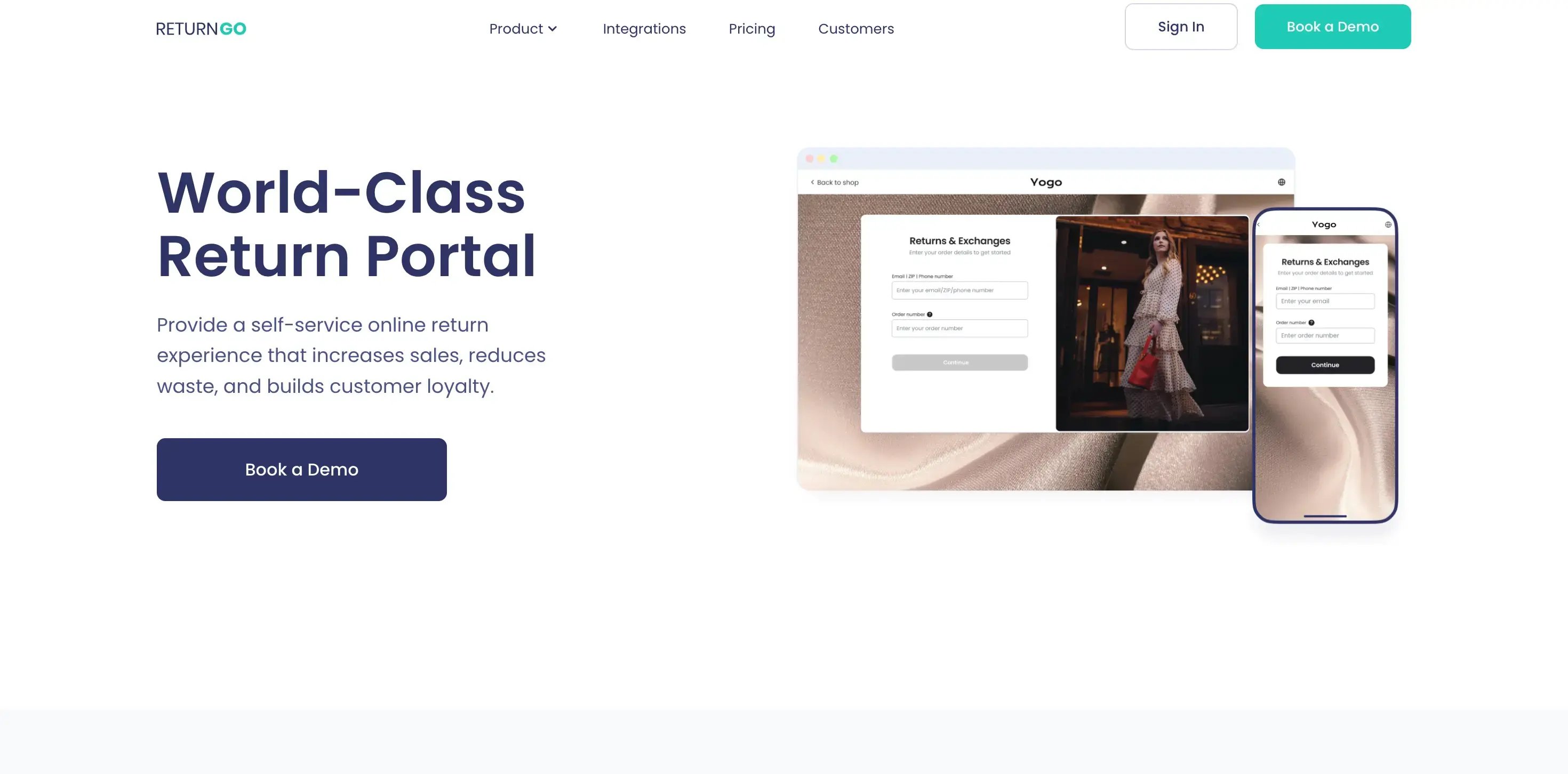
ReturnGO is built for ecommerce teams that want more than a portal. It is designed to actively steer shoppers toward exchanges, store credit, or alternative resolutions that protect margin. The platform combines a self-service return journey with condition-based rules and automation that can get very granular, especially for apparel-heavy catalogs.
Key features:
-
Branded portal with exchange first design and smart alternatives
-
Automation rules by product, reason, customer history, and order value
-
Returnless resolutions, such as keep item and donation options
-
Prepaid label creation and multi-carrier support via integrations
-
Warranty claim handling as a structured workflow
-
Multilingual and multicurrency support for cross-border returns
Best for
-
Shopify brands with high exchange potential
-
Apparel and accessories catalogs where size exchanges are common
-
Brands aiming to reduce refunds through incentives and alternatives
Integrations: Shopify, Magento 2. Helpdesk and marketing tools like Gorgias and Klaviyo are commonly supported. Carrier connections are typically via partner integrations such as EasyPost or regional carrier services, depending on the setup.
Pricing: Published tiers in market sources often start around $23 per month for low volume, with higher tiers commonly cited at $147 and $297 per month, plus overages, and enterprise custom for larger programs.
Pros
-
Exchange and store credit mechanics are strong and configurable
-
Flexible rule engine that can mirror real policy complexity
-
Returnless options can materially reduce reverse shipping costs
Cons
-
Setup can take time if you use complex rules
-
Non-Shopify ecosystems may require enterprise-style integrations
4. parcelLab Returns: Best Enterprise Returns Software for Mid-Market Retailers
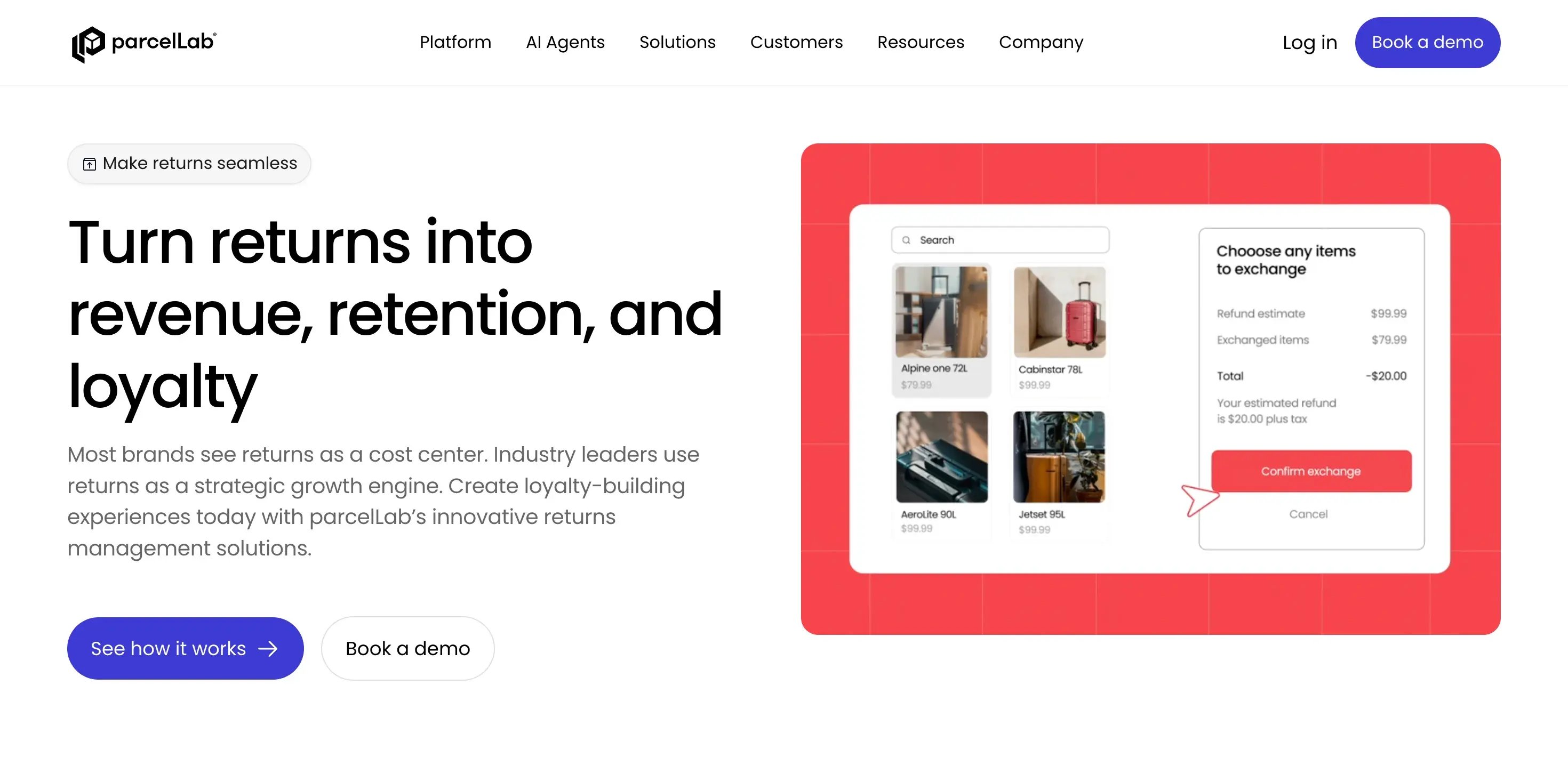
parcelLab targets mid-market and enterprise retailers that treat returns as a retention channel, not a support ticket. Its strength is owned brand experience across the entire post-purchase journey, including inbound return tracking and proactive communication. It is a better fit when you need tight control over messaging, channels, and workflows across regions, warehouses, and carriers.
Key features:
-
Branded returns portal with flexible policy configuration
-
Proactive notifications across return milestones, not just label creation
-
Multiple return methods, including drop off and pickup where supported
-
Exchange and store credit journeys with incentive controls
-
Analytics on reasons, cycle times, and exception patterns
-
Carrier integrations for inbound return tracking at scale
Best for
-
Enterprise retailers with complex returns programs across regions
-
Brands that want end-to-end post-purchase communication control
-
Teams that need deep workflow routing and reporting
Integrations: Shopify, Magento, Salesforce Commerce Cloud, plus API based connections to WMS, OMS, CRM, and 3PL tools. Carrier count varies by contract and region, often cited at around 150 or more.
Pricing: Custom quote. Market references commonly place enterprise entry levels at around 40,000 euros per year.
Pros
-
Strong enterprise-grade branding and communication control
-
Good at reducing ‘where is my return’ noise through milestone updates
-
Designed for global programs rather than single-store operations
Cons
-
Not priced or packaged for small brands
-
Implementation requires time and internal alignment across teams
5. Narvar Returns: Best Omnichannel Returns Software for Enterprise Retailers
Narvar is a long-established enterprise platform for post-purchase and returns experience. It is best known for branded journeys, network-based return drop-offs, and enterprise controls around policy and routing. Narvar is built for retailers that operate at scale and cannot afford inconsistent experiences across stores, regions, and carrier partners.
Key features:
-
Branded returns and exchange portal with enterprise controls
-
Boxless and labelless drop-off network support through partners
-
Automated eligibility checks and return routing logic
-
Exchange and store credit flows to retain revenue
-
Fraud and risk signals for return abuse prevention
-
Multi-carrier label generation and tracking
Best for
-
Mid-market and enterprise retailers with high return volume
-
Omnichannel brands that need store and online returns coordination
-
Programs that want drop-off convenience and a branded experience
Integrations: Shopify Plus, Magento, BigCommerce, Salesforce Commerce Cloud, plus APIs for custom systems. Carrier support is broad and typically cited at an enterprise scale.
Pricing: Custom quote. Narvar pricing is generally enterprise contract-based, tied to volume and modules, and often includes onboarding fees.
Pros
-
Enterprise-grade experience and operational controls
-
Strong convenience programs like boxless returns in supported networks
-
Proven at high volume across complex retailer environments
Cons
-
Limited pricing transparency and high entry cost
-
Implementation timelines can be longer than SMB tools
6. Loop Returns: Best Shopify Returns Software for Exchange-First DTC Brands
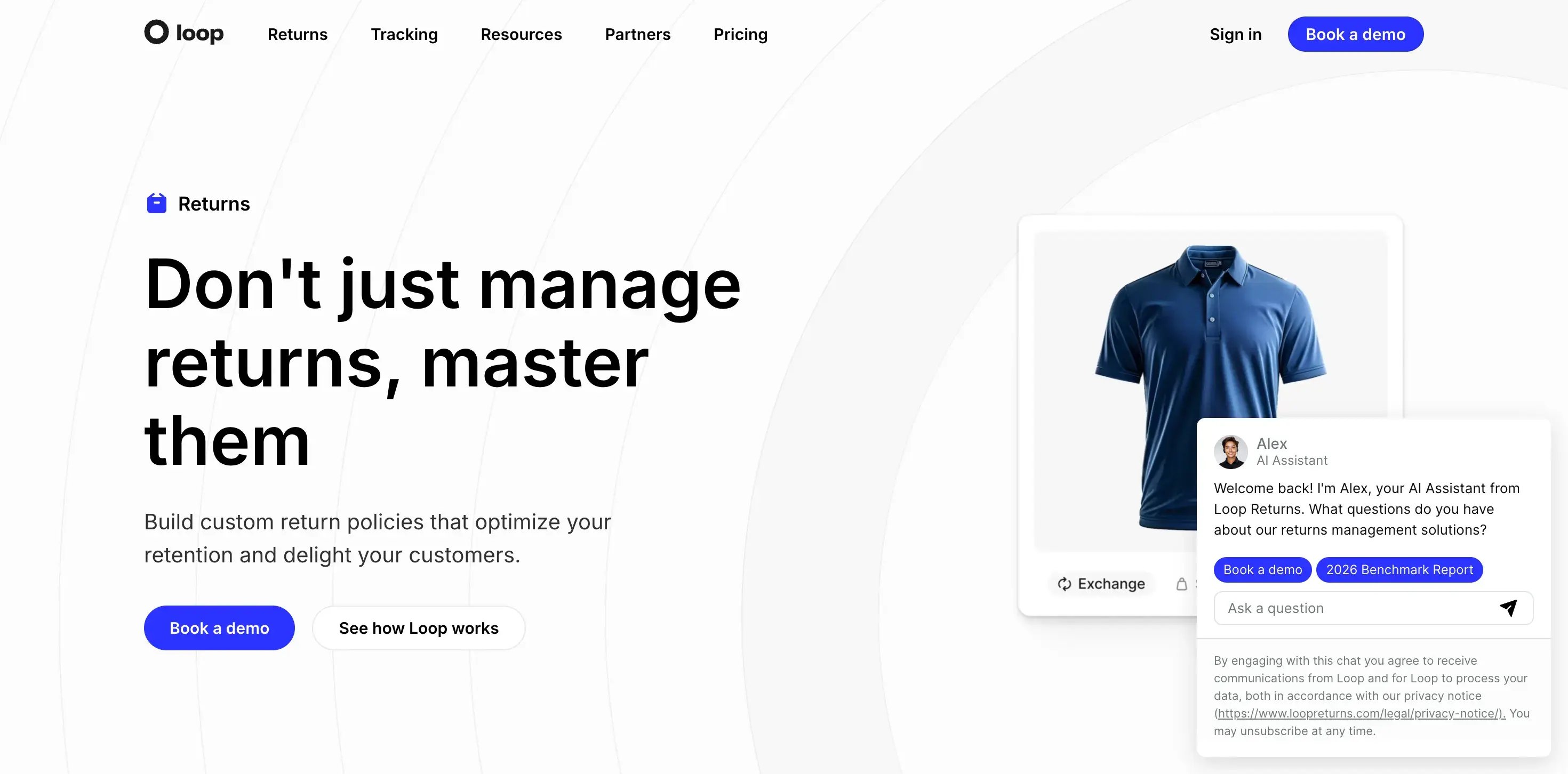
Loop is a returns platform built for Shopify brands that want a high-converting exchange journey. Its product design pushes shoppers away from refunds and toward exchanges, shop now flows, or store credit, with incentives that protect margin. Loop is especially popular in categories like apparel and footwear, where exchange intent is high.
Key features:
-
Branded self-service return portal optimized for exchanges
-
Instant exchanges and shop now flows that retain spend
-
Policy automation for Windows, final sale rules, and eligibility
-
Incentives like bonus credit to steer away from refunds
-
Returnless refunds for low-value items where appropriate
-
Analytics focused on retention outcomes and product issues
- Loop Returns does not publicly disclose pricing and follows a custom pricing approach.
Best for
- Shopify DTC brands with high exchange potential
- Apparel, footwear, and accessories teams
- Brands that want to prioritize retention over refund processing
Integrations: Deep Shopify ecosystem integrations plus common helpdesk, marketing, and 3PL tools. Carrier connectivity depends on the shipping stack and partners.
Pricing: The starting points in market sources begin around 155 dollars per month for core plans, with higher tiers in the 272 to 340 dollars per month range, and enterprise custom.
Pros
-
Exchange conversion mechanics are among the best in class
-
Smooth shopper experience with strong Shopify alignment
-
Automation reduces manual approvals and support load
Cons
-
It can be expensive for very small stores
-
Best experience is Shopify-centric
7. Happy Returns: Best Returns Software for Boxless Drop-Off Convenience in the US
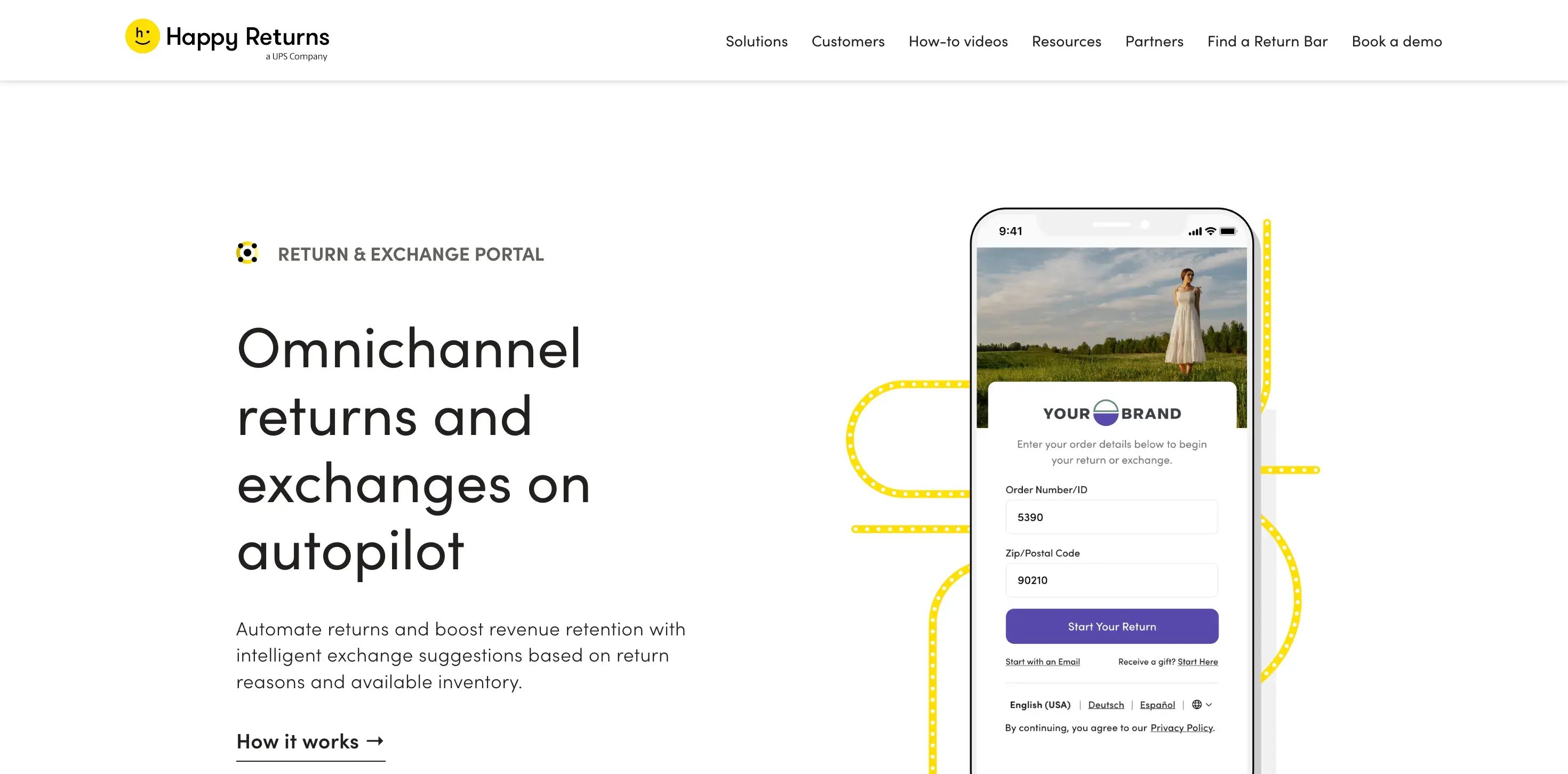
Happy Returns is a reverse logistics provider and returns platform known for its boxless, labelless in-person drop-offs. Customers receive a QR code, drop items at a Return Bar location, and refunds can be triggered more quickly. Behind the scenes, returns are consolidated and shipped in bulk, which can reduce per-unit reverse shipping costs and speed up restocking for some programs.
Key features:
-
Boxless and labelless drop-off network with QR-based intake
-
Consolidated reverse logistics that can reduce shipping costs per unit
-
Faster refund triggers tied to drop-off confirmation
-
Item verification at drop-off to reduce certain fraud patterns
-
Branded portal for initiation and status updates
-
Exchange and store credit options, depending on the integration partner
Best for
- US-focused brands that want the easiest possible customer returns
- Apparel and footwear brands with high return frequency
- Retailers that want drop-off convenience without a store footprint
Integrations: Shopify and common ecommerce platforms through apps and partners. Can integrate with other returns platforms depending on program design.
Pricing: Custom quote, typically a mix of subscription and per-item fees based on volume and services.
Pros
-
Best-in-class customer convenience for supported regions
-
Consolidation can improve reverse shipping economics at scale
-
Faster refunds can improve trust and repeat purchase behavior
Cons
-
Not equally available in all geographies
-
Total cost depends on volume, footprint, and service level
8. ReverseLogix: Best Returns Software for Complex Warranty and Repair Operations
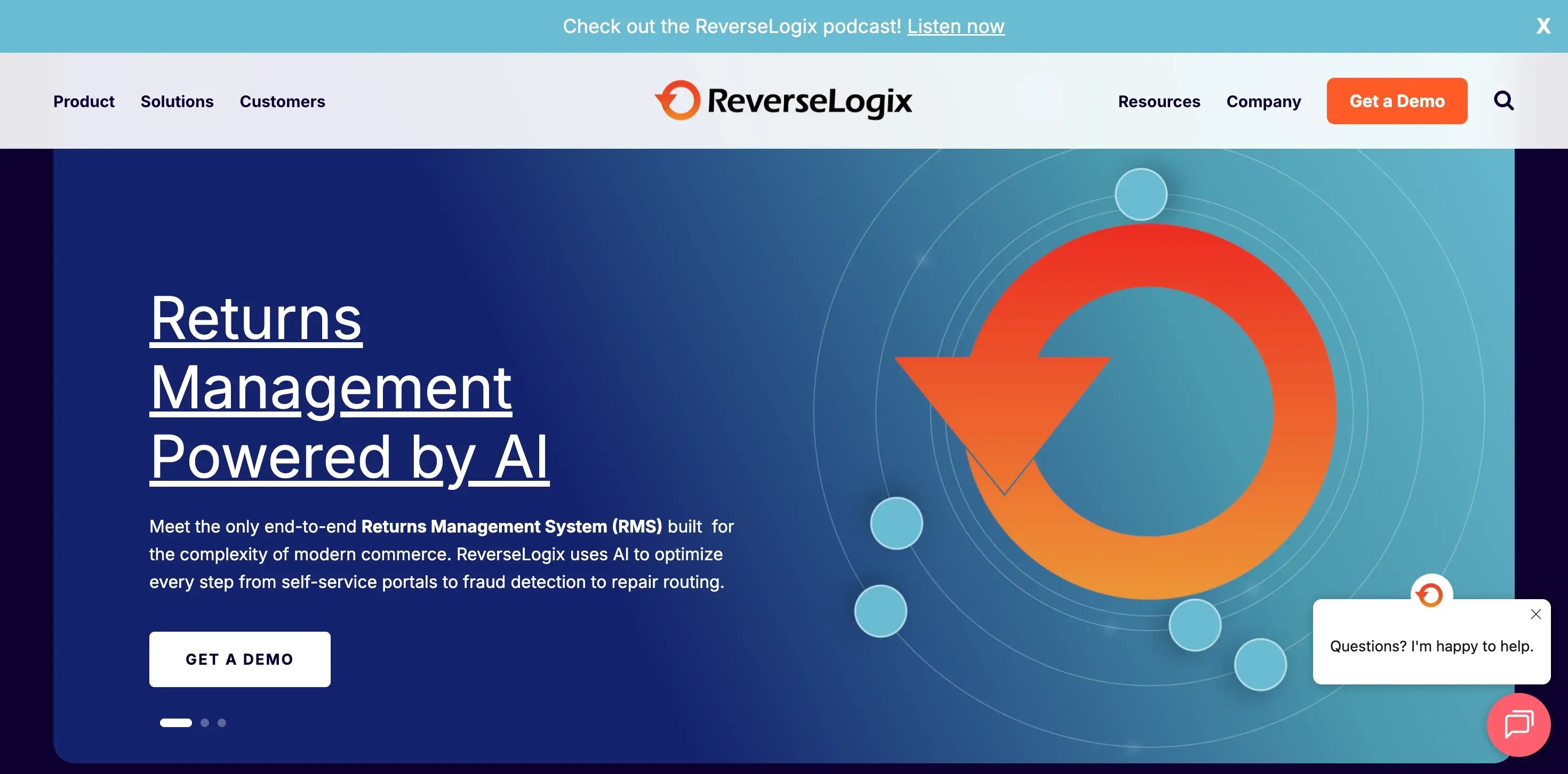
ReverseLogix is an enterprise returns management system built for complex reverse operations, including repairs, warranties, refurbishment, and disposition. It is less about a lightweight portal and more about managing the full lifecycle of an item after it comes back. ReverseLogix fits retailers, manufacturers, and 3PLs that need rigorous workflows inside the warehouse and service network.
Key features:
-
End-to-end returns workflows from authorization to disposition
-
Repair and warranty management modules for service scenarios
-
Configurable routing and inspection workflows in warehouses
-
Disposition logic for restock, refurbish, recycle, and liquidate
-
Analytics on cycle time, cost per return, and root causes
-
Enterprise integrations across ERP, WMS, OMS, and carriers
Best for
-
Enterprise retailers and manufacturers with repair or warranty flows
-
3PLs managing returns for multiple client programs
-
Teams needing deep warehouse processing controls and auditability
Integrations: API first enterprise integrations with common commerce platforms and back office systems like SAP, Oracle, NetSuite, and WMS tools.
Pricing: Custom quote, typically enterprise contract-based. Expect pricing to depend on transaction volume, users, and modules such as repair and warranty.
Pros
-
Strong operational depth beyond portal-based tools
-
Supports repairs, refurbishment, and complex disposition at scale
-
Good fit for multi-channel and mixed B2B B2C environments
Cons
-
Implementation is heavier than SMB tools
-
Not ideal if you only need a simple self-service portal
9. ReturnLogic: Best Returns Software for Growing Brands That Need Better Returns Discipline
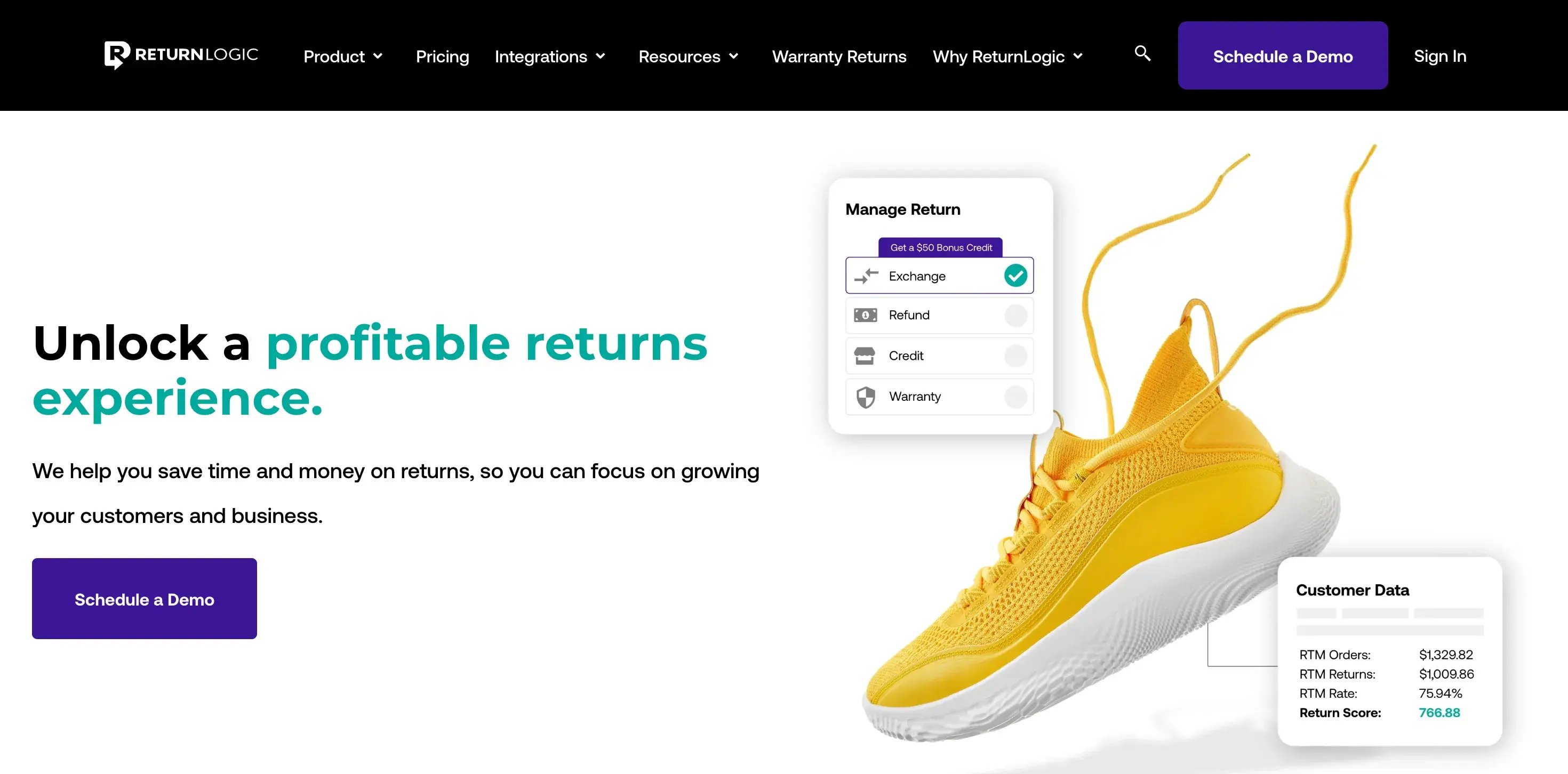
ReturnLogic combines a customer-facing portal with returns intelligence. The platform is designed for growing ecommerce brands that want automated approvals and labels, plus reporting to help reduce future returns. It is a good middle ground between lightweight Shopify apps and enterprise suites. ReturnLogic focuses on policy control, incentives, and warehouse processing visibility to ensure that both support and operations teams stay aligned.
Key features:
-
Branded portal for returns, exchanges, and store credit
-
Rules-based approvals and policy enforcement
-
Incentives that push store credit and exchanges
-
Returns analytics for reasons, products, and process bottlenecks
-
Warehouse intake workflows with scanning and disposition tracking
-
Gift returns support for a shopper-friendly resolution
Best for
-
High-growth e-commerce brands that want better returns discipline
-
Teams that care about data and reduction, not only processing
-
Shopify and BigCommerce merchants with moderate to high return volume
Integrations: Shopify, Shopify Plus, BigCommerce. Common helpdesk tools like Gorgias and Zendesk. 3PL connections depend on the program and API in use.
Pricing: Commonly cited starting points are around $ 299 per month, with alternative Shopify app-style tiers in lower ranges, plus per-return overages depending on the plan.
Pros
- Strong analytics for reducing avoidable returns
- Automation reduces manual approvals and support workload
- Balanced feature set for scaling teams without enterprise overhead
Cons
- Advanced customization may require higher-tier plans
- Setup effort increases as policy complexity grows
10. Return Rabbit: Best Returns Software for Shopify Brands That Want Returns to Drive More Sales
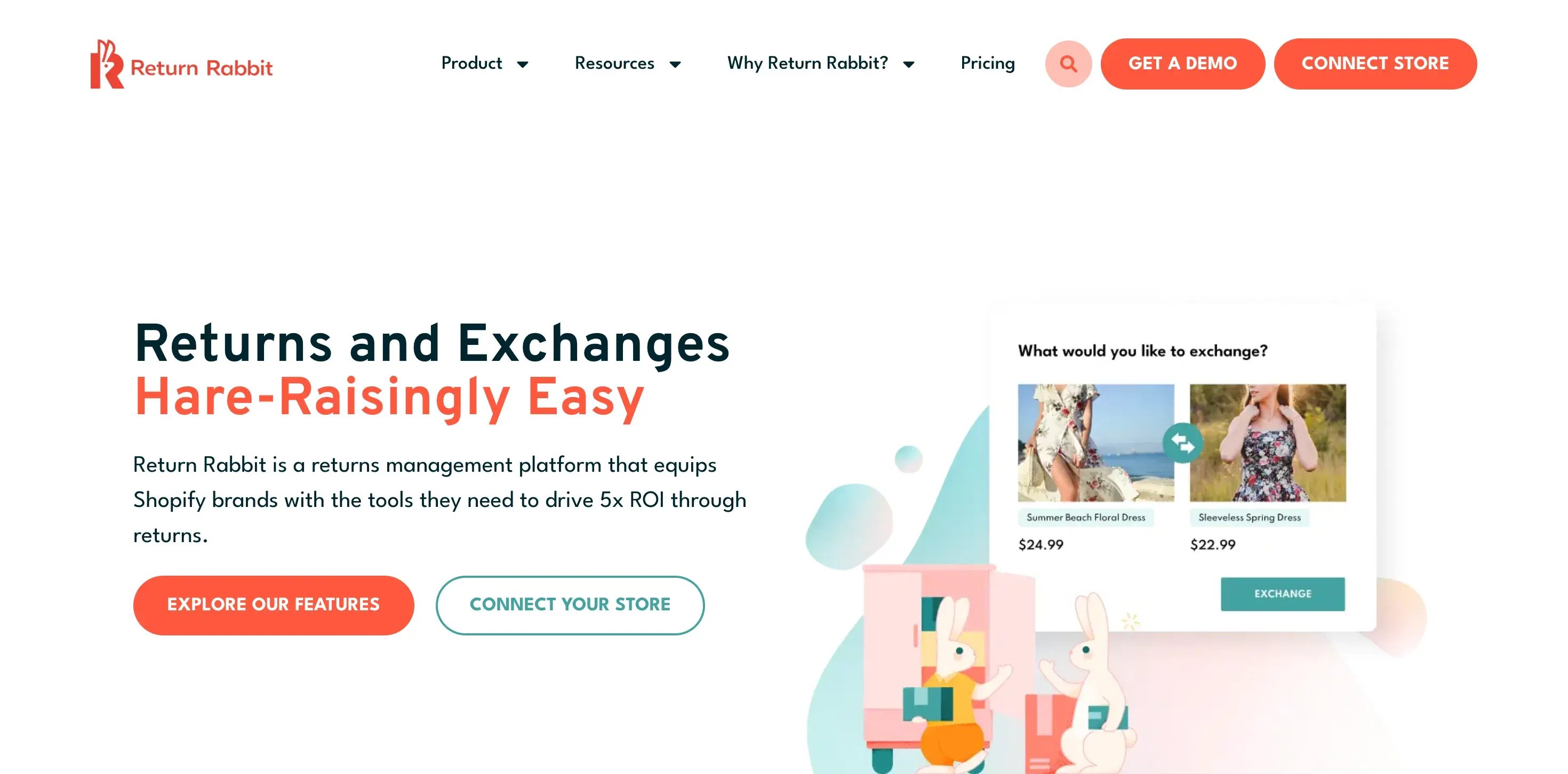
Return Rabbit is an exchange-first returns tool aimed at Shopify brands that want to turn returns into a conversion channel. It is built around personalized recommendations in the return flow, which can push customers toward exchanges or alternative items rather than refunds.
Key features:
-
Exchange-first return flow with the recommendation engine behavior
-
Branded portal that matches site experience
-
Automated workflows for approvals, exchanges, and refunds
-
Printerless and QR-based return options, depending on carrier setup
-
Catalog-wide exchanges across price differences
-
Analytics tied to retention and exchange outcomes
Best for
-
Shopify and Shopify Plus brands
-
Apparel and fashion brands where exchanges are common
-
Teams that want returns to drive additional shopping behavior
Integrations: Shopify ecosystem integrations plus common 3PL and support tools through connectors and APIs.
Pricing: The starting range is around $250 per month, with higher tiers at around $650 per month, plus annual options depending on plan structure and volume.
Pros
-
Strong exchange orientation with merchandising style recommendations
-
Fast time to launch for Shopify teams
-
Retention-friendly workflows reduce refund default behavior
Cons
-
Shopify-centric by design
-
It can be expensive for small stores with low return volume
7 Core Components of a Returns Management System Every eCommerce Team Needs
A return management platform usually combines these building blocks into one operating layer.
The returns pipeline at a glance
6 Reasons Your eCommerce Business Needs Returns Management Software in 2026
Returns are among the few moments when a brand must prove its trustworthiness after the sale. If the process feels hard, customers assume the brand is hiding behind policy. If it feels fast and fair, customers buy again even after a return.
Returns also create operational drag. Without automation, teams spend time on eligibility checks, label requests, manual status updates, and refund follow-ups. That cost scales faster than order volume because exceptions multiply as shipments increase. A return management platform reduces that chaos by making the workflow rule-based and measurable.
Reduce friction for customers and protect repeat purchases
Control costs and reduce manual work
Recover revenue through exchanges and smarter outcomes
Reduce return fraud and policy abuse
Improve inventory accuracy and speed up restocking
Scale returns without breaking support and operations
The impact at a glance
10 Must-Have Returns Management Software Features for Scaling eCommerce Operations
A long feature list does not define the best platforms. They are defined by whether they reduce return cost per order while keeping the customer experience clear and consistent. The features below are the ones that show up in real operations once you move beyond a basic label generator.
How to Choose the Right Returns Management Software: Complete Evaluation Guide for 2026
Picking return management software is not about finding the most features. It is about reducing refund leakage, speeding up back-to-stock, and keeping the return journey predictable for customers and warehouse teams. Start with your return reality, then shortlist based on workflow fit, integration depth, and total cost.
Step 1: How Do You Map Your Current Returns Reality Before Choosing Software?
If you do not define the problem, every demo looks perfect. Start with a quick baseline of volume, reasons, and operational constraints.
-
Monthly return count and peak season multiplier, so you do not buy a plan you will outgrow in one quarter.
-
Top return reasons by category, so the tool can help you prevent repeats, not just process refunds.
-
Your standard disposition paths are restock, refurbish, repair, donate, recycle, and liquidate.
-
Average time to refund and average time to restock so that you can measure the impact after go-live.
-
The channels you need supported: online-only, omnichannel, marketplace-heavy, B2B returns.
Questions to ask
-
What percentage of returns can be automated end-to-end in our exact policy setup?
-
Can we trigger refunds on the carrier scan, on the warehouse scan, or only after inspection?
-
Can we run different rules for VIP customers, first-time buyers, and repeat returners?
Step 2: How Do You Validate Returns Software Integrations and Data Write-Back?
Returns fail when systems do not talk. Your return portal should not be a silo. It must push clean data back into your commerce platform, OMS, WMS, and support stack.
-
Native connectors for your storefront, plus reliable APIs for custom workflows
-
Two-way inventory updates so the available-to-promise is not polluted by in-transit returns.
-
Carrier label generation and pickup scheduling that match your geographies
-
Helpdesk and CRM integration, so agents see return status without switching tools
-
Webhooks and event logs, so your tech team can trace issues fast.
Questions to ask
-
Which fields write back to Shopify, NetSuite, or our OMS, and when?
-
Do you support multiple warehouses and smart routing based on SKU, condition, and location?
-
Is the return status normalized across carriers, or is it passed through as raw carrier events?
Red flags
-
One-way integrations that import orders but do not write return outcomes back
-
Reporting that depends on manual exports for basic KPIs
-
No audit trail for approvals, overrides, and policy exceptions
Step 3: Which Returns Automation Features Actually Reduce Manual Labor?
Returns software should remove clicks, not add them. Look for automation that handles the messy middle, approvals, routing, status updates, and exceptions.
-
Rules engine for eligibility, windows, final sale logic, and conditional approvals
-
Automatic routing to the right node, store, warehouse, refurb partner, or 3PL
-
Fraud controls that let you segment policies without punishing good customers
-
Exchange first flows, store credit incentives, and instant swap options
-
Automated customer updates across the whole return journey, not just label creation
Questions to ask
-
Can we run condition-based workflows for wrong items, damaged, unworn, and opened boxes?
-
Can we block serial abusers without blocking high-value customers?
-
Can we auto-generate different outcomes by reason codes and product categories?
Step 4: How Do You Evaluate Customer Experience and Warehouse Experience in Returns Software?
A great portal reduces support tickets. A great ops console reduces confusion in the warehouse. You need both.
-
Branded self-service portal that works on mobile and supports guest checkouts
-
Clear return status milestones: initiated, label created, in transit, received, approved, refunded
-
Warehouse scanning and grading tools, so that disposition is consistent
-
Photo capture and inspection flows if your categories need it, like electronics or premium apparel
-
Multi-language and multi-currency support if you sell cross-border
Questions to ask
-
Can customers switch from refund to exchange mid-flow without contacting support?
-
Can we offer drop-off, pickup, boxless, label-free, and keep-item logic where needed?
-
Can we display precise refund timelines and reduce the number of 'Where is my refund?' tickets?
Step 5: How Do You Calculate the Total Cost and ROI of Returns Management Software?
Returns are expensive. Research shows that online return rates can be materially higher than in-store rates, which is why software and policy design matter.
-
Pricing basis per return, per shipment, per feature, per location, annual contract
-
Implementation costs, onboarding, custom workflows, API work, and training
-
Overage charges and peak season penalties
-
Savings levers, fewer support contacts, fewer labels, faster restock, better exchange conversion
-
Reporting depth so that you can tie return reasons to product fixes
Questions to ask
-
What is the all-in cost at our peak month volume, including overages?
-
What is your typical time to value for a brand like ours, in weeks, not promises?
-
Which metrics move first after go-live, and what do we need to do internally to unlock them?
Red flags
-
Pricing that is unclear until the last sales call
-
Features that are locked behind enterprise tiers for basic needs like routing and analytics
-
No customer success support model for policy design and rollout planning
Step 6: How Do You Shortlist Returns Software by Business Model and Use Case?
Different platforms win for different teams. Use this lens to shortlist faster.
-
High volume, multi-carrier, and complex routing, ClickPost, Narvar, parcelLab
-
Shopify first exchange-led workflows, Loop Returns, ReturnGO, Return Rabbit.
-
Boxless network heavy programs in the United States, Happy Returns
-
Repair, warranty, and B2B returns, ReverseLogix
-
Returns intelligence and product-driven prevention, ReturnLogic
What Are the Biggest Returns Management Trends for 2026? AI, Fraud Prevention, and Revenue Recovery
Returns are no longer a side process. They are a core part of the brand experience and a material cost line. In the United States alone, total merchandise returns have been estimated in the hundreds of billions of dollars, and fraud and abuse remain a growing slice of that number.
What Do the Latest eCommerce Returns Statistics Tell Us About 2026?
-
$890 billion in returns (2024): E-commerce returns in the United States totaled $890 billion, representing 17% of total retail sales. This volume puts enormous pressure on inventory management and supply chains.
-
30% return rate for online purchases: Compared to the 8.89% return rate for physical stores, nearly 30% of online purchases are returned. This stat highlights how the inability to inspect items before buying impacts return rates.
-
80.2% of returns due to damage: Damaged goods are the top reason for ecommerce returns, emphasizing the need for better handling, packaging, and order fulfillment services.
-
Return rates have doubled since 2021: Online returns have increased significantly post-pandemic, partly due to rising ecommerce sales and evolving customer expectations.
-
24.5% of global e-commerce sales are returned: With ecommerce forecasted to contribute 24.5% to global retail sales in 2025, businesses must prioritize efficient returns processing to protect profit margins.
Streamline returns with our powerful returns platform – Try it today!
ClickPost offers everything a modern retailer needs from a returns system: scalability, data-driven decisions, and seamless integrations with carriers, WMS, and storefronts.
With a branded portal, AI-driven fraud prevention, and 500+ carrier integrations, ClickPost becomes the backbone for reverse logistics success.
Ready to take control of your ecommerce returns?
Try ClickPost and transform your returns from a cost centre to a customer loyalty engine. Get in touch for a custom demo and discover how we can build your brand’s ideal returns ecosystem.
How Can You Turn Returns Into a Competitive Advantage Instead of Just a Cost?
Returns management software pays off when it reduces uncertainty. Customers see clear steps and predictable timelines. Support teams stop answering the same questions. Warehouse teams get structured grading and routing. Finance teams see fewer manual adjustments and cleaner refund controls. With returns representing a major cost line in modern retail, treating returns as a designed workflow is no longer optional.
What Are Your Next Steps After Reading This Returns Software Guide?
-
Shortlist two or three tools that match your operating model
-
Run a structured evaluation.
-
Map your policies, test key return journeys end-to-end, validate data write-back into your systems, and pressure-test peak-volume pricing.
-
Choose the vendor that fits your reality, not the one with the prettiest demo.
The best returns strategy is simple. Make the return easy, make the decision smart, and make the recovery fast.
Returns Management Software FAQs: 14 Questions eCommerce Teams Ask Before Buying in 2026
What are the best returns management platforms for midsize and global ecommerce brands?
The top returns management platforms are ClickPost, Loop Returns, Narvar, AfterShip Returns, Happy Returns, and ReturnGO.
ClickPost is best for global and multi-carrier brands, with strong reverse logistics automation and cross-border returns. Loop Returns suits Shopify and DTC brands focused on exchanges over refunds. Narvar fits enterprise retailers needing omnichannel post-purchase experiences. AfterShip Returns, Happy Returns, and ReturnGO balance automation, customer experience, and cost for midsize brands.
Choose based on your priority: global logistics, exchange optimization, omnichannel, or enterprise scale.
What features should modern returns management software have?
A modern returns management platform should allow customers to self-serve returns while automating the decisions behind the scenes. It should support policy-based eligibility checks, multiple exchange and store credit options, carrier-linked return labels, and real-time status updates. Additionally, it should detect fraud signals.
Which returns management software reduces manual work the most?
Returns management tools that minimize manual intervention use policy logic to handle standard cases automatically, while escalating exceptions, such as a refund for a high-value item. Platforms like ClickPost, Loop Returns, and Narvar automate eligibility checks, enable store credits, and flag high-value, high-risk, or non-compliant returns for review. This reduces repetitive support work but keeps necessary fraud controls in place.
How can returns management software increase exchanges instead of refunds?
Returns management software reduces refunds by guiding customers toward alternatives before a refund becomes the default. Exchange and replacement options are presented during the return process. Price differences and approvals are handled automatically. This helps brands retain revenue and enable higher-value exchanges.
How does returns software prevent fraudulent returns?
Returns automation helps control fraud through pattern-based analysis across return behavior. Frequent returns, high-value items, inconsistent reasons, or unusual timing trigger stricter rules or a manual review. This protects margins without slowing down legitimate customers.
Can returns management systems automate product quality checks using photos?
Yes. Some returns management systems, including ClickPost, support image or video uploads during the return request. These visuals help teams assess visible damage, missing parts, or condition issues before approving refunds or exchanges. This reduces back-and-forth, speeds up decisions, and prevents unsuitable items from re-entering inventory.
What analytics should returns management software provide?
Effective returns reporting connects return behavior to decisions. Teams should see which products and policies drive repeat returns, how exchanges perform against refunds, and where operational delays occur, to fix the root causes of product returns.
Does returns management software integrate with Shopify and other platforms?
Yes. Leading returns platforms integrate with Shopify and other ecommerce systems to sync orders, items, and fulfillment data. This reduces manual work, prevents data mismatches, and keeps returns aligned with the original order flow.
How can returns software help reduce operational costs?
Brands should look for cost-efficient returns platforms that remove manual steps from return/exchange processing, streamline routing and carrier allocation, and reduce WISMR (Where Is My Refund) inquiries through real-time customer communication. These lead to fewer support tickets and exchange conversions, which reduce both labor and logistics costs over time.
How does returns management software improve customer satisfaction?
Yes. Leading returns platforms integrate with Shopify and other ecommerce shipping software systems to sync orders, items, and fulfillment data. This reduces manual work, prevents data mismatches, and keeps returns aligned with the original order flow.
What is the difference between a returns portal app and enterprise returns software?
A returns portal app typically focuses on the front-end experience, basic eligibility rules, and label generation. An enterprise platform goes deeper into routing, multi-warehouse logic, omnichannel returns, fraud controls, and warehouse execution, including grading and disposition.
How can returns software help you retain more revenue?
Brands should look for cost-efficient returns platforms that remove manual steps from return/exchange processing, streamline routing and carrier allocation, and reduce WISMR (Where Is My Refund) inquiries through real-time customer communication. These lead to fewer support tickets and exchange conversions, which reduce both labor and logistics costs over time.
What are the hidden costs of implementing returns management software?
The highest hidden costs are integration work, policy configuration, and overages during peak periods. Some tools are priced by return volume, which can spike seasonally. Others charge for advanced routing, multi-warehouse setups, or analytics that you assumed were standard. Also factor in internal time for testing, training, and aligning warehouse SOPs.
What does return management software automate end to end?
Return management software automates the return journey from initiation to resolution. It lets customers start returns in a branded portal, applies eligibility rules, generates labels or QR codes, routes the item to the right node, and keeps both the customer and internal teams updated.