.png?width=193&height=27&name=ClickPost%20Logo%20(Blue).png)
.svg)
.svg)
.svg)
.svg)
.svg)
.svg)
.svg)
.svg)
.svg)


.svg)
.svg)
.svg)
.svg)
.svg)
.svg)


.svg)
.svg)
.webp?width=286&height=206&name=ROI%20Calculator%20(1).webp)
.svg)
.svg)

.svg)

.webp?width=286&height=206&name=RTO%20Playbook%20(1).webp)

In this blog
TL/DR summary
Store design is not only about aesthetics anymore. It is about building trust fast, helping shoppers find the right item faster, and keeping the storefront responsive under real traffic. The apps in this list focus on practical wins: cleaner variant UX, modular section upgrades, credible review layouts, performance optimization, and content workflows that keep brand presentation consistent across the funnel.
Key takeaways
-
If your catalog has many variants, swatches reduce decision fatigue and lower “wrong selection” returns.
-
Modular sections are a safer alternative to heavy page builders when Core Web Vitals are a concern.
-
Social proof is a design layer: photo reviews and clean widgets improve conversion without redesign.
-
Shipping bars and quick-buy flows increase average order value by reducing checkout hesitation.
-
Performance tools are store design tools because speed impacts SEO, UX, and revenue.
A good shortlist is the one that matches your constraints. If you are rebuilding pages weekly, Section Store and Canva Connect keep execution fast. If conversion is the immediate goal, Privy, Loox, and Hextom push measurable outcomes without cluttering the storefront.
Introduction
Store Design Shopify Apps are no longer “nice-to-have” add-ons for aesthetics. In 2026, they enable merchants to deliver a faster buying experience, reduce browsing friction, and make product discovery feel effortless across mobile and desktop. The best apps do not just beautify a storefront. They tighten navigation, turn social proof into a layout asset, speed up pages for Core Web Vitals, and add conversion cues that push shoppers from browsing to checkout without forcing discounts.
Key highlights
-
A cleaner UX reduces bounce rates and makes product pages easier to scan on mobile.
-
Visual merchandising tools can increase average order value by guiding customer choices and reducing confusion.
-
Review galleries, shipping bars, and quick-buy layers work best when they match the theme’s design system.
-
Speed and image optimization are now part of store design because performance affects SEO.
-
Modular sections and no-code embeds help teams iterate fast without breaking the theme.
Top Store Design Shopify Apps in 2026
The apps below are the best Shopify store design apps to watch for in 2026.
|
App |
What it helps you design (self-explanatory) |
Pricing (from reference) |
|
Variant selection that is visual, fast, and clear on collection + product pages |
$6.99/month |
|
|
Branded popups, banners, email capture, cart recovery moments |
From $24/month |
|
|
Theme-native sections for landing pages without page builder bloat |
Free to install + one-time section fees |
|
|
Quick-order catalog view for bulk add-to-cart and fast reorders |
From $7/month |
|
|
Coming-soon pages with email capture and countdowns |
$1.99/month (free for partner stores) |
|
|
Product videos that load fast and improve PDP confidence |
From $108/year |
|
|
Photo/video review widgets and galleries that build credibility |
From $12.99/month |
|
|
Progress-style free shipping prompts that lift cart value |
Free / $9.99/month |
|
|
Faster pages and cleaner SEO structure through image + site fixes |
Free / $39–$69/month |
|
|
Faster creation and deployment of banners, covers, and store visuals |
Free to install |
1. Color Swatch Pug
Color Swatch Pug replaces clunky variant dropdowns with clean, clickable swatches so shoppers can understand options at a glance on collection and product pages. It makes variant-heavy catalogs feel organized instead of overwhelming.
Notable features
-
Shows variant swatches directly on collection pages so that the shoppers can compare colors without extra clicks.
-
Auto-generates swatches from variant images or mapped colors for consistent merchandising.
-
Supports size, shape, borders, hover states, and alignment to match your storefront UI.
-
Hides or styles sold-out variants to reduce dead-end clicks and reduce choice frustration.
-
Works across many themes, including dynamic carts and modern storefront layouts.
The CSP Pro plan starts at $6.99/month (14-day free trial). If your catalog depends on color, finish, or pattern, this is one of the fastest ways to make browsing smoother and reduce “wrong variant” returns.
While Shopify apps make it easier to customize layouts and functionality, many merchants still rely on professional design support for campaign creatives, product banners, landing pages, and promotional graphics. A Penji graphic design service can help ecommerce teams produce these assets consistently without hiring an in-house designer.
2. Privy
Privy helps merchants keep their store design conversion-ready with pop-ups, banners, email-capture modules, and SMS prompts that can be styled to match native storefront elements. It is less about “pretty overlays” and more about creating smart moments that nudge checkout.
Notable features
-
Builds branded popups, banners, and forms with targeting by device, cart value, and referral source.
-
Runs abandoned cart recovery and post-purchase flows without a heavy marketing setup.
-
Supports onsite incentives like spin-to-win or timed offers without redesigning the theme.
-
Syncs customer data to Shopify for segmentation and list hygiene.
-
Allows you to keep the UX clean by preventing repeated interruptions.
Popups & Displays starts at $24/month (based on monthly traffic). Email begins at $30/month, and Email + SMS at $45/month (entry tiers). For stores seeking design-led growth, Privy helps ensure lead capture and retention by using the same visual language as the storefront.
3. Section Store
Section Store gives you a library of theme-ready sections that slot into the Shopify Theme Editor, so your storefront can evolve without a page builder. It is ideal when you want better layouts while still prioritizing site speed.
Notable features
-
Adds modular sections like FAQs, testimonials, trust badges, galleries, and feature grids.
-
Installs into the native Theme Editor so changes stay “Shopify-native.”
-
Avoids heavy page builder bloat by using lightweight section code.
-
Allows you to mix and match sections across the homepage, product pages, and landing pages.
-
Offers free sections plus one-time purchases for premium shadcn blocks.
The app is free to install, with free sections and one-time charges for premium sections (no recurring fees). It is a practical way to build conversion-focused layouts while protecting performance.
4. C: Quick Shop
C: Quick Shop improves storefront usability by letting shoppers add multiple items and variants to the cart from a single quick-order view. It is a design tool in the UX sense: fewer clicks, fewer dead ends, faster buying.
Notable features
-
Builds a quick-order form for bulk add-to-cart, including variant selection.
-
Supports SKU and product search to enable buyers to reorder quickly.
-
Allows merchants to load products by collections for clean, catalog-like buying.
-
Works with Shopify Markets to enable multilingual, multi-currency browsing.
-
Fits B2B workflows where repeat orders and speed matter.
Standard is $7/month (or $67.20/year). Shopify Plus is $8/month (or $76.80/year). If your brand ships frequent replenishment orders, this can improve conversion rate by removing unnecessary browsing steps.
5. LaunchX – Under Construction
LaunchX creates a polished coming-soon or maintenance experience so your storefront does not look unfinished during a rebuild. It helps you maintain brand credibility as you prepare inventory, content, and operations.
Notable features
-
Builds a branded coming-soon page instead of a blank store experience.
-
Captures emails for pre-launch demand and early access lists.
-
Uses countdown timers to create clear launch expectations.
-
Adds password protection and optional age verification.
-
Lets you switch on/off quickly during theme changes.
Partner stores are free. Unlimited plan is $1.99/month (3-day free trial). It is a small cost to protect your brand perception and capture leads while your storefront is under construction.
6. Vimeo Create
Vimeo Create helps merchants add high-quality video to product pages and marketing assets without needing editing skills. In 2026, video is part of store design because it reduces uncertainty and improves product understanding.
Notable features
-
Turns product images and text into short videos using templates and automation.
-
Publishes videos into Shopify product media for a more immersive PDP experience.
-
Keeps playback fast with hosted delivery so that the pages do not feel heavy.
-
Offers brand controls for logos, fonts, and colors for consistency.
-
Provides engagement insights to see what shoppers actually watch.
Annual plans include Plus ($108/year), Pro ($300/year), Business ($720/year), and Premium ($900/year). If your returns are driven by unclear expectations, a product video can reduce friction more effectively than extra copy.
7. Loox Product Reviews & Photos
Loox integrates reviews into the visual design by turning customer photos and videos into clean widgets and galleries. It enhances store credibility without changing the theme, which is important for conversion optimization.
Notable features
-
Collects photo and video reviews to strengthen social proof.
-
Displays reviews as carousels, popups, and product-page blocks that match your UI.
-
Automates review requests to keep the gallery up to date.
-
Supports referral-style sharing to extend UGC beyond the PDP.
-
Works across themes and page builders with minimal setup.
Beginner is $12.99/month, Scale is $39.99/month, Convert is $99.99/month, and Unlimited is $299.99/month. If you want a store design that feels trustworthy, Loox is one of the most direct levers.
8. Hextom: Free Shipping Bar
Hextom’s Free Shipping Bar is a design element that changes shopper behavior without cluttering the page. It turns shipping thresholds into a clean, progress-style cue that nudges cart value upward.
Notable features
-
Shows progressive messaging, such as “$12 away from free shipping,” that updates in real time.
-
Targets by device, page, and shopper location for cleaner UX.
-
Supports auto currency conversion so thresholds feel local.
-
Schedules campaigns for seasonal peaks and promotions.
-
Tracks performance so you can measure lift rather than guess.
Basic is free. Premium is $9.99/month (or $99/year). It is an easy way to lift average order value while keeping the storefront minimal and mobile-first.
9. BOOSTER SEO & IMAGE OPTIMIZER
BOOSTER indirectly improves store design by enhancing speed, image quality, and technical SEO. In practical terms, a faster store feels better to shop in and ranks better, so performance is part of design.
Notable features
-
Compresses images to reduce load time while preserving quality.
-
Generates structured fixes, such as broken-link detection and redirects.
-
Optimizes alt text and templates to improve accessibility and search visibility.
-
Supports bulk meta title and description workflows on paid plans.
-
Monitors site health to prevent issues from silently impacting traffic.
A free plan is available. Pro is $39/month (or $349/year). Premium is $69/month (or $619/year). If your storefront feels slow, no visual redesign will save conversion until performance is fixed.
10. Canva Connect
Canva Connect streamlines how you create and deploy storefront visuals by letting you pull product media into Canva and push finished assets back to Shopify. It is a workflow app that keeps design consistent across collections, banners, and merchandising.
Notable features
-
Pulls product images and media directly into the Canva editor.
-
Exports finished designs back to Shopify without manual downloading.
-
Helps maintain brand consistency with Canva Brand Kit assets.
-
Speeds up merchandising for collection covers and theme graphics.
-
Supports quick edits from the Shopify admin for rapid iteration.
Free to install. If your team publishes frequent promos, launches, or seasonal refreshes, this reduces turnaround time and prevents asset management issues.
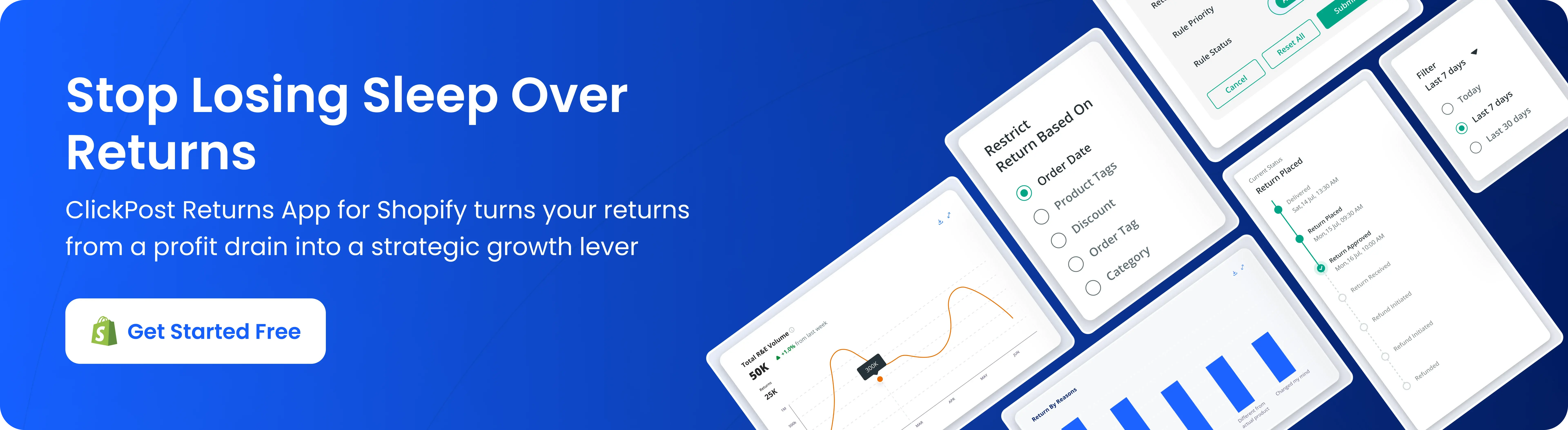
ClickPost turn returns into exchanges and repeat purchases, not losses
Automated returns & Exchanges with a self-serve portal, tracking, policies & analytics.
ClickPost Returns & Exchanges streamlines return and exchange management with automation, refunds, and a self-serve portal. Customers get real-time tracking, automated updates, and quick refunds. Merchants manage all return and exchange requests in one dashboard with customizable policies, eligibility rules, and reasons. Detailed return analytics and reporting give insights to cut costs and boost repurchases. Setup is fast, with everything ready in under 30 minutes.
-
Automated self-serve portal for easy returns, exchanges & refunds.
-
Dashboard to manage, track, and resolve return & exchange requests.
-
Process refunds to via gift cards or original payment methods.
-
Customizable return and exchange policies, rules, and eligibility.
-
Analytics & reporting with insights on return and Exchange trends.
ClickPost Returns Plus offers a free plan for up to 100 monthly returns. Paid plans start at $49/month. You can also integrate our returns management product with your ecommerce website. The total reviews on the ClickPost tool at Shopify are a testament to the ease it offers to merchants. The app support provided also makes it one of the best in the app categories for returns, exchanges, and refunds.
Conclusion: Design that sells is design that removes friction
In 2026, a beautiful Shopify store is table stakes. The stores that win are the ones that feel easy to shop, quick to load, and consistent from product discovery to checkout. Store Design Shopify Apps help you do that without rebuilding your theme every quarter, so you can keep shipping improvements while operations, inventory, and customer expectations continue to evolve.