.png?width=193&height=27&name=ClickPost%20Logo%20(Blue).png)
.svg)
.svg)
.svg)
.svg)
.webp?width=286&height=206&name=ROI%20Calculator%20(2).webp)
.svg)
.svg)
.svg)
.svg)
.svg)
.svg)
.svg)
.svg)
.svg)
.webp?width=286&height=206&name=Frame%201171276203%20(11).webp)
.svg)
.svg)
.svg)
.svg)
.webp?width=286&height=206&name=ROI%20Calculator%20(3).webp)
.svg)

.svg)
.svg)

.svg)
.webp?width=286&height=206&name=ROI%20Calculator%20(4).webp)
Best 10 Courier & Delivery Service Companies in USA [2026]



Ready to delight customers after checkout?
Trusted by 600+ brands
In this blog
TL;DR Summary
US e-commerce shipping in 2026 is defined by multi-carrier stack strategies as brands combat rising surcharges from UPS, FedEx, and USPS while regional carriers capture growing market share.
-
US e-commerce sales reached $1.23 trillion in 2025, up 5.4% year-over-year, driving sustained parcel volume growth across all carrier tiers.
-
UPS Ground Residential fees rose to $6.50 per package in January 2026, making single-item low-value shipments cost-prohibitive without high-volume discount agreements.
-
USPS remains the only major carrier with zero residential or fuel surcharges, resulting in lowest total landed cost for lightweight parcels under five pounds.
-
Regional carriers OnTrac and Veho are displacing legacy duopoly volume because they offer 1–2 day delivery at up to 30% lower cost in coastal and urban markets.
-
E-commerce return rates averaging 16–20% nationally have elevated reverse logistics from an afterthought to a primary carrier selection criterion for profitable brands.
Introduction
The US e-commerce logistics network is the most mature in the world with dense fulfillment center coverage, zone-based pricing models, and customer expectations shaped by Prime-era 1–2 day delivery.
US e-commerce sales hit $1.23 trillion in 2025, up 5.4% from the year before, and the parcel volume behind those sales is still climbing. But so is the cost of getting delivery wrong.
In 2026, the landscape is shifting fast. USPS rolled out fresh rate adjustments, UPS and FedEx keep layering on residential and peak surcharges, and regional US carrier companies like OnTrac and Veho are quietly taking share from the duopoly. The brands staying profitable aren't just negotiating rates, they're building multi-carrier stacks with API-first allocation and automated returns workflows.
This guide compares 10 of the best courier and delivery services in the US across five criteria that matter most to e-commerce brands in 2026. That includes: delivery speed, pricing transparency, API integration, returns management, and scalability. Each carrier is profiled in detail, covering available services, e-commerce-specific advantages, rate structures, surcharges, and limitations to watch out for.
Whether you're evaluating national carriers like UPS and FedEx, regional specialists like OnTrac and LSO, or platform-based options like Amazon Shipping and Pirate Ship, this guide gives you the ground-level detail to build a carrier strategy that scales without eroding your margins. For a broader look at courier service companies in the USA, including how they compare on coverage and pricing, see our dedicated overview.
How We Evaluated the Best US E-Commerce Shipping Couriers: 5 Criteria That Actually Matter in 2026
| Criteria | Why It Matters for E-commerce |
| Delivery Speed & SLA Reliability | Two-day delivery is the US baseline — customers don't reward you for hitting it, but they'll churn if you miss it. We evaluated real-world SLA consistency, not advertised transit times. A carrier that hits 2-day ground 95% of the time beats one promising next-day that misses twice a week. |
| Residential Surcharges & Pricing Transparency | Hidden surcharges are the #1 margin killer in US shipping. UPS and FedEx charge $5–7+ per residential delivery, and DIM weight pricing can double your cost on lightweight, bulky items. We assessed total landed cost — not just base rates — including peak, residential, fuel, and delivery area surcharges. |
| API & Platform Integration | Shopify, WooCommerce, Amazon MCF, ShipStation — your carrier needs to plug into your stack without duct tape. We assessed API depth, label generation speed, webhook support for real-time tracking, and native platform connectors. If integration requires a dev sprint, that's a cost most SMEs can't absorb. |
| Returns Management | US e-commerce return rates average 16–20%. That means reverse logistics isn't an afterthought — it's a core cost center. We evaluated whether carriers offer prepaid return labels, branded return portals, consolidated return shipping, and visibility into return-in-transit status. |
| Scalability & Zone Coverage | A carrier that works for 50 orders/day shipping Zone 1–3 can fall apart at 5,000 orders across all 50 states. We assessed whether each carrier's network, pricing tiers, and infrastructure can absorb volume growth without degrading speed or blowing up unit economics in distant zones. |
US Shipping Couriers Comparison: Speed, Pricing, Returns & API Support (2026)
| Carrier | Best For | Domestic Speed | Returns Support | API Integration |
Ideal Business Size
|
| UPS | Nationwide reliability | 1–5 Days | Best-in-class | Full / Open |
Mid to Enterprise
|
| FedEx | Time-definite Express | 1–3 Days | Robust | Full / Open |
Mid to Enterprise
|
| USPS | Lightweight & Rural | 2–5 Days | QR Code / Easy | Robust | SME to Mid |
| OnTrac | West/East Regional | 1–2 Days | Solid | Full API |
Mid to Enterprise
|
| LSO | Texas/South-Central | Overnight/Next-Day | Moderate | Basic API | SME to Mid |
| Veho | Premium DTC | 1-Day / Scheduled | Photo-verified | Full API |
Mid-Market D2C
|
| Better Trucks | Midwest/SE Expansion | Next-Day | Basic | Modern API | Mid-Market |
| DHL eCommerce | Cross-border outbound | 4–10 Days (Int'l) | International | Full API | All Sizes |
| Amazon Shipping | Multi-channel brands | 1–2 Days | Through Amazon | Native / API | Mid-Market |
| Pirate Ship | Budget SME rates | 2–5 Days | Basic | Plug-and-Play |
Small Business
|
2026 US Carrier Profiles: Rates, Services & E-Commerce Fit — UPS, FedEx, USPS, and More
National Carriers: How UPS, FedEx & USPS Stack Up for Full US E-Commerce Coverage
1. UPS Shipping for E-Commerce: Rates, Surcharges & Ground Services in 2026
Best For: Nationwide ground shipping and brands needing a reliable "everything" partner.
About: UPS is one of the largest carriers in the US. In early 2026, UPS implemented its most technical rate structure yet, prioritizing "profitable volume" over bulk shipments.
E-commerce Edge: Their 2026 Cubic Volume triggers for Additional Handling fees mean brands using compact, dense packaging save significantly compared to those in oversized boxes. Their returns network remains the industry's most frictionless.
Services: Ground, 2nd Day Air, Next Day Air, International, UPS My Choice for Business.
Watch Out For: Residential Surcharges. Effective January 2026, Ground Residential fees rose to $6.50, making single-item low-value shipments expensive without a high-volume discount. See how UPS SurePost compares to UPS Ground for cost-sensitive residential routes. For a direct head-to-head on the two biggest national carriers, our FedEx vs UPS comparison breaks down where each carrier wins on cost, speed, and surcharges.
2. FedEx Shipping for E-Commerce: Pricing, Surcharges & Ground Economy in 2026
Best For: High-value, time-sensitive shipments and international exports.
About: FedEx operates the world's premier air cargo network. Their 2026 focus is on the fdx platform, which provides end-to-end data visibility to help brands optimize their supply chains.
E-commerce Edge: FedEx Ground Economy (formerly SmartPost) has been revitalized in 2026 to compete directly with USPS Ground Advantage, offering a cost-effective alternative for 2–7 day shipping with residential delivery built-in. For a detailed breakdown of FedEx courier charges, see our dedicated rate guide. You can also compare FedEx Express Saver vs Ground to determine which service tier fits your delivery promise.
Services: Ground, Express, International Priority, FedEx Delivery Manager.
Watch Out For: The 5.9% Average Increase Myth. While the base rate rose 5.9% in Jan 2026, surcharges for "Additional Handling" (packages over 10,368 cubic inches) rose by 6.1% to 8.4%, meaning bulky items are much pricier. Review our full FedEx vs USPS vs UPS comparison to understand where each carrier wins on cost.
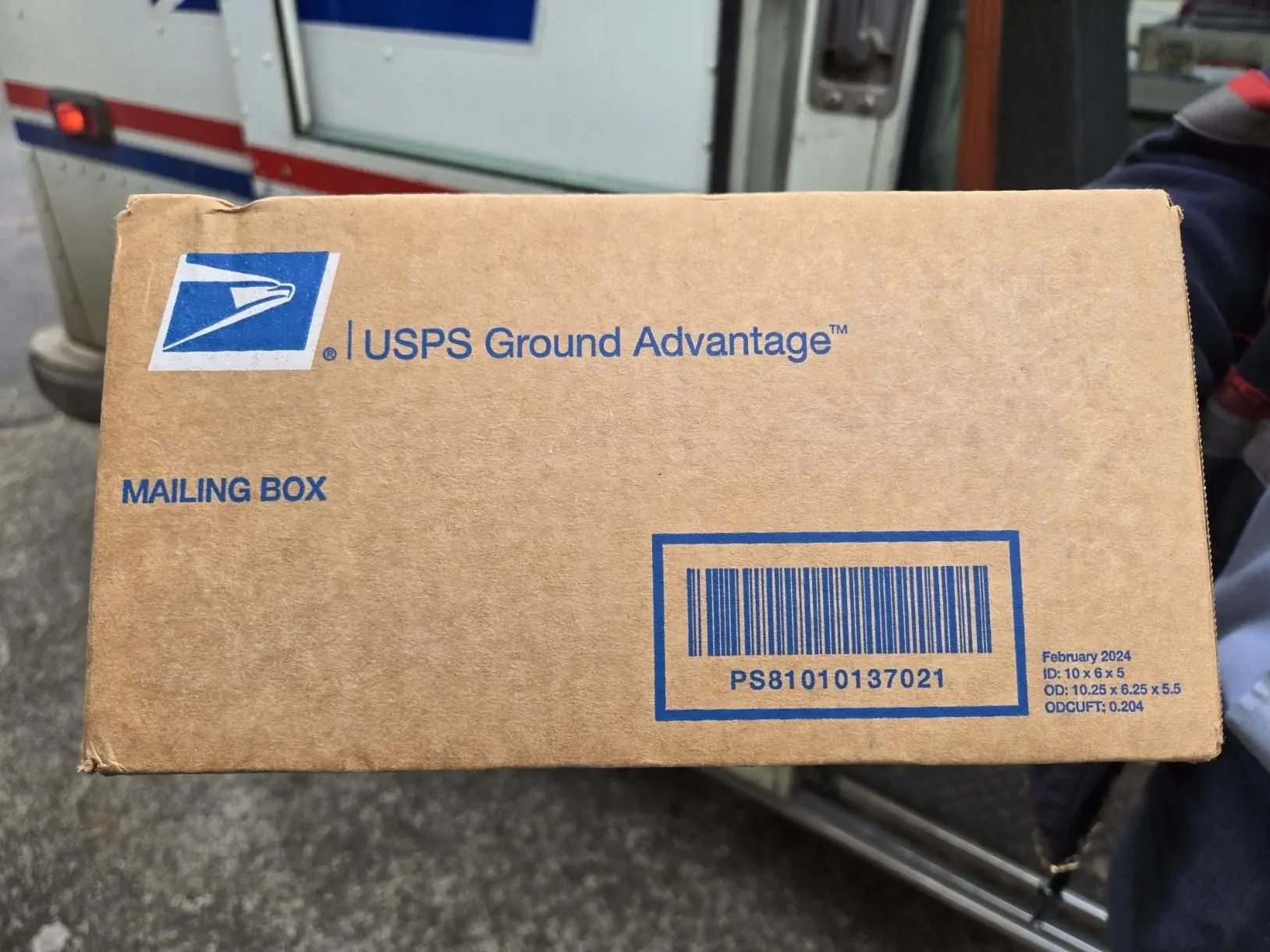
3. USPS Ground Advantage for E-Commerce: 2026 Rates, Reliability & When to Use It
Best For: Lightweight parcels (<5 lbs) and reaching rural addresses without surcharges.
About: USPS is the national postal service of the USA. Following the January 18, 2026 rate hike, Ground Advantage rates rose by an average of 7.8%, but it remains the "no-surcharge" champion.
E-commerce Edge: Still the only carrier with zero residential or fuel surcharges. For brands shipping lightweight apparel or cosmetics, USPS Ground Advantage is the most predictable cost-saver in the 2026 market. Use the USPS shipping calculator to estimate your exact rates before committing. Brands wondering about weekend coverage can also check whether USPS Ground Advantage delivers on weekends before setting customer expectations.
Services: Ground Advantage, Priority Mail, Priority Mail Express, Media Mail.
Watch Out For: Nonstandard Length Fees. USPS now applies a $10.00 surcharge for any package exceeding 30 inches, a massive jump designed to discourage oversized items in the mail stream.
Regional & Last-Mile Carriers: OnTrac, Veho, LSO & Better Trucks vs. National Options
4. OnTrac Regional Shipping: West Coast & Northeast Coverage, Rates & 2026 Services
Best For: High-volume brands needing fast West Coast and Northeast reach.
About: OnTrac has successfully integrated its East and West coast networks. In early 2026, they launched OnTrac Ground Essentials, a deferred service specifically for non-urgent parcels.
E-commerce Edge: Coast-to-Coast Express. They now offer a hybrid 2–3 day service across the country that bridges the gap between expensive air and slow ground, often at 30% lower costs than legacy carriers. For high-density urban zones, pairing OnTrac with a last-mile delivery software platform can further reduce zone-based costs. Brands shipping into major West Coast cities can also explore dedicated courier services in Los Angeles or courier services in San Francisco to complement OnTrac's regional network.
Services: Ground, Ground Essentials (Deferred), Coast-to-Coast Express.
Watch Out For: No Midwest "Bridge." While they own the coasts, shipments to the central US still require a second carrier.
5. Veho Delivery for DTC Brands: How It Works, Coverage & FlexSave Pricing in 2026
Best For: Premium DTC brands (Beauty, Fashion, Food) prioritizing customer experience.
About: Veho is a tech-first delivery platform that expanded to 66 markets in February 2026. Veho uses a "MaestroAI" platform to optimize routes for their driver network.
E-commerce Edge: FlexSave (New for 2026). Brands can now choose to "flex" delivery windows—trading a day of speed for a significantly lower rate—while maintaining photo-proof delivery and live customer texting. This kind of post-purchase experience transparency drives repeat purchases for DTC brands. Beauty and fashion brands in particular can benefit from Veho's precision delivery, especially those focused on customer experience and retention in beauty.
Services: Ground Plus (1–5 day), Premium Economy (2–8 day), Doorstep Pickup (Returns).
Watch Out For: Urban focus. While they cover 144 million Americans, they do not service ultra-rural zip codes.
6. LSO (Lone Star Overnight): Is It the Best Carrier for Texas E-Commerce Shipping?
Best For: Brands with high customer density in Texas and the South-Central US.
About: LSO (Lone Star Overnight) is a regional hero covering the "Texas Triangle" (Dallas, Houston, Austin). For a broader look at the shipping landscape in the region, see our guide to courier service companies in Houston and courier service companies in Dallas.
E-commerce Edge: They provide overnight delivery at ground rates within Texas. In 2026, they remain the most cost-effective way to win the Texas market, which is now one of the top e-commerce hubs in the country.
Services: Regional Overnight, Ground, Same Day.
Watch Out For: Tech limitations. They lack the advanced "predictive ETA" tools of carriers like Veho or FedEx. Brands relying on LSO should supplement with a dedicated e-commerce order tracking solution to maintain customer visibility.
7. Better Trucks Carrier Review: Midwest & Southeast Next-Day Delivery for E-Commerce
Best For: Brands shipping into the Midwest, Southeast, and Texas.
About: Better Trucks is a rapidly growing last-mile specialist that has stepped into the gap left by older regional players. They focus on high-density metropolitan delivery. Brands evaluating regional options in key Midwest and Southeast hubs can review dedicated guides to logistics companies in Chicago and logistics companies in Atlanta alongside Better Trucks.
E-commerce Edge: Their 100% digital POD (Proof of Delivery) includes GPS pings and photo evidence for every parcel. They are highly aggressive on pricing for 1-day and 2-day regional deliveries. Learn more about the true cost of last-mile delivery before choosing a regional carrier for your Midwest volume.
Services: Next-Day Regional, 2-Day Delivery, Returns.
Watch Out For: Aggressive scaling. As they grow into new markets, verify their local driver density before committing full volume.
International & Platform Shipping Options: Amazon Shipping, DHL eCommerce & Pirate Ship Compared
8. Amazon Shipping for Multi-Channel Brands: Rates, Same-Day Delivery & Data Privacy in 2026
Best For: Multi-channel brands selling on and off Amazon.
About: Amazon Shipping is Amazon's standalone delivery service. In 2026, it is no longer just for "Prime" orders; it is a full-scale competitor to UPS Ground.
E-commerce Edge: 3-Hour Delivery Windows. For brands using Amazon's 2026 local sortation centers, they can offer delivery windows that are impossible for legacy carriers to meet, driving massive checkout conversion. Brands using e-commerce fulfillment networks should evaluate whether Amazon's sortation density in their primary zip codes justifies the data trade-off. Those seeking alternatives can also review dedicated fulfillment companies to compare coverage and cost structures.
Services: Ground, Same-Day, Multi-Channel Fulfillment (MCF).
Watch Out For: Data privacy. Many brands remain wary of giving Amazon full visibility into their off-platform customer data.
9. DHL eCommerce for International Shipping: Cost, Speed & DDP Solutions for US Exporters
Best For: Affordable international outbound and EU/APAC corridor reach.
About: DHL eCommerce is the high-volume, e-commerce-specific arm of DHL. In 2026, they will be the leader in Green Logistics, offering carbon-neutral international shipping as a standard feature.
E-commerce Edge: Duty-Paid (DDP) Solutions. They handle the tax collection at checkout for international customers, ensuring no "surprise fees" land on the customer's doorstep in Europe or Asia. For brands shipping from the US to Canada or other key markets, DHL eCommerce's postal injection model offers the best value-to-speed ratio. Brands targeting Australia should also review our guide on shipping to Australia from the USA to compare DHL's rates against other carriers. Check the full DHL courier charges breakdown before committing to an international shipping plan.
Services: International Standard, Packet Plus, DHL Global Mail.
Watch Out For: Speed trade-offs. This is a "postal injection" service; it is reliable but significantly slower than DHL Express. For a side-by-side comparison of DHL and UPS international performance, see our DHL vs UPS guide.
Ultimately, the best courier service aligns with your operational goals and offers efficient cost savings. And if you're ready to launch your own courier or delivery business, Deonde's White-Label Courier Delivery Software lets you start your own fully branded courier business — complete with your own app, website, and delivery management system under your logo and brand name. No custom development needed, no heavy investment.
10. Pirate Ship Review 2026: Is It the Cheapest Way for Small Businesses to Ship Packages?
Best For: Budget-conscious SMEs and small-scale boutique brands.
About: Pirate Ship is a high-leverage courier software platform that provides deep commercial discounts for UPS and USPS with no monthly fees.
E-commerce Edge: Simple Export Rate. Still the most affordable way to ship a 2lb package from the US to Canada or Europe. In 2026, their integration with UPS Ground Advantage provided rates that were previously only available to enterprise shippers. For a broader look at the cheapest options for cross-border parcels, see our guide to cheapest shipping from the USA to the UK.
Services: Discounted USPS Ground Advantage, UPS Ground, Priority Mail.
Watch Out For: Manual Workflow. There is no automated NDR (Non-Delivery Report) management or AI-routing; you are the logistics manager. Brands that outgrow Pirate Ship typically move to a dedicated e-commerce shipping software platform to automate label generation and carrier selection at scale. For a curated list of the top platforms built specifically for US merchants, see our roundup of the best e-commerce shipping software in the USA.
2026 US Shipping Surcharges, Tariffs & Compliance: What E-Commerce Brands Need to Know to Protect Margins
In 2026, the "base rate" of a shipment is often the smallest part of the final invoice. Shippers now face a trifecta of rising costs: record-breaking fuel surcharges, the suspension of duty-free loopholes, and aggressive nonstandard fees.
The Death of De Minimis (Section 321): As of February 24, 2026, the US government has fully suspended duty-free de minimis treatment for all countries. Previously, shipments under $800 entered duty-free; now, every low-value commercial import faces standard duties, taxes, and formal customs processing.
Action Item: Brands shipping from international hubs (like China or Canada) must now integrate automated duty calculators at checkout to avoid "delivery at doorstep" payment shocks for customers. This is a core reason why international logistics strategy has become more complex for US-bound e-commerce in 2026. For a practical overview of how transit times and costs vary by corridor, our guide on how long international shipping takes is a useful reference.
Fuel Surcharge Volatility: In March 2026, fuel surcharges hit historic highs. UPS is currently hovering around 39.50% for air services, while FedEx Express surcharges are at 40.00%. These are adjusted weekly, making fixed-price shipping models dangerous for margins. Monitoring logistics costs in real time is no longer optional for brands running thin contribution margins.
USPS 2026 Rate Hikes: On January 18, 2026, price adjustments saw Ground Advantage rise by 7.8% and Priority Mail by 6.6%. While still cheaper for residential delivery (no surcharges), the gap is narrowing for packages over 5 lbs. Review the latest USPS Priority Mail Express rates to see if upgraded service still makes financial sense for your product weight profile. You can also compare FedEx One Rate vs USPS Priority Mail Flat Rate for predictable per-shipment budgeting.
Nonstandard & Cubic Fees: FedEx and UPS now penalize "air" in boxes more than ever. Any package exceeding 10,368 cubic inches triggers an "Additional Handling" surcharge (averaging $19–$26). USPS also enforces a $10–$15 penalty for any parcel over 22 or 30 inches. Brands looking to contain these costs should review small parcel shipping strategies to optimize packaging dimensions and reduce fee exposure.
Best Couriers by US Region in 2026: A Zone-by-Zone Strategy for E-Commerce Brands
US shipping in 2026 is a game of "Zone Optimization." To win, you must pair national networks with regional specialists who own specific zip codes.
The West Coast (LA, SF, Seattle):
Primary: OnTrac. They offer 1-day delivery across the entire coast at 25% lower rates than UPS Ground.
Premium: Veho. Use them for high-density metros like LA or Seattle for photo-proof delivery. Brands wanting to understand the local carrier landscape can also explore our guide to courier service companies in Seattle.
The Texas Triangle & South-Central (DFW, Houston):
Primary: LSO. Still the king of Texas. If you ship from a North Texas hub, LSO can hit 90% of the state overnight at ground prices. Brands scaling in the region can pair LSO with fulfillment companies in Texas to shorten last-mile distances and further cut zone costs.
Secondary: Amazon Shipping. Their DFW sortation density is unmatched for same-day speed.
The Midwest & Southeast (Chicago, Atlanta, Charlotte):
The New Hero: Better Trucks. They have rapidly expanded their "next-day" footprint across the Midwest and Southeast in 2026, filling the gap for high-density residential delivery. Brands building out fulfillment nodes in this corridor should review fulfillment companies in Chicago and fulfillment companies in Atlanta to pair with regional carrier coverage.
The East Coast (NYC/NJ to Florida):
Primary: Veho & OnTrac. Between these two, you can cover the entire I-95 corridor with 1–2 day speed without hitting the massive national carrier hubs. For brands shipping into New York, our guide to courier service companies in Manhattan provides additional local carrier options worth evaluating.
How ClickPost Helps E-Commerce Brands Manage Multi-Carrier Shipping, NDR Automation & Returns in 2026
ClickPost is an AI-powered logistics intelligence platform that helps e-commerce brands automate shipping, tracking, and the entire post-purchase experience.
By integrating with over 600 carriers through a single API, the platform offers smart carrier allocation, branded real-time tracking, and automated NDR (Non-Delivery Report) management to reduce failed deliveries. It also streamlines reverse logistics with a self-service returns portal and provides automated freight auditing to recover overcharges.
ClickPost acts as the intelligent "brain" above your logistics layer:
-
AI-Powered Carrier Allocation: Instead of manual rules, ClickPost's 2026 engine uses real-time performance data. If UPS is experiencing a delay at a specific Chicago hub, the system automatically routes your Chicago-bound orders to Better Trucks or USPS instead. Learn more about how AI and machine learning in carrier allocation reduce cost and failed deliveries at scale.
-
Automated NDR (Non-Delivery Report) Management: Failed deliveries (e.g., "customer not home" or "wrong gate code") are the #1 cause of RTO (Return to Origin). ClickPost triggers automated WhatsApp/SMS flows to the customer before the driver leaves the area, converting 35% of failed deliveries into successful ones. This directly addresses one of the top strategies to reduce return-to-origin rates in e-commerce.
-
Unified Post-Purchase Experience: Whether the package is with Veho, LSO, or FedEx, your customer sees one branded post-purchase experience. This reduces "Where is my order?" (WISMO) tickets by up to 60%. Brands looking to benchmark their post-purchase performance can explore key post-purchase metrics to track alongside carrier performance data.
Customer quote: "Great experience and fantastic support from ClickPost. This immediately cut our top support tickets around order edits, making ROI easy to quantify. Plus, the customization features and upsell tools help increase AOV. Highly recommend."
- Paul Fulton, CEO, Vanilla Pura
How to Build a 2026 US Couriers Strategy: Key Takeaways for E-Commerce Brands
In 2026, the divide between stagnant and scaling e-commerce brands is no longer just about marketing, it is about logistics intelligence. With the "Big Two" (UPS and FedEx) leaning into complex cubic surcharges and USPS adjusting to its most aggressive rate structure in a decade, the days of "set it and forget it" shipping are over.
The winners of 2026 are those who treat their carrier stack as a dynamic portfolio rather than a single-source contract. By leveraging the nationwide reliability of UPS for returns, the cost-transparency of USPS for lightweight parcels, and the hyperlocal speed of regional heroes like Veho and OnTrac to protect margins in high-density zones, retailers can turn fulfillment into a competitive moat.
Ultimately, success in this landscape requires a shift from passive shipping to active orchestration — ensuring every parcel is matched with the US carrier company best equipped to deliver it on time and under budget. Brands that invest in e-commerce logistics infrastructure today will compound those gains as volume and customer expectations continue to rise. For a look at how the broader supply chain fits together, our guide to retail supply chain management offers a useful strategic framework alongside carrier selection decisions.
FAQs: Best US Couriers for E-Commerce in 2026
1. What is the cheapest courier for US domestic shipping in 2026?
For parcels under 1 lb, USPS Ground Advantage remains the cheapest option, as it lacks the residential and fuel surcharges applied by private carriers. For heavier items over short distances (Zones 1–3), regional carriers like OnTrac or LSO often undercut national carrier rates by 20–30%. To compare options across package sizes and distances, see our guide on how much it costs to ship a package in the US.
2. How do UPS and FedEx residential surcharges work in 2026, and how much do they cost?
Both carriers apply a flat fee to any delivery made to a home. As of January 2026, these fees have risen to approximately $6.45–$6.50 per package for ground services. If your customer is in a "Remote" or "Extended" area, a secondary Delivery Area Surcharge (DAS) of up to $8.80 can be stacked on top.
3. Is USPS Ground Advantage reliable enough for e-commerce in 2026?
Yes. Since its 2023 launch and 2026 optimization, Ground Advantage has achieved a 96% on-time delivery rate. While it lacks the minute-by-minute tracking precision of FedEx, its 2–5 day delivery window is the most cost-effective "Free Shipping" engine for 2026 retailers. For a direct matchup on cost and reliability, see our FedEx vs USPS comparison.
4. What is the best carrier for same-day or next-day delivery in US metro areas?
For premium DTC brands, Veho is the leader due to its scheduled delivery windows and photo-verified proof. For brands with inventory in Amazon's network, Amazon Shipping offers unbeatable 3-hour and same-day delivery in over 2,000 cities. Brands prioritizing overnight speed can also review our dedicated guide to overnight shipping options across carriers.
5. How do regional carriers like OnTrac and Better Trucks differ from UPS and FedEx on cost and speed?
Regional carriers (OnTrac, LSO, Better Trucks) bypass national "hubs," meaning a package stays within its region. This allows them to offer Next-Day delivery at Ground prices. UPS/FedEx provide national reach but charge "Zone" premiums and surcharges that regionals typically waive or reduce.
6. What is the cheapest way to ship small packages internationally from the US in 2026?
For small parcels (<4 lbs), Pirate Ship's Simple Export Rate or DHL eCommerce are the value leaders. They utilize "postal injection" (handing off to the local post office in the destination country), which is significantly cheaper than the "Express" services of DHL or FedEx. For corridor-specific guidance, see our comparison of economy vs standard international shipping.
7. How can an e-commerce brand manage returns across multiple carriers from one place?
Managing returns via separate carrier portals is inefficient. ClickPost provides a unified reverse logistics software solution with a Self-Service Returns Portal that generates the correct label (UPS, USPS, or FedEx) based on your custom rules (e.g., "Cheapest label" vs. "Closest drop-off point") and provides one tracking view for the customer. Brands can also explore how AI in e-commerce returns is accelerating label routing and refund automation across multi-carrier operations.
8. What items are restricted by US shipping carriers in 2026?
Standard restrictions apply to lithium batteries, aerosols, and perishables. However, in 2026, vaping products and hemp-derived CBD face stricter "PACT Act" compliance, with USPS and FedEx requiring specialized age-verification and private network routing.
9. What is the best carrier for heavy, oversized, or fragile items shipped domestically in the US?
UPS and FedEx Ground both handle up to 150 lbs, but for 2026, UPS is generally preferred for "Heavy" parcels due to its more mature Large Package Surcharge tiers. For anything over 150 lbs, you must shift to FedEx Freight or UPS Supply Chain Solutions.
10. How can I track shipments across all my carriers from one dashboard?
This is the core value of ClickPost. It integrates with all 10 carriers in this guide via a single API, pulling all tracking data into one parcel tracking platform. This eliminates "WISMO" tickets and gives you a single source of truth for your entire logistics operation. Brands looking to further reduce support load can explore proven strategies to cut WISMO inquiries alongside their carrier tracking setup. For additional context on how automated shipment tracking benefits the entire customer journey, see our guide on the benefits of automated shipment tracking.




We use cookies to keep the site working, understand usage, and improve your experience. Learn more
Always active for essential site performance and security.
Enables anonymous usage analysis to refine our services.
Used to present relevant promotions and advertising.