%20%20-%20Menu.svg)





How to Reduce Post-Purchase Dissonance: 6 Proven Strategies



In this blog
TL;DR Summary
Post-purchase dissonance is the regret, doubt, or anxiety customers experience after buying, and it is a primary driver of ecommerce returns and churn.
- 90% of customers have kept an item they wanted to return, indicating widespread but invisible post-purchase dissonance across ecommerce.
- Retaining an existing customer costs five times less than acquiring a new one, making dissonance reduction a direct profitability lever for brands.
- Common causes include expectation-reality gaps in product quality, impulse purchases, and poor post-purchase communication leading to eroded buyer confidence.
- Frictionless self-service returns with exchange-first workflows retain revenue because customers are redirected toward alternatives rather than refunds.
- Six evidence-based strategies — transparent order communication, post-purchase email flows, visible return policies, return data analysis, unboxing investment, and self-service returns — systematically eliminate dissonance.
What Is Post-Purchase Cognitive Dissonance?
Post-purchase dissonance is a customer's feeling of dissatisfaction, regret, or anxiety after buying a product or service from your store. If the customer feels the product quality falls short of expectations, they may experience buyer's remorse — and may take steps toward requesting a refund or return.
The concept comes from cognitive dissonance theory in psychology: when a person's experience conflicts with their expectations, they feel psychological discomfort. In ecommerce, this discomfort manifests as doubt about the purchase decision.
Post-purchase dissonance can set in at any point after checkout — from the moment the order is placed to days or weeks after delivery. According to post-purchase dissonance theory, customers feel the effects long after the return window closes. Fail to address it, and you end up with one-time shoppers who never buy again. Prioritize it, and you build loyal customers for life.
Understanding post-purchase behavior — including when and why dissonance occurs — gives brands the data they need to prevent it systematically.
What Are the Common Causes of Post-Purchase Dissonance?
Post-purchase dissonance stems from several root causes. Not all of them are the brand's fault, but the outcome is the same — the customer regrets their decision:
1. Product Quality Does Not Match Expectations
When the product doesn't look, feel, or perform the way the customer expected based on your website, dissonance is immediate and intense. This includes misleading product photography, exaggerated claims about results, inaccurate material or sizing descriptions, and differences between online images and real-world appearance.
The fix is prevention: use high-resolution imagery in multiple lighting conditions, write accurate product descriptions, provide detailed sizing information, and encourage user-generated content that shows products in real-world settings. Reducing the expectation-reality gap is the single most effective way to prevent product-driven dissonance.
2. The Purchase Was an Impulse Buy
Marketing tactics that create false urgency ("Only 3 left in stock!" or inflated discount percentages) may drive short-term conversions but generate higher dissonance and return rates. Customers who purchase under emotional pressure — urgency, stress, or during sales events — are more likely to experience buyer's remorse once the impulse fades.
3. The Customer Found a Better Price Elsewhere
Discovering the same or similar product at a lower price after purchasing triggers immediate regret. This also applies when your own brand offers a deep discount shortly after the customer bought at full price. Price-matching guarantees or post-purchase price protection windows can neutralize this form of dissonance.
4. The Product Does Not Fit or Work for the Customer
Sometimes nothing is actually wrong with the product — it simply isn't the right fit for that specific customer. A pair of shoes is half a size too small, a piece of furniture doesn't fit the space, or a skincare product doesn't suit their skin type. This is not the brand's fault, but how you handle it determines whether the customer gives you another chance. A frictionless exchange process that suggests the correct size or an alternative product retains both the revenue and the customer.
5. Poor Post-Purchase Communication
Even if the product itself is fine, poor communication after purchase can create dissonance. Missing order confirmations, no tracking updates, unexpected delivery delays, and unresponsive customer service all erode the customer's confidence in their decision to buy from you.
How to Reduce Post-Purchase Dissonance: 6 Proven Strategies
A systematic approach to the post-purchase experience can eliminate or significantly reduce dissonance at every stage. Here are six strategies:
1. Build Trust Through Transparent Order Communication
At minimum, customers expect two things after purchasing: confirmation that their order was placed, and when it will arrive. If the shipment is delayed, communicate the change immediately. If possible, provide real-time shipment tracking through a branded tracking page instead of sending customers to a generic carrier site.
Failure to nail your transactional emails makes shoppers feel confused, frustrated, and immediately regretful. Proactive shipping notifications via email, SMS, and WhatsApp at every milestone — dispatched, in transit, out for delivery, delivered — keep the customer informed and in control, directly counteracting the anxiety that fuels dissonance.
Showing accurate estimated delivery dates at checkout and in order confirmations sets realistic expectations. When the actual delivery matches the promise, dissonance drops significantly.
2. Create a Comprehensive Post-Purchase Email Flow
Transactional emails are just the starting point. A comprehensive post-purchase email flow continues long after the customer receives the product, building confidence and reducing the chance of delayed dissonance.
For example, if a customer purchases a skincare regimen, you can create an email flow that begins when items are delivered, with short daily messages offering tips on how to use the products effectively. You can ask for feedback to ensure the customer is happy, and provide personalized advice if they're not. This type of engagement catches dissonance early, before it turns into a return request.
Using marketing automation tools and ClickPost's AI email generator makes building these flows scalable even for brands with large product catalogs.
3. Make Your Return Policy Visible and Confidence-Building
A vague, hard-to-find return policy does not instill confidence — it pushes customers down the path toward post-purchase dissonance.
Prominently displaying your return policy on a dedicated page, linking to it from product pages, checkout, and order confirmation emails, sends a clear message: "We believe in our products and so should you." When customers know they can easily return or exchange a product, their purchase anxiety drops, and paradoxically, they are less likely to actually return it.
Think long-term: if you stand by your products, shoppers will stand by your brand.
4. Use Return Data to Identify What Is Causing Dissonance
If your goal is to reduce post-purchase dissonance, insights from your product returns are a goldmine. Every return captures a reason, such as wrong size, quality issue, didn't match description, changed mind, and aggregating this data reveals the root causes of dissonance in your business.
Using analytics and reporting, you can drill down to find which products are returned most frequently and why. This data helps you optimize product descriptions, improve sizing accuracy, flag quality issues with manufacturers, and refine your customer journey.
A zoomed-out view reveals trends; a zoomed-in view identifies specific product-level fixes. Both are essential for systematically reducing dissonance. For benchmarks and context, see ecommerce return statistics.
5. Invest in the Unboxing and Delivery Experience
The unboxing moment is where expectation meets reality. Even if a customer ultimately returns a product, a positive unboxing experience keeps your brand top-of-mind for future purchases.
Invest in professional packaging, clear product documentation, and the small touches (a personal note, care instructions, a surprise sample) that turn a neutral experience into a positive one. On the delivery side, ensuring packages arrive undamaged through proper packaging and reliable carrier selection via carrier allocation prevents the immediate dissonance that damaged deliveries create.
When delivery issues do occur — failed attempts, wrong address, damaged package — automated NDR management resolves them before the customer has to escalate.
6. Make Returns Frictionless with Self-Service and Exchange-First Workflows
When dissonance does lead to a return, the return experience itself becomes the final touchpoint that determines whether the customer gives you another chance.
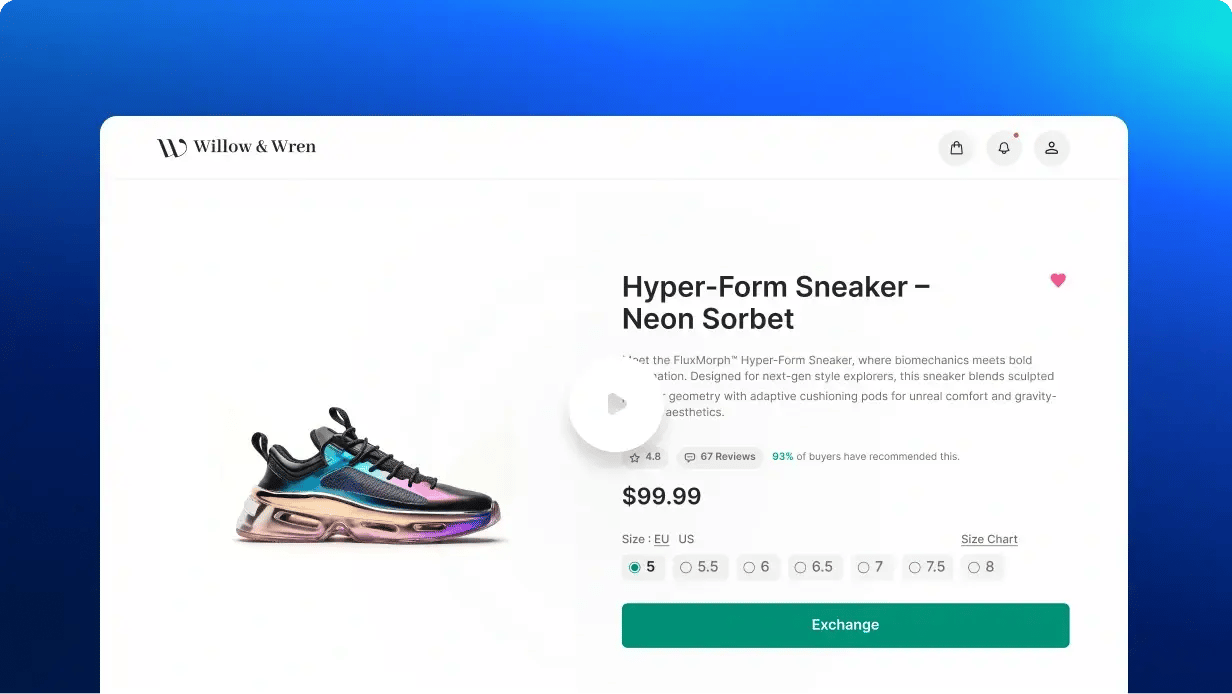
A self-service returns portal where customers can initiate returns, choose between refund/exchange/store credit, and get instant access to a return label removes the friction that compounds dissonance. Exchange-first workflows that suggest alternative products or correct sizes retain revenue while giving customers the flexibility to find the right solution.
Brands that offer instant store credit or gift cards for exchanges see significantly higher exchange-to-refund ratios. This keeps more revenue in the ecosystem while satisfying the customer's need for resolution.
Post-Purchase Dissonance vs Post-Purchase Evaluation: What Is the Difference?
Post-purchase evaluation is the broader process every customer goes through after a purchase, assessing the entire experience from order communication to product quality to returns. Post-purchase dissonance is a specific negative outcome within that evaluation process.
| Post-Purchase Evaluation | Post-Purchase Dissonance | |
| What it is | The overall process of assessing the buying experience | A specific feeling of regret, doubt, or dissatisfaction |
| Who experiences it | Every customer, after every purchase | Only customers whose experience falls short of expectations |
| Possible outcomes | Positive (loyalty), neutral, or negative (churn) | Always negative — anxiety, regret, return intent |
| Brand response | Optimize every touchpoint proactively | Identify root causes and intervene before returns |
Brands that optimize the entire post-purchase experience reduce the likelihood of dissonance occurring in the first place.
Reduce Post-Purchase Dissonance with ClickPost
ClickPost gives ecommerce brands the tools to address dissonance at every stage:
-
Transparent communication. Automated notifications via email, SMS, and WhatsApp at every order milestone keep customers informed and reduce post-purchase anxiety.
-
Branded tracking. A branded tracking page replaces generic carrier tracking, reinforcing trust and providing a familiar brand experience during the delivery wait.
-
Delivery accuracy. ML-powered estimated delivery dates set realistic expectations at checkout, reducing the expectation-reality gap that triggers dissonance.
-
Exception management. NDR management automatically detects and resolves delivery failures — preventing the dissonance cascade that damaged or failed deliveries create.
-
Exchange-first returns. ClickPost Returns offers self-service portals, exchange recommendations, instant store credit, and automated return tracking, converting dissonance-driven returns into retention opportunities.
-
Return analytics. ClickPost Analytics identifies the product-level and experience-level causes of dissonance, enabling systematic improvement.
See how ClickPost works → | View pricing → | Take the post-purchase assessment →
Editorial information
Our ecommerce research team reviews consumer psychology research, post-purchase behavior data, and return analytics best practices using published studies and industry reports. This article is reviewed and updated on a regular basis to ensure accuracy.
Sources referenced in this article:
-
Invesp: Ecommerce Product Return Rate Statistics — 90% of customers kept items they wanted to return
-
Harvard Business Review: The Value of Keeping the Right Customers — 5x acquisition vs retention cost
Frequently Asked Questions
What is post-purchase dissonance?
Post-purchase dissonance (also called buyer's remorse or post-purchase cognitive dissonance) is the feeling of regret, doubt, or dissatisfaction a customer experiences after making a purchase. It occurs when the customer's post-purchase experience — product quality, delivery, or communication — falls short of their expectations.
What causes post-purchase dissonance in ecommerce?
The five most common causes are: (1) product quality not matching expectations or descriptions, (2) impulse purchases driven by false urgency, (3) finding a better price after purchasing, (4) the product not fitting or working for the customer, and (5) poor post-purchase communication including missing tracking updates and delivery delays.
How does post-purchase dissonance affect ecommerce brands?
Post-purchase dissonance directly drives returns, negative reviews, and customer churn. It costs five times more to acquire a new customer than retain an existing one, so unaddressed dissonance erodes profitability. 90% of customers have kept items they wanted to return, meaning the visible return rate understates the true scale of dissonance.
What is the difference between post-purchase dissonance and post-purchase evaluation?
Post-purchase evaluation is the broader process every customer goes through after a purchase, assessing the entire experience. Post-purchase dissonance is one specific negative outcome within that evaluation, a feeling of regret or dissatisfaction. Every customer evaluates; only dissatisfied customers experience dissonance.
How can ecommerce brands reduce post-purchase dissonance?
The six most effective strategies are: (1) build trust through transparent shipping notifications and tracking, (2) create comprehensive post-purchase email flows, (3) make return policies visible and confidence-building, (4) use return analytics to identify root causes, (5) invest in the unboxing and delivery experience, and (6) offer frictionless self-service returns with exchange-first workflows.
How does a transparent return policy reduce post-purchase dissonance?
When customers know they can easily return or exchange a product, their purchase anxiety drops. And paradoxically, they are less likely to actually initiate a return. A visible, generous return policy signals that the brand stands behind its products, which builds the confidence that prevents dissonance from forming.
Can post-purchase dissonance be measured?
Yes. Brands can measure dissonance indirectly through return rates by reason, CSAT and NPS scores collected after delivery, review sentiment analysis, and WISMO ticket volume. Direct measurement is possible through post-delivery satisfaction surveys sent 3–7 days after delivery. Tracking these metrics through analytics tools reveals the scale and sources of dissonance.